January 2021
Published by the Oregon Office of State Fire Marshal
|
|
Community Risk Reduction - Incident Reporting Data assists with Risk Identification |
|
During 2020, the Oregon fire service provided emergency services, engaged in fire prevention activities, and delivered outreach to support community members in creative and unique ways. As we emerge from and evolve through the events that kept us on our toes this past year, 2021 offers us a new opportunity to focus on where we can make a difference. Quality incident reporting provides a platform to ensure that your data can help to tell the story of your commitment and sacrifice during 2020.
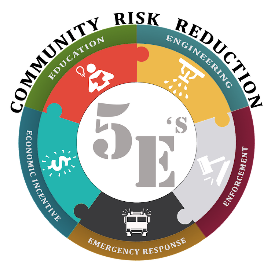
The Office of State Fire Marshal (OSFM) has begun an analysis of the events reported by Oregon fire agencies through local fire incident reports provided for 2020. Reports provided by your fire agency provide critical information to the state and national datasets and provides information for the initial step of Community Risk Reduction (CRR). Complete and accurate data allows for risk trends to be identified and sets the stage for determining strategic investments using the 5 “E’s” of prevention needed for local risk reduction efforts.
As a preliminary look at the Fire Incident Reports, the following information has begun to draw the initial 2020 fire picture. As of December 15th, 2020:
- 82% of Oregon’s 303 fire agencies had reported their fire incidents.
- 13,181 Fire Incident Reports were reflecting
- 3,698 Structure Fires
- 1,719 Vehicle Fires
- 7,764 Outside Fires
Identification of risks requires quality information submitted through your incident reports. Please take the time to ensure your incident reports are submitted to the OSFM.
ImageTrend Elite - If you have questions about your ImageTrend Elite Account, please contact us through osfmdata@osp.oregon.gov
Community Risk Reduction - To learn more about CRR, a free course is available at CRR Essentials.
|
|
Wildfires & Recovery: Oregon Emergency Management
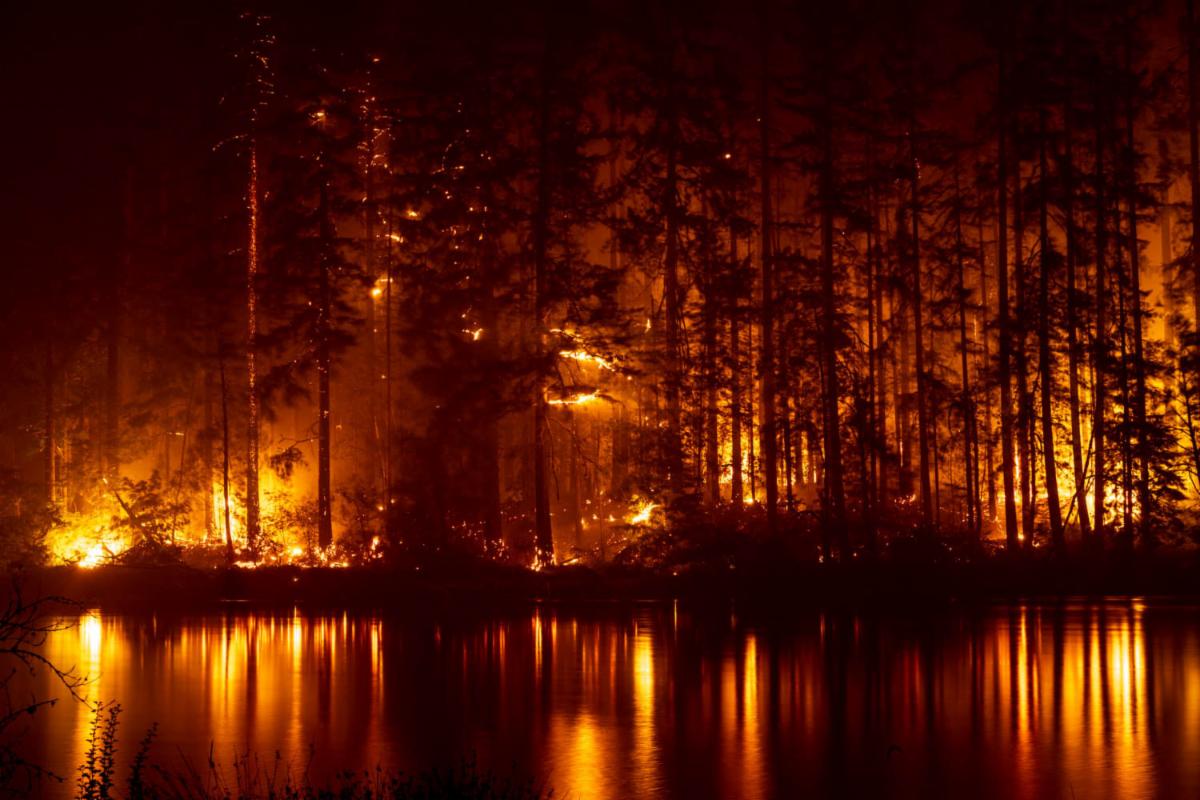
Our partners at Oregon Emergency Management (OEM) have created a website dedicated to the wildfires in September. During the event, this website (https://wildfire.oregon.gov/) became a go-to resource for impacted Oregonians, response agencies, and worldwide media. The site is still maintained and has shifted focus to feature content related to recovery. Anyone looking for resources or information about recovery after the wildfires would be well-served to visit.
|
|
Hazardous Materials by Rail |
|
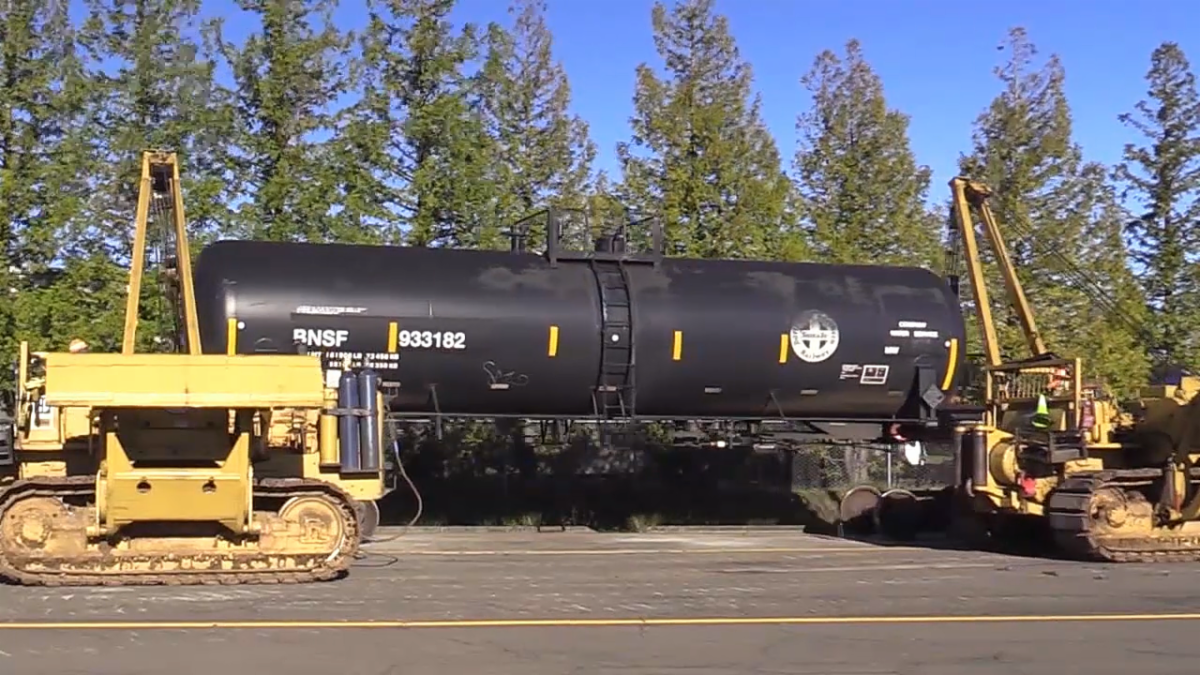
The Hazardous Materials (HazMat) by Rail program is excited to announce the installation of a retired DOT-111 training tank car in Portland. The tank car was taken out-of-service, cleaned and purged, and donated to OSFM by BNSF Railroad, and installed at the Portland Fire Training Center located at 122nd and Sandy. This railcar allows Portland Fire and Rescue firefighters and members of the OSFM Region No. 7 HazMat Team, along with other local agencies, an opportunity to locally train and prepare for a railroad incident involving the ignition, spill, or release of hazardous materials. Before this installment, firefighters would either schedule a visit to a busy railyard or travel outside of their district – sometimes out-of-state – to experience realistic scenario-based training.
The tank car donation spotlights the collaborative relationship the OSFM has built with the railroad industry. Throughout the year, these railroad companies also provide local training on emergency response and how to safely respond to a railroad incident. This project is the fourth railcar donation over the last three years. Other railcar placements include DOT-111 training tank cars located in Eugene, Hermiston, and Salem, with potential futures sites in Clackamas, Medford, and Redmond.
If your fire department or county emergency manager is interested in receiving a donated railcar, please reach out to our office. The process can be lengthy but very rewarding. This railcar was transported from the BNSF Vancouver Railyard in Washington to the Portland Fire and Rescue Training Center. Our staff was able to capture this transportation feat using a GoPro and multiple cameras. You can observe this time-lapse video here.
|
|
By OSFM Code Deputy David Mills
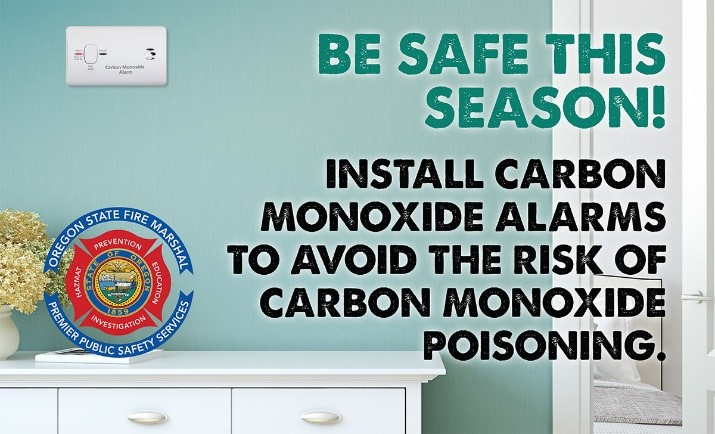
Carbon Monoxide Safety
|
|
Heating equipment is a leading cause of fires in U.S. homes according to the National Fire Protection Association (NFPA). Local fire departments responded to an estimated average of 52,050 fires involving heating equipment each year in 2012-2016, accounting for 15% of all reported home fires during this time. These fires resulted in annual losses of 490 civilian deaths, 1,400 civilian injuries, and $1 billion in direct property damage.
January is a month that these fires increase as cold weather drives people indoors, as heating systems are in regular use, and as people turn to alternatives such as space heaters and wood or pellet stoves. So now is the time to focus educational attention on heating issues. January can also be one of the coldest months of the year, and it may be the month that people run out of fuel and begin using unsafe alternatives like stoves and space heaters as their primary source of heat.
With these types of heating appliances, we need to be alert to exposure to carbon monoxide (CO) poisoning. January has the most CO incidents of any month during the year. Hundreds of people die accidentally each year from CO poisoning caused by malfunctioning or improperly used fuel-burning appliances. According to the Journal of the American Medical Association (JAMA), CO is the number one cause of poisoning deaths in the U.S.
Often called the invisible killer, carbon monoxide is an odorless, colorless gas created when fuels (such as gasoline, wood, coal, natural gas, propane, oil, and methane) burn incompletely. In the home, heating and cooking equipment that burn fuel are potential sources of carbon monoxide. Warning signs of CO poisoning include headaches, nausea, dizziness, confusion, fainting, unconsciousness, and death. CO poisoning can also mimic flu symptoms.
Safety Tips
- A CO alarm should be located within each bedroom or within 15 feet outside of each bedroom door. Bedrooms on separate floors in a structure containing two or more stories require separate CO alarms. For the best protection, interconnect all CO alarms throughout the home. When one sounds, they all sound.
- Follow the manufacturer’s instructions for placement and mounting height.
- Choose only a CO alarm that has the label of a recognized testing laboratory.
- Test CO alarms at least once a month; replace them according to the manufacturer’s instructions.
- If the audible trouble signal sounds, check for low batteries. If the battery is low, replace it. If it still sounds, call the fire department.
- If the CO alarm sounds, immediately move to a fresh air location outdoors or by an open window or door. Make sure everyone inside the home is accounted for. Call for help from a fresh air location and stay there until emergency personnel.
- If you need to warm a vehicle, remove it from the garage immediately after starting it. Do not run a vehicle or other fueled engine or motor indoors, even if garage doors are open. Make sure the exhaust pipe of a running vehicle is not covered with snow.
- During and after a snowstorm, make sure vents for the dryer, furnace, stove, and fireplace are clear of snow build-up.
- A generator should be used in a well-ventilated location outdoors away from windows, doors, and vent openings.
- Gas or charcoal grills can produce CO — only use outside.
|
|
Hazardous substance reporting opened January 1
|
|
Oregon’s Community Right to Know and Protection Act requires Oregon employers to annually report their hazardous substances to OSFM. This information is then made available to emergency planners, first responders, and the public for planning and response purposes.
On January 1sr, 2021, OSFM’s online portal for hazardous substance reporting, CHS Manager, opened for these employers to submit their 2020 annual report. This report will reflect the hazardous substances that they stored in reportable quantities during 2020. Employers have until March 1st, 2021 to complete and submit their reports.
In addition to completing an annual report, employers are required to report any substantive change within 30 days. Substantive changes include an increase in a reported substance, a new substance that meets reportable quantities, or new emergency contact information.
If you are an emergency planner or first responder interested in accessing the information reported by employers, please register for a CHS Manager account here: https://oregon.hazconnect.com/Account/Login.aspx. Due to limited licenses, we ask that agencies register for a single account so be sure to confirm your agency is not currently registered.
Members of the public may also use the link above to register for a “Citizen” account. Having access to this information allows the public to be better informed about hazardous substances in their community.
Please contact OSFM’s Community Right to Know program if you have any questions at (503) 378-6835 or by email a t sfmcr2k@osp.oregon.gov. |
|
Oregon Disaster Declaration |
|
Your FEMA-4562-DR-OREGON
Declared: September 15, 2020
Wildfires and Straight-Line Winds
**Due to extraordinary circumstances the Deadline has been EXTENDED for submission of the Request for Public Assistance (RPA) under DR4562 to 01/13/21 **
Federal funding is available to local, tribal governments, state agencies, special districts and certain private nonprofit organizations in designated areas (counties) for emergency work and the repair or replacement of public facilities damaged by the wildfires and Straight-Line Winds that occurred in Oregon between September 07, 2020 – November 03, 2020.
The federal share of assistance is not less than 75% of the eligible cost for emergency measures and permanent restoration.
FEMA Public Assistance Categories of Work
Eligible Applicants : include local governments, tribal governments, special districts, state agencies, and certain *private nonprofits (PNP) that have incurred cost for response activities and/or have sustained facility damage as a direct result of the event of September 07, 2020 through November 03, 2020.
*PNPs are those entities that provide a governmental type service, and have a 501(c), (d) or (e) tax exception status. PNPs please refer to FEMA Public Assistance Program and Guide (link below), page 43 regarding PNP eligible facilities and required documentation. Note: Certain PNPs that have damages to their facilities may be directed to apply to SBA loan first, the deadline to apply to SBA is December 21, 2020.
Request for Public Assistance (RPA) Submission – Due 30 days from Declaration Date – Extended to 01/13/21 for DR4562OR. Eligible entities that have response costs and or damages as a direct result of the event and are seeking federal financial assistance should submit an RPA. Once the RPA is approved, the applicant is assigned a State and FEMA Program Delivery Manager to assist with the FEMA process in developing eligible projects for reimbursement.
Applying for FEMA Public Assistance – FEMA Grants Portal Registration
Eligible applicants include state, local governments, tribal governments, special districts and certain private nonprofits (PNP) in designated areas may apply directly through registering in FEMA Grants Portal.
For new Applicants registering in FEMA Grants Portal
-
Go to https://grantee.fema.gov/
- Register Your Organization for Public Assistance
- Complete organizational profile (basic information about organization)
- New Applicants will select NO when prompted in Grants Portal to submit a Request for Public Assistance (RPA) - (DR4562 option to submit RPA is not available until the registration process is complete and approved by OEM)
- After the new Applicant completes the account request the account creation must be approved by the State (OEM) before the new Applicant can submit an RPA for DR4562
-
After OEM approves, the Applicant’s primary contact listed will receive a system-generated email with a user name and temporary password
- Once Applicant receives they can log back into FEMA Grants Portal to submit a Request for FEMA Public Assistance (RPA) for DR4562
Already Registered in FEMA Grants Portal?
Applicants whom are already registered in FEMA Grants Portal can submit an RPA for their organization directly by logging into https://grantee.fema.gov/
Unable to access FEMA Grants Portal to submit RPA or need assistance in creating Public Assistance Grants Portal user account?
Resource Materials:
FEMA Public Assistance Policy and Guide Book (PAPPG): Resource on FEMA Public Assistance Eligibility and Process.
|
|
See what's happening on our social sites: |
|
|
|
|
|
|