Clean Air Day is October 4: Take the Pledge!
The Sac Metro Air District (Air District) has pledged to participate in the 2023 California Clean Air Day on Wednesday, October 4, encouraging employees and the public to take the Clean Air Pledge. Designed around individual actions, California Clean Air Day is a statewide, behavior change campaign built on the idea that shared experiences unite people to action to improve our community health.
California Clean Air Day allows businesses, schools, government agencies, and other organizations to engage their members, students, employees, and customers to encourage participation. Participants pledge to take various actions from changing air filters to opting not to drive to switching out harmful cleaning products.
Visit CleanAirDay.org to take the pledge and for more information on this statewide day of action that is easy, fun, and totally California.
The Air District is participating in two events focused on clean transportation, a Mobility Tour and a Mobility Hub Grand Opening.
Mobility Tour
On October 4, the Air District will participate in a mobility tour hosted by the Cleaner Air Partnership and the UC Davis Institute of Transportation Studies. The four-hour tour will begin at Truitt Bark Park in Midtown at 10 a.m. following the Central City Mobility Project ribbon cutting at 9 a.m. The tour will include stops at the Zero-Emission Mobility Hub in Del Paso Heights and the California Mobility Center.
Mobility Hub Grand Opening
On October 11, the Air District will celebrate the grand opening of the Zero-Emission Mobility Hub in Del Paso Heights. Principally funded by the Air District, this innovative concept for mobility greatly benefits the community by revitalizing the area, reducing emissions, and providing transportation services to residents, helping them make trips to social services, training sessions, school, and medical appointments. The hub offers several zero-emission transit programs, a park area, a mobile device charging bench and free Wi-fi. In the future, the hub will also offer community resources such as a virtual job training kiosk. This mobility hub is the first of 52 planned hubs in the Sacramento region, per the Sacramento Region Zero Carbon Transportation Initiatives, also known as the ZEV Deployment Strategy.
Find these and other Clean Air Day events on the Coalition for Clean Air’s website.
|
|
Regional Leaders to Join California Delegation at UN’s COP 28
In November and early December, the Conference of the Parties to the United Nations Framework Convention on Climate Change (UNFCC) will convene in Expo City Dubai, United Arab Emirates, for its 28th annual meeting (COP 28).
Recognizing that every level of government has a role in climate action and the growing number of leading clean air and climate initiatives in the Sacramento region, the Sac Metro Air District and the Sacramento Municipal Utility District expect to join members of the California contingent as part of a large U.S. public/private sub-national delegation participating in COP 28. The group is expected to be a leading voice for climate action consistent with the urgency of the crisis and to learn, share, and connect.
Air District representation at the conference will include Board Vice Chair and Folsom City Councilmember Sarah Aquino, Air Pollution Control Officer Alberto Ayala, and Transportation and Climate Change Division Manager Jaime Lemus. SMUD’s Chief Executive Officer and General Manager Paul Lau, Chief Legal and Government Affairs Officer Laura Lewis, SMUD Board President Heidi Sanborn, and Board Member Brandon Rose also will be attending.
For more on COP 28, please visit the conference website here. |
|
|
|
CPRG Regional Stakeholders Webinar Recording Now Available
In late July, the Air District hosted a webinar to share information about the U.S. EPA’s Climate Pollution Reduction Grant (CPRG) program. As the lead agency for this grant opportunity, the Air District is responsible for coordinating with jurisdictional partners to develop a Priority Climate Action Plan that will guide later implementation grants to achieve the Sacramento region’s vision for a low-carbon future.
A recording of the webinar and more information on the Air District’s CPRG leadership efforts is available at www.AirQuality.org/CPRG. |
|
The Air Quality Benefits of Hydrogen Technology Explored During Public Workshop Hosted by the Air District
At its regularly scheduled meeting on September 28, the Air District Board of Directors hosted a comprehensive public workshop detailing the potential for hydrogen (H2) projects to help decarbonize our region and stimulate the local economy.
The Workshop was moderated by California Hydrogen Business Council Deputy Director Jennifer Hamilton. Panelists were:
-
Dr. Jack Brouwer, Mechanical and Aerospace Engineering Professor and Director of the National Fuel Cell Research Center at UC Irvine
-
Dr. Matt Miyasato, Vice President of Strategic Growth and Government Affairs with First Element Fuel
-
J.R. Wellman, Founder, Overwatch Capital
-
Tom Swenson, P.E. Manager - Global Regulatory Affairs, Cummins
The Air District is currently supporting a growing number of H2 projects in the Sacramento region, which will help advance our broader clean air and decarbonization goals. Air District efforts include projects for H2 production, fueling infrastructure, light-, medium-, and heavy-duty vehicles, and power generation.
“This workshop was a great opportunity to help educate our board, partners, and the public about the air quality benefits of hydrogen projects and the District’s current efforts,” said Air Pollution Control Officer Alberto Ayala. “Hydrogen is just one of the tools we can use to reach our clean air and climate goals. We are going to need every tool in the toolbox to collectively adapt to climate change and ensure a sustainable green economy now and into the future.”
Members of the public, other local agencies and partners, and elected officials were invited to the workshop. A recording of the board meeting and workshop has been posted to the Air District’s YouTube channel. |
|
Nation's Largest EV Truck Charging Depot Coming to Sacramento County
Watt EV, the industry leader in heavy-duty freight electrification, has been awarded a grant to construct the nation's largest solar-powered truck charging depot in Sacramento County. The depot will be located across Interstate 5 from the airfreight hub adjacent to Sacramento International Airport. The Air District is committed to working closely with Watt EV on the project as it will have significant air quality benefits for Sacramento.
The project is expected to open in mid-to-late 2025 with 15.6 megawatts (MW) of solar power supplemented by 7.2 MW of grid power supplied by the Sacramento Municipal Utility District.
The depot will have 30 DC fast chargers for passenger vehicles, 90 high-power CCS-1 cords for medium- and heavy-duty commercial electric vehicles, and 18 MW cords for pass-through charging of heavy-duty trucks using the upcoming Megawatt Charging Standard.
"Emissions from fossil-fuel powered cars and trucks are the largest source of air pollution in the Sacramento region," said Sac Metro Air District Transportation and Climate Change Program Manager Raef Porter. "Over the past 25 years, the Air District has invested $300 million in clean air projects. We're proud to continue that commitment by partnering with Watt EV on this transformative solar-powered, electric charging depot. Building new electric vehicle infrastructure is imperative to the successful transition to clean transportation and ensuring a clean air and low carbon future for all."
Read Watt EV's full press release here. |
|
Ag Biomass Conference on October 5-6 in Winters
The Sacramento Valley Basinwide Air Pollution Control Council (BCC) is putting on a two-day conference, “The Opportunities & Challenges of Agricultural Biomass Utilization” from October 5-6 in Winters, CA. The conference is aimed at bringing business leaders, policymakers, researchers, and regulators together to promote discussion and fuel positive action toward ag biomass utilization.
Biomass from agricultural operations in the Northern Sacramento Valley is a renewable and reliable resource, continually generated year to year and easily transported, making it ideal for producing bio-products like biochar and biofuels. Diverting ag biomass for alternative uses instead of burning it would greatly reduce smoke impacts and contribute to clean air goals for Northern Sacramento Valley communities.
Agenda At a Glance
Thursday, October 5, 2023
- Opening Remarks
- Session 1: Why are we talking about agricultural biomass?
- Session 2: Big Picture Challenges & Solutions for Ag Biomass Use
- Lunch Keynote Speaker
- Session 3: Legislation and Policy on Biomass
- Session 4: Logistical Challenges & Solutions for Ag Biomass Use
- Session 5: Field Trip to Facility (Tentative)
- Session 6: Networking Reception
Friday, October 6, 2023
- Session 7: Highlight Opportunities & Successes of Ag Biomass Use
- Session 8: Breakout Sessions: Where do we go from here?
- BCC Regular Meeting (open to the public)
More information about the conference is available here. |
|
|
|
Air District to Administer Over $15M for New Hydrogen Locomotives
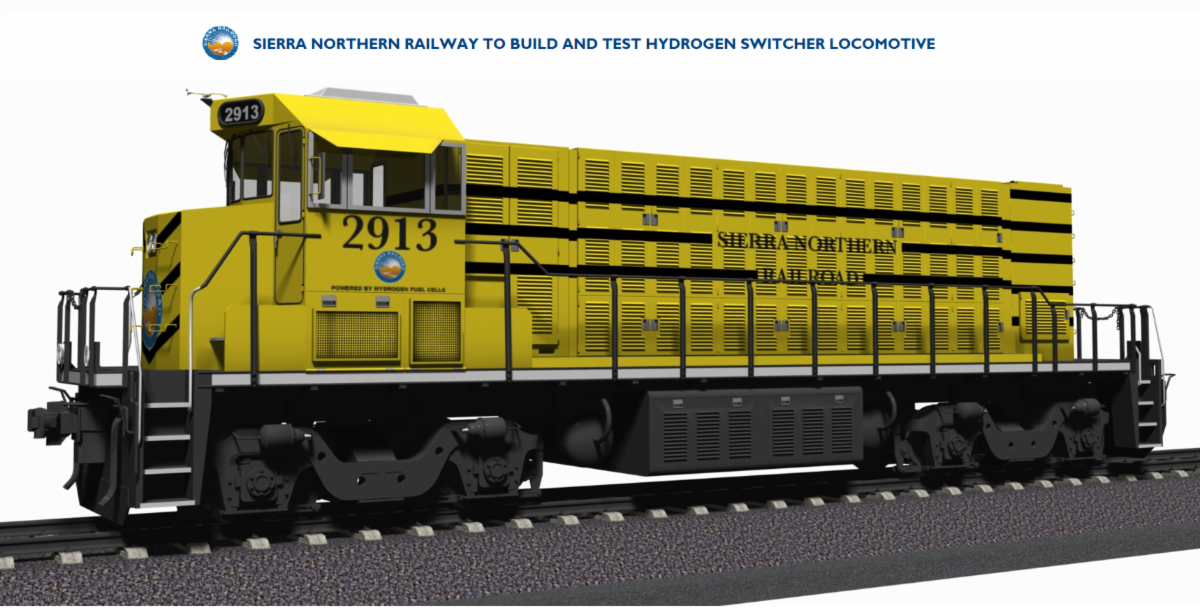
In July, the California State Transportation Authority announced that it will fund the Sierra Northern Railway's (SERA) industry-leading initiative to convert three additional diesel switching locomotives to hydrogen-powered, zero-emission solutions through a public-private partnership including the Air District.
This project includes developing, demonstrating, and testing three additional hydrogen-fueled, zero-emission switcher locomotives. The testing will be conducted on the soon-to-be-constructed test track in SERA's West Sacramento rail yard. When this project is completed in quarter four of 2027, it will expand the SERA Hydrogen Zero-Emission Switching Locomotive Fleet to a total of four locomotives and will help SERA lead the way to eventually convert the entire SERA fleet to hydrogen-powered, zero-emission switchers. This project also builds on the 2021 grant to undertake a first-generation hydrogen-fueled, zero-emission switcher locomotive, in which SERA is retiring an older tier 0 diesel locomotive and replacing it with a zero-emission switching locomotive using cutting-edge hydrogen technology.
"The District is proud to play a role in the development and deployment of hydrogen locomotives in the Sacramento region. With over 25 years of experience implementing successful clean air projects for heavy-duty on-road and off-road vehicles, we are ready to support this new public-private partnership with SERA to build and demonstrate these hydrogen-fueled, zero-emission fuel cell electric locomotives,” said Air Pollution Control Officer Alberto Ayala. “This technology will provide significant air quality and environmental justice benefits to communities surrounding the Port of West Sacramento, as well as reduce global warming gases, noise, and odor. The project puts Sacramento squarely in the clean energy transition while helping California achieve its decarbonization goals."
The project partners working together to execute this innovative effort include Sierra Northern Railway, the Sacramento Metropolitan Air Quality Management District, Railpower Tech LLC, Ballard Power Systems, Velocity Strategies, Gas Technology Institute, WHA International, UC Riverside, College of Engineering - Center for Environmental Research and Technology and Valley Vision.
|
|
Four-Agency Group To Convene Joint Board Meeting to Ensure Regional Collaboration
In a continued effort to move forward with decarbonization, zero-emission technology, and climate resiliency for the Sacramento region, the Air District, the Sacramento Area Council of Governments (SACOG), Sacramento Regional Transit (SacRT), and the Sacramento Municipal Utility District (SMUD) will convene a joint Board of Directors meeting on November 9. The meeting will be held at 9 a.m. at the Sacramento State Harper Alumni Center, 6000 J Street, Sacramento.
The purpose of this joint board meeting is to inform each of the four agency’s board of directors and the public about:
- Federal Climate Funding opportunities;
- Collaboration under the U.S. Environmental Protection Agency’s Climate Pollution Reduction Grant (CPRG) program being led by the Air District for the Sacramento region;
- SACOG’s Green Means Go program, a multi-year pilot that aims to lower greenhouse gas emissions in the six-county Sacramento region by accelerating infill development and reducing and electrifying vehicle trips;
-
SACOG’s Blueprint, a plan to build a connected region that includes transportation options for residents, affordable housing for the region’s growing population, and equitable investments that give all community members access to a safe and healthy region;
-
SacRT’s transportation efforts;
- Updates on the Sacramento Region’s ZEV Deployment Strategy, developed by the four-agency group; and
- Regional hydrogen efforts.
The recommendation is for each agency’s Board of Directors to agree on and pass a joint resolution supporting continued collaboration and providing direction on the region’s “pathway to zero.”
|
|
Air District Committed to Protecting Public Health as EPA Seeks to Update National Ambient Air Quality Standards
Following the U.S. Environmental Protection Agency’s (EPA) announcement in August that it would be conducting a review of the National Ambient Air Quality Standard (NAAQS) for ozone, and its previous proposal to revise the annual PM2.5 NAAQS, the Air District expects new, lower health-based standards for ozone and PM2.5 to be adopted within the next two years. The Air District remains committed to protecting public health and continuing to work closely with EPA to develop plans to meet any new standard once it is finalized.
Background on EPA’s Process
After carefully considering advice provided by the independent Clean Air Scientific Advisory Committee (CASAC), on August 21, EPA announced a new review of the ozone NAAQS to ensure the standards reflect the most current, relevant science. This review was also facilitated by the October 2021 decision to reconsider the previous Administration’s decision to retain the NAAQS for ozone.
CASAC has identified recent studies that include the most current science on ozone and has recommended EPA conduct additional risk analysis that might support lower health-based standards. The current ozone standard was established in 2015 at 70 parts per billion (ppb).
Regarding the ozone NAAQS review, EPA says it will “move swiftly to execute this new review of the underlying science and the standards – prioritizing transparency, scientific integrity, inclusive public engagement, and environmental justice.”
Earlier this year, EPA proposed to revise the annual PM2.5 standard from its current level of 12.0 µg/m3 down to as low as 8 µg/m3. EPA’s decision was based on reviewing the most recent available scientific evidence and technical information and after consulting with CASAC.
A final timeline for the new ozone rule has not yet been shared, however, EPA is expected to release a final rule on the new PM2.5 standard later this fall.
What This Means For the Sacramento Region
The EPA’s decision to set new federal health standards for ozone and PM2.5 will have critically important implications for the region, including the possibility of moving from attainment to non-attainment for the annual PM2.5 standard which will trigger the requirement to develop a new plan and strategies to meet new standard.
While PM2.5 and ozone pollution levels in the Sacramento region have steadily decreased over the past few decades thanks to multi-pronged strategies and programs administered by the Air District and its partners, significant work remains at all levels of air quality regulation to ensure that the Air District continues to reduce air pollution and the public’s exposure to air pollution, especially in disadvantaged communities.
If new, lower federal health standards are established, the Air District, along with other air districts, will collaborate with the California Air Resources Board and EPA to develop attainment plans to address the sources of pollution in the region and show how the region will meet the new standards.
Locally, the Air District will continue to implement effective air pollution mitigation programs, such as the Check Before You Burn and the Sacramento region’s Spare the Air programs, administered by the Sac Metro Air District on behalf of the air districts of the Sacramento region. The Air District will also continue to enforce air quality rules, perform inspections, invest in bringing cleaner technology to the region, and consider new control strategies to reduce pollution and exposure to it.
|
|
Sacramento Public Library Showcases Electric Bookmobile Funded by The Air District
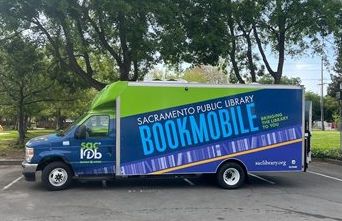
The Sacramento Public Library (SPL) hit the road this summer with two new electric bookmobiles and, on August 23, showcased one of the bookmobiles at Pat O’Brien Community Center in Elk Grove. The showcase featured self-guided tours and SPL staff sharing information about the library on wheels. The SPL’s bookmobiles visit local events and communities with limited access to libraries.
The two electric bookmobiles replaced the 25-year-old diesel vehicles previously being used by the SPL. The project was made possible thanks to a partnership between the SPL, the Air District, and the California State Library. Executive Director and Air Pollution Control Officer Alberto Ayala and Transportation and Climate Change Division Manager Jaime Lemus represented the Air District at the event.
In 2022, SPL bookmobiles made nearly 800 visits circulating 35,800 materials including books, DVDs, hotspots, and more. The library has two regular bookmobile routes. The family route, which focuses on children and families in apartment complexes and other affordable housing communities, visits 10 locations. The senior route visits more than 40 facilities on a monthly schedule, including retirement communities, assisted living centers, and mobile home parks.
“The Air District is proud to partner with the Sacramento Public Library to bring these new zero-emission, electric bookmobiles to Sacramento area residents,” said Jaime Lemus, Air District Transportation and Climate Change Division Manager. “By funding this project, we are ensuring cleaner air for our region and reducing exposure to toxic tailpipe emissions for sensitive populations, like the children and seniors who visit the bookmobiles throughout our communities. We are also raising public awareness that vehicle electrification can happen in all types of vehicles. We are excited to continue supporting this project with the award of additional funding to the Library for new charging infrastructure.”
|
|
Make Sure to Check Before You Burn Beginning November 1 – It’s the Law
The Air District's annual Check Before You Burn program resumes November 1 and runs through the end of February 2024. During this time, burning and the use of fireplaces, wood stoves, inserts, and pellet stoves are restricted when fine particle pollution (PM2.5) is forecast to be high. This is an important program to protect residents’ health as wood burning causes over 50 percent of winter pollution in Sacramento County and unnecessarily exposes residents to harmful particle pollution.
This law applies to residents and businesses in unincorporated Sacramento County, and the Cities of Citrus Heights, Elk Grove, Folsom, Galt, Isleton, Rancho Cordova, and Sacramento. Remember, Check Before You Burn is a law in Sacramento County and penalties apply for violations.
Check the daily burn day status by visiting AirQuality.org or by calling 1-877-NO-BURN-5. To report a wood-burning violation please call 800-880-9025 or file a complaint here. |
|
|
|
|
|
|