|
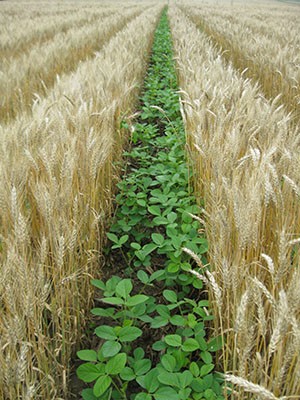
Relay cropping is a form of multiple cropping in which a second crop is sown into an existing standing crop before the first crop is harvested, allowing the two crops to share part of the growing season. This intentional overlap distinguishes it from double cropping, where crops are grown one after another without overlap. Relay cropping is designed to exploit temporal and spatial complementarities between crops such as differences in rooting depth, canopy structure, growth rate, and resource demand to improve overall system efficiency. By maintaining continuous vegetative cover, relay systems can capture more sunlight over the season, reduce evaporation losses, and improve nutrient uptake, thereby increasing total biological productivity per unit land area. Additionally, relay cropping can contribute to soil health by reducing erosion, enhancing soil structure through continuous root activity, and supporting more diverse soil microbial communities. It also offers agronomic benefits such as weed suppression, reduced pest pressure through increased biodiversity, and improved resilience to weather variability, making it an attractive strategy for sustainable intensification in resource-limited environments.
In western North Dakota, relay cropping presents both opportunities and challenges due to the semi-arid climate, highly variable precipitation, and relatively short growing season. The system is particularly appealing as a way to intensify wheat-based systems without relying on full-season double cropping, which is often not feasible in this region. For example, relay seeding cool-season pulses like lentil or field pea into standing spring wheat can allow partial use of late-season moisture and extend the productive period of the land. However, the success of such systems depends heavily on careful synchronization of crop growth stages to minimize competition for water, which is often the most limiting factor. Selection of early-maturing and drought-tolerant cultivars, along with precise timing of seeding (e.g., introducing the relay crop at wheat heading or early grain fill), is critical to balance competition and complementarity. Residue management and canopy structure also play a key role in ensuring sufficient light penetration for the understory crop. While risks such as moisture stress and yield trade-offs exist, relay cropping has strong potential to improve precipitation-use efficiency, diversify crop rotations, and enhance system resilience in western North Dakota’s dryland systems.
|