Why Do Some Bears Have Ear Tags? | |
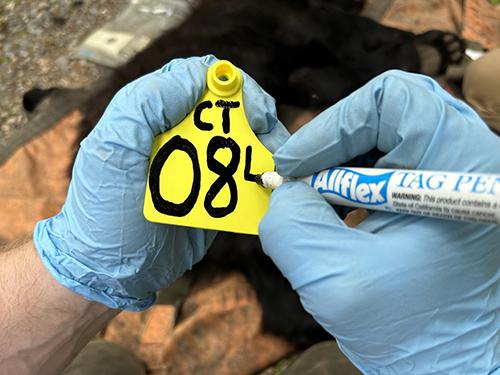
When an untagged bear is captured by the Wildlife Division, whether related to research efforts, conflict, or the rare occasion a bear finds itself in an unsafe area like downtown Hartford, it is anesthetized, measured and weighed, and its overall physical health is assessed. Additionally, all bears handled are given a PIT tag (similar to a microchip for your pet) and also marked with ear tags, one in each ear.
It is a common misconception that an ear-tagged bear in Connecticut is a “conflict bear” and that the number of tags corresponds to the number of instances the bear was involved in a human/bear conflict (a strike system related to ear tags).
The reality is every bear handled by Wildlife Division staff is marked with brightly colored ear tags. The tags have numbers unique to each individual, and the color of the tag indicates the year the bear was handled. Each colored tag used presently has a three-digit number code. Older tags may have a two digit number and/or letter code. For example, a bear with orange ear tags marked “038” would be the third bear handled in 2018.
A majority of the black bears in Connecticut have not been tagged, and it is not unusual to see a bear with only a single ear tag. While ear tags are a cost-effective way of marking bears, they sometimes fall off or break.
So what is the purpose of the tags? Sighting reports of bears with and without ear tags yield valuable information on the distribution and abundance of bears in towns throughout the state. Bears tagged in Connecticut have traveled as far as Vermont, and bears tagged in New York, Massachusetts, and even Pennsylvania have shown up in Connecticut. Ear tags can also help identify individual bears.
Report bear sightings . . .
| |
Creatures of the Night Hide from the Light | |
|
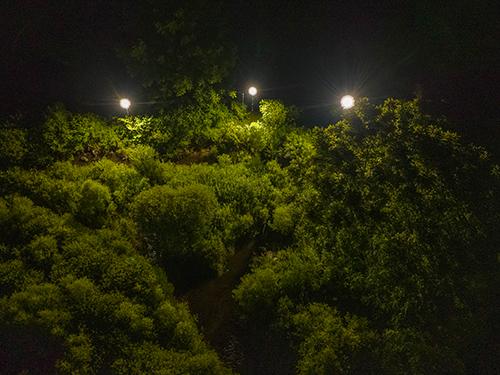
Recent research conducted by the Wildlife Division’s conservation partners at Great Hollow Nature Preserve in New Fairfield found that some bat species avoided foraging for insects in areas contaminated by light pollution from LED floodlights. Not all bat species responded the same to the light pollution, but little brown bats seemed to be the most sensitive.
These findings help inform Connecticut’s State Wildlife Action Plan by providing insight on challenges bats are facing and pointing toward a simple action people can take to make our environment more bat-friendly — turn off the lights at night!
More conservation partner stories . . .
| |
Deer Firearms Seasons Open this Month | |
|
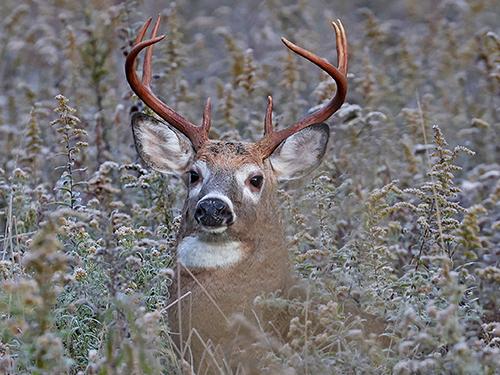
Firearms deer hunting season opened for landowners on their own property on November 1, and the Private Land Shotgun/Rifle/Revolver and the State Land Lottery and No-Lottery seasons open on Wednesday, November 20. Everything you need to know about season details, as well as the tagging and reporting process, is covered on the DEEP website.
Fluorescent orange: All hunters must wear hunter orange (fluorescent orange) from September 1 through the last day in February (with some exceptions). When fluorescent orange is required, the hunter must wear an article of clothing that has 400 square inches of fluorescent orange material visible above the waist and visible from all sides.
Photo courtesy of Matt Balnis.
2024 Hunting and Trapping Guide . . .
| |
Managing Nesting Cavities for Waterfowl | |
|
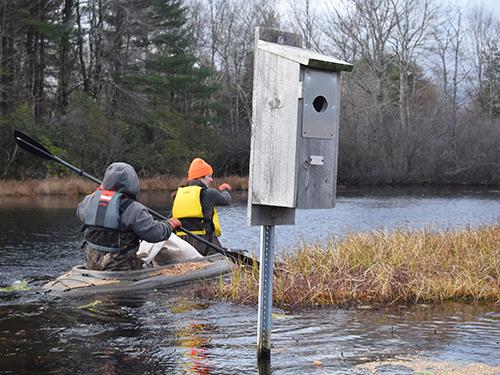
DEEP Wildlife Division biologists maintain approximately 400 wood duck nest boxes across state parks, state forests, and wildlife management areas. This time of year, staff are assessing the overall condition of the boxes, raising the height of boxes for the seasonal change in water levels, and adding fresh pine shavings for the birds that will nest in the box come spring.
Unlike the very familiar mallard duck, wood duck hens require some type of cavity (natural or man-made) to lay their eggs. Nest boxes installed on state lands are built with locally harvested timber that is milled at the DEEP's own saw mill in Portland.
Special thanks to the Connecticut Waterfowl Association and Valley Shore Waterfowlers for purchasing equipment for Wildlife Division staff to construct the boxes.
More on the wood duck . . .
| |
Fisher Research Project Ready for Second Field Season | |
|
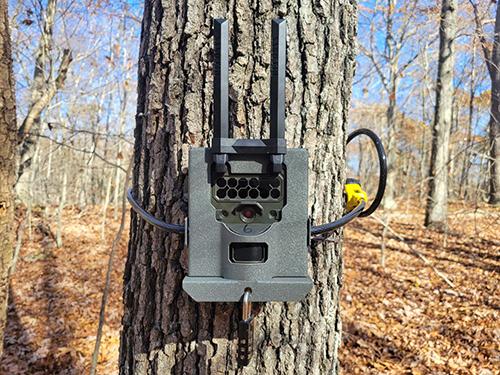
DEEP Wildlife Division biologists are gearing up for the second field season of our fisher research project. By deploying trail cameras at select locations across the state, biologists are hoping to find and ultimately capture wild fishers, and the trail cameras are particularly helpful in informing biologists where to focus their efforts.
Through live-trapping, biologists fit select individuals with lightweight, GPS collars to track their movements on the landscape. The goal of the project is to better understand the gradual decline in the fisher population despite there being plenty of suitable habitat in Connecticut.
The first field season launched in December 2023, and 20 fisher were caught. Staff biologists are hoping for another productive round of fieldwork.
Connecticut residents are encouraged to submit their fisher sightings to deep.FisherSightings@ct.gov.
More on the fisher . . .
| |
Over 100 Native Trees Planted on Charles Island in Milford | |
|
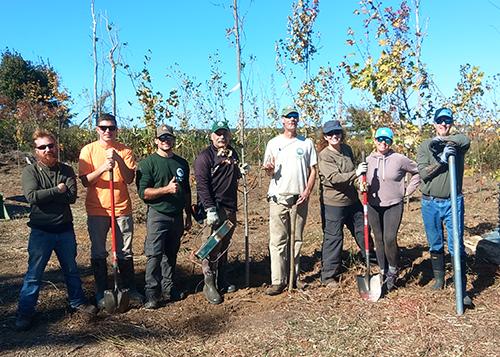
Recently, 110 native trees were planted on Charles Island Natural Area Preserve in Milford. Some of the species include American sycamore, red maple, and sassafras.
Spearheaded by DEEP Wildlife Division Biologist Peter Picone, the goal of this ongoing native tree restoration project is to restore the upper canopy of the island that serves as important nesting habitat for state-listed birds, including the snowy egret and glossy ibis. DEEP Wildlife Division staff, Silver Sands State Park staff, and volunteers from the Charles Island restoration group completed the planting in just two days.
This effort represents a powerful conservation collaboration between DEEP's Wildlife, State Parks, and Support Services Divisions and the many dedicated local residents of Milford looking to make a difference for their local environment.
| |
Motorists, Watch Out for Crossing Wildlife | |
|
November tends to be a dangerous month for vehicle collisions with wildlife. Longer nights and shorter days means people spend more time driving at dawn, dusk, and night, when deer, bears, and other wildlife are typically active. With the recent daylight savings time change, these animals are now more difficult to see.
Fall is also the time of year when many animals are busier than usual, trying to prepare for winter, seeking food across larger areas, looking for mates (white-tailed deer), and crossing busy roadways more often. These crossings can put animals and motorists at increased risk of collisions. These collisions not only kill wildlife, they can lead to serious injury to drivers, in addition to thousands of dollars in vehicle damage.
The Wildlife Division cautions motorists to be aware and heed “Deer Crossing” signs which are placed in areas along state highways where multiple animals have been struck in the past. Motorists are advised to slow down and drive defensively should a deer or moose be spotted on or by the road.
All deer, bear, and moose vehicle collisions should be reported to local, state, or DEEP Environmental Conservation Police Officers (24-hour DEEP Dispatch Center -- 860-424-3333).
| |
Marsh Restoration at Rocky Neck State Park | |
|
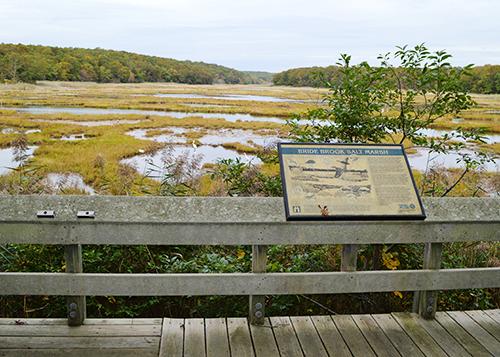
Connecticut’s coastal marshes have become degraded over time, and DEEP is making every effort to restore as many marshes as possible. Healthy marshes provide critical habitat for many of Connecticut’s fish and wildlife species of greatest conservation need (SGCN), store large amounts of carbon, and provide critical protection against rising sea levels and catastrophic storm surges.
As part of this effort, restoration work will begin in January 2025 at Rocky Neck State Park in Niantic in the lower marsh along Bride Brook. Sand and organic material currently hamper tidal flow in and out of the marsh, and in some instances, impede movement of alewife to their spawning grounds in Bride Lake. The restoration will involve the removal of over 5,400 cubic yards of sand and organic material, which will then be placed on the marsh surface in several areas to rebuild the elevation of the marsh that, due to restricted tidal flow, has subsided. The diminishment of the marsh has resulted in a loss of vegetation, thus reducing the ecological benefits provided by the vegetation to fish, wildlife, and invertebrates. This restoration project will increase tidal exchange within the marsh, expand elevation and vegetation growth, and improve the ecological function of the system.
While this work is being conducted, which will last through the middle of February 2025, access across the crab bridge and the bridge leaving the main parking lots will be limited. Sections of the parking lot may also be inaccessible. These areas will be clearly marked with signage once construction begins.
More on Species of Greatest Conservation Need . . .
| |
Report Fox and Fisher Roadkills | |
|
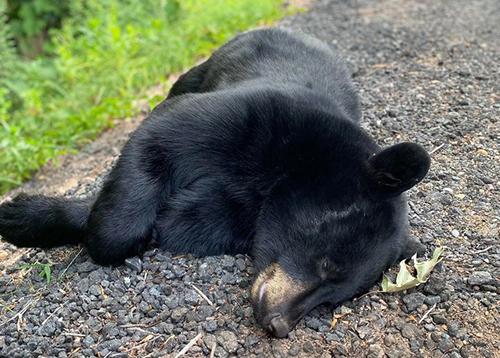
The Wildlife Division’s Furbearer Program is requesting residents to report any roadkill fisher, red fox, or gray fox to DEEP.Wildlife@ct.gov. Wildlife Division staff are attempting to collect any carcasses so biological samples may be taken for further disease testing.
All carcasses collected will be tested for rabies, canine distemper, HPAI (Highly Pathogenic Avian Influenza), parvovirus, and more. In addition, liver biopsies will be collected and tested for exposure to ARs (anti-coagulant rodenticides) and other heavy metals.
Several indices including harvest, sightings, and roadkills have indicated a decline in Connecticut's fisher and gray fox populations. Understanding how factors such as disease and environmental contaminants may be contributing to this decline will help drive management actions to ensure Connecticut retains stable, healthy populations of these native species for the future.
| |
|
Stay Connected!
Follow us on Social Media
| |
|
-- Quick Links --
Your Feedback Is Important to Us!
Send your comments or suggestions to deep.ctwildlife@ct.gov
|  | |
The Connecticut Department of Energy and Environmental Protection is an Affirmative Action/Equal Opportunity Employer that is committed to complying with the requirements of the Americans with Disabilities Act. If you are seeking a communication aid or service, have limited proficiency in English, wish to file an ADA or Title VI discrimination complaint, or require some other accommodation, including equipment to facilitate virtual participation, please contact the DEEP Office of Diversity and Equity at 860-418-5910 or by email at deep.accommodations@ct.gov. Any person needing an accommodation for hearing impairment may call the State of Connecticut relay number - 711. In order to facilitate efforts to provide an accommodation, please request all accommodations as soon as possible following notice of any agency hearing, meeting, program or event.
This program receives Federal financial assistance from the U.S. Fish and Wildlife Service.
Under Title VI of the 1964 Civil Rights Act, Section 504 of the Rehabilitation Act of 1973, Title II of the Americans with Disabilities Act of 1990, the Age Discrimination Act of 1975, and Title IX of the Education Amendments of 1972, the U.S. Department of the Interior prohibits discrimination on the basis of race, color, national origin, age, sex, or disability. If you believe that you have been discriminated against in any program, activity, or facility, or if you need more information, please write to:
Office of Diversity, Inclusion and Civil Rights
U.S. Department of the Interior 1849 C Street, NW
Washington, D.C. 20240
| | | | |