|
BHIPP Bulletin
Volume 11, Issue 11
May 2026
| | Talking about Mental Health with Adolescents in the Primary Care Office | | |
This month's BHIPP Bulletin is a contribution from
Rheanna Platt, MD, Associate Professor in the Department of Psychiatry and Behavioral Sciences at Johns Hopkins University School of Medicine and BHIPP Consultant.
| | |
Adolescence is a critical period for mental health development, and pediatric primary care providers (PCPs) are uniquely positioned to identify, support, and intervene early. Given the rising rates of anxiety, depression, and other mental health concerns among youth it is essential to create a safe, supportive environment for open dialogue.1 This newsletter provides practical strategies for initiating and maintaining conversations about mental health with adolescent patients.
Before even initiating a conversation about mental health, there are ways in which office environments and procedures can be set up to be conducive to such discussions. For example, having brochures or videos available in the waiting room can provide an initial ‘signal’ to the patient/family that mental health topics are acceptable to talk about in the primary care setting. The University of Michigan Adolescent Health Initiative provides an adolescent mental health starter guide, and includes links to additional training, adolescent-friendly office assessments, office materials (e.g., brochures, posters) and a range of information on topics related to adolescent physical and mental health.2-5 The guide also includes information that can be shared with parents on topics such as encouraging parent-child conversations about mental health.1-4
| | |
During the visit itself, there are several ways to ‘set the stage’ for discussions about mental health with adolescents. Introducing the concept of mental health screening to patients and families, even before adolescence, can help signal to the family that mental health discussions will be a regular part of preventive health visits. In accordance with the Maryland Healthy Kids/Early and Periodic Screening, Diagnostic and Treatment (EPSDT) program, providers that accept Maryland Medicaid, are required to provide mandatory depression screenings for youth ages 11 and up with Medical Assistance.6 Even if screens are negative, they provide an opportunity to remind families about the prevalence of mental health symptoms among youth and remind patients and families that you are available should concerns develop in the future.
Another important consideration for ‘setting the stage’ relates to privacy and confidentiality. Signaling to patients and families that adolescent well-visits include some time with the adolescent alone as standard practice can also increase patient comfort with discussions about sensitive topics, including mental health. The University of Michigan Adolescent Health Initiative provides resources about confidentiality, including information about state laws related to confidentiality, training on best practices related to confidentiality, and youth-friendly materials/guides.7,8 It is important that limits of confidentiality as they apply to mental health (e.g., acute risk of harm to self or others) are explicitly discussed with the patient. Confidentiality is particularly important to consider and address in virtual visits, where providers have less control over the environment in which the patient joins.9
| | |
Similar to screening, it can be helpful to normalize discussions about mental health, for example, by letting the adolescent know that you ask all adolescents about topics such as stress. However, if an adolescent is hesitant to discuss these topics, it may be important to allow them a sense of autonomy in terms of when and how they want to share information. Similarly, to the degree possible, allowing the adolescent some autonomy with respect to treatment decisions can be valuable for promoting a more long-term alliance with the patient. Within the context of discussions about mental health symptoms and risks, it can also be helpful to ask about strengths and interests the adolescent has, not only to promote resilience, but also to signal a broader interest in the adolescent.
Practicing and/or observing conversations about potentially sensitive topics with adolescents (including mental health) can be helpful. In addition to resources (e.g., videos of conversations, examples of scripts that can be used, trainings) available through the Adolescent Mental Health Initiative mentioned above, the University of Minnesota Center for Healthy Youth Development has a library of tools (called TALK Tools) for providers about talking about topics with adolescents (including but not limited to mental health).10 This library includes video examples, and scripts (available in both English and Spanish). This program/website also includes sample letters that practices can send to patients/families welcoming and introducing them to adolescent care/procedures.
| | |
As always, if you have questions about the behavioral health needs of your patients, we encourage you to call the BHIPP consultation line at
855-MD-BHIPP (632-4477), open 9am-5pm Monday-Friday, for resource/referral networking or consultation support.
We will keep you informed about all our services and training events through our website (www.mdbhipp.org) and monthly e-newsletters. Additionally, BHIPP is on LinkedIn and Facebook. We invite you to follow us there to stay up-to-date on upcoming training events, pediatric mental health research, and resources for providers, families and children.
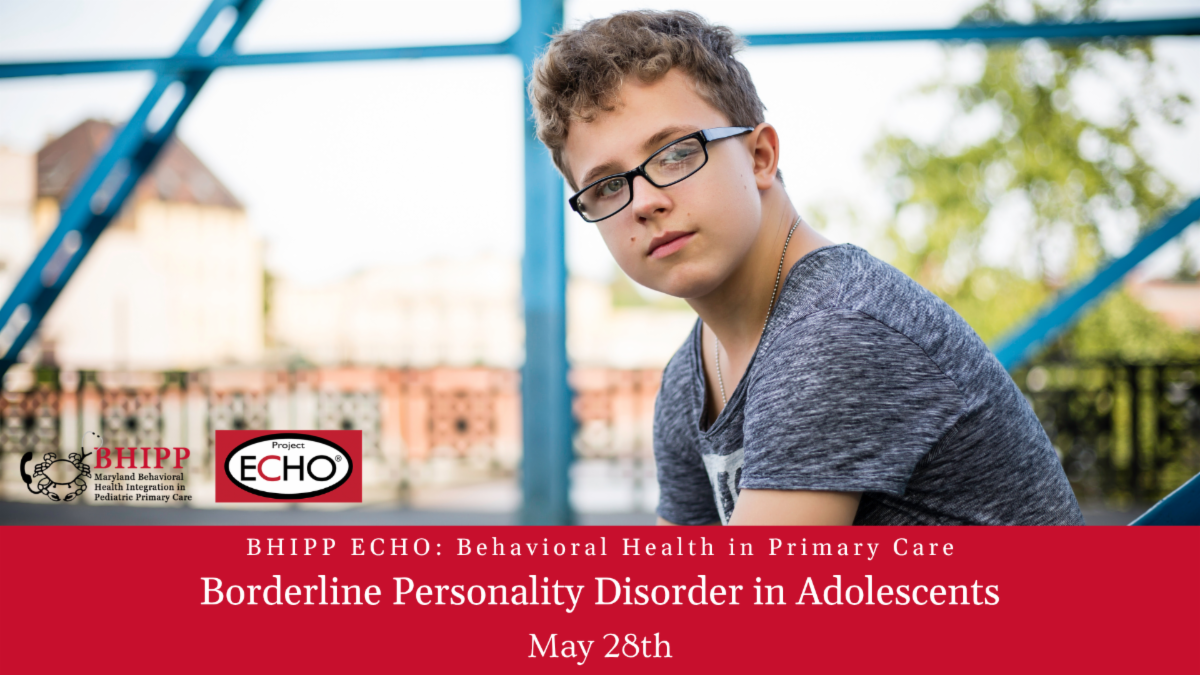
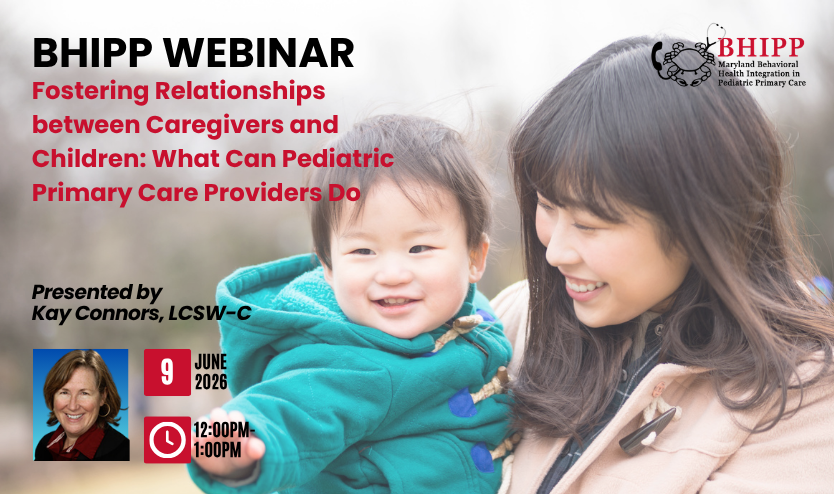
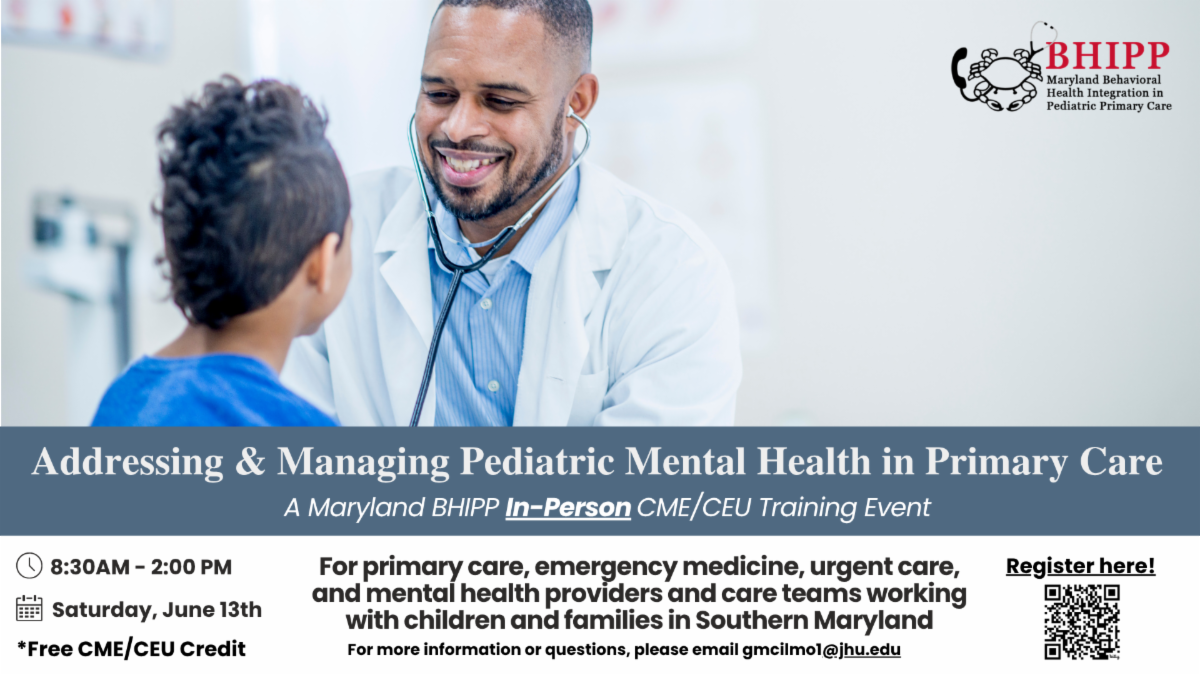
| | Join us for the last BHIPP ECHO Session for Pediatric Primary Care Providers! | | Register for the BHIPP ECHO Series for Pediatric Primary Care Providers! The first session will be held on May 28th from 12:00-1:00pm. Join our multidisciplinary team of child behavioral health experts bimonthly from October 2025 and May 2026 for virtual case-based learning and didactic presentations. Free CEU, CME, and ABP MOC Part 2 credits are available for participation. | | Register for the next BHIPP Webinar! | | Register for the next BHIPP Webinar on June 9th at 12:00pm! BHIPP Webinars are a series of interactive, web-based learning sessions that are a virtual space for pediatric primary care, emergency medicine, and behavioral health providers to connect, learn and share about strategies, practices and resources to promote mental health and resilience among children and families as well as providers. Free CME and CEU credit is available for participation! | | Join us for an in-person CME/CEU training event! | | BHIPP is pleased to offer an in-person, free CME/CEU training event for primary care, emergency medicine, urgent care, and mental health providers and care teams working with children and families in Southern Maryland. A light breakfast and lunch will be provided, as well as opportunities for providers to meet and network. Join us on June 13th from 8:30am-2:00pm at the Hilton Garden Inn Waldorf (10385 O'Donnell Place, Waldorf, MD 20603). | | |
BHIPP is supported by funding from the Maryland Department of Health, Behavioral Health Administration and operates as a collaboration between the University of Maryland School of Medicine, the Johns Hopkins University School of Medicine, and Salisbury University.
BHIPP and this newsletter are also supported by the Health Resources and Services Administration (HRSA) of the U.S. Department of Health and Human Services (HHS) as part of an award totaling $1,379,327 with approximately 20% financed by non-governmental sources. The contents of this newsletter are those of the author(s) and do not necessarily represent the official views of, nor an endorsement, by HRSA, HHS or the U.S. Government. For more information, visit www.hrsa.gov.
Copyright © 2021 Maryland Behavioral Health Integration in Pediatric Primary Care (BHIPP), All rights reserved.
| | | | |