Last week, CMS released its CY2024 proposed rules for physician fee schedule, ambulatory surgery center, and hospital outpatient prospective payment systems schedules. We provided you with our initial high-level summaries for each rule and highlights.
There is some good news, significant amounts of bad news, and potentially ugly news in this proposed fee schedule.
ASIPP is reviewing the proposed rules in depth and will follow up with additional detail. Let us know if you have any questions.
|
|
The agency doesn’t expect its costs will rise significantly.
CMS proposed Thursday to boost payment rates to providers for the virtual care they provide Medicare patients in their homes.
In its proposed physician fee schedule for next year, the agency said that doctors needed additional compensation because they’re now offering a significant amount of telehealth while still maintaining their physical offices.
The agency said doctors’ expenses are consistent with a higher “non-facility” payment rate, which varies by the type of service.
|
|
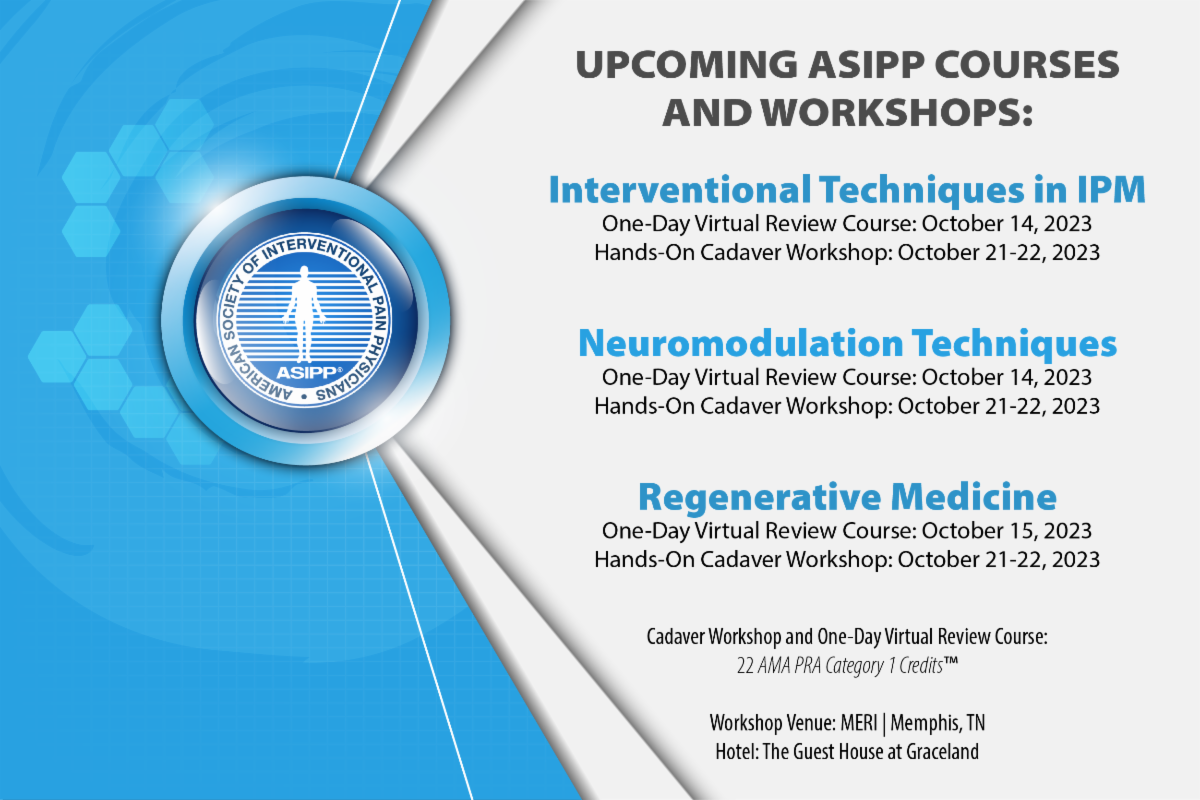
Interventional Techniques in IPM
Review Course & Cadaver Workshop
|
|
Regenerative Medicine
Review Course & Cadaver Workshop
|
|
Committee chair expresses concern about agency's lack of a "predictable coverage pathway"
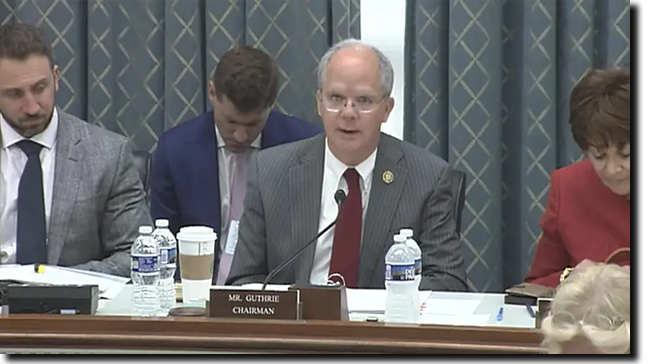
Medicare needs to up its game when it comes to approving coverage for new drugs and devices, witnesses and members of Congress agreed Tuesday at a House hearing.
"Despite the historic advancements in treatments for Alzheimer's disease, the Biden administration has decided to limit access to these therapies through onerous coverage policies that require patients and their providers to take great lengths in order to administer and gain access to these drugs," Rep. Brett Guthrie (R-Ky.), chair of the House Energy & Commerce Health Subcommittee, said at a hearing on evaluating Medicare coverage pathways for innovative drugs. "I remain extremely frustrated by the Biden administration's restrictive approach to addressing this vicious disease."
|
|
Caregivers must have the support they need to feel safe at the bedside
by Karen Coughlin, RN
My son was 14 years old when he asked me if anyone had tried to kill me at work. He is grown now, so it is hard to remember whether, on that specific day, someone had pulled a weapon, punched me, or used some other means to try to end my life. But I wouldn't bet against it.
I was a bedside registered nurse for 34 years. I was punched, bit, kicked, spit on, nearly knifed, and once threatened with a handmade weapon resembling a straight-edge razor. Once, in 2005, a furious 6-foot-4-inch, 275-pound patient struck another patient, bit a health aide, and twice tried to grab me while threatening my life. The patient was restrained, but the fear was traumatizing.
I tried not to talk about these things with my family. I did not want to bring the fear, anxiety, and trauma my co-workers and I were experiencing into my home. Despite my caution, my son had overheard a conversation with my husband. His question struck me to my core. No child should ever have to question their parents' safety at their workplace, right? I'm a nurse; I didn't sign up for this.
|
|
Virtual
ABIPP Part I; ABIPP Path - Combined DCCPM/CSM virtual exam; ABIPP Competency Exam in IPM; ABIPP Competency Exam in Regenerative Medicine
Memphis, TN
ABIPP Part II - Practical Portion; ABIPP Competency Exam - Practical Portion; ABIPP Regenerative Medicine Competency Exam - Practical Portion
|
|
Key takeaways:
- Physician providers and management companies must be mindful of corporate practice of medicine prohibitions.
- Management interactions should be carefully structured.
Many states have corporate practice of medicine prohibitions.
Corporate practice of medicine (CPOM) prohibitions intend to protect the independent medical judgment of physicians from the undue influence of profit-seeking corporations, and it is important that physician providers and their management companies be mindful of applicable CPOM prohibitions to ensure compliance with the law. As a cautionary tale, recently a jury in Travis County, Texas, issued a $9.3 million judgment against a private equity-backed hospitalist staffing company for breach of contract; the breach largely resulted from the company’s failure to comply with Texas’s CPOM prohibitions. The case was unusual because the court awarded monetary damages (it is more common that such a contract be rescinded).
|
|
Key takeaways:
- Researchers found 71% of all opioids consumed in the study period came in the first 3 postoperative days.
- By day 4, 63% of patients had discontinued their opioid use.
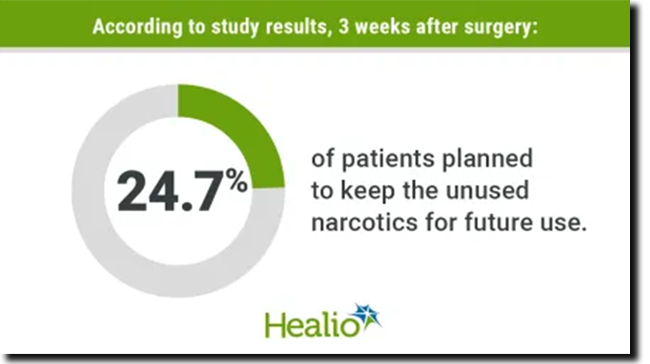
Most prescribed opioids remain unused after elective outpatient arthroscopic procedures, and one-quarter of patients plan to keep remaining medication for future use, according to results of a study presented here.
“The overall message remains the same and the majority of opioids prescribed following these procedures went unused, leaving an average of 11 5-mg oxycodone pills remaining after every case,” William Johns, MD, said during a presentation at the American Orthopaedic Society for Sports Medicine Annual Meeting.
|
|
Opioid initiation for older adults with dementia is linked to a significantly increased risk of death, especially in the first 2 weeks, when the risk is elevated 11-fold, new research shows.
"We expected that opioids would be associated with an increased risk of death, but we are surprised by the magnitude," study investigator Christina Jensen-Dahm, MD, PhD, with the Danish Dementia Research Centre, Copenhagen University Hospital, Rigshospitalet, Denmark, told Medscape Medical News.
"It's important that physicians carefully evaluate the risk and benefits if considering initiating an opioid, and this is particularly important in elderly with dementia," Jensen-Dahm added.
|
|
Since May, physicians in 21 states are no longer being asked broad mental health or substance abuse questions when they apply for a medical license. That's a major shift that could ease doctors' concerns about seeking treatment, according to the Dr. Lorna Breen Heroes' Foundation, a physician burnout prevention group that tracks such changes.
The foundation was named in honor of Lorna Breen, MD, an emergency medicine physician in New York City who died by suicide in April 2020 as the pandemic unfolded. The rate of suicide among physicians is twice that of the general population.
"The issue is not whether a physician may have had a serious or a mild mental illness...but whether they have any disabilities that may affect their current work," said Peter Yellowlees, MD, distinguished professor of psychiatry at the University of California, Davis. "Asking about any past mental illness episodes, which may have occurred years previously...is simply discriminatory and is an example of the stigma associated with mental disorders."
|
|
- ASIPP Members Only Site Information - |
|
-
To log in for the first time you will need to click “forgot password” at the bottom of the login window.
- Check your email and then log in as directed.
-
If you have problems logging into your account, click here.
|
|
Pain Medicine Case Reports (PMCR) and Editor-in-Chief Alaa Abd-Elsayed, MD, PhD would like to invite you to submit case reports and case series to the PMCR journal. Your article will be published free of charge.
Open access journals are freely available online for immediate worldwide open access to the full text of published articles. There is no subscription fee for open access journals. Open access journals are no different from traditional subscription-based journals: they undergo the same peer-review and quality control as any other scholarly journal.
Interested in becoming a member of the PMCR Editorial Board?
Editorial board members are asked to review 2-6 manuscripts per year. Please submit your most up-to-date CV to sgold@asipp.org for consideration.
For more information or to submit your articles, click here.
|
|
| CASE REPORT |
Sara Heard, DO, and Jerry Lin, DO
Abstract
BACKGROUND: Spinal cord stimulation (SCS) is commonly used for the management of chronic pain conditions, such as intractable axial and radicular back pain, complex regional pain syndrome, and painful peripheral vascular disease. Patients have had adverse complications with SCS trials and permanent implants. Cases of contact dermatitis from SCS devices have been reported, but a systemic allergic reaction to an SCS trial has not yet been published to date.
CASE REPORT: A 52-year-old woman with complex regional pain syndrome type II and a history of a presumed infectious reaction to a previous SCS trial 8 years prior presented with chronic right L5, S1 radicular pain. Having failed conservative measures, she underwent a repeat SCS trial. The lead was placed at the T8 vertebral body, migrated several days later to the T9 vertebral body, and was subsequently adjusted back to T8 under fluoroscopic guidance. The patient reported improvement in her back and leg pain. Three days later, she presented to the emergency department with subjective fever, headache, rigors, chills, diaphoresis, nausea, vomiting, and diarrhea. The lead was removed, and the patient’s acute symptoms resolved within 48 hours.
CONCLUSIONS: Systemic allergic reactions to SCS can be significant and lead to device removal despite improvement in pain symptoms. Further case reports and studies are needed to elucidate the risks associated with SCS placement, such as allergic reaction, infection, and neurologic injury.
KEY WORDS: Case report, spinal cord stimulator, chronic pain, allergic reaction
|
|
| RETROSPECTIVE STUDY |
Di Zhu, MD, Jun-Nan Hu, MB, Lei Wang, MB, Wei Cui, MD, Ji-Chao Zhu, MD, Song Ma, MD, Bao-Peng Tian, MD, and Bao-Ge Liu, MD, PhD
Abstract
BACKGROUND: In recent years, many extrapedicular puncture methods have been applied to percutaneous kyphoplasty (PKP) in the treatment of osteoporotic vertebral compression fractures (OVCFs). However, these techniques were generally complex and had the risk of some puncture-related complications, which greatly limited the wide applications in PKP. Finding a safer and more feasible extrapedicular puncture method was rather important.
OBJECTIVES: To evaluate the treatment effect of modified unilateral extrapedicular PKP in patients with lumbar OVCFs clinically and radiologically.
STUDY DESIGN: Retrospective study.
SETTING: Department of Orthopedic Surgery, an affiliated hospital of a medical university.
METHODS: Patients who were treated by modified unilateral extrapedicular PKP in our institution, from January 2020 to March 2021, were retrospectively enrolled. The degree of pain relief and functional recovery were evaluated by the Visual Analog Scale (VAS) and the Oswestry Disability Index (ODI), respectively. Radiologic results were assessed including anterior vertebral height (AVH) and kyphotic angle. In addition, volumetric analysis was performed to evaluate bone cement distribution. And the intraoperative data and complications were also recorded.
RESULTS: A total of 48 patients with lumbar OVCFs were successfully treated by modified unilateral extrapedicular PKP. All patients experienced a significant decrease in VAS and ODI scores after surgery (P < 0.01) and maintained the statistical significance until the last follow-up (P < 0.01), as well as significant AVH restoration (P < 0.01) and kyphotic angle correction (P < 0.01) compared with preoperative corresponding values. Volumetric analysis showed that all cases of bone cement diffused across the midline of the vertebral body (VB), in which 43 patients (89.6%) presented optimal contralateral distribution with good or excellent bone cement spread. In addition, 8 patients (16.7%) experienced asymptomatic cement leakage, and no other severe complications, such as injuries to segmental lumbar arteries and nerve roots, were found.
LIMITATIONS: A noncontrol study with a small patient population and short follow-up duration.
CONCLUSIONS: Modified unilateral extrapedicular PKP, in which the puncture trajectory was advanced through the bottom of Kambin’s triangle to or across the midline of VB for proper bilateral cement distribution, greatly alleviated back pain and restored the morphology of fractured vertebrae. It seemed to be a safe and effective alternative applied to treat lumbar OVCFs with appropriate patient selection.
KEY WORDS: Lumbar, osteoporotic vertebral compression fractures, extrapedicular, percutaneous kyphoplasty
|
|
| COHORT STUDY |
Jung Eun Kim, MD, PhD, Seong Yoon Koh, MD, Heather Swan, BA, Sayada Zartasha Kazmi, MD, Hyun Jung Kim, PhD, Hyeong Sik Ahn, MD, PhD, and Seong Soo Hong, MD
Abstract
BACKGROUND: Although several studies have examined the epidemiological features of vertebral compression fractures (VCF) among elderly patients, few studies have reported the epidemiology of VCF among younger individuals.
OBJECTIVE: To examine trends in the incidence and mortality of VCF in both the old (>= 65 years) and young (< 65 years) age groups. This study aimed to investigate the incidence and mortality of VCF among all age groups in Korea.
STUDY DESIGN: Population-based cohort study.
SETTING: A nationwide, population-based setting.
METHODS: Using the Korean National Health Insurance database, which has complete population coverage, we identified patients diagnosed with VCF between 2005 to 2018. Differences in incidence, survival and mortality were compared across groups using Kaplan-Meier analysis and Cox regression for all age groups and both genders.
RESULTS: We identified a total of 742,993 VCF patients and the annual incidence was 140.09/100,000 individuals. Although the incidence of VCF was significantly higher in the older age compared to younger age group (556.38/100,000 vs. 44.09/100,000 individuals), the mortality rate ratio for VCF patients was higher among younger compared to older individuals (old: 1.59 vs. young: 2.87). In our multivariable-adjusted analysis, the hazard ratio for multiple fractures, traumatic injury and osteoporosis were higher in patients aged < 65 years compared to patients aged >= 65 years, suggesting that the impact of these clinical variables on mortality is more significant in the younger age group.
LIMITATION: A limitation of this study was its lack of information on clinical features, such as disease severity and laboratory data. The precise cause of death of VCF patients could not be confirmed from the study database.
CONCLUSIONS: The mortality rate ratio and hazard ratio were significantly higher among younger patients with VCF, indicating the need for further research on VCF in younger age groups.
KEY WORDS: Cohort study; hazard ratio; incidence; mortality; mortality rate; mortality rate ratio; population-based cohort study; vertebral compression fracture
|
|
ASIPP is now in collaboration with Curi Medical Liability Program
Since this malpractice insurance program officially launched in November 2018, ASIPP has signed up hundreds of providers with an average savings of 30%. This is professional liability insurance tailored to our specialty and will stand up for us and defend our practices.
Curi is a full-service advisory firm that serves physicians and their practices. Their valued advice is grounded in your priorities and elevated in your outcomes. They are driven by a deep understanding of your specific circumstances in medicine, business, and life. To read a few important points to keep in mind about the program, including discounts, administrative defense, cyber coverage, aggressive claims handling, and complimentary risk management CME activities, visit our website.
|
|
ASIPP® has formed a partnership with Henry Schein and PedsPal, a national GPO that has a successful history of negotiating better prices on medical supplies and creating value-added services for independent physicians. Working with MedAssets, PedsPal provides excellent pricing on products like contrast media that alleviate some of the financial pressures you experience today.
|
|
ASIPP® is now offering our members the benefit of a unique revenue cycle management/ billing service.
We have received a tremendous amount of interest in the ASIPP® billing and coding program.
Click here to learn more about the negotiated rate for practices and more!
|
|
|
up-to-date news related to you, your practice, and your patients!
|
|
|
|
|
|
|