One Month After Our Move: CID's Transition to Independence | | |
On July 1, the Center For Inclusive Democracy (CID) transitioned to a national independent research center. As we continue building on the foundation we developed at UC Davis and USC, we are ensuring that our nonpartisan work continues to grow with the focus, integrity, and stability that this moment for our democracy demands. Read our full statement on the transition here.
Moving forward, we are continuing to conduct the innovative and rigorous research for which we’re known, in order to advance inclusive civic and political representation. We believe that the current democracy landscape demands new and unique strategies, as well as data tools that can empower inclusive and equitable participation. That’s why a key component of our work going forward is expanding community education and partnerships. We will further the reach and impact of our research with dedicated educational outreach and communication programs, complemented by direct data support.
Check out the three main areas of CID's research and action work:
| |
Independent Research
CID is expanding its ability to conduct independent, applied research designed to create a better understanding of the urgent challenges and opportunities for greater engagement and representation in U.S. democracy. Through consultation with local, state and national stakeholders, CID will also seek to identify the urgent “what’s next” in the field of engagement, exploring critical overarching questions related to how our nation moves beyond its current democracy crisis to see a truly inclusive and representative democracy.
| |
Education and Outreach
We are extending our educational reach and impact by creating dedicated outreach and communications programs designed to further inform state and community-level engagement efforts, as well as policymaking conversations. This work includes outreach to (and often partnership with) four main audiences: 1) Nonpartisan statewide, regional and community-based organizations, 2) Local elected decisionmakers, 3) State legislative staff/members and 4) Media (traditional and new).
| |
Supporting Nonpartisan Engagement
Throughout our history, we have regularly supported nonpartisan civic engagement groups and worked with local decision-making bodies to help facilitate positive change in their communities through the power of data. Typically, this work involves customized data presentations, trainings and consultations to both statewide and local stakeholder groups. CID is now expanding and more widely offering direct, customized data support to groups and organizations seeking to bring about a more engaged and representative democracy.
| | As we move into our new era, CID is honored to welcome three new members to our National Advisory Board: | | |
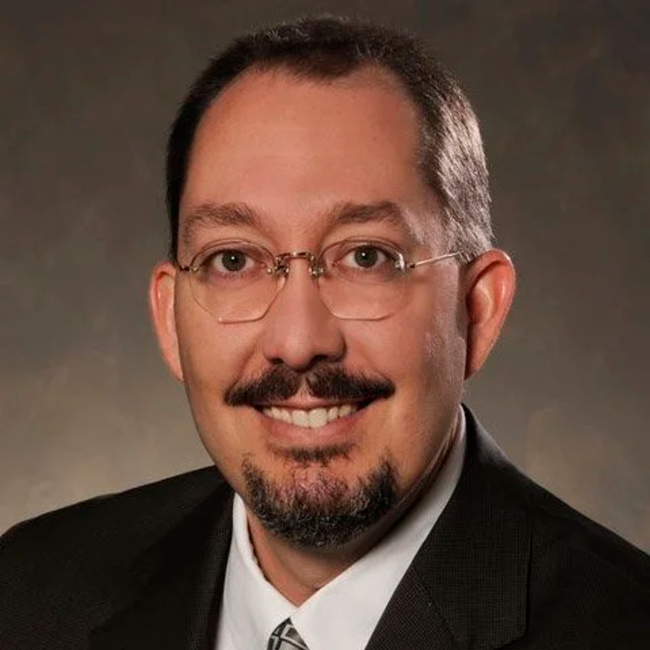
Judd Choate
Director, Division of Elections, Colorado Department of State
| | |
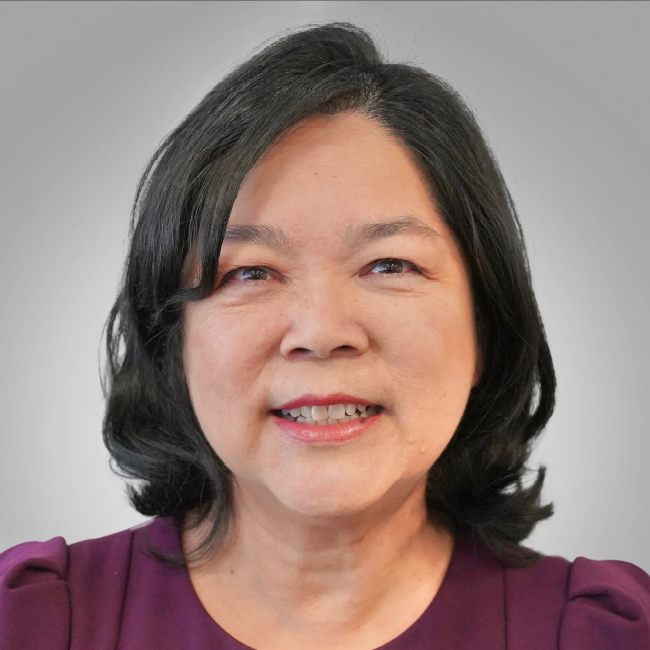
Kathay Feng
Senior Deputy, Los Angeles County Registrar-Recorder/County Clerk
| | |
Nate Kaplan
Former SeePolitical Founder and Director
| | Last month we also welcomed three new members to the National Advisory Board: | | |
Clarissa Martinez De Castro
Vice President, Latino Vote Initiative
UnidosUS
| | |
Ditas Katague
Former Associate Director for Communications and Engagement at the U.S. Census Bureau
| | |
Tova Wang
Director of Research Projects in Democratic Practice, Ash Center for Democratic Governance and Innovation, Harvard Kennedy School of Government
| | |
In partnership,
Mindy Romero, Ph.D.,
CID Founder and Director
| | Celebration of CID's New Era | | |
CID celebrated its transition into an independent research organization at the 2026 Election Science, Reform, and Administration Conference in Phoenix, AZ. The conference brought together election experts from academia, state and local government, non-profits, and research institutes to develop empirical approaches to the study of how law and administrative procedures affect the running of free and fair elections in the United States.
As we continue our transition to independence media outlets have taken an interest in our next chapter. Listen to recent reporting that has discussed CID's transition:
| | |
CapRadio
Vicki Gonzalez, Insight's host, noted that for more than a decade, the Center for Inclusive Democracy (CID) has been a leading nonpartisan resource for understanding voting behaviors and barriers to the political process. CID recently announced its transition from academia to an independent national organization. Listen to Mindy Romero discuss more about what this means for voters as they look to engage with civic resources during this midterm election year.
| | |
SideBar: Optimism in Action
SideBar: Optimism in Action podcast welcomed Dr. Mindy Romero, founder and director of the Center for Inclusive Democracy. Learn about why CID believes that inclusive civic and political participation is critical in addressing disparities in social and economic well-being, and can improve health, education, and employment outcomes, and how CID will implement this belief as we move into our independence.
| | |
Election Protection: 866-Our-Vote
Call or text the Election Protection Hotline (866-OUR-VOTE) and speak with a trained Election Protection Volunteer for anything you need to know about elections in 2026. This program provides an important place for people to get involved and to help stop voter suppression by serving as a nonpartisan Election Protection volunteer at this link.
English: 866-OUR-VOTE/866-687-8683
Spanish/English: 888-VE-Y-VOTA/888-839-8682
Asian Languages/English: 888-API-VOTE/888-274-8683
Arabic/English: 844-YALLA-US/844-925-5287
| | |
On July 16th MIT Election Data + Science Lab (MEDSL) launched the Election Resource Hub. The Hub will connect researchers, policymakers, and election officials directly to evidence-based policy and practice recommendations that have proven effective, either through rigorous academic study or real-world implementation.
| | |
The Elections Group's Pocket Guide
The Election Group's Pocket Guide provides concrete steps and resources that Americans can use to help protect the vote and the elections process, everything from checking one's voter registration to knowing the laws when it comes to law enforcement at the polls. It is intended for individual voters and organizations whose actions can support election workers in their efforts to run secure, efficient and fair elections.
| | |
CID's Voting Location and Outreach Tool
The Voting Location and Outreach Tool is designed to provide assistance to county election offices and communities in the placement of voting locations. The Voting Location and Outreach Tool serves fourteen states representing 51% of the U.S. population: Arizona, California, Colorado, Florida, Georgia, Hawaii, Michigan, Nevada, North Carolina, Ohio, Pennsylvania, Texas, Virginia and Wisconsin.
| | On July 1, the California Voting Rights Act (CRVA) of 2026, advanced out of the Assembly Elections Committee. The act will enshrine voting rights protections into state law. Governor Newsom and legislative leadership also announced of tens of millions of dollars secured for voter outreach and protections. These efforts were led by the California Democracy Partnership and its membership of racial justice, civil rights, labor, and community organizations. | | Our elections are secure and trustworthy, but rumors and lies on social media abound. The Brennan Center for Justice disputes 7 myths about our elections and separates fact from fiction. | | The Safeguard American Voter Eligibility (SAVE) Act's stated goal is to make sure only U.S. citizens vote in federal elections, which is already a law that is being enforced. What the SAVE Act would do is make every American have to appear in person at an election office with qualifying documents. Online voter registration, which 42 states currently rely on, would be upended or eliminated. | | Nearly 150,000 California voters had their mail-in ballots rejected for the state’s June primary. Voting experts suspect the main problem is postmarks on ballots that came after Election Day, making them ineligible to be counted. | | The LWVC and the LWV of Redding Area recently filed an amicus brief supporting the state’s legal challenge to Shasta County’s Measure B, which attempts to ban electronic voting equipment and mandate counting ballots by hand. | | |
Click here for more information and the event recording.
| | |
Click here for more information and the event recording.
| | Click here to see more past CID events. | | Click here for all upcoming CID events. | | |
Nearly 300,000 of California’s youngest eligible voters haven’t registered
In California, while around 517,000 18-year-olds are eligible to vote every year, about 43% are registered to do so, according to the Civics Center. Mindy Romero says there is room to improve in our civics education to make sure young people are taught how to vote, and young organizers are the most effective at bridging that education gap.
| | |
California Democrats, experts reject Trump's election fraud claims
California Democrats and election experts are pushing back against President Donald Trump's latest claims about election fraud. Mindy Romero says these claims are simply an attempt to undermine trust in our elections. There has been no significant level of voter fraud in the United States and no election results have been changed because of it, says Romero.
| | For more information, contact Mindy Romero at: mindyromero@cidus.org | | Center for Inclusive Democracy | | |
The Center for Inclusive Democracy's mission is to improve the social and economic quality of life in U.S. communities by producing non-partisan, data-driven research that informs policy and on-the-ground organizing efforts through education and outreach for a more engaged, transparent and representative democracy.
CID conducts a range of national and state research initiatives exploring voting behavior, civic engagement, voting rights, electoral reforms, and deliberative dialogue. CID research is intended to inform and empower a wide range of policy and organizing efforts, supporting equity and well-being throughout the nation.
| | | | |