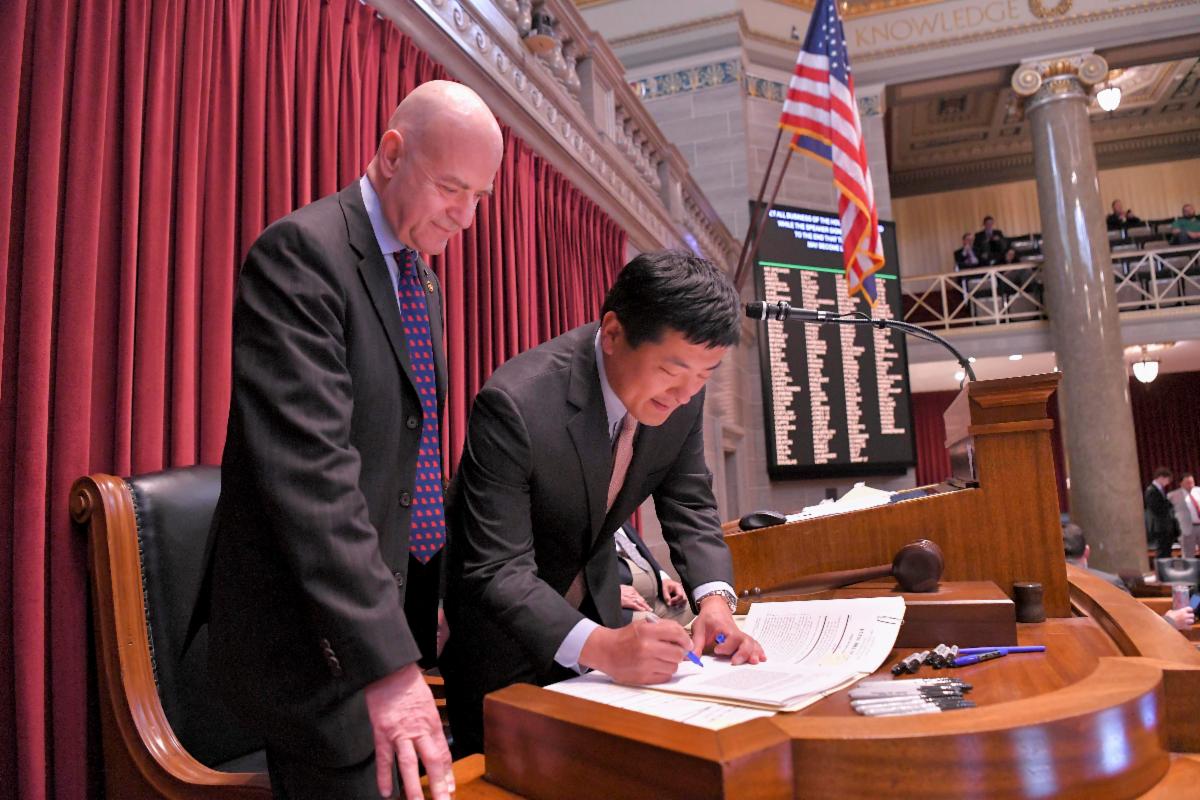
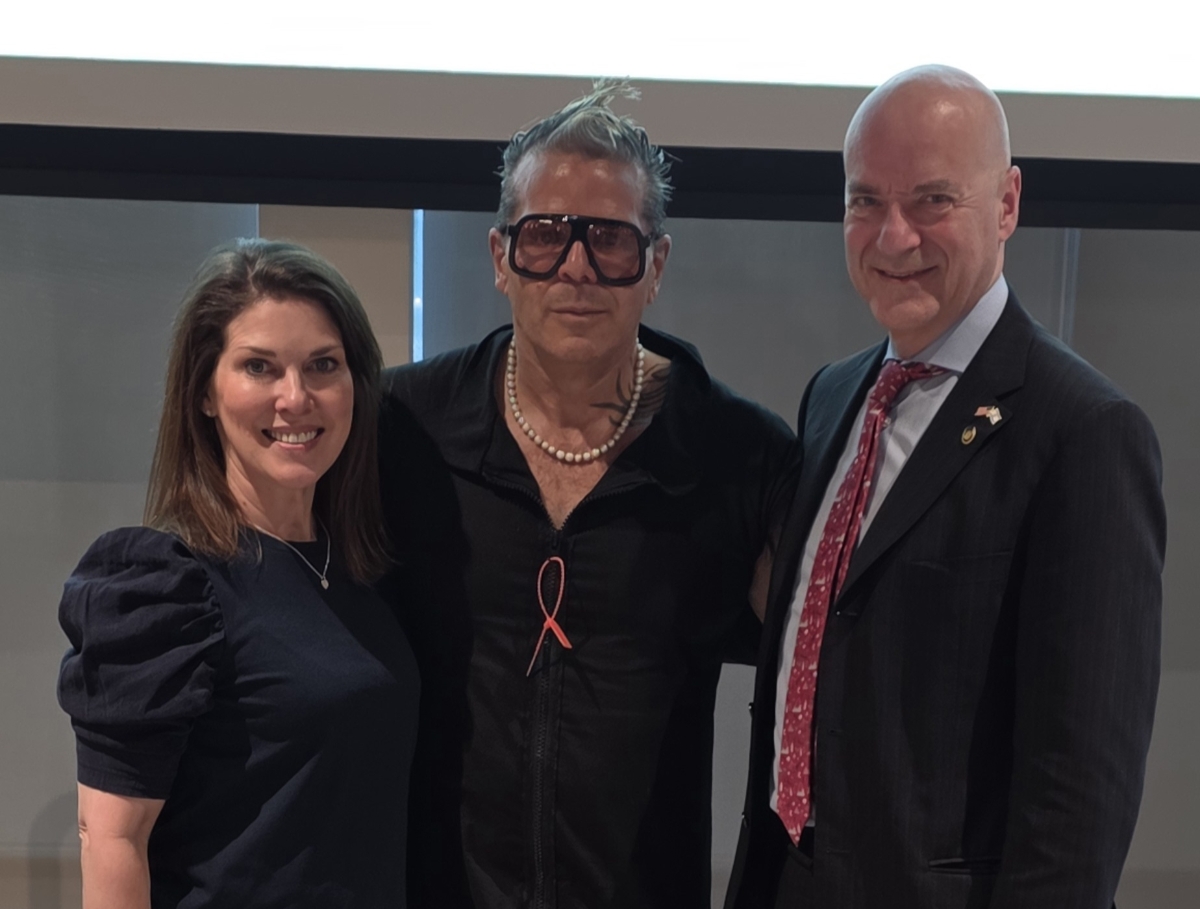
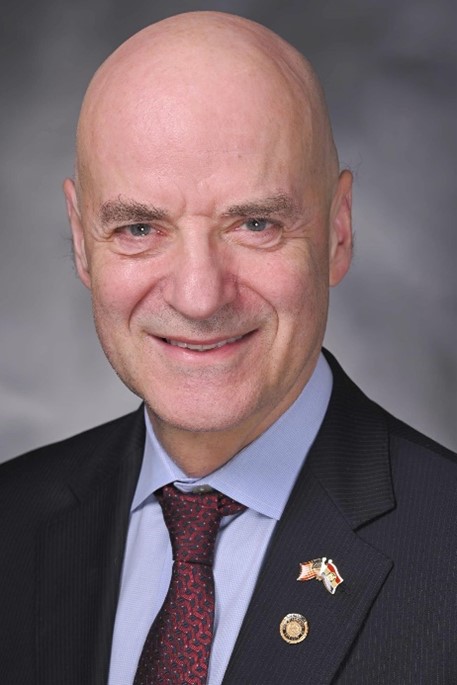
Speaker Jon Patterson, MD has signed our bill, House Bill 2061, on Jewish student safety and antisemitism in K-20 public educational institutions and sent it to Governor Kehoe for his signature. The Governor plans to sign the bill on April 23rd at his Capitol office. Once signed, the legislation will take effect on August 28, 2026. Our Jewish students can be assured that the Missouri Legislature has their back.


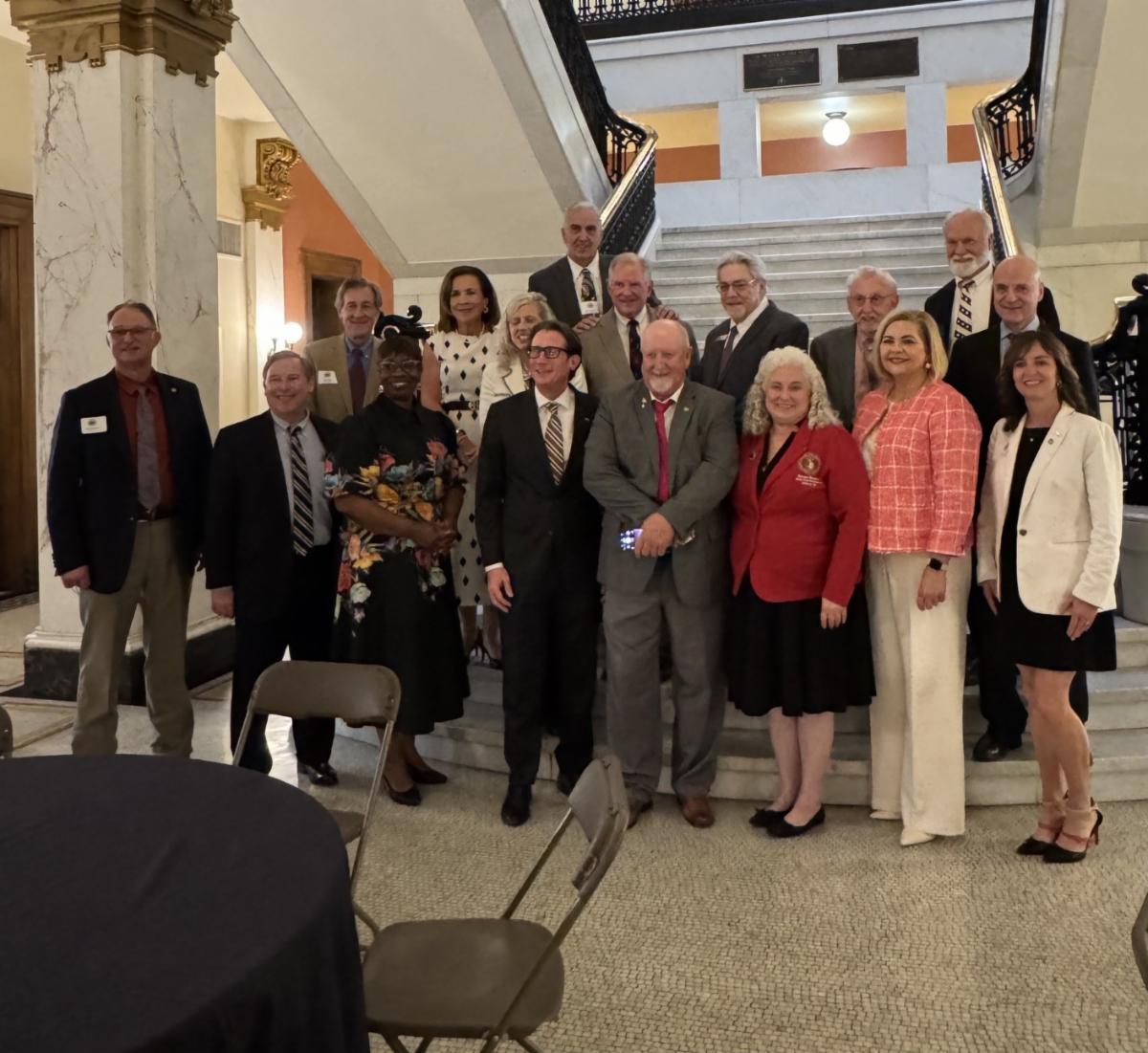
I joined about a dozen of legislators at the Missouri Supreme Court to meet with justices and enjoying delicious homemade pies, a long annual tradition.


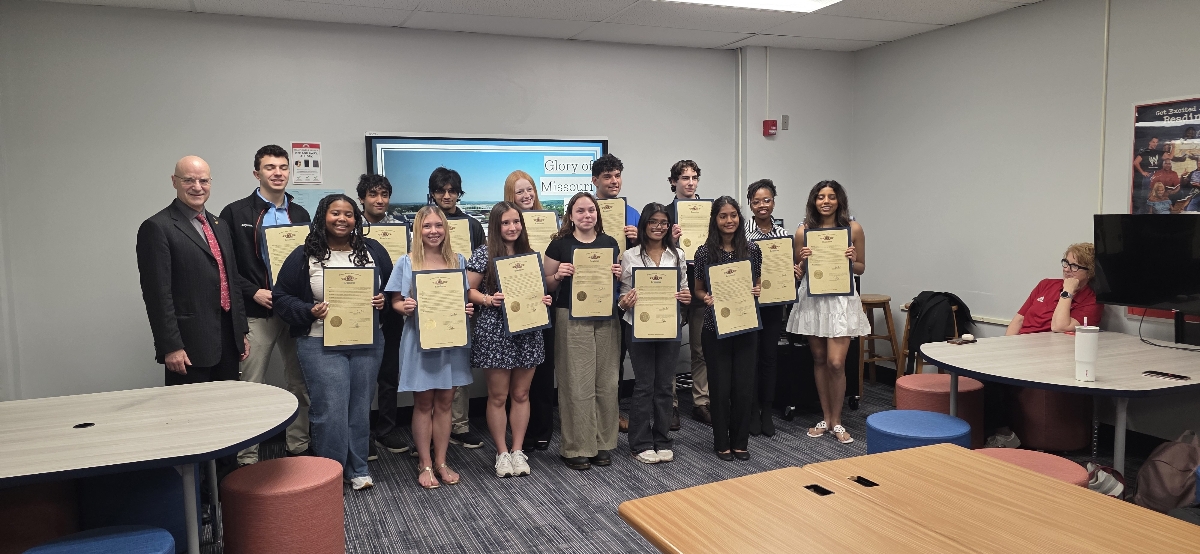
I was honored to present the Missouri Glory Awards to 14 Parkway West High School students. The awards are based on the principles engraved in the House Chamber: Knowledge, Liberty, Equality, Law, Justice, Fraternity, Education, Progress, Honor, Truth, Virtue, Temperance, Enterprise, and Charity. Truly a group of students representing the best and brightest.


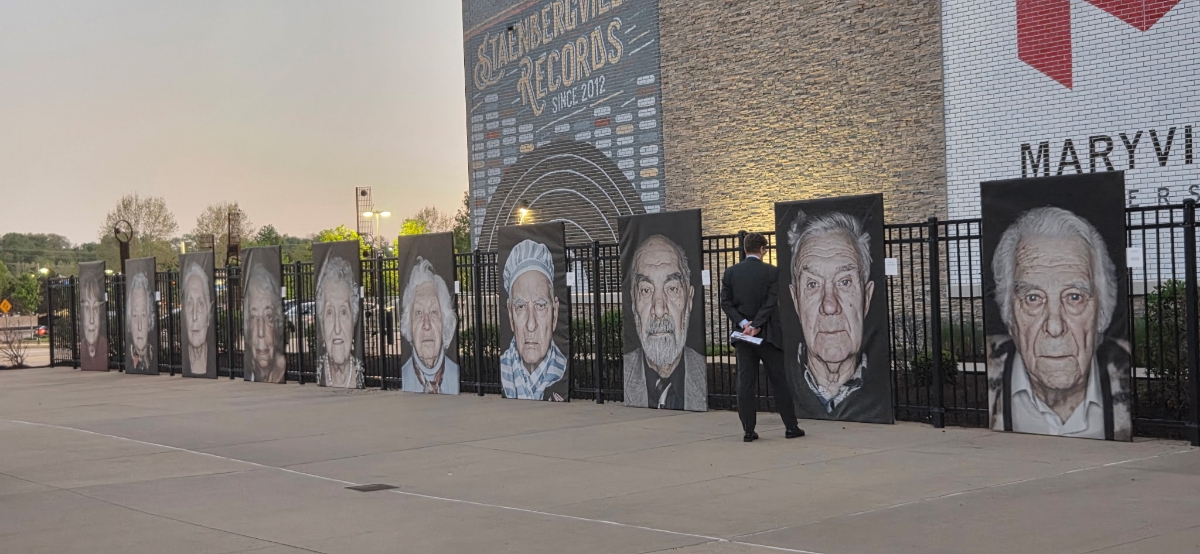
Carrie and I attended an exhibition by Luigi Toscano in Chesterfield that consists of dozens of larger than life portraits of Holocaust survivors. A truly moving experience. The exhibit is in place April 16-May 3, 2026 at The District in Chesterfield.


HB 2404 prohibits deed restrictions on public school buildings that prohibits their sale or lease to public charter schools. It was voted out of the Senate Education Committee. It is also part of HCS SS SCS SB 973 that has passed out of House General Laws Committee.

House Gives Final Approval to Measure Targeting Abusive Website Accessibility Lawsuits

Legislation aimed at curbing abusive accessibility-related lawsuits cleared its final House vote with passage of HCS SS SCS SBs 907, 1154 & 1272.

The measure creates the “Act Against Abusive Website Access Litigation,” establishing a new legal process for courts to evaluate lawsuits alleging website accessibility violations. Under the act, the Attorney General, the state, political subdivisions, or private defendants targeted by such litigation may bring a civil action seeking a judicial determination of whether the underlying lawsuit constitutes abusive litigation. Courts are instructed to evaluate the “totality of the circumstances,” with particular attention to whether the primary purpose of the suit is to extract payment based on the cost of defense rather than to remedy an alleged violation.


The bill also creates a 90-day cure period that applies in certain cases. If a defendant receives notice of an alleged website access violation and makes a good faith effort to correct it within 90 days, there is a rebuttable presumption that any subsequent claim may be considered abusive. However, this presumption does not apply if the violation is not corrected within the 90-day window after written notice or service of a petition.


The Attorney General is authorized to intervene in cases or initiate actions on behalf of Missouri residents or governmental entities facing alleged abusive litigation, and may issue guidance on identifying abusive practices. Courts may award attorney’s fees, costs, and additional sanctions, including punitive damages up to three times the attorney’s fees awarded, against parties found to have engaged in abusive litigation practices.


The act includes a sunset provision tied to potential federal action, expiring for covered entities if the U.S. Department of Justice issues standards governing website accessibility under the Americans with Disabilities Act. It also applies retroactively to cases pending as of August 28, 2026, with its 90-day correction period available to qualifying defendants in ongoing litigation. With House approval, the bill now heads back to the Senate.


House Advances Expanded Commercial Driver Standards and Enforcement

The Missouri House has passed HCS HB 2741, a comprehensive proposal tightening requirements for commercial motor vehicle operators and increasing accountability for motor carriers.


The bill establishes minimum English language proficiency standards for drivers, requiring them to communicate with the public, understand traffic signs, respond to law enforcement, and complete required records. Drivers who fail to meet those standards face escalating penalties and are placed out of service until compliance is demonstrated.


Additional provisions address documentation requirements for certain drivers operating under nondomiciled commercial licenses, requiring proof of lawful work authorization or citizenship while driving. Violations carry criminal penalties and fines, and drivers may not continue operating until proper documentation is provided.


The legislation also creates a new offense for operating a commercial vehicle without proper federal work authorization. Beyond individual penalties, the bill places significant responsibility on commercial motor carriers, requiring them to verify that drivers are legally authorized to operate. Carriers that fail to do so face substantial fines, with higher penalties tied to serious injury or death resulting from violations, and potential suspension or revocation of their authority to operate in the state for repeat offenses.


The bill further outlines procedures for handling stranded vehicles and cargo when violations occur, ensuring continuity of transport while maintaining enforcement standards. It also includes provisions preventing companies from avoiding penalties through restructuring or rebranding. The measure now heads to the Senate for consideration.

House Expands Scope of Pharmacy Practice

The House has approved HCS HB 3009, a wide-ranging update to Missouri’s pharmacy laws. The bill adjusts how pharmacists can administer vaccines, shifting authority to regulatory boards to determine which immunizations are permitted.


It also expands pharmacists’ role by allowing them to prescribe certain medical devices and provide medication therapy services under updated rules. Additional provisions address emergency flexibility for pharmacies, out-of-state licensing, and dispensing protocols for specific medications.


House Establishes Pediatric Disease Research Task Force

The Missouri House has passed HCS HB 2740, creating a statewide task force focused on advancing research into pediatric and genetic diseases. The group will include lawmakers and appointees from across the medical and research communities, with a mandate to meet regularly and report findings to the General Assembly.


The task force will track research efforts, funding, and outcomes, while also offering policy recommendations. The initiative is structured as a temporary effort, with a sunset set for the end of the decade.


“Mason’s Law” Aims to Improve Law Enforcement Interactions

HCS HB 3175 introduces a voluntary designation for individuals who may have difficulty communicating with law enforcement due to medical conditions or disability. The designation would be accessible to officers through state systems during traffic stops or other interactions. In addition, the bill calls for training materials to help officers better recognize and respond appropriately in these situations.


House Revises Animal Welfare Laws

The House has passed HB 2436, a wide-ranging update to Missouri’s animal welfare statutes. The bill creates a new offense for filing false reports of animal abuse and strengthens penalties for severe neglect, including cases involving starvation. It also revises standards for animal care and control, outlines updated procedures for impounding animals, and adjusts legal responsibilities for owners and agencies during abuse investigations.


Court Upholds MOScholars Program in School Choice Ruling

A Cole County Circuit Court has upheld Missouri’s MOScholars program, rejecting constitutional challenges and allowing the education scholarship initiative to continue.


In its decision, the court found that the plaintiffs lacked standing to bring the case and dismissed all claims on their merits. The ruling clears the way for continued distribution of scholarship funds through the Missouri Empowerment Scholarship Accounts (ESA) Program.


The program, funded by a $50 million appropriation approved by the General Assembly, provides financial support to families for education-related expenses such as tuition, tutoring, and specialized services. It currently serves thousands of students across the state.


The decision marks a significant legal victory for the program, which has faced ongoing scrutiny since its expansion, and ensures its continued operation moving forward.

Committees

Economic Development

Emerging Issues

Health and Mental Health

Professional Registration and Licensing

Joint Committee on Tax Policy

Joint Committee on the Life Science (Chair)

Please feel free to contact me. My legislative assistant Mirhad Hasanovic and I would be happy to help with any issues you might have with the State of Missouri.


The District 89 State Representative Office is located at the Missouri State Capitol, 201 W Capitol Ave, Suite 201G, Jefferson City, MO 65101. During legislative session, the office is open Monday-Thursday, 8:00am-5:00pm.


I look forward to hearing from you. My door is always open. If anyone you know may want to join this email update communications list please share this link with them to easily join at Capitol Report Sign-up.


Thank You,


Missouri State Representative, District 89

George Hruza, MD MBA

573-751-1544

George.Hruza@house.mo.gov

Facebook  X  Instagram

Paid for by Hruza for Missouri, Kelly Wuennenberg Treasurer