|
A Moment with Ed...
11/11/2026
In October 2026, the Public Religion Research Institute in Washington, D.C., released a survey of American values that it conducted in partnership with the Brookings Institute. For the first time, the report included findings on empathy. There is good news and bad news.
The good news is that most religious groups in the United States believe that empathy is “a foundational moral value” for a “healthy society” by margins of approximately 3-1. That includes most religiously unaffiliated people, adherents from non-Christian religions, Jews, white mainline Protestants, and most Christians of color.
The bad news is that only 42% of white evangelicals think that empathy is an important human value. That suggests that less than half of your neighbors attending one of the large evangelical churches in town consider empathy an important human virtue. It is hard to believe that any group calling itself “Christian” could regard compassion as unnecessary. That “love your neighbor” thing is not negotiable. The Bible teaches extensively about compassion. See, for example: Matt. 9:26;Matt. 14:14; Luke 10:33,34; Romans 12:15; Heb. 4:15; 1Cor. 12:26; Eph. 4:32; Coll. 3:12; 1 Peter 3:8; and 1 John 3:16 . . . “God is love, and those who abide in love abide in God.”
The survey also finds that skepticism about the social value of empathy is strong among Christian nationalism*Adherents. In recent years, Christian nationalists have attacked empathy as“toxic.” Six in ten Adherents (59%) believe empathy can become dangerous when it leads people away from building a society guided on “God’s truth”, with half strongly agreeing with the statement (50%). By contrast, nearly all Christian nationalism Rejecters (94%) say empathy is a foundational moral value for a healthy society.
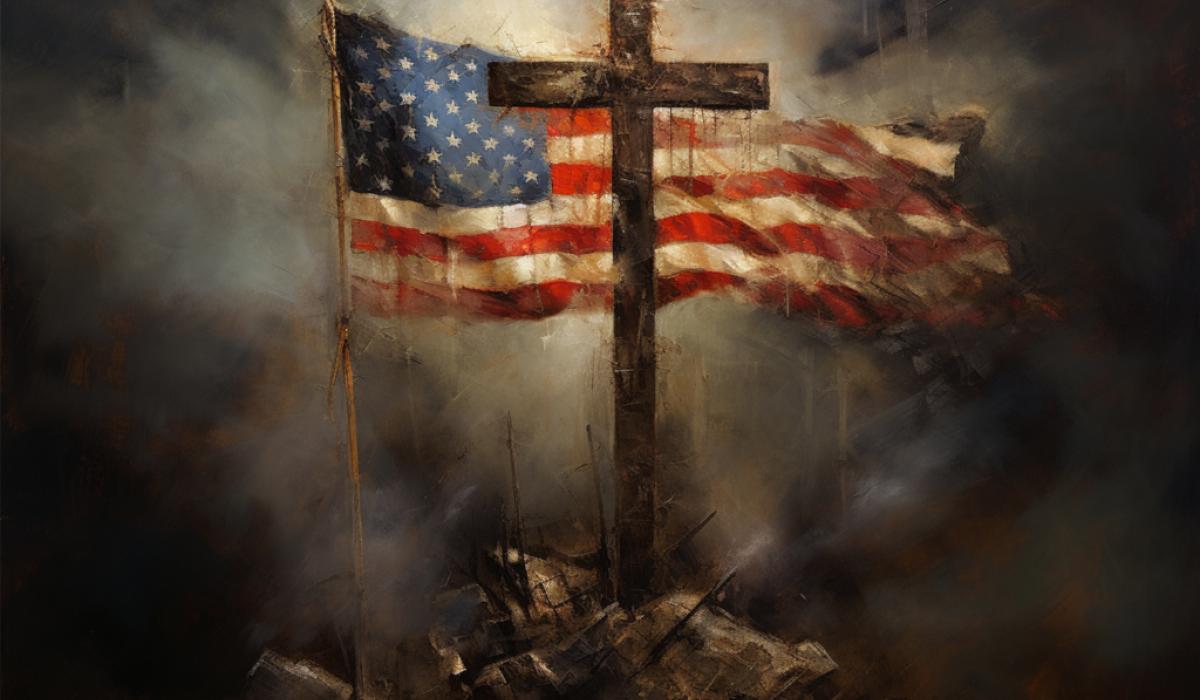
Some people may conflate Christian nationalism and Christianity because they both use the symbols and language of Christianity, such as a Bible, a cross, and worship songs. I would bet that when many mainliners hear the term “Christian nationalism,” they think of the flags in their churches, Boy Scout troops, prayers for soldiers in the liturgy, and singing the national anthem on July 4. They may have heard the term “Christian nationalism,” but that doesn’t sound dangerous. It sounds American. White picket fences and parades. It conjures nostalgia. But a profound distinction exists between “Christian nationalism” and “faithful patriotism.”
Christian nationalism is not the same as Christianity. Christian nationalism is a political ideology that seeks to merge a particular and dangerous view of Christian and American identities, distorting both the Christian faith and America’s constitutional democracy. They have no qualms about backing up their “truth” with political power or force. They view themselves as God’s agent to force their neighbors and the whole world to adhere to their own twisted religious and political views.
Mainline Protestants agree that we are called to be empathetic people — and that empathy matters in community, in society, and in our political life.
~~Ed
* Only one-third of Americans qualify as Christian nationalism Adherents (11%) or Sympathizers (21%), compared with two-thirds who qualify as Skeptics (37%) or Rejecters (27%). Support for Christian nationalism is positively associated with lower education levels and older age; three states have more than half of their white, non-Hispanic residents supporting Christian nationalism: Arkansas (59%), Mississippi (54%), and West Virginia (53%).
|