e-Newsletter | August 2, 2025 | | |
(Re)introducing the Perkins Art & Research Center
by Bethany Groff Dorau
| | |
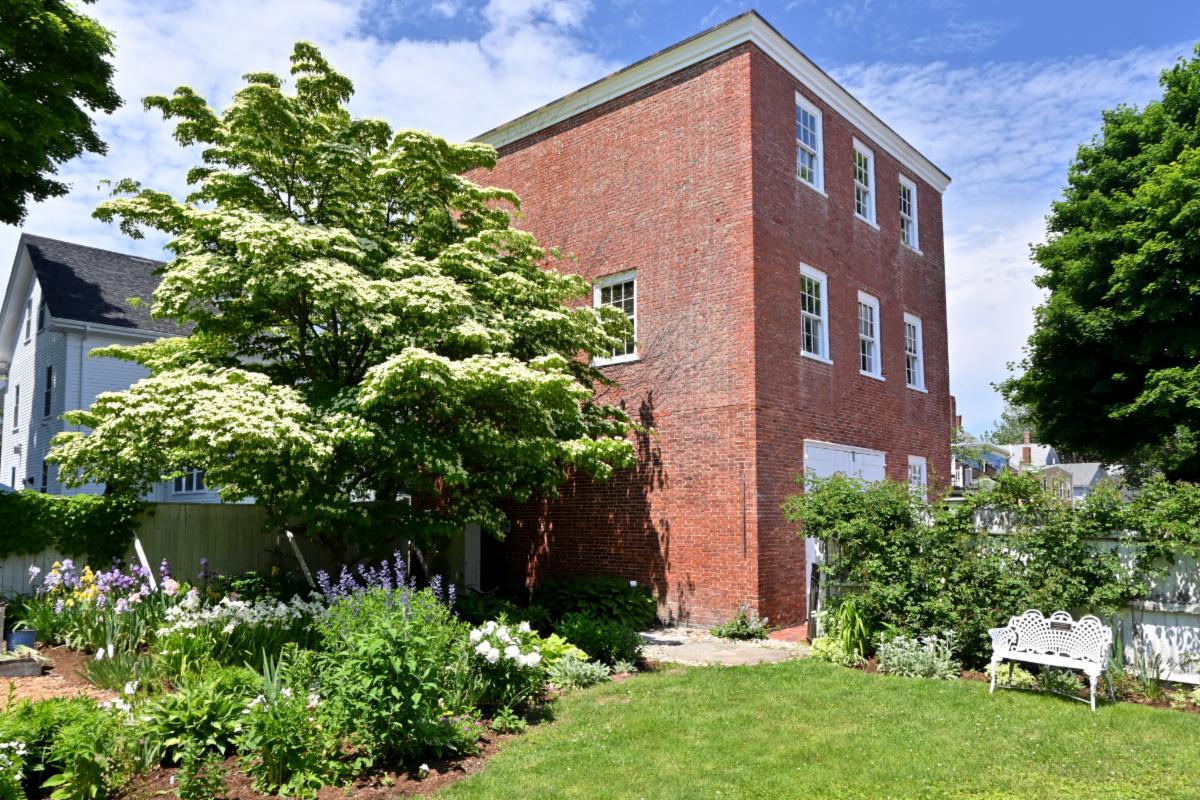
The Perkins building, tucked in behind and beside the Cushing property, has lived many lives in its 217 years, serving first as the workshop of silversmith, engraver, scientist, and inventor Jacob Perkins. The building was designed for stability and security - paper money was printed here using Perkins' anti-counterfeiting process.
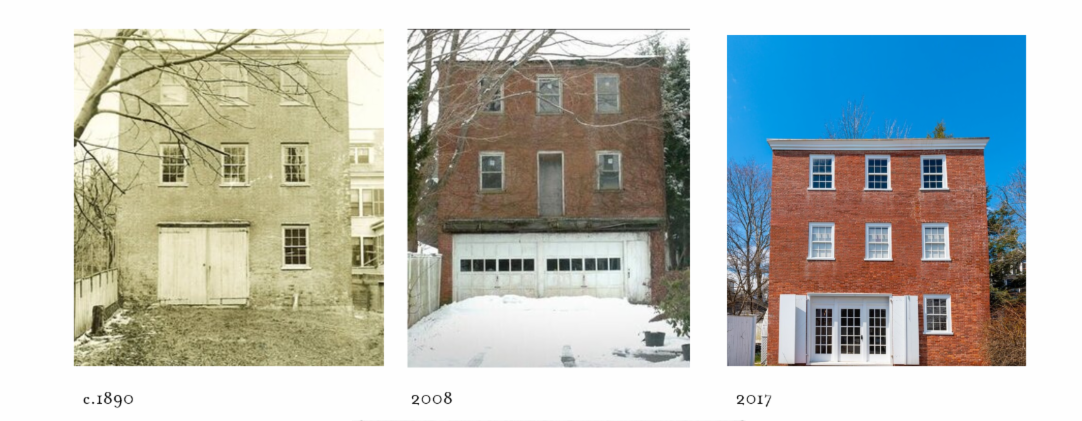
Jacob Perkins moved to London in 1818 and died there in 1849. Back in Newburyport, his shop was used by his brother Abraham and other members of the Perkins family, and then as an industrial building of one kind or another until the 20th century. At one point before 1948, parts of the building and chimney were partially demolished to create a garage front, and five thousand bricks were given to restore the central chimney of the Jackman-Willett House in Newbury.
| |
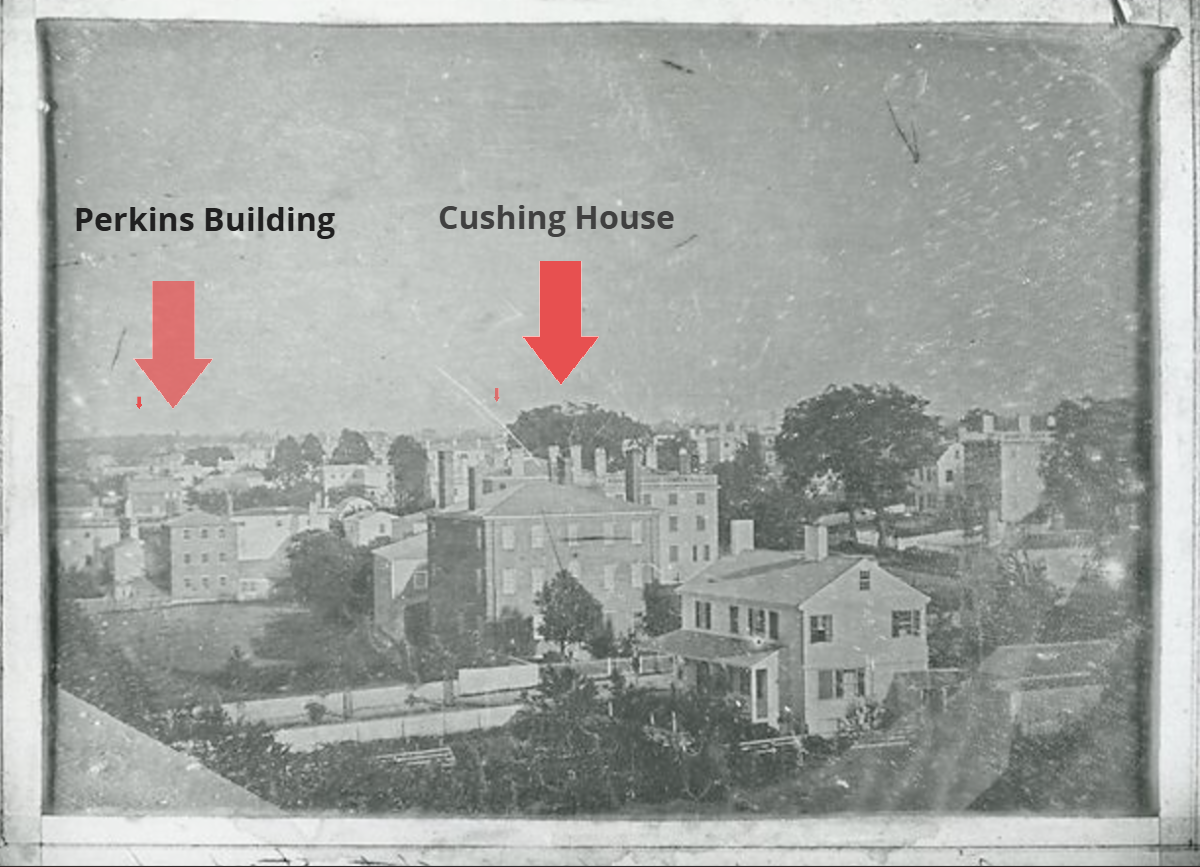
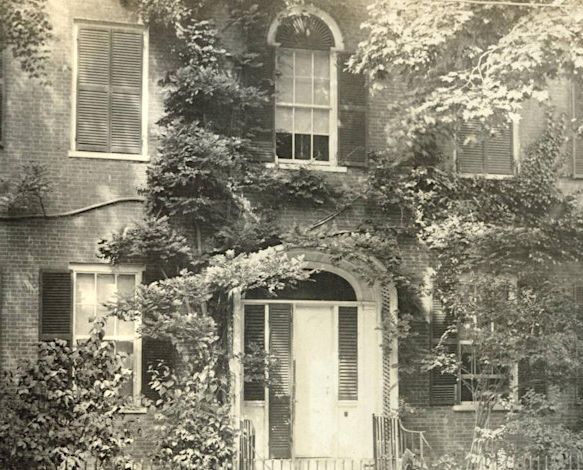
The Perkins building appears in one of the earliest photographs taken in the United States. Jacob Perkins' 4th cousin Henry Coit Perkins captured this image in 1839. This extremely rare daguerreotype is in the collection of the Museum of Old Newbury.
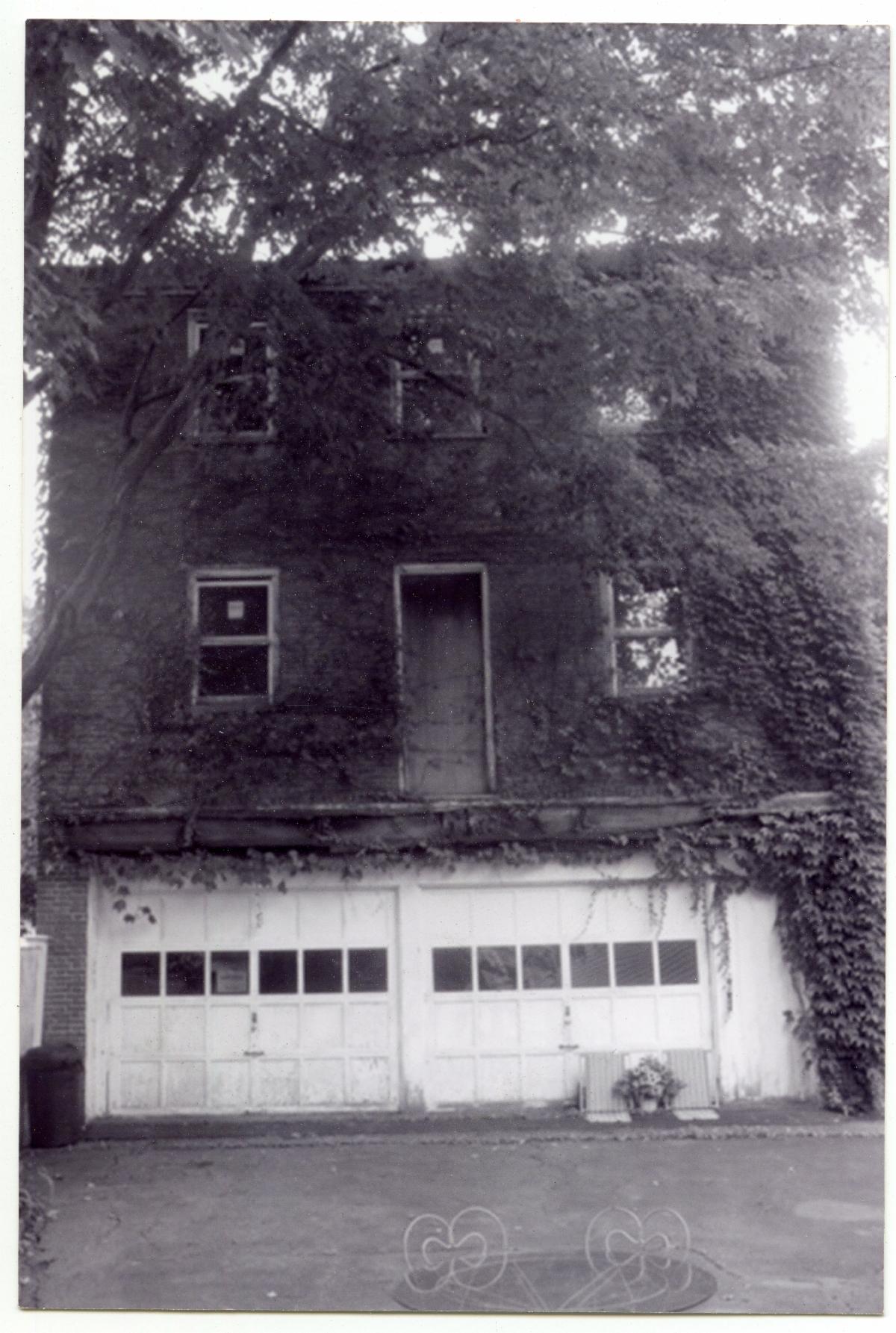
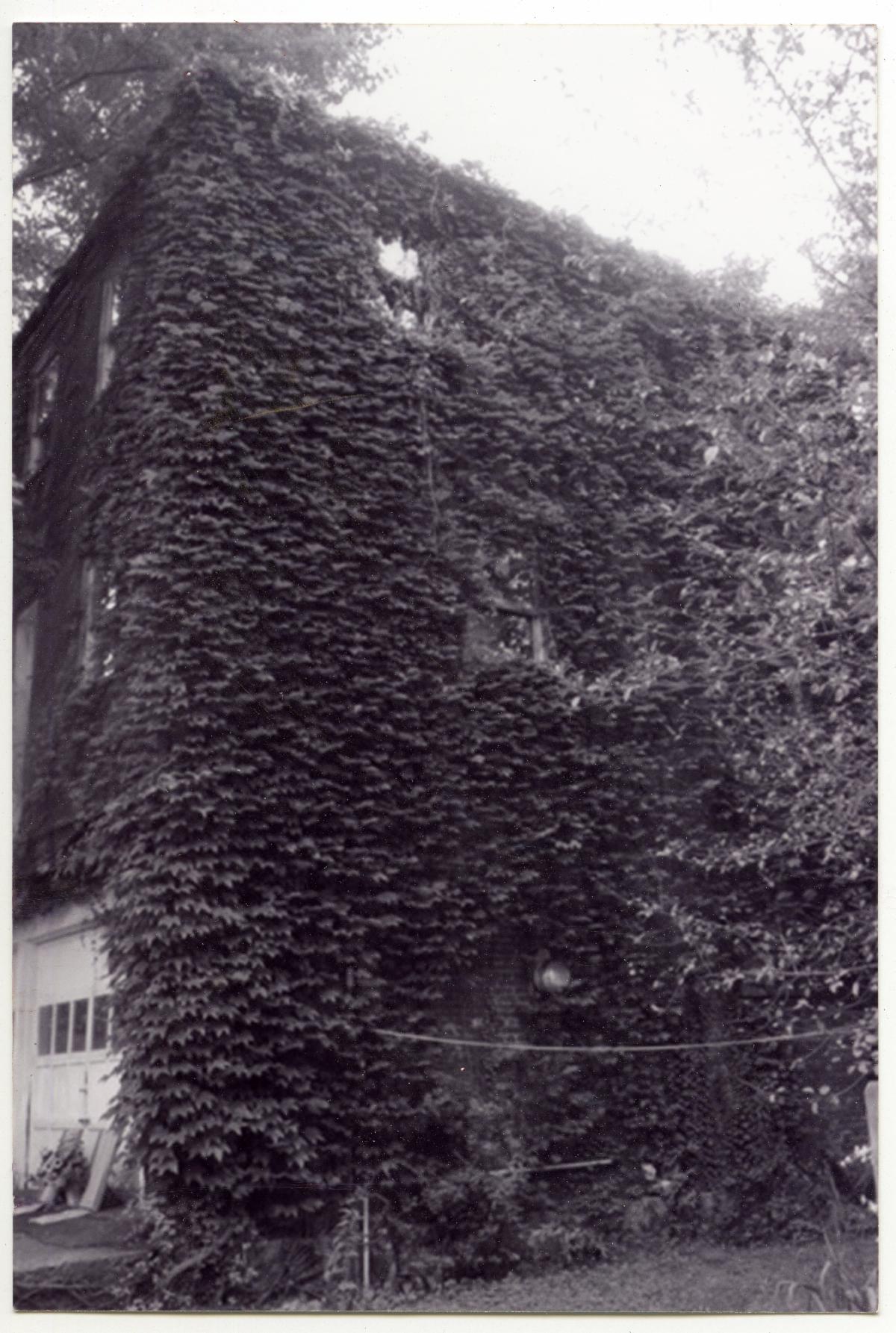
The Lagoulis family acquired the property in 1973, and in 2006, Jim Lagoulis asked for permission to turn “the vacant and deteriorating building” into apartments. As the oldest generally intact industrial building in Newburyport, preservation-minded people came out to try to save the building from the invasive renovations and alterations that would have been required to turn the building into living space.
| | |
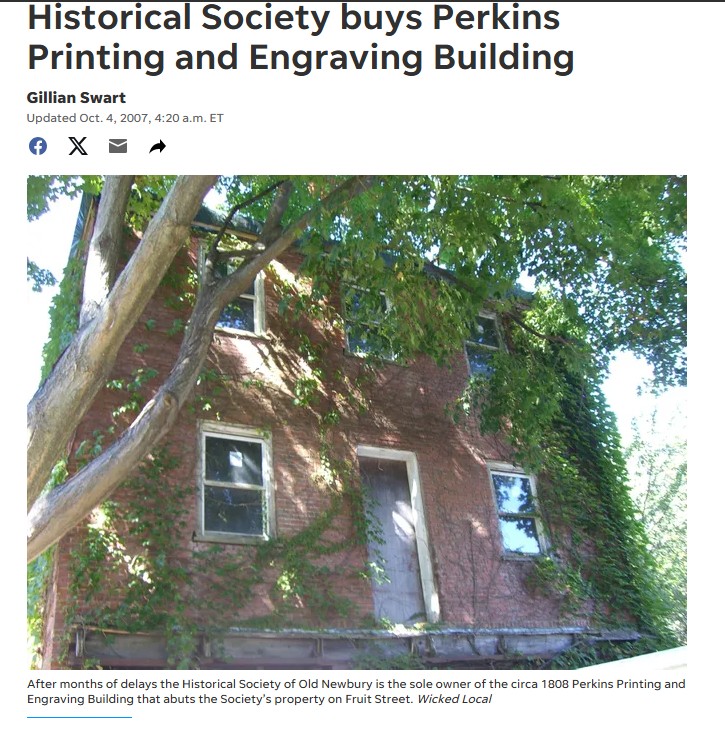
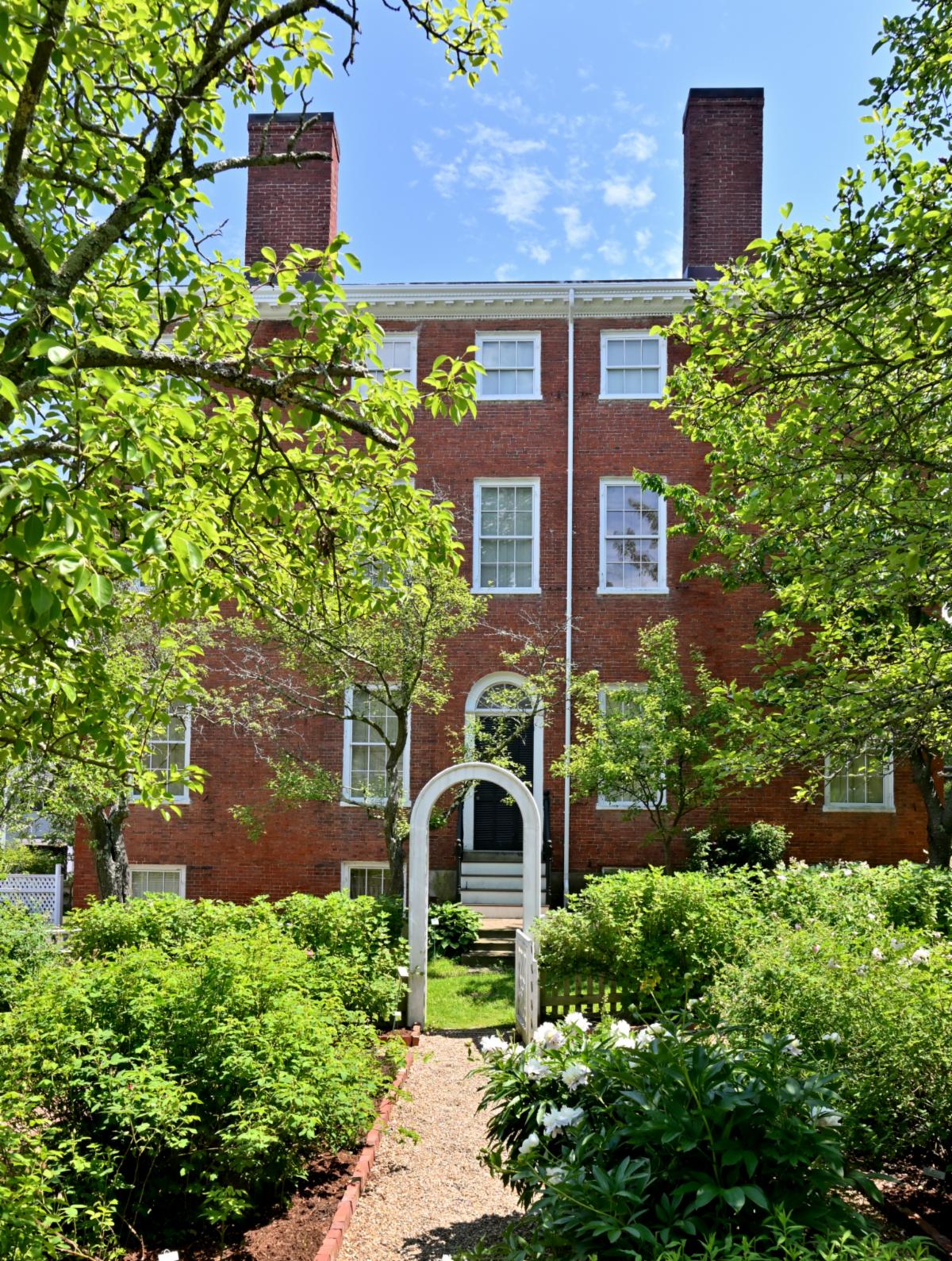
Top: The Perkins building in 2006. Bottom: This 2007 photograph from the website WickedLocal.com shows the building just after its purchase.
In 2007, after a year of negotiations, the building was purchased by the museum with significant support from donors including the Newburyport Bank, and in 2008, the Community Preservation Act helped to fund the initial restoration and stabilization of the building.
These first crucial projects included rebuilding the roof, stabilizing three of the masonry walls, the interior structure, preserving wooden flooring, replacing a staircase and pouring a reinforced cement first floor. Wooden beams and one rusted steel beam were replaced with steel-reinforced wood. Stabilization was completed by May 2010, and the building was officially opened.
| |
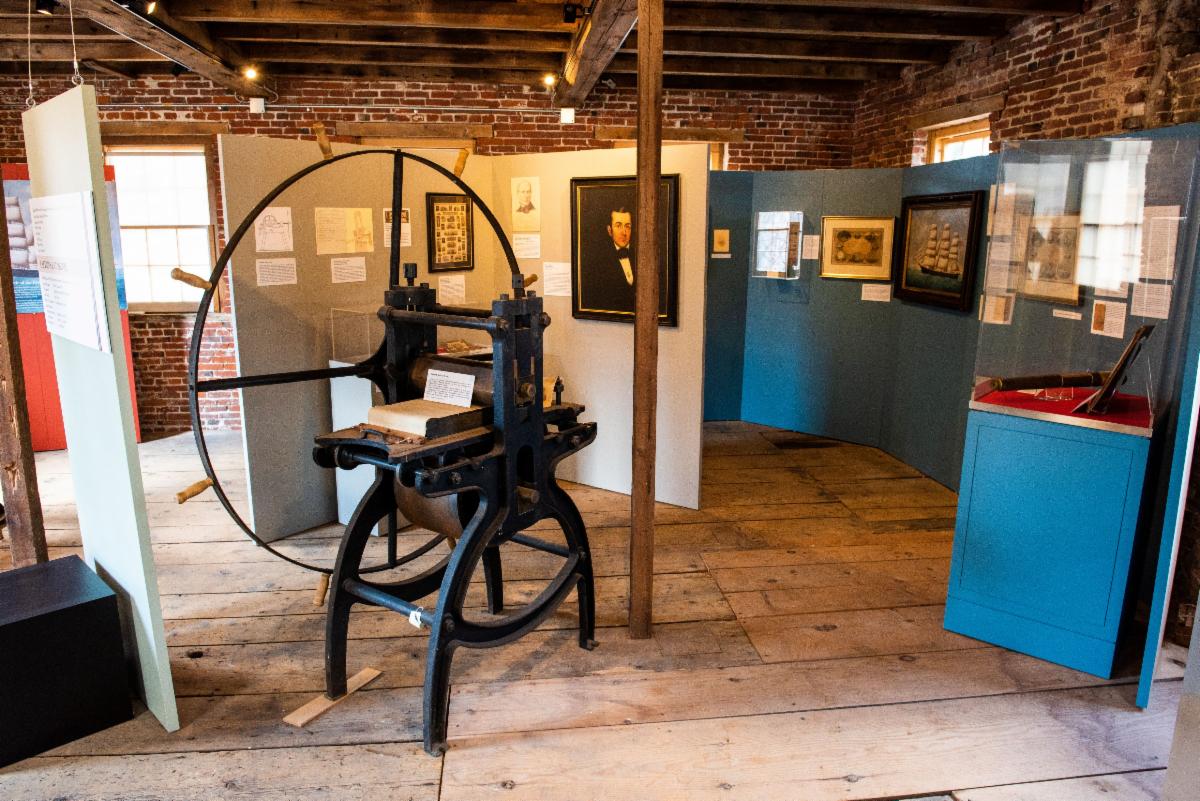
In 2017, the Museum of Old Newbury opened its first exhibition in the Perkins Printing and Engraving Plant, Captains and Currency. The exhibit told the personal and professional stories of the Brown and Perkins families in the second floor of the space, while the first and third floors were used for limited storage and programming, but was largely unused.
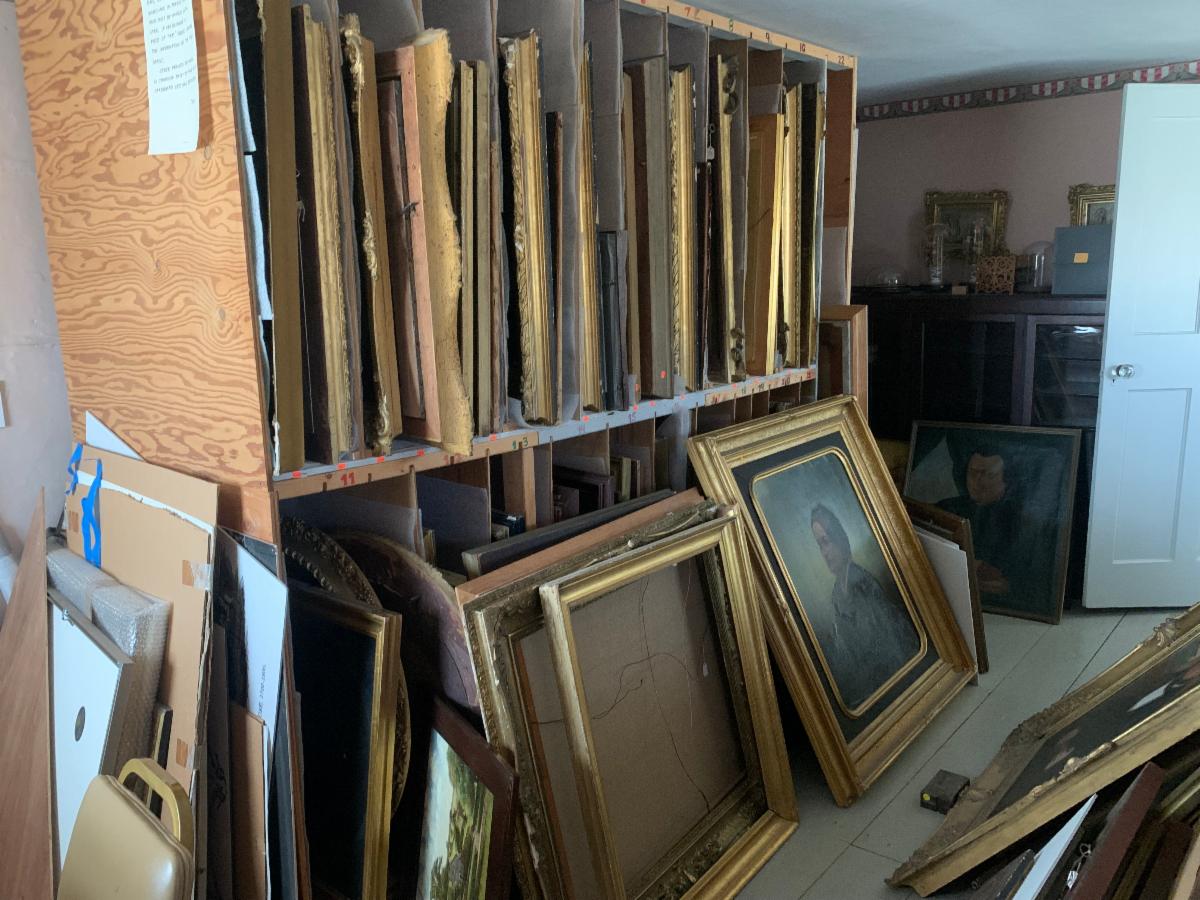
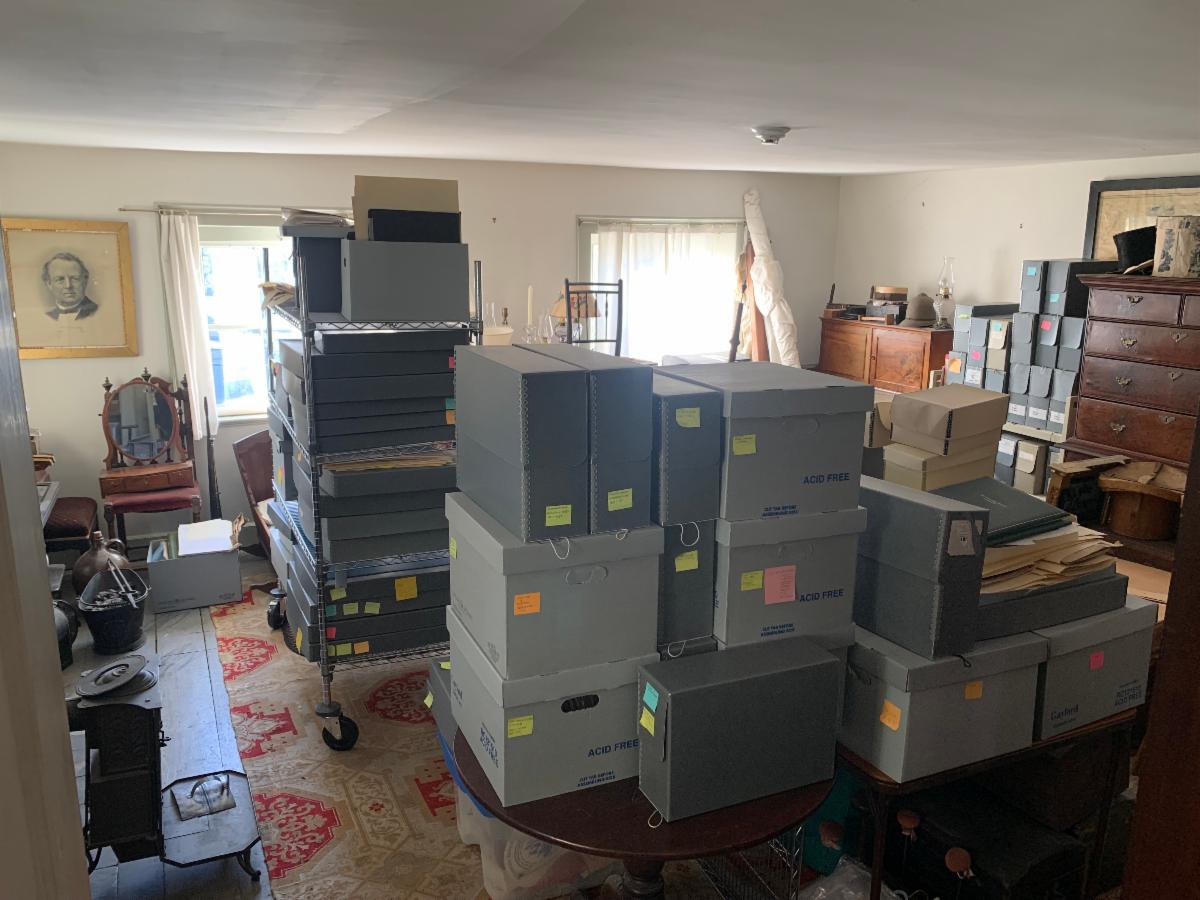
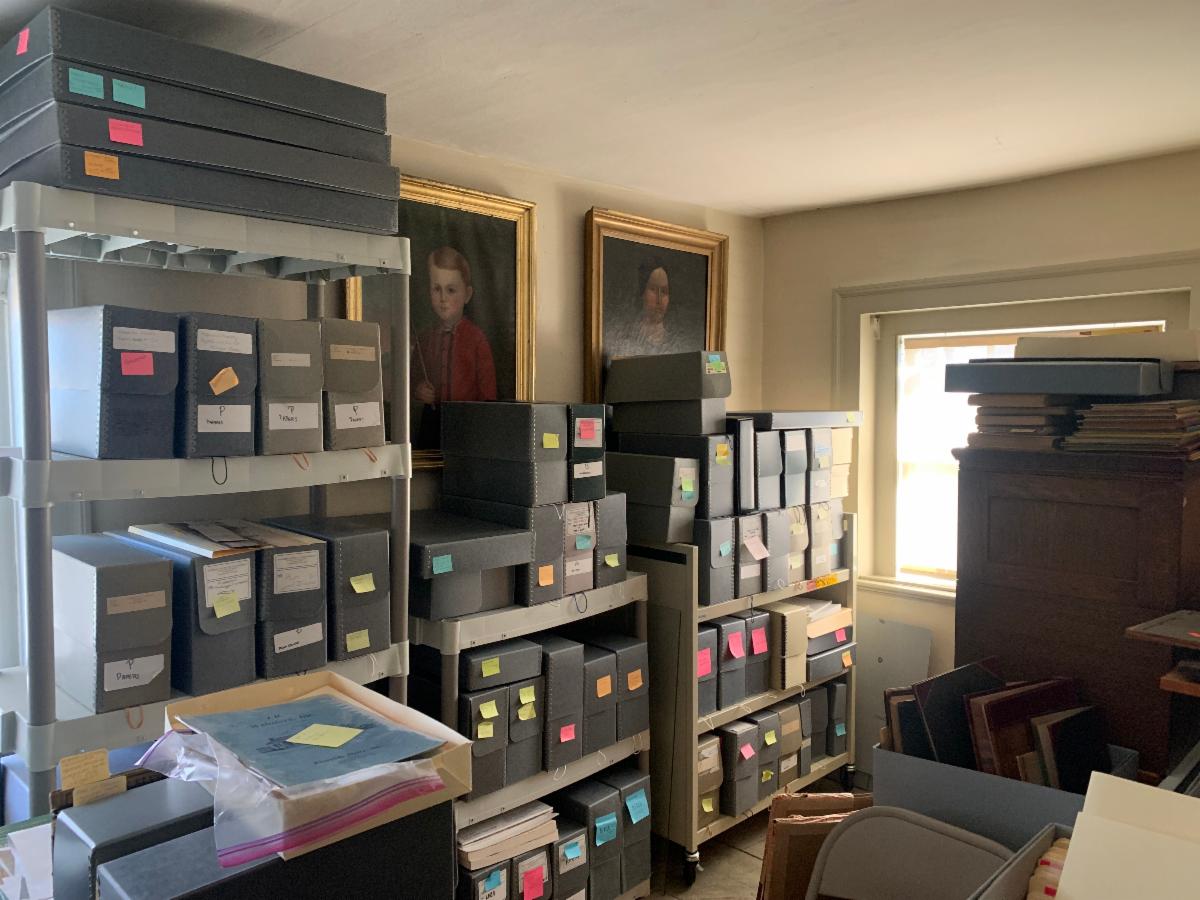
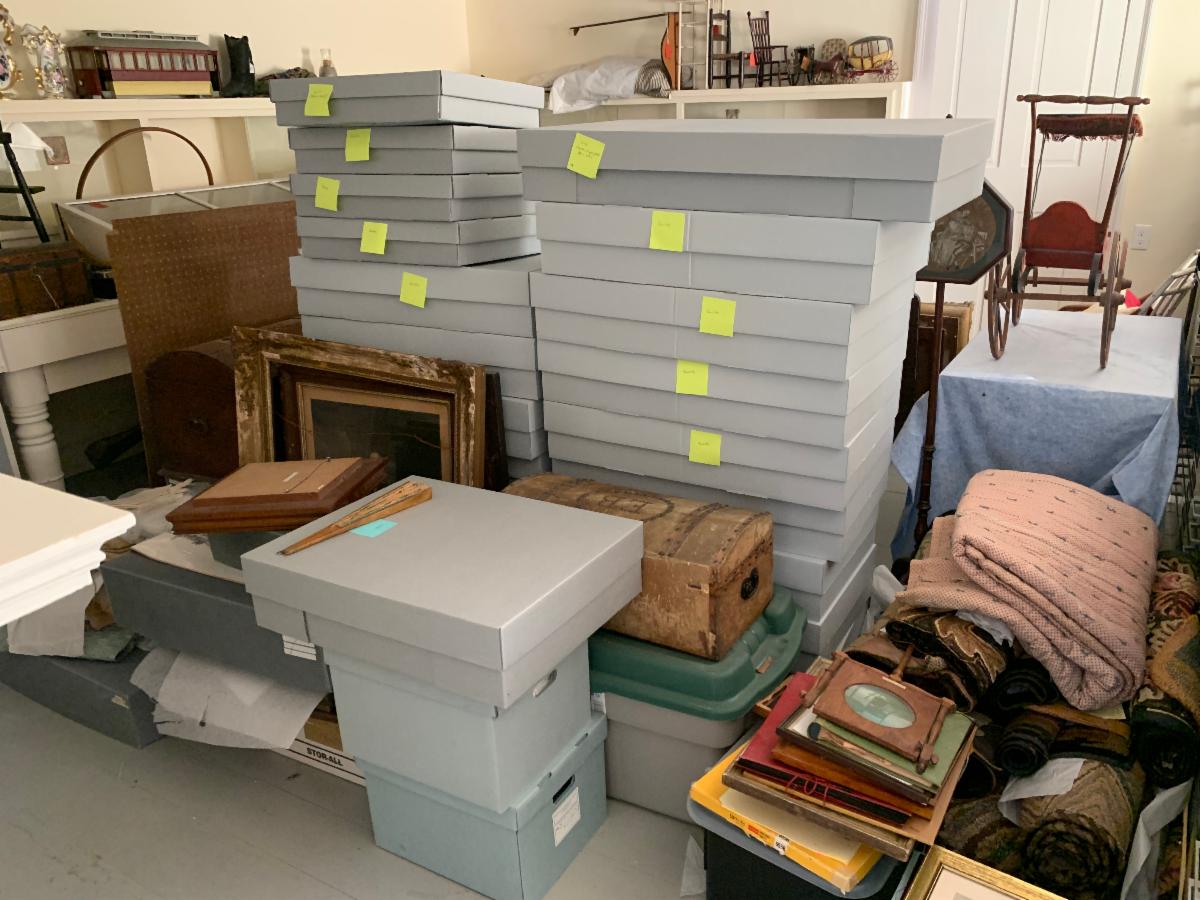
Meanwhile, the Cushing House, headquarters of the Museum of Old Newbury, was groaning under the literal weight of thousands of books, hundreds of paintings, rooms full of manuscript and archival collections, and more. Framed artwork was stacked in a small storage room, while boxes and bins spilled out of the archive room on the third floor into hallways and other spaces. Though the Cushing House was designed for strength, it was not intended to bear weight on that scale.
Of course, this was a wonderful problem to have, in a way. The generosity of our donors, especially over the last decade, has been remarkable. We were drowning in riches, saving artifacts and documents that tell amazing stories, and working hard to protect and care for these collections. Still, as donations kept coming in, we were rapidly reaching a crisis point.
At the same time, research requests were skyrocketing, and it was exceedingly difficult to accommodate in-person visits or even access the materials needed to answer questions, which flooded in from around the world. There was simply no safe, secure space for staff, researchers, and volunteers to work.
| | |
By 2021, when I became the executive director of the museum, and despite its attractive and important exhibition, Perkins had been a bit of an orphan for several years. Of course the pandemic did not help.
To be clear, I was not the first director here to contemplate a different use for this building. There had been ongoing conversations about art storage under the previous director, Susan Edwards. The landscape had been restored extensively and beautifully with an eye to accessible walkways to Perkins. With the enthusiasm of a newbie, I took on the challenge of developing, executing, and funding a long-term solution.
The last three years could fill a (admittedly boring) volume, but for our purposes, let me just condense it thus. We raised nearly half a million dollars, reinforced the building with steel girders, mended masonry, restored and installed a fence panel from the old Wolfe Tavern, moved literally tons of steel art storage racks, library cases, and archival compact storage units, installed security systems, rebuilt and moved HVAC systems, designed and installed bespoke lighting solutions for a complex building, photographed and catalogued artwork to facilitate the move, and every step of the way, angels appeared to help us meet the challenge. You know who you are.
| |
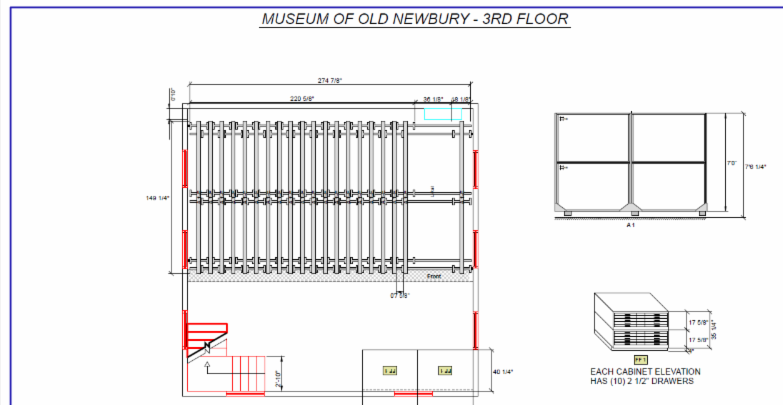
Preliminary design of the third floor art storage racks from Donnegan Systems Inc.
Over the last three months we have moved the lion's share of our precious archive, library, and art collection to the newly christened Perkins Art & Research Center. It has taken patience, care, kindness, diligence, an army of interns and volunteers, and a whole lot of literal footwork. We have hired a new archivist, Ashley Adams, who you will meet below, and are fortunate enough to continue to have the support and guidance of Sharon Spieldenner, who was crucial to building this archive, as the world's most over-qualified volunteer.
| | |
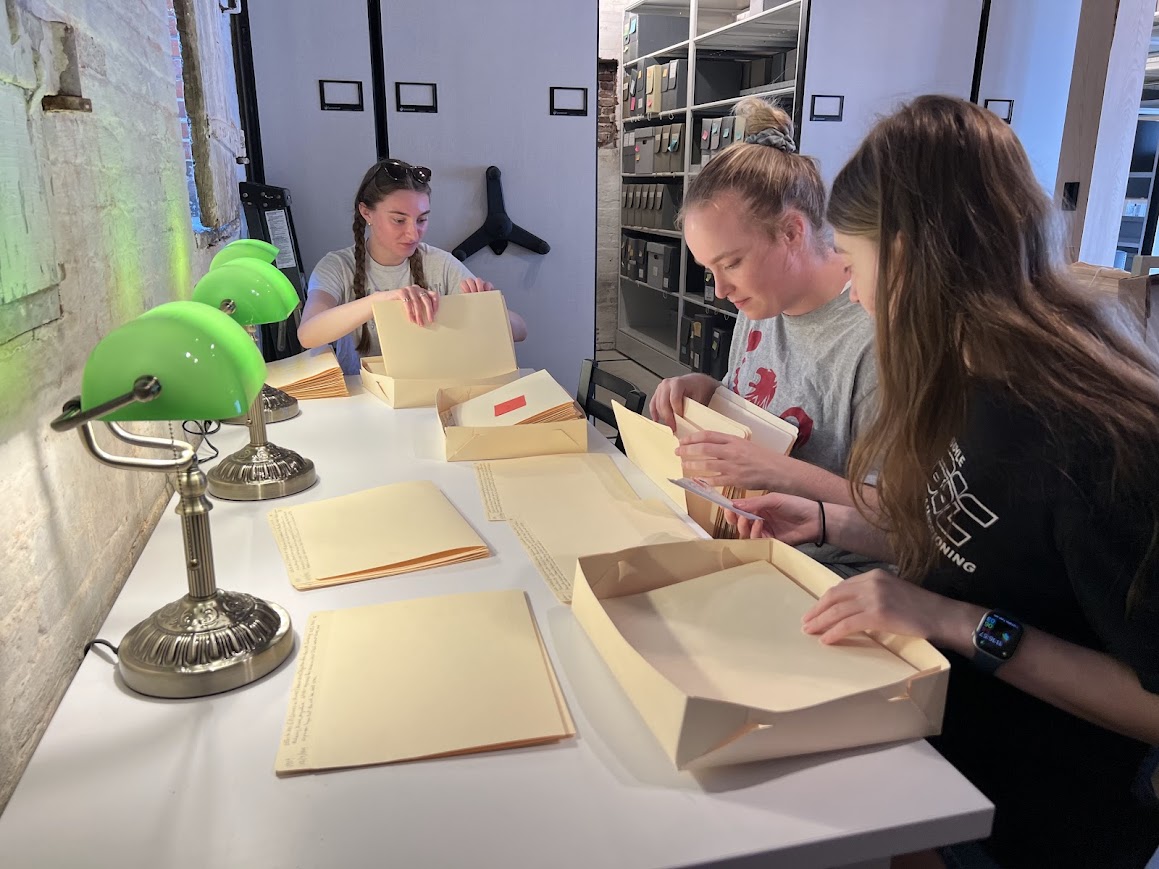
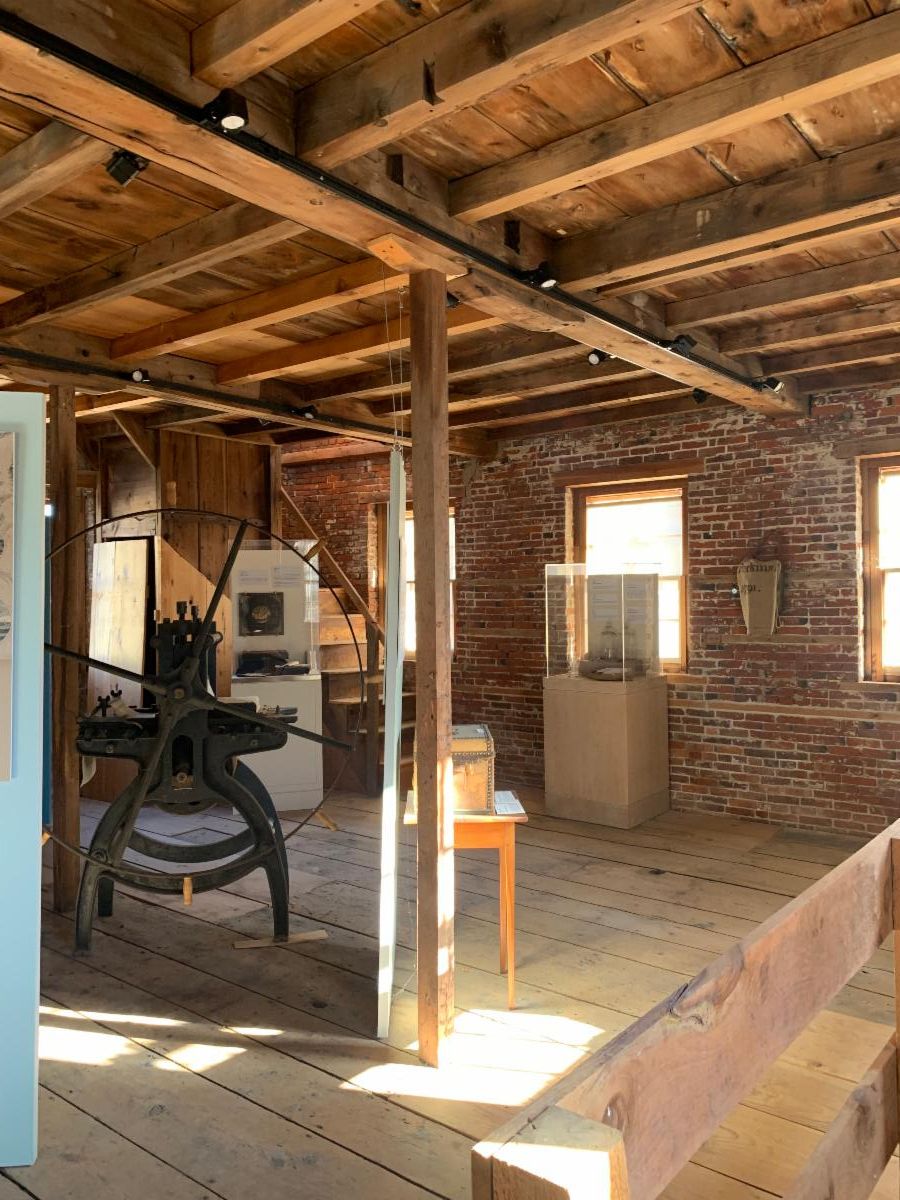
First Floor - Archive
Before, after, and in-use with our team of wonderful interns!
| | |
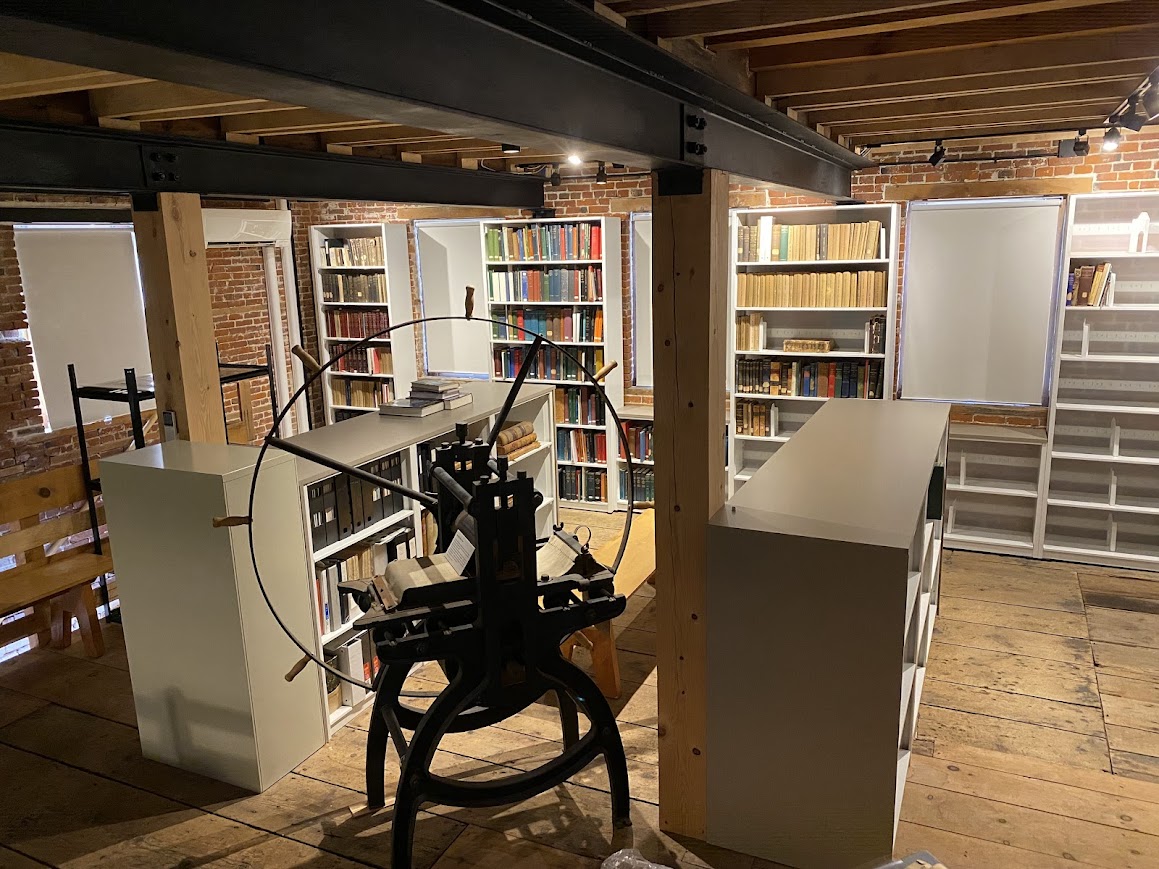
Second Floor - Library
Before and after
| | |
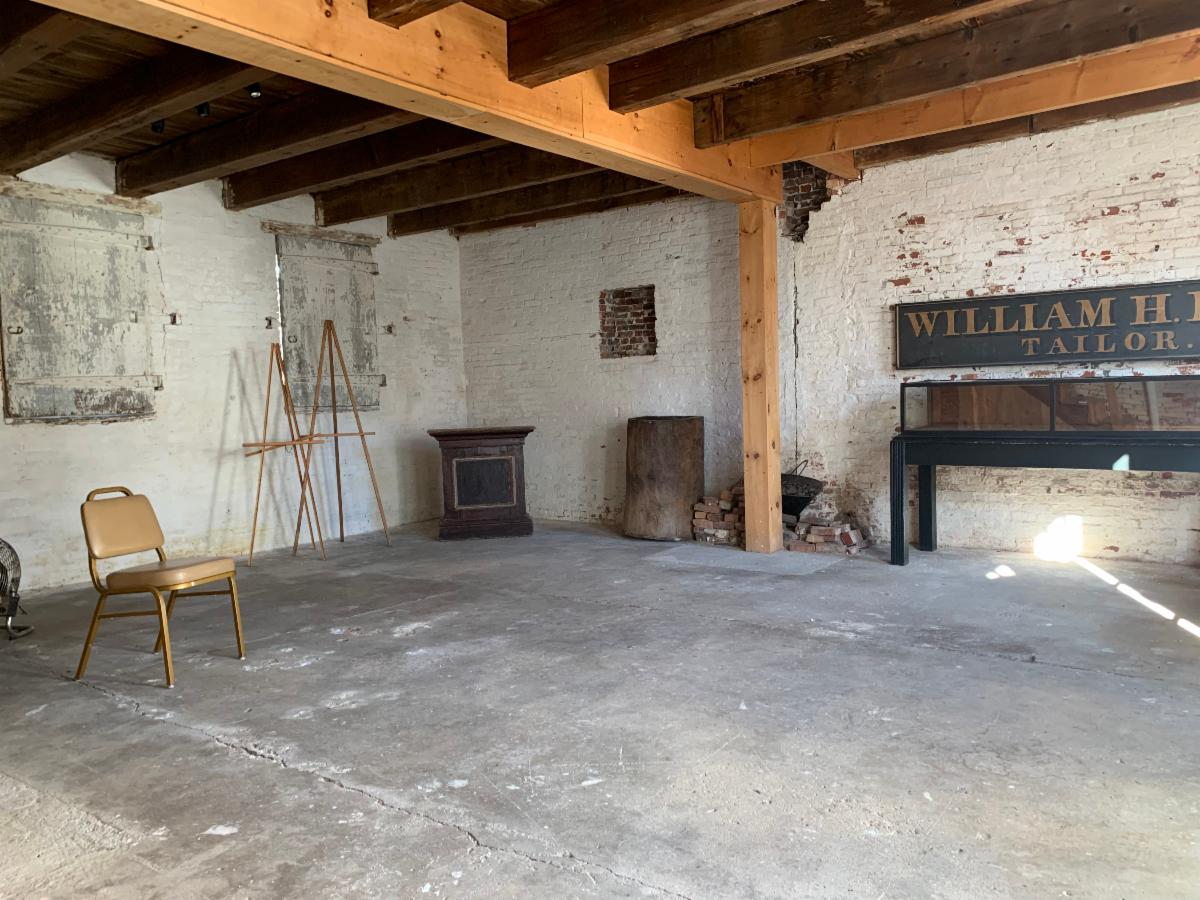
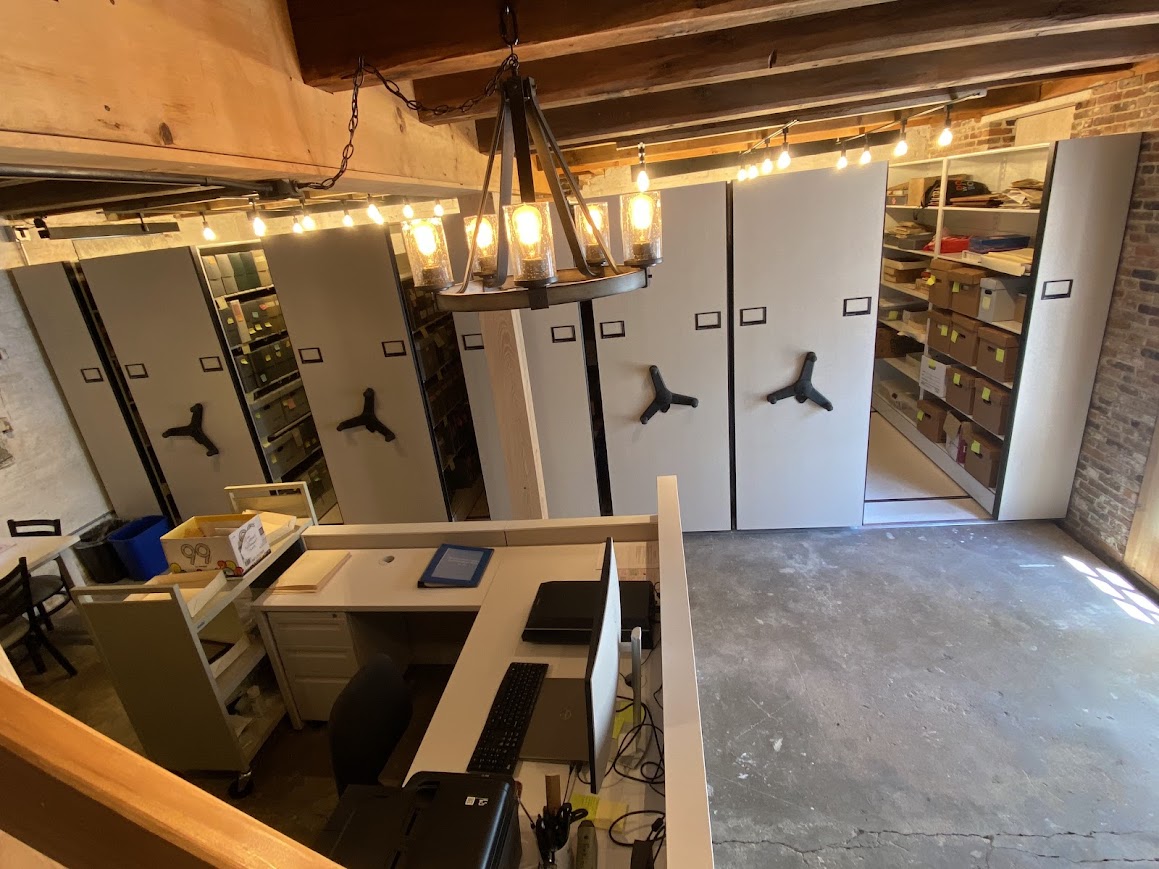
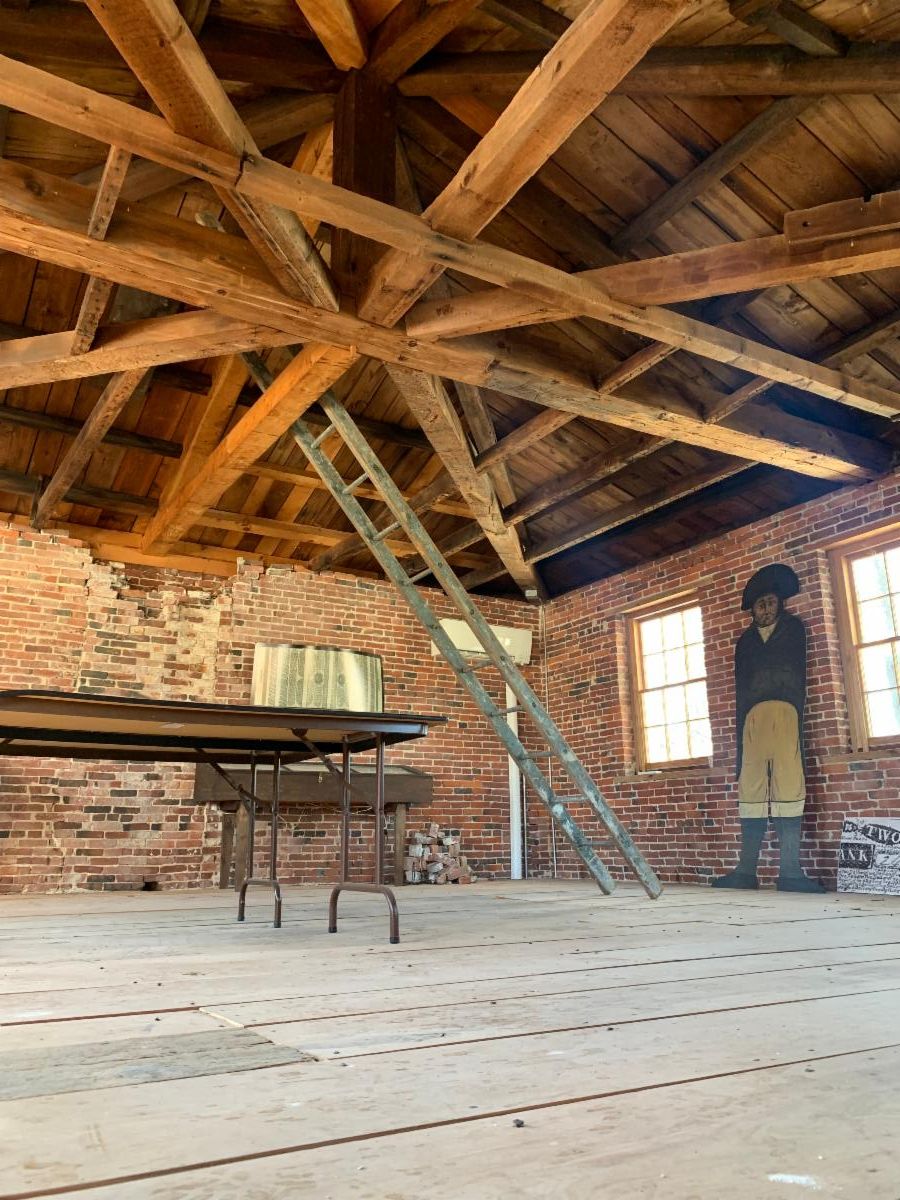
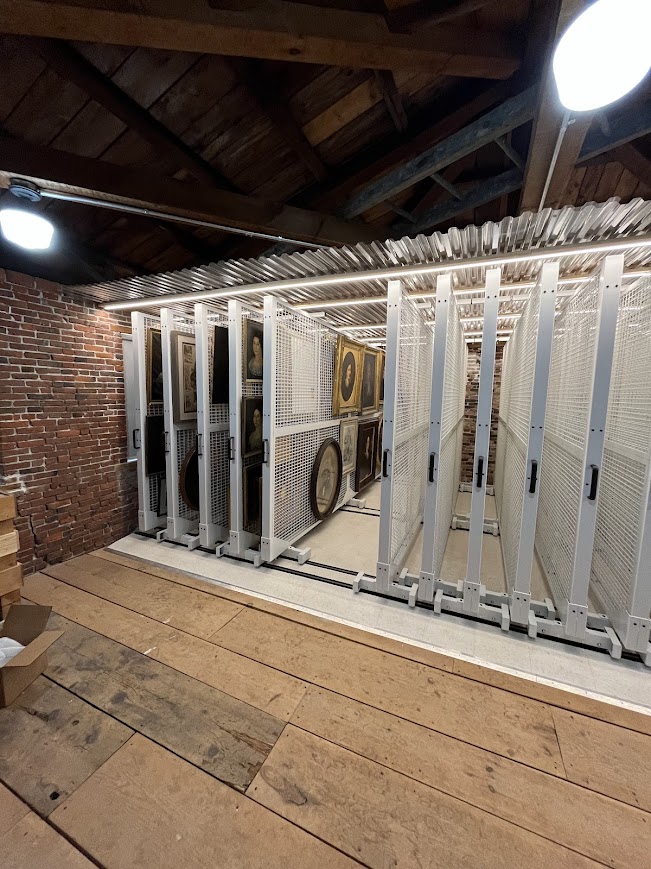
Third Floor - Compact Art Storage
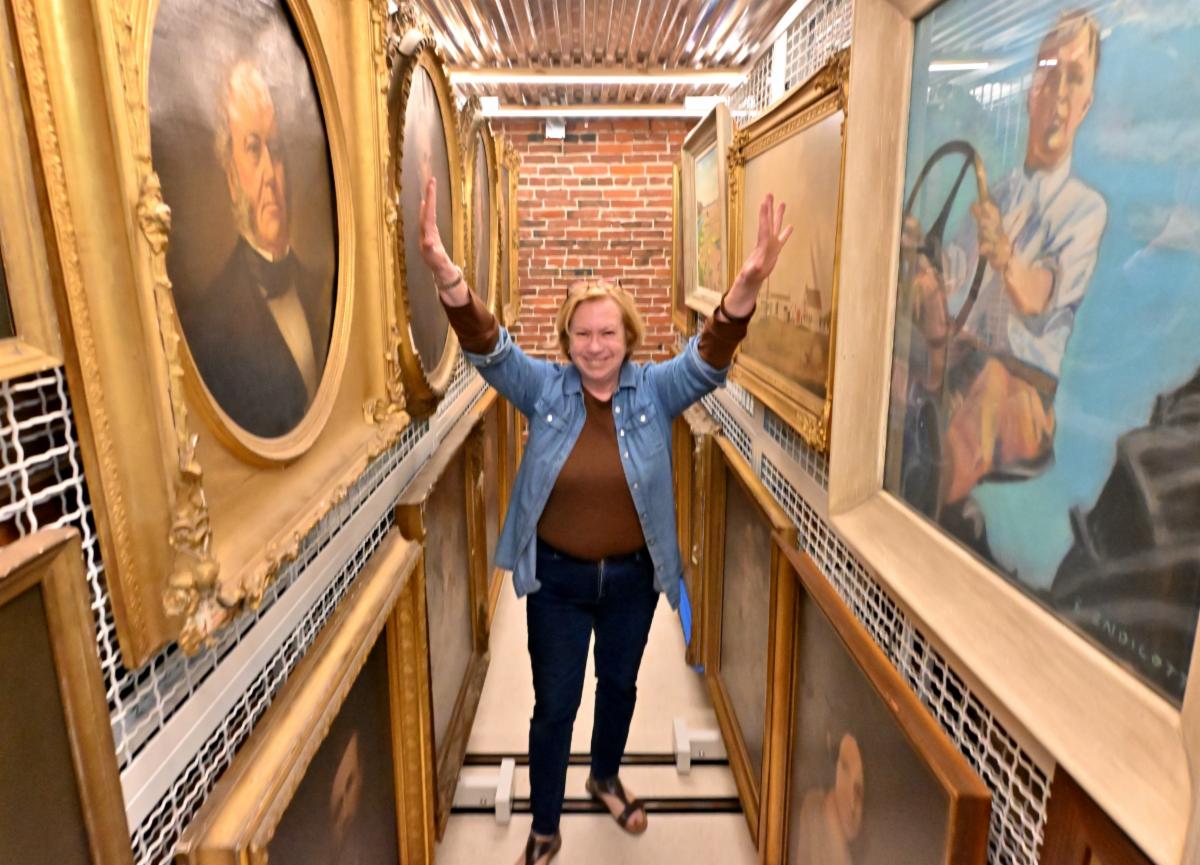
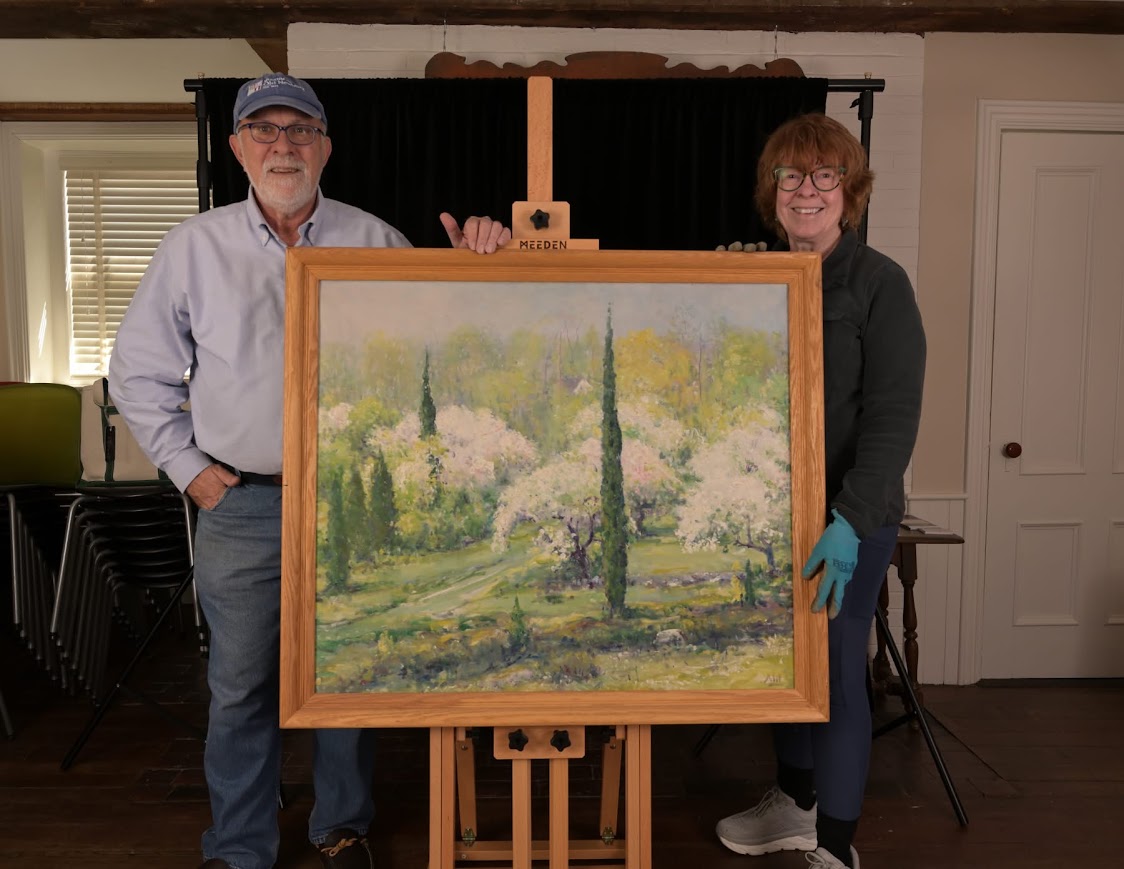
Before and after and a very happy board member and art specialist, Monica Reuss. Also, Bob Watts and Barbara Gregory, who tirelessly photographed hundreds of works of art before the move.
| | |
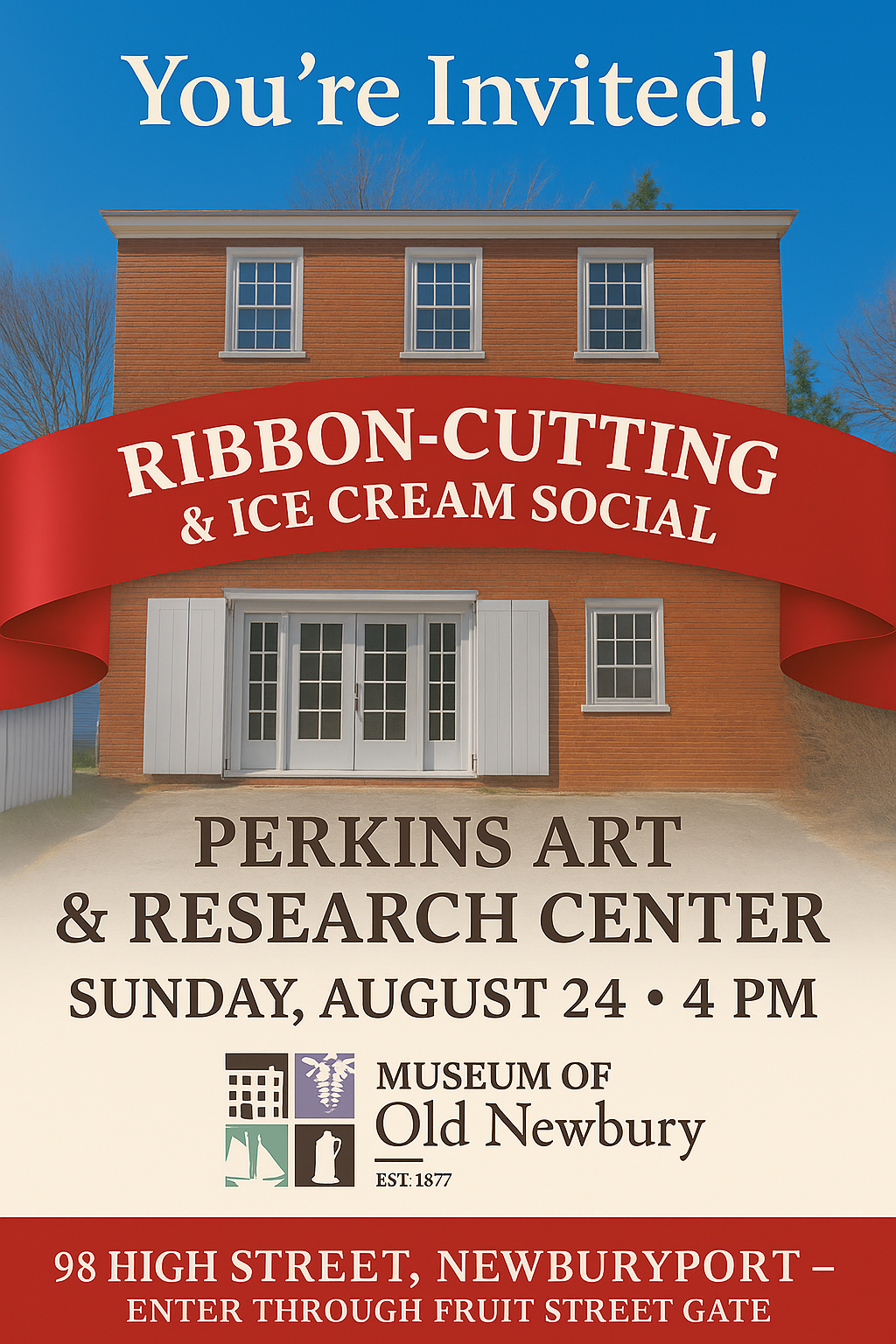
Come see it all for yourself at the ribbon-cutting and official opening on Sunday, August 24. There will be pie and ice cream and a toast to the hard work of all those who helped move this project forward.
And join us as we do a deeper dive into the history and importance of our archival collection in the next issue of the newsletter!
Want to do more? Call 978-462-2681 or email bethany@newburyhistory.org, or just click the link below!
| | More Upcoming Museum Events | |
| |
June to October, 2025
Thursday-Sunday
11:00 a.m. to 5:00 p.m.
Museum of Old Newbury Guided Tours
Take a tour through this 1808 Federal mansion, containing art and artifacts from the past four centuries. Hear the story of Old Newbury and the growth of Newburyport.
Tours on the hour, last tour at 4 p.m.
Tickets here
| | | |
| |
Thurs, August 7, 2025
10:00 a.m.
Architectural Walking Tours: Newburyport’s Fashionable Old Houses
Join us for a walking tour of Newburyport’s architectural styles from the 18th and 19th centuries as found along High Street and the neighborhood near the Museum of Old Newbury.
Tickets here
| | | | Perkins Partner Spotlight - Newburyport Community Preservation Committee (CPC) | | |
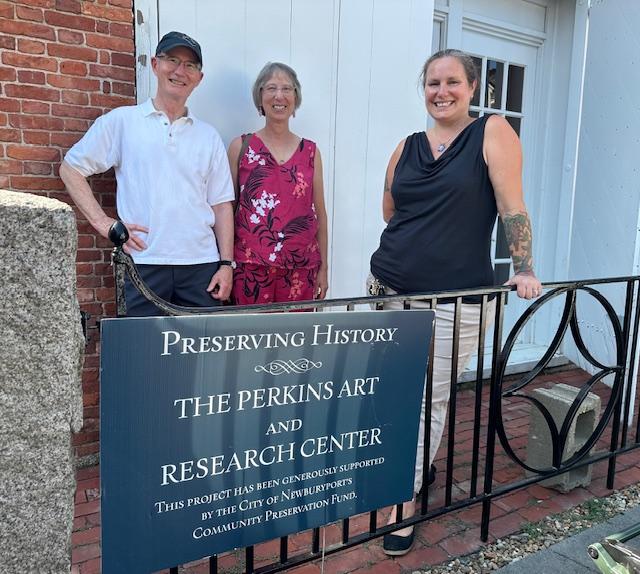
Mike Dissette, chair of the Newburyport CPC, Kathy Roth Huse, former Associate Director of the Community Preservation Coalition, and MOON director Bethany Groff Dorau, tour the Perkins project on July 30. Not pictured but present were Mary Dissette and Stuart Saginor, Executive Director Community Preservation Coalition.
The Community Preservation Committee has been a partner in the preservation of the Perkins building since its acquisition by the museum. Initial stabilization was funded in part by the CPC, along with subsequent preservation projects. Since 2022, in two cycles, the CPC has granted over half of the total funding for the Perkins Art & Research Center, providing funds for the steel compact storage systems at the heart of this project.
The Community Preservation Act (CPA), signed into law in 2000, is a smart growth tool that helps communities preserve open space and historic sites, create affordable housing, and develop outdoor recreational facilities. Learn more about this program here. We have benefitted from the generosity of Newburyporters through CPC funds, which have allowed us to serve the community in myriad ways. Thank you.
| | |
Perkins Partner Spotlight II
Meet Ashley Adams Serveiss, Archivist!
| |
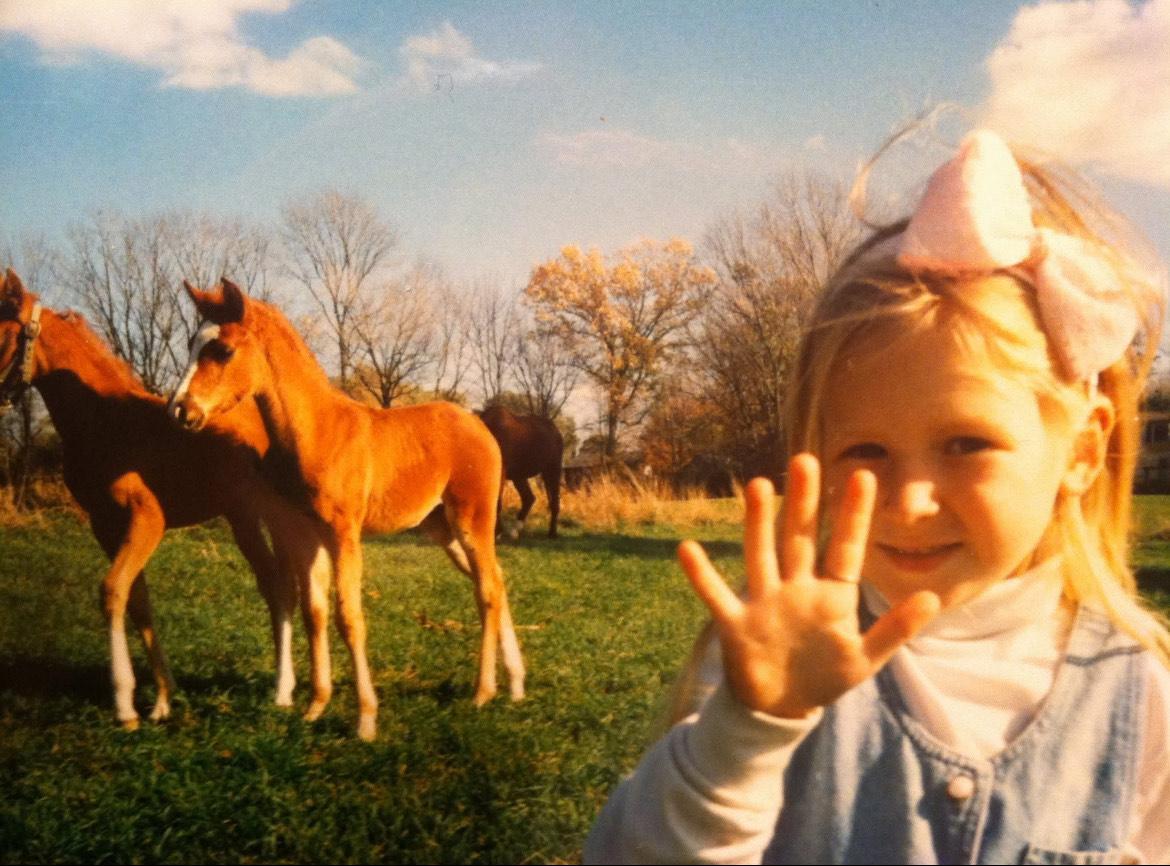
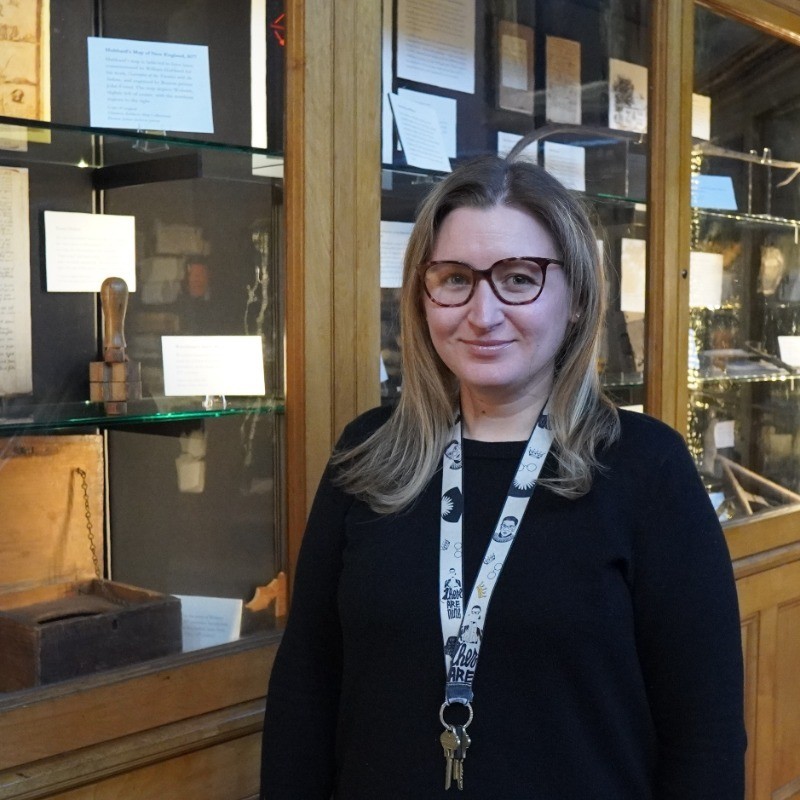
Ashley, age 5 (hence the hand gesture), hanging with the horses at Long Hill in West Newbury, ca 1995, and a bit more recently.
Ashley Serveiss (pronounced sir-vees) has joined the staff of the Museum of Old Newbury as a part-time archivist! Ashley was born in Newburyport and grew up on her family's apple orchard in West Newbury. Several of her ancestors landed at Newbury in 1635, making her a distant cousin to many (including Bethany)! She has been working in museums and libraries since 2012 and is also the full-time Archivist & Museum Curator at Woburn Public Library. Ashley holds a BA in History and a MLIS from Simmons University. When not working, she enjoys bird watching, cooking, and planning picnic adventures with her husband.
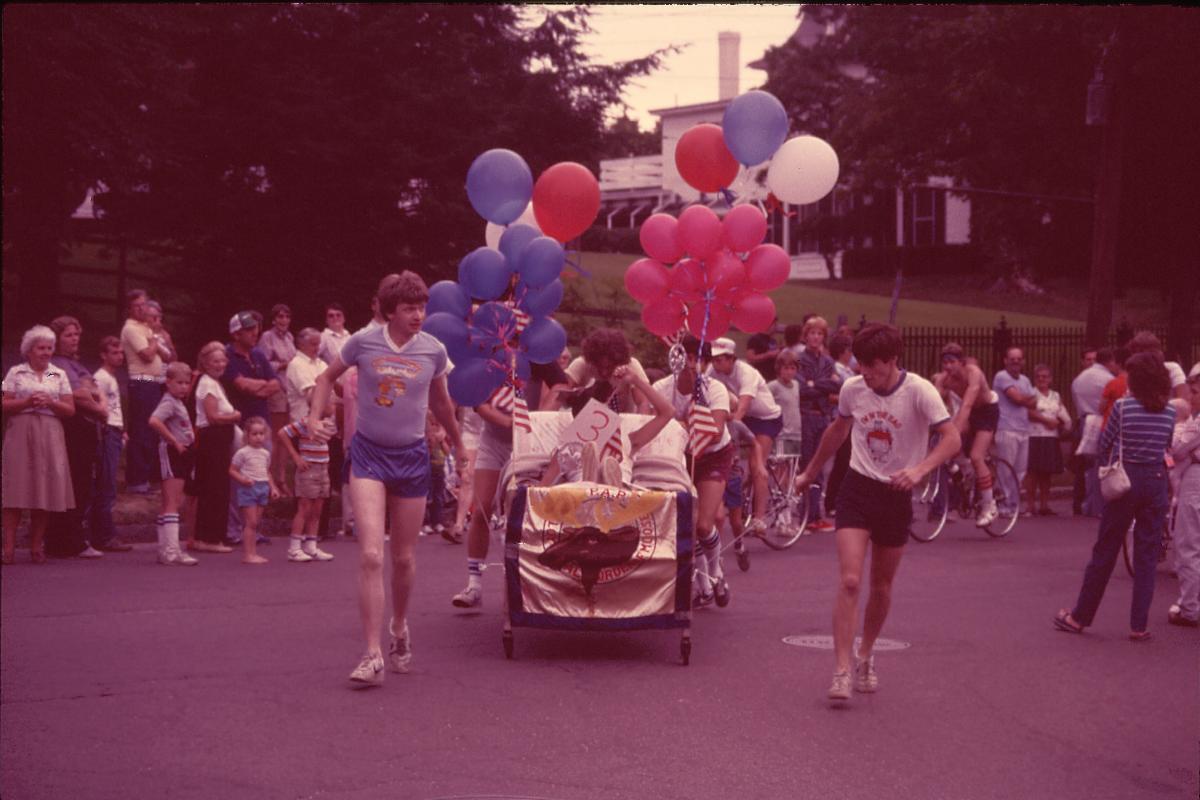
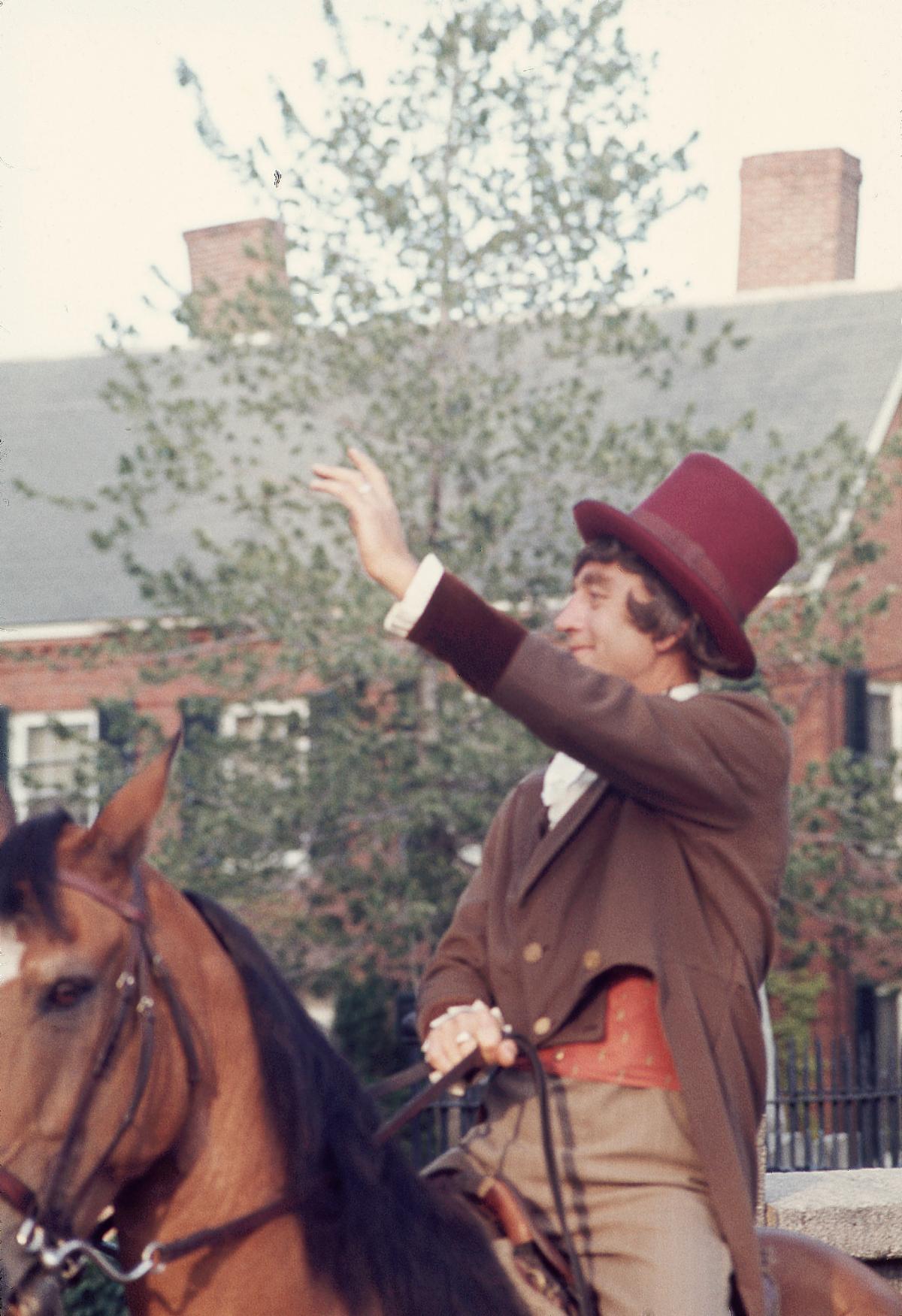
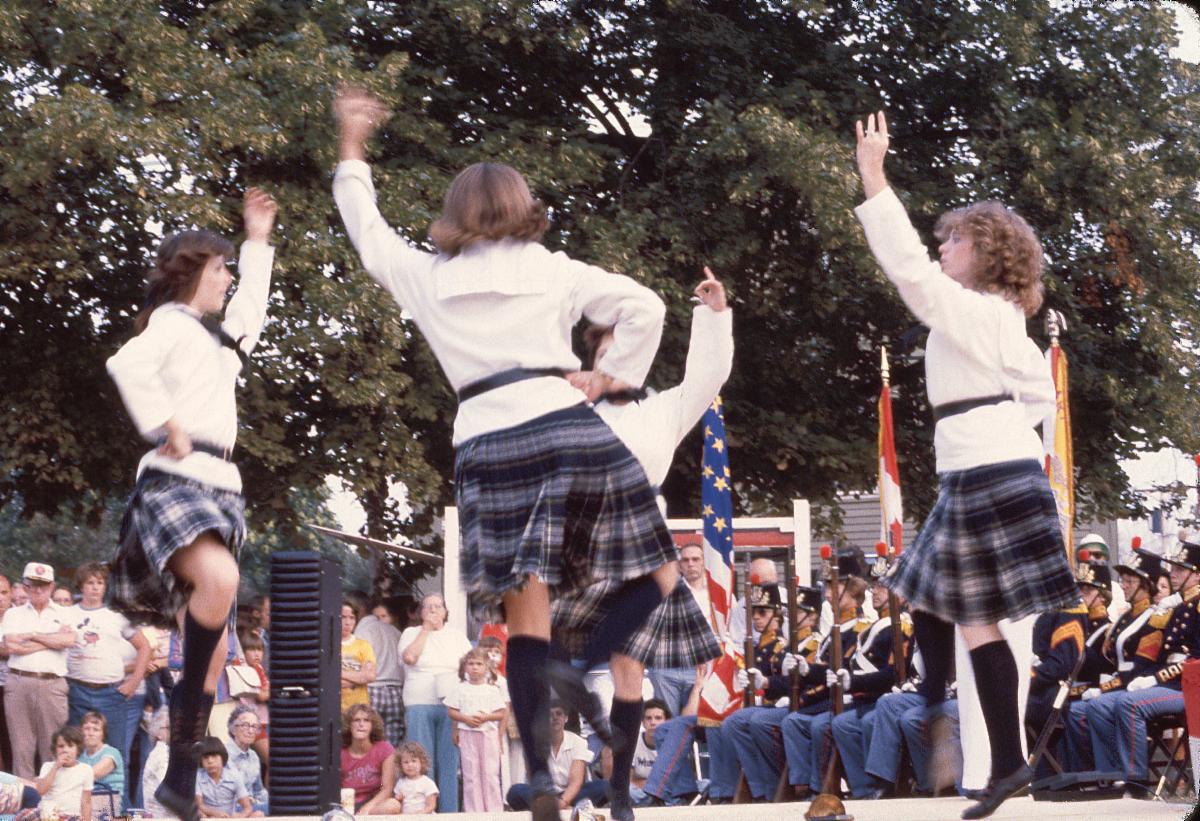
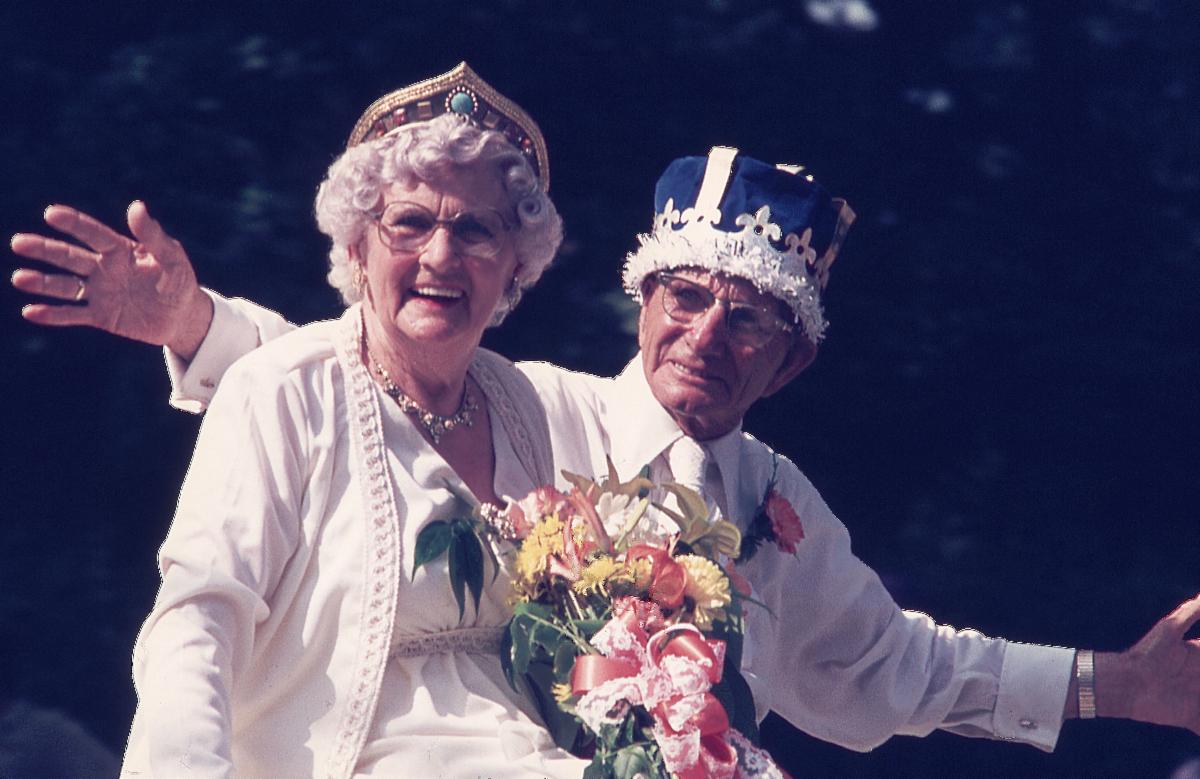
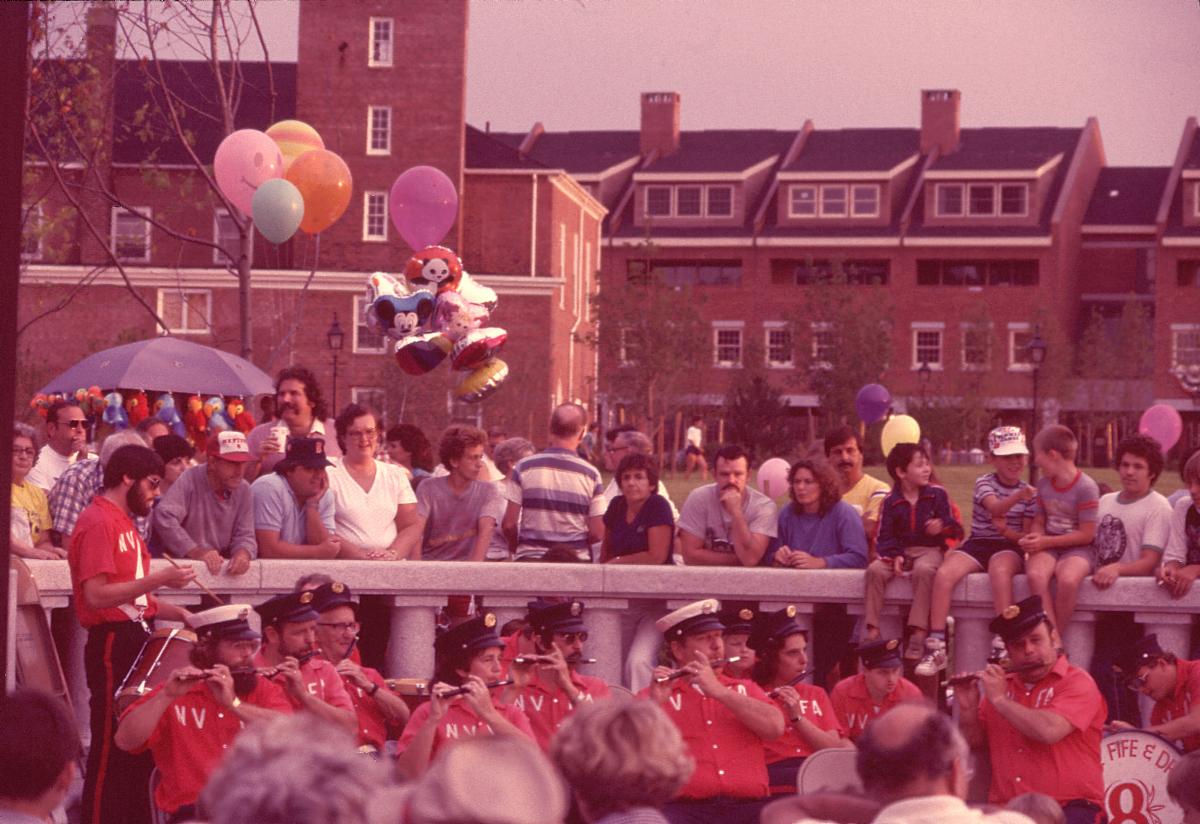
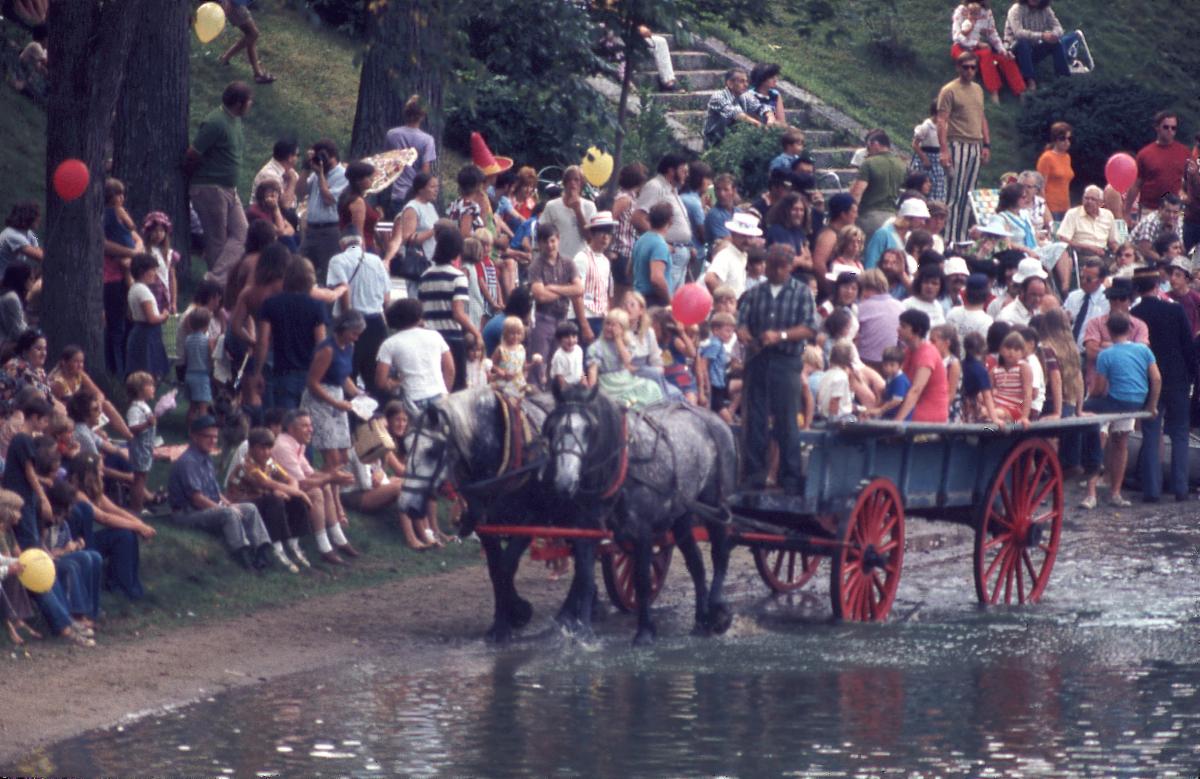
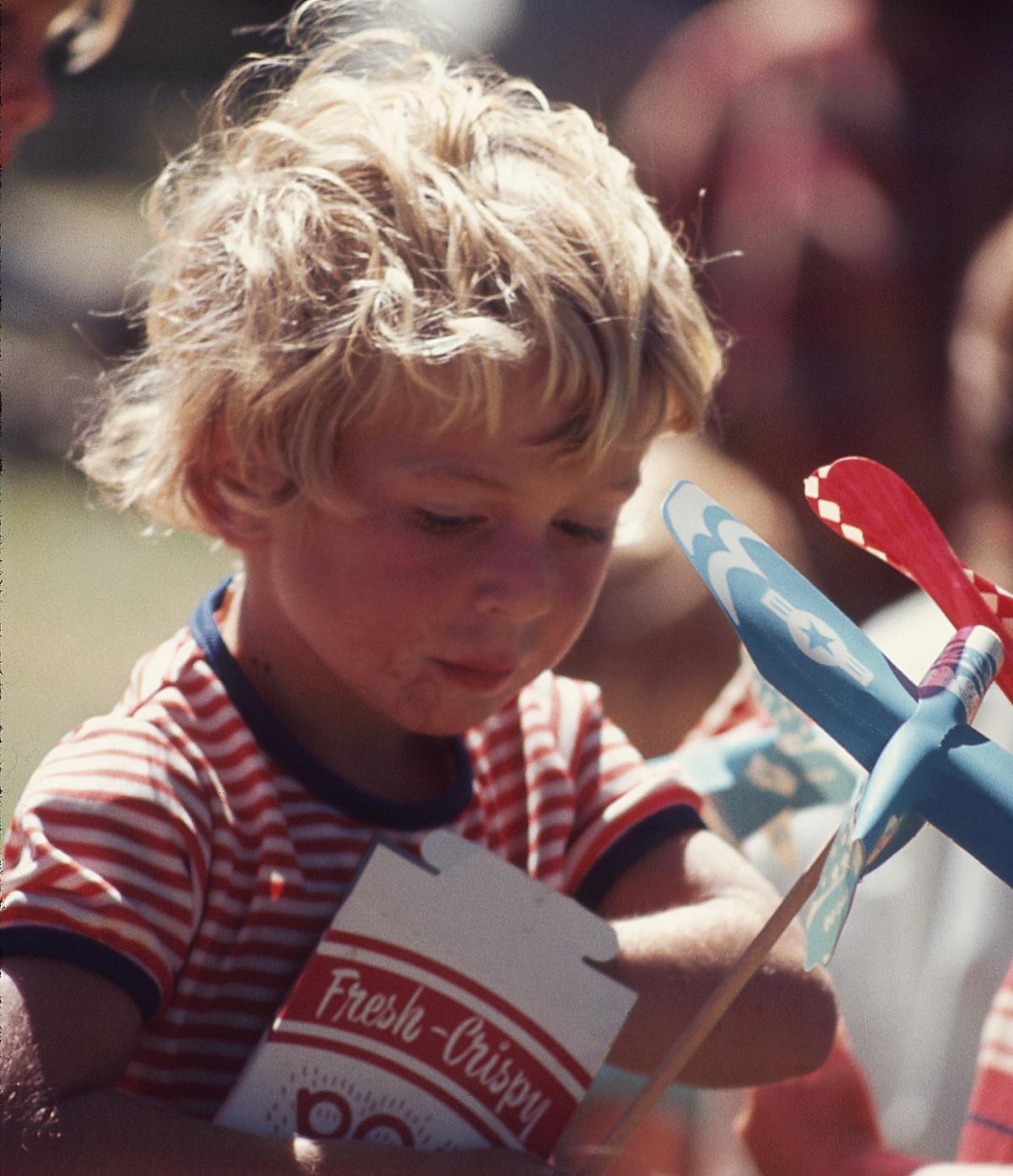
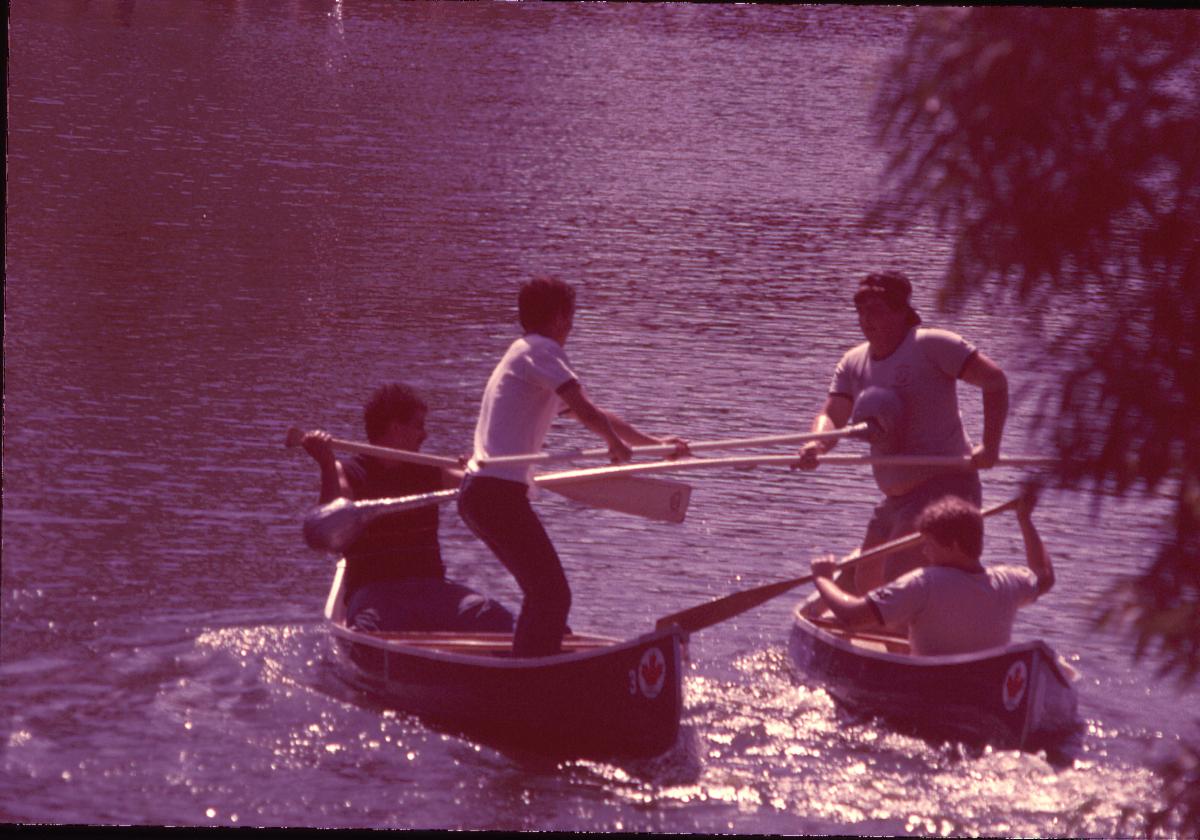
| | Celebrate Yankee Homecoming with Fran Dalton! | | There will be much more information on this extraordinary acquisition in the near future, but we are thrilled to announce that we have just accepted a comprehensive, multi-media collection of artifacts, primarily photographs, by Fran Dalton (1929-2010). This collection was preserved, catalogued, researched, and shared by Colleen and Frank Stiriti, and will now live in the Perkins Art & Research Center as we work on further documenting and processing Dalton's extraordinary body of work. For now, in no particular order, here are some of our favorite images from Yankee Homecomings in the past. Enjoy! | | Something Is Always Cooking... | | |
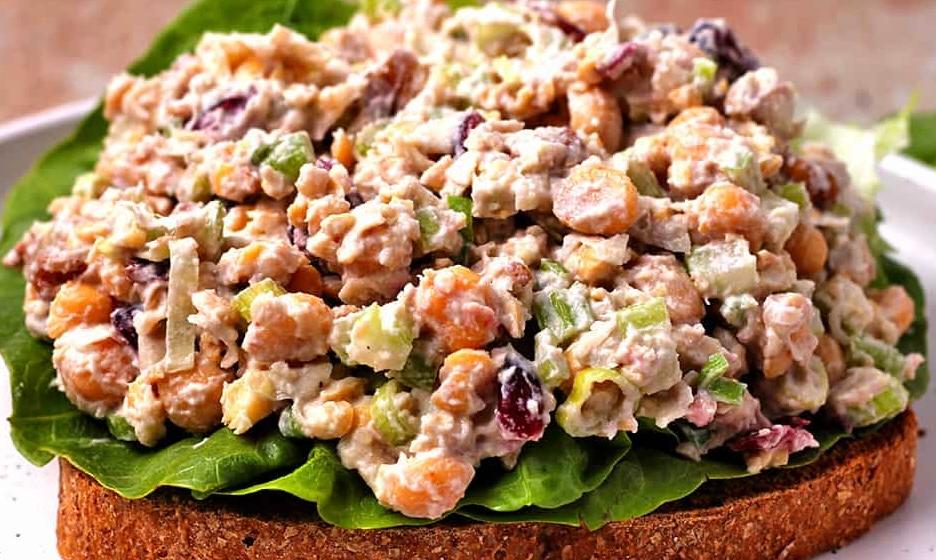
Chickpea Salad
A wonderful alternative to chicken or tuna salad (also, I'd be willing to bet if you serve this and don't say anything, no one will notice it's vegetarian).
Ingredients:
2 cans chickpeas, drained and rinsed
1 cup chopped walnuts
2/3 cup dried cranberries
2 stalks celery, chopped
1 onion or 2 scallions, finely diced
1/2 cup mayonnaise (add more if needed for better consistency)
1-2 teaspoons fresh lemon juice
3/4 cup crumbled feta cheese
1 good pinch of salt
fresh ground black pepper, to taste
Heat chickpeas in a large bowl in the microwave for 90 seconds.
Mash the chickpeas with a fork or potato masher to a lumpy consistency.
Add mayonnaise and lemon juice, mix well (if too dry, add more mayo).
Mix in remaining ingredients and chill.
Makes excellent sandwiches with fresh sprouts, kale or lettuce, or add to a garden salad as a mixable side.
Enjoy!
| | |
Click the image to do the puzzle
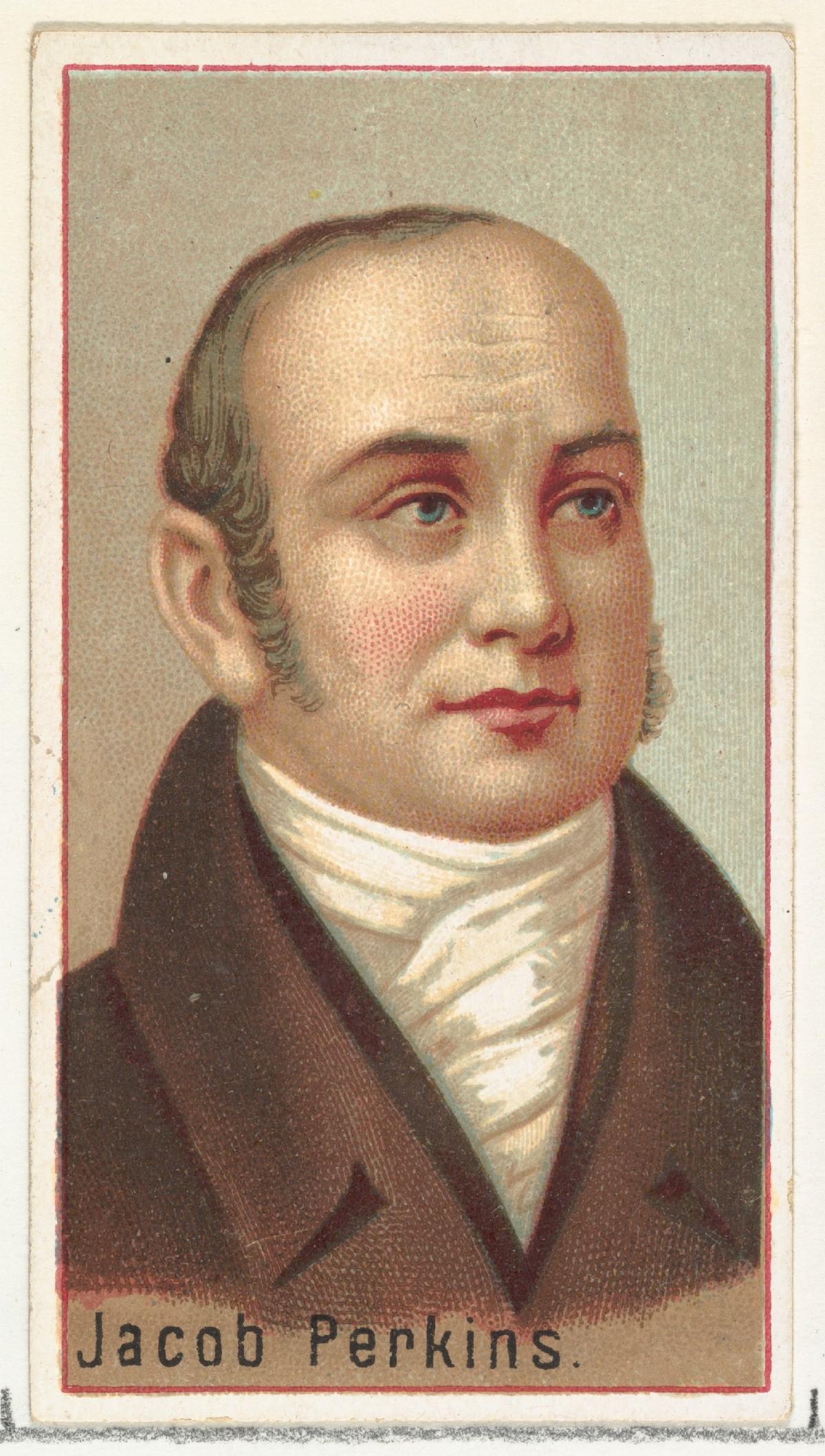
This image of inventor Jacob Perkins was produced by Allen & Ginter Cigarettes as part of their 1888 World's Inventors souvenir album. Courtesy of the Metropolitan Museum of Art.
| | |
Museum e-Newsletter made possible through the
generosity of our sponsors:
| | | | | |