Weekly Digest Number 15 - April 11, 2023 |
|
Welcome to the RWU Rail & Labor News! This news bulletin is produced and emailed out each Tuesday morning. We hope you find each week's news and information useful. If so, please share with co-workers, friends, and colleagues. If you like, you can sign them up to get all the news from RWU HERE. Or forward them the link. Note: If you read over this news bulletin each week, you will be sure to never miss the important news of what is going on in the railroad world from a worker's perspective!
|
|
(Editor's Note: RWU has been battling against excessively long and heavy trains for nearly a decade. See our Resolution from 2014 and our updated March 2023 version HERE. The article below makes the case well.)
|
|
The True Dangers of Long Trains
Trains are getting longer. Railroads are getting richer. But these “monster trains” are jumping off of tracks across America and regulators are doing little to curb the risk.
|
|
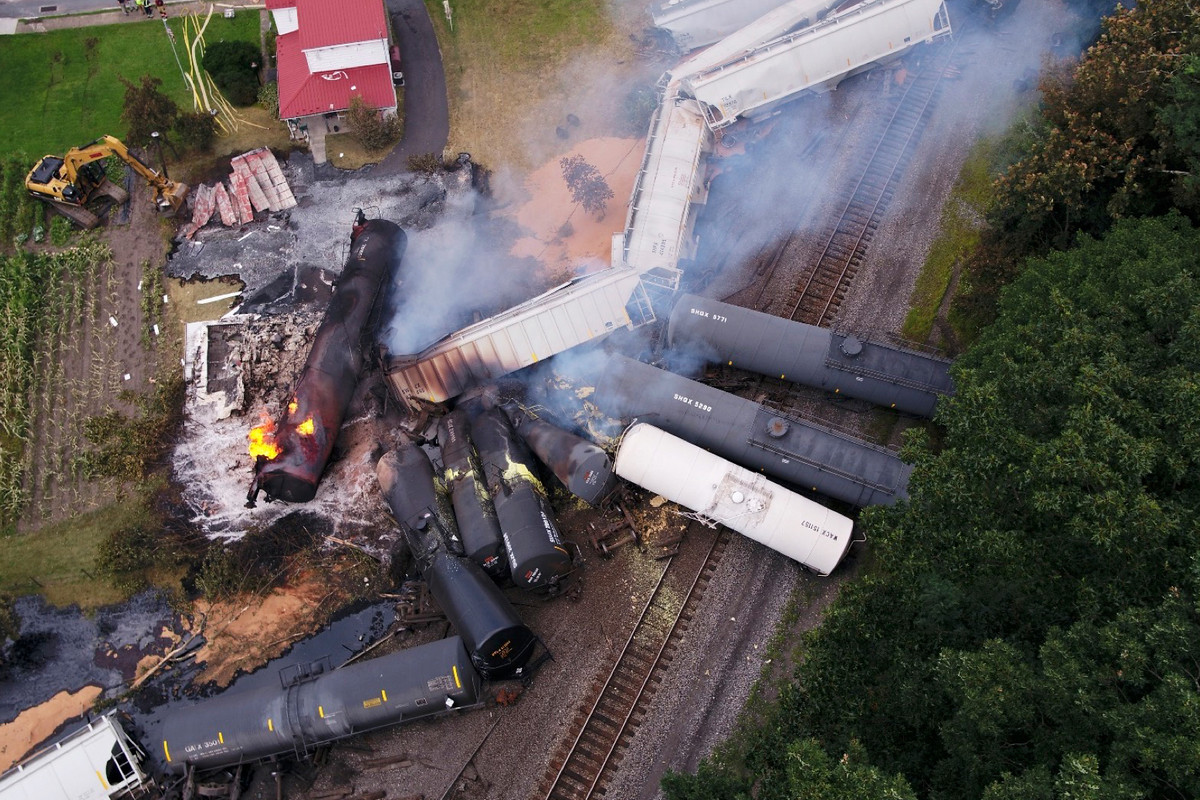
JUST BEFORE 5 A.M., Harry Shaffer’s wife called to him from across the living room, where he’d fallen asleep on the couch, exhausted from installing an aboveground pool. Did he hear that sound, that metallic screeching from up the valley? She opened the door of their double-wide trailer and walked outside as Shaffer closed his eyes.
A moment later came a thunderous crack of splintering lumber. Debris shot through the living room. Shaffer opened his eyes again to find a hulking train car steps from where he lay. It had shorn off the roof, exposing the murk of the pre-dawn sky. He jumped up and ran outside and saw the garage next door in flames.
Though it sat at the floor of a valley along a busy stretch of railroad tracks, the quiet town of Hyndman, Pennsylvania, hadn’t seen a major derailment in recent memory. Trains didn’t frighten residents like Shaffer even though 21 of them trundled through the town’s center day and night.
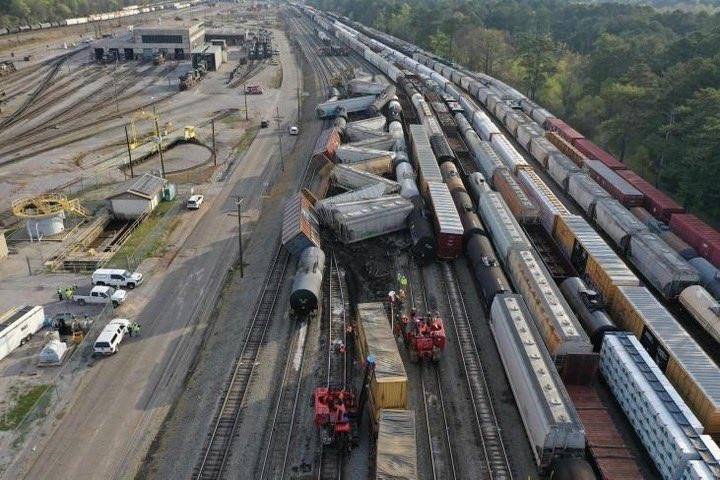
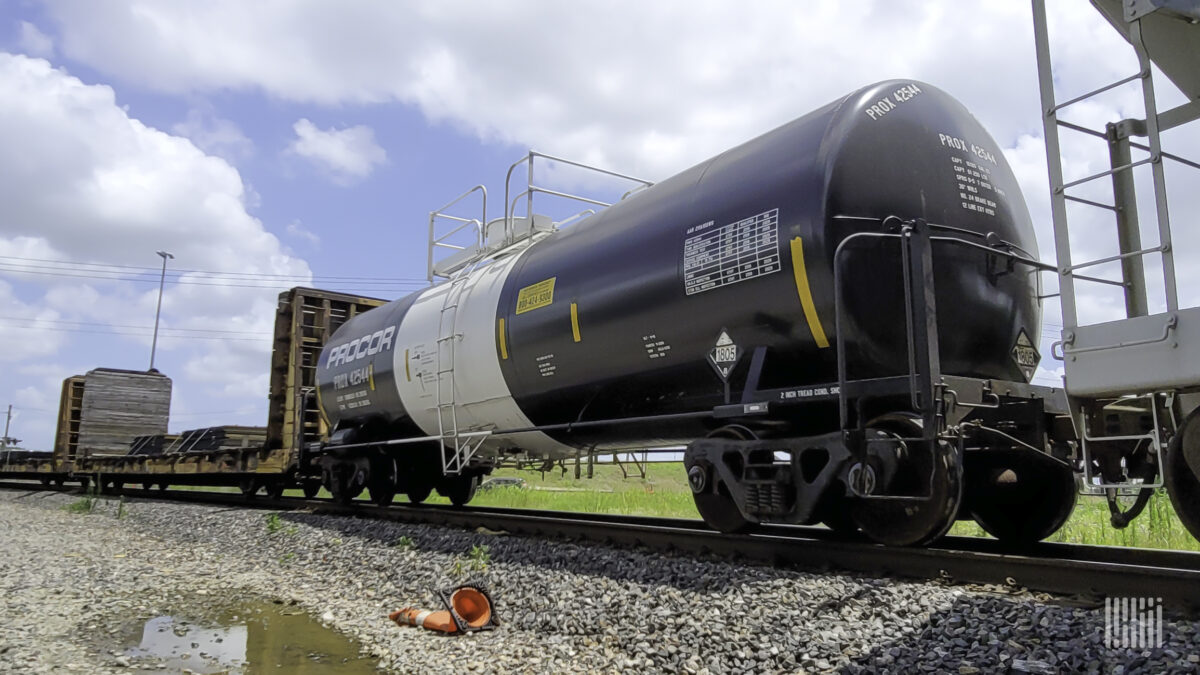
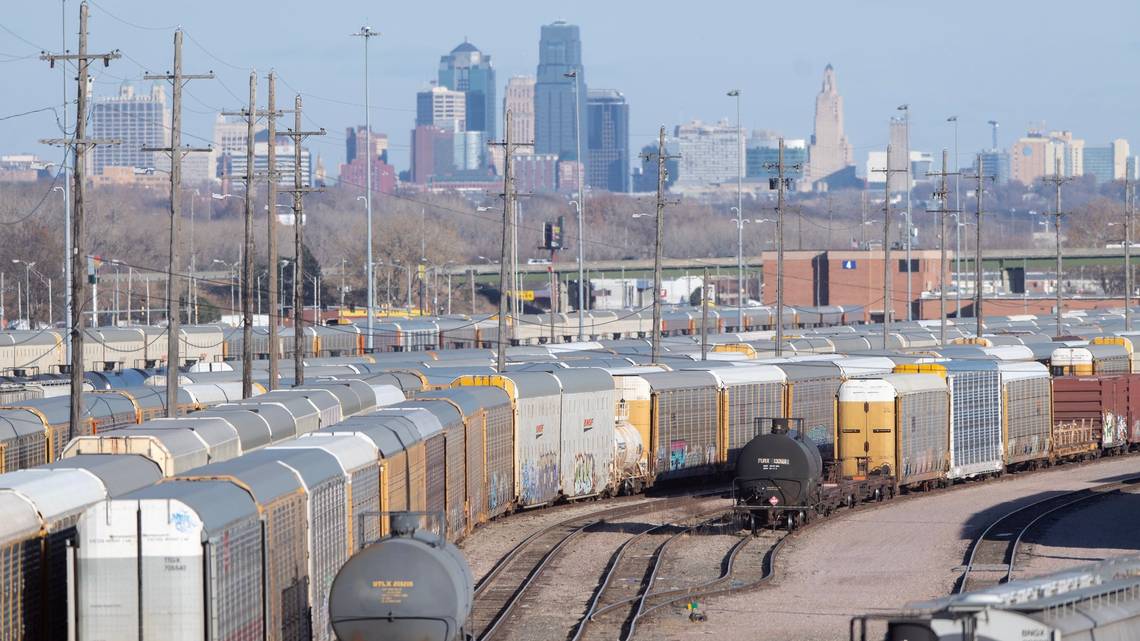
But unbeknownst to them, the corporations that ran those trains had recently adopted a moneymaking strategy to move cargo faster than ever, with fewer workers, on trains that are consistently longer than at any time in history. Driven by the efficiency goals of precision scheduled railroading, companies are forgoing long-held safety precautions, such as assembling trains to distribute weight and risk or taking the proper time to inspect them, ProPublica found. Instead, their rushed workers are stringing together trains that stretch for 2 or even 3 miles, sometimes without regard for the delicate physics of keeping heavy, often combustible tanker cars from jumping off the tracks.
Rail safety grabbed headlines this February after a Norfolk Southern train passed sensors designed to flag mechanical issues and catastrophically derailed in East Palestine, Ohio; Republicans and Democrats alike are now calling for tighter regulations on company operations, especially in light of precision scheduled railroading.
ProPublica’s reporting suggests they should start by looking at federal regulators’ ponderous response to the mounting warnings about the dangers of long freight trains.
Before that morning in Hyndman in August 2017, regulators had already investigated seven long-train accidents in which the length was a culprit, and the nation’s largest rail worker union had sounded alarms about a pattern of problems.
|
|
(Editor's Note: This article is based on a press release issued by RWU after 6 major derailments, on 6 different carriers, in 6 different states, all in the space of a week. Surprisingly, few outlets picked up this key story. ) |
|
Derailment Spree Proves Railway Regulations Urgently Needed, Say Union Members
"These companies siphon billions into share buybacks, dividends, and bonuses rather than into the vital maintenance and infrastructure growth we need to build a safe, modern, and thriving rail industry," said one worker.
|
|
After at least six major freight train derailments occurred across the United States over the past week, the need for stronger rail safety rules couldn't be clearer, an interunion alliance of rail workers said Monday.
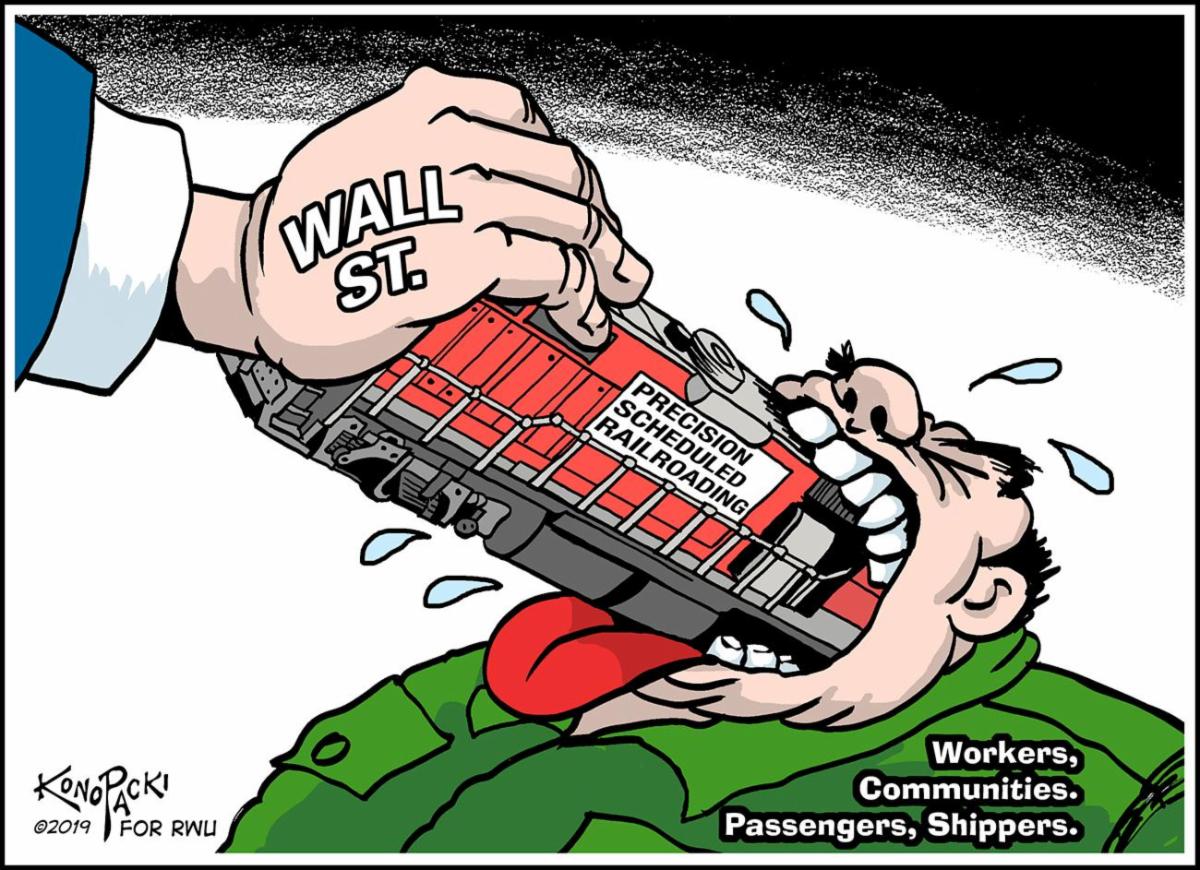
"The recent uptick in derailments across the U.S. highlights the dire need for stricter regulations on the length and weight of trains, as well as a focus on preventing unsafe operational practices such as precision scheduled railroading (PSR) which prioritizes short-term financial gains for Wall Street over the safety of communities and railroad workers," Jason Doering, a locomotive engineer and general secretary of Railroad Workers United (RWU), said in a statement.
The past week "was not a good one" for the nation's Class 1 rail carriers, RWU observed.
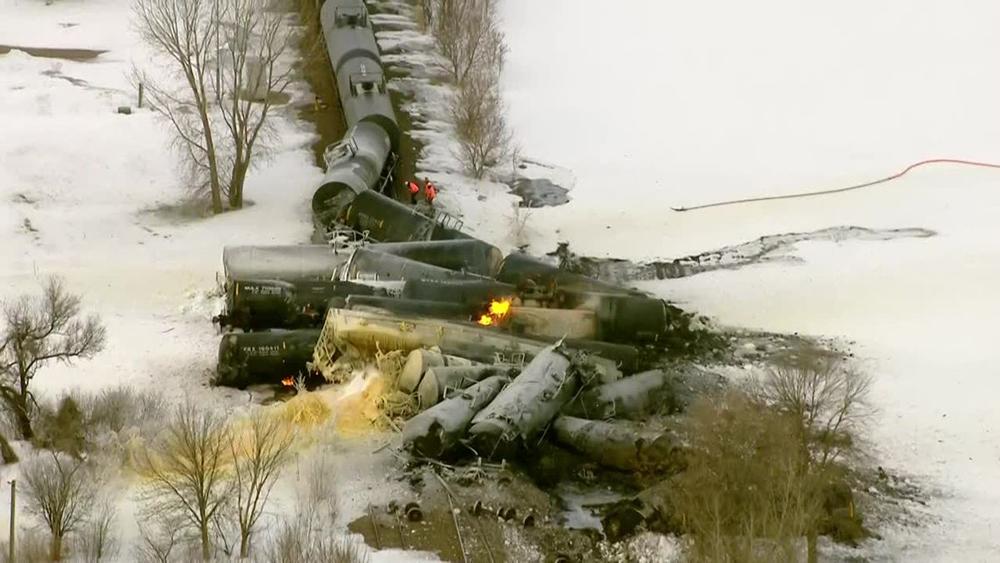
On Sunday, March 26, a Canadian Pacific train carrying hazardous materials careened off the tracks outside Wyndmere, North Dakota, spilling liquid asphalt and ethylene glycol and releasing propylene vapor.
Last Monday, a Union Pacific iron ore train reached 118 miles per hour as it ran away down Cima Hill in the Mojave Desert before wrecking on a curve, destroying two locomotives and 55 cars in San Bernardino County, California.
On Wednesday, a Canadian National iron ore train derailed in Butler County, Pennsylvania.
On Thursday, a BNSF train carrying ethanol and corn syrup crashed near Raymond, Minnesota, causing a fire that forced local residents to flee.
On Friday, a Norfolk Southern train went off the tracks in Irondale, Alabama.
|
|
(Editor's Note: With its irresponsible budget cuts to safe train operations, the industry has undermined the public's faith in rail as the safest and most environmentally sensitive form of transport for both freight and passengers.) |
|
East Palestine Has Put Railroads Under a Cloud of Suspicion: Analysis
Railroads can and must do better at preventing derailments
|
|
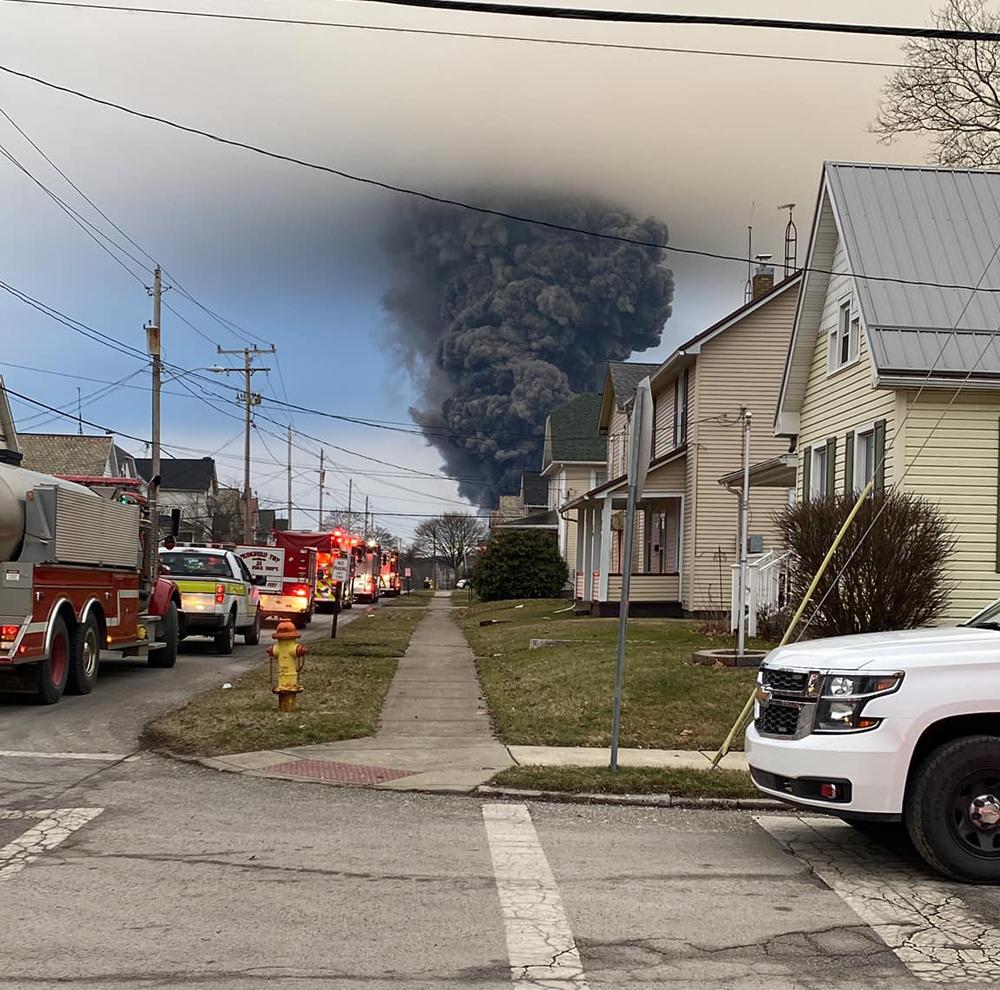
All the positive freight railroad safety statistics in the world — like more than 99.9% of hazardous materials shipments arriving without incident — can’t overcome that image of a towering column of black smoke rising from East Palestine, Ohio.
The toxic cloud from the Feb. 3 Norfolk Southern derailment did far more than upend 4,700 lives in East Palestine. It made people in trackside cities and towns across the U.S. wonder: What if that happened here? And an intense media spotlight on subsequent derailments has made it seem like no one can keep their trains on the rails.
So now there’s a rush in Washington to introduce more stringent railroad safety regulations. Instead of following the data and waiting for National Transportation Safety Board recommendations, politicians want to show that they are doing something to make railroads safer.
High-profile railroad disasters always lead to new safety rules. What’s different about East Palestine is that it has prompted a raft of proposed regulations that seem to have nothing to do with the wreck.
The NTSB said the derailment was caused by a wheel bearing failure. In its preliminary report, the board also said the train crew did nothing wrong, there’s no evidence of track problems, and the hotbox detectors on the route were working as designed.
The Rail Safety Act, introduced by Ohio Sens. J.D. Vance and Sherrod Brown, would regulate wayside defect detectors for the first time, expand handling rules for trains carrying hazardous materials, and require railroads to provide first responders with more funding and real-time data on hazmat shipments. These are logical responses, although an argument could be made that installing wheel bearing sensors on freight cars is a far better solution than adding more hotbox detectors.
The bill also is a legislative grab bag...
|
|
(Editor's Note: As the shipping e-newsletter Loadstar points out, PSR has taken a drubbing this past year. RWU sounded the alarm years ago, and promulgated a Campaign to oppose it when it took the rail industry by storm. At the time, the union officials were largely mute on the question. There were only a few voices in the wilderness, RWU among them. See our Resolution on the question HERE.)
|
|
Under mounting pressure from a string of derailments, US Class I railways are abandoning elements of their predominant operational strategy of recent years .
Precision scheduled railroading (PSR) is in retreat as legislative pressure on the carriers keeps building.
On 30 March, legislators in the House of Representatives tabled a bill aimed at improving railway safety – the fourth proposal in Congress to step up measures for rail safety since the derailment of a Norfolk Southern (NS) train in East Palestine, Ohio, in February, which forced the evacuation of residents as several rail cars carrying hydrochloric acid came off the rails.
The incident cast more light on railways widely accused of putting profit before safety and, if anything, that glare has intensified in recent weeks with news of more freight train derailments.
The latest rail safety initiative in Congress came hours after a BNSF train, carrying ethanol and corn syrup, derailed at the town of Raymond, in Minnesota. Hundreds of local residents had to be evacuated after four tank cars carrying ethanol ruptured and caught fire.
|
|
(Editor's Note: One of the hallmarks of PSR and its cost-saving methods is so-called "block swapping" that saves on switching/humping and initial train make-up. Now it is finally coming under the microscope along with other tenants of PSR for failing to build safe trains.) |
|
Regulators Say Railroads Must Examine How They Build Trains
By JOSH FUNK April 7, 2023
|
|
OMAHA, Neb. (AP) — Federal regulators said Friday that railroads need to re-examine how they assemble their trains after a string of derailments in recent years that were at least partly caused by the way empty and loaded cars were mixed together with locomotives.
Heavy cars at the back of a train can push and pull against empty cars in the middle of a train as it goes over hills and around corners. Those forces have become more of a problem as the industry increasingly relies on longer trains with a wide variety of freight aboard.
Another factor complicating the issue is the industry’s practice of placing locomotives throughout trains. The locomotives can amplify the forces if they’re not used correctly.
The Federal Railroad Administration’s advisory cites six derailments since 2021 where those forces were a factor. They include a Norfolk Southern derailment near Springfield, Ohio, last month and a 2021 Union Pacific derailment that forced the evacuation of Sibley, Iowa, for three days. Regulators say these kind of derailments are happening with increasing frequency.
Palestine, Ohio, that prompted much of the recent concern nationwide about railroad safety as an example of this problem. The National Transportation Safety Board has said that an overheated bearing that caused an axle to fail on one of the railcars likely caused that derailment.
But it is still early in the East Palestine investigation so it’s not clear if the makeup of the train was also a factor.
“Railroads must prioritize proper train makeup to maintain safety, prevent accidents, and optimize train performance,” the railroad administration said in the advisory. “Further, all operating employees must be properly trained in these technologies and the handling of complex trains to ensure safe operation and minimize human error.”
All of the derailments the FRA mentioned involved trains with at least 125 cars. In every case an empty car was the first to come off the tracks. The order doesn’t specifically single out long trains, but the kind of forces regulators are concerned about are amplified in longer trains, especially if large blocks of empty cars are placed in the middle or front of a train.
|
|
(Editor's Note: The "interlocking directorates" between industrial companies, investment firms, attorneys, and politicians knows no bounds. This is a classic case.) |
|
Investment Giant Under Fire Over Ohio Chemical Disaster
By Conor McGlone
Published Tuesday, April 4, 2023
The same investment firm that is the largest owner of a train company being sued over a devastating derailment and chemical spill in Ohio, is also a major shareholder of the chemical company that was transporting the hazardous chemicals, E&T can reveal.
|
|
Vanguard is the world’s second-largest fund firm and asset manager with about $7.2 trillion of assets on its books. It is the largest stake in Norfolk Southern, the train company being sued by the State of Ohio after one of its trains derailed in the town of East Palestine in February. The accident led to the open-air burning of around 100,000 gallons of toxic vinyl chloride.
Vanguard is also the third largest shareholder of Occidental Petroleum, the parent company of Oxy Vinyls, the firm which owned three of the five train cars that contained the hazardous chemical.
This arrangement has led to anger from campaigners, who say individual investors should “know the negative impacts of their investments.”
The chemicals were travelling from Oxy Vinyls’ plant in Deer Park, Texas to its facility in Niagara Falls, Ontario on 3 February when the two-mile long 32N train derailed.
Oxy Vinyls is one of the biggest producers of PVC in the world and it has “a long history of community and worker safety concerns”, according to the campaigning group Toxic-free future. In 2021 ex-employees of a New York State plant, which has since been closed, spoke out about their exposure to asbestos and accused the company of failing to enforce safety rules.
The firm also has a history of accidents. In June last year, a fire at its plastics production facility in La Porte, Texas, raised concerns about the potential release of ethylene oxide, but no “protective measures” for the community were advised by officials.
In 2012, 20,000 gallons of vinyl chloride destined for Oxy Vinyl’s facility in Pedricktown, New Jersey was released into Mantua Creek in Paulsboro, after a train was derailed when a bridge jointly owned by Norfolk Southern and another rail operator failed to function properly.
|
|
Norfolk Southern’s Huge Profits go 80 Percent to Top Honchos’ Checks
|
|
CLEVELAND - Unions, safety specialists, and now - the residents of East Palestine, Ohio, have contended that corporate greed drove Norfolk Southern Railway to cut corners on safety inspections and prevention, thus leading to the disastrous Feb. 3 wreck there.
But buried deep in the March 31 federal Justice Department filing, for both itself and the U.S. Environmental Protection Agency, against Norfolk Southern in U.S. District Court in Cleveland, comes confirmation of the extent of that greed—and it’s mind-boggling.
To be precise, “80 percent of the compensation” for Norfolk Southern’s top honchos, including its CEO, depends on how big its profit margin is. The larger the profit, the larger their pay.
That’s an incentive to reduce human safety inspections, let experienced workers go, force remaining workers to shoulder jobs they weren’t trained for, and line up rail cars in an unsafe way, with heavy tank cars in the rear, to satisfy their profit model, precision scheduled railroading, and cut trains to just one crew member, the engineer, rail unions say.
|
|
(Editor's Note: Sooner or later the operating crafts will settle with the Class Ones on sick time deals. The TA here seems to be a cut above what has been negotiated to date. The devil may well be in the details however.) |
|
CSX Becomes First Railroad to Reach Sick Time Deal with Conductors’ Union
SMART-TD B&O members must ratify agreement
|
|
JACKSONVILLE, Fla. — CSX Transportation has reached a tentative agreement with the Sheet Metal, Air, Rail and Transportation Workers-Transportation Division B&O union to provide trainmen and conductors with paid sick leave benefits.
Pending ratification by SMART-TD B&O members, the agreement will increase the number of CSX operating employees with paid sick leave benefits to more than 10,000, or 60% of the company’s union-represented workforce, the railroad announced today.
CSX CEO Joe Hinrichs. CSX
“I want to thank the SMART-TD B&O leadership for working with us to reach this important agreement for their members and adding to the progress we’re making together to improve the work experience for front-line employees who create value for our customers,” CEO Joe Hinrichs said in a statement.
The terms of the SMART-TD B&O agreement provide for five days of paid sick leave annually plus an opportunity to convert two days from personal leave to sick leave.
|
|
(Editor's Note: It is all getting a little confusing out there with all of the legislation in the field. Multiple bills now in the House a Senate. Most all of them have their shortcomings and loopholes, as to be expected.) |
|
Latest Rail Safety Bill Takes Aim at Wheel-Related Train Derailments
Pennsylvania, Ohio lawmakers focus on rail car inspection, switchyard operations
|
|
Lawmakers from Pennsylvania and Ohio have introduced another rail safety bill in Congress that addresses rail car inspections and maintenance and calls for the Federal Railroad Administration to examine the causes of and mitigation strategies for wheel-related train derailments.
The bill, called the Railway Accountability Act, was introduced by Pennsylvania Sens. John Fetterman and Bob Casey and Ohio Sen. Sherrod Brown, all Democrats, and builds on another rail safety bill they introduced with other lawmakers in early March.
The March bill calls for establishing requirements for wayside defect detectors; compelling railroads to notify state emergency responders when trains carrying hazardous materials are passing through their states; increasing penalties for violating rail safety regulations; and mandating train crews of at least two or more workers.
This latest bill focuses on rail car inspection and maintenance, as well train operations at the switchyard. Included in the bill are the following provisions:
- Compel the Federal Railroad Administration (FRA) to examine the causes of and mitigation strategies for wheel-related train derailments, with an eye toward creating regulation that would come from the findings. This would include examining why and when vertical split rim failures occur.
- Prohibit trains from being moved during brake inspections.
|
|
(Editor's Note: Promulgated by SMART-TD, the bill has the support of both unions of the operating crafts. Rail union representatives along with RWU members, and representatives of other unions, the Sierra Club, Progressive Leadership Alliance of Nevada (PLAN) and others testified in favor of the rail safety bill.) |
|
Nevada Bill Targeting Train Safety Gains Steam Amid National Derailments
|
|
A new proposal heard by lawmakers this week could set the maximum length of a train running through Nevada to just 7,500 feet, or just over 1.4 miles, a move that comes amid a rash of high-profile train derailments — including a devastating chemical spill in East Palestine, Ohio in February.
Sponsored by the Assembly Committee on Growth and Infrastructure, AB456 would look to cut down on the size of trains that can often reach or exceed 3 miles long and weigh more than 60 million pounds — “monster trains” that bill proponents argued are more difficult to crew and maintain, more easily spur delays and are more prone to mechanical failures. No such limits on train length exist under federal law.
“Just to give you an idea of these forces, we are seeing some cars, in certain scenarios, literally ripping in half like a cracked egg,” Gabe Christenson, a freight railroad engineer and conductor, told the committee during a hearing Tuesday.
Twenty-seven trains derailed in Nevada between 2021 and 2022, including a six-month period in 2022 that saw nine derailments, according to research from the Legislative Counsel Bureau presented Tuesday. Notably, in 2019, a train carrying military small arms and hand grenades as well as hazardous materials derailed in eastern Nevada, briefly shutting down Interstate 80, even though no hazardous material or munitions were spilled.
More recently, at least two trains have derailed near the Nevada border, including a train carrying corn syrup through Arizona on March 15. Last week, another train carrying iron ore near Baker, California caught fire after it derailed.
|
|
(Editor's Note: This lengthy article, from of all places The Council on Foreign Relations, points out some of the shortcomings of U.S. railroading, and makes comparisons with other nations' infrastructure and operations.) |
|
How the U.S. Rail System Works
A spate of train derailments, most notably in East Palestine, Ohio, has reinvigorated the debate over the nation’s railroad infrastructure. Here’s how U.S. rail could be brought up to speed.
|
|
Introduction
Coast-to-coast railroads helped build the modern United States into an economic powerhouse, and they continue to play an important if controversial role. Today, privately owned freight rail remains competitive with other modes of transportation, carrying energy supplies and crucial industrial materials. Spurred by decades of consolidation, a handful of freight companies have become increasingly efficient and profitable, but critics say these gains have come at the cost of poor labor conditions and weakened safety controls.
Meanwhile, passenger rail has struggled. Systems in Asia and Europe outpace those in the United States by a wide margin, leading to calls for more funding and proposals to build high-speed trains. But skeptics say the benefits of high-speed rail are overblown and the costs astronomical. After decades of disinterest from Washington, the Joe Biden administration is prioritizing infrastructure spending, with over $100 billion earmarked for investment in rail.
What is the state of U.S. rail infrastructure?
The U.S. rail network is among the most extensive in the world, comprising more than 140,000 miles of track. The majority of that network is owned and operated by freight rail enterprises. Amtrak, the federally chartered U.S. passenger railroad operator, runs on 21,400 miles of track, nearly three-quarters of which is leased from private companies.
|
|
(Editor's Note: The rail unions at Amtrak need to raise hell to Congress about this failure. The future of the Amtrak national network and the grandiose scheme to rebuild the U.S. passenger train network is in dire jeopardy. Amtrak must act NOW by rebuilding damaged and stored rail cars and otherwise augment its fleet to provide the necessary accommodations to make the national network viable.) |
|
Amtrak Mobility, Pricing Affected by Sidelined Long-Distance Equipment: Analysis
With annual funding request up for debate, data makes case for investment in national-network capacity to capture more ridership, revenue
|
|
WASHINGTON — For passengers on long-distance trains, compared to those on the Northeast Corridor, Amtrak is falling short of its pledge to “restore our business to pre-pandemic levels,” as voiced by Vice President Dennis Newman at a public Board of Directors meeting in St. Louis last December.
Demand for long-distance travel was the strongest among the company’s product lines as travel resumed following the pandemic, but capacity issues meant those trains could not fully meet demand [see “Analysis: coach sellouts hinder …,” Trains News Wire, Jan. 4, 2021]. And the company did not sufficiently reverse the long-distance shortfall as it bulked up departures elsewhere.
Now, a Trains News Wire analysis of revenue and ridership trends shows that Northeast Corridor and state-funded routes have begun to show larger gains than the capacity-constrained long-distance network.
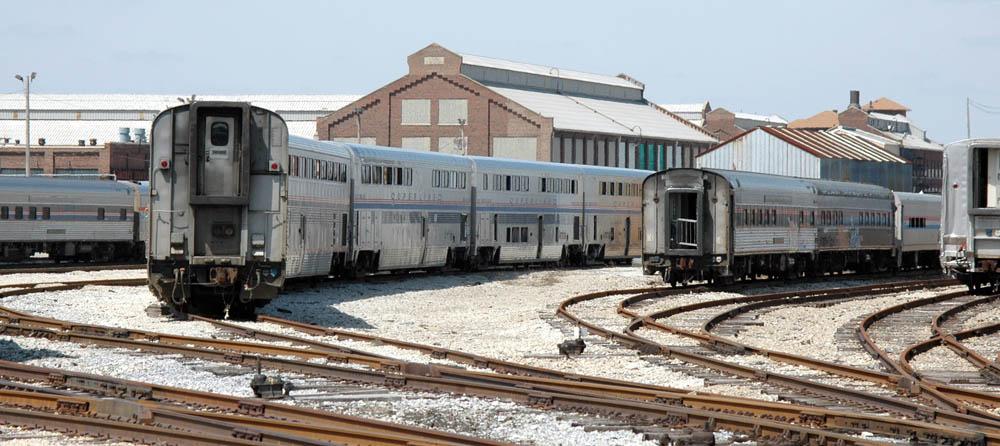
The long-distance capacity issues have their roots in the reduction of service from daily to three or five times per week (along with the suspension of the Silver Meteor for eight months in 2022). This permitted Amtrak to store much of the equipment and decrease the workforce necessary to run daily schedules. Though frequencies have been restored, management has not prioritized returning enough sidelined Superliners, Viewliners, and Amfleet II coaches to active duty. (Amtrak has regularly cited an ongoing shortage of maintenance personnel for the large number of cars still out of service)
|
|
(Editor's Note: Compared to last week's 6 wrecks, this has been a relatively "good" week ... if you discount that fact that two rail workers were injured.) |
|
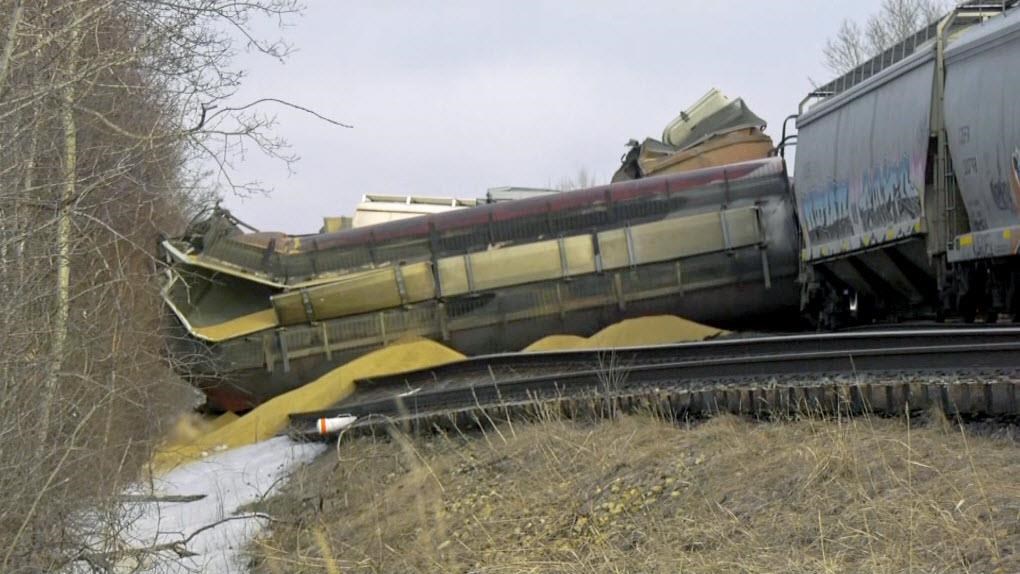
Weekly Derailment Department |
|
|
|
|
|
|