September 1, 2026. Volume 21, Issue 17 | |
The Cold Climate Stormwater Center of Excellence now has its own email newsletter! The Cold Climate Currents summer 2026 edition features articles on Building Better BioFilters for Colder Climates, Chloride Reduction Training Inventory, Training for 1,400+ Professionals and More to Come, and Conference-Quality Learning, No Travel Required. Click the button below to sign up to receive this quarterly email newsletter! | Minnesota Stormwater Seminar Series | Data-Driven, Unbiased Metrics to Evaluate BMP Water Quality and Hydrologic Mitigation Performance | Please join us NEXT WEEK in person or online on September 10, 2026 for the next Minnesota Stormwater Seminar Series event - a monthly experience featuring national, state, and local experts on stormwater and green infrastructure. | |
Presenters & Panelists:
-
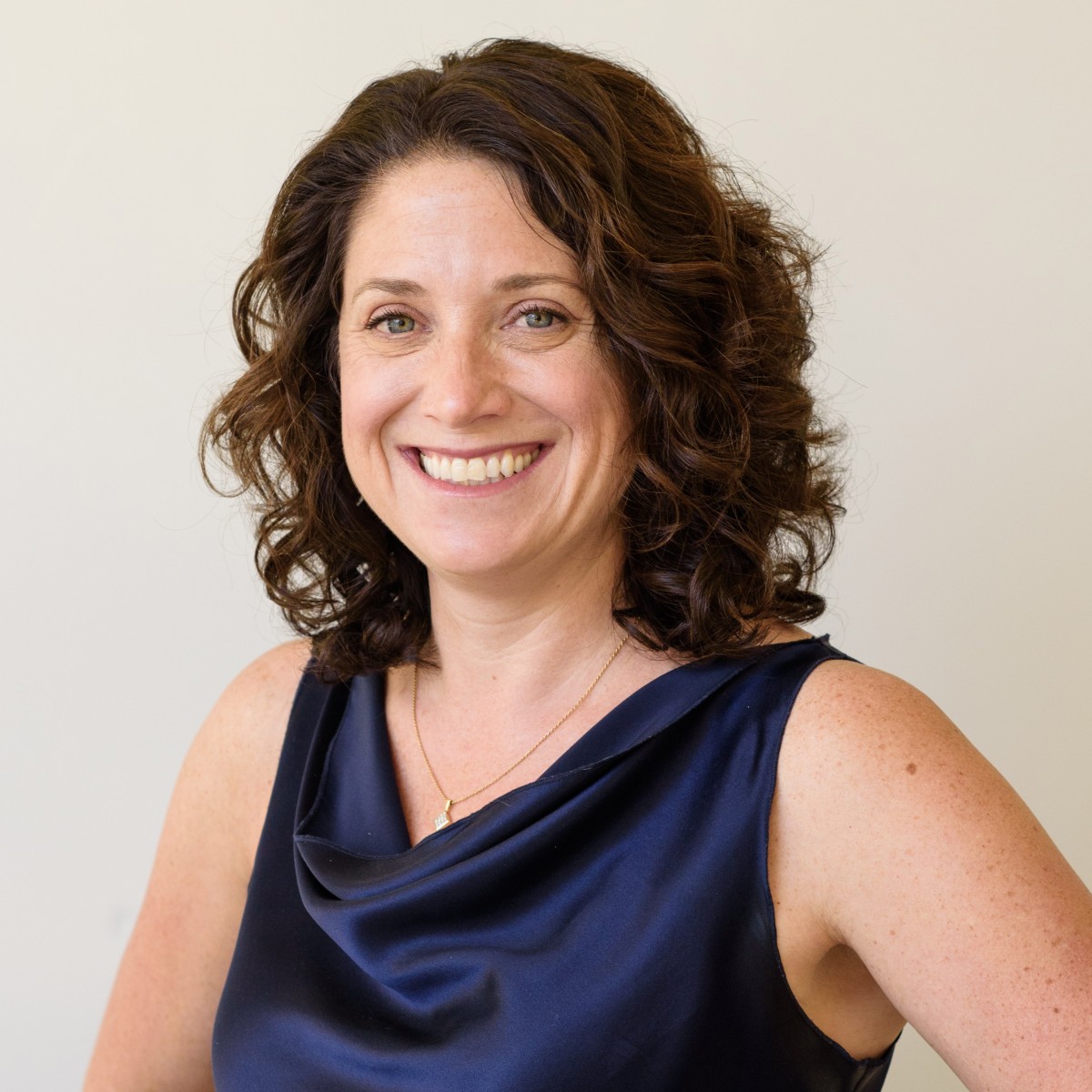
Keynote: Elizabeth Fassman-Beck, Engineering Department Head, Southern California Coastal Water Research Project (SCCWRP).
-
Panelist: Tim Sundby, Carver County WMO
-
Panelist: Mike Kinney, Comfort Lake Forest Lake WD
| |
Abstract: Stormwater BMP implementation and maintenance demand substantial municipal budgets to comply with NPDES permits. Pollutant treatment and runoff reduction are primary goals of BMPs; however, few BMPs can treat all concerns equally, and maintenance condition influences BMP functionality. Interpreting the success or failure of a BMP using common metrics such as %- removals requires subjective judgement of the engineer, manager, or regulatory reviewer.
Since Dr. Fassman-Beck’s last seminar in Minnesota, she has led the development of new BMP performance indices for water quality treatment and hydrology (runoff capture volume) to convert quantitative field monitoring data to simple, unbiased categorical performance determinants with clear management implications, including corrective actions. The index benchmarks performance against specific water quality and runoff capture volumes design goals, while considering operating conditions on a storm-by-storm basis. The index value enables objective assessments across a range of pollutant types, water quality goals, design specifications and/or implementation across a wide variety of landscape settings. The unbiased and transferable metrics enable post-construction performance evaluation of a unique BMP, or amongst BMPs of the same or different types, while deconstructing metrics provide information to support maintenance and planning, for example by tracking performance over time. An open-source web application and calculator have been developed to implement and explore the BMP Performance Index.
Applying the BMP Performance Index to field monitoring data from the Southern California Stormwater Monitoring Coalition’s Regional BMP Monitoring Network, this seminar will show how the Performance Index is informing regional management decisions in relation to TMDL compliance.
| |
DATE & TIME: Thursday, September 10, 2026, 10a - 12p US Central
In-person: St. Anthony Falls Laboratory Auditorium (2 Third Ave SE, Minneapolis, MN). THERE IS NO PARKING AVAILABLE AT SAFL. We recommend you consider biking (bike racks available at SAFL), mass transit, or parking in the 212 SE 2nd Ave parking garage, free or metered parking along nearby side streets (3rd Ave, Main Street, etc.) and give yourself about 10-15 minutes to walk down to SAFL (2 Third Ave SE).
Online: https://z.umn.edu/mn-stormwater-seminar-series (active 10 minutes prior)
Registration: Click here to learn more and Register
| |
About the MN Stormwater Seminar Series:
The Minnesota Stormwater Seminar Series is a monthly program featuring national, state, and local experts in unique discussion panels that share their research, knowledge, and innovations in stormwater and green infrastructure. This seminar series is a program of the University of Minnesota's St. Anthony Falls Laboratory and Water Resources Center. The seminar is supported by the Minnesota Stormwater Research Council, the Clean Water Land and Legacy Amendment by appropriation through the Clean Water Fund, and in kind by the Cold Climate Stormwater Center of Excellence, which is funded by the U.S. Environmental Protection Agency and co-directed by the University of New Hampshire and the University of Minnesota, in partnership with the National Municipal Stormwater Alliance.
See the full schedule here or visit our YouTube Channel for all recordings.
| |
Past Minnesota Stormwater Seminars (YouTube Channel):
-
Engineered Amendments for Climate-Resilient Green Infrastructure featuring Sanjay Mohanty, UCLA, and local experts.
-
Adaptive Level Control Systems – Research on Maximizing Stormwater Pond Functionality featuring Cory Anderson, Sarah Stratton, and local experts.
-
Can stormwater pond sediment be managed as a valuable resource instead of a costly waste? featuring Dr. Francine Kelly-Hooper, GHD, and local experts.
-
Minnesota Watersheds: Uniquely Equipped to Address Water Resource Challenges featuring Louis Smith, Smith Partners, and local experts.
-
The Green Stormwater Revolution: What Have We Learned and What's Next? featuring Rob Traver, Villanova University, and local experts.
-
Stormwater reduction and pollutant sourcing from urban trees featuring Xue Feng (UMN), Diana Karwan (UMN), and local experts.
-
Addressing the challenge of water-soluble emerging contaminants in green stormwater infrastructure featuring Greg LeFevre, University of Iowa, and local experts.
-
Urban Flash Flood Detection with Low-Cost IoT Sensor Networks featuring Bill Selbig, USGS, and local experts.
-
Enhanced Street Sweeping: America's First Line of Defense in the Abatement of Urban Stormwater Pollution featuring Roger Sutherland, Cascade Water Resources, LLC, and local experts.
-
Performance and Maintenance of Sand Filters Amended to Retain Phosphate featuring John S. Gulliver, St. Anthony Falls Lab & University of MN, and local experts.
-
Managing Stormwater Ponds for Optimal Function: Characterizing Phosphorus and HAB Export, Plus a New Tool for Prioritizing Maintenance Needs featuring Katie Hembre (Stantec), Dr. Poornima Natarajan (UMN SAFL), and local experts.
-
Using Winter Chloride Management to Reduce Impacts of Winter Maintenance Operations featuring Laura Fay, Montana State University, and local experts.
-
Turning tight spaces into big solutions: testing a high-volume stormwater filter at Rosland Park featuring Andy McCabe, Barr Engineering, Erica Sniegowski, Nine Mile Creek Watershed District, and local experts.
-
Extreme Weather Impacts Across the Water Sector Sunny Wescott, Cybersecurity and Infrastructure Security Agency (CISA) Chief Meteorologist and Federal Emergency Response Official and local experts.
-
Assessment of urban stormwater chloride and its impact on surface water trends featuring Dr. Ben Janke, Dr. Jacques Finlay, and local experts.
-
Funding and technical assistance for stormwater management and green infrastructure featuring Robyn DeYoung, US EPA; Travis Ostrom, US EPA, and local experts.
-
Moving towards multi-functional stormwater management systems featuring Lauren McPhillips, Penn State University, and local experts.
-
Watershed-scale effectiveness of green stormwater infrastructure featuring Aditi Bhaskar, University of Colorado Boulder, and local experts.
-
Emerging policy issues that may influence future stormwater management efforts featuring Chris Kloss, U.S. EPA, and local experts
|
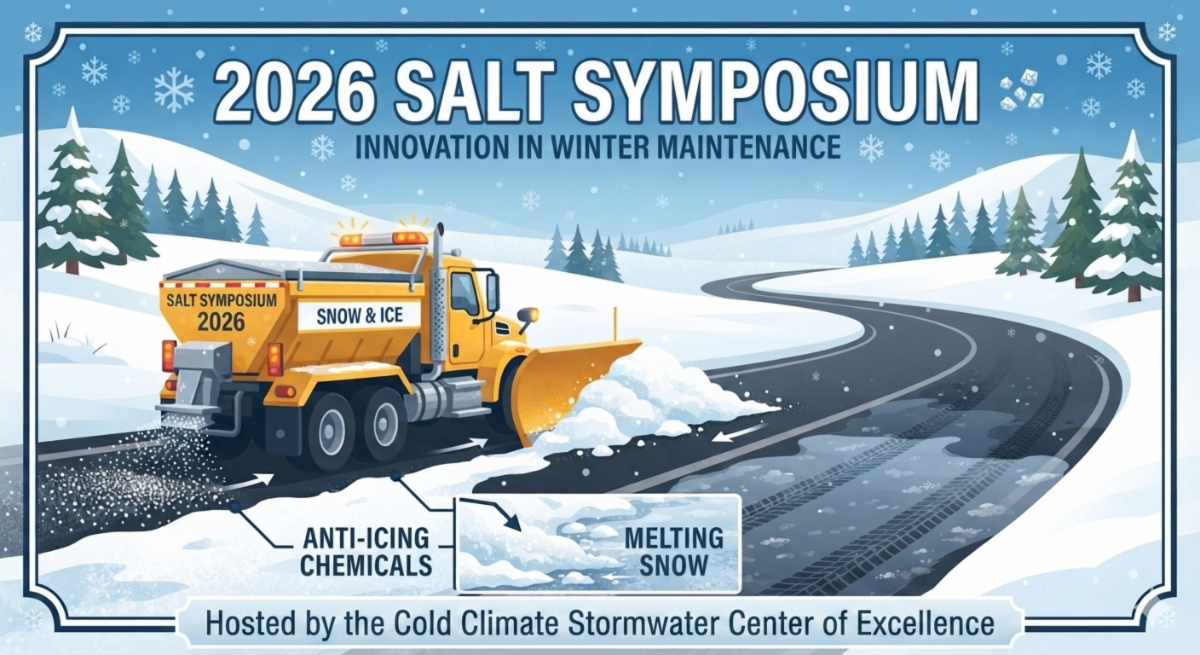
2026 Salt Symposium
The 2026 Salt Symposium marks an exciting new chapter in one of the nation’s leading forums on chloride reduction, winter maintenance, and freshwater protection. Now hosted by the University of Minnesota Cold Climate Stormwater Center of Excellence (CCSCoE), the Symposium continues its long-standing mission of bringing together researchers, public agencies, industry leaders, educators, and practitioners to advance innovative, science-based solutions for managing salt use in cold climates. Building on more than two decades of collaboration and leadership established by Fortin Consulting, the Freshwater Society, and Bolton & Menk, the 2026 Salt Symposium will expand opportunities for research, training, and cross-sector collaboration focused on protecting infrastructure, water resources, and community safety while designing a lower salt future.
- Program will be released soon!
- Registration is now open!
- Sponsorship Opportunities are available!
| | |
Visit our website for more:
- Natarajan, P., Weiss, P.T., and Gulliver, J.S. (2026). "Runoff Quality from Paved Low-Volume Roads." Journal of Sustainable Water in the Built Environment, 12(4). https://doi.org/10.1061/JSWBAY.SWENG-717
- Herb, W., Natarajan, P., Janke, B.D., Gulliver, J.S, and Finlay, J.C. (2026). "Wet Pond Modeling for Contaminant Retention and Maintenance." MnDOT Report no. MN 2026-18, Office of Research & Innovation, Minnesota Department of Transportation. Retrieved from the University of Minnesota Digital Conservancy, https://hdl.handle.net/11299/279529
- Gallagher, N. D., Erickson, A. J., & Gulliver, J. S. (2026). "Nonstationarity in Records of Extreme Precipitation Frequency for the Upper Midwest." Journal of Hydrologic Engineering, 31(4). https://doi.org/10.1061/JHYEFF.HEENG-6830
- Finlay, J.C., Janke, B.D., Natarajan, P., Larkin, D.J., and Distel, J. (2026). "Managing urban pond vegetation to enhance water quality benefits." Final report to the Minnesota Stormwater Research Council, St. Paul, MN. https://hdl.handle.net/11299/279603
- Overbo, A., Heger, S. and Gulliver, J.S. (2025). "Examining Chloride in an Agricultural Watershed Using a Chloride Balance Model," Environmental & Engineering Geoscience 31 (2): 101–117. https://doi.org/10.21663/EEG-D-24-00083
- Natarajan, P., Janke, B.D., and Finlay, J.C. (2025). “Enhancement and Validation of a Stormwater Pond Assessment Tool.” Project Report No. 610, St. Anthony Falls Laboratory, University of Minnesota, Minneapolis, MN. April 2025. Retrieved from the University Digital Conservancy, https://hdl.handle.net/11299/273518
- Natarajan, P., Gulliver, J.S., Cai, M., McCollor, M., and Singh, R. (2025). "Research Needs for the Sustainable Application of TDA in Stormwater Infiltration and Treatment." Project Report No. 608, St. Anthony Falls Laboratory, University of Minnesota, Minneapolis, MN. May 2025. Retrieved from the University Digital Conservancy, https://hdl.handle.net/11299/272727
- Burrows, L.J., Gulliver, J.S., Erickson, A.J, and Weiss, P.T. (2025). "Iron Enhanced Sand Filters Performance and Maintenance Meta-Analysis." Project Report No. 609, St. Anthony Falls Laboratory, University of Minnesota, Minneapolis, MN. May 2025. Retrieved from the University Digital Conservancy, https://hdl.handle.net/11299/271303
- Singh, R. and J.S. Gulliver (2024). "Understanding the Role of Biofilms and Estimation of Life-Span of a Tire Derived Aggregates-based Underground Stormwater Treatment System," Water Research, 257, 121716. https://doi.org/10.1016/j.watres.2024.121716 Presentation on the project: https://youtu.be/NZ2PSlRm3-E?si=hgiY7Ly62NTIEFfK&t=294
- Gulliver, J.S. and Erickson, A.J. (2024). "Measuring Infiltration within Green Stormwater Infrastructure (GSI) Filtration and Infiltration Basins: Years 1 – 3," Proj. Rep. 606, St. Anthony Falls Laboratory, University of Minnesota, Minneapolis, MN. https://hdl.handle.net/11299/263948
- Erickson, AJ, Gulliver, JS, and Weiss, PT. (2024). "Stormwater BMP Inspection and Maintenance Resource Guide." MnDOT Report no. MN 2024-09. https://www.cts.umn.edu/publications/report/stormwater-bmp-inspection-and-maintenance-resource-guide and https://researchprojects.dot.state.mn.us/projectpages/pages/projectDetails.jsf?id=28083&type=CONTRACT Minneapolis, MN, June 2024. Recorded presentation on this project: https://youtu.be/NZ2PSlRm3-E?si=R6ZSV9Vf0frUy9Ak&t=1129
| | St. Anthony Falls Laboratory | 2 Third Ave SE, Mpls, MN 55414 | https://cse.umn.edu/safl | | | | |