April 2026 | Rooted in Community


Bits from Beth

Hello April.


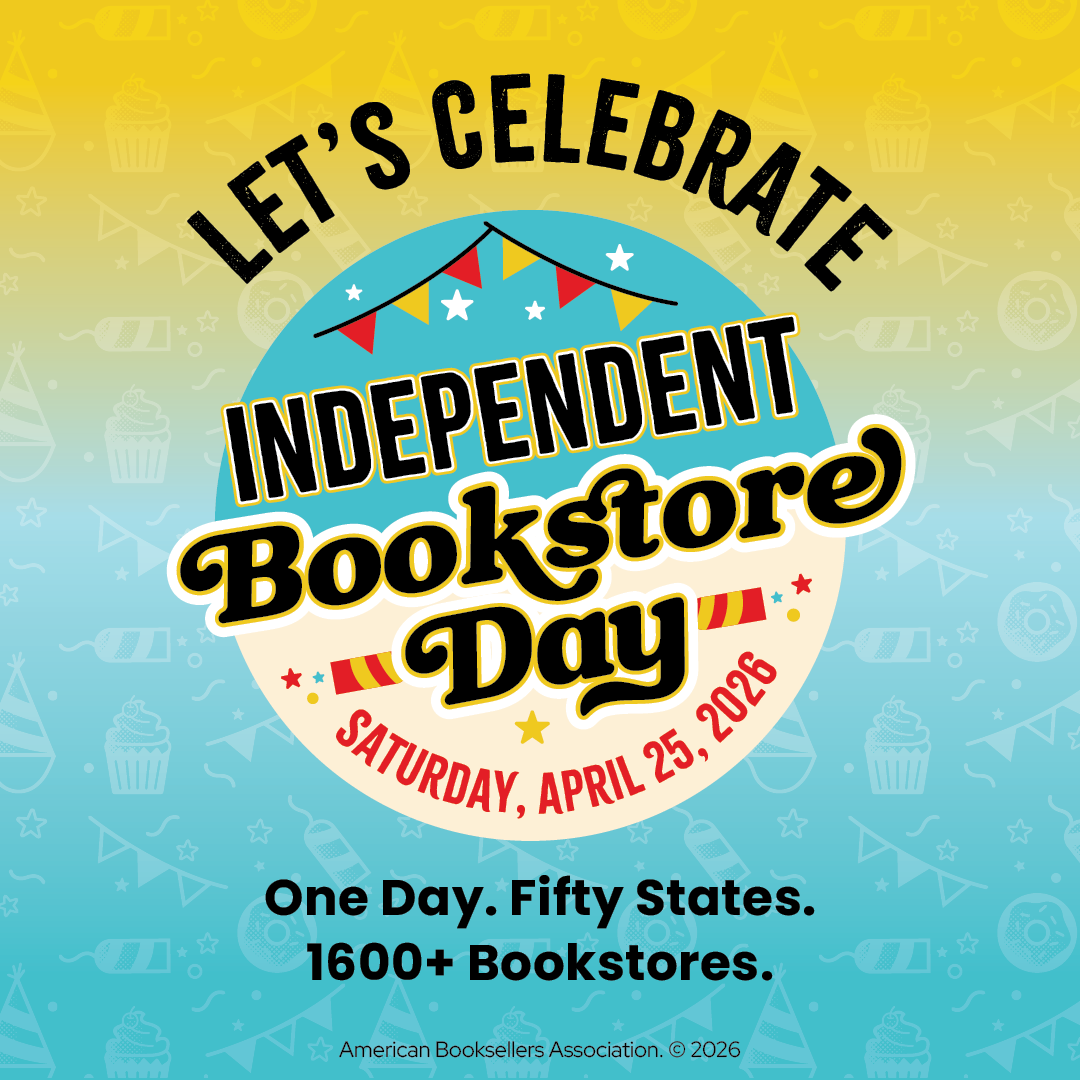
Indie Bookstore Day is a one-day national party that takes place at indie bookstores all across the country on the last Saturday of April every year. Just as every indie bookstore is unique, so are the celebrations we throw. Consider this an invitation to mark your calendar for Saturday, April 25 and plan to find an indie bookstore near you.


Why is this celebration so important to us and communities? As you may recall, Amazon was founded in 1994 by Jeff Bezos as an online bookstore. It sold its first book online in July of 1995. Since then, many attribute the mass closure of brick-and-mortar bookstores to Amazon’s predatory practices. Amazon’s early intention was not to profit from selling books, rather, to lure customers to the platform, capture their data, and then sell higher-margin priced items. I personally can think of many reasons to avoid purchasing any items (not just books) from Amazon (e.g. predatory pricing, tax avoidance, market dominance, etc.). The most important reason though is that I firmly believe that I get to vote on what my community, state, nation and world looks like with every financial transaction I make. Further, my spending isn’t just transactional - it’s directional. Where my money goes shapes what survives. Spending with intention is powerful and can truly make a difference.


Indie Bookstore Day (organized by American Booksellers Association) has become a kind of cultural counterweight to the rise of companies like Amazon. It’s not just nostalgia—it’s about preserving spaces that do things algorithms can’t.

Independent bookstores tend to:

  • Curate, not just stock — real humans shaping what’s on the shelves
  • Build community — host author events, community circles, book clubs, etc.
  • Keep money local — more of each dollar you spend recirculates in your community
  • Support diverse voices — often taking chances on small presses and new authors


Here are simple ways you can make April 25th meaningful:


  • Visit a local shop and buy at least one book you didn’t plan to buy
  • Talk to a bookseller and get a recommendation
  • Bring a friend who doesn’t usually go to bookstores
  • Share your experience on your social media pages


This is how the places you love stay alive—not just through principles, but through habits. We hope to see you on the 25th!


Happy Reading!


Beth

Celebrating Poetry Month


Celebrating Poetry Month in April is less about formality for me and more about intention —slowing down enough to let language actually land. Poetry has a way of sharpening my perception of the world around me; it makes ordinary things feel extraordinary. I often find myself carrying a line from a poem around with me before revisiting the entirety of the poem again a few days later.


You don’t have to “study” poems to celebrate poetry. Dedicating a month to poetry is an invitation to engage with poetry in new ways. It’s a great time to stretch a bit—try poets you wouldn’t normally pick up. If you usually gravitate toward contemporary, dip into something older and denser. If you like structured verse, try something more fragmented or experimental. And if you’re open to it, try writing—even just a few lines—can deepen the experience. You don’t need to write for perfection, just to see how it feels to shape a thought that tightly. One certain outcome is that it will give you a different respect for what you are reading.


Here is a list of recommendations from some of the booktenders at Pearl Street Books:


Eric: "My favorite contemporary poet is still Natalie Diaz. I read When My Brother Was an Aztec while teaching on the Navajo Reservation, which certainly deepened my understanding, but I predict it will have the durability of Whitman or Plath."


Rachel: "We had a poet who used to travel through La Crosse between teaching gigs, Clemonce Heard, and we still carry his book, Tragic City, which is an intense, beautiful collection he wrote while participating in an artist residency in Tulsa, Oklahoma. He did a few readings in the store and I have so much respect for his work and how he shares it."


Sophie: "A poem that I have heard and have been enjoying going back to is "Wild Geese" by Mary Oliver. More recently I heard the poem "Warning" by Jenny Joseph and it also makes me smile."


Kazuya: "Japanese Haiku poet Basho transforms minimal words into profound beauty."


Sara: "I feel like I could write a whole list here but a few of my current favorites include: Joy Harjo, Ofelia Zepeda, Margaret Noodin, Machi Tawara, Aimee Nezhukumatathil, Louise Gluck, Anne Sexton, & Sylvia Plath."


Celebrating National Arab American Heritage Month


April is a time to celebrate Arab identity, culture, and storytelling—especially poignant this year amid ongoing violence and destruction in Gaza, Iran, Lebanon, and across the region. Many Arab and Arab American writers have long used literature to explore war, exile, resistance, imperialism, and belonging—making their work both timeless and urgent right now.


Here are some essential contemporary Arab and Arab American authors and works to read or revisit this month. These authors/works are drawn from recent heritage-month reading lists and notable literary voices.


Isabella Hammad – The Parisian and Enter Ghost

Explores Palestinian identity, colonialism, and the power of art under occupation.


Leila Aboulela – River Spirit

Set in 19th-century Sudan, this historical novel centers on resistance, colonial struggle, and faith.


Susan Muaddi Darraj – Behind You Is the Sea

Linked stories of Palestinian Americans in Baltimore, weaving grief, family, and diaspora identity.


Safia Elhillo – The January Children

Poetry about displacement, language, and the complexities of Sudanese and Arab American identity.


Ahmed Almallah – Border Wisdom and Wrong Winds Poems that traverse cities and languages, capturing Palestinian exile and alienation.


Threa Almontaser – The Wild Fox of Yemen

A lyrical collection intertwining Yemeni heritage, womanhood, and life in post-9/11 America.


Leila Chatti – Deluge

Explores faith, gender, and illness through the lens of an Arab American Muslim woman.


Haneen al-Sayegh – The Women’s Charter

A bold Lebanese novel about solidarity, womanhood, and social constraints in a Druze village.


Marjan Kamali - The Lion Women of Terhan

An evocative and a powerful portrait of friendship, feminism, and political activism.


Omar El Akkad - One Day, Everyone Will Have Always Been Against This

Looks at how we look away from cruelty and systemic violence and challenges us to actually see the suffering of the genocide in Palestine.


UPCOMING EVENTS

Read with Therapy Dogs

Wednesday, April 1

10:30-11:30 am (Chilli & Nellie)

(No Scout)

&

Wednesday, April 15

10:30-11:30 am (Chilli & Nellie)

6:00-7:00 pm (Scout)


Death and Lit Cafe

Thursday, April 2

6:30 to 7:30 pm

(This is now full - registration is closed)


Monday Morning Memoirs

Monday, April 6, 13, 20, & 27

10:30 to 11:30 am


Cover to Cover: Book Club

Wednesday, April 8

6:30 to 7:30 pm


Philosophy Circle

Thursday, April 9

6:30 to 7:30 pm

Topic: Does perspective shape truth? Who decides what counts as knowledge?


Second Saturday Sessions

Music with Luke Thering

Saturday, April 11

1:30 to 3:30 pm


Mending Circle

Sunday, April 12

2:00 to 3:00 pm


Poetry Circle

Thursday, April 16

6:30 to 7:30 pm


Psychology Circle

Friday, April 17

6:30 to 7:30 pm

Topic: Inherited Trauma


Spring Adult Book Fair

Friday, April 17

7:00 to 9:00 pm

@ the Root Note


Silent Book Club

Tuesday, April 21

7:00 to 9:00 pm

@ the Root Note


Women's Forest Bathing Walk with Rejuve Nature

Wednesday, April 22

5:30 to 7:30 pm

Click here to sign up!


Pump House Author Event

with Nick Gulig

& Elizabeth Zuba

Thursday, April 23

7:00 to 8:00 pm

@ the Pump House


Independent Bookstore Day

Saturday, April 25

Celebrate our biggest day of the year with us all day in-store with activities, prizes, indie road maps, live music, and more!


7Rivers LGBTQ+ Out in Print Book Club

Tuesday, April 28

5:30 to 6:30 pm

Title: Choose any title by

Alison Bechdel


Click here for more details about our events.


Thank you for reading our newsletter! Be the first person to respond will win a copy of Omar El Akkad's book One Day, Everyone Will Have Always Been Against This. Please send email to: info@pearlstbooks.com

Staff Pick from Sara

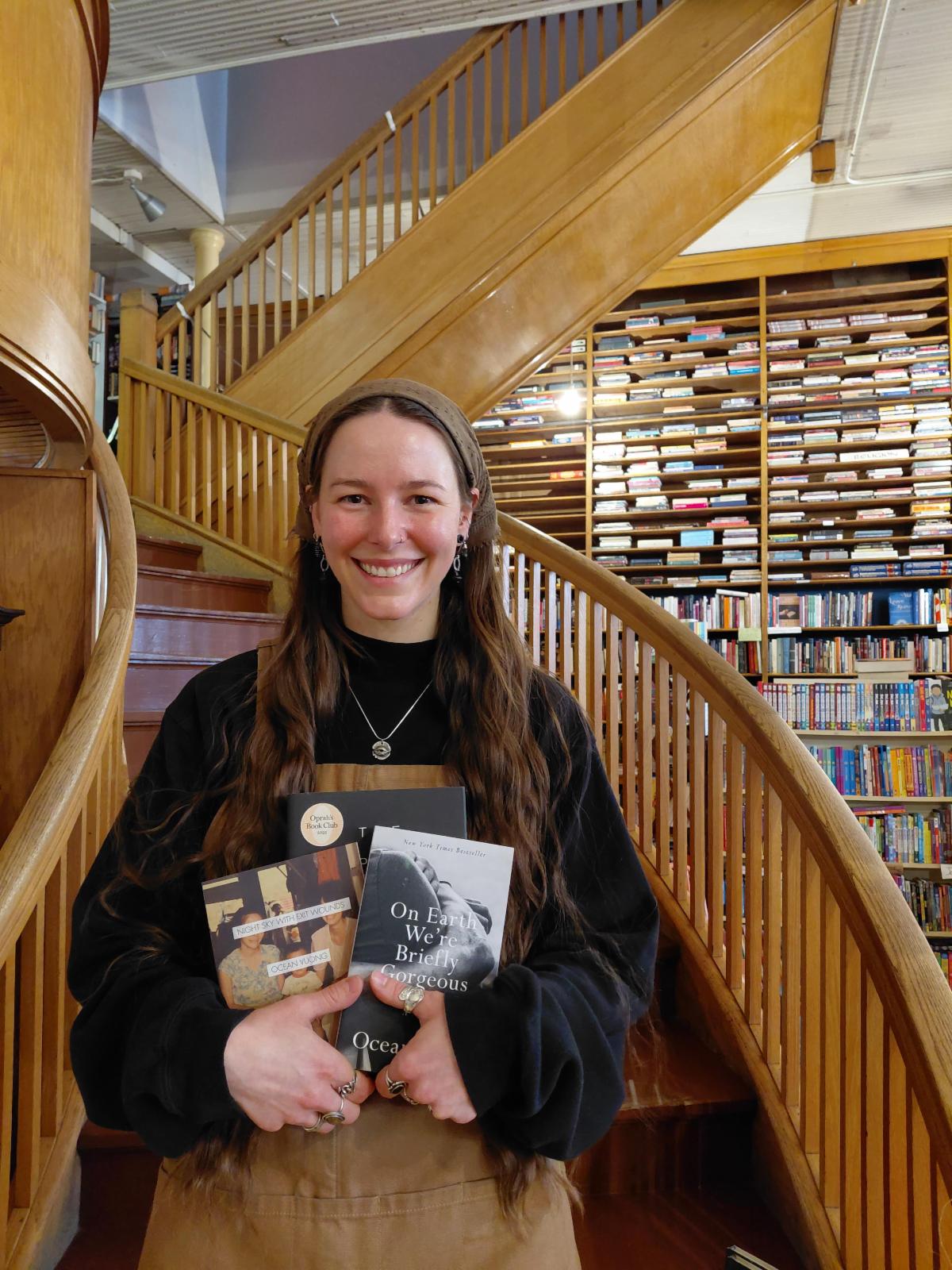
Since April is Poetry Month, I wanted to highlight one of my favorite modern-day poets and novelists: Ocean Vuong. His writing is raw, lyrical, and achingly honest, inviting you into spaces where grief and grace coexist.


I first fell in love with On Earth We're Briefly Gorgeous. Written as a letter to his mother, the novel follows a son reckoning with family, war, and first love, capturing how tenderness and violence can exist in the same breath.


I then read his poetry collections, Night Sky with Exit Wounds and Time Is a Mother. Night Sky with Exit Wounds moves through war, immigration, queerness, and first love, while Time Is a Mother, written after his mother’s death, reflects on grief, memory, and what it means to keep going.


Most recently, I read his newest novel, The Emperor of Gladness, which follows a young Vietnamese American man who forms an unexpected bond with an elderly woman living with dementia. Through their relationship, Vuong explores loneliness, work, chosen family, and endurance in an often unforgiving world.


What stays with me is how he captures emotion with such precise, unexpected language. So, I’ll leave you with some of my favorite lines from a couple of his poems:


Someday I’ll Love Ocean Vuong

...The most beautiful part of your body

is where it's headed. & remember,

loneliness is still time spent

with the world.


Into the Breach

...Turn back & find the book I left

for us, filled

with all the colors of the sky

forgotten by gravediggers.

Use it.

Use it to prove how the stars

were always what we knew

they were: the exit wounds

of every

misfired word.


Image below of Sara the booktender at Pearl Street books.


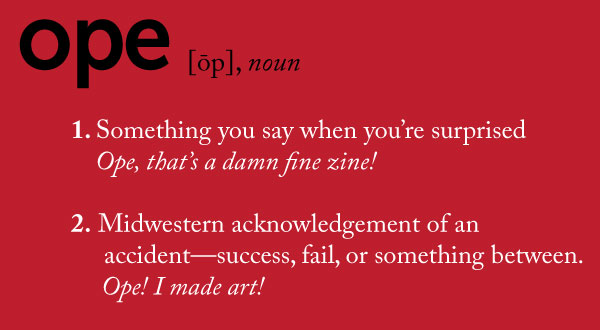
Monthly Pearl from Ope!

Ope! had a big wild March, mostly because of La Crosse Soup, a local organization that gives money to small groups who pitch their causes to a live audience, everyone eating $5 bowls of soup. Ope! was one of four groups to pitch a project on St. Paddy’s Day at the Weber Center, and we pitched If Wishes were Fishes: a series of five zines created by UW-L history students working under Dr. Ariel Beaujot. Each zine has two students working together to create the content, and all of them will be illustrated by local artist Tiana Traffas, releasing through the summer and into the fall of 2026. Ope! took second place at the Soup event, receiving $1000 to help cover the cost of printing so we can distribute the zines for free rather than for sale. This is so bolstering to our work, because it shows preliminary interest in this second series of ours (after Demystifying City Government) to engage the public directly with their city. Each zine of If Wishes were Fishes focuses on one city space and the past, present, and an imagined future of that particular space. Most of the students are not from La Crosse, so it’s a fascinating way to see our city through fresh eyes and perspectives. I’ve spent the last few days reading over their initial research and ideas, and I’m so impressed with their work, and really excited to see how everything comes together.  

That’s our good news; the bad news is that after all the beauty of saving the SMRT bus a few months ago, we’re still going to lose it after 2026, unless some miracle of money, community, and consciousness occurs. Vernon County voted to end the service after this year, because they can’t afford the needed increase in funding. Personally, I find this a failure of our “local” healthcare systems, one of whom quietly dropped all funding for the bus, while neither of them ever contributed much in relativity to their enormous profits, despite the fact that their employees and patients are often the people utilizing this service. Working with their local county to support and fund the SMRT would have been a brilliant way for these hospital systems to promote health, community, and to at least slightly alleviate the parking mess both systems have created. You may not agree with me on this point, and that’s fine; I only ask that you consider the grander scheme: our culture does not need to be driven by cars. Millions of American adults maneuvering two-ton hunks of plastic and metal everywhere is no way to move as a society. We could be so much better, but we’re never gonna get there by car. It’s just not SM(a)RT. ... See what I did there?

Thanks for reading! - Rachel


Happy Reading!

Keep in Touch!

Facebook  Instagram