A Message from the Executive Director |
It’s springtime again and summer is on the way. All things that have remained dormant through the winter are waking up and feeling renewed. We all have been through a tough year — but as we have always done through the many trials and tribulations, we as Native people survived and are thriving.
In this past year, the National Indian Council on Aging (NICOA) witnessed a resurgence of who we are as American Indians and Alaska Natives of this country. We renewed our “Indian-ness” by reaching into the past and relearning how the foods that kept us alive in the past are just as relevant now, the stories our grandparents shared still resonate and their morals still matter. Tribes are taking urgent steps to preserve their languages — it is, after all, the foundation upon which tribal cultures exist.
In this month of May, there have been celebrations and recognitions of the contributions made by our elders nationwide. It is “Older Americans Month” and we at NICOA celebrate and acknowledge the elders who have shaped what Indian Country is today.
Tribes that once only existed in the memories of their members are now once again walking upon this land. Tribes that once were riddled with poverty and unemployment are prospering through their economic foresight. Tribes who lost their traditional homelands are now gaining back what they lost.
Each of these accomplishments would not have been possible if the elders of their respective tribes had not shared their vision for their people. These visions were transmitted through ceremonies, vision quests, and through gifts given to them by their Creator.
Today, NICOA sees the path ahead for tribal leaders, tribal members and most importantly, the youth of these tribes. There is one certainty in life: We are going to grow old and, in the end, take the spiritual journey home.
Our elders have seen strife, wars, and other efforts to extinguish their existence and identities. They have lived through them, and they have survived. How and what they did to survive are important prologues to the story on how tribes will continue to survive. This is the precious story they hold.
For more than 40 years, NICOA has known this, and it has not forgotten its mission and purpose. We want tribes to survive and thrive for the next two millenniums; this is the role our tribal elders play in this world theatre.
To all who have helped us in this effort, thank you. For those who think this effort is worthy of support, please visit our website to see the work we’ve accomplished in the past year. May the Creator protect you, your tribal communities and our Mother Earth.
Sincerely,
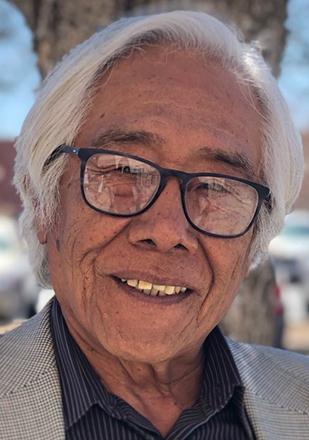
Larry Curley
Executive Director
|
|
|
|
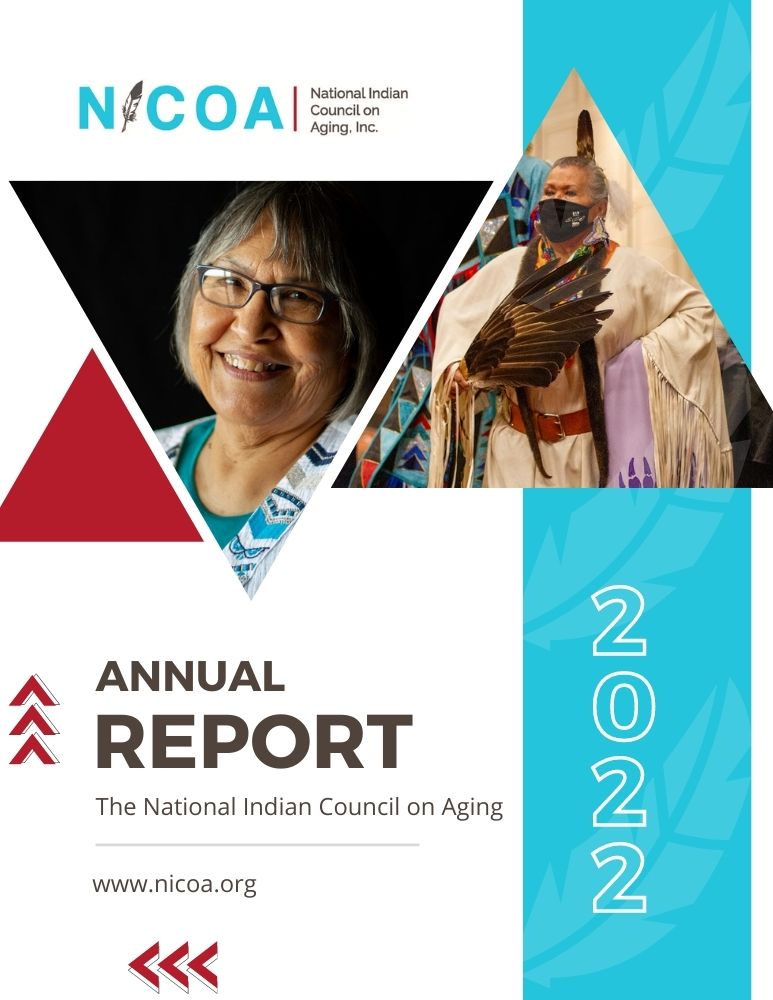
NICOA Releases 2022 Annual Report |
NICOA continues to fulfill its mission to advocate for improved comprehensive health, social services and economic well-being for American Indian and Alaska Native elders, thanks to the unwavering support of our donors, volunteers, and staff. We are especially grateful to the tribal communities we serve, who inspire us every day with their resilience, strength, and determination.
In our report, you will find a comprehensive overview of NICOA’s activities, achievements, and financial performance. You will learn about some of the key initiatives we undertook during 2022 and the positive outcomes we achieved.
We want to express our sincere gratitude to all those who contributed to our success. We would not have been successful without your generosity, dedication, and support. We hope this report will inspire you to continue supporting NICOA as we strive to make a difference in the lives of Native elders and their families.
|
|
|
|
Still Accepting Workshop Proposals — Now Online |
NICOA’s conference is the only national conference in the country focusing exclusively on the needs of American Indian and Alaska Native elders. It consists of educational presentations from tribal, state and federal organizations as well as a diverse network of aging service partners with experience in providing services to Native elders, who provide information and updates on aging services, health care, civic engagement and economic development in Indian Country.
Workshop sessions have discussed caregiver support, elder abuse prevention, health, nutrition, transportation, disease prevention, long-term services and supports, employment and training, financial assistance and more.
|
|
|
|
NICOA Presents at On Aging 2023 in Atlanta |
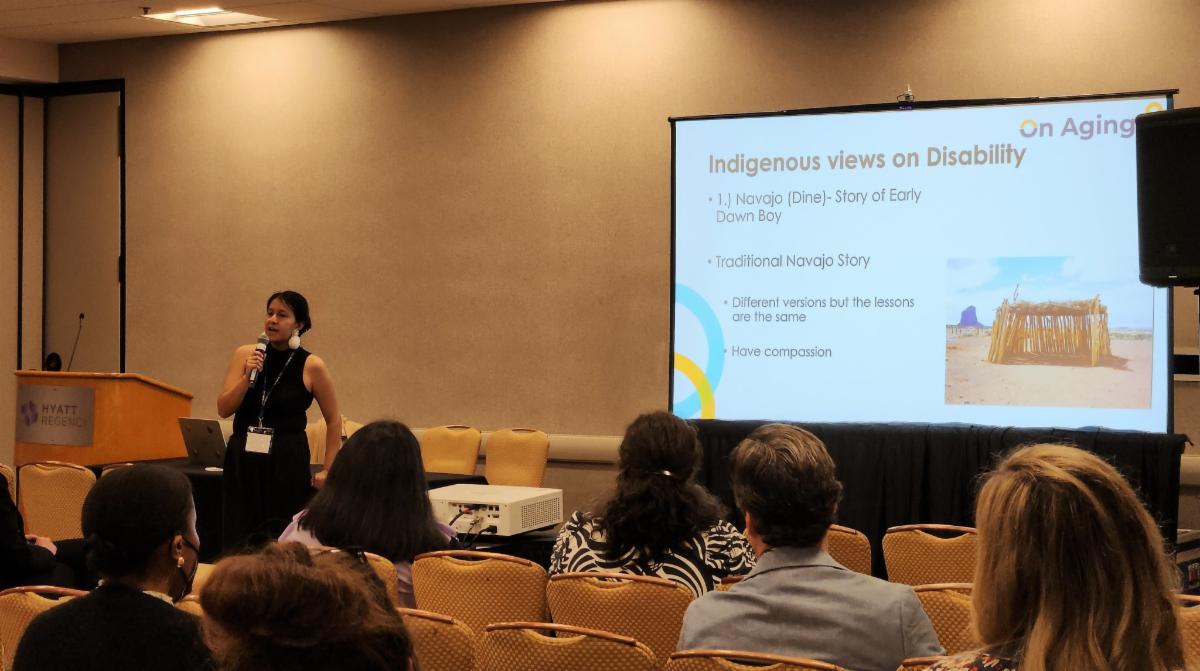
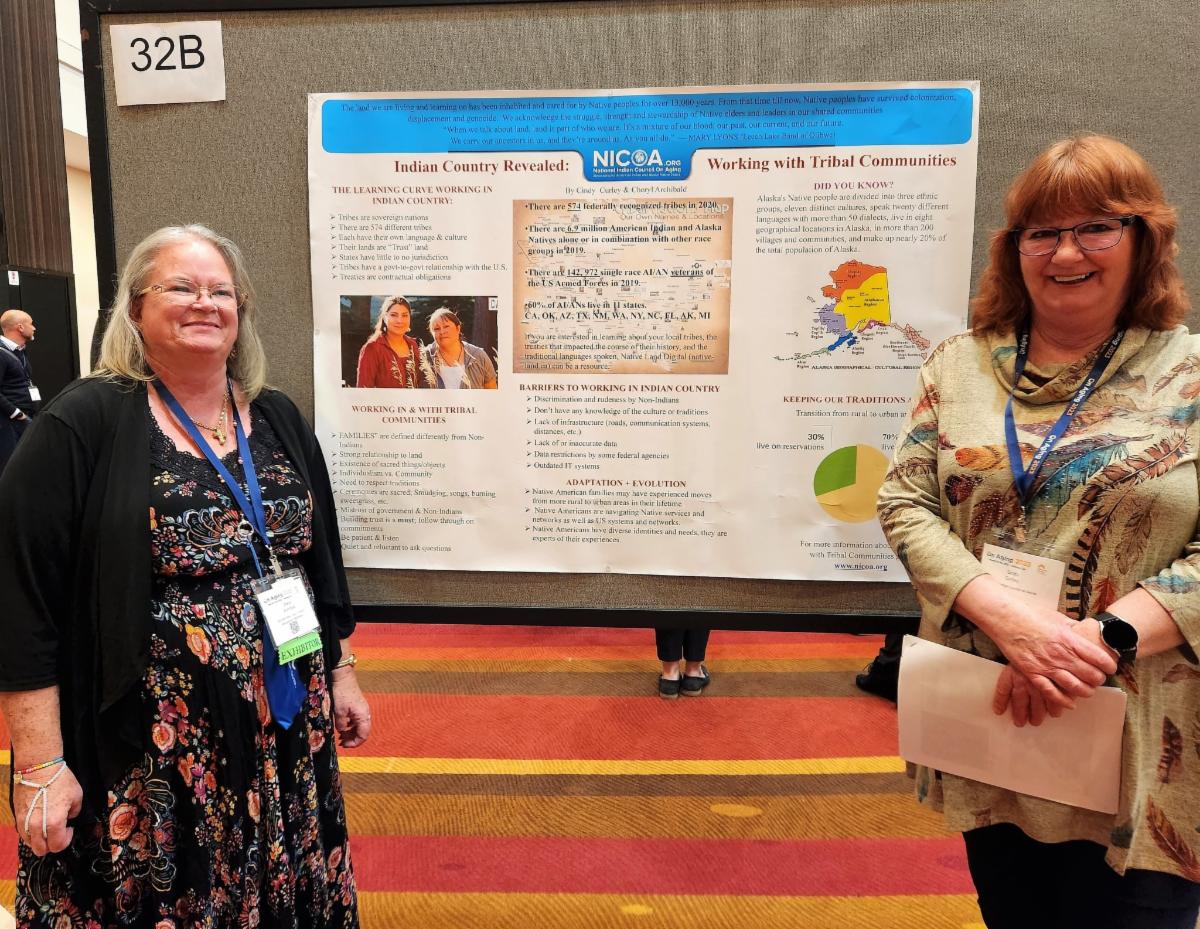
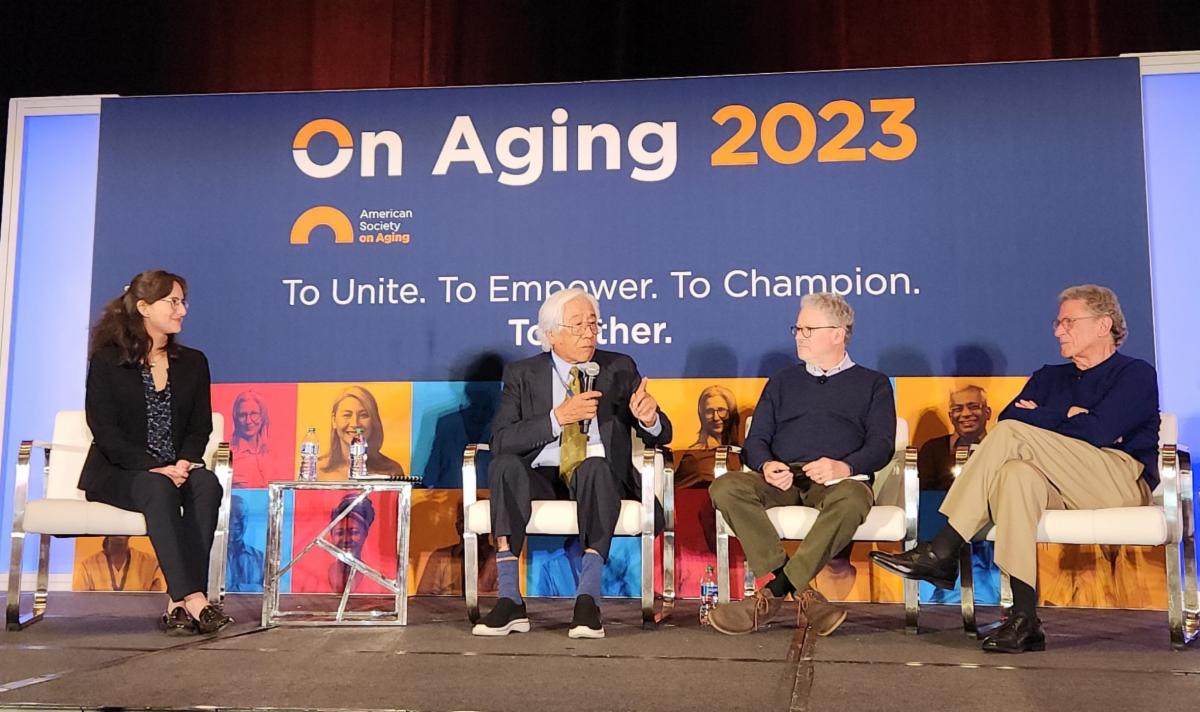
NICOA traveled to Atlanta, Georgia in March for On Aging 2023, the American Society on Aging’s (ASA) conference. Staff were there to provide an Indigenous view, giving presentations on topics such as disability, aging, social isolation, health policy, Indian Country, and the Older Americans Act.
|
Encore CEO Marc Freedman and Age Wave CEO Ken Dychtwald interviewed NICOA Executive Director Larry Curley during “Legacy Lessons from Sages of Aging,” a curated session exploring notable aging topics. |
|
|
|
A Message from the Senior Community Service Employment Program |
Survey data from Joblist indicates that 27 percent are returning to work because they need money, and another 21 percent fear inflation was eroding their retirement savings. However, the data identified the primary reason for returning was neither money nor inflation.
Sixty percent of retirees returning to work said they were simply “looking for something to do.” According to Joblist CEO Kevin Harrington, “Many people struggle with how to spend their time after they retire and miss the social connection that work provides.”
NICOA’s SCSEP is ready to assist elders returning to the workforce. We partner with government agencies and nonprofit organizations to help mature workers find permanent employment through extensive training. It is important to us that we provide the necessary training to elders to help them find the right fit.
NICOA’s SCSEP has begun to partner with tribal colleges to create computer classes for our participants to attend. This provides an additional resource of training to help our participants find employment. |
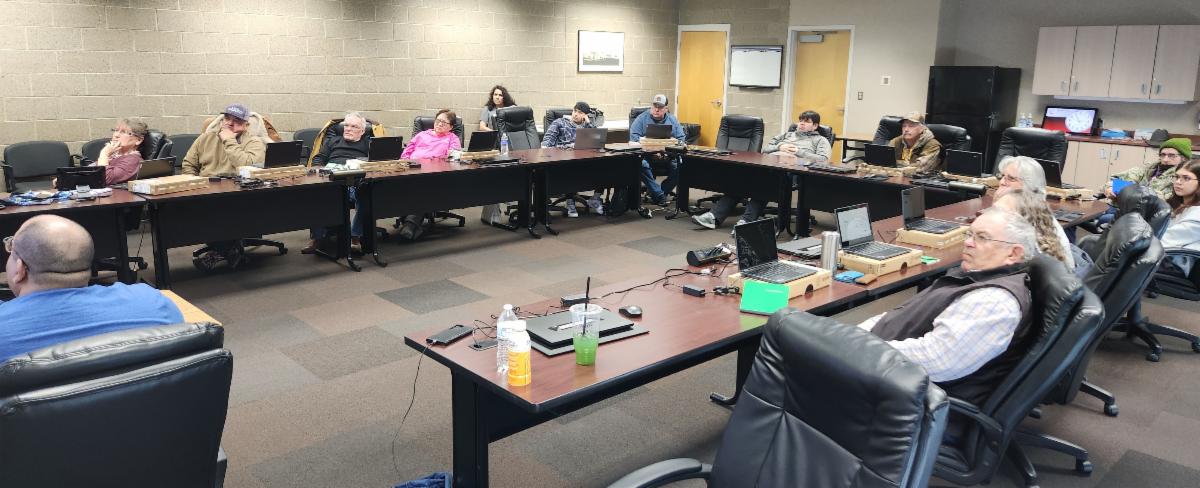
With our encouragement and guidance, Turtle Mountain Community College (TMCC) in North Dakota started a basic computer class for people 55 and older. Eight of our participants enrolled and completed the class.
The class is taught by three TMCC instructors, with assistance from TMCC students who provide one-on-one support. Each student was given a free Google Chromebook from the college and are encouraged to practice 30 minutes per day on it.
The class meets once a week for three months. Due to an overwhelming response to the article printed in the Turtle Mountain Times covering the class, the class will again be offered in the fall of 2023. At least three more of NICOA’s SCSEP participants will attend.
The college is located on the Turtle Mountain Reservation. This is an important connection for NICOA’s SCSEP. Participants can learn critical computer skills that they need to enhance their opportunities for employment.
NICOA’s SCSEP team provides services to the states of Arizona, Minnesota, New Mexico, North Dakota, Oklahoma, South Dakota and Wisconsin. However, it is a program being provided nationally by many other service providers.
|
Leslie Maly
Senior Community Service Employment Program Director
|
|
|
|
GetSetUp and NICOA: A Partnership for Empowering Older Job Seekers |
NICOA has partnered with GetSetUp, an online learning platform, to provide educational and training opportunities to older job seekers. NICOA runs the Senior Community Service Employment Program (SCSEP), which is funded by the Department of Labor. NICOA's SCSEP participants are able to benefit from using GetSetUp.
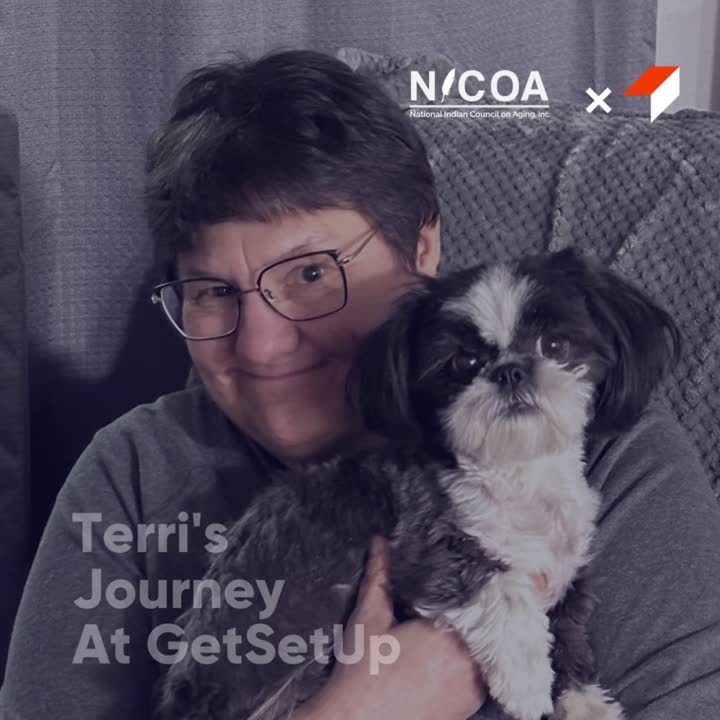
Terri, a 64-year-old resident of North Dakota, was introduced to GetSetUp through NICOA and had a positive experience learning through the platform.
"When I started, I had no training with NICOA. They paid me to learn and train with job skills classes on GetSetUp. I learned a bit here and there including some useful stuff," Terri says.
While initially Terri found out about GetSetUp through NICOA, she has since left the NICOA program and excited to learn that her health plan offered GetSetUp at no additional cost through her SilverSneakers membership, so she’s now looking forward to seeing the new classes on the platform like Tai Chi.
Terri recalls taking classes in various topics such as handling difficult conversations, networking, and using Microsoft Excel and Word.
"I took an Excel class this past summer, which was super helpful. I ended up using lots of spreadsheets in my work with NICOA," Terri says.
|
|
|
|
Turtle Mountain College Offers Free Class to Older Job Seekers |
Additionally, a free Google Chromebook was given to each course participant after they have successfully completed the eight-week course. The class was taught by TMCC students, with assistance from their instructors, and ran from March 8 to May 3.
“Understanding basic computer skills will help our elders stay socially connected and learning about cyber security will help them stay safe while they do so,” said Lynn Wise, program manager of NICOA’s SCSEP in North Dakota.
TMCC is located on the Turtle Mountain Chippewa Reservation, 10 miles from the Canada-U.S. border in the north central portion of North Dakota. Belcourt is the center of the reservation community’s government, commerce, and education for the more than 10,000 enrolled members of the tribe.
|
|
|
|
Older Adults Equity Collaborative |
|
A Message from the Older Adults Equity Collaborative |
My mother sends meaningful gifts. They arrive with her graceful handwriting on the mailing label and everything inside is packed in a serious way.
Inside the box this time was a plate with heft and a unique glaze, tinting it a shade similar to the periwinkle crayon I used when I was little. I recognized the plate because it had always been on our family table filled with fruit.
I did not know that it was created by our relative, Lula Owl Gloyne. She was an important person on the Qualla Boundary in North Carolina where I grew up. The plate is now on my desk as I think about this remarkable woman.
She was born in 1891, the oldest of 10 children. Lula went to a mission school and then to Hampton Normal and Agricultural Institute. After teaching for a year, she then entered the Chestnut Hill Hospital School of Nursing in Philadelphia in 1914. While there she received a gold medal in obstetrical nursing. In 1916 she became the first registered nurse in the Eastern Band of Cherokee Indians.
Lula began her nursing career as a missionary school nurse on the Standing Rock Sioux Reservation in Wakapala, South Dakota. After returning to the Qualla Boundary she advocated to Congress and the Commissioner on Indian Affairs to build the first hospital in the area.
She became head nurse and worked as a field nurse, visiting people in their homes, providing immunizations, home health care, hospice and delivering babies. I remember hearing stories about her fearlessness and persistence as she traveled long distances over rutted dirt roads by horse, ox cart, and later by car to reach her patients.
She remained active until 1969 when she retired at the age of 77. People in the tribe acknowledged her deep commitment to quality health care for every tribal member by bestowing on her the title of “Beloved Woman”. This honor is for people who have “made special and unique contributions to the Cherokee people”.
Rebecca Owl Morgan
Eastern Band of Cherokee Indians
Older Adults Equity Collaborative Project Coordinator
|
|
|
|
NICOA Presents Webinar on Social Security Benefits |
NICOA partnered with the Social Security Administration to present this webinar about social security benefits. We take a brief look at all types of benefits available through the Social Security Administration, including Supplemental Security Income (SSI), disability, and survivor benefits.
The webinar covers Medicare, other available health savings programs, and discussed some commonly missed benefits to consider for eligibility, as well as the appeal process. We want you to understand what Social Security can mean to you and your family’s financial future.
Our webinar, “What You Should Know About Social Security Benefits,” also covers the new application for protective filing.
|
The Social Security Administration has a new tool to establish when you are eligible for benefits. The SSI program provides monthly payments to adults 65 and older who meet the financial qualifications. Adults and children with a disability or blindness who have income and resources below specific financial limits are also eligible.
Introduction by Renee Ferguson, American Indian Alaska Native Executive Lead, Deputy Associate Commissioner, Office of Quality Review.
Presenters include Rhonda Romero, Public Affairs Specialist, New Mexico; Keith Thompson, Regional Public Affairs Specialist, San Francisco Region; Sandra Chavez, Assistant District Manager, Rio Rancho, New Mexico; Peggy Murphy, District Manager, Great Falls, Montana; and Cynthia Velarde, Assistant District Manager, Farmington, New Mexico.
|
|
|
|
Understanding Disabilities in Native Communities: Video Interviews |
The most unique feature of this toolkit are the stories featuring people living with a disability. They reflect on their life, their relationship to the Native disability community, and how their disability has made life both more fulfilling and, at times, more challenging. |
This project is dedicated to building bridges between tribes and those in the Aging Network who want to help but are not sure how to begin. It is our hope that this guide assists tribes and their allies as they work together to make good decisions about our shared future. |
|
|
|
Become a NICOA Member:
2023-2024 Membership Available
|
|
Do you want to improve aging services for American Indian and Alaska Native elders?
If so, become an advocate and learn more about supporting Native elders! NICOA is the premier organization on Native aging, and we invite you to become a member. Anyone can become a member, regardless of their age or tribal affiliation (or lack thereof).
All elders are encouraged to join and have their voices heard. Be an important part of a national membership network and become a NICOA member by applying online or by mail. Memberships are for two calendar years. |
|
|
|
Preventing Alzheimer’s in Indian Country |
The number of American Indian and Alaska Natives 85 years of age and older is projected to increase from 42,000 in 2012 to 300,000 in 2050 — a more than sevenfold increase.
This means there will be many more Native elders with Alzheimer's disease in the future. Studies show that one out of three American Indians and Alaska Natives over the age of 65 are at risk for developing Alzheimer's disease and related dementias.
Early detection matters. Learn how to recognize the signs of Alzheimer's and other forms of dementia in loved ones and schedule an appointment with your local Urban Indian Health facility. Get health screening tests and wellness check-ups each year.
|
|
|
|
Simeon Gipson Bikes to the National Senior Games |
At 77, cyclist Simeon Gipson, who is half Cherokee and half Choctaw, is preparing to embark on a bicycle journey of more than 1,000 miles from Tahlequah, Oklahoma to Pittsburgh, Pennsylvania. Once there, he plans to compete in the National Senior Games.
The thousands of miles Gipson has covered over the years started when he was nearing 70 with a last-ditch attempt to improve his declining health. He’s one of many Native elders and others that embark on epic journeys and inspire the rest of us along the way. Listen to his May interview on Native America Calling. |
|
|
|
|
|
NICOA featured Simeon in a 2022 video about elder wellness, where he spoke about participating in the National Senior Games and how his love of bicycling got him back on track after experiencing health issues. He encourages everyone to get outside, find a hobby and exercise. |
|
|
Barriers To Native American Homeownership |
American Indians and Alaska Natives have faced numerous obstacles when it comes to accessing adequate housing, such as high poverty rates, overcrowding, lack of plumbing and heat, and unique development issues. These challenges are rooted in historical injustices, discriminatory policies, and ongoing economic disparities. Many Native communities continue to struggle with substandard living conditions, overcrowding, and homelessness.
One of the main obstacles is a lack of funding, particularly in more rural areas. The federal government is responsible for providing funding for housing programs on tribal lands, but this funding has historically been insufficient. Native communities have had to rely on substandard housing options, including overcrowded and dilapidated homes.
The remote regions of the Plains, Alaska, and the Southwest experience additional barriers due to their limited access to employment and development resources. Data sources for nearly all federal housing resources undercount their tribal populations, leading to less funding for crucial housing programs.
Forty percent of on-reservation housing is considered substandard (compared to 6 percent outside of Indian Country) and more than a third of Native families in tribal lands live in homes that are overcrowded or lack basic amenities, such as plumbing, a refrigerator, or heating. Doubling up to prevent homelessness is common in tribal lands, often leading to overcrowding. Almost every Native community reports overcrowding as an issue. Nearly 16 percent of households across tribal lands live in overcrowded conditions, compared to 2.2 percent nationally. |
|
|
|
Sober-Living Scam Targets Native Americans |
Native Americans are being targeted in what officials call a multi-million-dollar health care scam. Scammers are targeting Native people from the Navajo Nation and other reservations in Arizona, New Mexico, and South Dakota and bringing them to behavioral health residential facilities in Phoenix, Arizona, for treatment for substance abuse and mental health issues. In some cases, the victims are intoxicated or given alcohol on the trip.
The scammers target people found at places like gas stations, grocery store parking lots and at bus stops. They promise food, shelter and treatment, but ultimately leave them stranded. In some cases, Native people had to jump out windows and climb over walls to escape the facilities.
Gallup police say they are still looking for 14 people who were reported missing over the past 18 months after they went to Arizona seeking treatment. In total 32 people who are believed to have gone to group homes were reported missing to the Gallup Police Department. As many as 7,000 Native Americans have been recruited to illegitimate sober living homes in recent years.
|
|
|
|
5 Recent Tribal Newsletters |
|
|
|
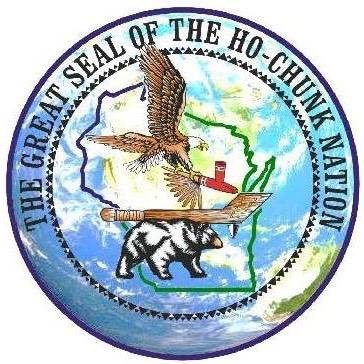
Profile: The Ho-Chunk Nation |
The Ho-Chunk Nation, also known as the Winnebago Tribe of Nebraska, is an American Indian tribe whose territory includes parts of Wisconsin, Minnesota, Iowa, and Illinois. The tribe’s history stretches back more than 10,000 years, with evidence of their presence found throughout the Great Lakes region.
The tribe’s name means “ people of the big voice” in their language, and they have a rich cultural heritage that includes traditional crafts, music, and storytelling. Their art is characterized by bright colors and intricate designs, often featuring images of animals and nature. The tribe’s traditional music is also an important part of their cultural heritage, with songs and dances passed down through generations.
The Ho-Chunk Nation has faced many challenges over the years, including forced relocation and assimilation policies in the 19th and 20th centuries. Despite these challenges, the tribe has maintained its cultural identity and has made significant strides in recent years to improve the lives of its members.
The Ho-Chunk Nation is one of the largest employers in Wisconsin, with over 7,000 employees. They operate a number of businesses, including casinos, hotels, and restaurants, providing employment opportunities and economic development for the tribe. |
|
|
|
Native Students Sue for Tribal Regalia |
On May 15 a Native high school graduate in Oklahoma sued a school district, claiming she was forced her to remove a feather from her cap at a ceremony last spring. Groups like the Native American Rights Fund regularly hear from students blocked from wearing eagle feathers or other regalia.
A bill vetoed earlier this month by Oklahoma Governor Kevin Stitt, a Republican, would have allowed the student and others like her to wear feathers, beaded caps, stoles or other objects of cultural and religious significance. Advocates argued laws are needed to avoid leaving it up to individual high school administrators. On May 25, the Oklahoma Legislature overrode Stitt’s veto.
The measure takes effect July 1 and has strong support from many Oklahoma-based tribes and Native citizens. It would allow any student at a public school, including colleges, universities and technology centers, to wear tribal regalia such as traditional garments, jewelry or other adornments during official graduation ceremonies.
For Native students, tribal regalia is often passed down through generations and worn at graduations to signify connection with the community. Disputes over such attire have spurred laws making it illegal to prevent Native students from wearing regalia in nearly a dozen states including Arizona, Oregon, South Dakota, North Dakota and Washington. |
|
|
|
Native Cases in the Supreme Court |
There are several cases involving tribes that are going before the Supreme Court this year: Haaland v. Brackeen, which is scheduled for 2023, and Arizona v. Navajo Nation, which will be heard on March 20, 2023.
Haaland v. Brackeen has been brought by the states of Texas, Louisiana, and Indiana, and individual plaintiffs, and seeks to declare the Indian Child Welfare Act (ICWA) unconstitutional. The case was argued before the Supreme Court on November 9, 2022, and a decision was expected in spring 2023.
The ICWA was enacted in 1978 to protect American Indian children from removal from their tribes to be adopted by non-Indians. The law sets federal standards for the out-of-home placement of American Indian children and requires caseworkers to make “active efforts” to keep Native children with their biological family.
Arizona v. Navajo Nation is a case that asks the Supreme Court to consider whether there is a trust relationship between the Navajo Nation and the U.S. government regarding the Nation’s water rights. The case was heard by the Supreme Court on March 20.
The outcome of this case will have far-reaching implications for the Navajo Nation’s water resources, the stability of water rights, and the water allocation system. The case pits the treaty rights of the largest Native American reservation in the United States against water-rights claims by the state in which much of the reservation is located.
|
|
|
|
The Bad River Band of Lake Superior Chippewa in Wisconsin have asked U.S. District Judge William Conley to issue an emergency ruling forcing energy company Enbridge to shut down the Line 5 pipeline after large chunks of riverbank running alongside it were washed away by the river in northern Wisconsin. The tribe is concerned an Enbridge oil pipeline will cause a massive oil spill due to erosion and proximity to a river.
The tribe says less than 15 feet of land now stands between the Bad River and Line 5 in four locations on the reservation. In some places, more than 20 feet of riverbank has eroded in the past month alone. Experts and environmental advocates have warned in court that an exposed section of pipeline would be weakened and could rupture at any time, causing massive oil spills.
Enbridge’s engineers argue that the pipeline will not be exposed to erosion, let alone rupture, in the next year.
The Bad River tribe sued Enbridge in 2019 to force the company to remove the roughly 12-mile section of Line 5 that crosses tribal lands, saying that the 70-year-old pipeline is dangerous and that land agreements allowing Enbridge to operate on the reservation expired in 2013.
Conley sided with the tribe last September, saying Enbridge was trespassing on the reservation and must compensate the tribe for illegally using its land. But he wouldn’t order Enbridge to remove the pipeline due to concerns about what a shutdown might do to the economy of the Great Lakes region.
|
|
|
|
Protecting Native Burial Sites |
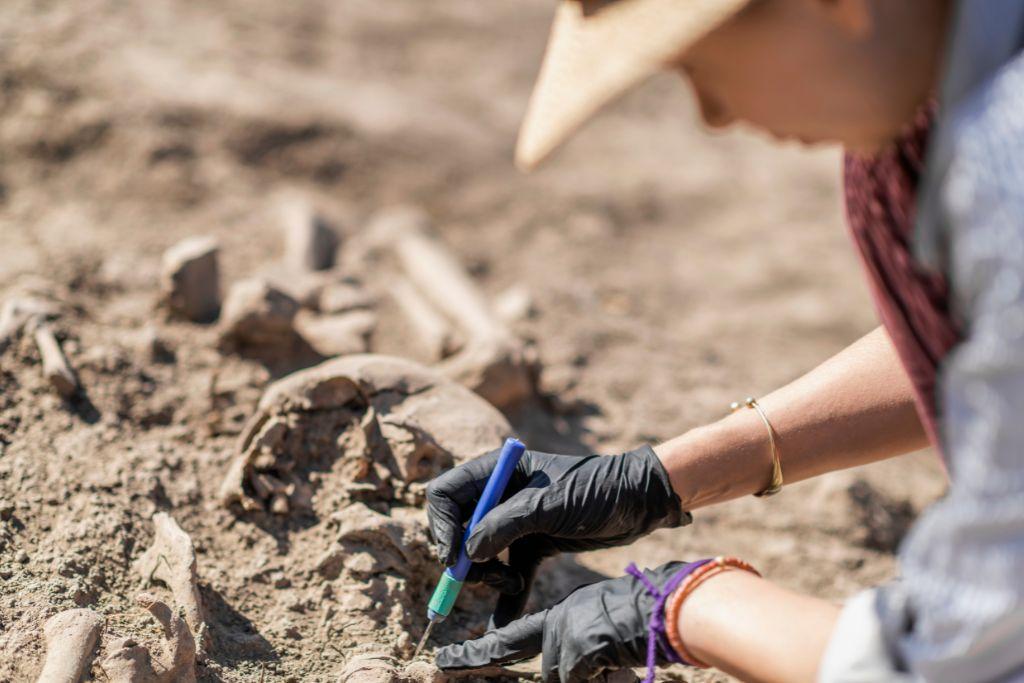
New York is one of four states without statutory protection for American Indian burial sites, but that is set to change thanks to a provision included in the state budget deal announced in early May. The measure would, for the first time, require private landowners to halt development if they discover a burial site on their property, and make it a crime to remove, deface or sell the remains or funerary objects.
Representatives of the state’s tribes had pushed legislators to protect the graves of their ancestors for almost 20 years, only to see bills die without getting to a vote. When a grave protection bill finally passed last year with unanimous approval, Governor Kathy Hochul vetoed it, saying it stripped landowners of their property rights.
Under the measure being considered, landowners would have to call the county medical examiner or coroner if human remains are discovered on their property. If the authorities find the remains are of ancient Native American origin, a burial site committee of tribal representatives and state experts would examine the case and decide, together with the landowner and descendants of the dead, what to do next.
Differences over what should happen when the landowner and the descendants disagree, including the prospect of delays, led to Hochul’s veto. After the veto last year, Hochul said she would seek to balance grave protection with property rights. The new law now heads to her desk.
|
|
|
|
|
|
We are committed to providing services for Native elders, but the power to provide starts with you.
Your support brings attention, education, and improved services to elders and people with disabilities across Indian Country. Every elder deserves access to the services and resources necessary to age independently, with dignity, and in their chosen community.
Consider donating to us directly to help us with our mission to improve the lives of American Indian and Alaska Native elders. Your financial support will go directly to supporting our mission to improve health, social services and economic well-being for all Native elders.
|
|
|
The National Indian Council on Aging | 8500 Menaul Blvd. NE, Suite B-470, Albuquerque, NM 87112 | 505-292-2001 | www.nicoa.org
|
|
|
|
|
|
|