News From the Director
The start of springtime here at the museum has been full of generosity and love.
We've received special donations from new friends, celebrated our volunteer community at our first-annual Volunteer Brunch, and enjoyed connections with doll clubs and mini makers.
I was especially amazed by the response to our miniature workshops in April: the gatherings included many guests who had never made a miniature before! With careful guidance, they produced some truly beautiful crafts. You will get a chance to see them in this recap newsletter!
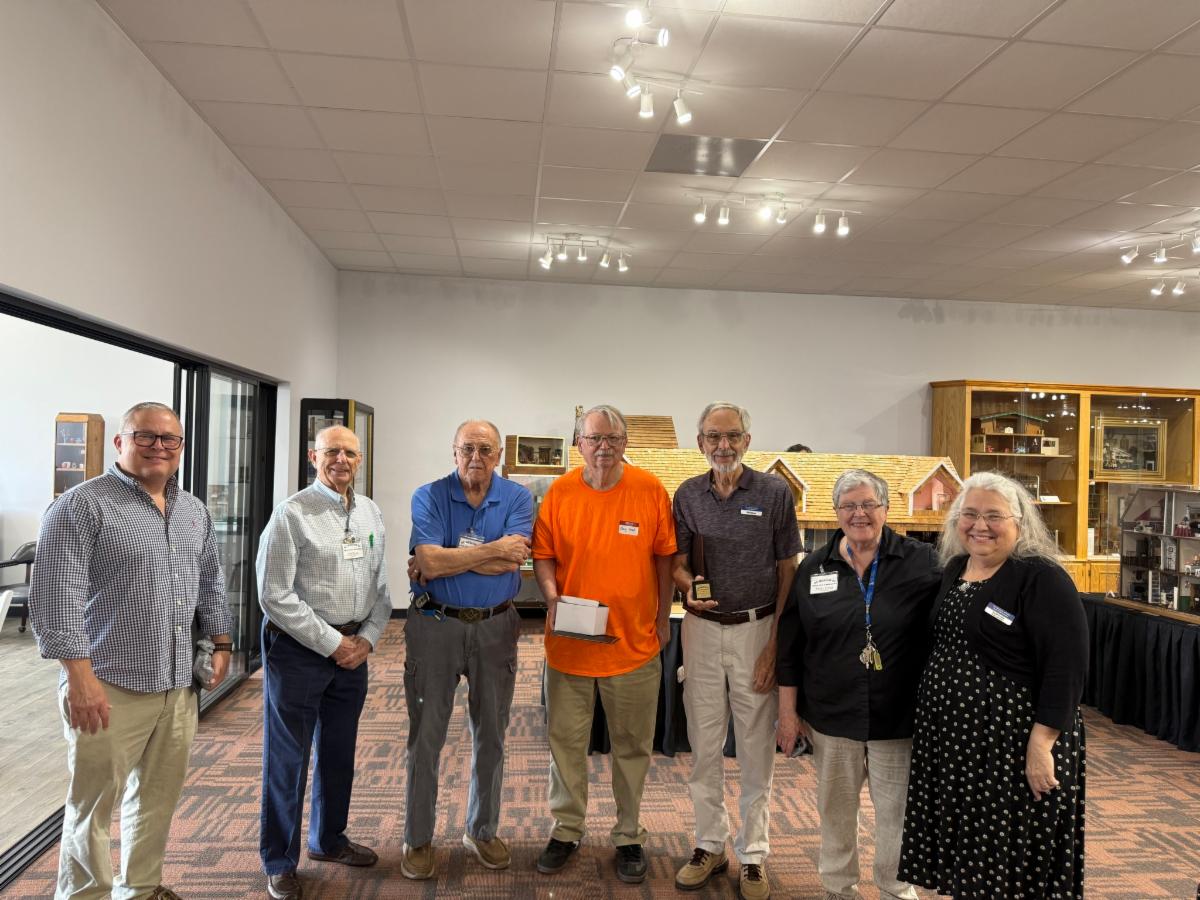
We want to send our special thanks and recognition to the hard-working museum volunteers who received the Rowan County 2026 Governor's Volunteer Service Award! Congratulations on your recognition to Diane, Ed, Gary, Kathy, Lynn, Nancy, Perry, Rebecca, Richard, Robert, Rodney, Susan, and Terri.
With love,
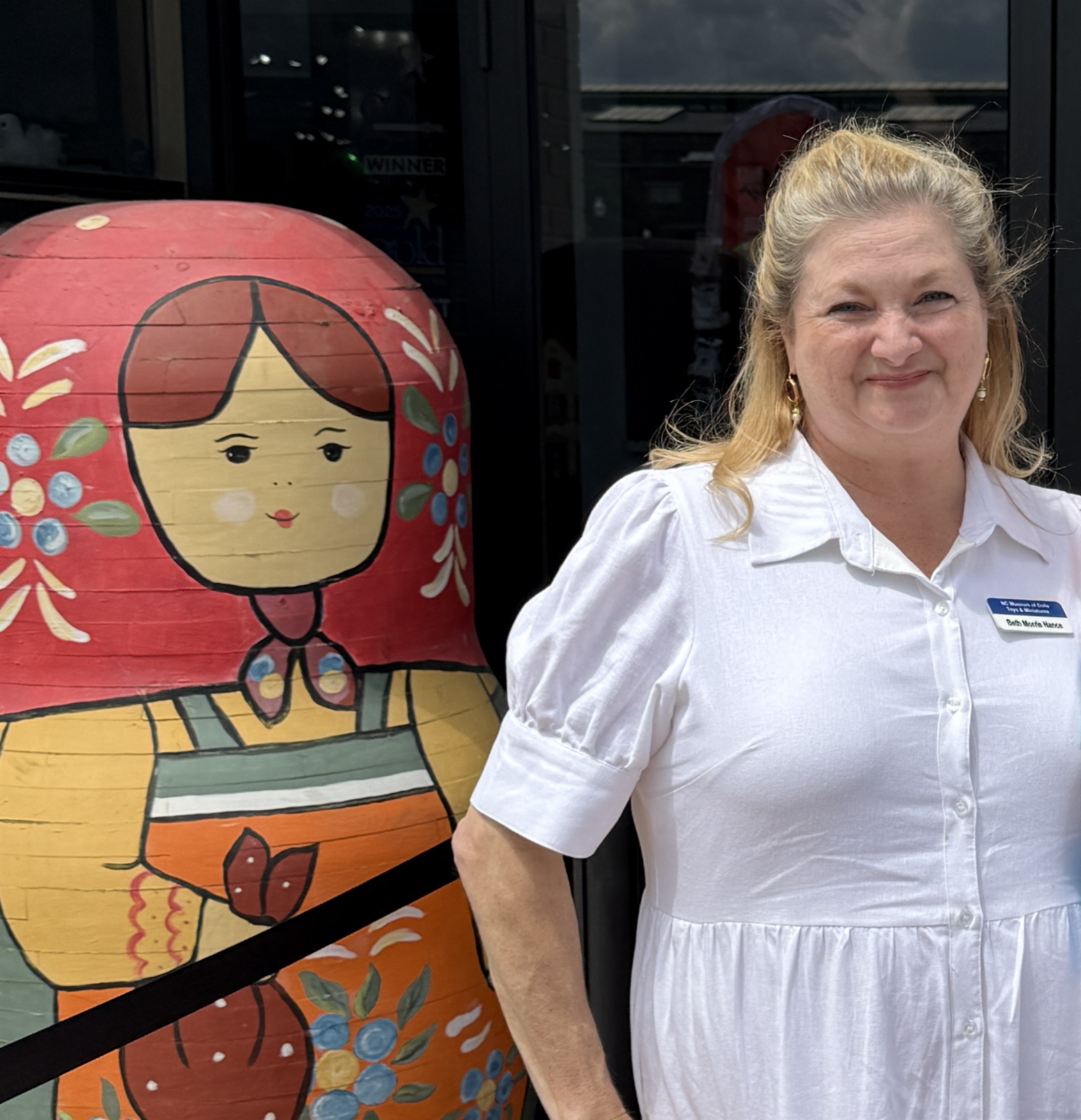
Beth M. Nance
Founder and Executive Director
PS - will we see you at our Fill-a-Bag Sale & World Doll Day celebrations on June 13?
| |
Shop for a Cause:
Gift Shop Relaunch
| |
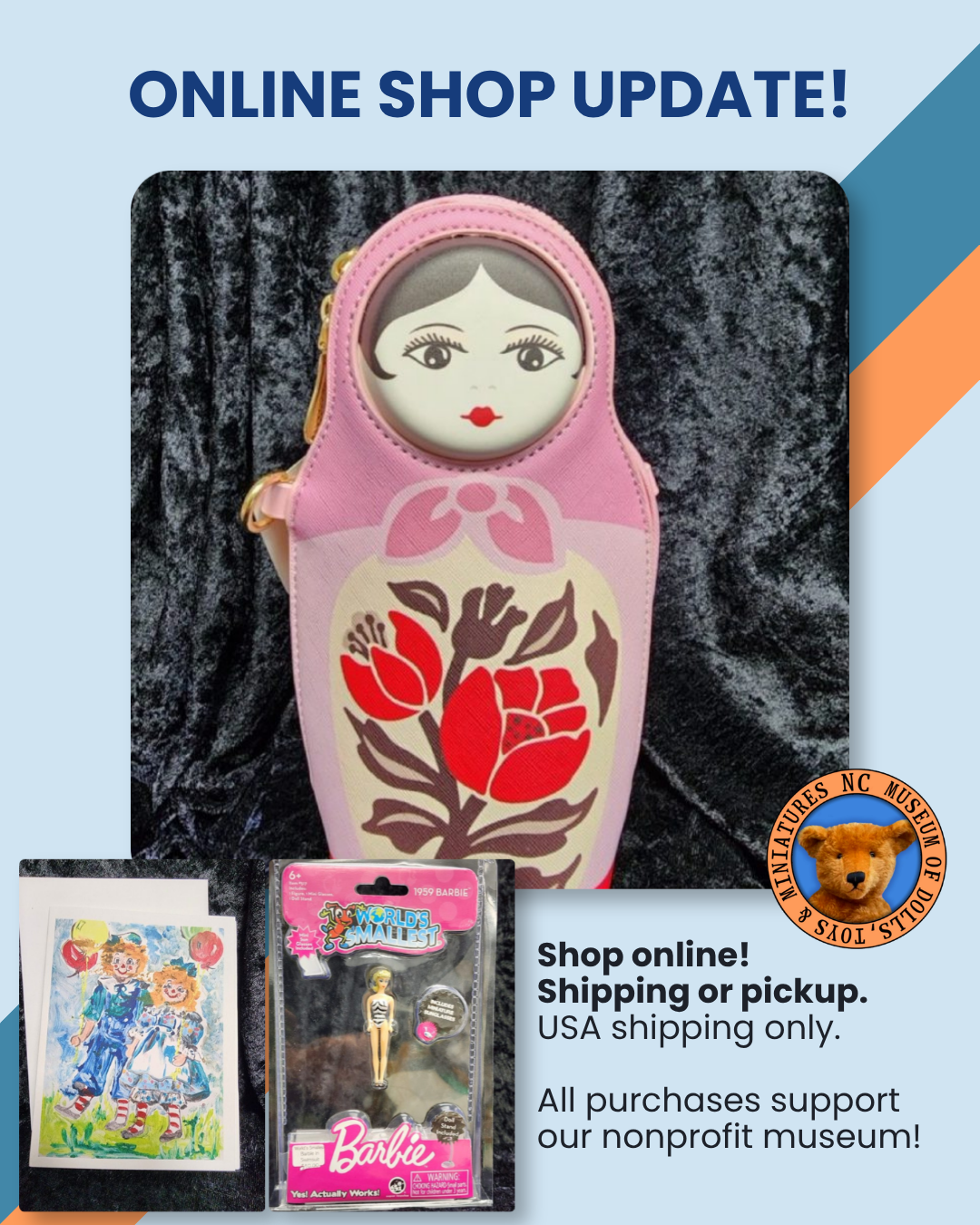
We are so excited to officially relaunch our museum gift shop this spring! If you haven't browsed the selection yet, take a look now!
We offer free pickup at the museum or shipping anywhere in the US.
Free shipping at $100 or more. We cannot offer international shipping at this time.
Current offerings include many of our most popular gift shop items, from our nesting doll purse to greeting cards, puzzles, and World's Smallest toys.
|
Get Your
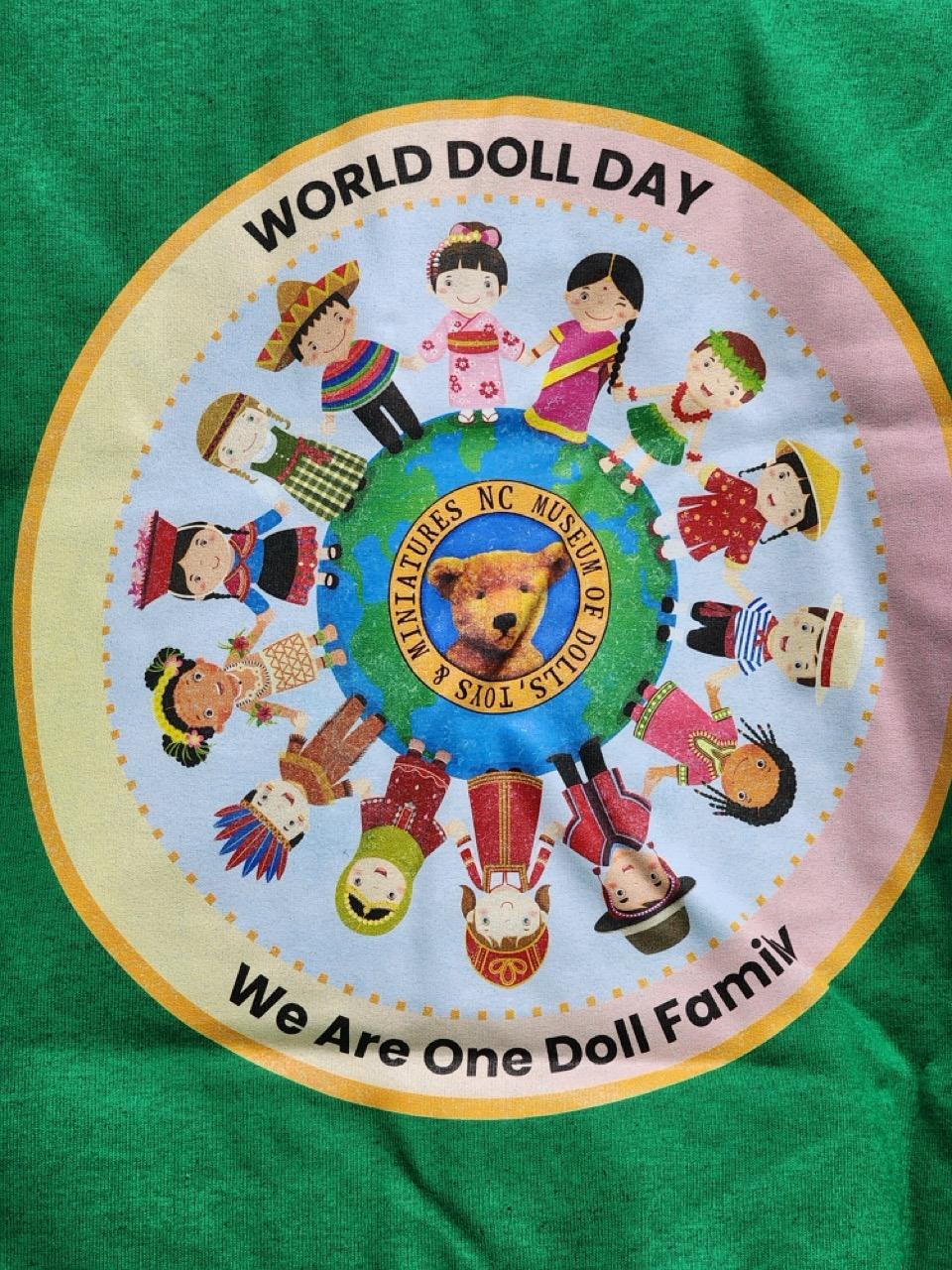
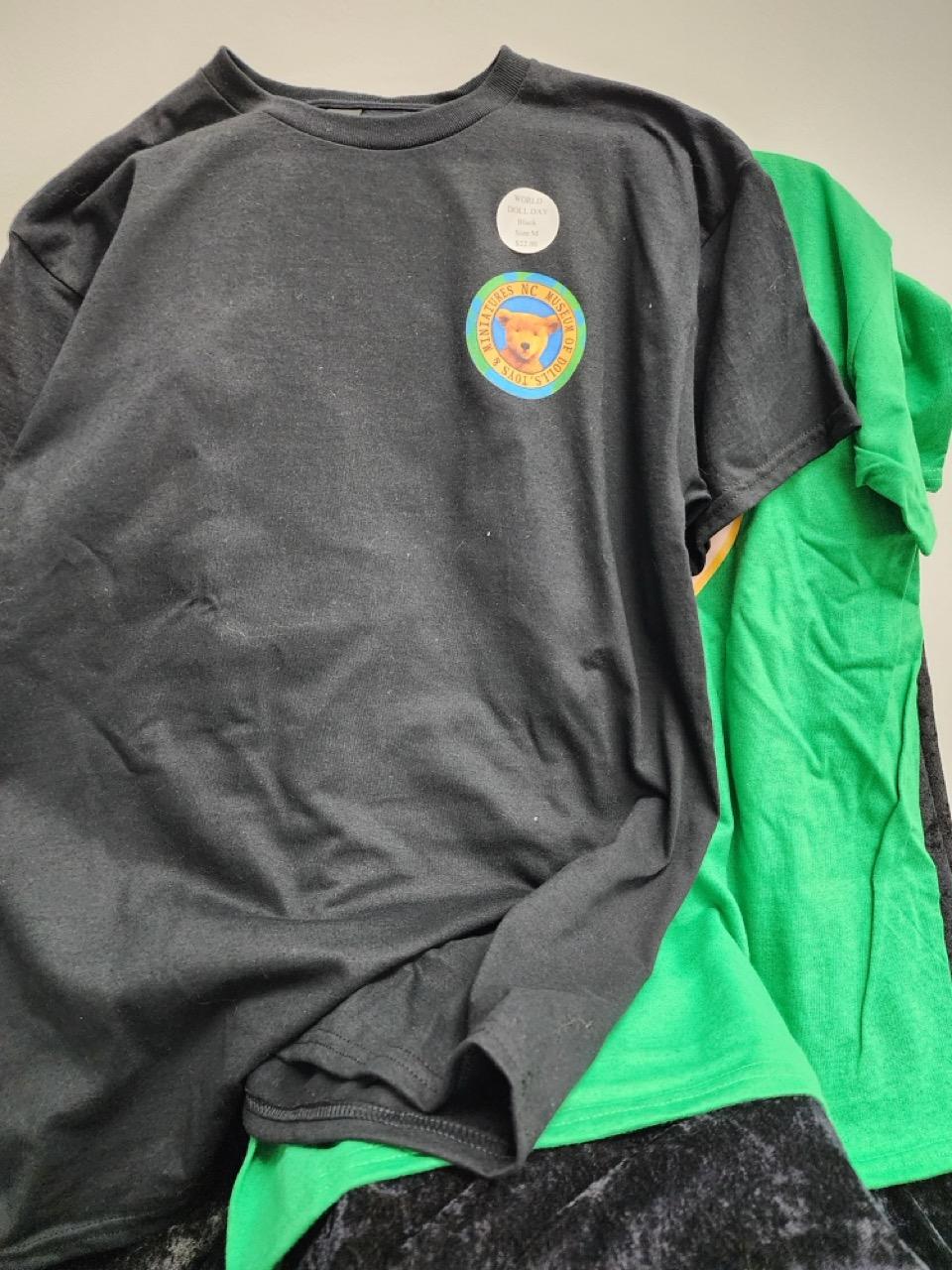
World Doll Day T-Shirt!
| Get ready for World Doll Day by picking up your official t-shirt frm the museum! Now available in our online shop: |
Event Recap:
Volunteer Brunch
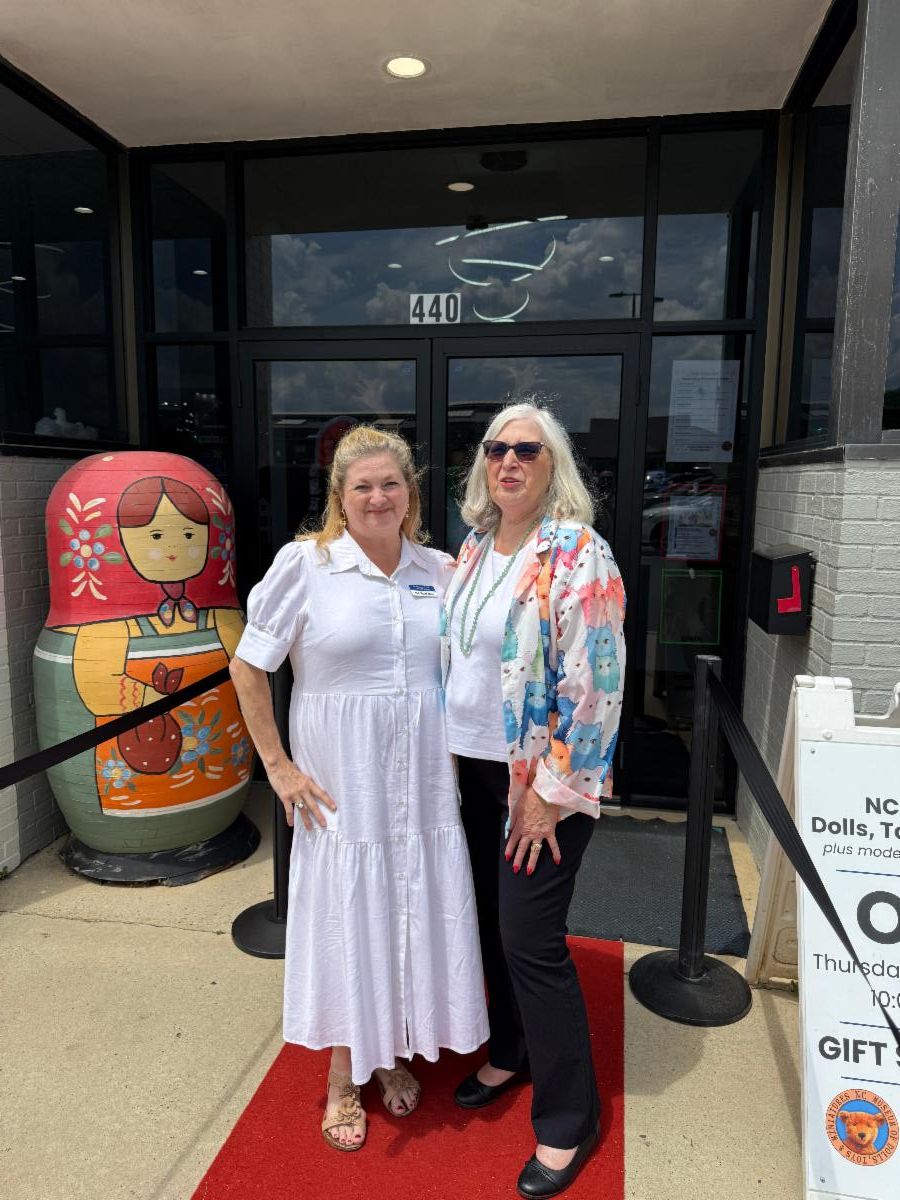
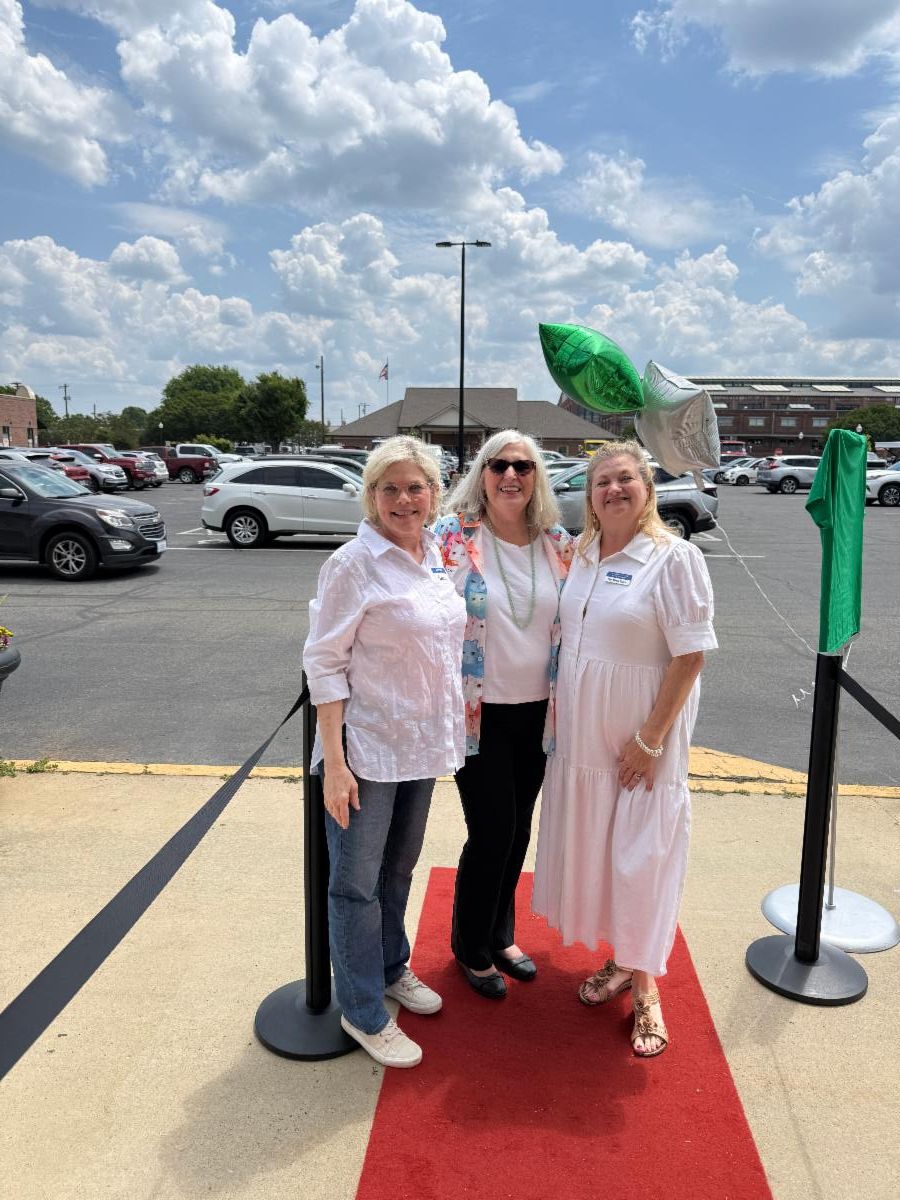
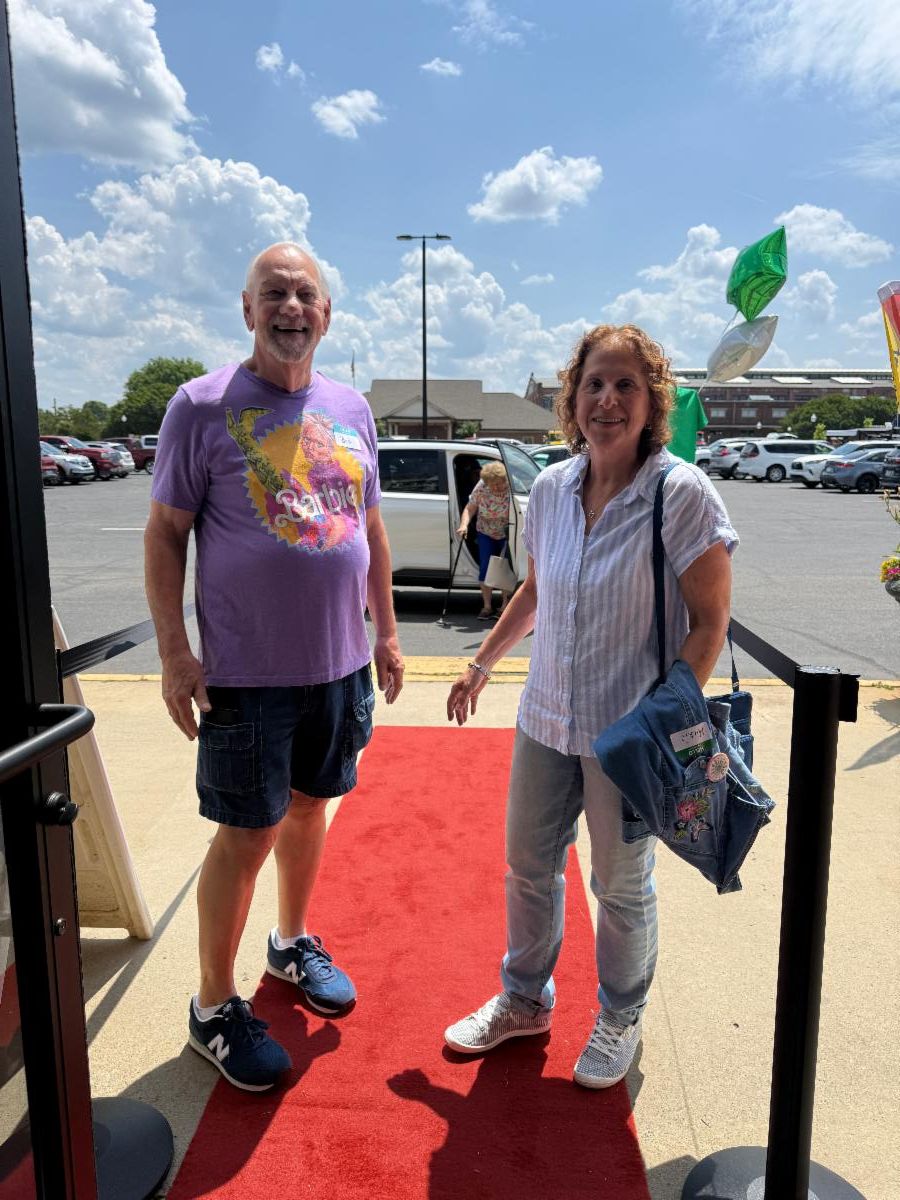
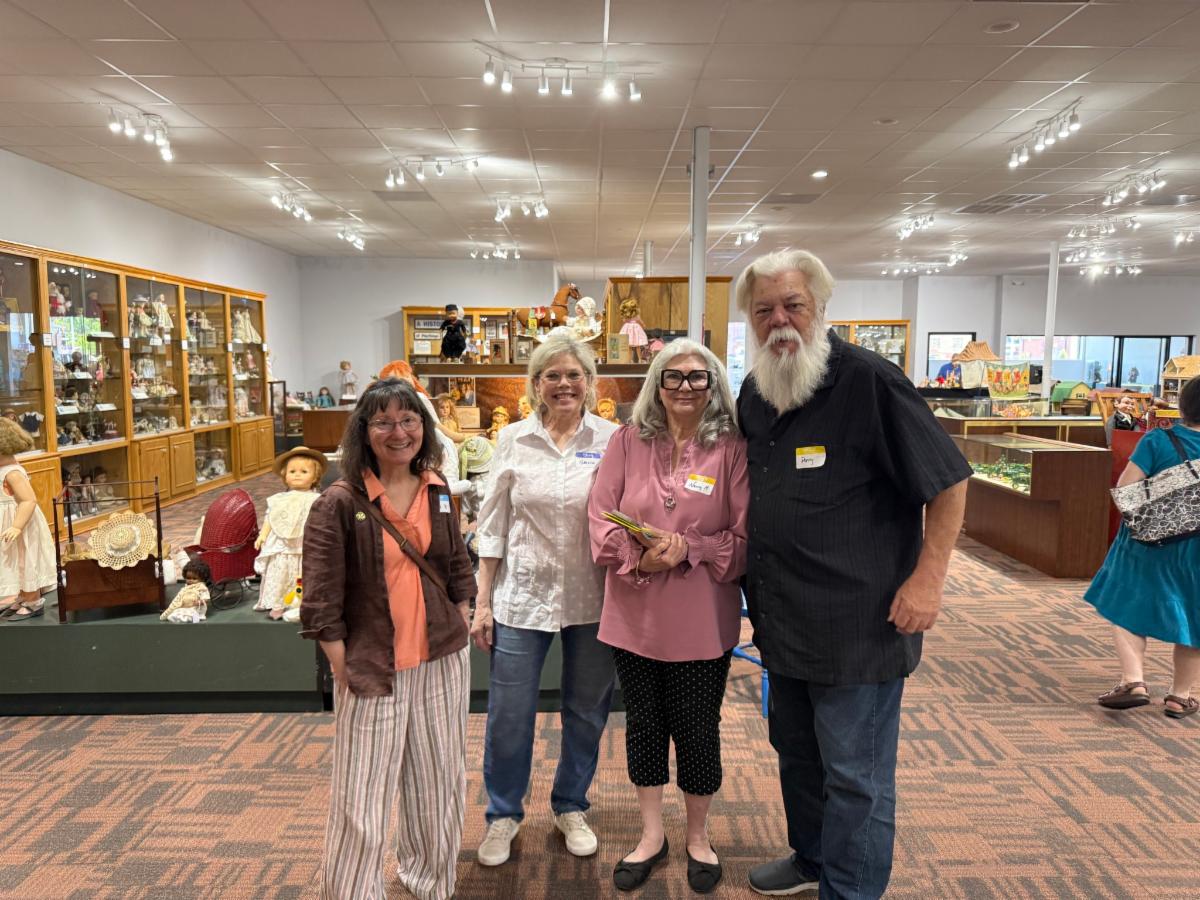
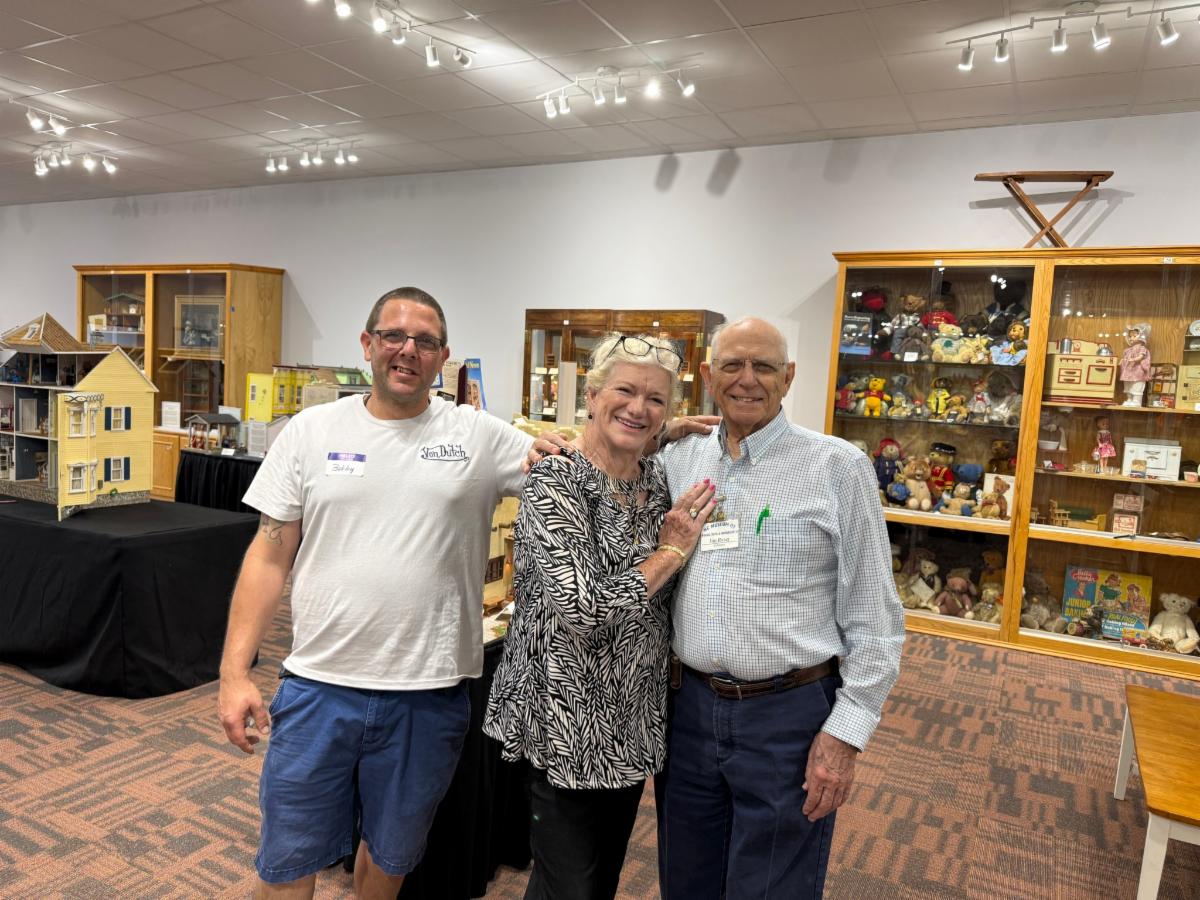
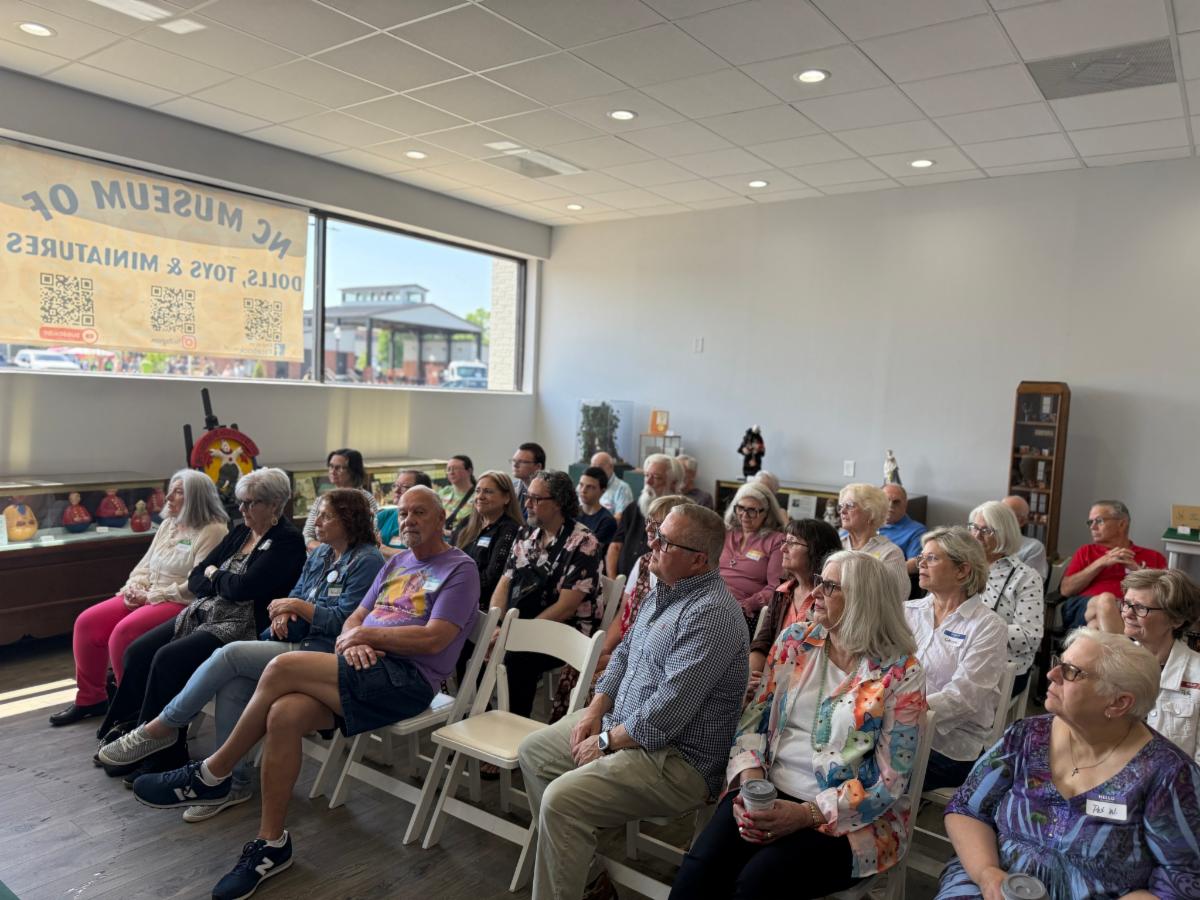
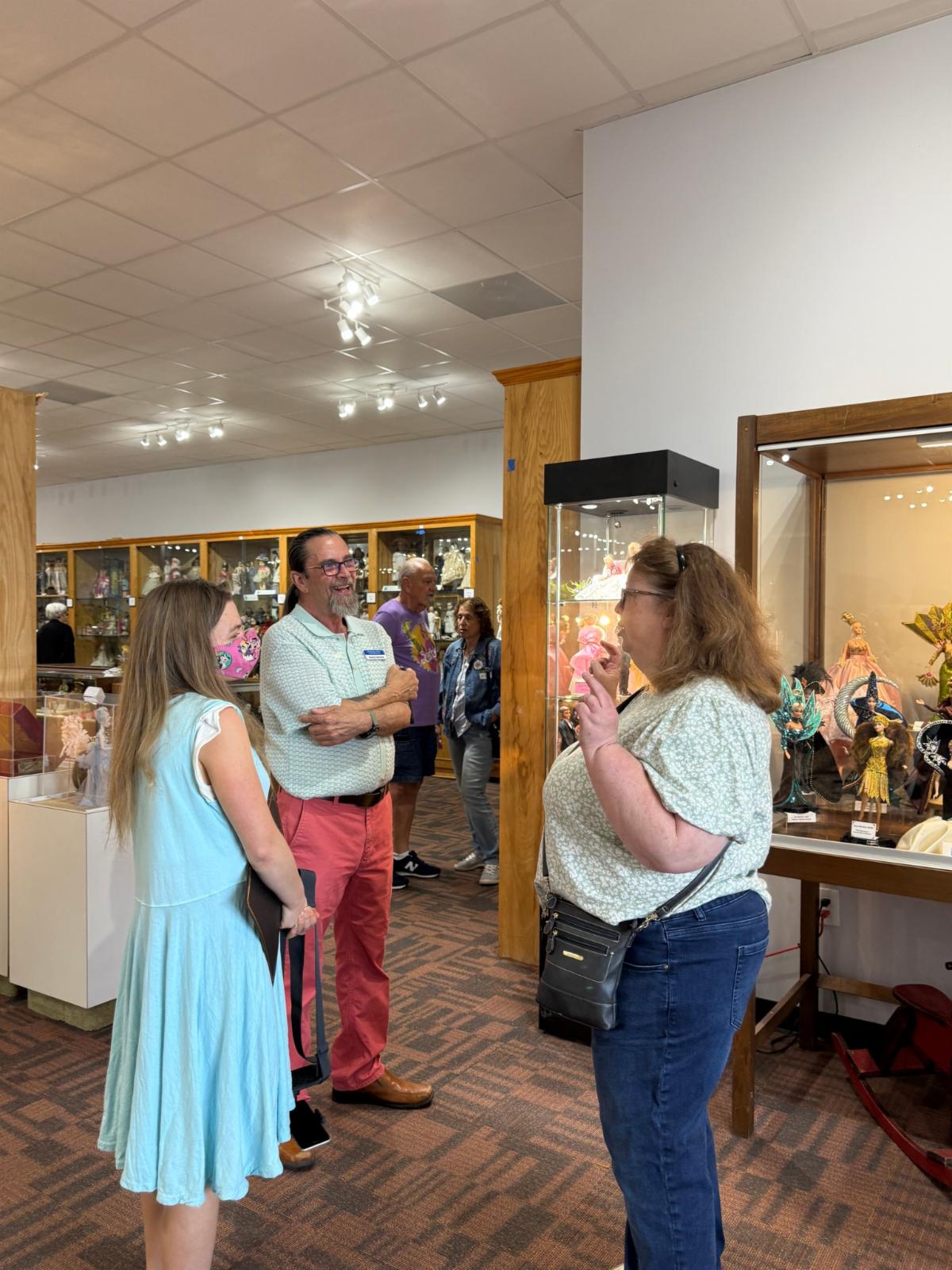
| We were delighted to get the chance to give back to our dedicated volunteers with our First Annual Volunteer Brunch in April. We rolled out the red carpet for these hardworking friends - take a look! | |
Event Recaps:
Miniature Workshops
| | |
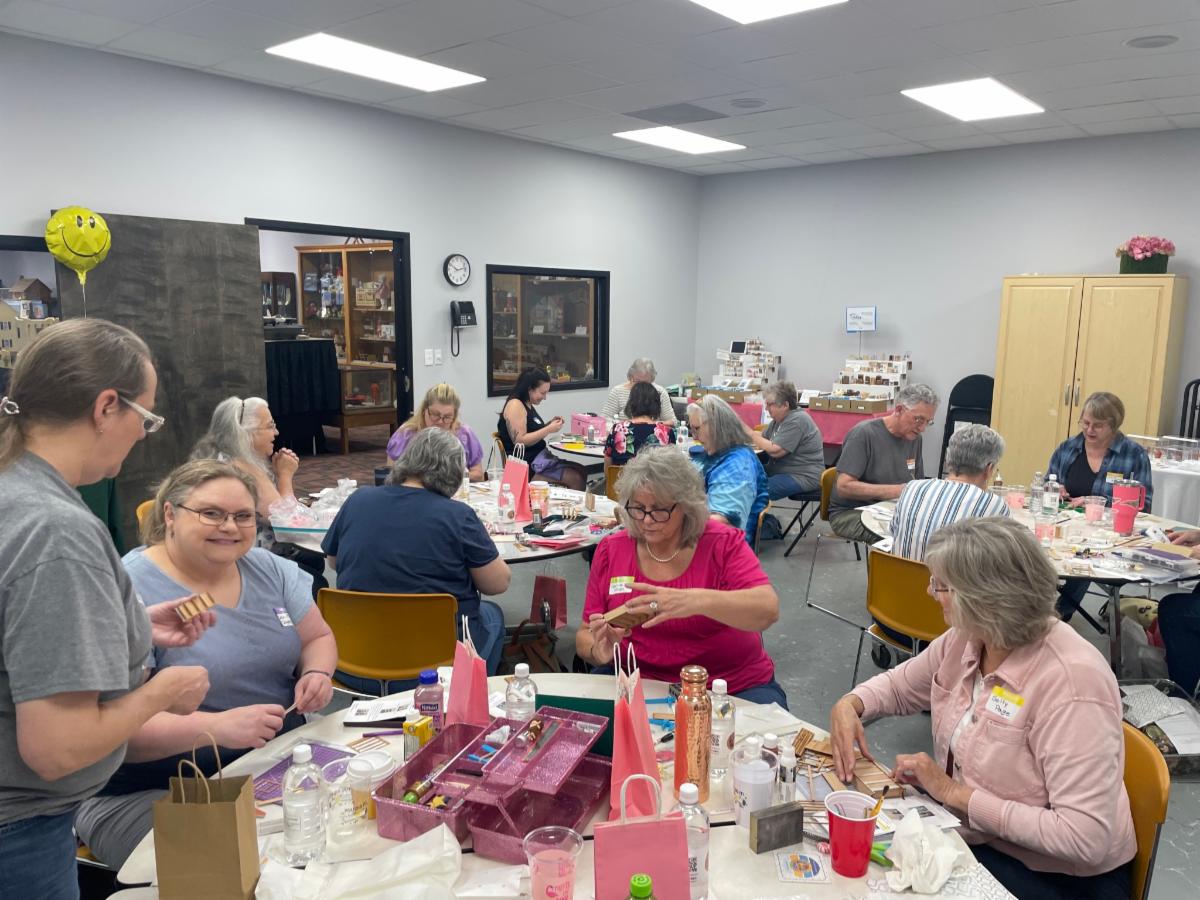
It was miniature mayhem at the museum in April as we held two special miniature workshops with expert guidance to back us up.
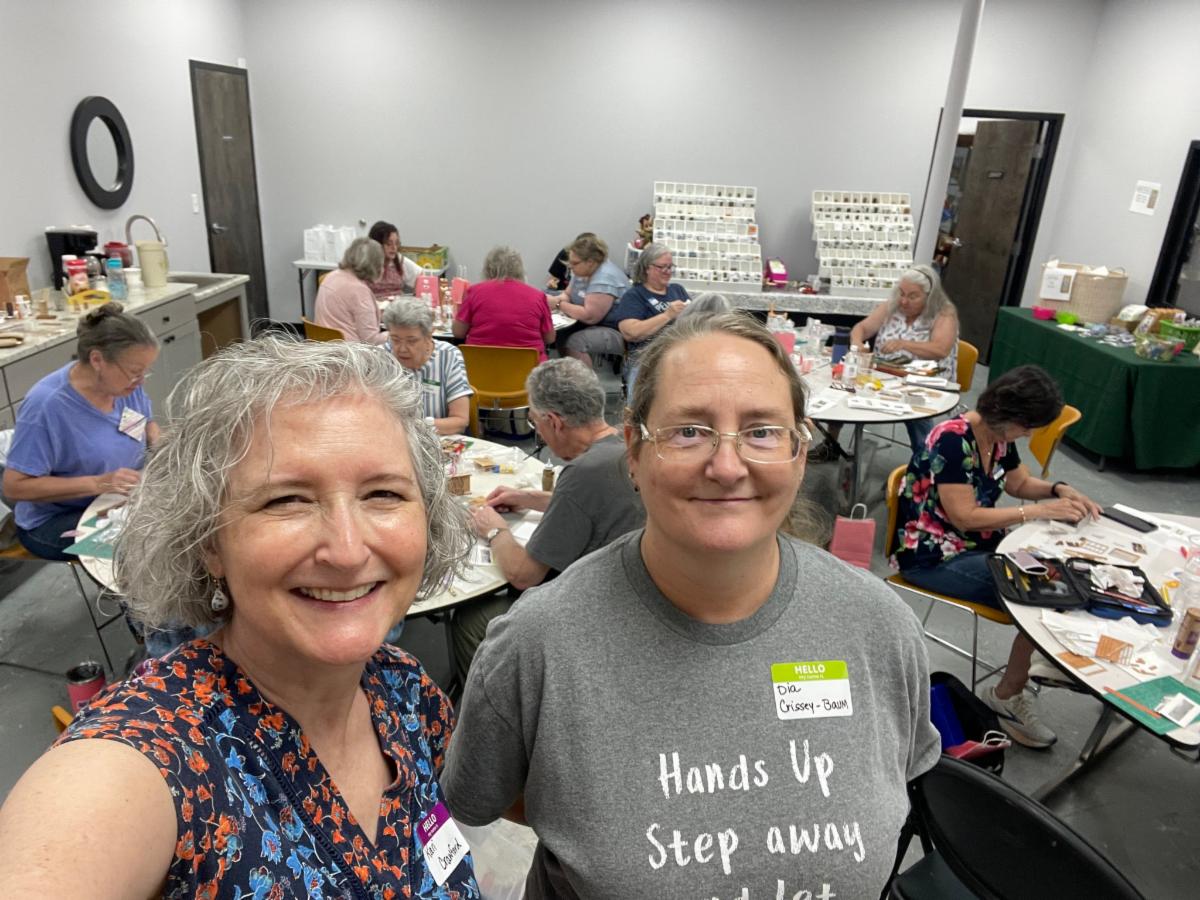
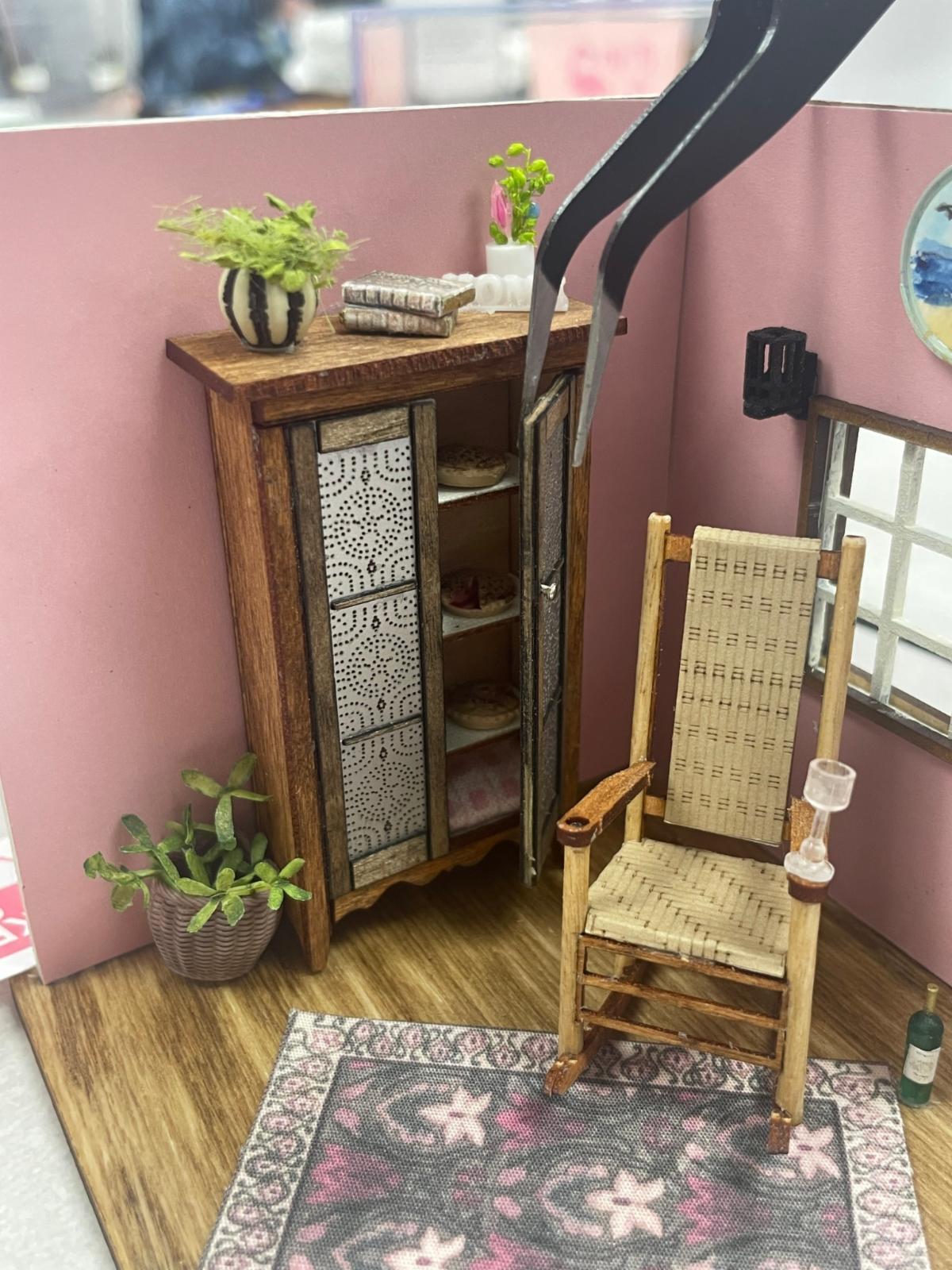
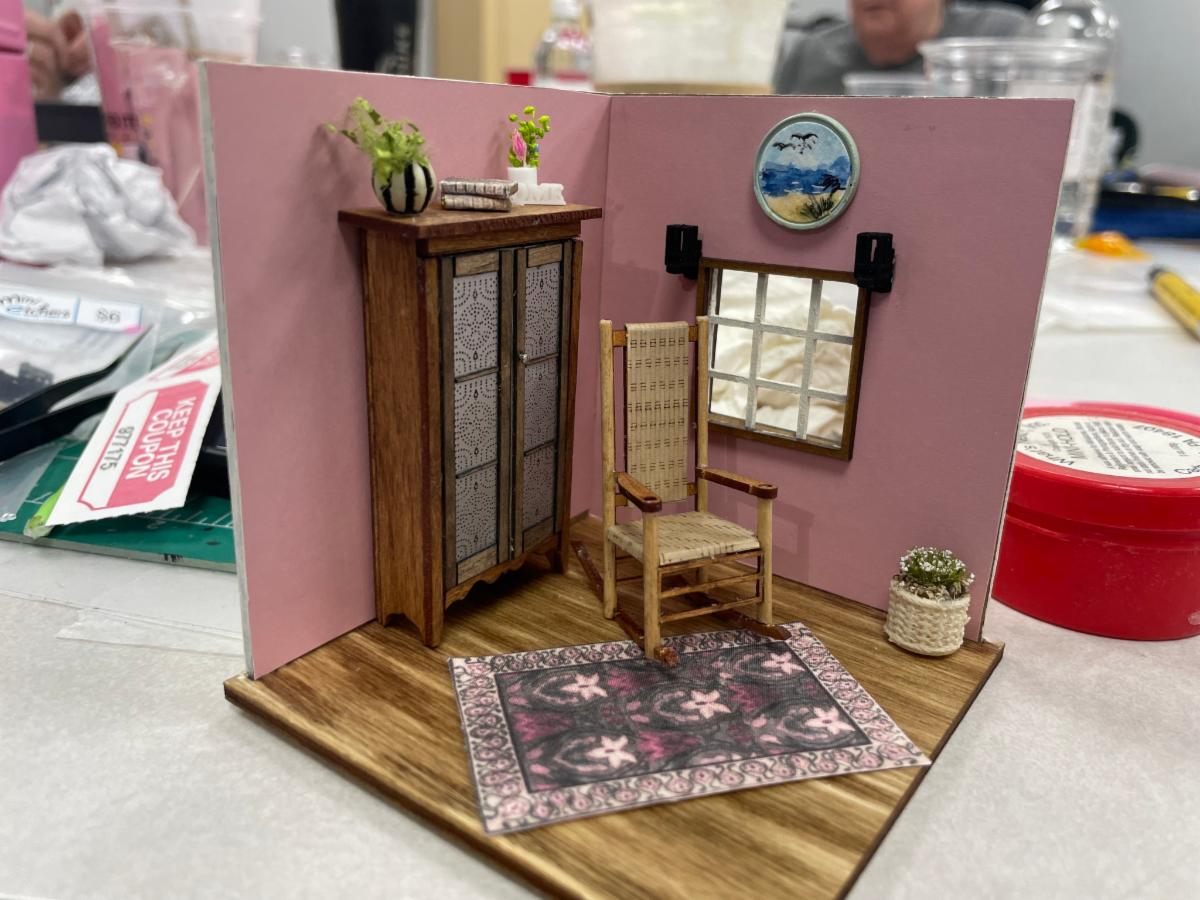
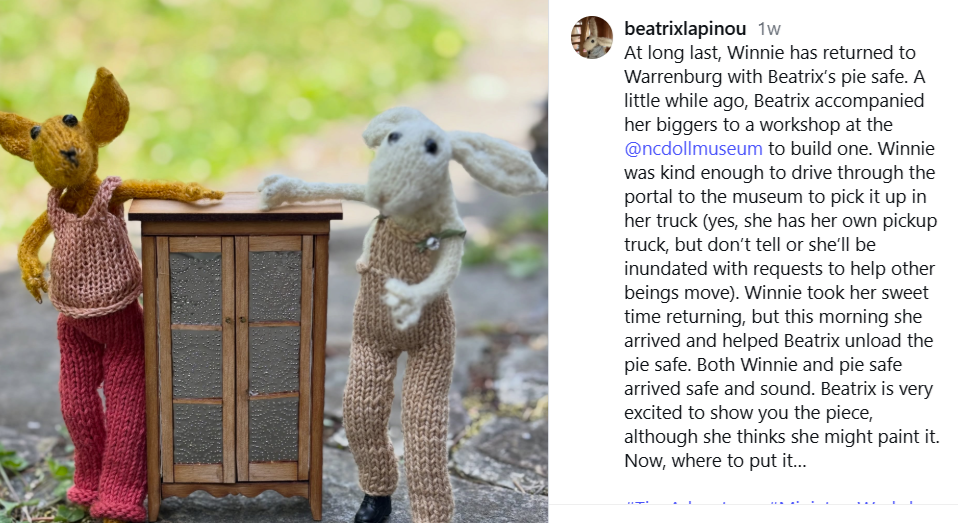
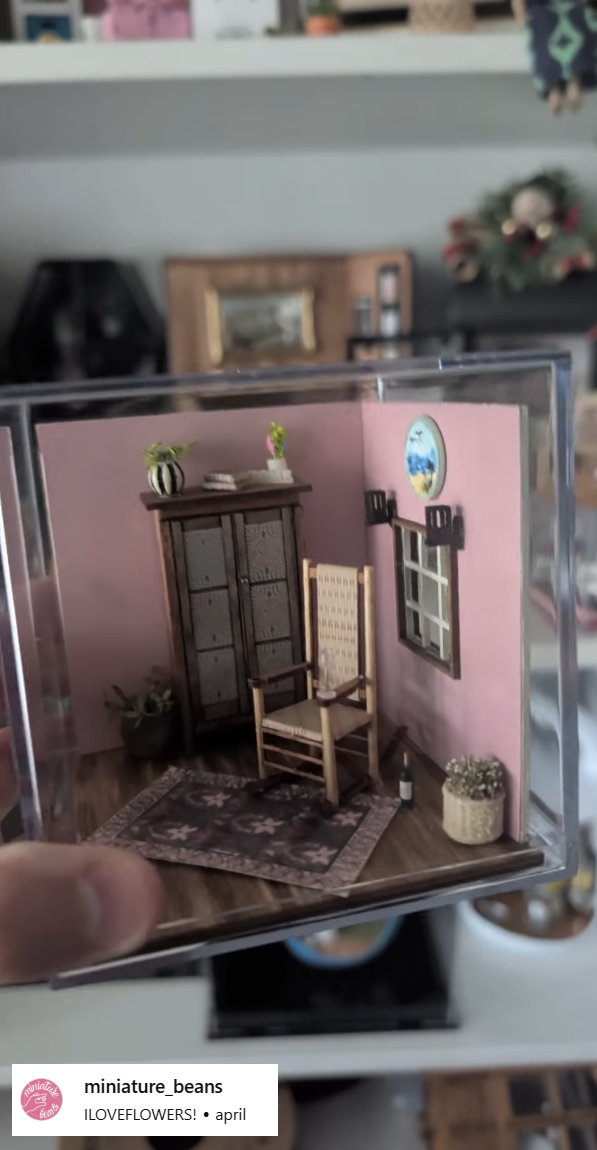
First, Dia Crissey-Baum (Tailgate Minis) and Kari Crawford (MiniEtchers) joined us to help both new and experienced mini makers create a charming vignette in their choice of scale (1, 1/2, or 1/4 inch) featuring a primitive pie safe and chair honoring early American craftsmanship and tradition.
| | We were so excited to see some of the finished creations shared on social media! You can always tag the museum when you post about us - we'd love to re-share. | | |
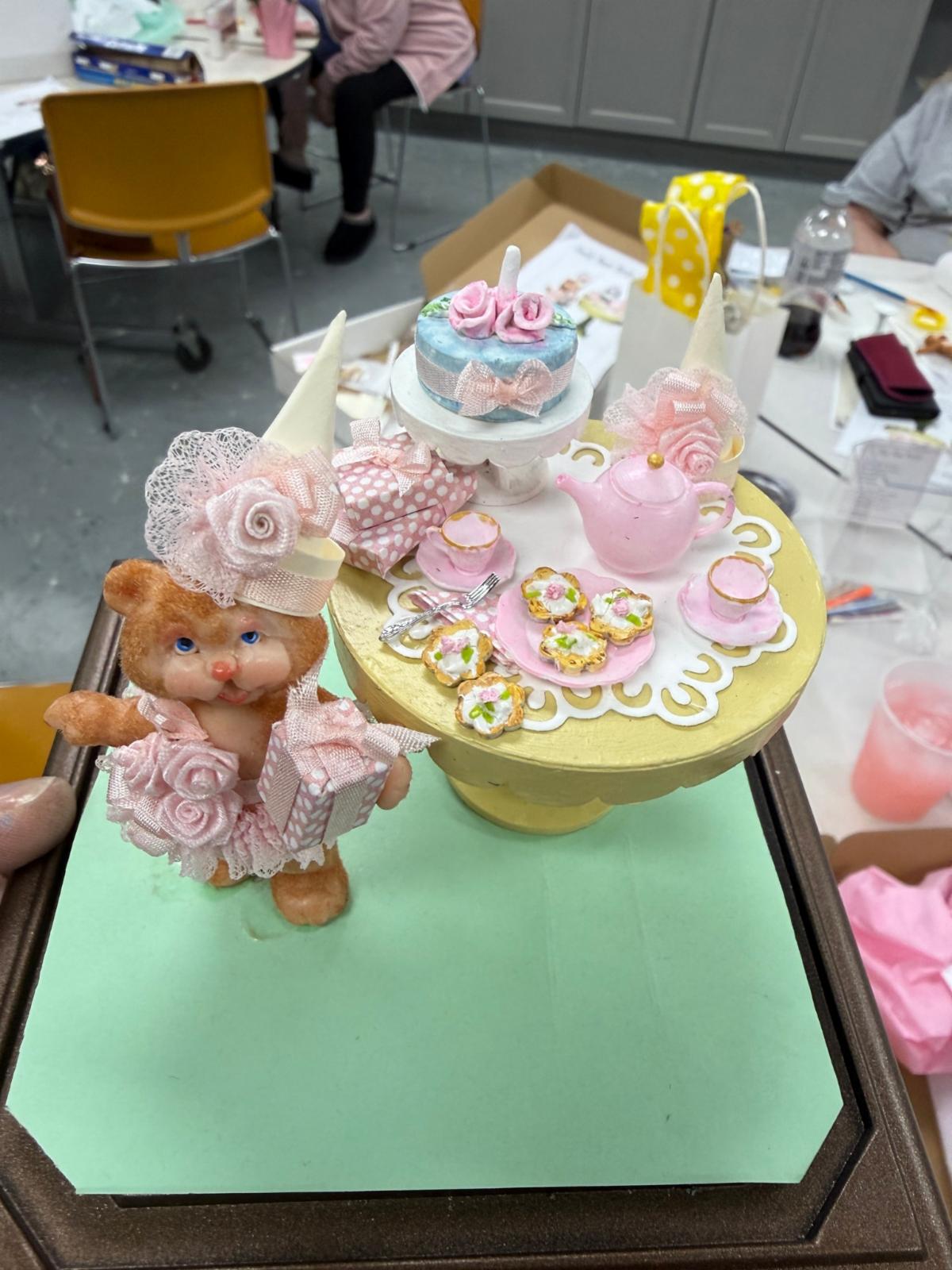
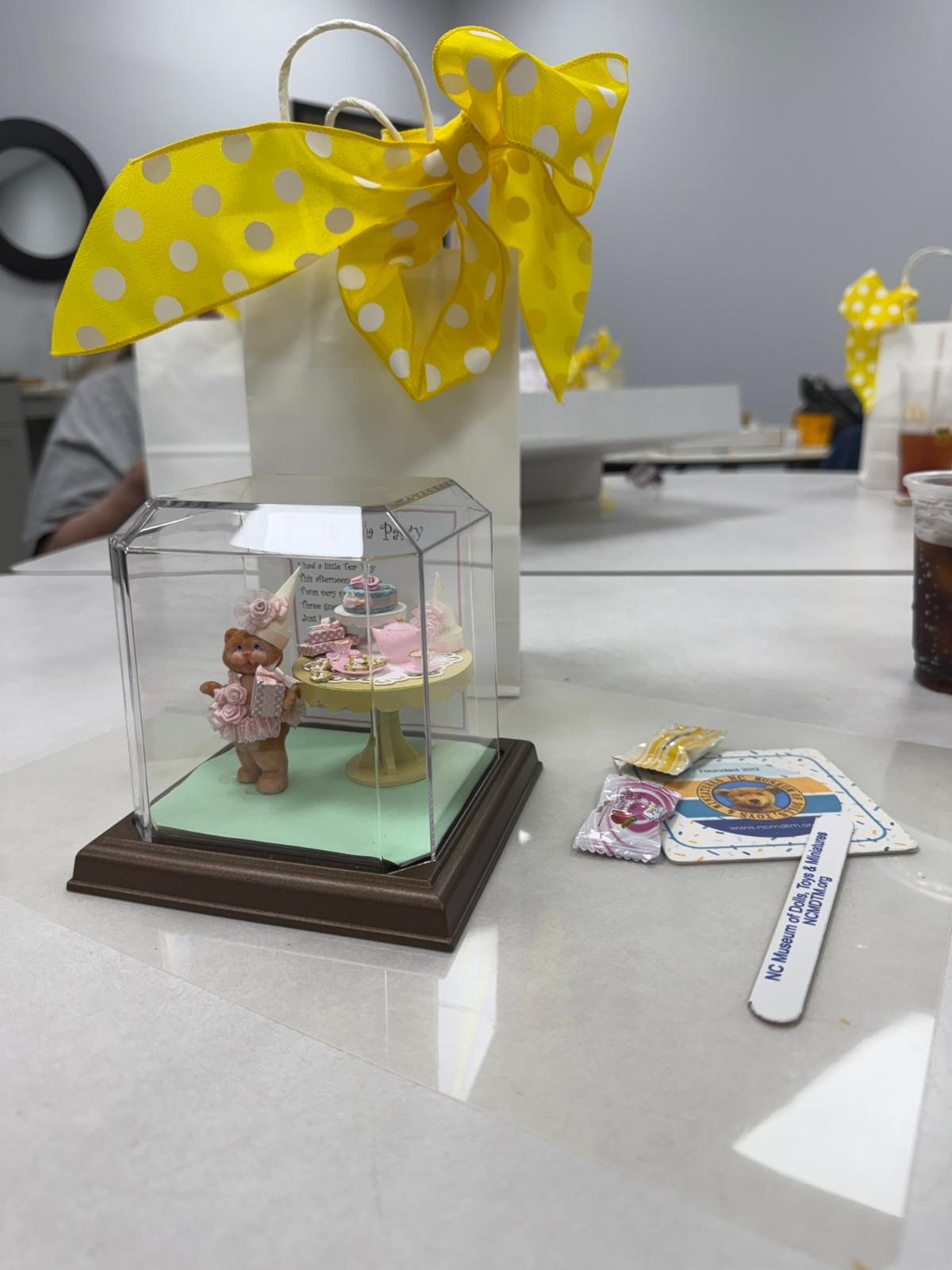
Next, we welcomed mini legend Cat Wingler to the museum to guide a Teddy Bear Tea Party workshop.
Working in 1 inch scale, participants learned how to sculpt their own teddy bear out of polymer clay, assemble a beautiful table and cake stand, and paint their own teapot, dishes, and cookies.
| | Cat provided her expert guidance to help participants every step of the way, including painting and flocking their bears for their tea party outfits. Learn her advice for flocking in this short video: | |
Museum Moment:
Bring the Family!
| |
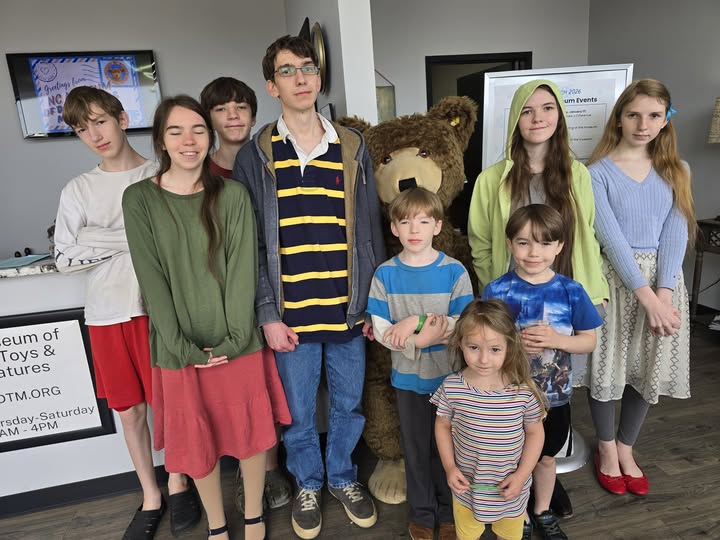
In April, a family of nine dropped by the museum - and they left four more family members at home! A big family ready for big fun with us!
The museum is the perfect place for a curious party of one, a small doll or miniature club, or the entire family. We can even accomodate larger group outings and field trips if you reach out to us.
| |
Celebrating the Season:
April Holidays
| | |
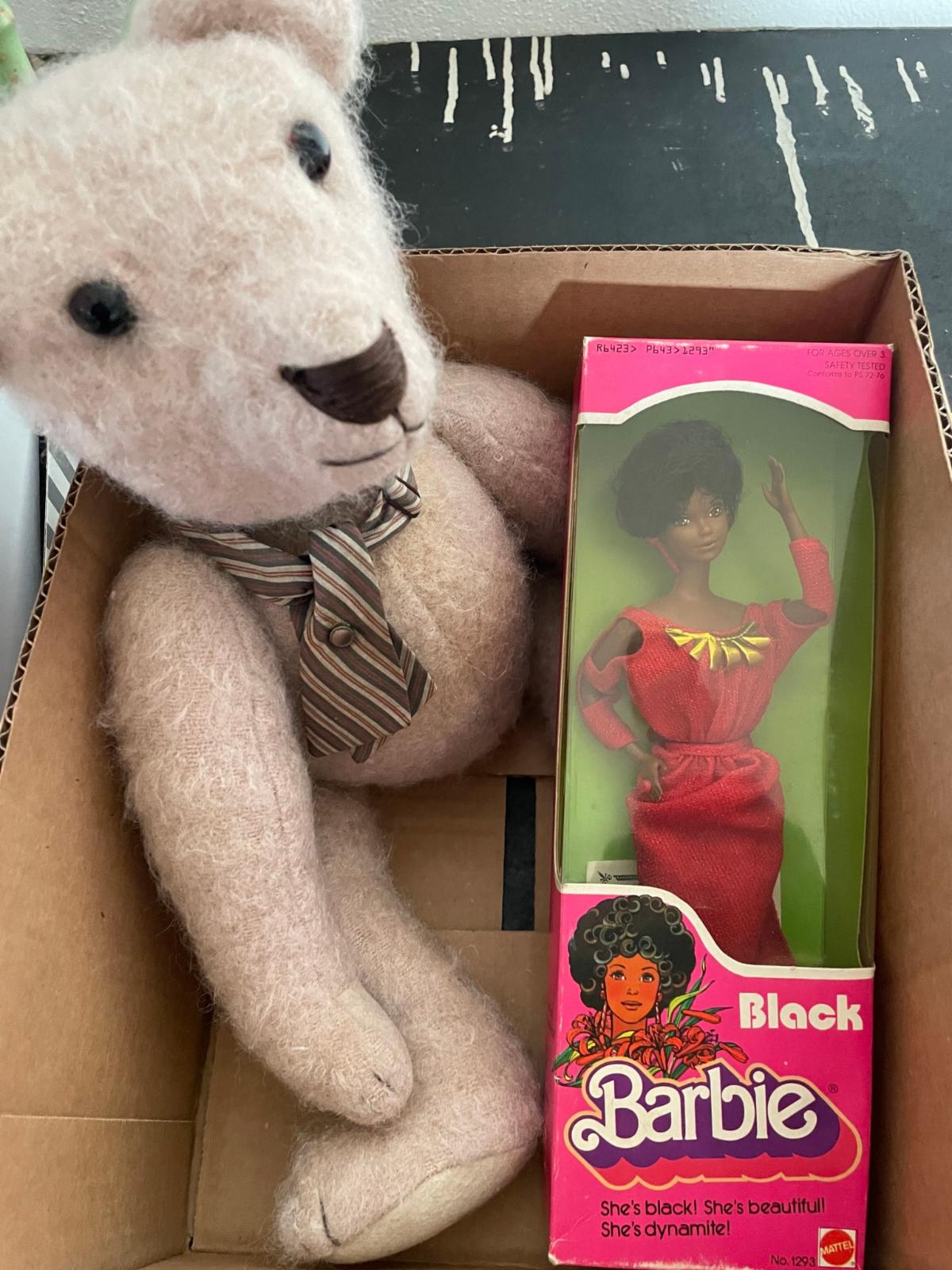
"I knew that Black Barbie was different. I never realized the magnitude."
We ended March celebrating a special local holiday that's meaningful to all Barbie and doll collectors. March 30 is Kitty Black Perkins Day in Spartanburg, South Carolina!
Kitty grew up in Spartanburg before relocating to LA. She worked for 6 years in the fashion industry before applying for a job with Mattel.
Her first attempt to impress Mattel through a practical Barbie design challenge failed—but her persistence triumphed. She produced 6 original Barbie outfits for her second interview.
All 6 of the outfits Kitty brought to her second interview were produced as real Barbie outfits, and Kitty was hired as the first Black designer at Mattel.
She worked for Mattel for nearly 3 decades and became the Chief Designer of Fashions and Doll Concepts. In 1980, she designed Black Barbie.
| | |
Black Barbie had fuller lips, a wider nose, and short, natural hair. 21 years after the first Barbie was released, Black Barbie changed the game. She wasn’t a white doll with dark skin. And she wasn’t just a “friend of Barbie" either:
"I wanted her to reflect the total look of a Black woman. I wanted her to be the complete opposite of Barbie AND the complete opposite of Christie."
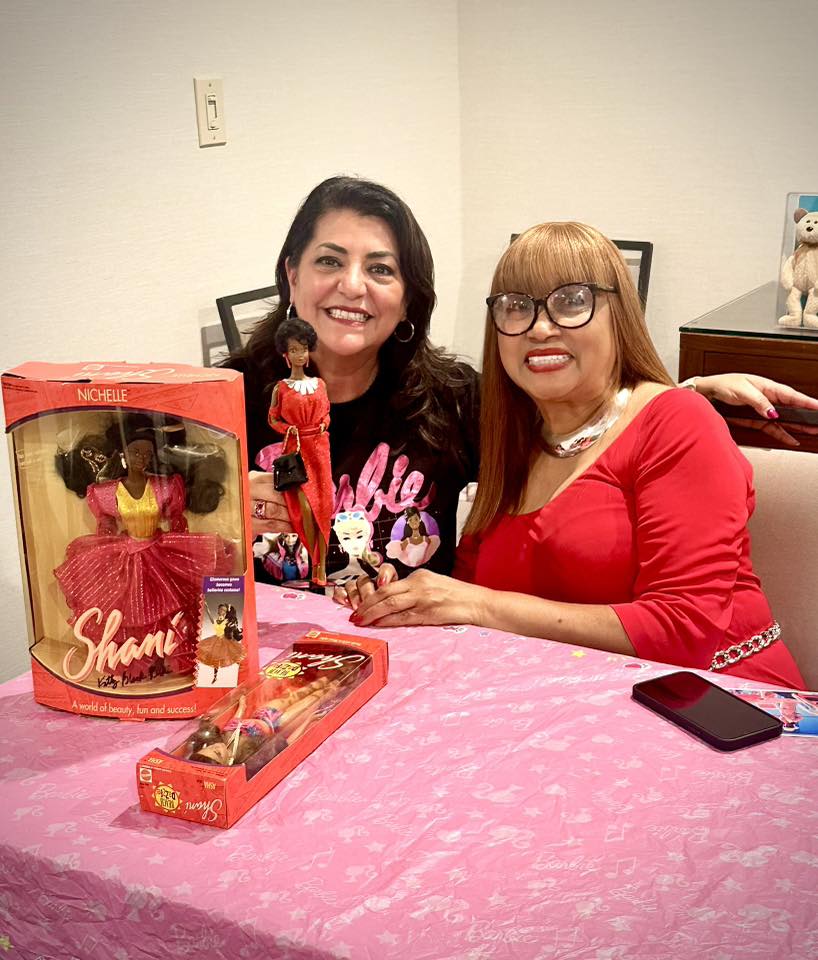
Here's a lovely recent photo of Kitty shared by the Be Anything Museum:
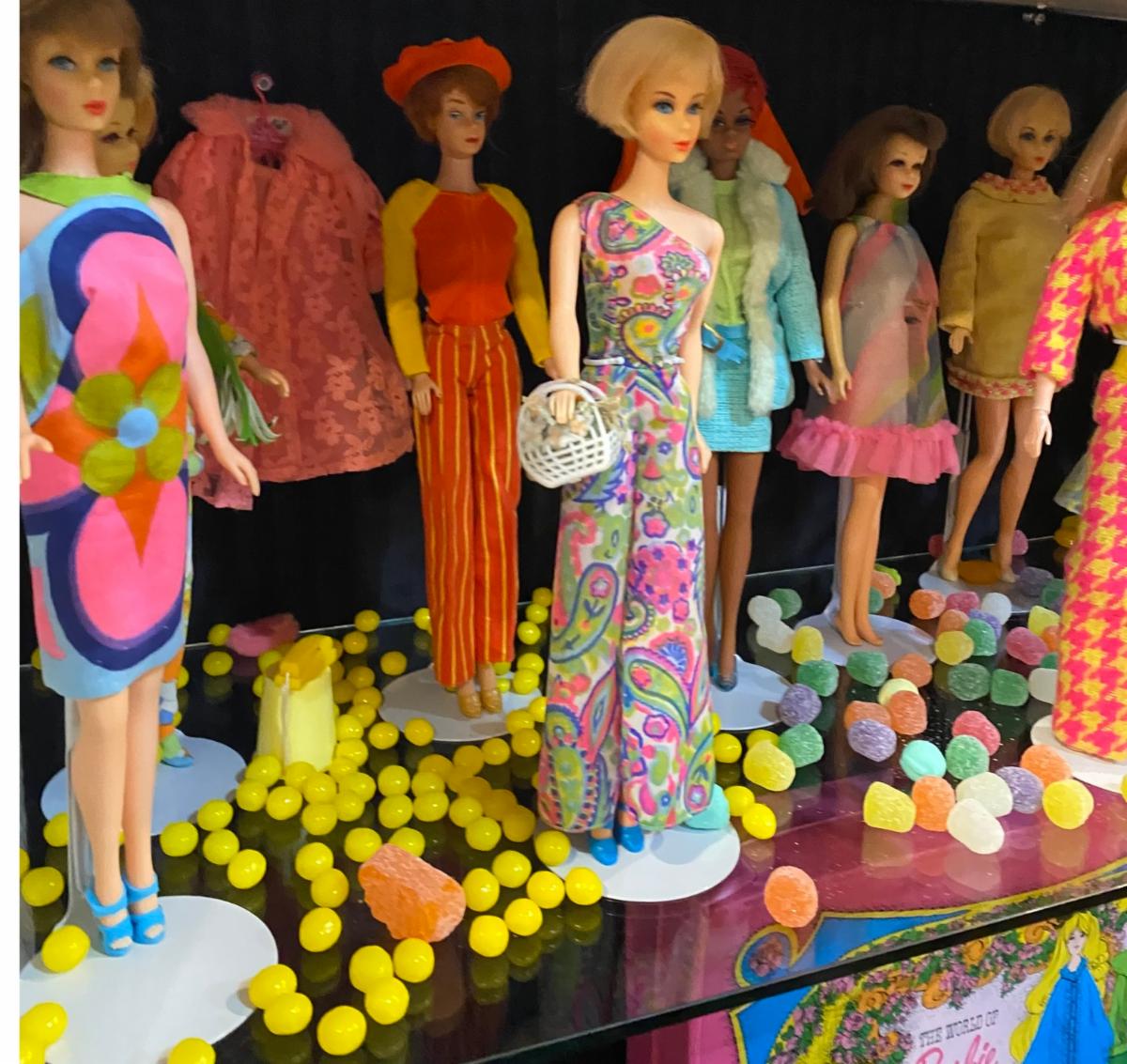
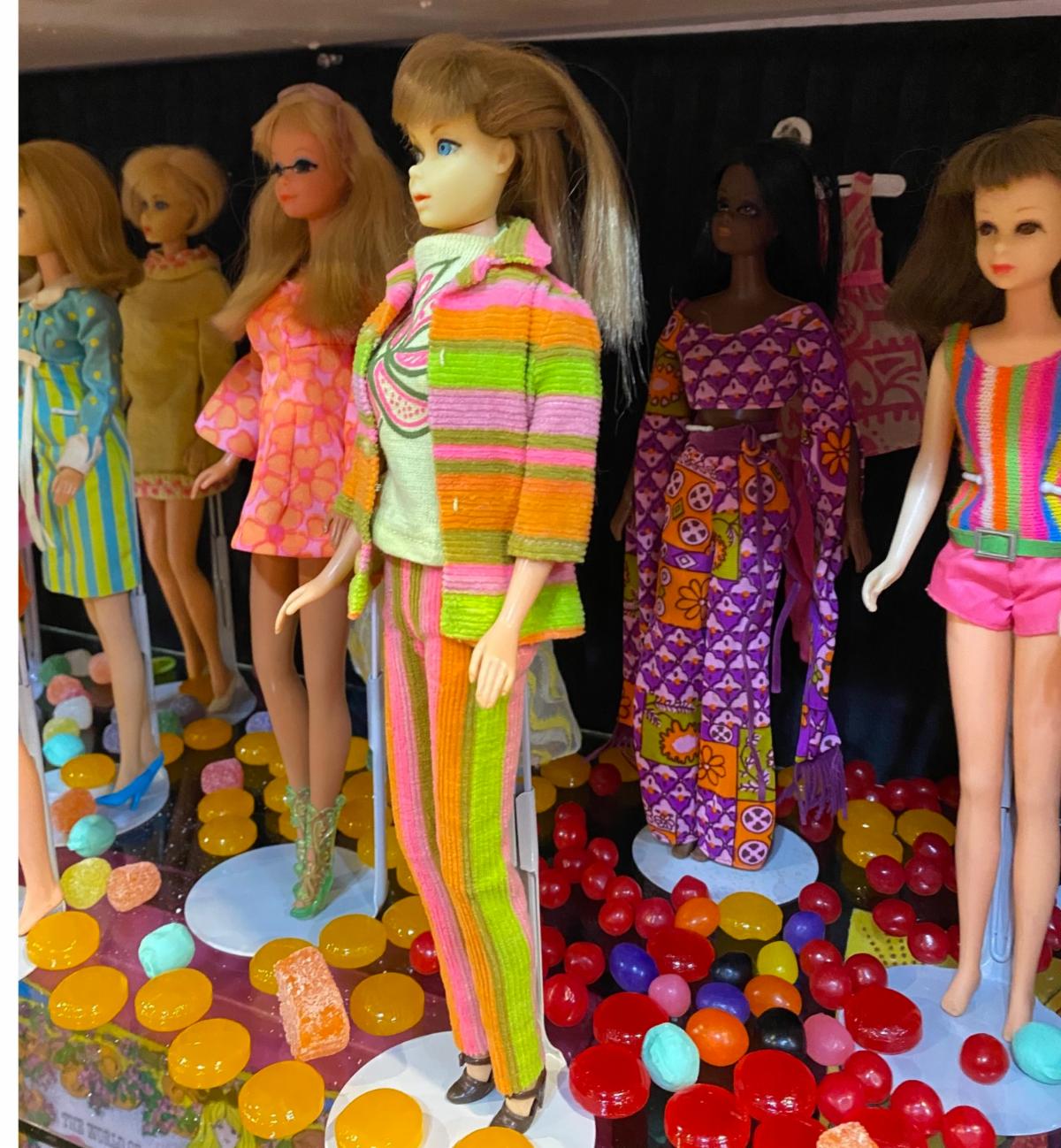
| | We shared this Barbie display inspired by sweet treats to celebrate National Peeps Day at the start of April: | | And Barbie & friends even enjoyed a spring wedding with a new display! | | |
Did you know that Ken celebrated his 65th birthday in 2026?
Ken’s full name was revealed by Mattel for this special anniversary year: Kenneth Sean Carson, named for Elliot & Ruth Handler’s son Kenneth.
Ken launched two years after Barbie made her teen fashion queen debut. The boyfriend & girlfriend pair met at a dance – and Barbie “knew that she and Ken would be going together.”
As he celebrates his 65th birthday, Ken is preparing to have some new adventures thanks to Mattel: he’s trying 65 new things on a year-long global travel quest. Hello, new beginnings!
| |
(Our special thanks to Deborah for taking many of the creative videos and photos you see in these newsletters and in our social media posts!)
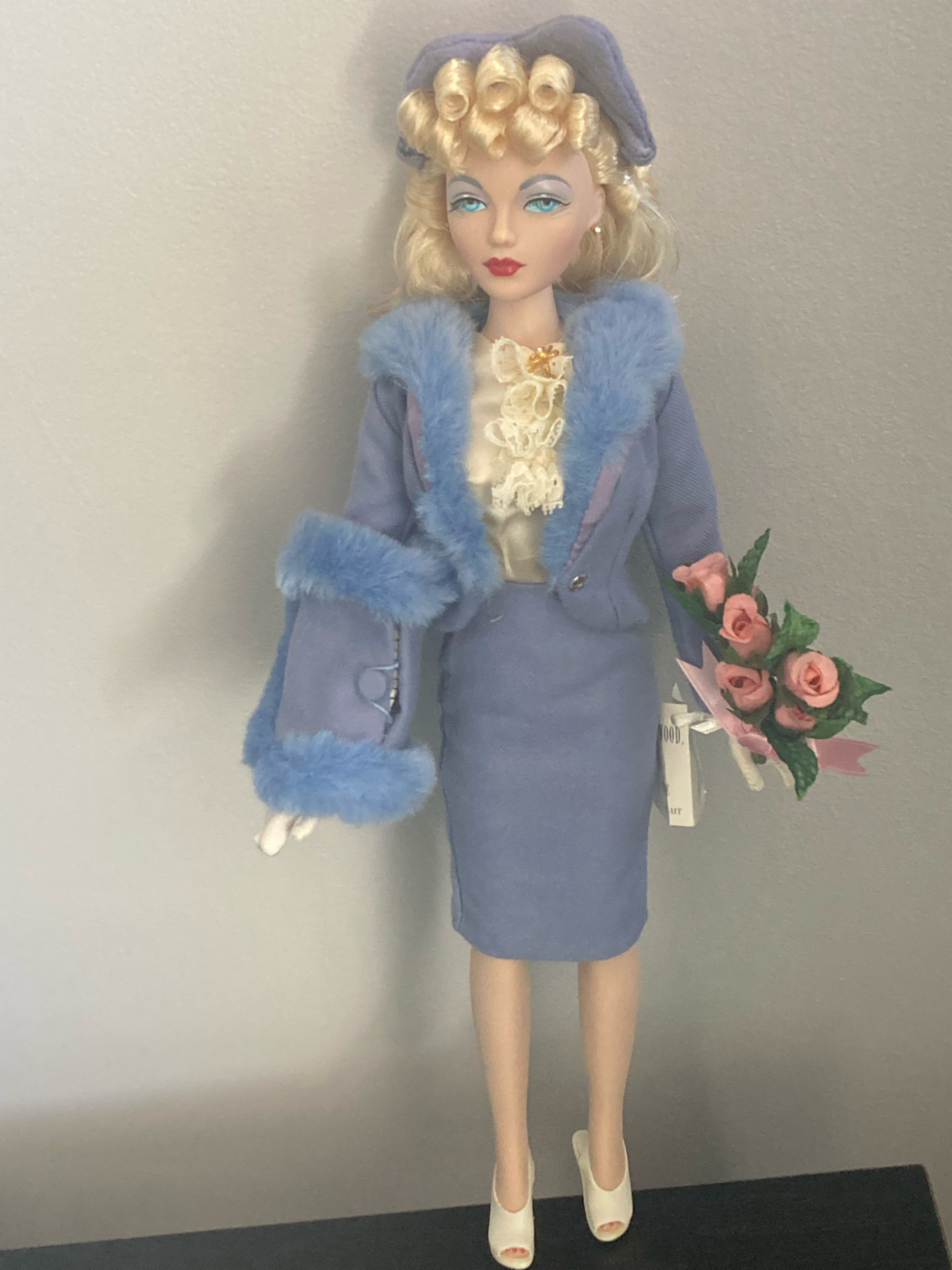
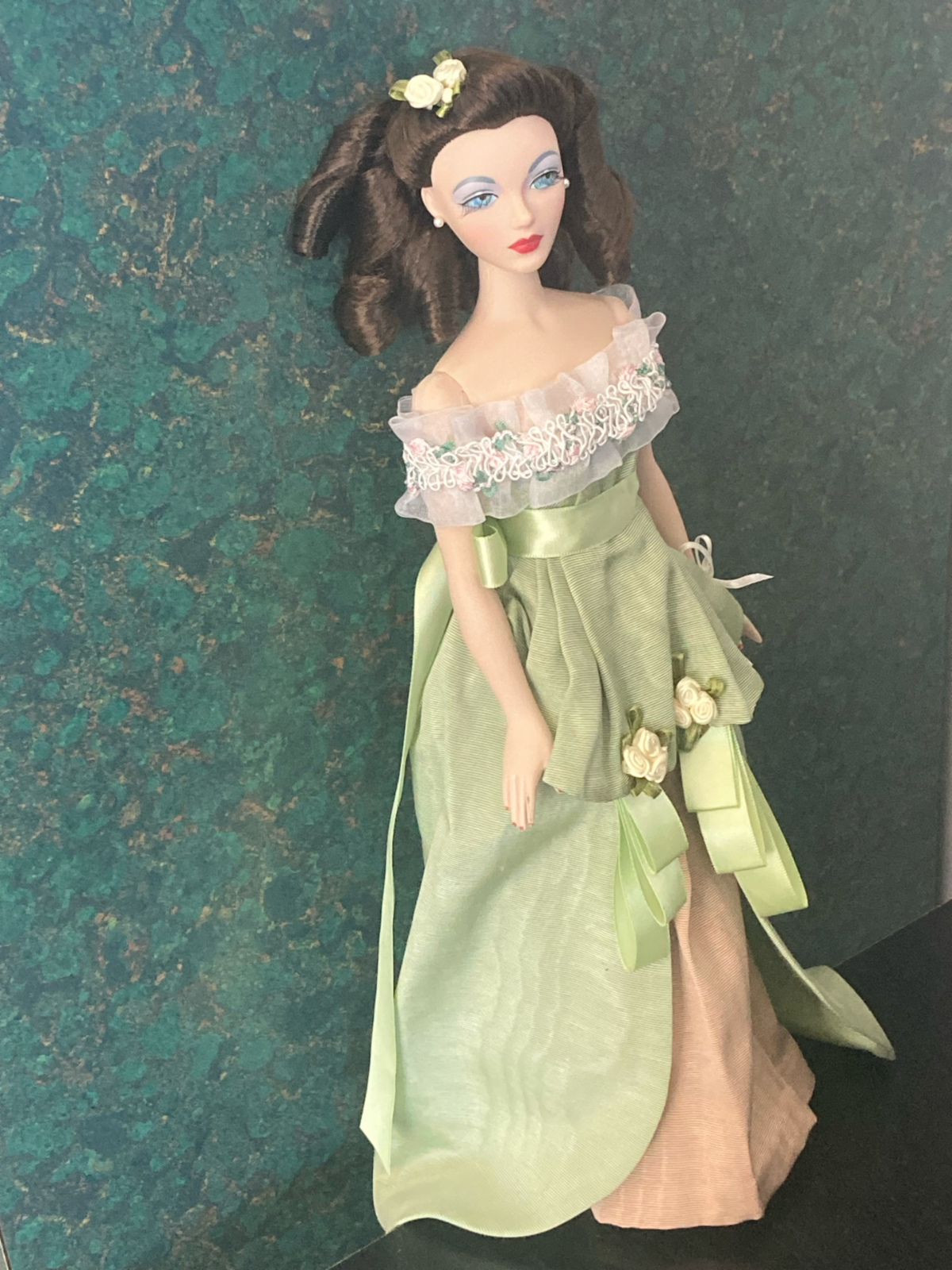
On April 17, we celebrated the birthday of iconic fashion doll Gene Marshall. The 16-inch fashion doll introduced by Mel Odom in 1991 has a highly colorful backstory, including a family tragedy and an arch-rival, Madra Lord.
| |
"Gene fits in an adult's hands the way Barbie fits in a child's hands."
Gene was a breath of fresh air in the doll world with her movie-star aesthetic and a wide range of fashions that included period clothes to transform her identity. The fashions were often inspired by costume design.
Ashton Drake produced Gene starting in 1995. In 2006, Integrity Toys produced Gene with new articulation and removable wigs.
Mel uniquely sketched out the faceup for each new release.
In her 15th year on the market, Gene retired. We can only assume she now lives a life of quiet and luxurious anonymity on the beaches of the Maldives.
Thank you to all who shared comments with their own beautiful Gene Marshall collections on Facebook!
| In celebrating Gene's birthday, we also shared a glimpse of the intensely creative artistry of her creator: | |
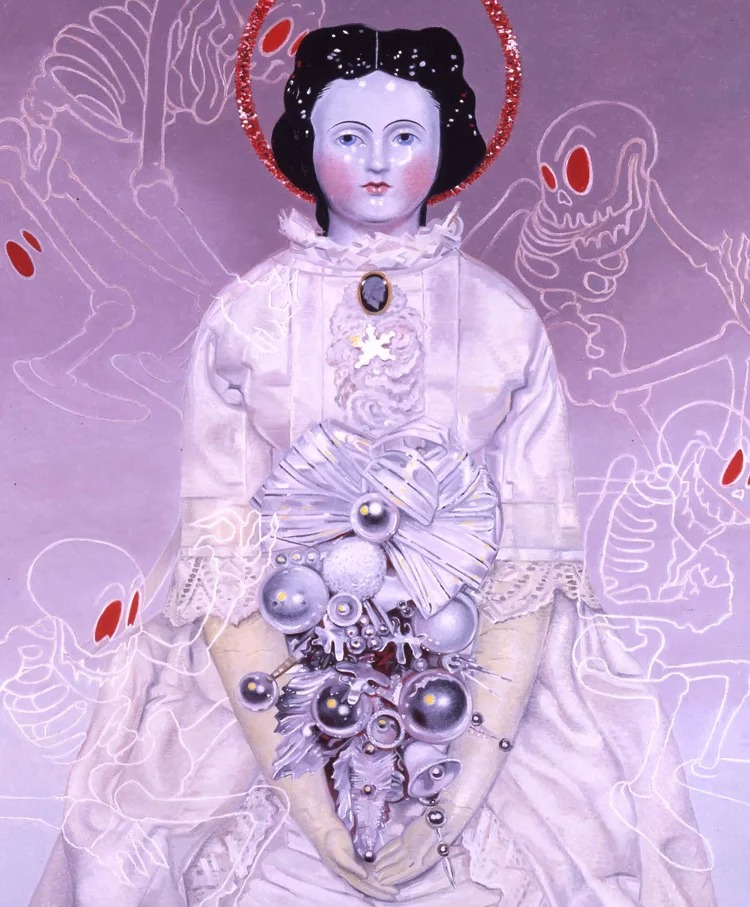
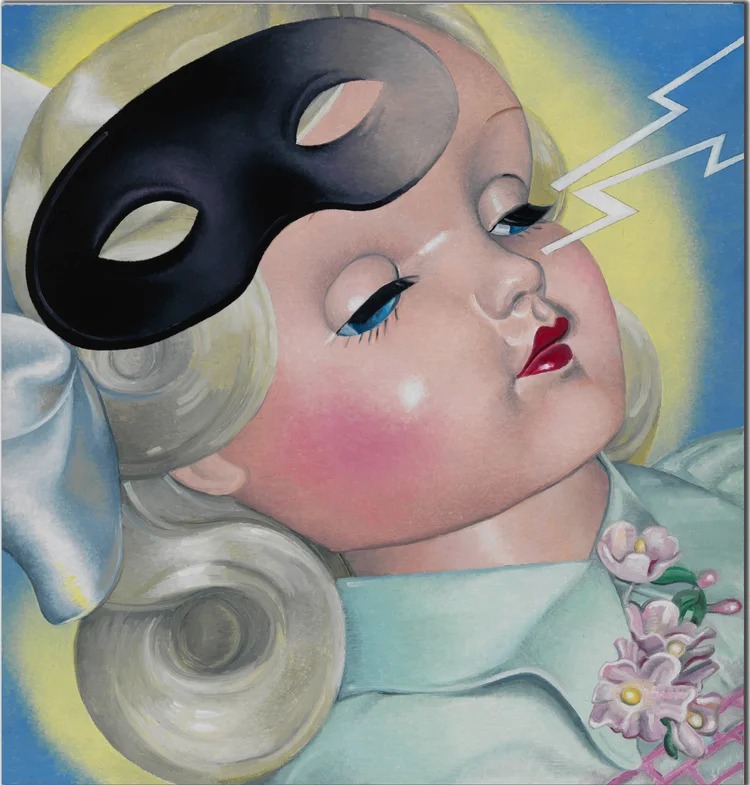
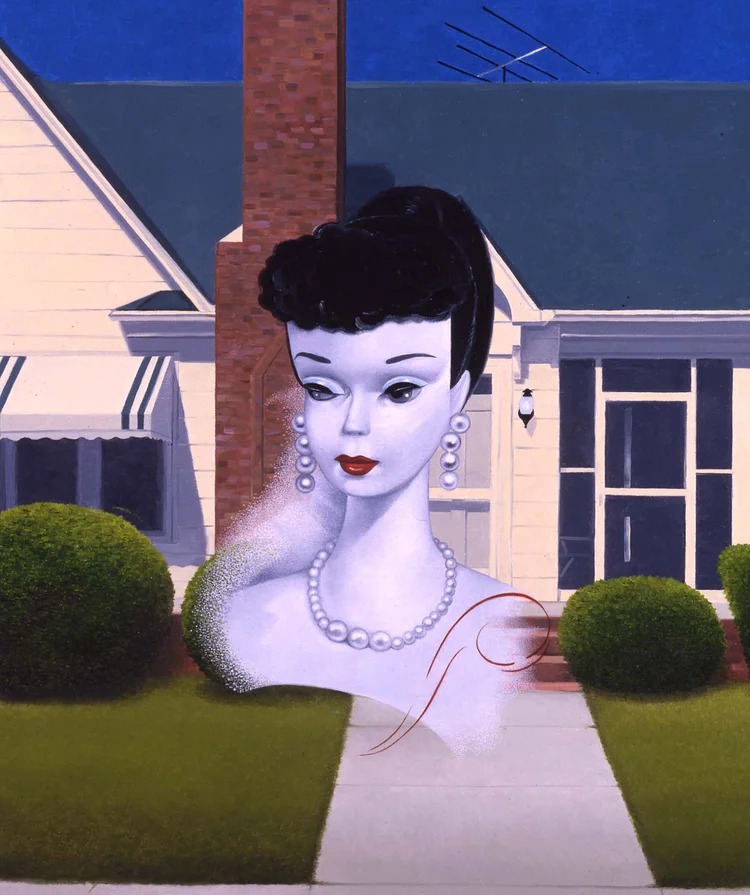
Mel Odom grew up here in North Carolina and was an award-winning illustrator for 20 years.
His studio website speaks to his "lifelong interest in the mystique of objects that look like life, yet are not" and "finding order from chaos, beauty within pain, and hope from despair."
Mel even shared a behind-the-scenes fact with us in a Facebook comment:
| |
Collection Spotlight:
Schoenhut Humpty-Dumpty Circus
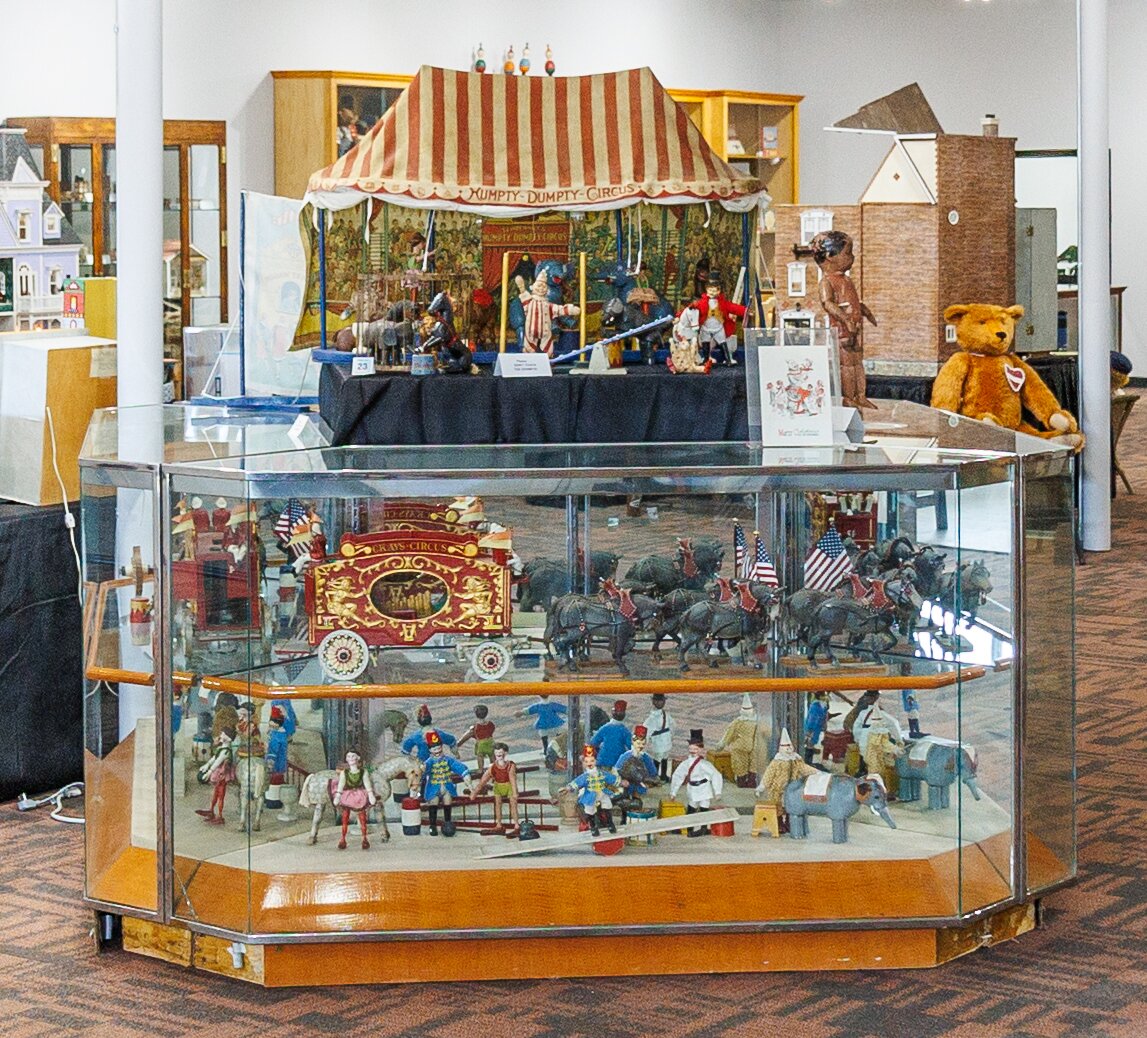
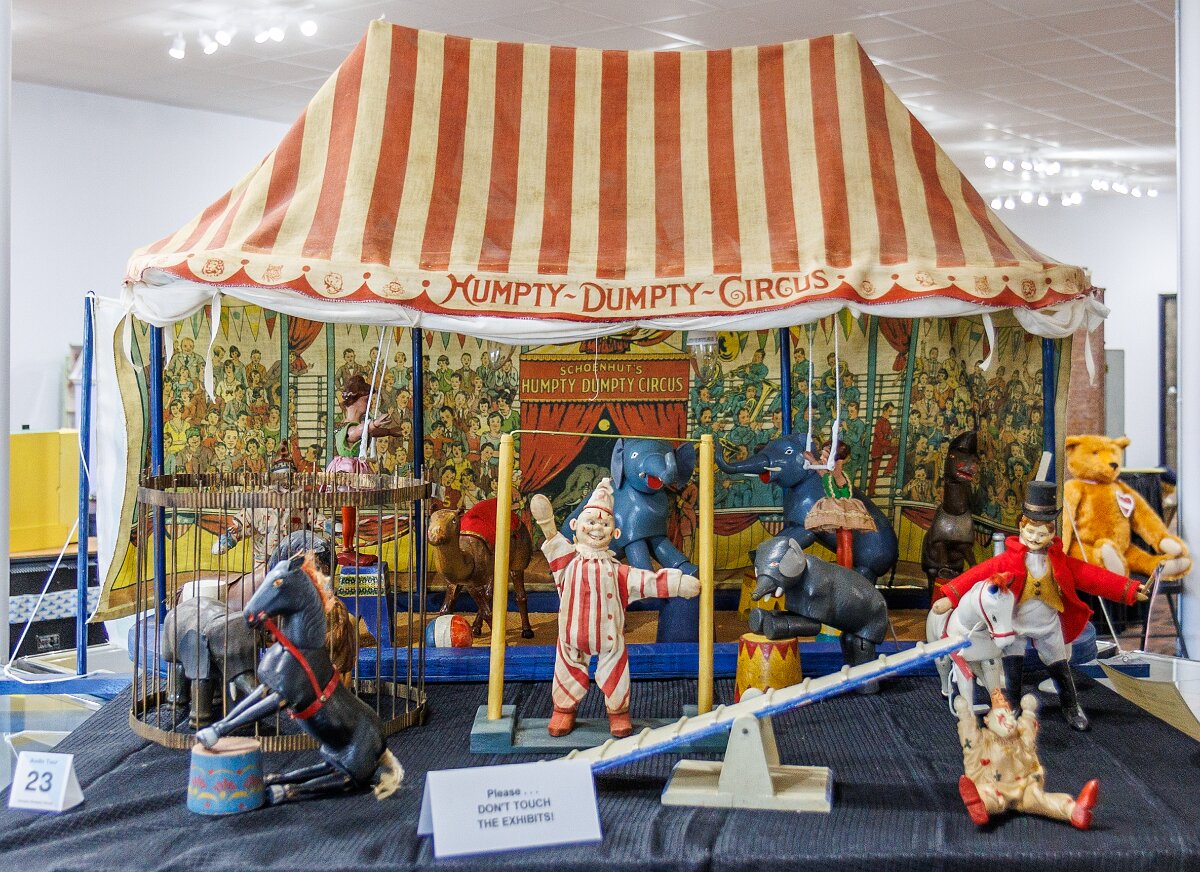
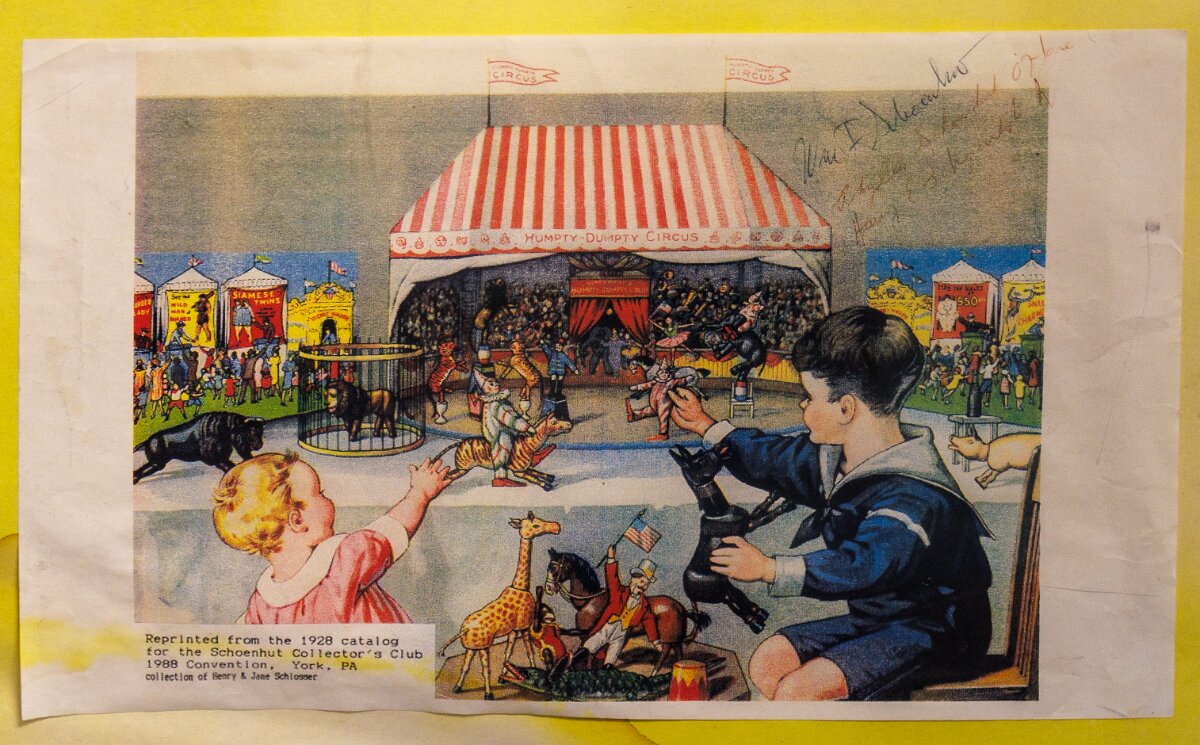
| April 18 was World Circus Day! And it wouldn't be Circus Day without sharing one of the museum's standouts: the Schoenhut Humpty-Dumpty Circus. | |
More from our audio tour:
Created by German immigrant Albert Schoenhut in the late 19th century, this whimsical circus set captured the hearts and imaginations of generations of children.
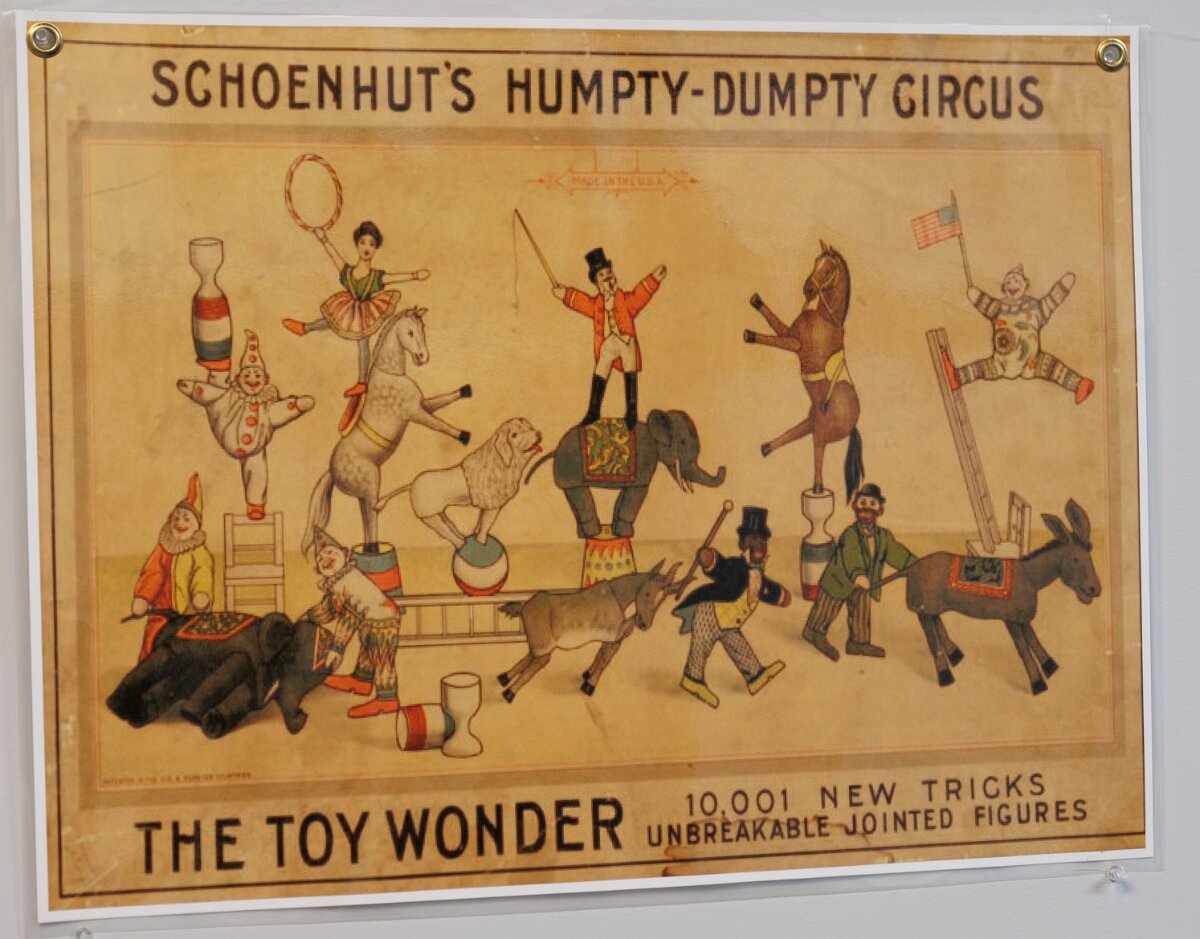
At its core, the Schoenhut Humpty Dumpty Circus was a miniature world of entertainment, featuring handcrafted wooden figures and animals that could be posed and manipulated with strings or wires. Each carefully detailed piece shows the artistry and craftsmanship for which Schoenhut was known for.
The star of the show, of course, was the Humpty Dumpty Clown, which Schoenhut modeled after the popular play and clown at the time, Humpty Dumpty. He served as the ringmaster, overseeing a vibrant cast of acrobats, clowns, tightrope walkers, and a menagerie of animals, all with movable limbs that allowed a wide range of movements.
| |
What set the Schoenhut Humpty Dumpty Circus apart from other toys of its time was its ability to spark creativity and storytelling.
Children could create their own circus performances, complete with daring feats and comical interludes. It encouraged imaginative play and allowed youngsters to become the masters of their own miniature circus.
| |
This line continued through the early 20th century and gained immense popularity, even being featured in catalogs alongside other renowned toys. Its lasting appeal has made vintage sets highly sought after by collectors and enthusiasts today.
Today, the Schoenhut Humpty Dumpty Circus remains a cherished piece of toy history, a testament to the enduring power of imagination and play. It continues to evoke nostalgia and captivate new generations with its timeless charm and whimsy.
|
Collection Spotlight:
Shirley Temple
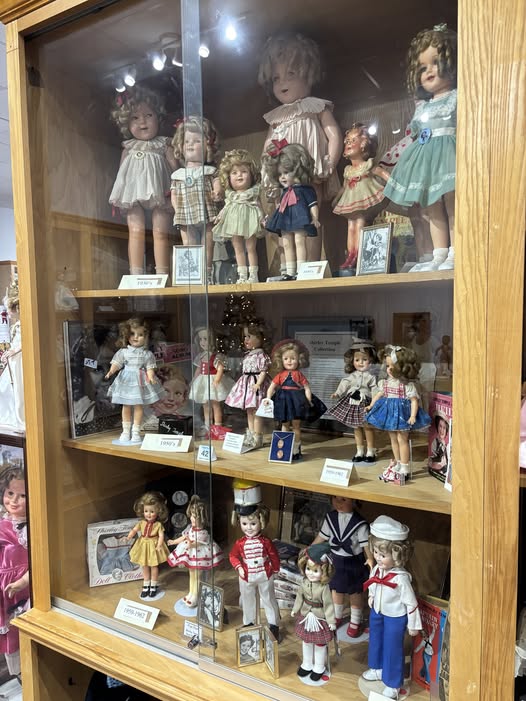
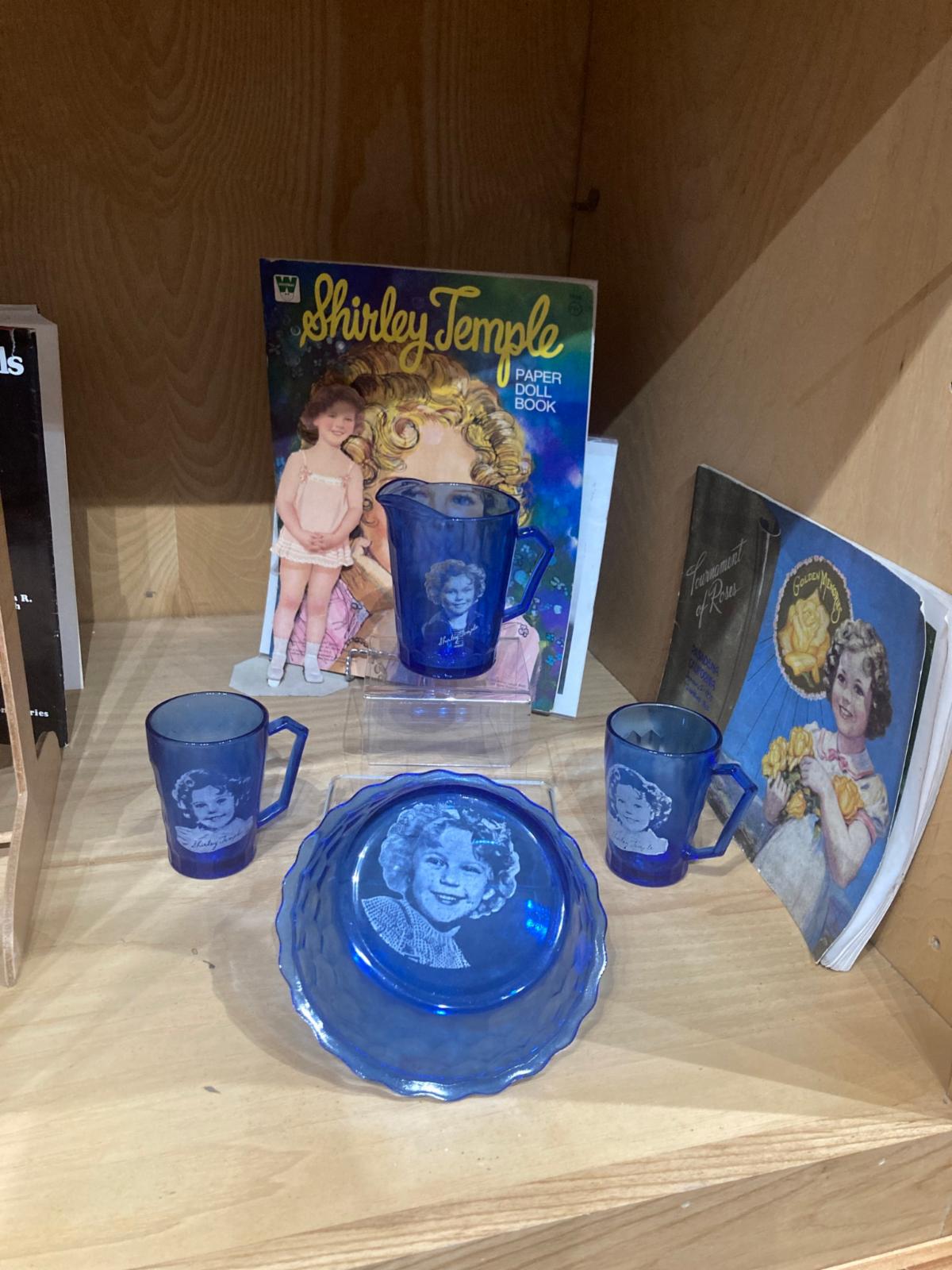
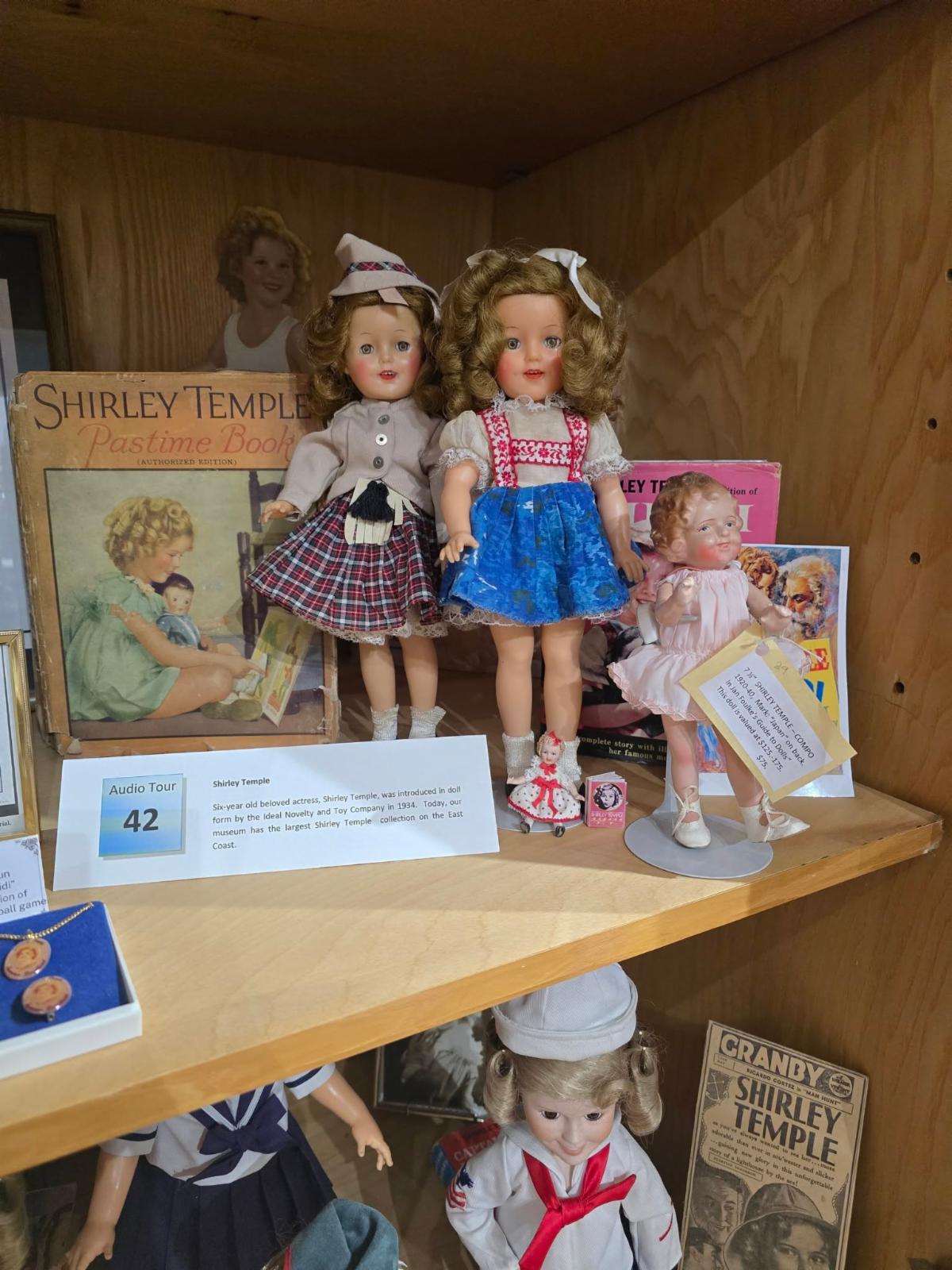
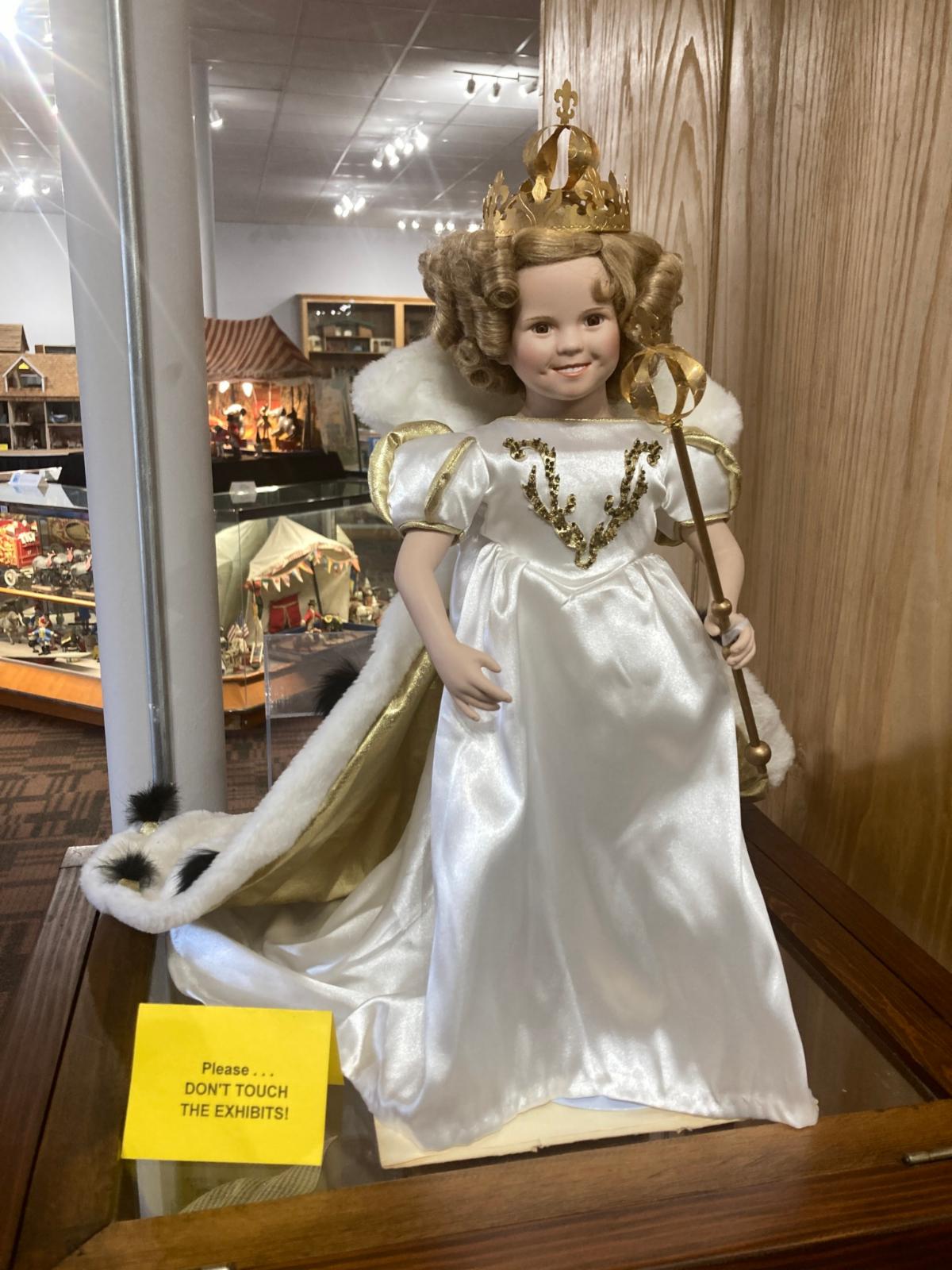
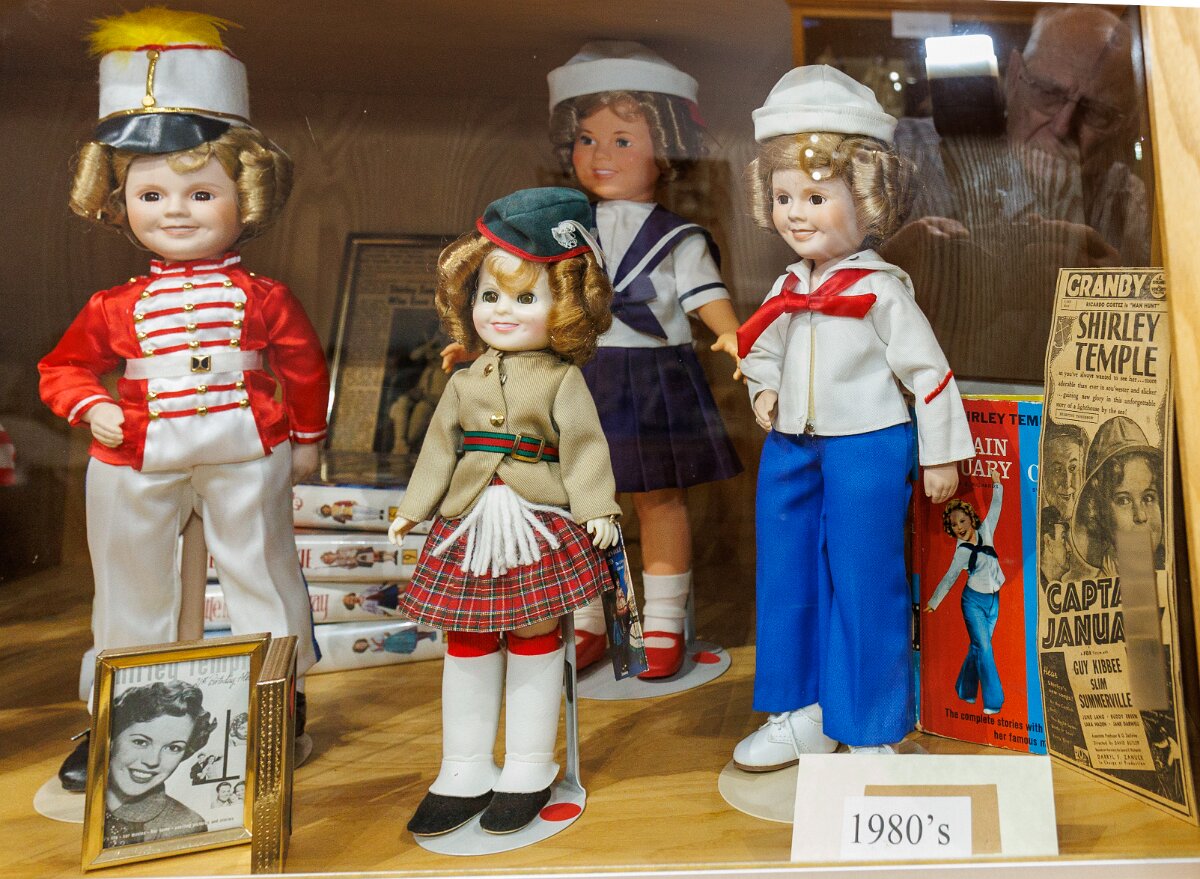
| Shirley Temple was born on April 23, 1928. Did you know that our museum holds the largest Shirley Temple doll collection on the east coast? | |
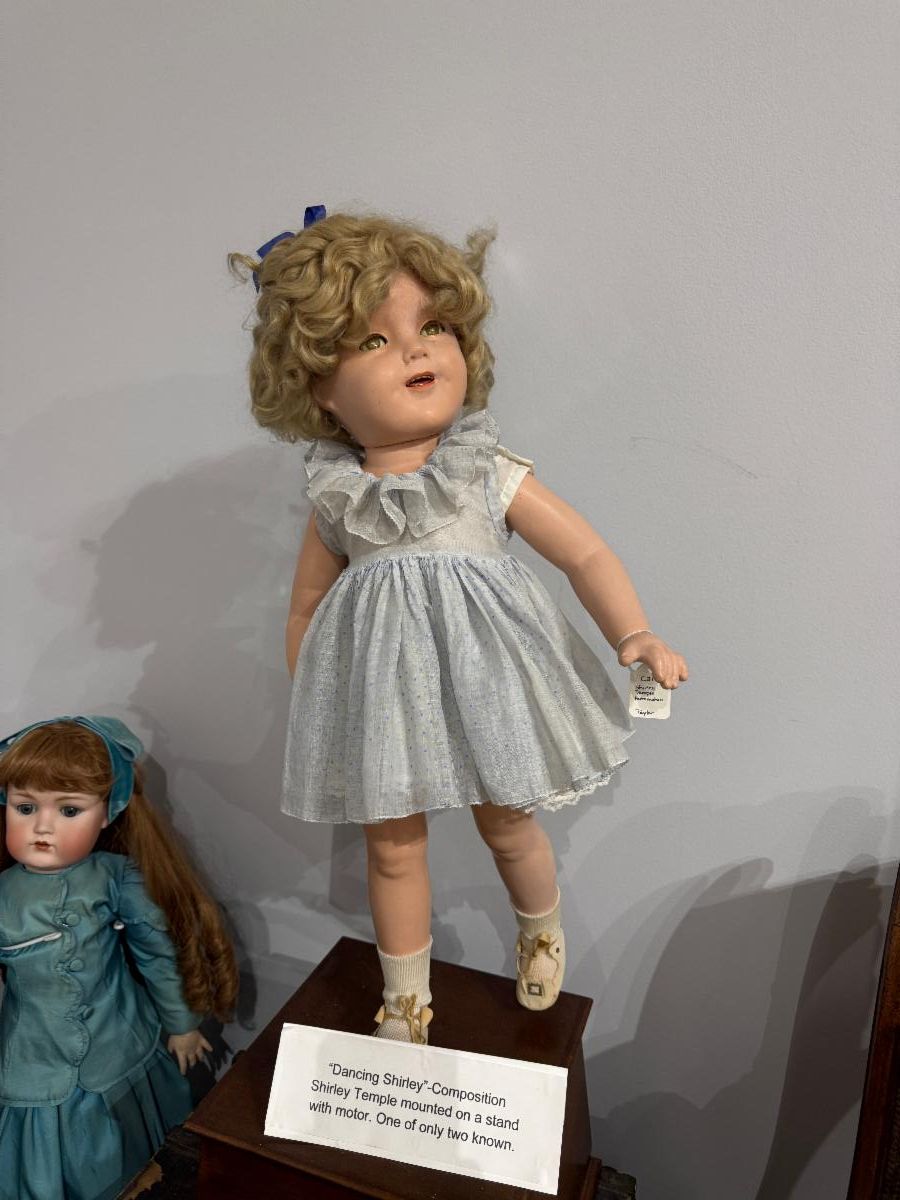
This year, we had an extra-special collection addition to feature: an ultra rare dancing Shirley Temple.
According to the donors, our friends at the Kentucky Doll and Toy Museum, these were made with rotisserie motors to go in department store windows and sell Shirley merchandise! Take a look:
| |
Here's some history about the museum's Shirley Temple doll collection from our audio tour:
Shirley Temple the doll was introduced to little girls throughout the country in 1934, the year Shirley Temple, the six-year-old actress, became a national film phenomenon.
| |
The child star who illuminated the silver screen was a bright spot in the bleak grayness of the Great Depression. The dolls she inspired brightened the lives of hundreds and thousands of children.
The Ideal Novelty and Toy Company had scored one of the great merchandising feats of all time. After months of negotiations with Temple’s parents, the company secured an exclusive contract to produce a doll of the movie star.
Ideal had the body but reportedly, the designer Bernard Lipfert had to make twenty molds before the head was finally approved by everyone involved.
| |
Ideal’s Shirley Temple was not only the most popular celebrity doll ever made, she was also the most copied.
Nearly everybody tried to get in on the act. Even the renowned doll maker Madame Alexander, after publicly opposing the exploitation of Shirley Temple’s fame as an actress, produced a Little Colonel doll in 1935.
| |
By 1939, as the Depression drew to a close and the dark clouds of WWII gathered, Shirley Temple’s reign as a box office queen was over. That year, Ideal ceased production of the doll.
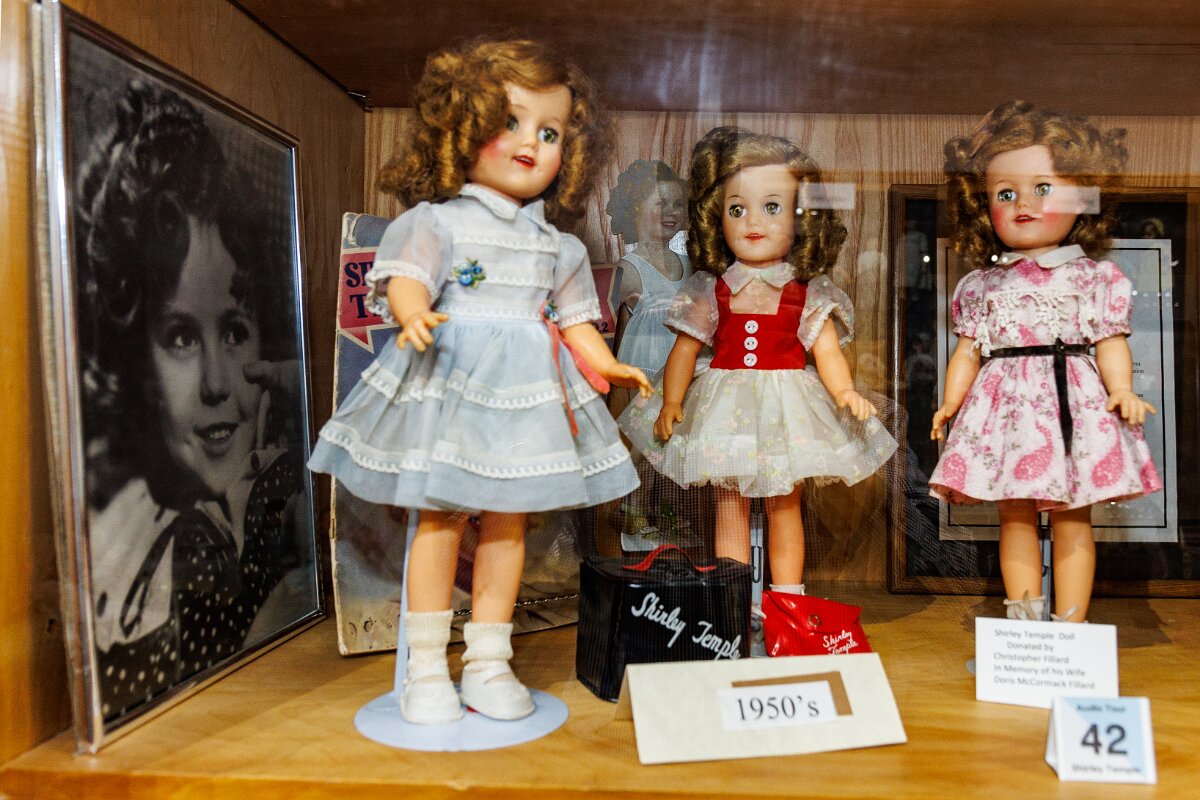
The revival of Shirley’s movies in 1957 sparked interest in the child star once more, and Ideal re-issued the doll in hard plastic and vinyl. The new doll was not the same and never achieved the popularity of the original.
| |
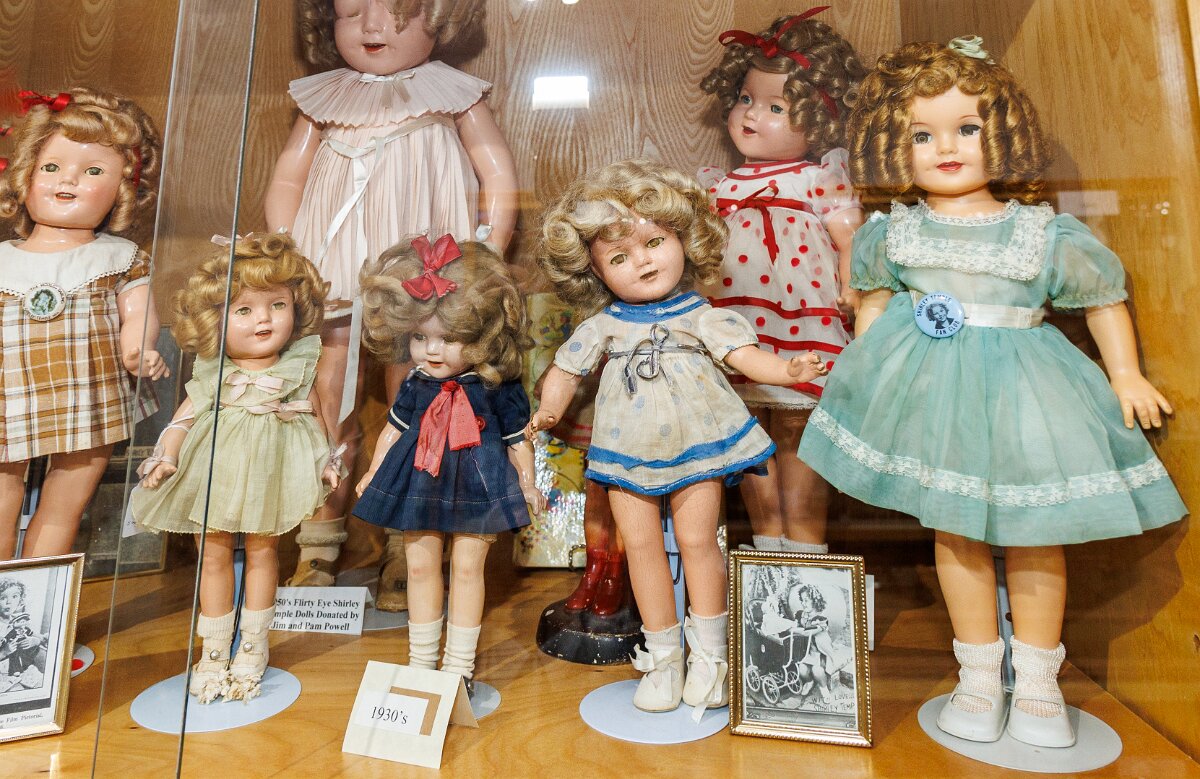
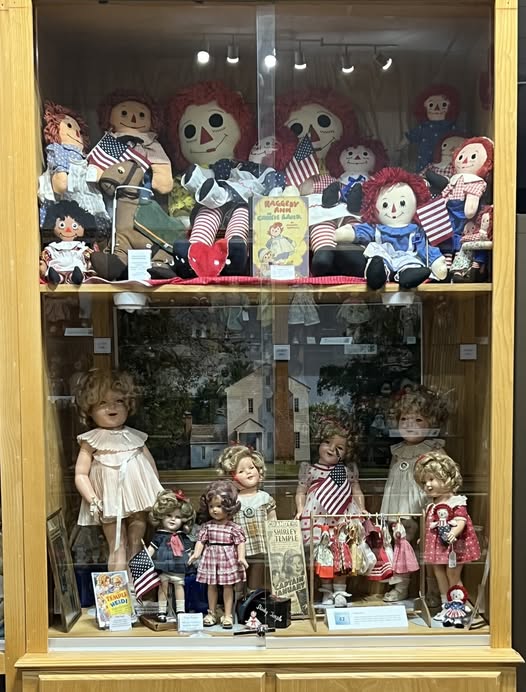
We also put together two special displays in celebration of America 250.
The bottom shelf contains a variety of Shirley Temple Dolls created by the Ideal company in the early 1930s when Shirley Temple was at the height of her popularity. From her 56 curls to her charming smile, Shirley Temple comes in a variety of sizes with a variety of outfits.
The early Shirley’s were made of composition, which is an American invention.
On the shelf above, Raggedy Ann, created by Johnny Gruelle in approximately 1915. She had a candy heart and was made to love with brown hair and button eyes. Andy came along approximately three years later and they have been issued and re-issued throughout time. Somewhere around the late 1920s Anne and Andy’ s hair went from rust colored to red.
|
Collection Spotlight:
Mary March Dollhouse
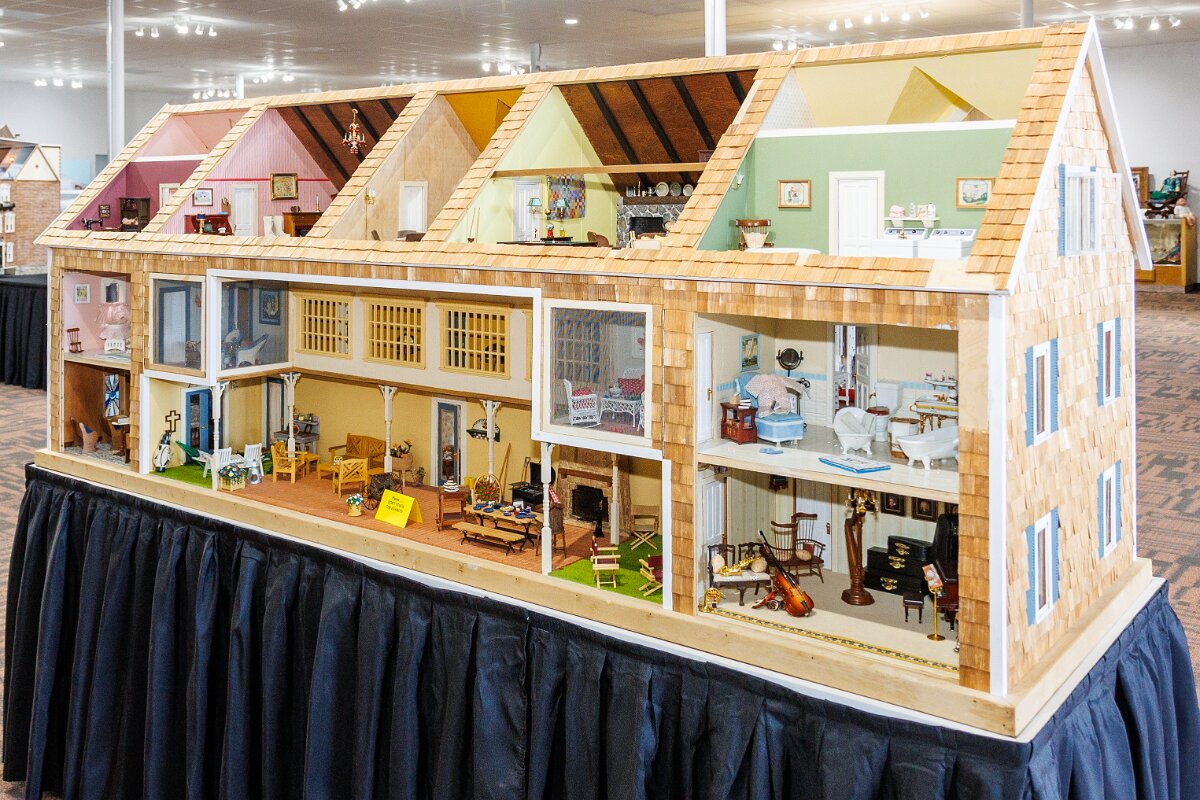
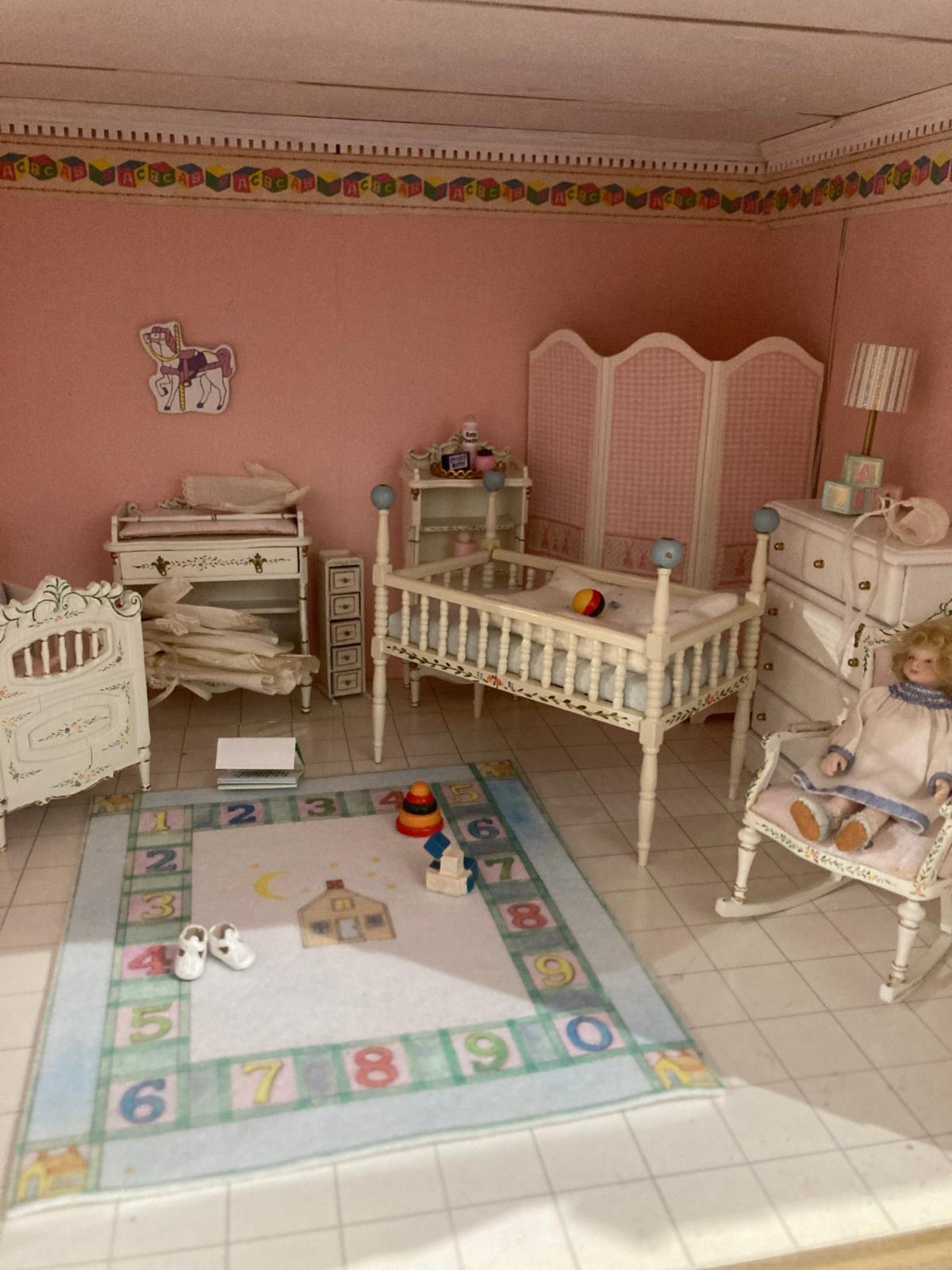
| We celebrated International Dollhouse Day in April. You'll love looking inside one of the museum's treasures: the Mary March Dollhouse. | |
7 feet wide and 3 feet deep, the dollhouse was created by Mary Trebilcock March of Weaverville, NC and donated to the museum by Mary’s family.
Mary and her husband, Frederic, had a large family of two girls and four boys. Their household was “full of activity, friends, laughter, and chaos.” That became the inspiration for this dollhouse.
| |
Mary fell in love with miniatures as a young girl when her mom took her to the Art Institute of Chicago and she saw the Thorne Miniature Rooms on display.
Once her children were grown up, she began to take on a miniature project of her own. Her husband gave her a miniature house that was based on a historical home in Charleston.
| |
From then on, Mary began working on dollhouses avidly, often gifting them to her grandchildren and grand-nieces once complete.
This Mary March Dollhouse is a home that suits a family of 14. Mary said she wanted 12 children, but she was happy with six—her dollhouse expands that dream into a beautiful vision.
| |
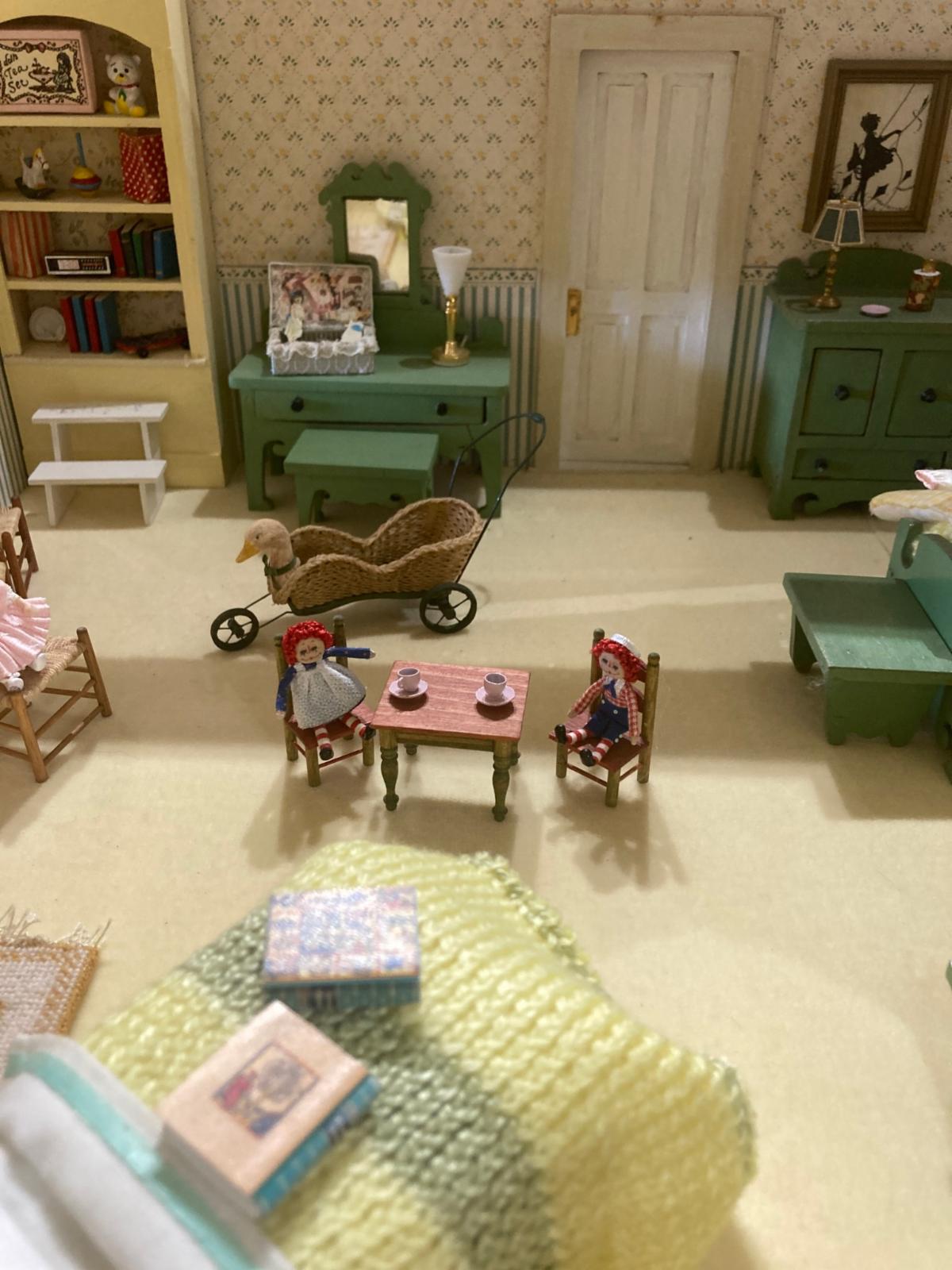
The 12 dolls she added to the house were custom made by an Australian artist. Six are named after Mary’s own children.
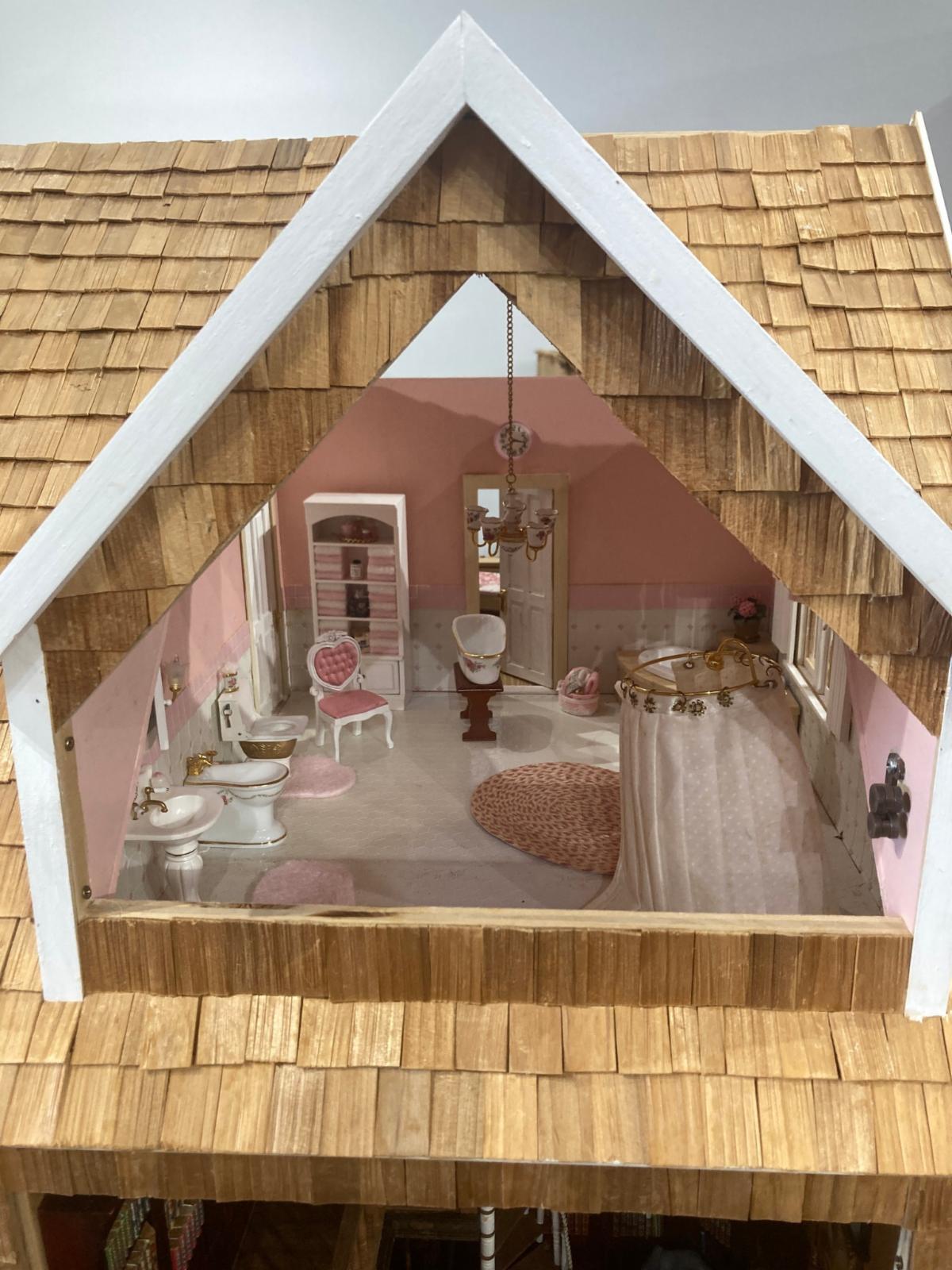
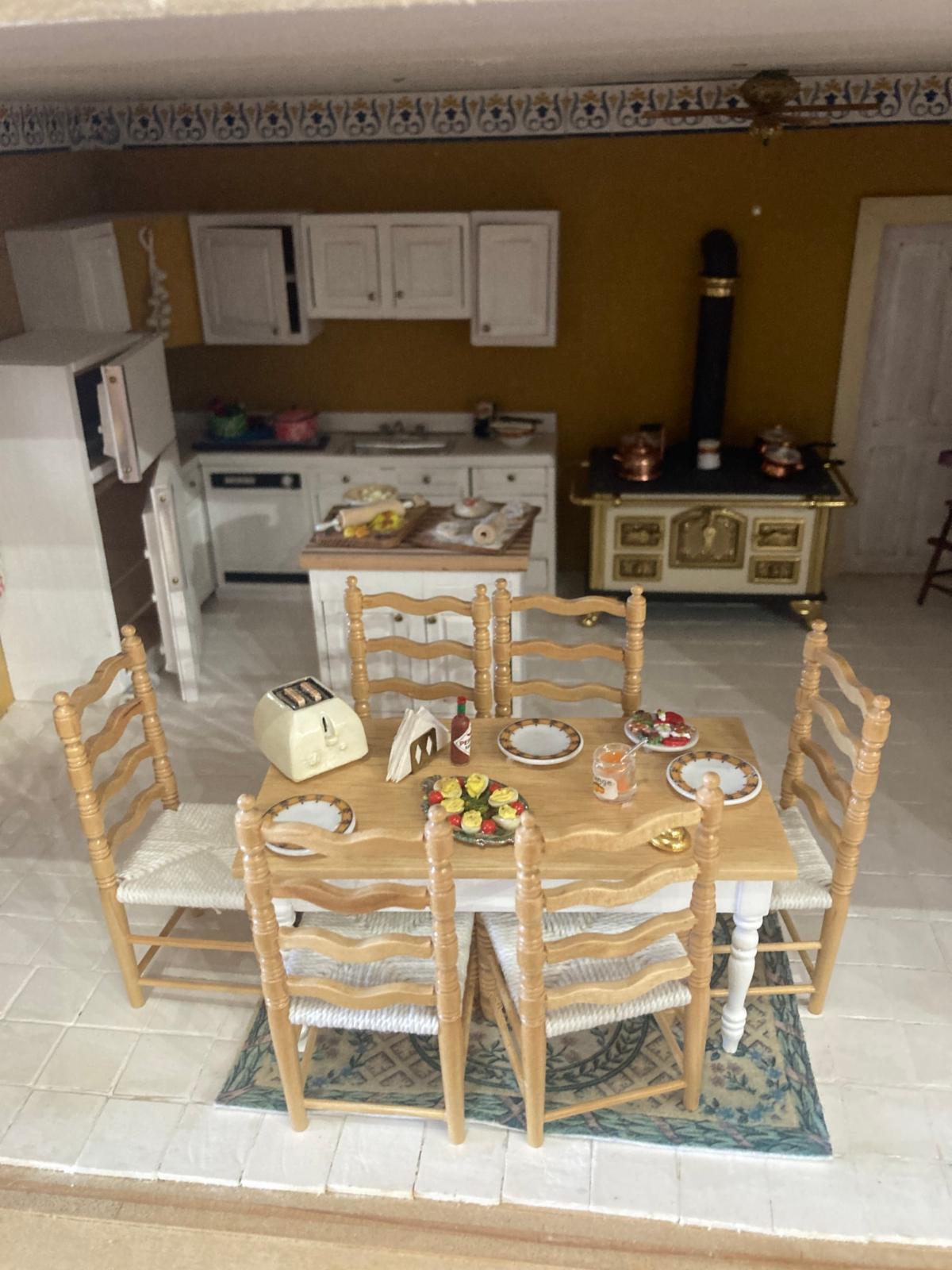
Mary loved to sew and embroider, and so she made many small marvels you can see inside the house today. The house also includes furniture pieces made by her great-uncle when she was a little girl!
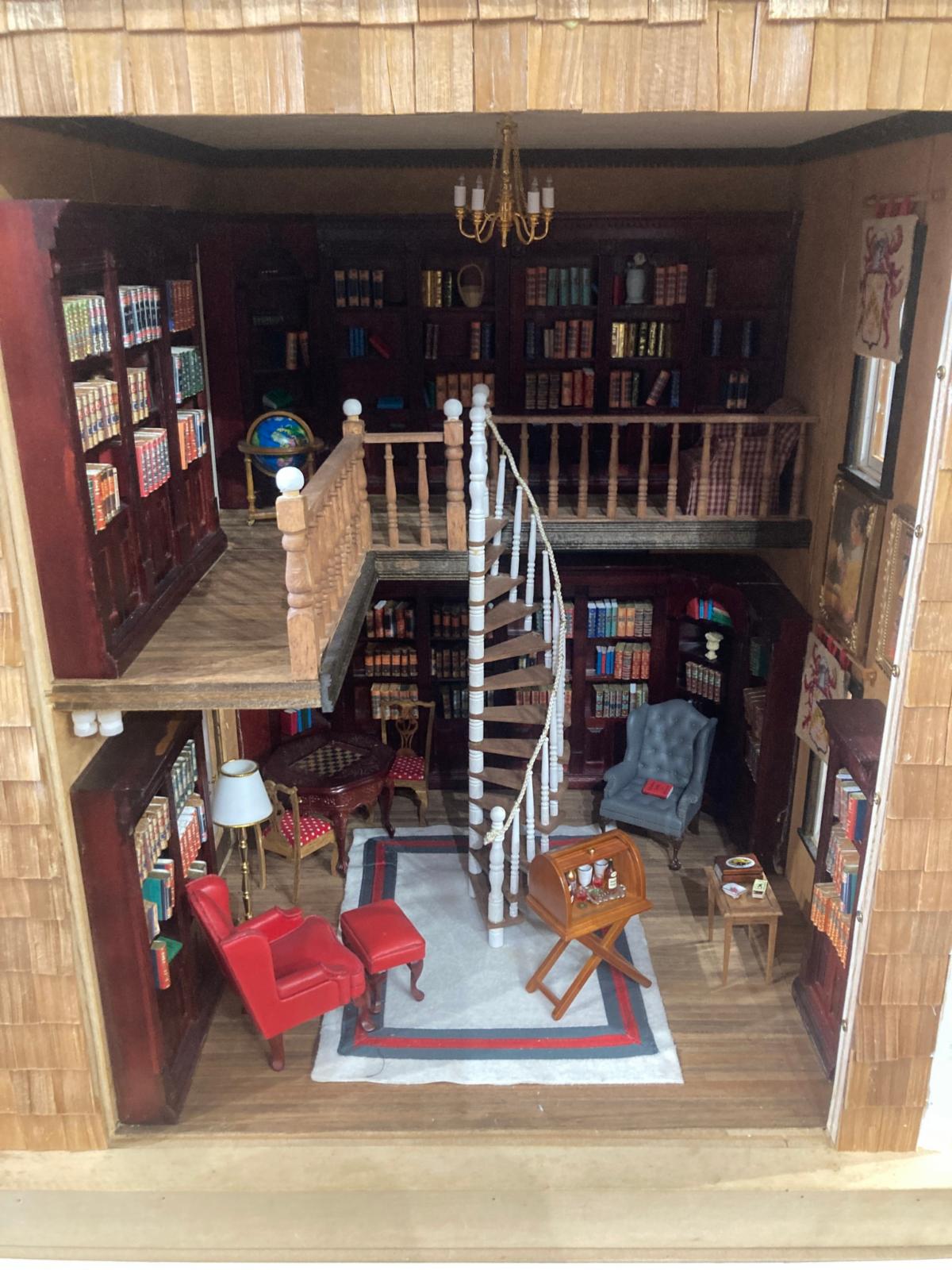
| The library is based on the Biltmore House in Asheville, where Mary worked as a docent. | You could spend a whole day enjoying the intricacies of this dollhouse! We hope you get the chance to enjoy it in person alongside our other dollhouse and miniature wonders. |
Trains, Toys & Trucks:
National Train Day
| | |
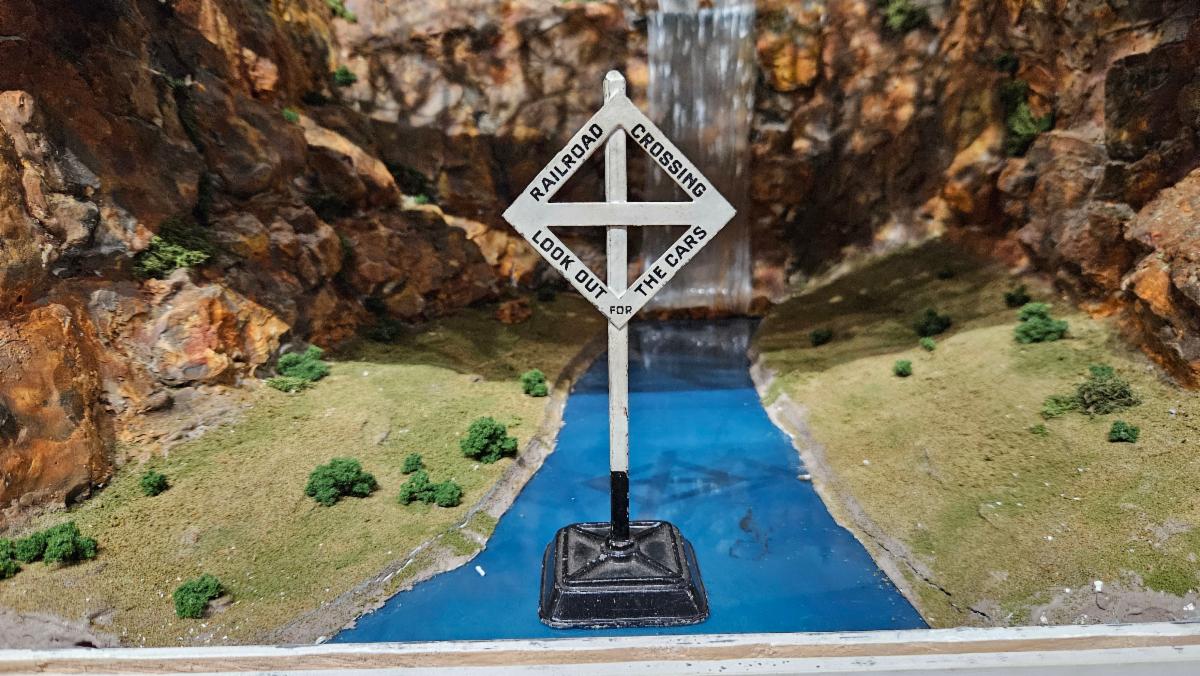
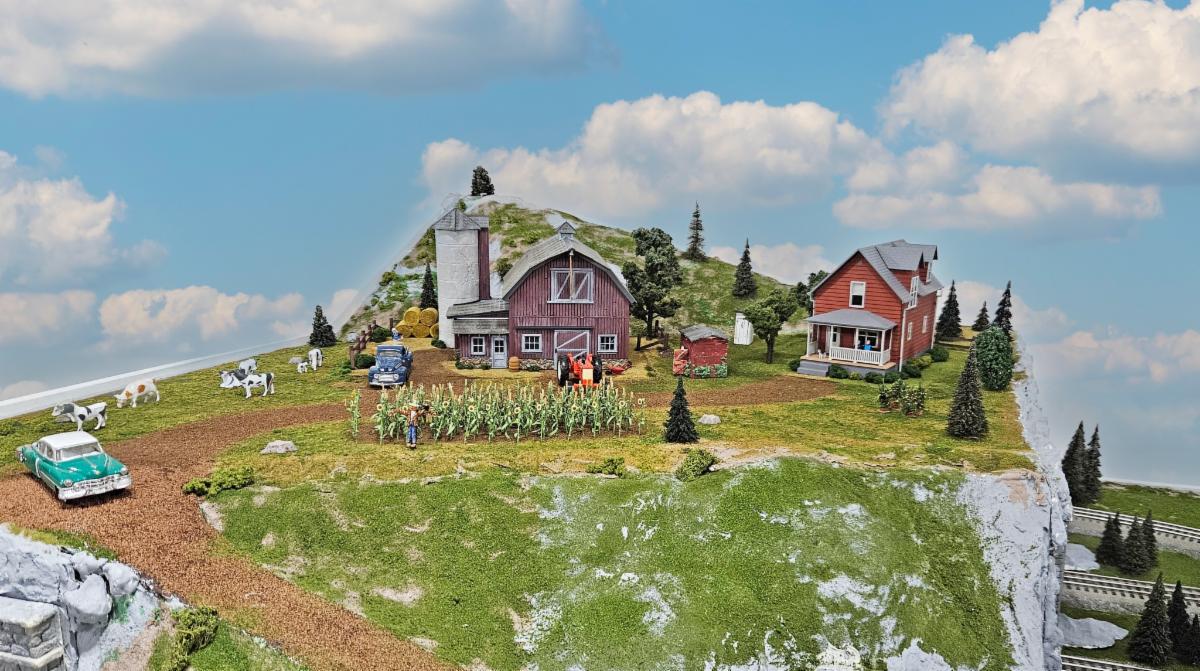
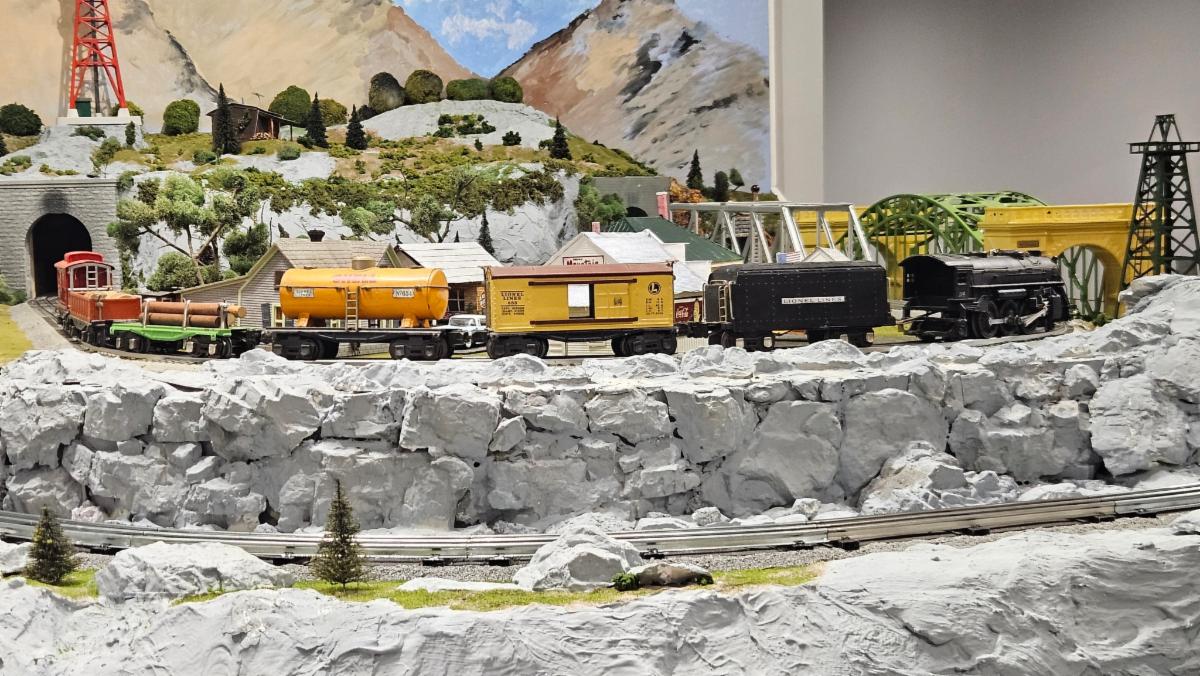
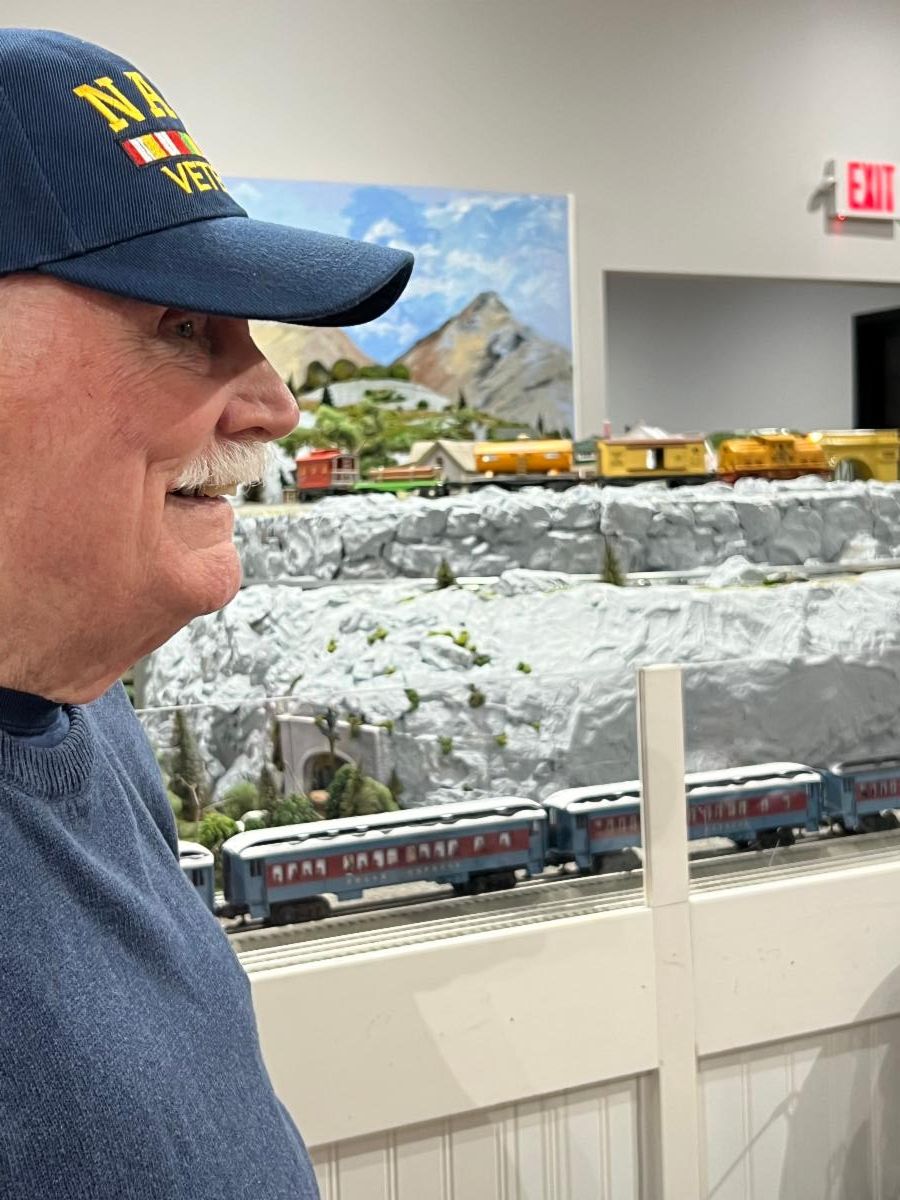
May 9 was National Train Day, a great day to celebrate one of the museum's most beloved attractions - our model train table and collection, including a big spotlight on Lionel Trains.
A huge thank you to our volunteer "train team" for the hard work they've put into our stunning layout.
| |
Here's some history from our audio tour:
When Lionel founder Joshua Lionel Cowen and his immigrant family arrived in New York after the Civil War, the railroads were literally America's engines of progress.
The "Golden Spike" meeting of the Union Pacific and Central Pacific lines in 1869 unified the continent and signaled the birth of a world power.
Cowen was born in 1877, just before Edison's first electric light. He grew up with real trains, amid constant change.
Around the time he founded Lionel in 1900, passenger lines like the peerless Twentieth Century Limited symbolized American technology and sophistication.
| |
Cowen was already a successful inventor when he created his first toy train. But The Electric Express and its offspring soon became a sacred mission, and Cowen would spend a lifetime stoking America's imagination with the romance of the rails.
He told boys that Lionels would prepare them for adulthood. Soon dads too were encouraged to join youngsters in model train enthusiasm, to further father-son bonding.
With the growth of television in the 1950s and the cultural differences between fathers and sons in the 1960s, toy train popularity waned.
| |
Our trains are primarily made by Lionel, however there are a few other manufacturers’ trains intermixed. All of the trains that are operating are consider “O” gauge which means the distance between the two outside rails is 1 1⁄4 inches. There are about 6 other popular scales or size tracks that range from slightly more than a quarter of an inch up to about 1 ¾ inches.
Other scales are on display around the museum.
Most of the operating trains are from the late 1990s and early 2000s.
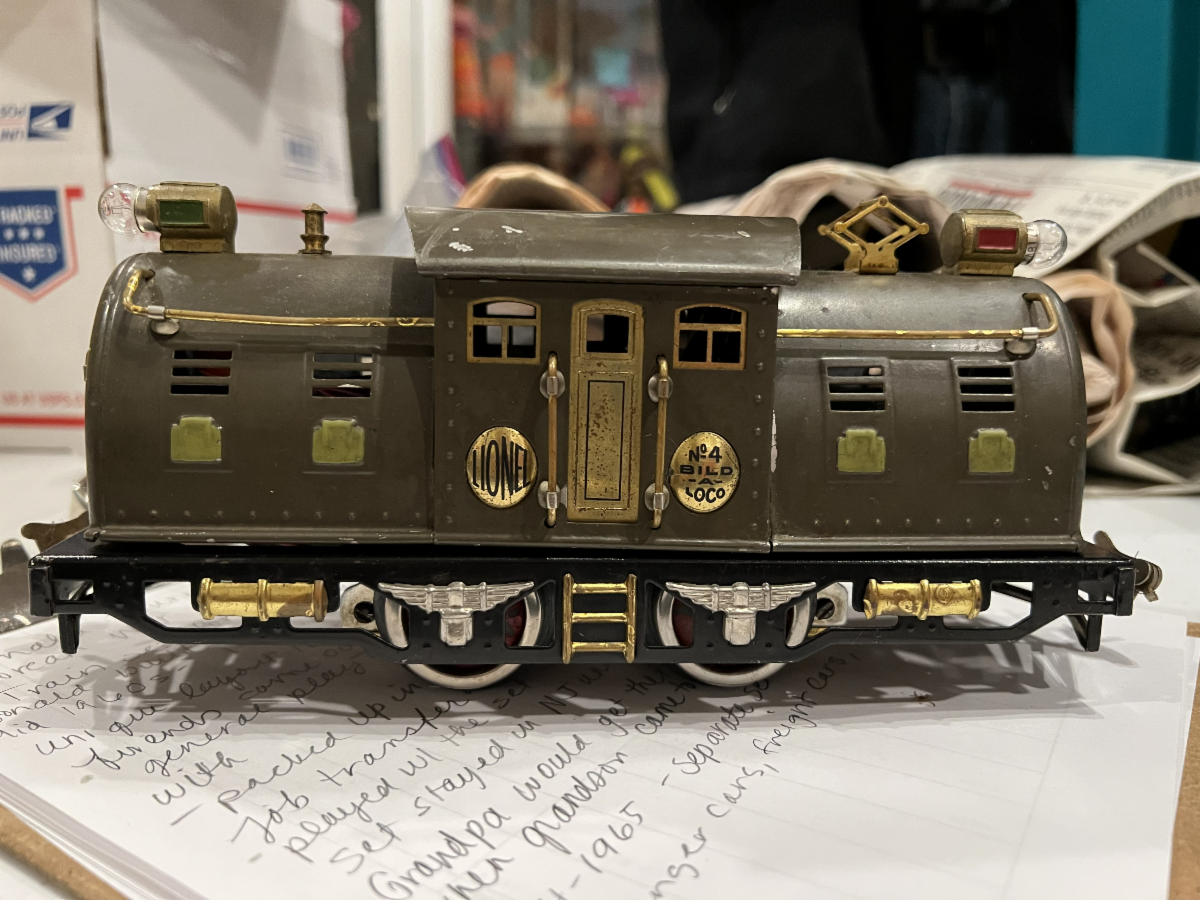
Our displays also include Lionel trains from the “Prewar” period, which means that they were built before World War II and trains from the “Post War” period which covers 1946 through 1969.
The earliest trains that we have are from about 1925.
|
Last Look:
Glamorous Museum Life
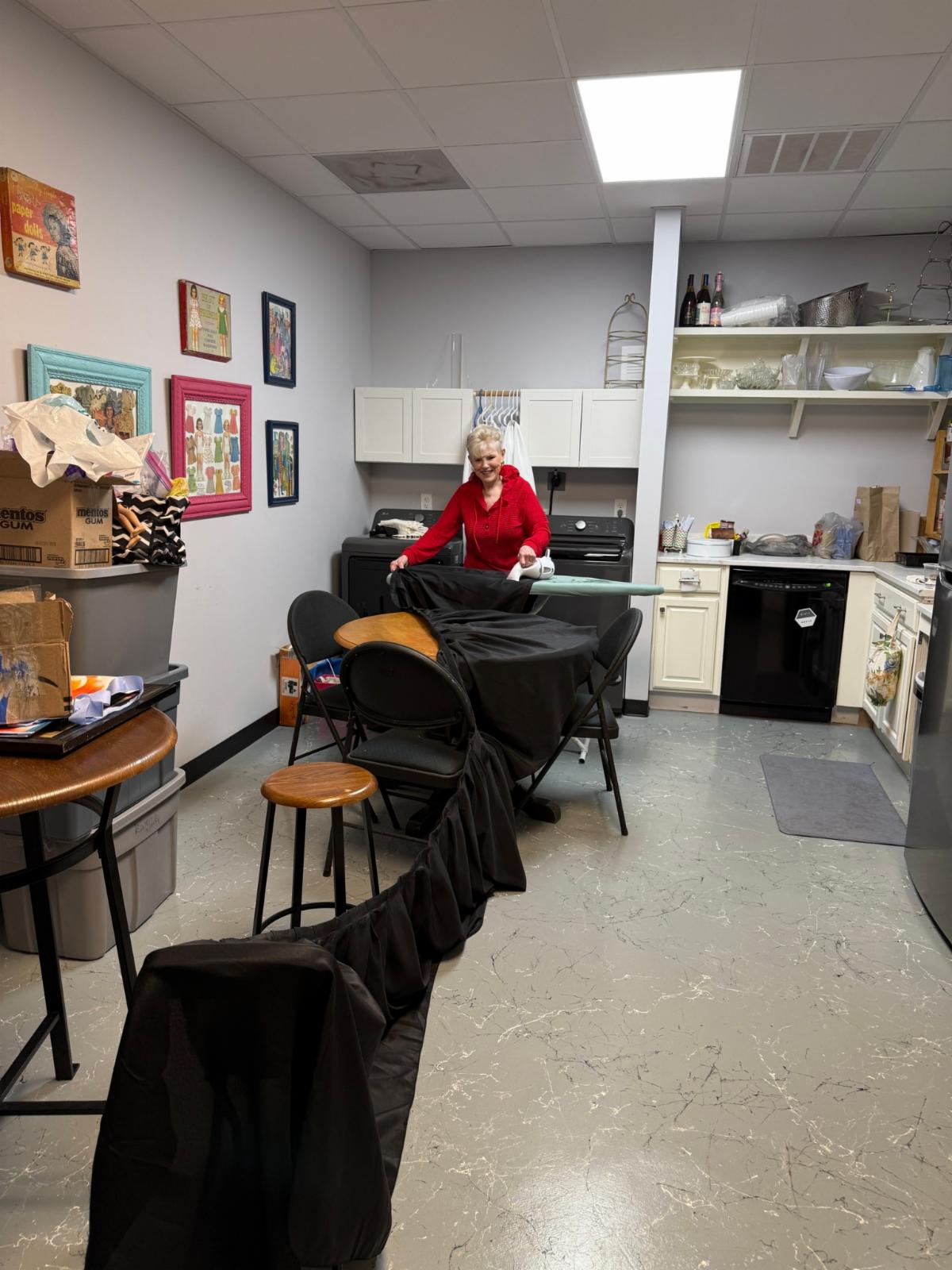
| Running a museum isn't all tea parties, train rides, and dolly dress-up, you know! Here's volunteer Penny putting in the hard work to make our exhibits look pretty by ironing table skirts: | | | New & Renewing Members | New & Renewing Members | | Joye Adams | Nancy Hall | | Taylor Bashford | Judy Hemenway | | Janet Chase | William Hunter | | Marie Cluster | Cristina Inoa | | Kathleen Conn | JJ Inoa | | Nancy Correia | Evie King | | Jane Ferrita | Perry Leonard | | Ellen Gardner | Susan Matson | | Carla Garris | Sherry O’Brien | | | | (cont.) | (cont.) | | Melanie Phillips | Katrena, Tim, Hannah, Abigail, and Deborah Wells | | Liz Redford | Jackie Wynne | | | | Society Members ($250+) | Society Members ($250+) | | Suzanne Birmingham | Teddie Martin | | Beth Calhoun | Lynn Montgomery | | Lynn Frank | Nancy Mott | | Nancy Hall | Jean Peeler | | Rebecca Jennings | Theresa Pitner | | Ed Klebaur | Liz Strillacci | | | |
This membership list was last updated on May 1, 2026.
Your annual membership provides critical funding for our maintenance, acquisitions, and programming. To see the different levels of membership we offer and sign up, click here.
You can pay your dues by mailing in a check, or you can pay online.
| | |
Thank You!
Thanks to you, our mission continues to preserve history, enrich the community, and spread joy.
Reply to this email if you’d like to connect with a member of our staff, volunteer, share feedback, or make a suggestion. We love hearing from you!
| | | | |