World Elephant Day is August 12 |
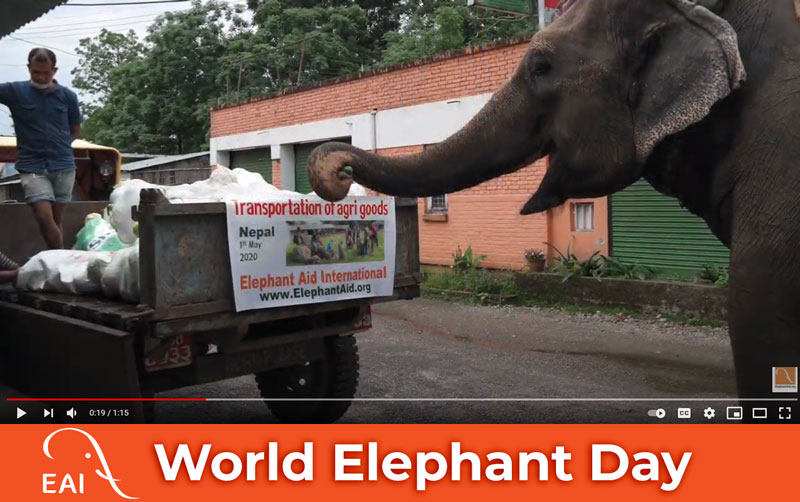
Click the image to watch.
Want to do something special to commemorate World Elephant Day on August 12, 2021? Consider a donation to EAI where everyday is a day to celebrate elephants.
Positive reinforcement training sessions with elephants and their mahouts (caregivers), supplemental food deliveries of produce from local farmers, foot care to prevent disease, chain-free corrals, humane education for the next generation--these are the ways EAI celebrates this magnificent species. Please consider a donation and invite your friends to learn more about elephants at elephantaidinternational.org.
Thank you!
|
|
The Habitat at Elephant Refuge North America |
|
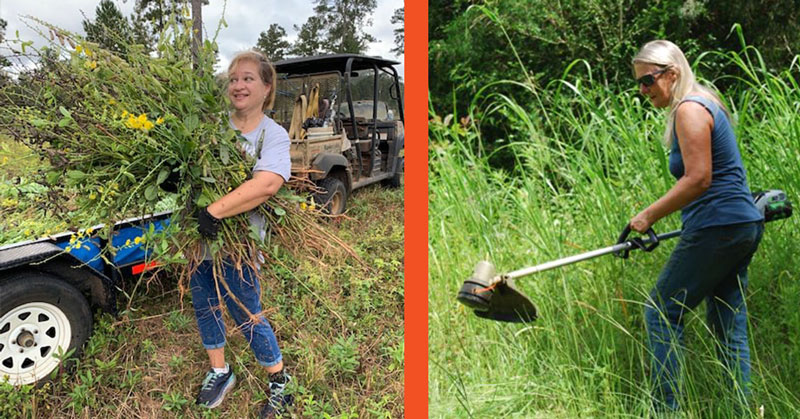
As the monsoon rains drench southern Georgia, acres of pastures at Elephant Refuge North America (ERNA) flourish. Unlike the hundreds of acres of lush pastures that only require mowing twice a year, preventing the rapid growth of wild vegetation from consuming the 60,000 feet of fencing is a labor intensive, time consuming, year-round challenge.
Thank goodness for your support, our equipment, and the recently completed crossover bridges that give us full access to fence lines in the most remote areas. Since we do not use pesticide to kill invasive vegetation, keeping it under control requires many person-hours each week. Thanks to a versatile Ventrac mower and a powerful flex wing cutter, we keep overgrowth in check. And then there is always the battery powered weed eater that can get into tight spaces where the other equipment cannot reach.
Equipment maintenance is scheduled but repairs are usually a result of unforeseen problems like a damaged mower blade, flat tire, or severed hydraulic line. All of these issues cause delays and add costs, but we have learned they are part of maintaining 850 acres of elephant paradise.
We consider it an honor to maintain the habitat in anticipation of retiring elephants who will hopefully soon call ERNA home. Although none are scheduled at this time, you will be the first to learn when that changes!
|
|
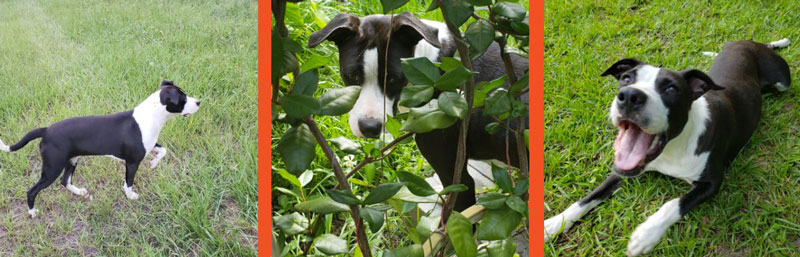
Mala’s arrival was the greatest reminder to “never say never.” As adamant as we were to not have dogs at ERNA before resident elephants, Mala had other plans.
We agreed to foster this needy pup without any intention of keeping her. But after a failed ID chip search and equally unsuccessful owner search, we earned the title “Foster Failure.”
Initially it seemed Mala was not suited for country life. Hot humid days and buzzing insects irritated her. And long walks in the habitat, well, that was not something she enjoyed. We surmised Mala must have been a house dog—a 40-pound hunk of soft, couch lounging, bed sleeping, lap sitting puppy.
At her first vet visit, we learned Mala has heartworms. Luckily, she is young and the load is light, so her treatment does not include painful injections and forced confinement. With this diagnosis, we realized Mala was at ERNA to stay.
After a few days of supervised exposure to the habitat, Mala’s attitude towards the vast, buggy, humid outdoors changed. The basket of toys and pocket of treats were encouragement enough to pique her interest. Now she loves her early evening walks, drags her toys all over the yard, hops into the UTV in playful anticipation, and pseudo-tracks wildlife without knowing what it is. She has not lost her love of cushy home comforts, but she has developed an adventurous side that makes us smile.
There is no doubt you will continue to hear more about Mala’s adventures, so stay tuned!
|
|
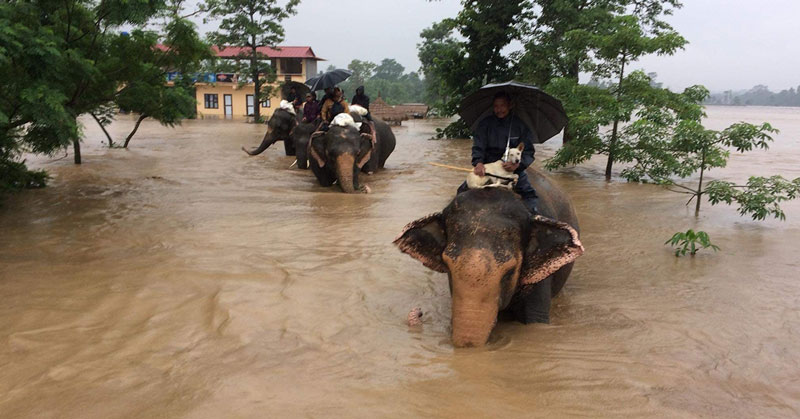
Nepal continues to struggle following the months-long COVID-19 lockdown and recent monsoon flooding. Recently in Sauraha, the area where we concentrate our Nepal work, the Rapti River caused widespread flooding. This event is not uncommon but the extent this year was unprecedented. As result, elephants had to be moved to higher ground. Most elephant hattisars (stables) are located close to rivers to allow for the elephants daily drinking and bathing. Although some hattisars have wells, many do not, so river access is essential.
You can imagine when the Rapti River floods, so much is lost: stored elephant food, kitchen supplies, mahouts’ belongings. Houses are flooded, beds soaked, personal items ruined. With so little to call their own to begin with, mahouts suffer greatly from the seasonal floods.
This year the 8 elephants living at Direct Aid Nepal had to be evacuated from their chain free corrals. They walked through waist-high water to the local temple which sits on higher ground, providing refuge for local elephants and humans alike. And this year, Malik the dog was there as well, arriving on the back of one of Direct Aid Nepal’s elephants!
For those who believe elephants should never be ridden by mahouts, might this situation demonstrate why a humane relationship between mahout and his elephant is essential? Life in Nepal is so very different from the Western world. Finding ways to improve elephant welfare does not require compromising elephant wellbeing, but it does require understanding the culture if you want improvement.
We have not received word about the degree of damage to the corrals, mahout housing, or the stores of elephant food and supplies. We can only hope some was salvageable. We do know the mahouts returned to their rooms to find their beds and belongings soaked by river water and covered in mud. But true to their nature, they silently set about sweeping the water out of their rooms and hanging up any remaining belongings to dry.
The daily hardships these mahouts silently endure are one reason we support them and their efforts to provide a humane existence for the elephants in their care.
If COVID-19 restrictions are lifted, we plan to return to Nepal in November to continue our foot trimming and positive reinforcement target training programs with these dedicated mahouts. Thank you for your support!
|
|
Around the world, many entities describe themselves as a “sanctuary” or “rescue” for displaced, wild, equine, and farm animals. However, the quality of animal care and sustainability of the organization varies widely among them. The Global Federation of Animal Sanctuaries (GFAS) is the only globally recognized organization for certification as a true “sanctuary.” GFAS’ definition of “sanctuary” is any facility providing a temporary or permanent haven to animals in need while meeting the principles of a true sanctuary: providing excellent and humane care for their animals in a non-exploitative environment and having ethical policies in place regarding:
• Tours
• Commercial trade
• Exhibition
• Acquisition and disposition
• Breeding and more
All sanctuaries accredited by GFAS meet their Standards of Excellence. Elephant Aid International is proud to hold provisional certification prior to elephants arriving on-premise.
The GFAS website’s “Find a Sanctuary” page is the first stop in planning your next animal adventure. There are over 150 GFAS accredited and verified sanctuaries, rescues, and rehabilitation centers around the world. Explore their growing database and sort sanctuaries by animal type, location, services, and volunteer/internship opportunities. |
|
EAI Board Member’s New Leadership Position |
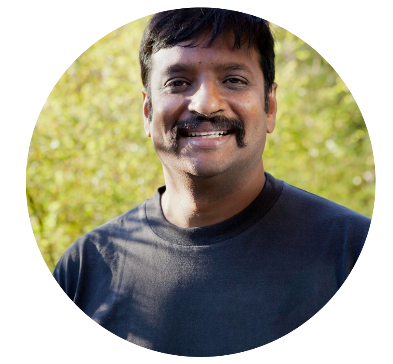
EAI Board of Directors member A. Christy Williams, PhD recently joined NEOM as the Director for Terrestrial Conservation. NEOM is a region in northwest Saudi Arabia on the Red Sea being built from the ground up as a living laboratory–a new model for creating thriving businesses and reinventing environmental conservation. Christy leads the land conservation team and works with other sectors to restore the rangelands and rewild them with native Arabian Wildlife. Christy’s expertise in conservation strategy and leadership skills will be a great asset for NEOM. Christy is not leaving EAI, he will continue to serve on the Board and benefit EAI as we expand our elephant welfare programs in Asia, and in the U.S. at Elephant Refuge North America. Congratulations, Christy!
|
|
As always, we greatly appreciate your interest, commitment and help. You make our work for elephants possible. Thank you! |
|
Support EAI Every Time You Shop |
|
One World... One Elephant at a Time
|
|
|
|
|
|
|