|
Pre-Conference: Ethics focused on AI in Behavioral Health/
Ethics Recertification
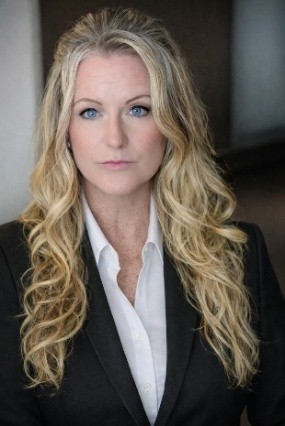
Thanks to the Mid-America PTTC for arranging Christina Boyd (pictured above) to lead one of AC4C's two pre-conference courses that are happening simultaneously on Tuesday, November 3, 1-4:10 pm at MCTC/Camp Dodge and both have been approved by IBC for 3.0 CEUs. If you cannot make it to the AC4C Prevention Conference the next day, you may still attend one of these courses without coming to the conference. They stand alone and are totally free.
This AI ethics course qualifies as an Ethics Recertification course, but even if you don't need your that specific recertification course, this is going to be an amazing training on AI ethics you won't want to miss! And the CEUs can just be used for general certification or recertification as well.
Session Objectives:
• Analyze Ethical Dilemmas in response to the use of technology in practice
• Understand the emerging use of AI and how it is impacting the practice of behavioral health services
• Identify risks and benefits of AI use and develop ethical decision-making approaches for integrating AI into responsible behavioral health practice
Christina Boyd, LSCSW, LCAC- Christina is a clinical social worker as well as a clinical addictions counselor who has worked in the behavioral health field for over 30 years. She is currently an Associate Professor of the Practice for the University of Kansas School of Social Welfare and serves as the Liaison to Rural Communities as well as serving on the Leadership Board for the Center for the Advancement of Healthcare for Everyone. She is a collaborating faculty member with KU Medical Center Project ECHO. She is a master trainer for the ATTC network and serves as a content expert on prevention and treatment with the Opioid Response Network State Targeted Response. She continues to reside in Western Kansas and is passionate about equity of health resources in rural areas as she continues to pursue her mission of helping people find their happy.
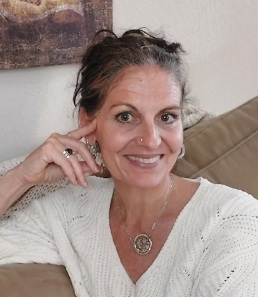
OR the second pre-conference opportunity below is by Nick Swope, MS, MCHES, RPCV (pictured below session information). Thanks again to Mid-America PTTC for bringing Nick to our conference!
How to Leverage AI in My Prevention Work
3 Ideas. 2 Products. 1 Plan.
Zero Jargon.
This is a hands-on training is for up to 20 people; register soon as limited class size is filling up quickly!
Session description
Most prevention specialists have heard plenty about AI and been handed very little they can use on a Thursday afternoon. This training is the opposite. It is built for people who have never used an AI tool at work, or tried one once and stopped.
Participants leave having built two things: an action list with owners and dates, drawn from a coalition meeting transcript; and their choice of parent-facing flyer copy drafted from an approved source packet, or a reviewer's flag list on a grant narrative. They also leave with a one-week plan for one workflow in their own coalition, with a named reviewer.
The training is tool-agnostic. A free ChatGPT, Claude, or Gemini account works, and so does a county-licensed tool. Participants bring a laptop if they can; two people can share one. All practice material comes from a fictional Iowa coalition, so nothing real or sensitive goes near a chat tool.
AI should support prevention work, not replace expert judgment.
Training goal
Participants leave able to run one low-risk, human-reviewed AI workflow in their own prevention work within one week, and knowing what must never be entered into a chat tool.
Learning objectives
By the end of the session, participants will be able to do each of the following. Every objective is demonstrated in the room, and the evidence is the participant's own completed workbook.
Evidence of achievement
1) Write a four-part prompt — goal, context, source, expectations — for a routine prevention task, scoring at least 3 of 4 on the prompt checklist.
Workbook Checkpoint 1, self-scored 0–4 against the printed rubric.
2) Produce a decisions-and-action-items list from a coalition meeting transcript, and verify at least one owner and one due date against the source document.
Product 1 completed and one verified fact recorded in the workbook; checked against the answer key during debrief.
3) Produce either parent-facing flyer copy drafted from an approved source packet, or a reviewer's flag list on a grant-narrative draft — including a written AI-disclosure line.
Product 2 completed in the participant's chosen track; disclosure line written in the workbook.
4) Diagnose one unsatisfactory AI output by identifying which part of the prompt caused it, and revise one variable at a time in a follow-up prompt.
Diagnose-and-revise step recorded in the workbook during Product 2.
5) Assign a risk tier — lower, moderate, or higher — to their own mapped workflow, and name at least three categories of material that must never be entered into a chat tool, including youth-identifying information and survey data below the aggregate level.
Workflow map with risk tier marked; keep-out list completed; exit ticket.
6) Complete a one-week pilot plan naming the workflow, the owner, the source materials, the reviewer, and the success measure.
Pilot plan page in the workbook with all five fields filled in.
Nick Swope is an applied AI practitioner and public health educator, founder of Backyard-AI Public Health and a Doctor of Public Health student at East Tennessee State University. With over a decade of experience in public health practice, teaching, and program leadership, he specializes in the practical, responsible integration of artificial intelligence into research, education, and community health. At ETSU, he founded the university's AI interest group and serves on the AI task force, building tools that help faculty, researchers, and community organizations put AI to work. His applied projects include Jesse AI, a substance use recovery chatbot developed for Recovery Resources Tennessee, along with custom research workflows that compress weeks of manual qualitative analysis into hours for partners such as the National Coalition of STD Directors. He has been a speaker at the AI4 conference, the Tennessee Public Health Association, and one of America’s top-ranked private companies. Drawing on earlier roles leading public health teams in North Idaho and teaching in a CEPH-accredited MPH program, Swope brings a rare blend of frontline practice, graduate instruction, and hands-on AI development to his work advising health departments, nonprofits, and universities on mission-aligned AI adoption.
|