|
On 20 February 2025, Al-Shabaab militants launched a series of sweeping, coordinated attacks across multiple locations in the Middle Shabelle region, targeting Somali forces in Al-Kawthar, Ali Ahmed, Dar al-Naama, and Ali Foldiri. These attacks resulted in Al-Shabaab driving out dozens of government forces and seizing significant amounts of military-grade weapons, ammunition, and equipment, including entire military convoys. The militants also captured, killed, and injured several Somali troops, including kidnapping a Somali officer.
Expansion and Continued Offensive
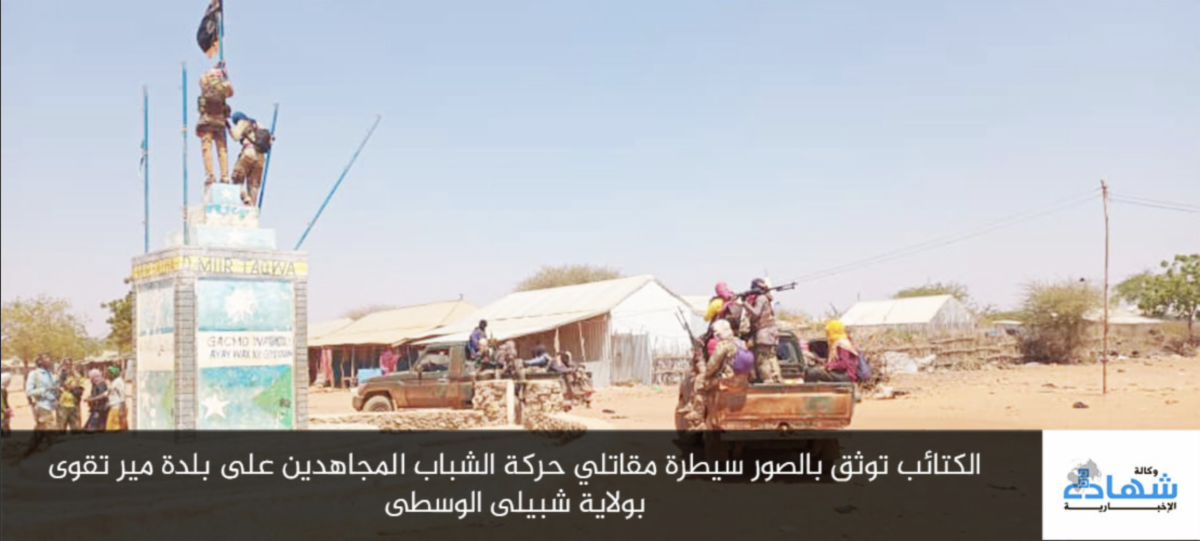
The clashes extended into the following day, with Al-Shabaab claiming complete control over additional villages, including El Barf, Adli, Bos Amer, and Mir Taqwa in Mahaday. This continued expansion highlights the strategic and aggressive tactics employed by Al-Shabaab, effectively weakening the Somali government’s influence in Middle Shabelle and crippling its ability to maintain a presence in rural areas.
On 25 February 2025, Al-Shabaab escalated its offensive by targeting a Somali Forces military base in Adan Lahi, Ruunnirgood, Middle Shabelle. As a result of the raid, the militants seized complete control of Adan Lahi, captured troops, and inflicted heavy casualties on government forces.
Multiple Al-Shabaab Claims Comform Large-Scale Attack
Within four hours, Al-Shabaab released seven separate claims updating the ongoing offensive across Middle Shabelle. The group confirmed complete control over Dar al-Naama and Al-Kawthar despite their proximity to the regional capital, Jowhar. Notably, TRAC analysts recorded limited to no militant activity in these villages before this large-scale incursion, highlighting a sudden and deliberate expansion by Al-Shabaab.
Patten of Escalating Militant Tactics
According to Al-Shabaab’s most recent claim, at least 22 Somali officers were killed as they attempted to flee the attacks, reinforcing an emerging pattern of militant expansion tactics that TRAC analysts have been monitoring. Al-Shabaab’s recent operations suggest a clear shift toward intensified offensives, leveraging targeted strikes on strategic towns and rural villages to further its territorial control.
Al-Shabaab’s Long-Term Expansion Strategy
Over recent weeks, Al-Shabaab has increasingly reinforced its offensive strategies to consolidate control over rural regions. The group has already seized control of remote villages such as Elder and Halgan, and intelligence suggests they are now actively working to take over Berdale, Beled Hawo, Masagaway, and Bulobarde.
By targeting isolated and under-defended villages, Al-Shabaab is strategically expanding its operational hubs in areas where government forces have limited reach. These newly acquired territories serve multiple purposes:
- Recruitment & Propaganda: The group is leveraging its presence in remote villages to recruit new members and spread ideological narratives.
- Government Weakness Exploitation: Al-Shabaab capitalises on governance gaps, such as poor infrastructure, lack of state control, and economic reliance on pastoral livelihoods, making these areas highly susceptible to militant influence.
- Strategic Control: These rural strongholds allow Al-Shabaab to launch further attacks, disrupt trade, and expand into larger, more politically significant regions.
The implication of Al-Shabaab’s Growing Presence
These recent attacks across Middle Shabelle indicate Al-Shabaab’s increasing confidence and operational capability. The deliberate targeting of multiple villages in succession suggests the group is not just seeking short-term victories but is executing a long-term expansion plan. If Al-Shabaab continues this aggressive territorial push, the Somali government will face increasing challenges in regaining control, particularly in regions where Al-Shabaab has now established a foothold.
| | |
TRAC Incident Report: More Than 30 Islamic State Khurasan (ISK) Militants Sentenced for Planning to Poison Food During March 2024 Navruz [Persian New Year] Celebrations in Vahdat, Tajikistan | |
|
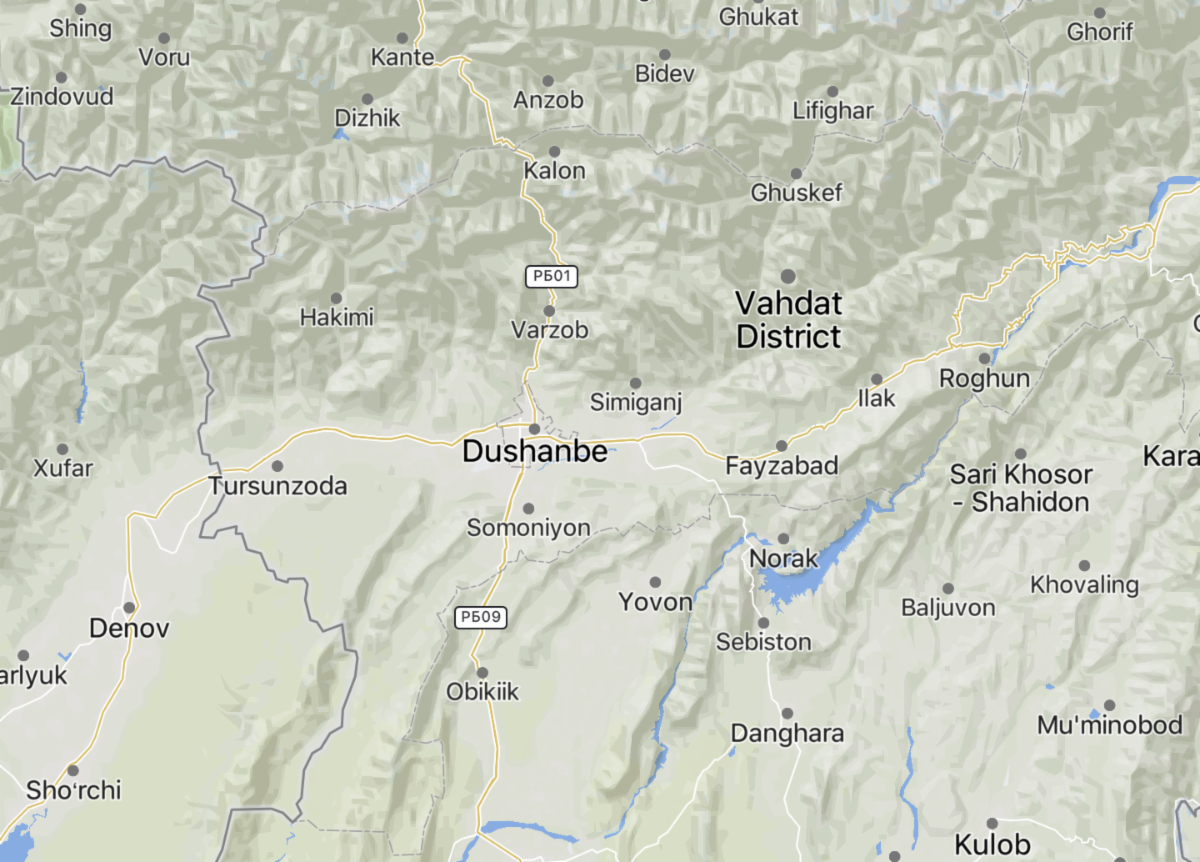
On 17 February 2025, a Tajikistan court sentenced over 30 Islamic State Khurasan (ISK) militants to prison terms ranging from 8 to 20 years for their role in a foiled mass poisoning attack during the March 2024 Navruz celebrations in Vahdat. Authorities have confirmed that 10 additional suspects remain at large, with active efforts to track them down. The planned attack aimed to contaminate food during the festival, marking a departure from ISK’s traditional tactics of bombings, shootings, and suicide attacks.
Poisoning food is an atypical method for ISK, signalling an evolving and adaptive strategy to circumvent heightened security measures. Navruz, the Persian New Year, is a major cultural and national celebration across Central Asia, making it a symbolic and strategic target for ISK. The group sought not only to cause mass casualties but also to instil fear, disrupt social cohesion, and undermine public confidence in the Tajik government’s ability to protect its citizens. This attack fits into ISK’s broader objective of destabilising Central Asian states, particularly Tajikistan, which has become a key battleground in the group's expansion beyond its Afghan and Pakistani strongholds.
The location of the planned attack, Vahdat, is significant as it has emerged as a hotbed for jihadist activity. It was also the site of a recent ISK-linked prison break attempt at Penal Colony No. 3/2, underscoring ISK’s growing operational footprint in Tajikistan, which the group increasingly views as a gateway for expansion into Central Asia. Tajikistan has long struggled with Islamist insurgency, dating back to its civil war in the 1990s. It has been a key source of foreign fighters for IS, with many Tajik militants returning from Syria and Iraq to bolster ISK's ranks.
ISK has a history of leveraging Tajik operatives for both regional and international attacks. Tajik militants, due to their Central Asian appearance and lower visibility compared to Arab or South Asian jihadists, can blend more easily into European populations, making them ideal for overseas operations. This is evident in ISK’s claimed attack in Azerbaijan, which indicates the group’s ambition to project power beyond Central Asia and into the Caucasus and Europe.
ISK’s expanding propaganda network has strengthened its ability to recruit in Tajikistan and other Central Asian states. The launch of a Tajik-language media outlet in 2022, followed by a Uzbek-language network, highlights the group’s targeted efforts to radicalise and mobilise local populations. These linguistic initiatives are not merely about spreading ideology but are designed to directly engage and recruit disaffected youth and marginalised communities, ensuring a steady pipeline of operatives for regional and transnational attacks.
The foiled poisoning plot, the Vahdat prison break attempt, and ISK’s growing regional footprint all indicate a dangerous shift in tactics. The group is increasingly adopting unconventional methods to circumvent counterterrorism measures while testing new forms of mass casualty attacks. This latest attempt to poison civilians at a significant national festival demonstrates ISK’s willingness to innovate and refine its operational playbook. With Tajikistan playing an increasingly central role in ISK’s regional strategy, more such plots will likely emerge, further straining Central Asia’s counterterrorism efforts.
| |
TRAC Incident Report: Sindhudesh Revolutionary Army (SRA) Armed Assault on National Logistics Cell (NLC) Tankers on the National Highway, near Sarhad Town of Mirpur Mathelo (Ghotki), Sindh, Pakistan | |
|
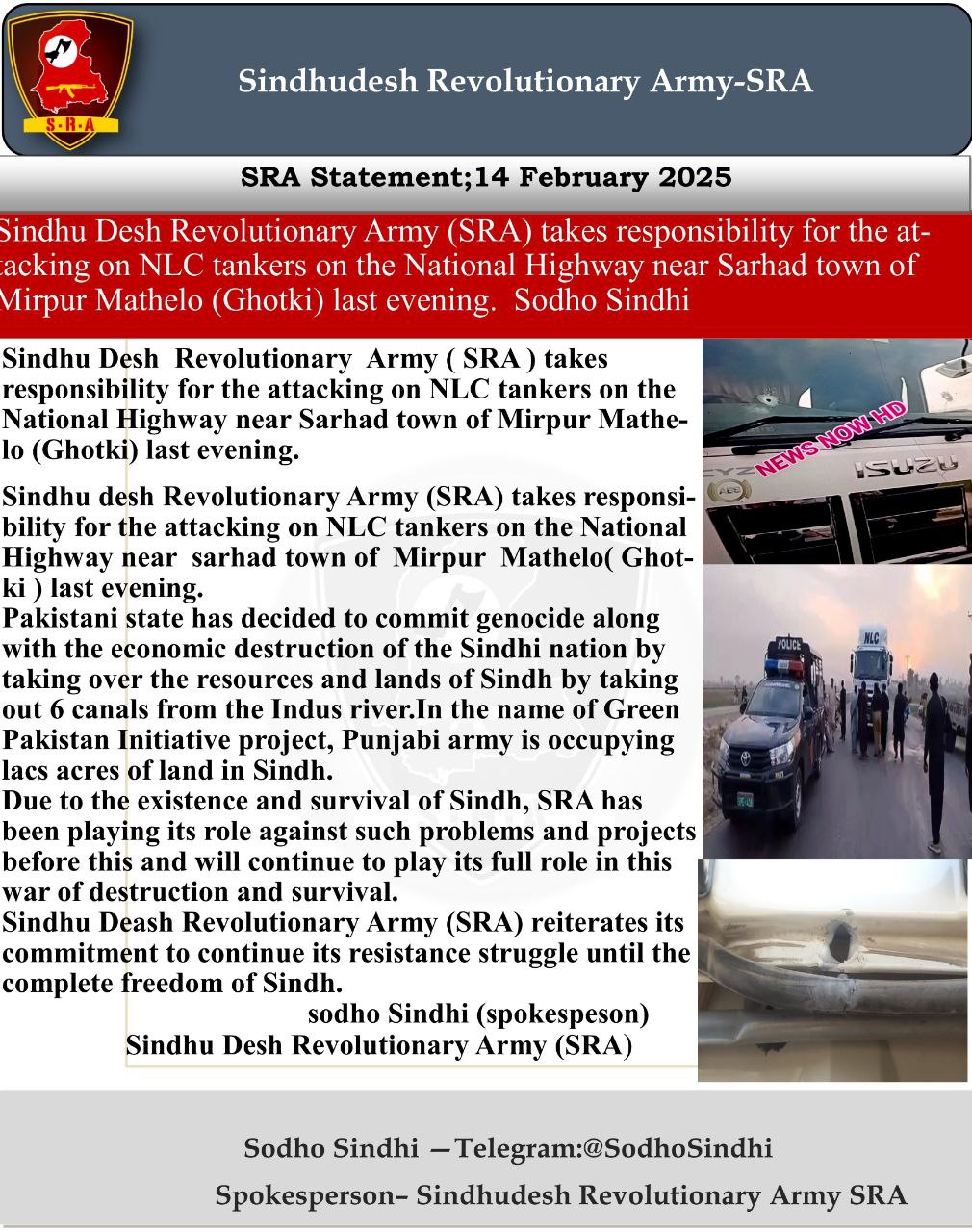
On 14 February 2025, Sindhudesh Revolutionary Army (SRA) militants launched an attack on National Logistics Cell (NLC) tankers along the National Highway near Ghotki, Sindh. This attack, as outlined in the group’s claim, was motivated by grievances against the Pakistani state, specifically the economic and social instability in Sindh and the alleged exploitation of the region’s resources. The SRA has long positioned itself as a separatist movement advocating for an independent Sindhudesh, frequently targeting infrastructure and state institutions to highlight their resistance.
This latest attack on NLC tankers is not an isolated incident but part of a broader pattern of militant activity against key state-run entities. The tactics employed in this operation bear striking similarities to those used by Baloch insurgent groups, raising the possibility of strategic influence or collaboration. This speculation is further reinforced by the first known joint operation between the Baloch Liberation Front (BLF) and the SRA. This event may signal an emerging alliance between Baloch and Sindhi separatists. Should this partnership continue, it could reshape the operational landscape of Sindhi militancy, allowing the SRA to adopt more sophisticated insurgent tactics and potentially escalate the scale of its attacks.
While the SRA remains a relatively small separatist group, its focus on resisting Punjabi migration and advocating for Sindh’s independence has kept it active in regional militancy. If their alliance with Baloch insurgents deepens, the SRA may evolve into a more formidable threat, leveraging BLF’s experience, resources, and operational tactics to intensify its campaign against the Pakistani state and its economic infrastructure.
| |
TRAC Incident Report: Islamic State West Africa (ISWA/Wilayat Gharb Afriqiyah) and Boko Haram Clashes Intensify at Lake Chad Basin, Borno State, Nigeria | |
|
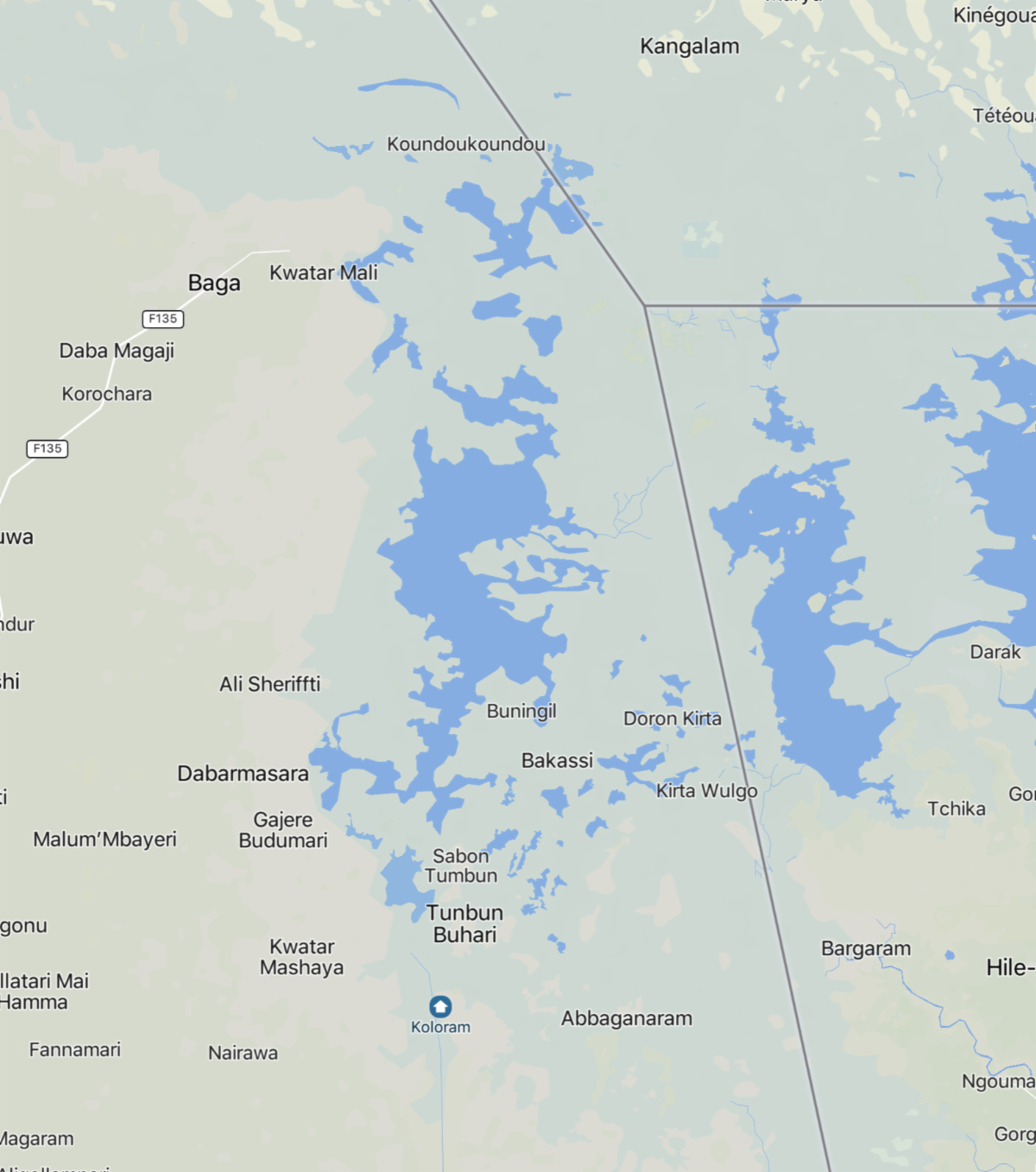
On 23 February 2025, violent clashes between Islamic State West Africa Province (ISWA) and Boko Haram escalated around the Lake Chad Basin, Borno State, Nigeria, following the collapse of recent peace talks between the two rival factions. Despite past attempts at reconciliation and reunification, both groups have returned to open conflict, reigniting their long-standing enmity that has shaped insurgent dynamics in the region.
The Lake Chad Basin has historically been a strategic battleground for both groups. Due to its dense terrain, porous borders, and access to critical resources, it serves as a key hub for insurgent activity. The recent fighting is driven by territorial disputes and competition over vital assets, particularly local populations, economic resources, and strategic smuggling routes. Both ISWA and Boko Haram rely heavily on exploiting civilians for forced recruitment, taxation, and supply chains, making control over fishing villages and trade routes an essential factor in their rivalry.
The fishing industry in the region has become a primary target for both factions. Fishermen and food producers provide a sustainable economic base militants can exploit for taxation, extortion, and recruitment. Given that these resources are finite and highly valuable, the ongoing violence is as much about survival as it is about ideological differences. This renewed conflict underscores the fragile nature of any truce between these groups and suggests that Lake Chad will remain a key hotspot for insurgent infighting, further destabilising the region.
With the Nigerian military and regional forces stretched thin, the power struggle between ISWA and Boko Haram will likely escalate even further, leading to more civilian casualties, displacement, and economic disruption in the already scared region.
| |
TRAC Incident Report: Incel Movement-Linked Teenage Suspect Arrested After Threatening to Attack Women with a Knife, Meythet, Annecy, Haute-Savoie, Southeastern France | |
|
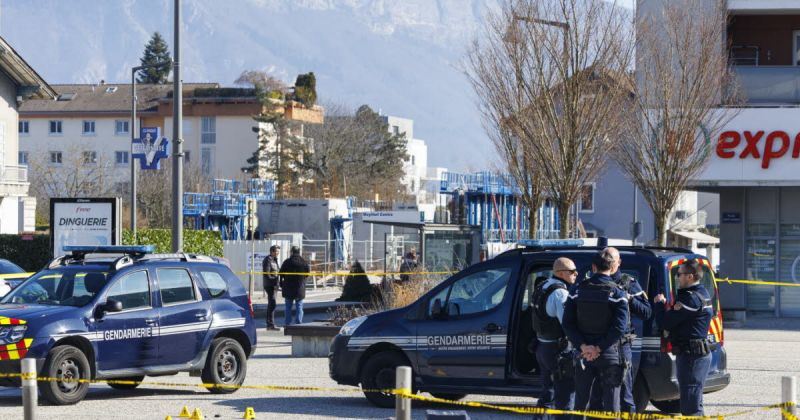
On 16 February 2025, at approximately 12:44 PM local time, French police arrested a 17-year-old male suspect in Meythet, Annecy, Haute-Savoie, after he posted a threatening video on TikTok in which he declared his intent to carry out a knife attack on women in a public square in the city centre.
Law enforcement intercepted the suspect before he could act on his threats, but upon confrontation, he brandished a knife at the officers, prompting them to shoot him in the leg to neutralise the threat. The suspect, who later claimed affiliation with the Incel Movement, has since been prosecuted for ‘apology for terrorism’, a charge often applied in France to individuals promoting or justifying violent extremist ideologies.
The Incel Movement (Involuntary Celibate) refers to an online subculture of predominantly young men who harbour deep-seated misogyny, frustration, and resentment due to their perceived inability to form romantic or sexual relationships. Within incel circles, women are dehumanised and blamed for their lack of intimacy, leading to an ideology that justifies violence against them.
Certain factions within the movement openly advocate for sexual violence, promoting a "rape culture" narrative under the pretext of restoring traditional gender roles and increasing the white population. Beyond targeting women, some incels also turn their hatred toward sexually active men, whom they see as competition. The ideology has increasingly manifested in violent attacks, including mass killings in North America and attempted attacks across Europe.
While Incel-motivated violence has historically been more prevalent in the United States, cases in Europe are on the rise. The Meythet incident highlights the increasing radicalisation of young men via online spaces and the threat of digital platforms like TikTok in disseminating extremist ideologies. French authorities have recognised the potential for incel radicalisation to escalate into acts of terrorism, as demonstrated by past attacks in Canada, the U.S., and the U.K., where self-identified incels have carried out deadly assaults.
| |
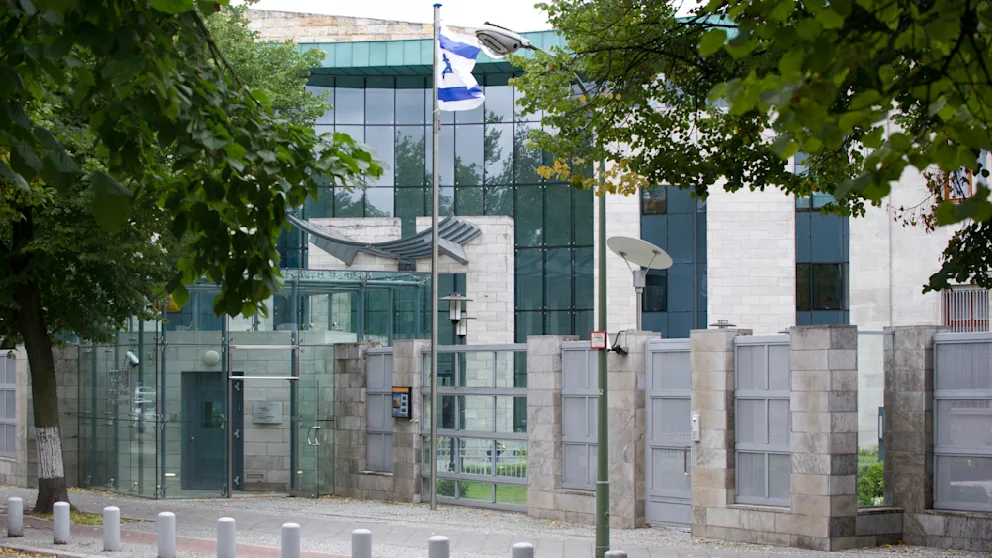
TRAC Incident Report: German Special Services Detain 18-Year-Old Chechen-Origin Islamic State (IS) Militant, Planning IED Attack on Israeli Embassy in Berlin, Ahead of Flight to Turkey at Berlin Brandenburg Airport, Berlin, Germany | |
TRAC Insight: The ‘Zizians’: An Evolving Tale of Murder and Rationalist Ideology | |
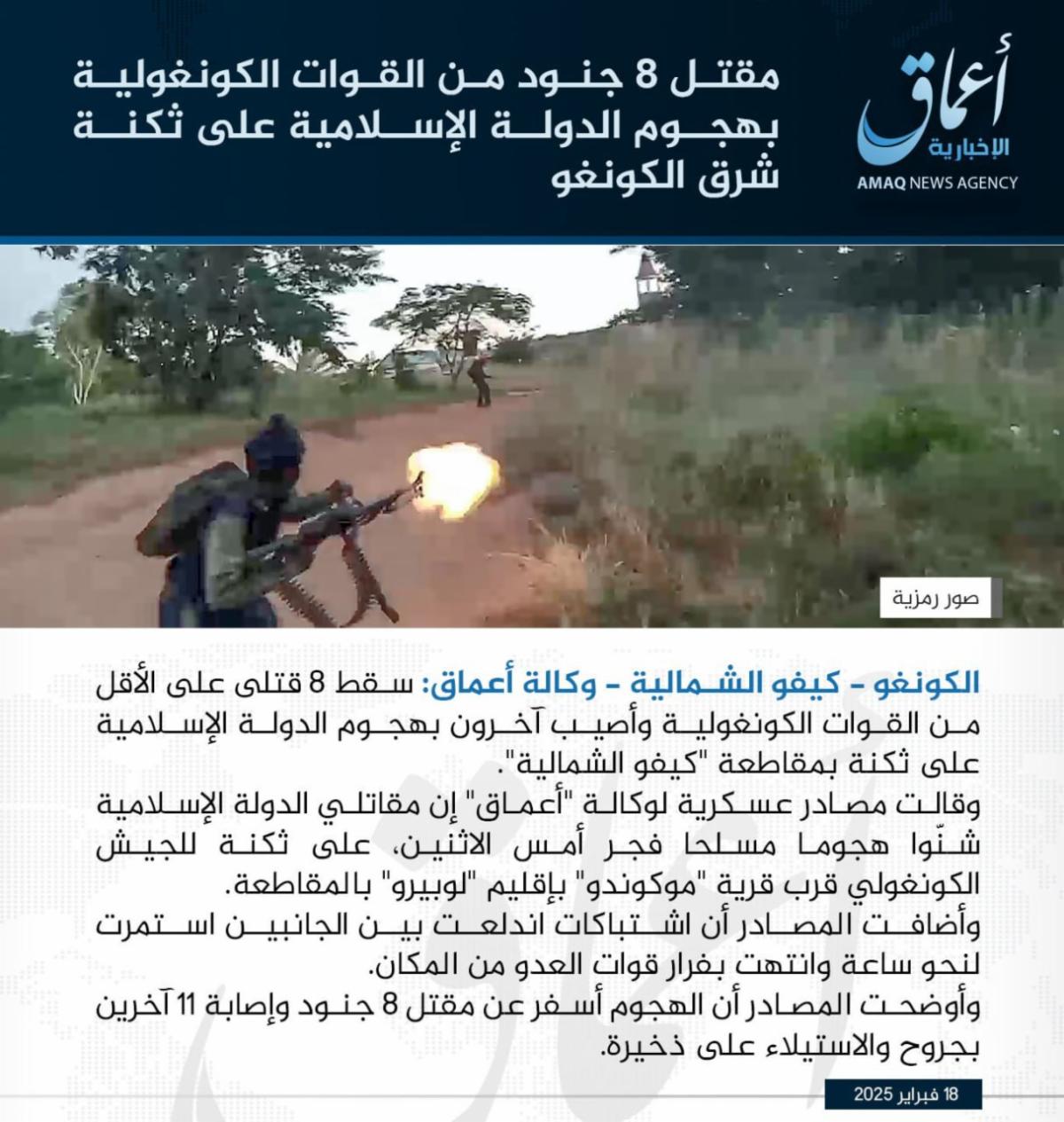
TRAC Incident Report: Islamic State Central Africa (ISCA/Wilayat Wasat Afriqiyah) Militants Led an Armed Assault on Congolese Army Forces in Mukundu, Lubero District, Congo (DR) | | | | |