2025-2026 Legislative Bulletin | |
|
Recently Introduced Bills of Municipal Importance
The following bills were recently introduced in the Wisconsin State Legislature and have been added to the list of those being monitored by the League. Unless otherwise indicated, no formal position has been taken on these proposals to date.
-
Senate Bill (SB) 26: Technical College Facility Lease to Childcare Centers – Sen. Feyen (R-Fond Du Lac) and Rep. O’Connor (R-Fond Du Lac) – Under current law, technical colleges may rent unneeded space in their facilities to other entities. However, since 1999, they may not rent space to others for school purposes. This legislation creates an exemption to that prohibition for the lease of technical college facilities to childcare centers. With 52 campuses across the state, this legislation could be one tool in the toolbox that helps to address the shortage of childcare slots in Wisconsin. The League has registered in-favor of this legislation.
| | |
|
WE WANT TO HEAR FROM YOU: While providing childcare is not a municipal responsibility, an increasing number of local governments have been looking to help solve childcare shortages in their communities. Has your municipality explored partnerships to expand childcare options? Fill out this brief survey to tell us about what options, if any, you’ve explored. | |
-
SB 34: Allowing Candidates for Certain Offices to Withdrawal Candidacy – Sen. Wanggaard (R-Racine) and Rep. Steffen (R-Howard) – This legislation allows independent candidates for president and vice president and candidates for the U.S. Senate and House of Representatives, the state senate and assembly, governor and lieutenant governor, secretary of state, and state treasurer to withdrawal their candidacy at certain timelines prescribed in the bill. These deadlines include before June 10th preceding the partisan primary or before the 4th Tuesday in August preceding the general election, which align with the final deadlines for the state to certify and report candidates for these offices to local clerks. This bill only impacts the offices listed and does not make changes to the processes for other offices, including local elected offices. The League is evaluating the impact this bill may have, if any, on ballot printing.
-
SB 35: Rehiring Public Safety WRS Annuitants – Sen. Jacque (R-De Pere) and Rep. Wichgers (R-Muskego) – This legislation allows Wisconsin Retirement System (WRS)-participating employers to rehire annuitants (i.e. those receiving a retirement or disability annuity from WRS) if the annuitant is a retired law enforcement officer or firefighter, the annuitant does not have an agreement with the prospective employer at the time of retirement, and the annuitant elects to not become a participating employee in WRS when they are rehired. Additionally, to qualify, the annuitant must not have been retired until after the effective date of this bill if it becomes law, and there must be at least a 75-day waiting period in between retirement and rehiring.
-
SB 37: Prohibiting Local Regulation of Gardens – Sen. Jacque (R-De Pere) and Rep. Sortwell (R-Two Rivers) – This legislation prohibits cities, villages, towns, and counties from requiring a permit for a vegetable or flower gardens or prohibiting the cultivation of a garden on property not owned by the local government. Exemptions to this proposal would still allow for efforts to control noxious weeds or invasive species.
-
SB 40: Restricting the Types of Flags Flown at State and Local Buildings – Sen. Feyen (R-Fond Du Lac) and Rep. O’Connor (R-Fond Du Lac) – This legislation restricts the types of flags that may be flown at state and local government buildings and facilities to the U.S. flag, the Wisconsin flag, and certain other flags listed in the bill, including the flag of a local unit of government or the recognized flag of a unit of firefighters, law enforcement officers, emergency medical technicians, or other first responders.
-
SB 44: Prohibiting Chicken and Quail Bans – Sen. Cabral-Guevara (R-Appleton) and Rep. Sortwell (R-Two Rivers) – This legislation prohibits cities, villages, towns, counties, and sewerage districts from prohibiting an owner or certain lessees of residential property from keeping four or fewer chickens or quail. Exemptions to this proposal would still allow local governments to require permits, require notification of adjacent landowners, impose regulations on fowl housing, prohibit the keeping of roosters, and impose cleanliness standards.
⭐If you would like to contact your legislators on any bills mentioned in the Bulletin, you can find contact information for all legislators here. To find out which legislators represent your community, use the "Find Your Legislator" function on the right side of the page.
| |
|
Act 10 Litigation Headed to Appeals Court
On February 12th, the Wisconsin Supreme Court denied a petition for bypass on a case regarding 2011 Wisconsin Act 10 and the constitutionality of the state’s collective bargaining provisions. The case will proceed through the traditional judicial process and will now head to the Court of Appeals while the Dane County Circuit Court’s decision – which found some, but not all, of Act 10’s provisions unconstitutional – is stayed. The stay puts the court’s decision on hold until the appellate courts have had a chance to review it.
Municipalities can continue to operate under the law as it was prior to the judge’s decision.
| |
|
Three Important Reminders
-
Tomorrow, February 18th, is not only the 2025 Spring Primary Election, the Governor will also be delivering his Budget Address to a joint session of the State Legislature beginning at 7:00pm. We already have some clues as to what will be in the Governor's budget from his announcements on agriculture, lower consumer costs, PFAS, and yesterday’s announcement of a major state corrections overhauls, but Tuesday will provide a full picture of the Governor’s priorities for the 2025-2027 Executive Budget.
The address will be aired on TV on PBS Wisconsin and will be streamed online on WisconsinEye. Local TV networks may also air the address either live on TV or through their online streaming platforms. The League will be providing a breakdown of provisions relevant to Wisconsin municipalities in a special edition of the Legislative Bulletin on Wednesday, February 19th.
-
On Wednesday, February 12th, chief executives, managers, administrators, economic development directors, and planners should have received an email from the League asking for your participation in a short survey on comprehensive planning. This topic is being explored in the State Legislature as part of the broader effort to address Wisconsin’s housing crisis. Your participation will help to better inform our lobbying efforts related to housing, planning, and zoning. Through Friday, 65 cities and villages have responded to the survey, with an average completion time of around 15 minutes. If you haven’t already, please take a few minutes to answer the survey prior to Tuesday, February 25th at noon. If you have trouble locating the survey in your inbox, please respond to this email and we will resend the information.
-
There are only two weeks left until the application deadline for the Innovation Planning Grant! As a reminder, the Innovation Planning Grants are available to municipalities with a population not exceeding 5,000 to help fund staffing or consultants as your community considers the transfer of one or more allowable services or duties from a municipality to another entity. Awards can be up to $100,000 for each proposed project, with $3 million in total available. If your community is interested, please make your best effort to apply by February 28th. Also, if you have questions, be sure to check out the recording of the webinar hosted by the League in conjunction with the Wisconsin Towns Association and Department of Revenue (DOR) along with the FAQ document on DOR’s website.
| |
|
Upcoming Webinar on Judicial Privacy Act
2023 Wisconsin Act 235, known as the Judicial Privacy Act, provides specific privacy protections for certain judicial officers and their immediate family members. These protections extend to municipal court judges and commissioners and may have impacts on the treatment of certain information by other municipal officials. An overview of Act 235, including a section on frequently asked questions (page 7), is available here.
The Wisconsin Counties Association is hosting a two-part webinar focused on the implementation of Act 235, with part two specifically focused on the role of cities, villages and towns under Act 235 and how counties and municipalities can work together to ensure compliance. Part two will be held on Zoom on Friday, March 7th from 12:00pm to 1:00pm. Registration for this webinar is available here.
| |
|
📚Reading Room
Several recent reports may be of interest to municipal officials. In our new ‘Reading Room’ section, we’ll periodically provide a list of these reports that we use to inform our efforts before the State Legislature, and which you may use to inform your efforts locally.
Wisconsin Policy Forum, led by President Jason Stein, produces impartial, relevant, and high-quality public policy research that helps generate informed and fact-based public policy decision-making. While Policy Forum has a host of recent publications, which are highlighted each month in The Municipality magazine, there are three recent publications we’d like to highlight:
| |
-
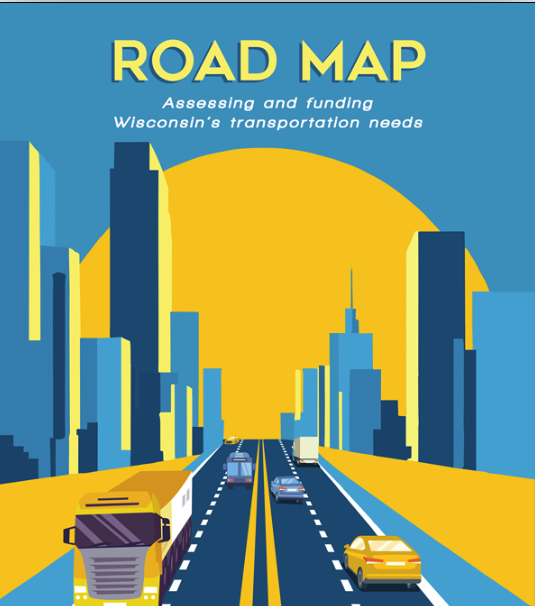
Road Map: Assessing and Funding Wisconsin’s Transportation Needs evaluates the growing gap between transportation funding and transportation needs, the conditions and spending on Wisconsin’s roads compared to other states, and a series of potential investment levels with a range of revenue options to cover those scenarios for the future of transportation.
| |
|
|
Forward Analytics, led by Director Dale Knapp, is a Wisconsin-based research organization providing state and local nonpartisan analysis of issues impacting the state. There are three reports by Forward Analytics that we’d like to highlight, including:
-
Priced Out: The Steep Cost of Childcare in Wisconsin shows childcare costs average between 18% and 36% of family income while slots for childcare have been harder to find and afford due in-part to a 26% decline in the number of childcare workers from 2010 to 2022.
| |
|
Agency Anecdotes
Comments Submitted on Landfill Rule
The League, in partnership with the Wisconsin Counties Association, filed comments with the Wisconsin Department of Natural Resources (DNR) on their proposed rule WA-08-24 which would allow municipalities and counties to use an alternative method for a municipality to establish proof of financial responsibility required for a solid waste disposal facility. In lieu of using bonds or escrows to cover the long-term closure costs of a landfill, local governments could use this alternative method to establish an in-effect ‘net worth test’ to meet their obligations, reducing municipal and county costs by an estimated $1.6 million to $4.6 million annually on saved bond or escrow maintenance costs.
This proposed rule, stemming from 2023 Wisconsin Act 107 which the League supported, represents a positive step forward for local government, aligning the state long-term closure cost requirements with federal law and with state law for private entities. However, the League and Counties Association are requesting a change regarding the treatment of opinions from Certified Public Accountants on end-of-year financial statements.
Our joint comments, which may be viewed here, come as the DNR finalizes their public comment period. They will now evaluate public comments, make revisions as they see fit, and seek final approval on the rule from the Natural Resources Board and Governor prior to legislative review.
DNR Releases New MS4 BMPs Menu
The Wisconsin Department of Natural Resources (DNR) has a new Municipal Separate Storm Sewer System (MS4) Best Management Practices (BMPs) Menu to assist MS4 permittees in complying with their permits. This tool will provide resources and examples to aid permittees in selecting appropriate storm water strategies.
Around 245 local governments throughout the state with populations greater than 10,000 hold MS4 permits and are required to implement a MS4 permit’s storm water management program, also referred to as the six minimum control measures. This new tool from the DNR may help to make compliance easier for municipal officials charged with implementing these programs.
| | | | |