WORC 2026 Webinar Schedule | | Updated Rule Language Specific to the Organics Management Rulemaking to be Released Soon | | Ecology will soon release updated draft organics rule language by filing the CR-102 for the Organics Management rulemaking specific to WAC 173-350. When the CR-102 is filed, updated draft rule language will be published on Ecology’s rulemaking webpage. This summer we can expect two public hearings and comment periods. Stay up to date by subscribing to Ecology’s rulemaking communication. [Select “Rulemaking”>”ECY-ORGANICS-MGMT-RULEMAKING”]. | | |
CFOT 2026 Updates
Registration and Scholarships
| | |
Mark Your Calendars - (Compost Facility Operator Training) CFOT 2026 will be held from October 19th - 23rd at WSU Puyallup. Registration for this five-day, in-person operator training course will open on Wednesday, July 15th. Register on the WORC website.
2026 CFOT Pricing:
WORC Members | $1,375; further discounts available for WORC annual sponsors
Non-Members | $1,575
Scholarship applications are being accepted now. Please express your interest by filling out this application by Friday, June 26th. Applicants will be notified of their award status by Friday, July 10th.
|
| Compost Professionals Training Recap | | |
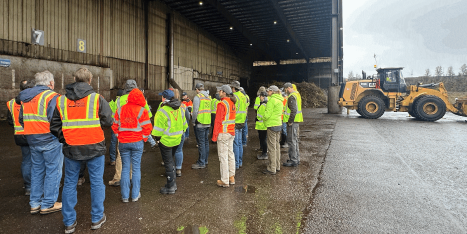
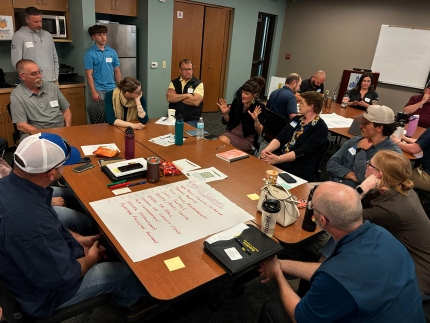
In March, WORC hosted a first-of-its-kind training geared towards compost professionals from across organics recycling industry backgrounds. The Compost Professionals Training (CPT) brought together over 40 professional participants and 16 expert speakers to discuss advanced composting topics like air emissions modeling, water balance calculations, economics, microbiology, and chemical contaminants of concern. A (rainy) tour of Waste Connections’ Compost Factory was led by both facility managers and Tacoma-Pierce County Health Department staff, showcasing a leading regional example of collaboration between composters and regulators.
This three-day training, designed as a complementary curriculum to CFOT, sold out and will be brought back in 2027. Stay tuned for more details on registration and event dates!
| | 2026 WSRA/WORC Annual Conference Reflection | | |
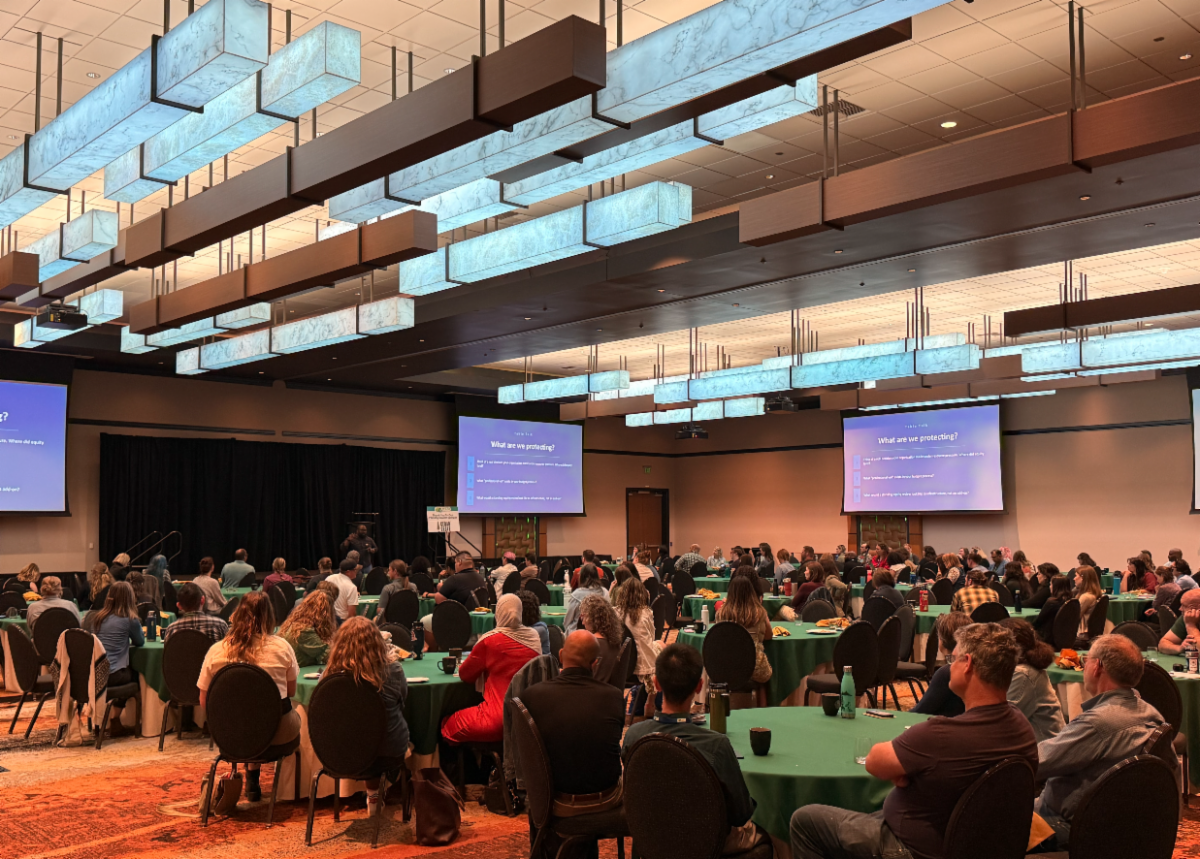
On May 4th - 6th, recycling and organics professionals from across the region gathered for the 2026 WSRA/WORC Conference. This year’s event brought together a mix of tours, innovation showcases, and speaker sessions centered on advancing recycling systems and strengthening the circular economy here in Washington.
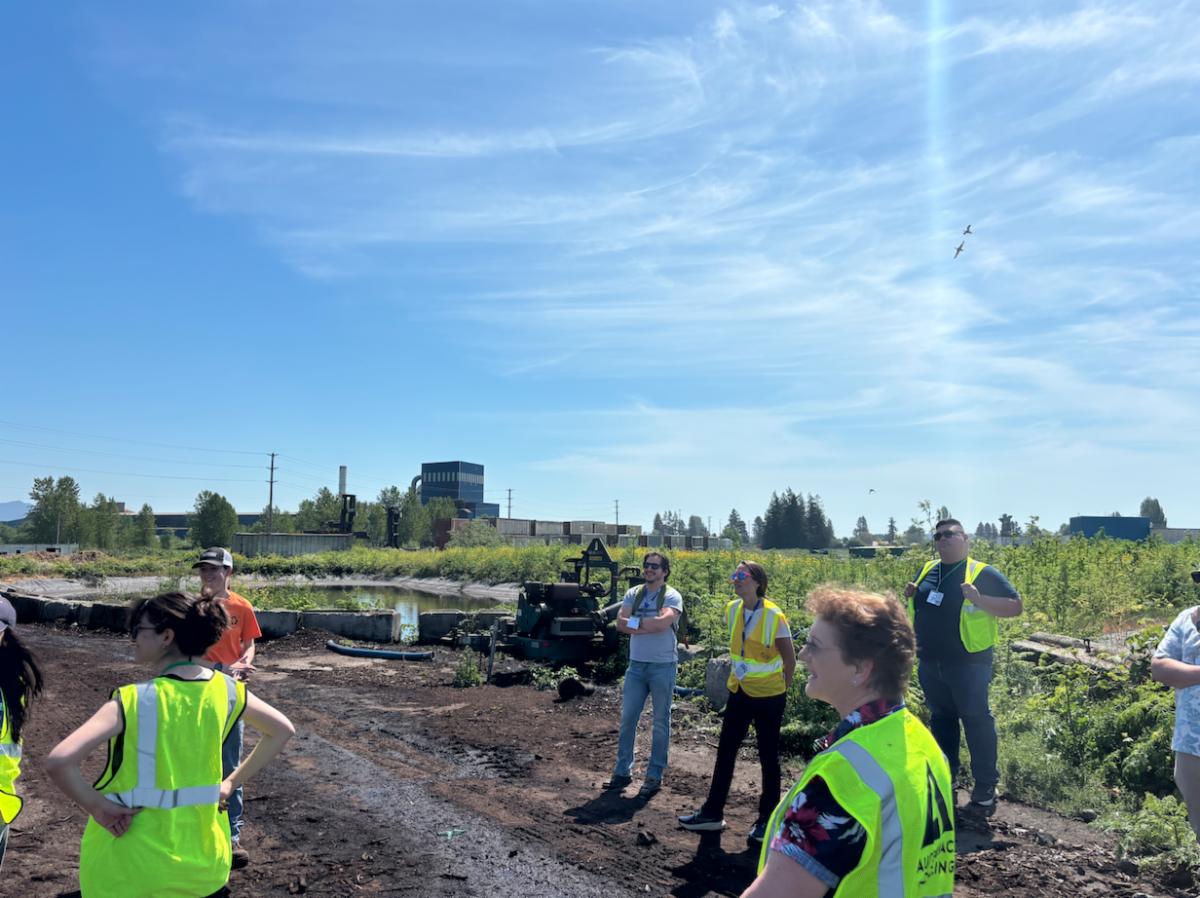
Tour attendees saw recycling and composting operations in action, gaining firsthand insight into both the challenges and the breakthroughs shaping our industry. The NextCycle event featured new and emerging recycling-focused businesses from across the state. Several startups work directly in the organics space, including a vermicomposting operation in eastern Washington, and all presentations highlighted creative approaches to expanding organics collection and boosting the availability of high-quality compost.
The rest of the conference was packed with sessions. On the organics track, several standout panels offered perspectives from composters actively shaping the market. Composters discussed the realities of running and scaling operations, with candid insights ranging from feedstock variability to infrastructure investment to building end markets. Another session featured California composters, providing relevant insight for Washington composters facing similar legislative impacts, like expanded organics collection mandates, contamination challenges, and evolving expectations. Their stories offered both caution and inspiration as Washington prepares for similar transitions, emphasizing the importance of clear communication, adequate infrastructure, and ongoing collaboration between regulators and industry.
A heartfelt thank you goes out to our WSRA partners, in addition to the presenters, organizers, tour hosts, and entrepreneurial teams who made the event so engaging.
|
| |
Positive Energy at
Ecology’s Spring Organics Summits
| | |
Ecology hosted four in-person organics summits across the state in late April and early May. More than 200 people gathered to discuss opportunities and challenges related to implementing the organics management laws. This year's summits focused on increasing business participation and compliance with the Organics Management Laws, featuring approaches from within and outside Washington for growing commercial participation rates. To review the slide deck from your regional summit, contact organics@ecy.wa.gov.
Ecology also announced their upcoming technical assistance pilot that will partner with three cities to deliver on-the-ground support for businesses. Stay tuned for the announcement by subscribing to Ecology’s Organics distribution list. [Select “Solid Waste Management”>“ECY-ORGANICS-MGMT”].
Major themes from the Summits across the state included: reviewing the economic structure of funding organics service, investments in food rescue, increased business participation in organics service, and strategies to manage contamination.
Overall, there was significant energy from simply being in-person with one another and making connections to create Washington’s new organics landscape.
| | Organics at 2026 NextCycle | | |
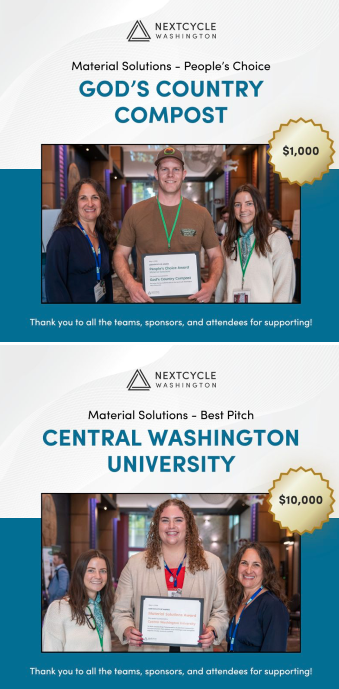
The Annual Conference opened this year with NextCycle Washington’s Accelerator Pitch Event, the capstone showcase for teams completing its Accelerator Program. After months of business planning, technical research, and mentorship, participating teams delivered five-minute pitches to an audience of roughly 200 professionals representing recycling, reuse, organics, government, nonprofits, and investment sectors. Each team presented its concept, funding strategy, projected impact, and opportunities for partnership or investment. A panel of judges awarded monetary prizes to the top projects.
This year’s cohort included these three organics-focused teams, all working to advance composting and soil health solutions across Washington:
Central Washington University — Judge’s Choice Award Winner
About the Team: Central Washington University (Ellensburg, WA) advances applied sustainability through campus research, education, and hands-on learning.
| | | |
About the Project: CWU is developing on-site composting infrastructure at the Wildcat Farm to divert campus organic waste and produce compost for food production and landscaping. Through NextCycle Washington, the team refined system design, operational planning, and partnerships to support scalable composting solutions that reduce emissions and serve as a living laboratory for students.
God’s Country Compost — People’s Choice Award Winner
About the Team: God’s Country Compost (Oroville, WA) is a locally owned composting service transforming agricultural, commercial, and food system residuals into high-quality compost.
About the Project: The team’s work strengthens soil health, supports local agriculture, and builds rural circular economies throughout Okanogan County. During the Accelerator, they advanced operational planning, feedstock sourcing strategies, and market development for expanded compost production.
Worm to Farm
About the Team: Worm to Farm (Odessa, WA) is a regenerative vermicomposting operation converting organic waste into nutrient-rich soil amendments.
About the Project: The project supports farmers, ranchers, and gardeners by restoring soil health and reinforcing regional food systems. Through NextCycle Washington, the team refined processing operations and partnership strategies to scale vermicomposting solutions.
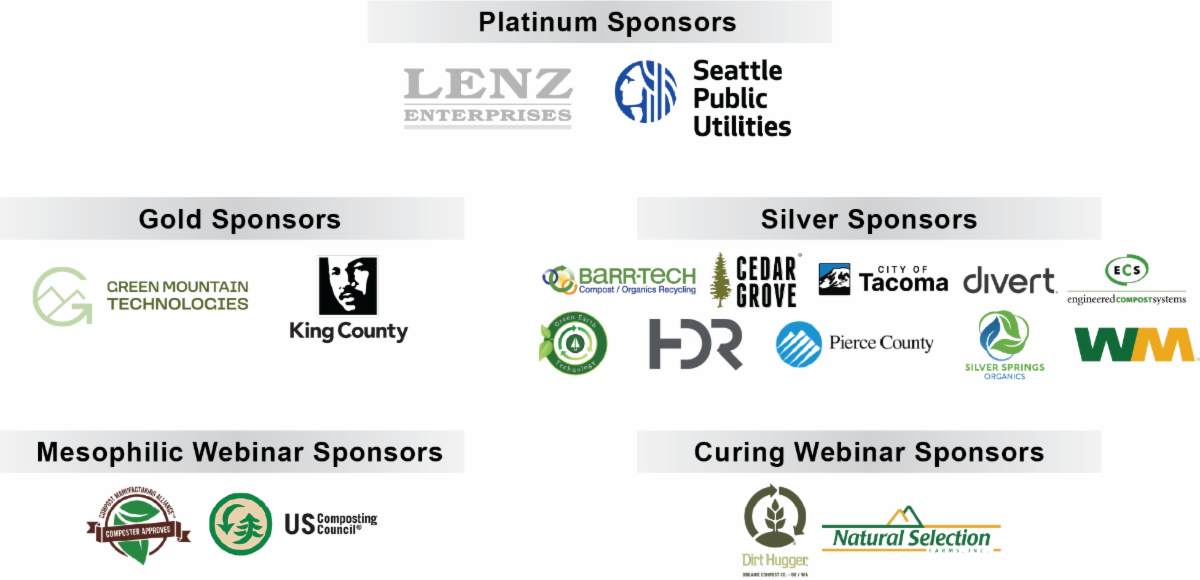
| | Thank You to Our Annual and Webinar Sponsors | | | | |