|
Summer is in full swing in Southwest Georgia! A busy 2024 marches on in research, conservation, and education.
In this issue, we highlight our Water research program represented by our Aquatic Sciences, Ecohydrology, Herpetology, and Affiliate Mussel Conservation Lab as well as the work of our Conservation and Outreach & Education programs from mid-March through July 2024.
|
|
Wetland Hydrology Meets Rocket Science | |
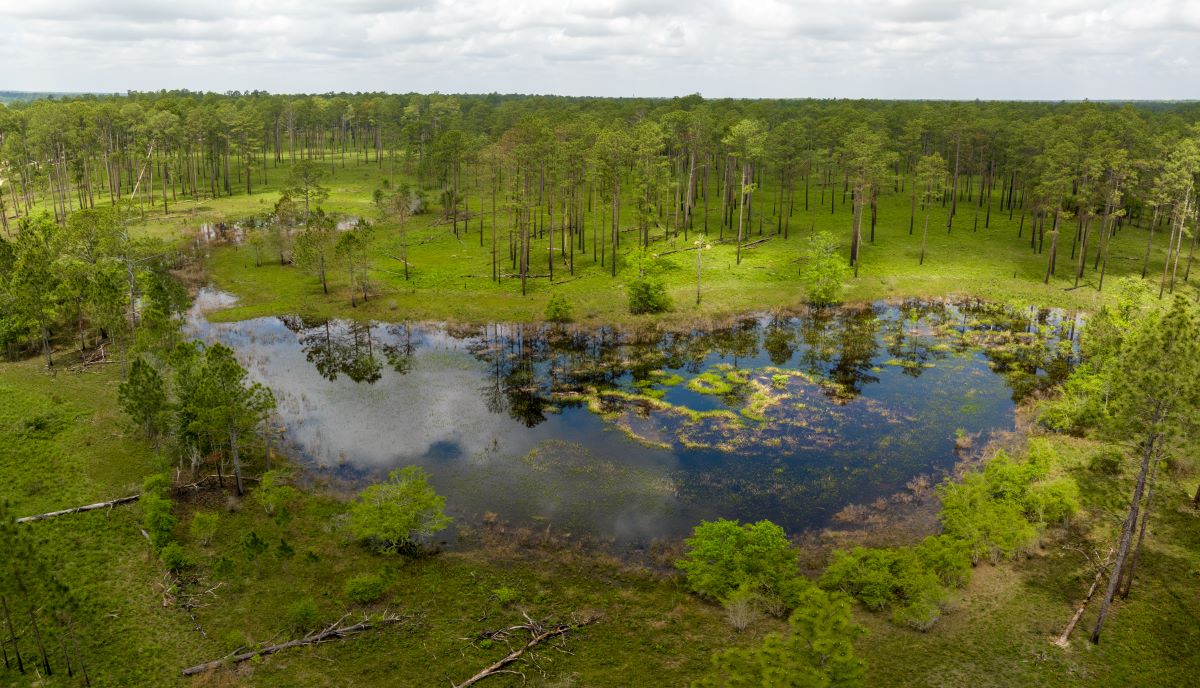
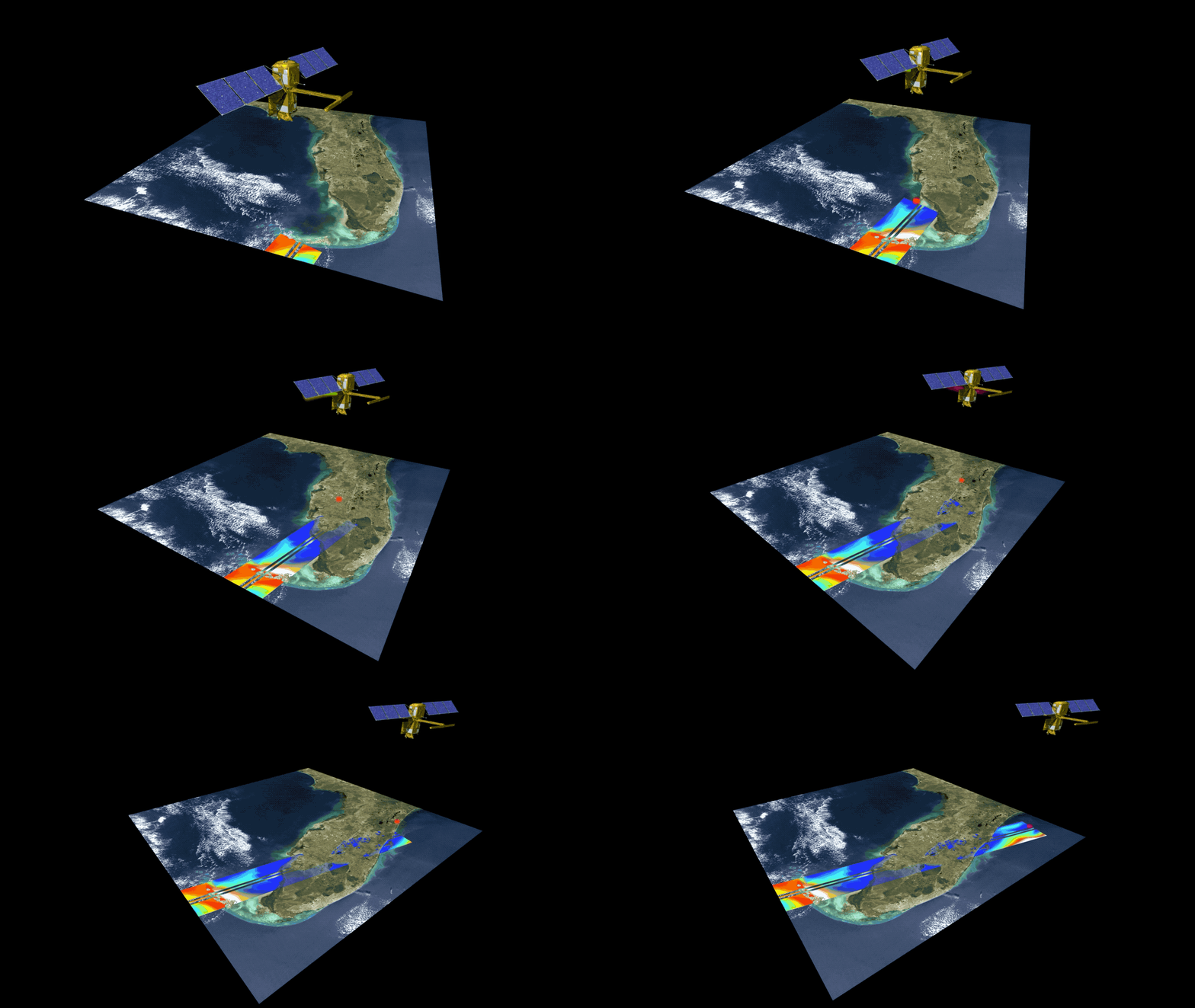
Wetlands provide numerous benefits to people, a.k.a. ecosystem services, such as water filtration, nutrient sequestration, and wildlife habitat. The Jones Center has nearly 100 isolated wetlands and has maintained a 30+ year record of water depth on more than 30 wetlands. In 2016, we installed a new set of sensors to measure wetland depth every 30 minutes. Now, NASA is funding Center scientists and collaborators at Auburn University and The University of Alabama in Huntsville to use those wetland depth values to test a new satellite sensor launched in 2022. The project will use data from the Surface Water and Ocean Topography (SWOT) sensor to analyze wetland surface elevations and area over time using high-frequency radio waves. The new data will allow project scientists to estimate total water storage by wetlands at the basin scale, an important unknown in watershed modeling. Findings will ultimately be applied across other wetland-rich regions of North America. The NASA grant will last four years and fund a new Center PhD student. | |
Former Ichauway Student Returns to Lead Newest Research Lab | |
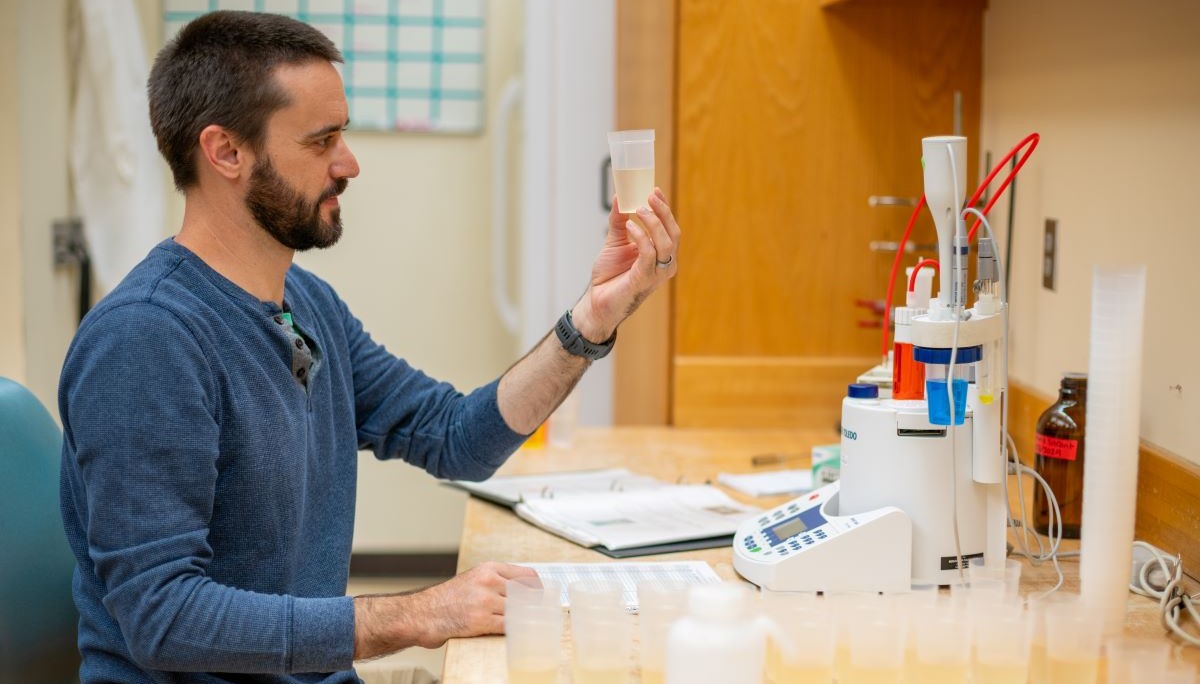
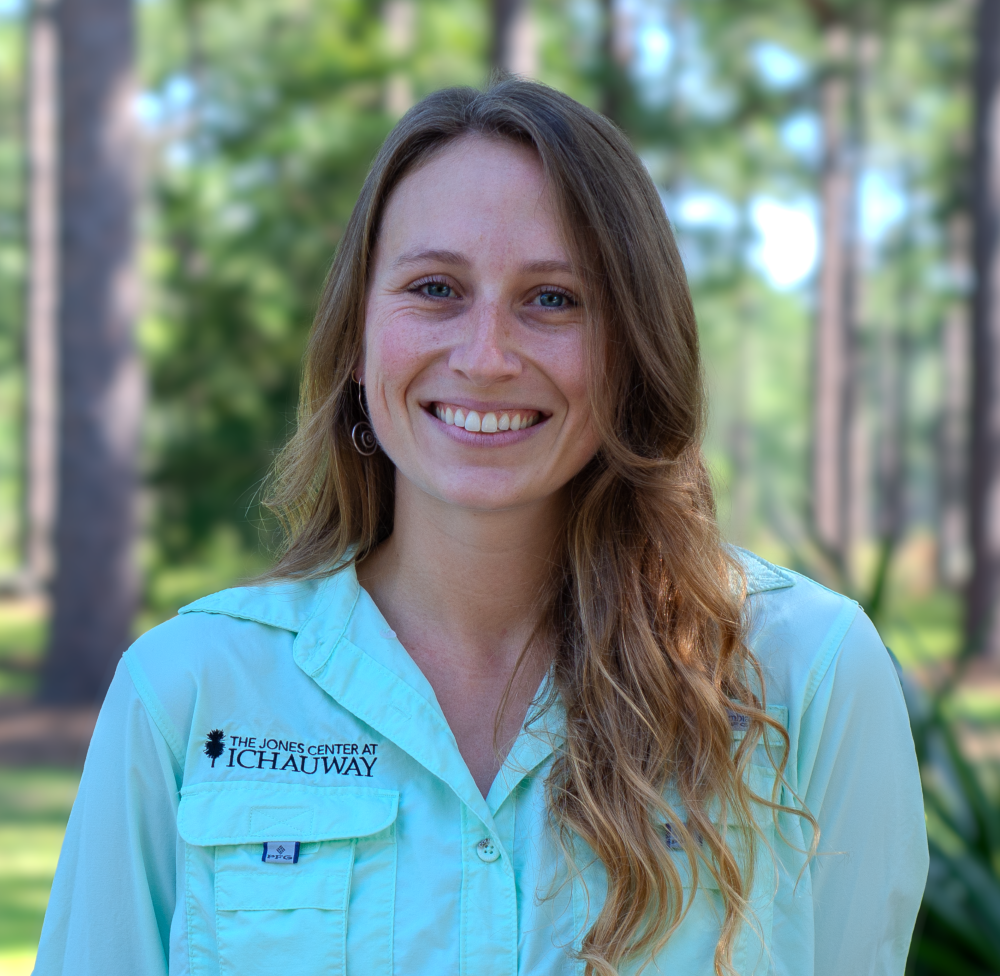
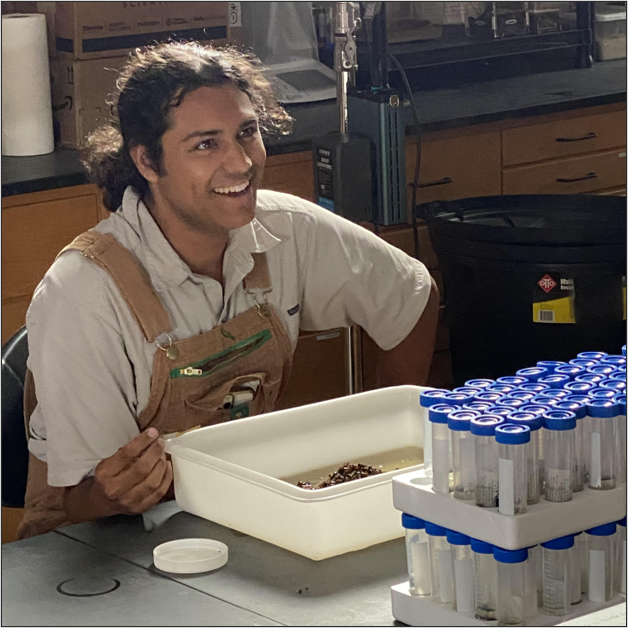
The newest lab at The Jones Center, the Aquatic Sciences Lab, began in January 2024, with new Scientist, Dr. Nick Marzolf. Dr. Marzolf’s research focuses on rivers, streams, and wetlands from an ecosystem ecology perspective, studying the movement and transformations of material and energy in aquatic ecosystems. An alumnus of The Jones Center through the Odum School of Ecology at the University of Georgia, Dr. Marzolf returns to the Apalachicola-Chattahoochee-Flint Basin to research how aquatic ecosystems contribute to biogeochemical cycles, provide habitat for animals of interest, and are experiencing change from combined human demand and climate change. Read more about the lab. | |
Saving Rare Amphibians One Wetland at a Time | |
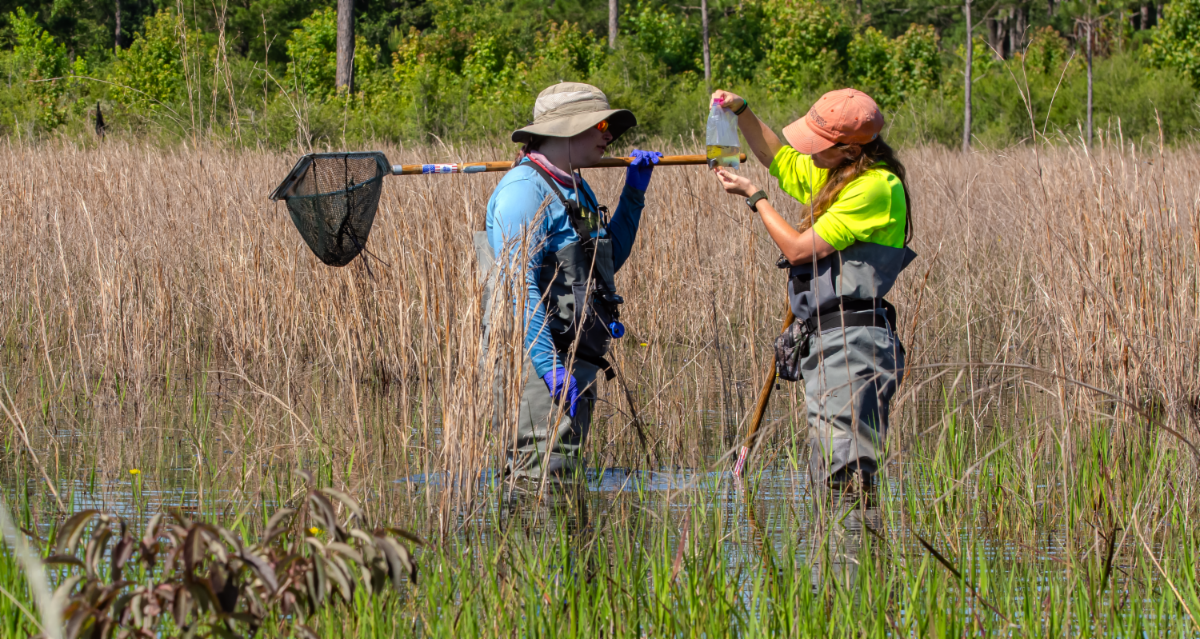
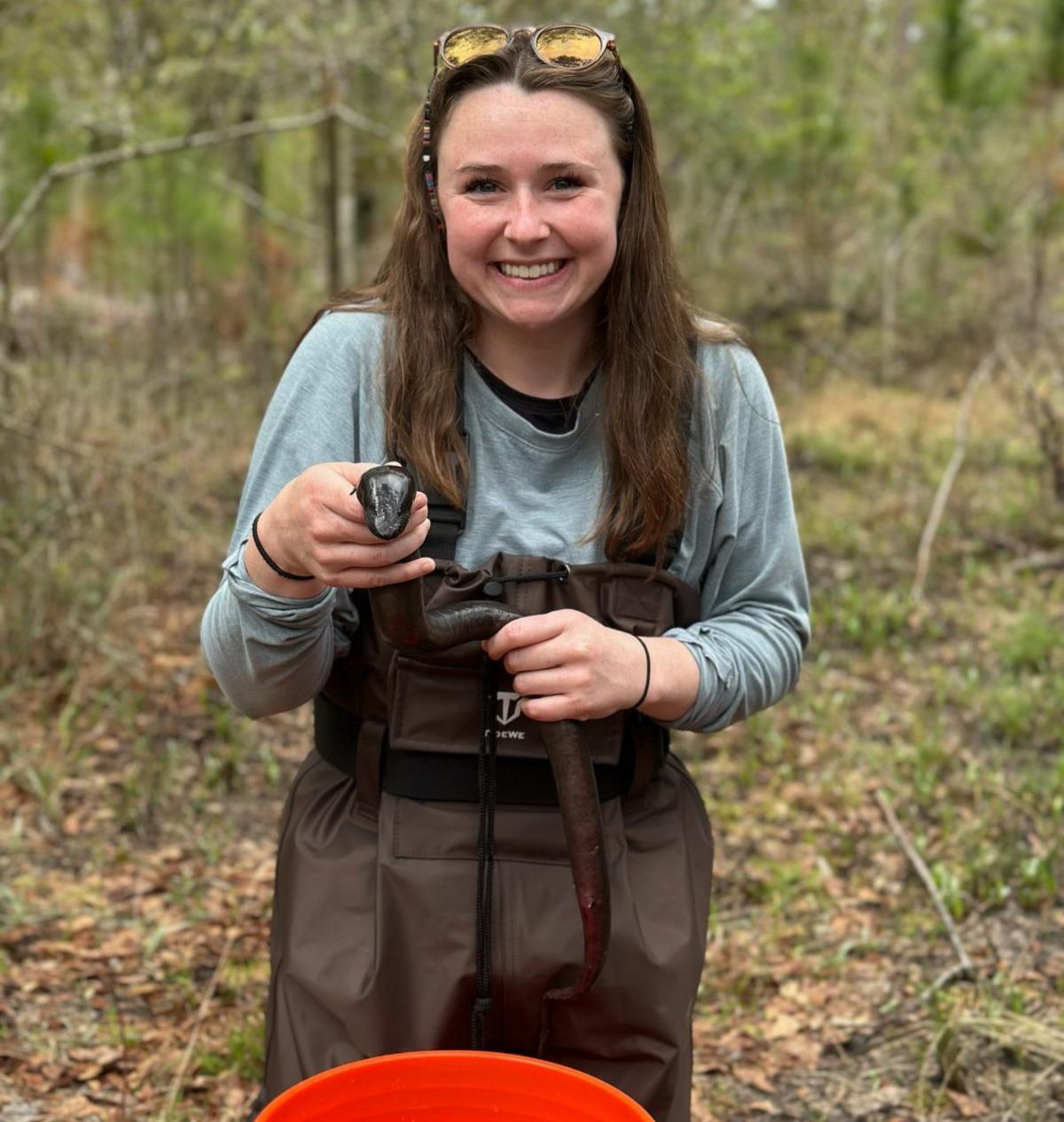
The Herpetology Lab has had a productive (amphibian) summer! Jade Samples, an M.S. student of The Jones Center and the University of Georgia, along with seasonal technician, Mia Cinello-Smith, are putting in some serious road miles over southern Georgia to monitor amphibian diversity and survey fo imperiled amphibians, such as the gopher frog (Rana capito), on five sites including Ichauway and several state wildlife management areas. Read more about how Jade’s research could help rare amphibians of the Coastal Plain. | |
New Habitat Conservation Plan Aims to Benefit Freshwater Mussels and Local Agriculture | The Affiliate Mussel Conservation Lab at The Jones Center is working with The Georgia Flow Incentive Trust by contributing to the development of a Habitat Conservation Plan (HCP) for freshwater mussels. HCPs allow reasonable use of natural resources while providing for natural communities' needs. A first draft of the HCP was submitted in April 2024 to the U.S. Fish and Wildlife Service for comment. The Mussel Lab was responsible for species status summaries, climate, and hydrology summaries for the lower Flint River. Learn more about the HCP and the Center's involvement. | |
To all alumni (former graduate students and employees) of The Jones Center at Ichauway, we would love to hear from you! We are building a new alumni network and want you to be part of it! Help us share information, job and research opportunities, plan events and more! | |
The University Spring Rush | | |
|
The Education and Outreach Program ushered in an unprecedentedly busy spring and early summer hosting university groups such as University of Florida (Silviculture course), University of Georgia (Herpetology course, Ecophysiology Lab, Environmental Problem Solving Maymester, and the newly-minted Vector Ecology Maymester), Berry College (Conservation Biology course), College of Coastal Georgia (Soils course), and The University of Alabama (Aquatic Science Camp). | |
School's Never Really Out... | |
|
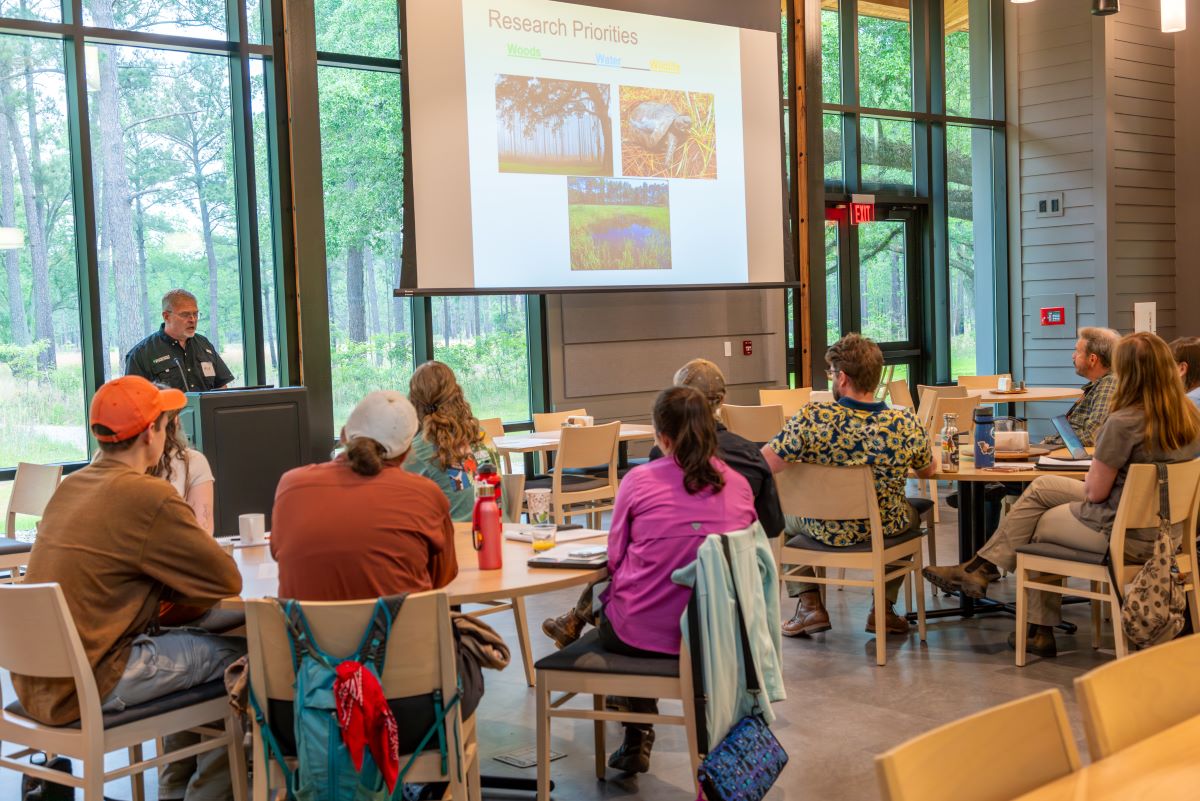
Much of our spring and early summer has been jam-packed with professional development, training, and workshops. Here's a snapshot of some of our recent visitors:
Our Wildlife Ecology Lab engaged state and regional mammal research and management questions by hosting a Feral swine summit and Georgia small mammal workshop.
| | |
|
We hosted two prescribed fire workshops in partnership with Tall Timbers: a women’s Georgia Prescribed Burn Manager Course and a training for Georgia's USDA Natural Resources Conservation Service staff. | |
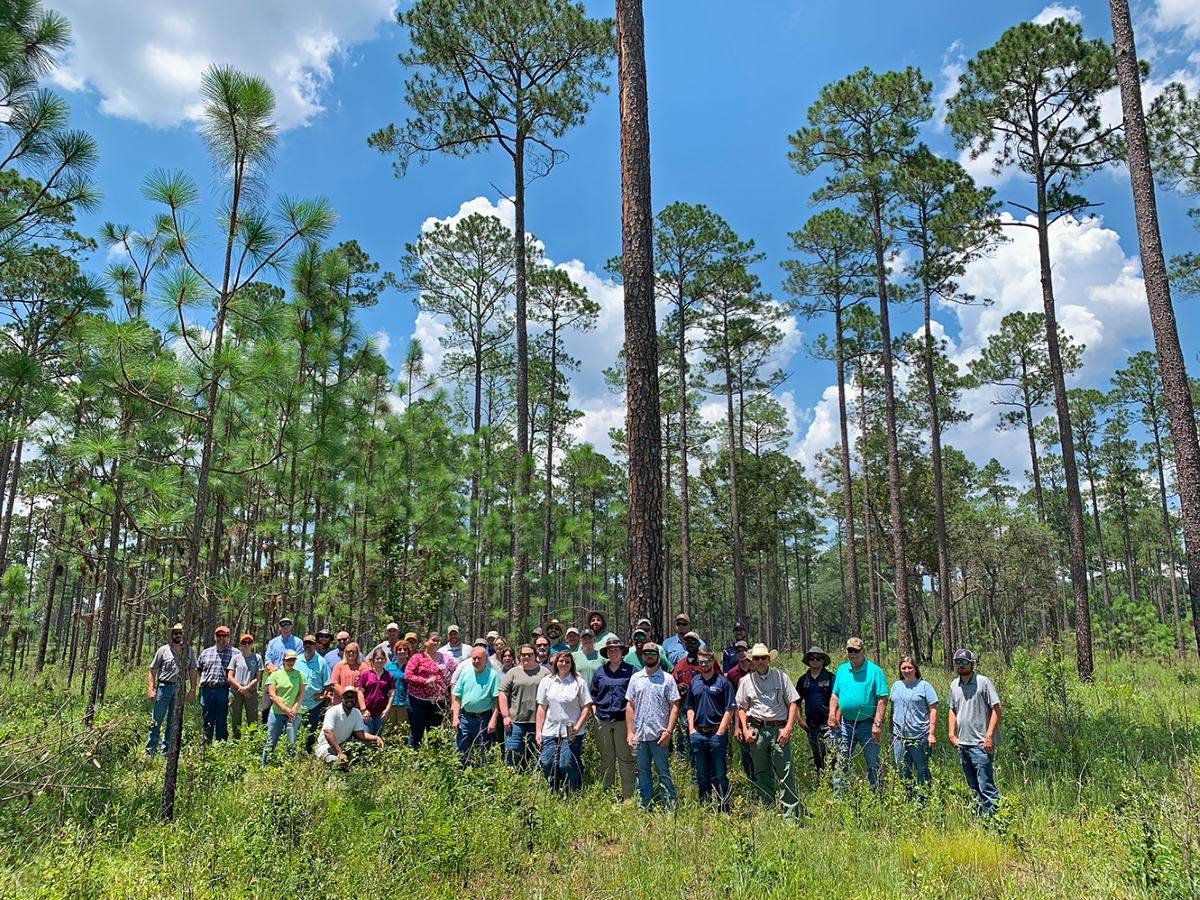
In July, we hosted the Institute for Georgia Environmental Leadership. The 2024 class of this year-long program spent the week in southwest Georgia visiting local farms, the Stripling Irrigation Park, and Resora. The class, a diverse group of over 30 environmental leaders, also experienced the Flint River and learned about the natural wonders of Ichauway, and our research, education, and conservation. | |
| |
|
|
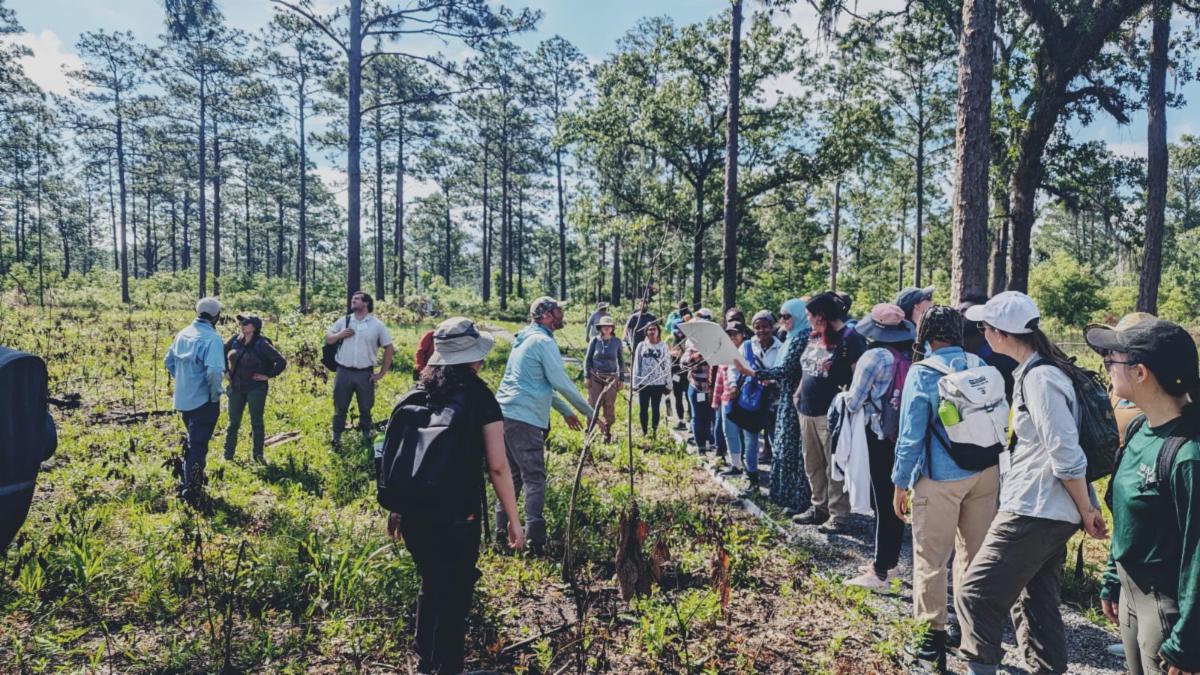
The Longleaf Alliance Board met at Ichauway and experienced a carbon and water-centric field tour to finish their meeting.
Other professional visits included a U.S. National Vegetation Classification training, an American Forest Foundation field tour, and international forest carbon investors investigating the efficacy of fire-maintained, open-pine systems.
| |
A Leader in Prescribed Fire Smoke Communications | |
Following a Georgia Smoke Tabletop meeting in early 2024, The Jones Center has led a prescribed fire workgroup, Smoke Communications & Burner Outreach, in response to the EPA’s recent changes to the National Ambient Air Quality Standards that lowered the annual Particulate Matter 2.5 (PM2.5) standard. Recent funding from the Georgia Department of Natural Resources and an agreement with Tall Timbers will expand our efforts to curate a centralized information hub for the Georgia public to receive smoke-related content and to implement a unified message and outreach to Georgia’s private prescribed burners for good smoke management.
| |
Reaching Broader Audiences in Media | | |
|
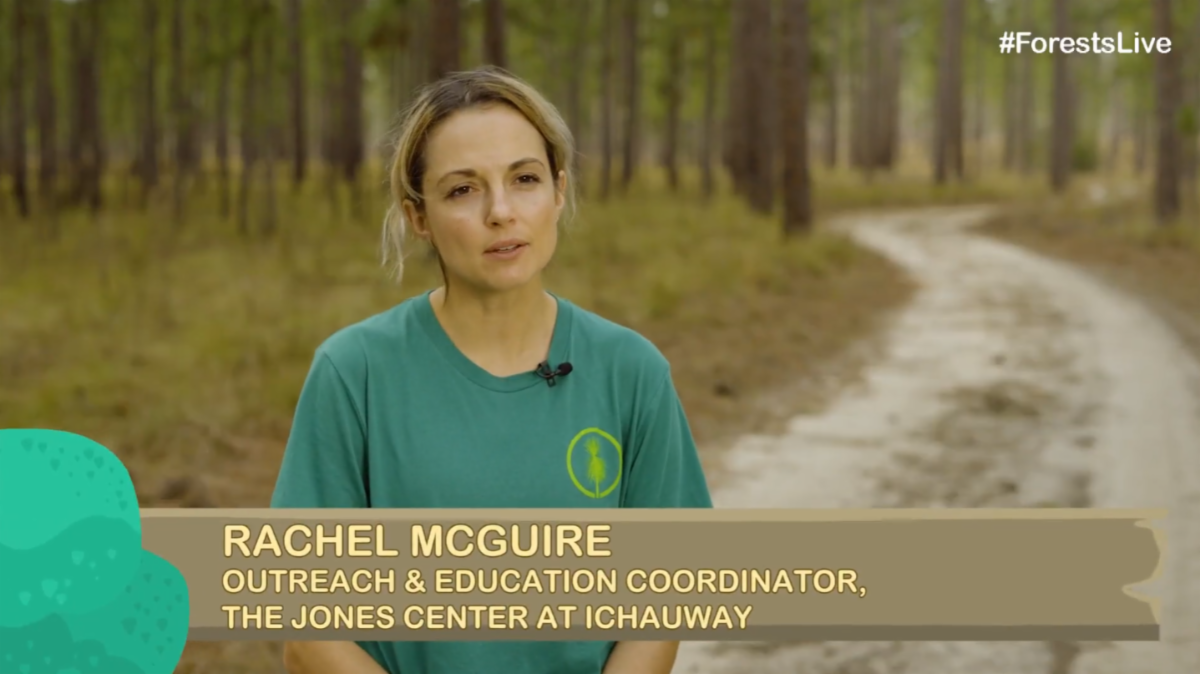
In May, we hosted the live broadcast of Georgia Public Broadcasting’s Georgia’s Forests. This episode, created in partnership with the Georgia Forestry Foundation, was viewed live by about 40,000! Watch the episode. | |
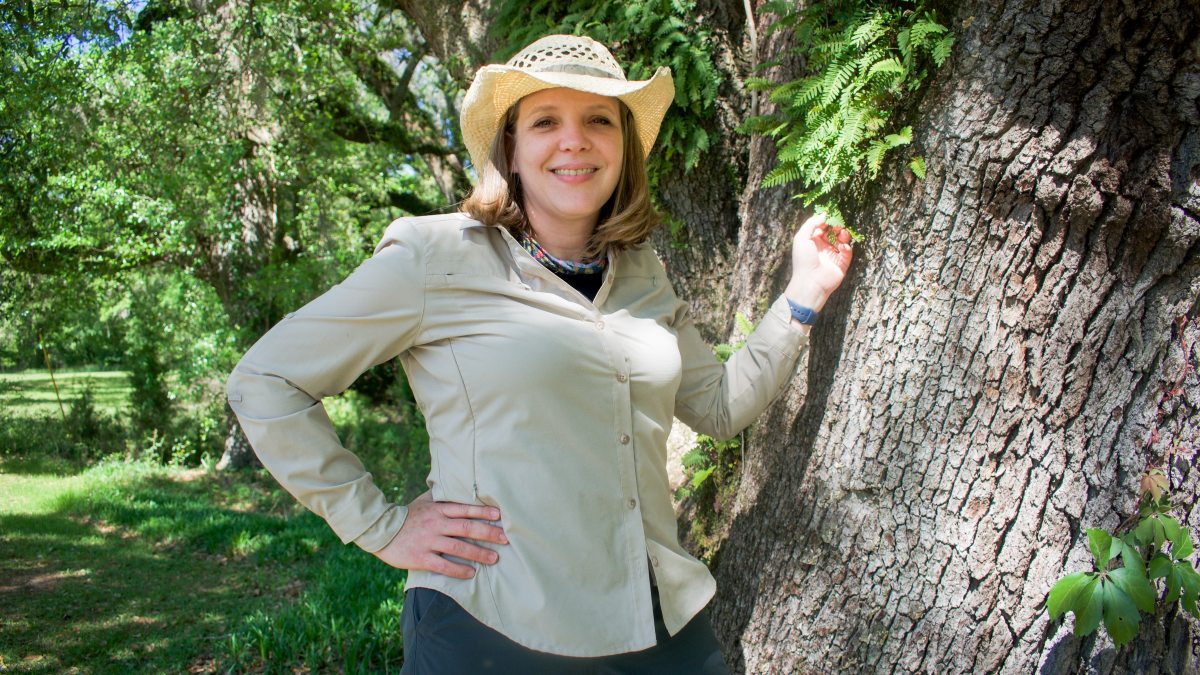
Emory University’s Dr. Cassandra Quave, a Center collaborator, visited Ichauway to record for the CNN series Champions for Change. The segment focused on her passion for ethnobotany as part of the solution for treating antibiotic resistant infections using the power of plants! Watch the segment. | |
|
ACF Waters Conference Makes Another Splash | |
 | 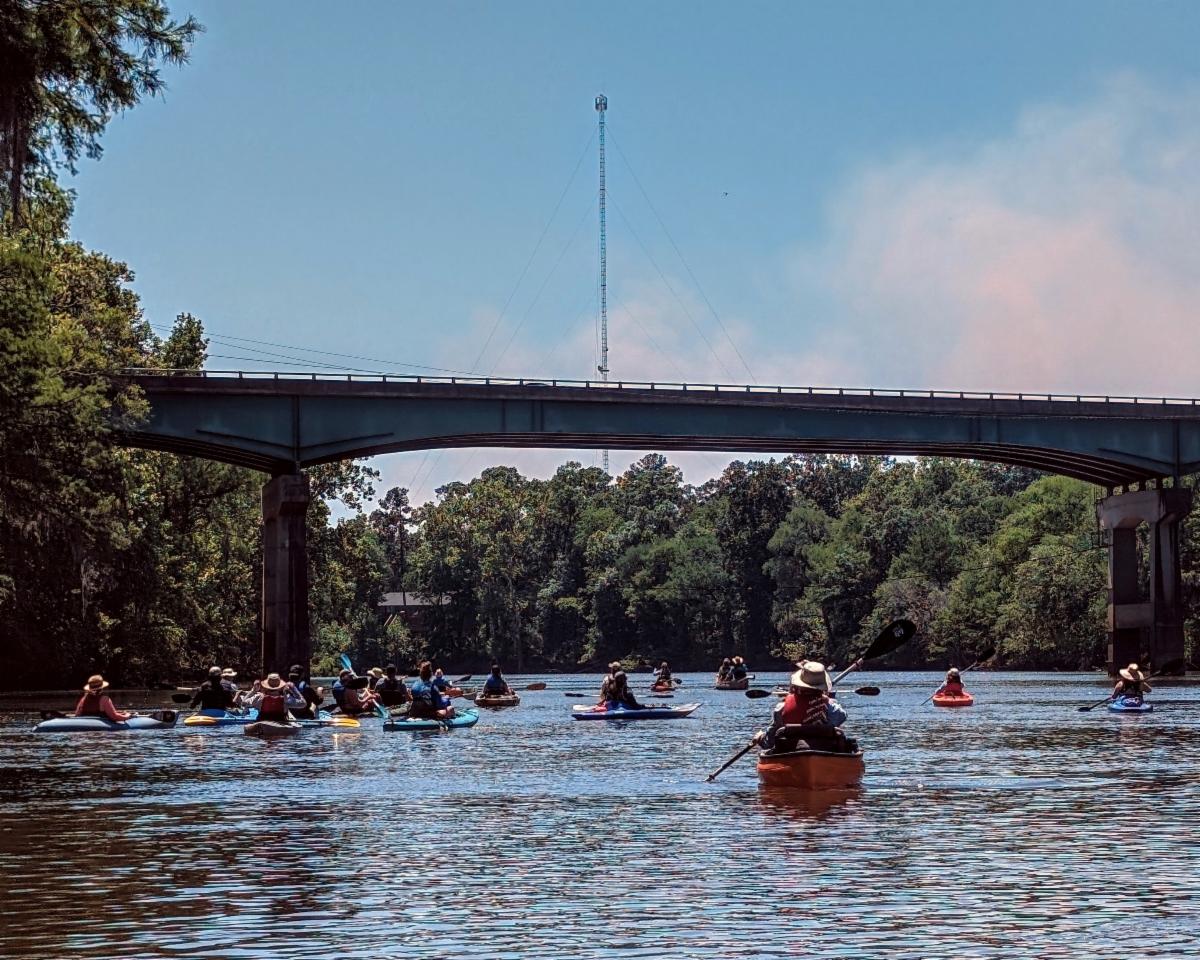 | The Jones Center at Ichauway was heavily involved with the second Apalachicola-Chattahoochee-Flint (ACF) Waters Conference in Albany, GA in April 2024 hosted by longtime Center partner, The Georgia Water Planning and Policy Center. The Center was a sponsor and had several staff as co-organizers including the Affiliate Mussel Conservation Lab’s Dr. Steve Golladay on the steering committee. Research Associate Caitlin Sweeney coordinated the poster session, and Dr. Golladay and Jamie Rogers presented on freshwater mussels and shoal bass, respectively, during a pre-conference canoe trip on the Flint River. The poster session also included several Center students and staff. Finally, Jones Center Advisory Committee member Dr. Jennifer Tank of the University of Notre Dame presented a keynote address on conservation practices to enhance water quality in the Mississippi River Basin. This year’s event included over 100 attendees including policymakers, managers, water users, water advocacy organizations, and researchers.
| |
|
Local Youth Meet Aquatic Researchers
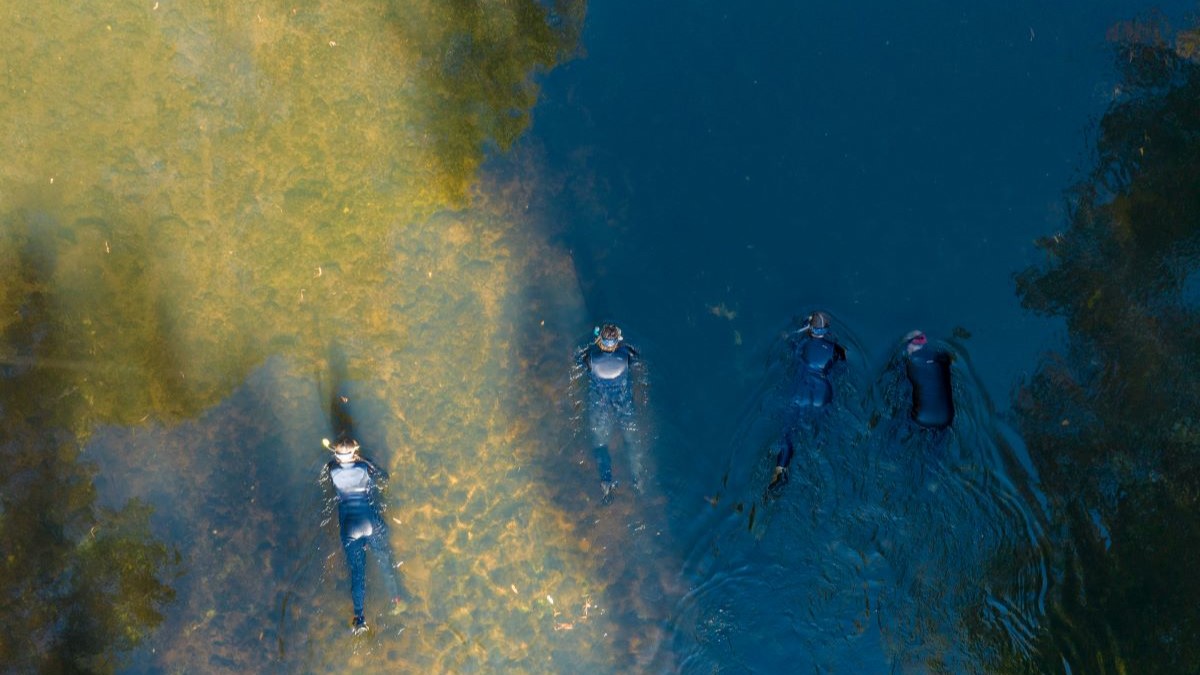
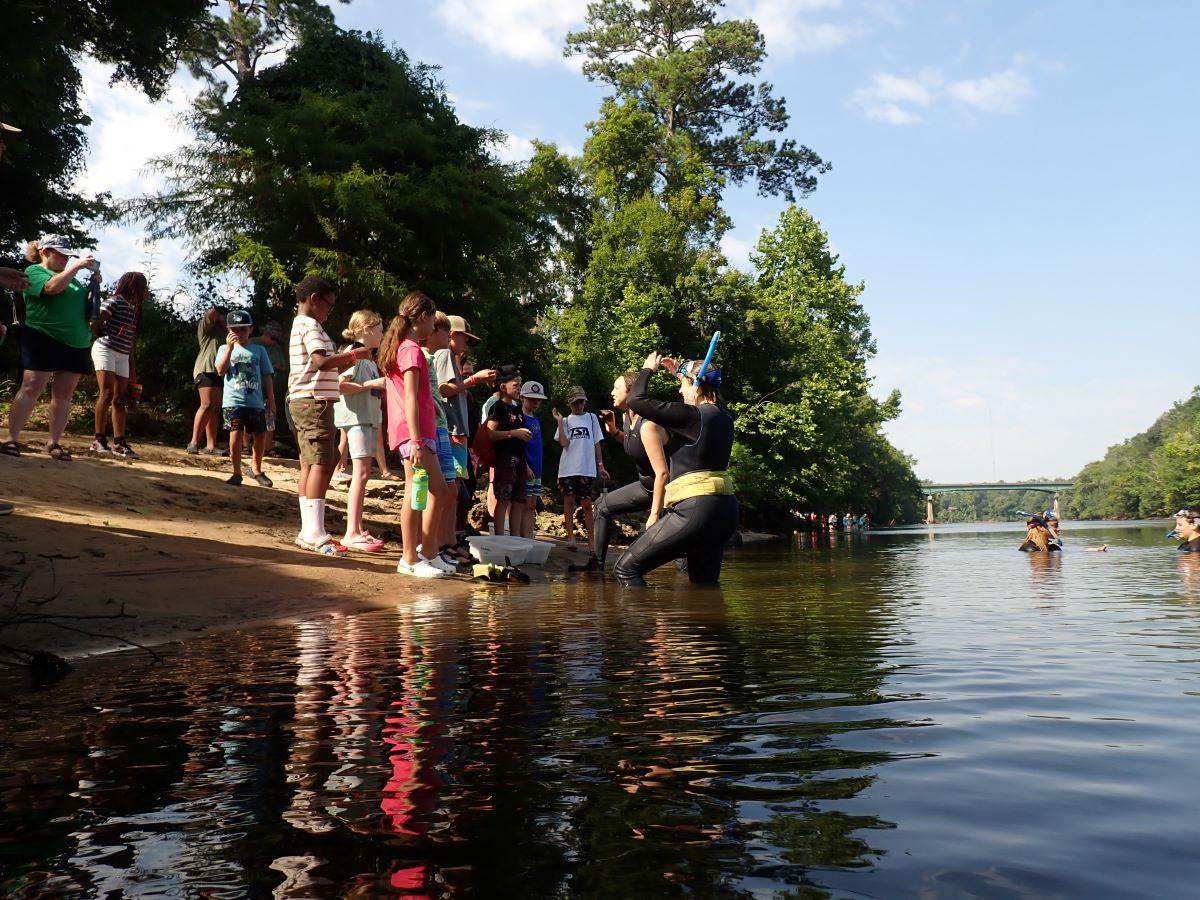
In June, many of our Center aquatic researchers took to the Flint River in Newton to participate in 4H2O, a day camp for 4-H students from nearby school districts. For many 4-H’ers, it was their first chance to meet a researcher and to see a freshwater mussel in its natural habitat.
| |
New Postbaccalaureate Program Underway | |
|
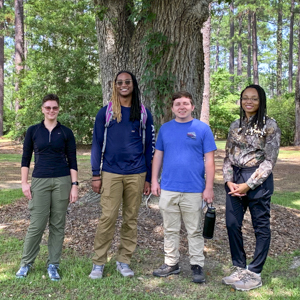
We welcomed the first cohort of the Woods to Water Project, a National Science Foundation (NSF) funded professional development program, in partnership with The University of Alabama and the NSF National Ecological Observatory Network, for postbaccalaureates in June.
Read more about our mentees.
| |
| |
|
|
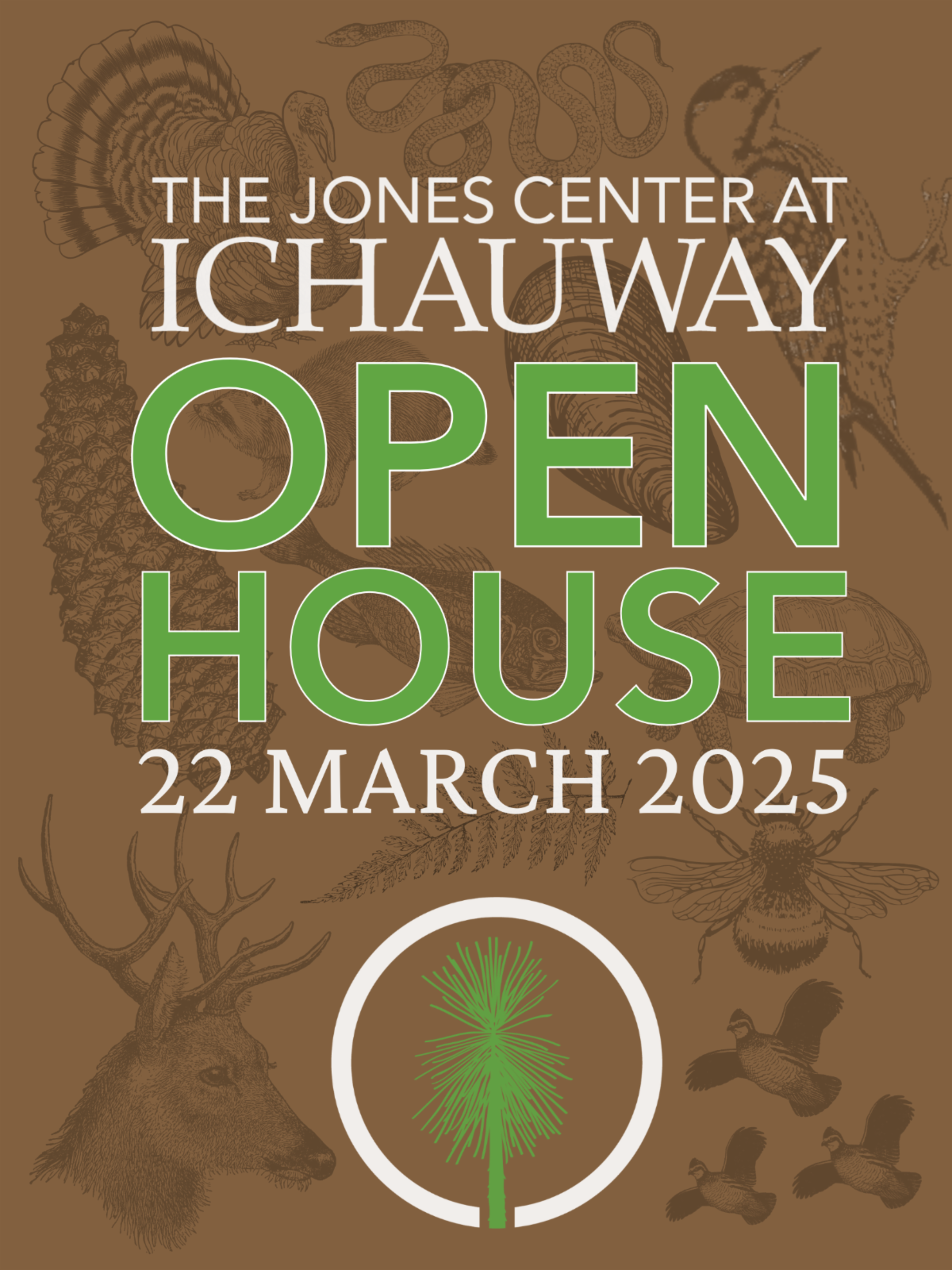
Mark your calendars for our sole public event! This only comes around every two years and is a great opportunity to explore The Jones Center at Ichauway, meet our staff, and learn about our Research, Education, and Conservation programs! This is a family-friendly event. More details coming this fall.
| |
The Perfect Storm for a Challenging Red-cockaded Woodpecker Season | | |
|
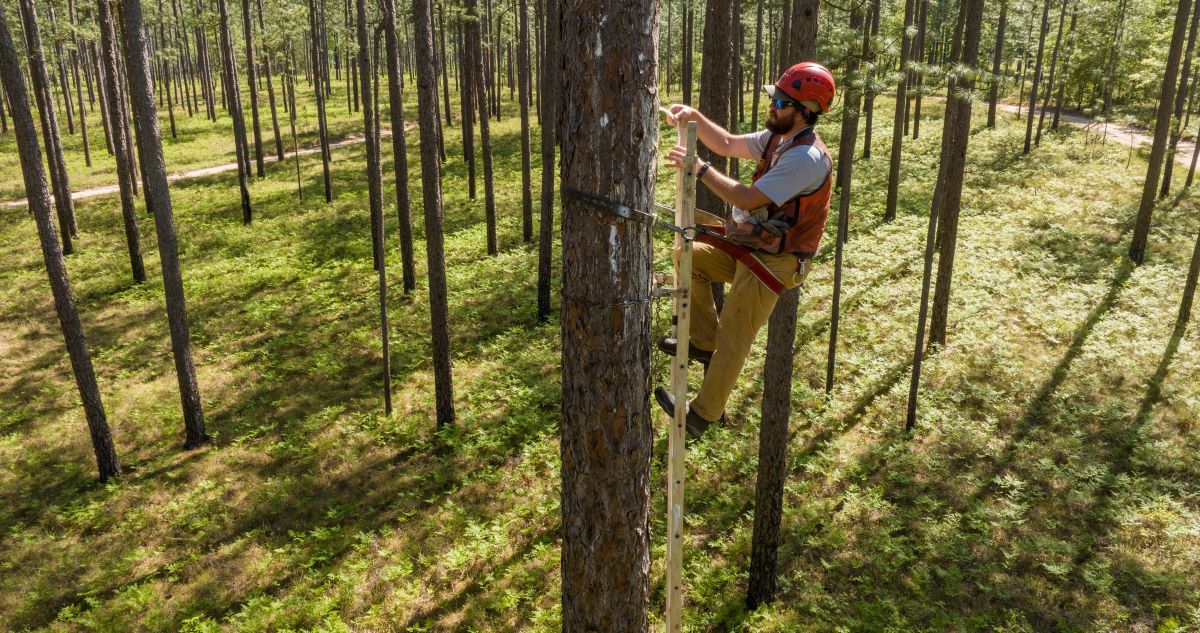
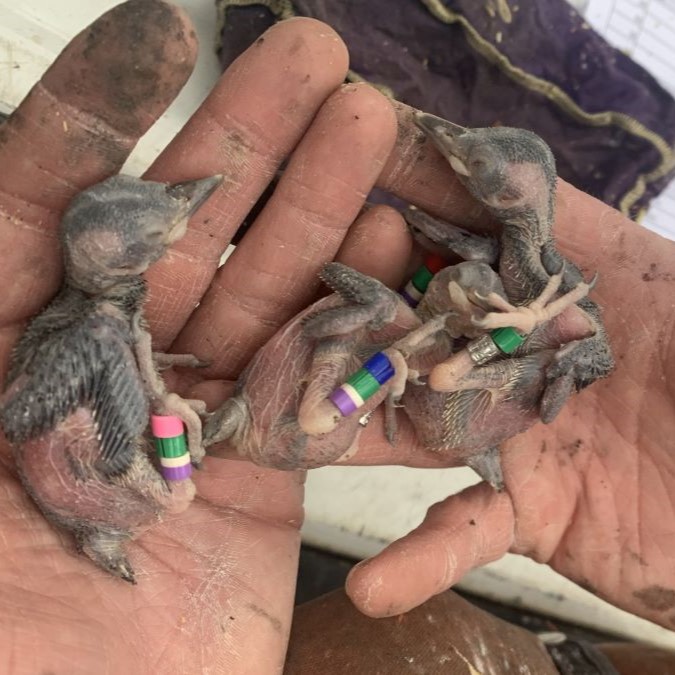
This spring, The Jones Center at Ichauway entered its 26th Red-cockaded Woodpecker monitoring season. As a Safe Harbor program member since 1999, Ichauway has devoted vast resources to restoring our population of this endangered bird to its 29,000 acres. Despite a relatively strong population uptick following Hurricane Michael’s substantial impacts in 2018, the outlook for 2024’s breeding season was a mixed bag due to a few multi-year factors from the 2021-2023 nesting seasons. Read the article. | |
|
The Conservation program completed a successful fire season in June with two growing season burns to stimulate wiregrass (Aristida stricta) seed production. The seed will be collected and used for on-site, native groundcover restoration. In total, approximately 12,500 acres of Ichauway were burned in 2024.
| |
Conservation hosted the Southern Regional Technical College in April as part of their ongoing efforts to develop a well-trained conservation workforce. Fifteen students learned about agriculture, forestry, and habitat management from our Conservation staff. | |
Field Guide: Mussels of the Flint River Basin | |
|
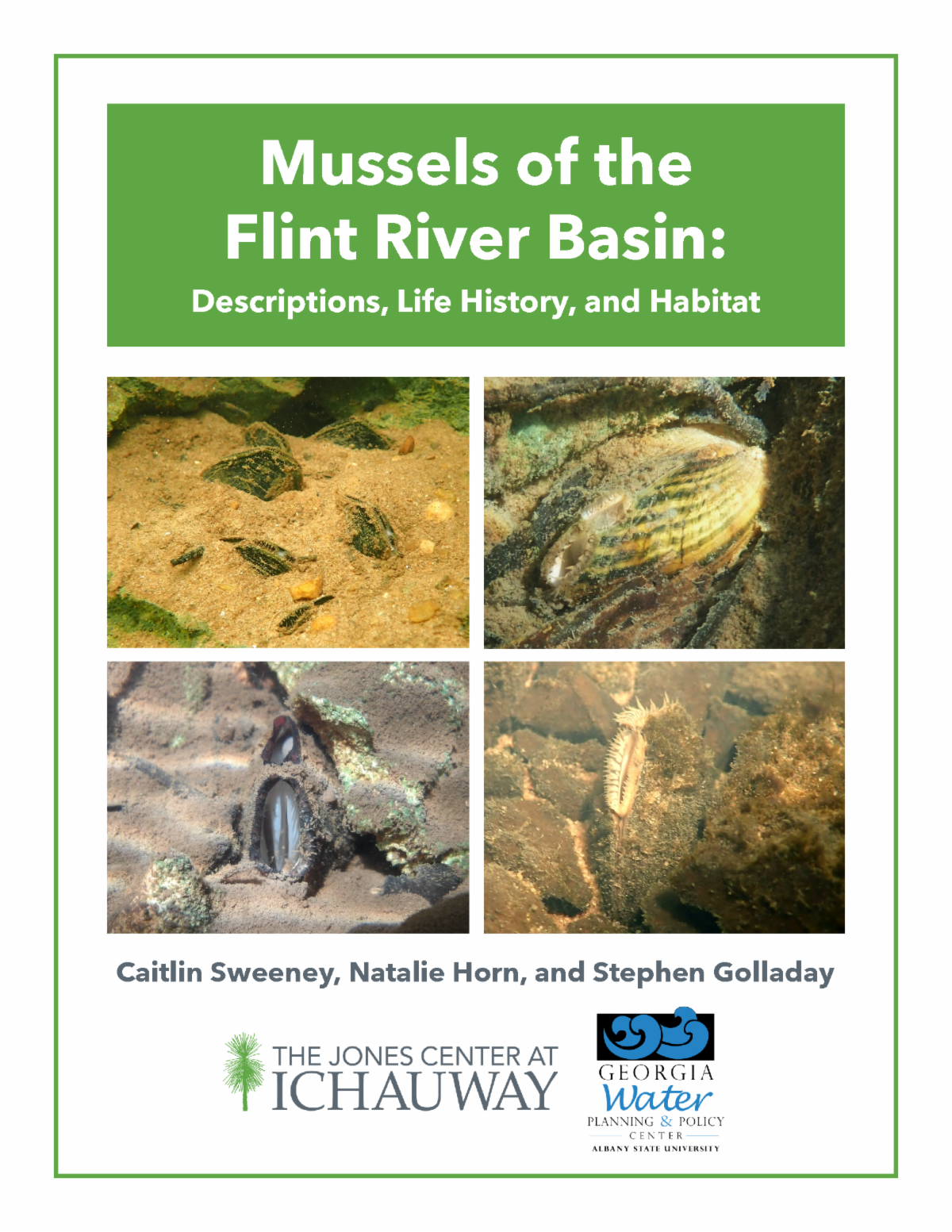
Freshwater mussels are one of the most imperiled groups of organisms in the world with approximately 70% of the United States’ nearly 300 species considered endangered, threatened, of special concern, or extinct. This is extremely relevant to scientists in the southeastern U.S., as we host around 91% of U.S. mussel diversity. Although mussels appear to live unassuming lives, they contribute important ecosystem services including water quality improvement and nutrient cycling. Adding to their allure, mussels trick fish into carrying their larvae around streams, rivers, and lakes. Maybe there is such a thing as a free ride! Biologists at The Jones Center developed a new field guide to the twenty-five currently known mussels in our basin.
DOWNLOAD THE GUIDE
| |
|
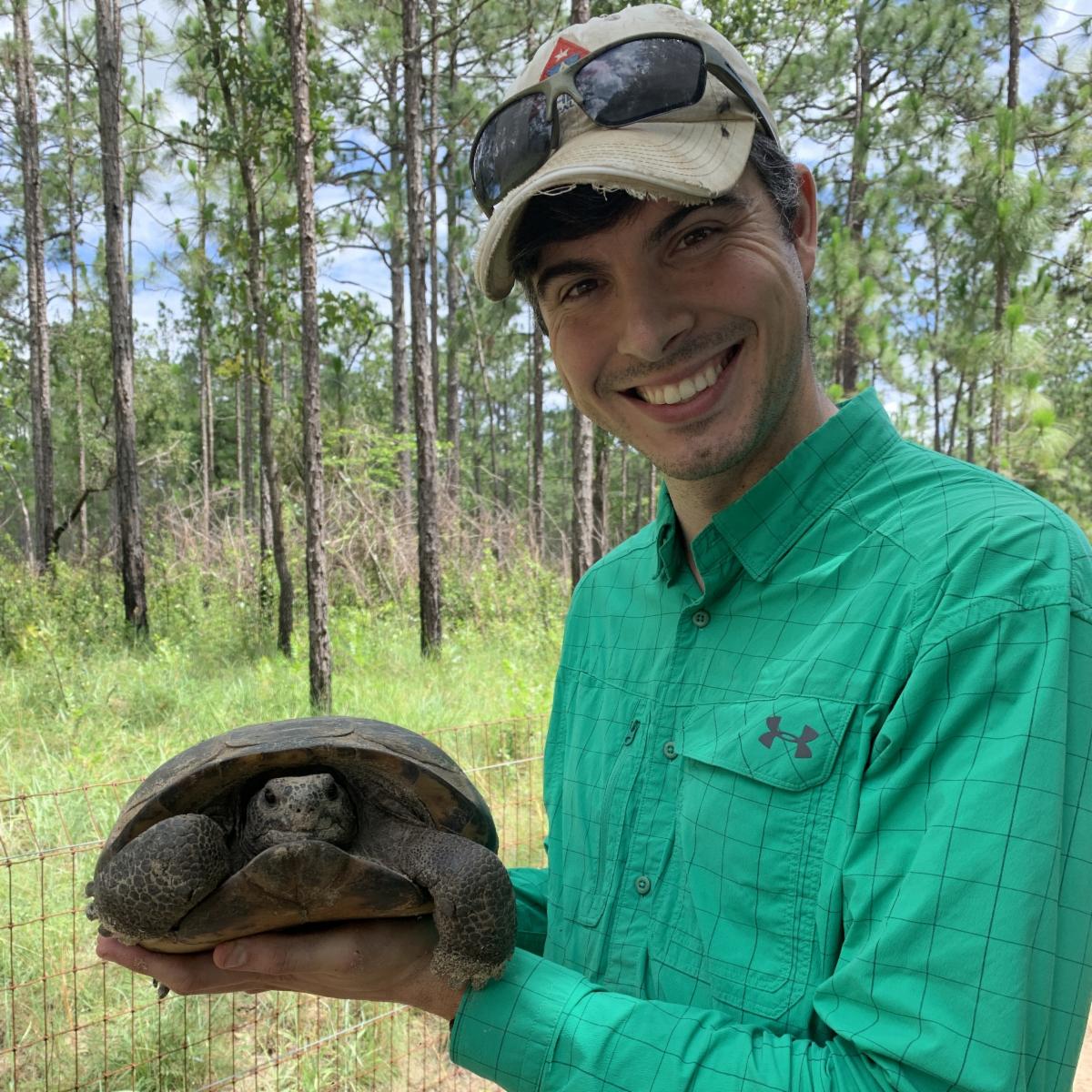
Garrett Lawson (MS, Herpetology Lab) successfully defended his thesis entitled Gopher tortoise nest-site selection at burrow and the influence of nest environment on hatchling success, in the department of Fish and Wildlife Conservation at Virginia Tech in July 2024.
| |
Gabe Nyen (MS, Ecological Silviculture Lab) was awarded “Graduate Assistant Researcher of the Year” at Mississippi State University. He completed his thesis entitled Silvicultural strategies for converting longleaf pine plantations to multi-aged stands with groundcover restoration in Georgia, USA. Gabe will be starting his PhD at the University of Minnesota with a focus on the Adaptive Silviculture for Climate Change study at Ichauway co-advised by Dr. Josh Puhlick.
| |
|
Jamie Rogers (MS, Aquatic Biology Lab) successfully defended her thesis entitled Spawning and Early Ecology of Riverine Shoal Bass and Largemouth Bass. Jamie was an Auburn University student co-advised by Dr. Shannon Brewer and Dr. Steve Golladay. Jamie accepted the position of Research Associate in the Aquatic Sciences Laboratory at The Jones Center.
| |
|
Gabriel Tigreros (MS, Entomology & Microbiology Lab) successfully defended his thesis entitled Deadwood dwellers: Insects and fungi utilizing downed pines and oaks in a subtropical longleaf pine ecosystem. Gabriel was co-advised by Dr. Kier Klepzig and Dr. Joe McHugh of the Department of Entomology at the University of Georgia.
| |
|
Benjamin Webster (PhD, Aquatic Biology Lab) successfully defended his dissertation entitled Investigating Historic and Modern Ecology at Whole Watershed and Singular Basin Scales with Sediment Paleolimnological Techniques. Ben was an Auburn University student co-advised by Dr. Matt Waters and Dr. Steve Golladay. Ben accepted a post-doctoral fellowship at the National Sedimentation Laboratory in Oxford, Mississippi.
| |
|
Dr. Seth Younger (Postdoctoral Associate, Landscape Ecology Lab) has accepted a Physical Scientist position with the United States Geological Survey Wyoming-Montana Water Science Center. In the Fall of 2024, Seth will join the team in Cheyenne, Wyoming where he will continue his work on water quantity and quality studies with partner agencies.
| |
|
Dr. Nicole Zampieri (Postdoctoral Associate, Landscape Ecology Lab) co-led a research grant recently funded by the National Science Foundation that will use tree rings to understand how climate change has impacted precipitation in Africa. Working with local African researchers at the Copperbelt University, the project will also provide support for the African Dendrochronological Fieldschool where Nicole will serve as a lead facilitator to help build capacity for ecological research in Africa.
| | | | |