The STARR News: December 2023 |
|
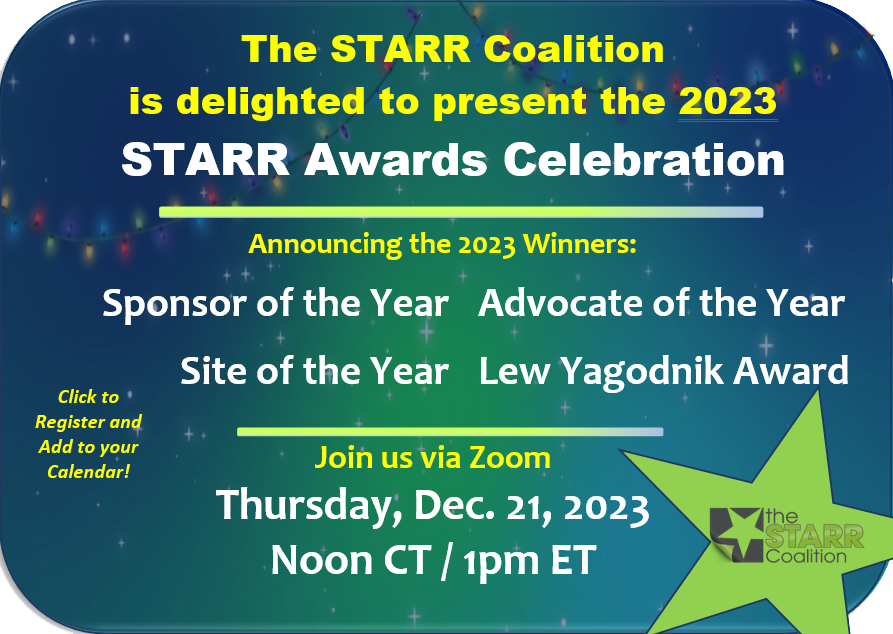
We are delighted to invite everyone to join the STARR Annual Awards Celebration on Thursday, December 21st!
This year's zoom event will be hosted by Adam Simmons and will be a great way to celebrate the end of the year with friends and colleagues from the STARR community!
Please register in advance and join us on Thursday, December 21st at 1pm ET via zoom.
Or send me an email and I'll email you a calendar invite with the zoom link!
|
|
Despite the long, dark days, December can be the most wonderful time of the year for most people. But it’s also the time for the winter blues for many others. For this reason, December has been designated as Seasonal Affective Disorder (SAD) Awareness Month.
SAD Awareness Month is intended to educate the public about Seasonal Affective Disorder (SAD) also known as seasonal depression, and the various ways to alleviate its symptoms.
Seasonal Affective Disorder is more prevalent in regions with harsher winters. But, like other mental health conditions, this condition doesn’t discriminate. It affects individuals of all ages, though older adults may have a higher risk.
Seasonal Affective Disorder (SAD) typically comes in two forms: a mild version referred to as the ‘winter blues,’ and a more invasive variant that’s SAD – a classification of depression. Unlike the winter blues, which are often brought on by more time isolated indoors and a lack of sunlight, the latter affects a person’s daily life, including how they think, feel and act. The milder version affects most people (10-20 percent of Americans), often seen by a drop in the neurotransmitter’s serotonin level, notable weight gain, and lethargy.
The importance of awareness is in the diagnosis. Those who experience life-altering mood changes during the winter season should consult with a mental health professional regarding the cause, and what treatment options would help reduce the symptoms of SAD.
Sources & Resources:
|
|
Navigating the Holiday Blues
Some Tips from the
STARR Advocacy Board
The term "Holiday Blues" typically refers to feelings of sadness, loneliness, or increased stress that some individuals may experience during holiday seasons. When discussing this topic, it's important to use language that acknowledges and empathizes with these emotions while also offering support and encouragement. Phrases like "feeling down during the holidays," "struggling with holiday-related sadness," or "experiencing emotional challenges this time of year" can be more sensitive and inclusive when addressing this issue. It's crucial to communicate in a compassionate and understanding manner, avoiding dismissive or trivializing language.
There are ways to move the needle—you just need to figure out what works best for you. Your mood can shift with a little effort, making the holiday season brighter for you and those around you.
Actions to Ease Holiday Blues
1. Engage in self-care practices such as maintaining a regular sleep schedule, exercising regularly, and eating nutritious meals can positively impact mood. Also, limit your alcohol intake, and try not to keep it readily available around your house. If you’re attending a party and you know alcohol will be accessible, limit yourself to one or two drinks. Drinking to excess can affect your mood and amplify any negative feelings that you may have.
2. Add small, pleasant activities to your life. Making time every day to do something that brings you a little joy—whether that’s grabbing coffee at the local café, talking to a friend, quilting, or watching a sunset—can help balance the difficulties of the holidays with more positive experiences.
3. Move your body—even if it’s just a little. Exercise of any kind—walking, biking, weightlifting, dancing—is proven to be mood-boosting and is important for overall health, too.
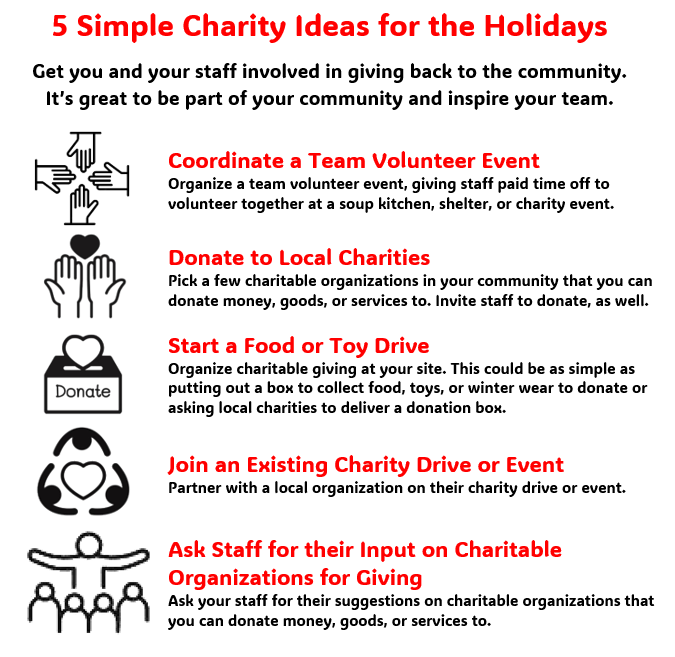
4. Organize your space. Cleaning is exercise and a good way to feel a sense of accomplishment, so take some time to declutter and reorganize your belongings. Donate old clothes to a homeless shelter. Go through your child’s toys. Is there anything they don’t play with anymore Start a box for items you wish to place in next year’s garage sale. Place ads for “old” items online. Use this time to clean your cupboards and decide what you want to keep and what you want to discard. Also, keep in mind that local charities accept donations of most household items… so not only are you decluttering but you’re also doing something good for your community!
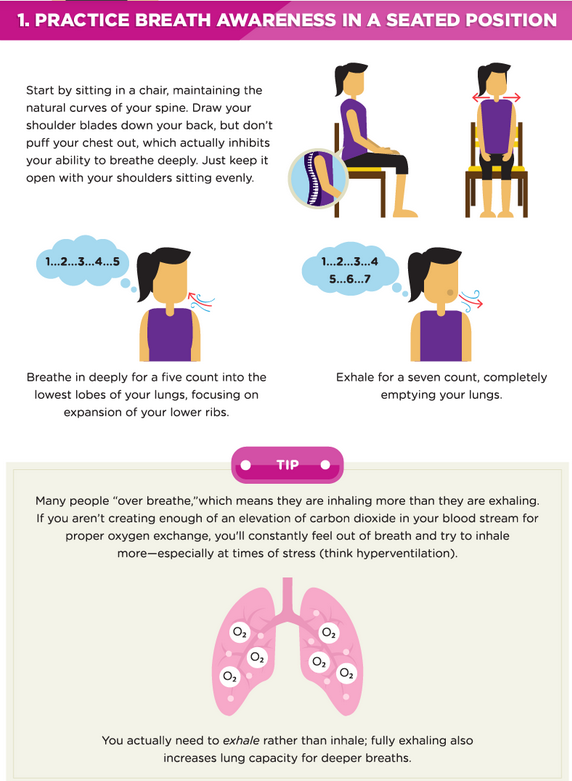
5. Practice self-compassion. Making yourself more aware of your feelings and thoughts and learning to accept them (rather than just pushing them away) can help some people manage their moods. And, in the midst of your suffering, it can be good to remember that others feel this way, too, and to offer yourself kindness. You can do this through meditation or mindfulness exercises.
6. Connect with other people. Sometimes, we just need to stop avoiding social interactions and start connecting with people—friends, family, neighbors, colleagues, even strangers. Try calling an old friend, asking a colleague to coffee, waving at your neighbor, or greeting your local grocer or mail carrier. These small interactions can make you happier.
7. Let someone know how you are feeling. Just expressing aloud your emotions can often be so freeing. Practice identifying and working through your emotions by letting someone in your life know what is going on. They may be able to relate to how you feel or offer support. Additionally, this adds a dimension of depth to your relationship with that person and your vulnerability may make them feel safe to open up.
8. Plan a trip. Whether it’s a trip to a nearby city or overseas, a stay at a friend’s house, a hotel, or a spa, having a vacation to look forward to can help you navigate some of the holiday blues.
9. Give thanks for small blessings. Try starting a gratitude journal, where you write down a few small things you feel grateful for every day. Don’t try to be grateful for things you’re not happy about, though—you don’t have to paint a smiley face on difficult things. But look for the small, good things in your life—like a delicious cup of coffee, your pet’s soft fur, a beautiful winter sky, or your child’s goofy grin—and say thanks to yourself for those small blessings.
10. Set healthy boundaries. Say “no” and do not overcommit. Make time for alone time, leave space for grief if you need it. Evaluate traditions; let go of traditions that no longer serve you and make new ones that align with a healthy state of mind if needed.
11. Volunteering or helping others. You could volunteer to deliver meals to the hungry, sing for people in a nursing home, or visit lonely neighbors. Especially if you’re unable to be with friends or family this holiday, look for volunteer opportunities that allow you to be around others. Some non-profits will even come pick you up if you’re unable to drive. Helping others helps lift your mood to feel like you’re doing something purposeful, something that makes others feel happy.
12.Seek professional support. Talking to a therapist is never a bad idea and may be especially helpful to work through some of the things that make the holidays less cheerful for you.
Managing the "Holiday Blues" is all about acknowledging the emotional cocktail that comes with this time of year— seasonal affective disorder (SAD), stress, or just feeling a bit out of sync with the festive cheer – and taking steps to overcome it.
|
|
The North Texas Clinical Trials (NTXCT) team participated in the “Bring The Conversation To Light” Luncheon put on by the Jordan Harris Foundation, which works to prevent suicide, eliminate stigma, and provide hope to those struggling with depression. A key take-away from the meeting was learning about QPR (Question, Persuade, Refer) - an informative way of being able to help those dealing with depression and suicidal thoughts. The Jordan Elizabeth Harris Foundation provides suicide prevention training and education for children and adults, offering their evidence-based QPR course to recognize warning signs, question the individual’s desire or intent regarding suicide, and persuade them to seek and accept help, and refer the person to appropriate resources.
|
|
Chase Pearson, Director of Recruitment, is representing Pillar Clinical Research at the National Federation of Families Conference in Chicago!
The National Federation of Families is the nationwide advocacy organization with families as its sole focus, playing an important role in helping parents, caregivers, and families of children—of any age—whose lives are impacted by mental health and substance use challenges. This important work is supported largely by the generous supporters and donors like you who contribute to our cause.
|
|
The Pillar Clinical Research Dallas staff were on hand to discuss clinical studies at the 2023 Texas NAMI Annual Conference on November 3 and 4 in Houston, Texas, where there were nearly 450 clinicians, providers, researchers, and advocates. Bruce Trimble, Chief Experience Officer, on the left, and Chase Pearson, Director of Recruiting, met with professionals from across the state.
|
|
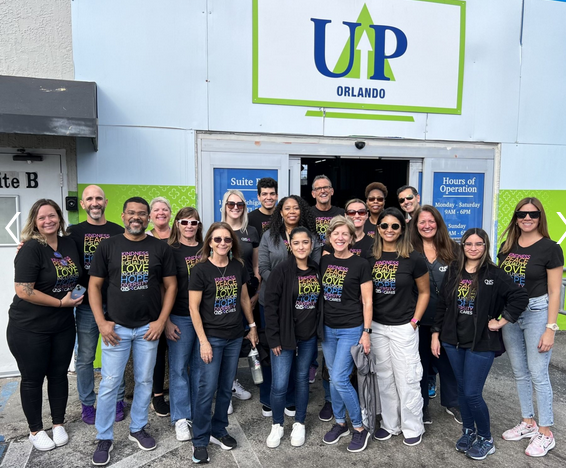
CNS Healthcare's Site Support team spent a day volunteering at United Against Poverty in Orlando, FL. The team worked together to sort and stock the Member Share Grocery Program which serves 300 Central Florida individuals and families living in poverty on a daily basis.
Everyone had a fun day giving back and showing how much CNS Healthcare cares for the community!
|
|
CenExel HRI has been honored with the prestigious Metro Philly's Best Medical Research Facility award for the third year in a row! This remarkable achievement is a testament to the unwavering dedication, passion, and expertise of the incredible CenExel HRI team. Check out the Metro Philly announcement here.
Way to go, Howard, Elan, and team HRI!!
|
|
The application has been granted a Prescription Drug User Fee Act (PDUFA) date of September 26, 2024. “We are pleased the NDA for KarXT has been accepted, and we look forward to working with the FDA during the review process,” said Bill Meury, president and CEO of Karuna Therapeutics.
Dr. Kakar. Medical Director, CSO at Segal Trials and investigator on the Karuna Emergent program was quoted in the announcement, “KarXT focuses on a novel pathway through muscarinic receptors to indirectly modulate dopamine signaling in key brain circuits, and in clinical trials completed to date KarXT has demonstrated the much-needed combination of strong tolerability and clinically meaningful symptom reduction,”
If approved, KarXT would represent the first new pharmacological approach to treating schizophrenia in several decades.
Join us in congratulating Karuna Therapeutics as we draw a step closer to access to a pharmacologically distinct treatment option and a welcome innovation for people living with schizophrenia!
|
|
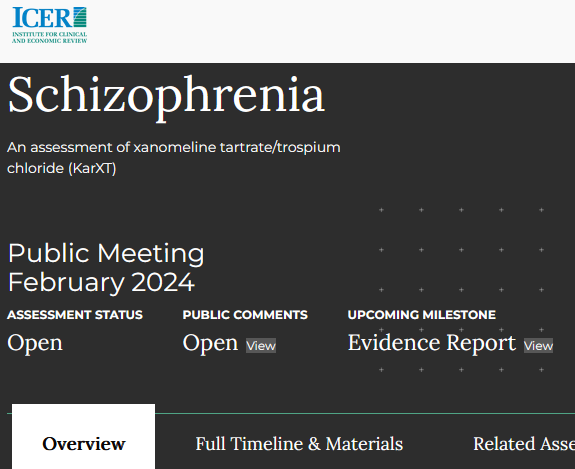
The STARR Coalition, along with many other advocacy and pharma stakeholders have been actively working to prevent ICER from establishing additional barriers to innovation and access to potentially life-altering medications for schizophrenia.
ICER posted their draft evidence report and review of KarXT for schizophrenia, which you can find here.
There are a few upcoming opportunities for stakeholder engagement, included below:
Submit a Public Comment on the Draft Report and Voting Questions
We invite you to submit public comments by email to publiccomments@icer.org, which must be received by 5 PM ET on December 22, 2023.
Register for the Virtual Public Meeting: The Evidence Report will be the subject of a virtual public meeting of New England CEPAC on February 9, 2024. During the meeting, the independent council will vote on key questions raised in the report. Registration for the virtual public meeting is now open.
Register to Make an Oral Comment: During the virtual public meeting, there will be a limited amount of time available for interested stakeholders to make an oral comment on the report. Requests to submit oral comments must be emailed to publiccomments@icer.org by 5 PM ET on December 22, 2023.
|
|
December Spotlight Podcast:
Cherilyn Boller, Brii Biosciences
December’s Spotlight Podcast delves into the profound effects of childhood trauma on one’s life and emphasizes the role of research in offering hope and solace.
Cherilyn candidly shares the story of her mother’s tragic death from cancer when Cherilyn was only 9 years old, highlighting the deep and far-reaching impact this traumatic experience had on every facet of her life. This event, marked by the support of the medical community, steered Cherilyn toward a path in medical research. Despite the inability of the research to save her mother’s life, Cherilyn’s mother found purpose in contributing to research endeavors and transformed her mother’s passing into a meaningful contribution by providing essential data to advance treatment options.
|
|
Taurine Levels in Brain Linked to Depression - Researchers discovered a link between depression and reduced taurine levels in the hippocampus, a key brain region for memory and learning. Using advanced 7T MRI technology, researchers found significantly lower taurine concentrations in the hippocampus of young females with depression compared to healthy controls. This study, a collaborative effort involving several Korean research institutions, marks the first time the relationship between hippocampal metabolites and depression has been explored. The findings open new avenues for understanding depression’s pathogenesis and potential treatments, highlighting taurine’s role in brain health.
The Role of Socioeconomic Position in the Association Between Mental Disorders and Mortality: A Systematic Review and Meta-Analysis - Studies summarizing how the association between mental disorders and mortality varies by socioeconomic position (SEP) are lacking, particularly considering different aspects of SEP, specific types of mental disorders, and causes of death. In this systematic review and meta-analysis of 71 observational studies, relative associations between mental disorders and mortality were similar across different SEP levels; however, there were lower relative mortality risks for natural causes but higher for external causes among individuals with mental disorders and of higher rather than lower SEP. Evidence on absolute scales, specific diagnoses, and specific causes of death was scarce. The findings in this study related to SEP and a possible differential risk between natural and external causes of death in individuals with mental disorders warrant additional research. [STARR note: this is included because it poses an interesting question and proposes that SEP data be collected as part of research studies in the future.]
New Gene Link to Treatment-Resistant Depression - Researchers discovered a gene, LHPP, that interacts with stress and plays a pivotal role in treatment-resistant Major Depressive Disorder (MDD) using an animal model. The study underscores the intricate dance between genetic risks and environmental factors in the onset of MDD. In stressed mice, an increase in LHPP expression worsened depression-like behaviors. Notably, this form of depression responded positively to esketamine, but not traditional antidepressants.
Loneliness: A Silent Risk of Early Death - A new study using UK Biobank data highlights the deadly risks of social isolation, revealing that never being visited by friends or family is linked to a 39% increased risk of death. Analyzing social interactions of over 450,000 adults, the study found that objective measures of social interaction, like visits and group activities, are more strongly related to mortality than subjective feelings of loneliness. Notably, regular visits from friends or family significantly reduce this risk, offering a protective effect against the consequences of isolation.
Brain Inflammation Linked to Suicide Risk - A new study reveals critical brain changes linked to suicide risk. The research identified overactive inflammation and the loss of protective brain mechanisms as key factors. This research supports the potential use of anti-inflammatory medications to mitigate suicide risk, particularly in early stages of suicidal ideation. The study, showcasing the most comprehensive analysis of gene methylation and transcriptomic data from suicide victims’ brains, offers new avenues for treatment and early risk detection.
The researchers advise that while it’s important to change stressful situations when possible, recognizing and talking about negative emotions as natural and temporary can be beneficial for psychological health.
Personality Traits: A Surprising Factor in Dementia Risk - Researchers at UCDavis found that certain personality traits, such as conscientiousness, extraversion, and positive affect, can reduce the likelihood of a dementia diagnosis. This comprehensive analysis involved over 44,000 people, with 1,703 developing dementia. Surprisingly, the researchers found no correlation between these protective personality traits and brain pathology in deceased individuals, suggesting these traits may enhance resilience to dementia-related impairments. This study highlights the potential of targeting personality traits in interventions to lower long-term dementia risk, emphasizing the role of non-genetic factors in dementia development.
|
|
The Anxiety and Depression Association of America (ADAA) has an open call for papers for their official scientific journal, Journal of Mood & Anxiety Disorders. The Journal of Mood & Anxiety Disorders welcomes original clinical, translational, and basic research as well as synthetic review articles covering neurobiology (genetics and neuroimaging), epidemiology, experimental psychopathology, pathophysiology and treatment (psychotherapeutic, neuromodulation, and pharmacologic) aspects of mood and anxiety disorders. They encourage original research submissions from basic neuroscientists and pharmacologists as well as all clinical investigators to establish a platform for translational advances and discussion. To advance this discussion, review papers focusing on current treatment advances as well as those providing innovative and cutting-edge reviews of key areas and issues guiding mood and anxiety disorder science will be prioritized. All submissions will be peer reviewed. All papers submitted and accepted through December 31, 2023, will be published fully open access at no cost.
Ketamine May Enhance Extinction of Recalled Traumatic Memories. Intrusive memories of trauma are among the classic symptoms of PTSD that can haunt and impair sufferers. The traumatized individual re-experiences the traumatic event via a memory which carries the event’s original emotional intensity and vividness. A first-line treatment for PTSD aims at fear extinction (or reduction) via exposure therapy. It works very well in some patients, although its benefits are often not enduring. (Brain & Behavior Research Foundation)
Neuroscientists engineer a protein that enhances memory to respond to anti-aging drug - Neuroscientists in Rome have genetically modified a molecule, the protein LIMK1, which is normally active in the brain, with a key role in memory. They added a molecular switch that allowed them to activate it, on command, through the administration of rapamycin, known for its several anti-aging effects on the brain. The next step will be to verify the effectiveness of this treatment in experimental models of neurodegenerative diseases exhibiting memory deficits, such as Alzheimer's disease.
|
|
Teva’s “Community Routes: Access to Mental Health Care” is a partnership with the National Association of Free and Charitable Clinics and Direct Relief to advance mental health equity and care for underserved populations in the US. This year, medicine donations were expanded into seven new states across the US – Alabama, Georgia, Mississippi, North Carolina, South Carolina, Texas and Virginia. The picture is one of the organizations supported by Teva’s mental health access program, Volunteers in Medicine South Jersey (VIMSJ), which is helping struggling individuals in their community.
|
|
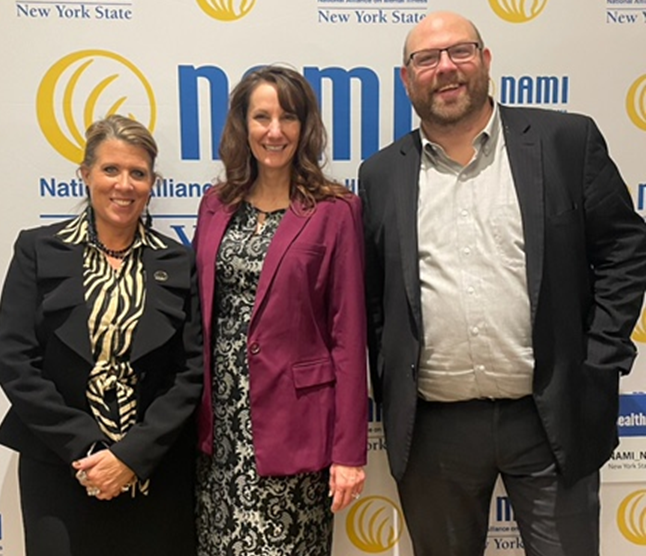
NAMI NYS' hosted their 2023 Education Conference, 'Our Time: Prioritizing Mental Health in Today's World', which celebrates the advancements made in mental health in the last years and sheds light on the challenges and barriers that continue to impact mental health, was a huge success. STARR community member Michelle Roberts, Teva, participated in a panel discussion, “Everyone at the Table: Demystifying Research Participation to Ensure Diversity". Pictured is Sharon Horton, NAMI NYS Executive Director with Michelle and Matthew Shapiro of NAMI NYS!
|
|
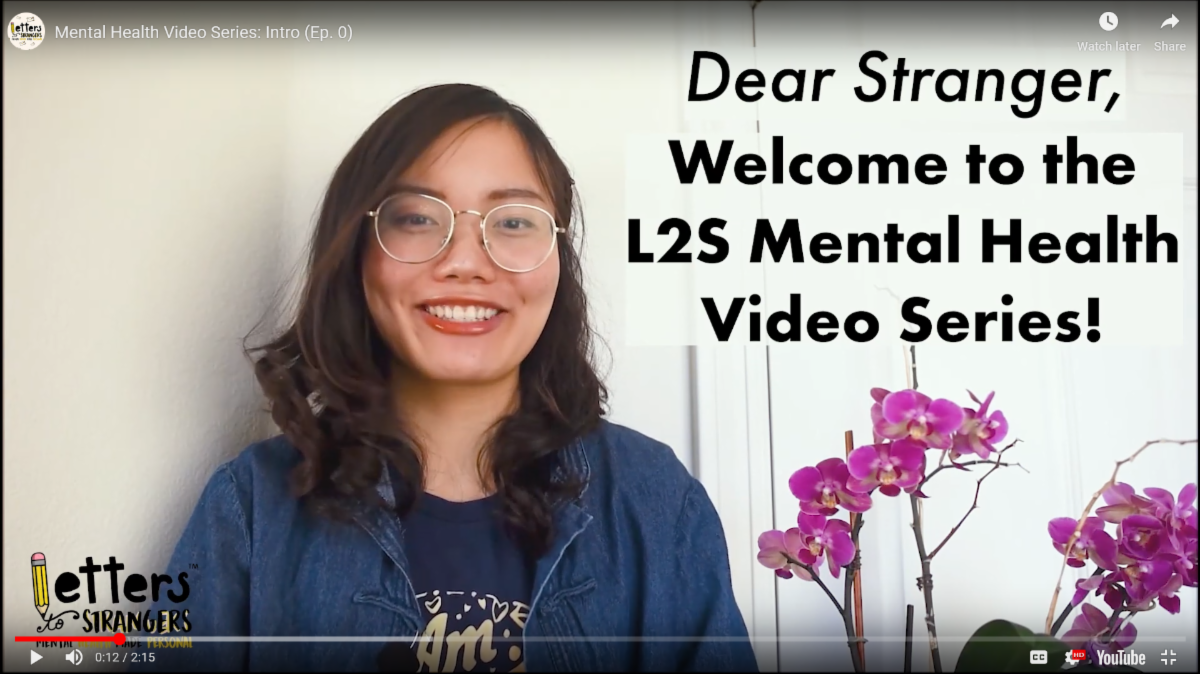
Letters to Strangers (L2S) took their best-selling, World's First Youth-for-Youth Mental Health Guidebook and turned some key sections of it into YouTube episodes. Watch now for a dive into race, ethnicity, youth, and mental health, particularly in the context of U.S. history but also featuring concerns and legacies felt by many around the world. As always - written and produced entirely by youth; expert/professional-reviewed and approved. (First season - 7 episodes - now complete!)
|
|
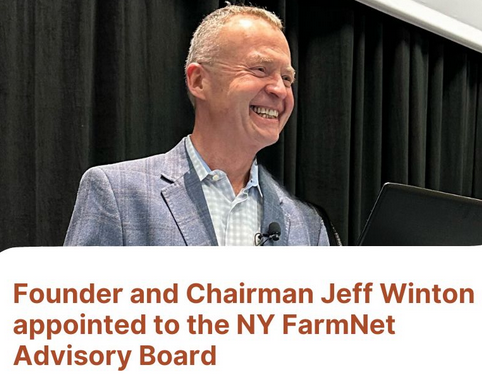
Rural Minds Founder and Chairman Jeff Winton has been appointed to the NY FarmNet Advisory Board. An important and valued partner of Rural Minds, NY FarmNet is a Cornell University-affiliated nonprofit organization that helps New York State farms navigate transition, opportunity, and challenge through educational programming and holistic consulting that addresses financial, family, and social stress.
|
|
On December 11, join Sven Sommerlatte, Chief Human Resources Officer at Boehringer Ingelheim, for Top Employers Institute's Fireside Chat, 'Employee Wellbeing: The 4 Pillars of a Successful Strategy'. You will hear more about the importance of not only mental and physical wellbeing but also social and financial wellbeing in a comprehensive employee wellness strategy. These aspects are crucial for creating a well-rounded and successful approach to employee wellbeing. Sven will also share his personal experiences and insights into how self-awareness in leadership can positively impact employee wellbeing and play a significant role in fostering a healthy and supportive work environment. The presentation will be followed by a 15-minutes Q&A led by David Plink, CEO, Top Employers Institute. Register and learn more here.
|
|
NAMICon 2024 will engage, challenge and include you in dynamic discussions and inspiring moments. It will introduce you to new ideas and tools you can take with you. It’ll connect you with people who will go from strangers to community—all in the name of mental health awareness, education and advocacy. Join us June 4–6 in Denver for an unforgettable experience. Save the Date!
|
|
We exist to create meaningful change by increasing communication, partnerships and goodwill among stakeholders in the areas of mental health treatment, advocacy, and clinical research, with an emphasis on promoting clinical research sites as a valued part of the community and trusted treatment option.
|
|
|
The STARR Coalition is a 501(c)(3) nonprofit organization, our Tax ID # is 47-4634007.
We are happy to provide a form W9 upon request.
|
|
Thank you for reading!
If you have questions, comments, or would like to submit an item to be included in an upcoming newsletter, please email erica@thestarr.org.
|
|
The STARR Coalition is a 501(c)(3) nonprofit organization, our Tax ID # is 47-4634007.
|
|
Everything The STARR Coalition does comes from our stakeholders looking to make positive change.
The STARR Coalition | phone: 501-725-8890 | www.thestarr.org
|
|
SHARE, CARE, AND BE KIND. |
|
|
|
|
|
|