KYSAM Logo
 
Kentucky's Voice for Accessible, Quality Addiction Care
KYSAM Connection
 

Welcome

Winter 2026 Newsletter

Closeup fluffy sparrow bird rests on snow-covered pine Branches surrounded by serene winter scene_ small wild bird. Light gray snowy blur background_ tranquil wintertime banner_ side view_ copyspace

KYSAM NEWS

Welcome to the KYSAM Winter newsletter. You have received several emails recently regarding KYSAM advocacy efforts. Go to the KYSAM News section for further details.

KYSAM's advocacy goals align with those of ASAM. The ASAM 2026 advocacy goals are outlined in the ASAM news section. KYSAM continues to promote these goals on a state level. 

Though much of our effort has focused on advocacy, our education committee has also been hard at work. We sponsored 3 webinars in the fall of 2025. Each webinar was worth one CME of credit. The annual meeting was worth 7 hours of CME. The education committee is reforming to plan the next annual meeting and any other educational activities. We need participation from KYSAM membership. Most KYSAM Board meetings are open to all members. We have attempted to be transparent regarding our activities, finances, etc. But any organization works better when members participate. 

The education committee is considering a hybrid annual meeting this fall. The meeting would likely be in the same location, but a zoom option would be available for people who cannot attend. Meeting in person allows for better discussion and social connection, but we understand that this is difficult for our busy members who live in far areas of the state. We will be sending out a survey to see how many of you would be interested in attending the meeting either in person or by zoom. 

This is an election year for KYSAM. Our president-elect, Oliver Benes, will become president in August. The election process takes almost 4 months. It isn't too early to start thinking about whether you or someone you know might be interested in an office. You will receive an email in the next couple of months asking for nominations. There will be a nominating committee which will review nominations and prepare a slate.


KYSAM Advocacy

Both HB 153 and SB 82 have been filed. They will most certainly go to the Health Services Committee in each branch. You were recently emailed a list of members of the Health Services Committee in the House and Senate. The bills must get out of committee to get to the floor and receive a vote. Some sponsors have been added to the bills since the last email. 


The content of HB 153 and SB 82 is the same. SB 82 is sponsored by J.Adams, L.Tichenor, A. Reed, S. Madon, S. Rawlings and HB 153 is sponsored by L. Willner, S. Bratcher, B. Chester-Burton, J. Nemes, D. Fleming, D.Grossberg, C. Lewis, K. Moser. 


The bills say in part: 


Create a new section of KRS Chapter 13A to find 201 KAR 9:270 and 201 KAR 20:065 deficient and void; create new sections of KRS Chapters 311, 313, 314, and 315 to establish that the State Board of Medical Licensure, Board of Dentistry, Kentucky Board of Nursing, and Kentucky Board of Pharmacy shall not promulgate administrative regulations that restrict or limit the prescribing, dispensing, or administering of buprenorphine-mono-product, buprenorphine-combined-with-naloxone, or any other Schedule III, IV, or V medication approved by the United States Food and Drug Administration for the treatment of a substance use disorder; EMERGENCY.


You can read the full bills by clicking on the link below: 


https://apps.legislature.ky.gov/record/26rs/hb153.html

https://apps.legislature.ky.gov/record/26rs/sb82.html


Please contact your legislator to advocate for these bills. They align with ASAM’s 2026 advocacy goal of empowering addiction providers and patients to make personalized treatment decisions that are right for them as well as removing barriers for patients who are not coming to treatment for various reasons. 

To download a fact sheet that can be given to legislators, click here.


If you know who your legislators are, call 502-564-8100 and simply ask to be connected to their office. You will get their legislative assistant who will give the message to the legislator. If you don’t know your legislator, call 800-372-7181 and, based on your address, they will tell you who your legislators are. 

Dr James Murphy, our area representative, has prepared a letter advocating for these bills, and a number of organizations have signed on including the Kentucky Sheriff's Association. Kentucky Wounded Heroes, Kentucky Psychiatric Medical Association, Kentucky Psychological Association, Kentucky Pharmacists Association, University of Louisville Division of Palliative Medicine, U of L School of Medicine and several others. To view the letter click here.

If you are affiliated with an organization that would be willing to sign, email Dr. Murphy at James.Murphy2@louisville.edu.


If you would like to sign on as an individual, use this link:

https://act.dream.org/sign/dont-let-kentucky-roll-back-access-lifesaving-treatment/?mc_cid=aff9efb74a&mc_eid=22755d1625


Greater Louisville Medical Society Supports HB153/SB82

A number of organizations have signed on to support these bills. The Greater Louisville Medical Society (GLMS) sent a letter to the legislature endorsing the bills. The letter reads in part;

The ongoing overdose crisis demands a bold response that utilizes all policy tools to support our families, friends, and communities.

Buprenorphine is a U.S. Food and Drug Administration-approved medication for the treatment of OUD and has been proven to significantly

improve health outcomes for people with OUD. Specifically, buprenorphine treatment is associated with reduced overdose deaths and criminal

activity. Further, evidence suggests that expanding access to this medication is a cost-effective strategy that would save both lives and

taxpayer money. .


and


By enacting HB 153 / SB 82, the General Assembly will standardize the regulation of buprenorphine in the same manner as other Schedule

III controlled substances. This common-sense effort simplifies our regulatory scheme and returns treatment decisions to the professional

judgment of clinicians and their patients, protecting physicians who practice within established standards of care.

To read the letter in its entirety, click here.

ASAM ADVOCACY FOCUS

ASAM Advocacy Focus for 2026:


ASAM supports policies that foster innovative approaches to addiction medicine research and development, treatment delivery, and protection of community health. 


Their goals fall into three areas: innovation, individualized pathways, and strong continuum of care for all. 


Innovation: 

1. Boost the adoption of evidence -based psychosocial treatments. 

2. Accelerate addiction medicine research and development. 

3. Support integration of useful technologies.

4. Champion smart drug policy reform. 


Individualized Pathways:

1. Champion policies that empower the addiction specialty workforce and patients to make personalized treatment decisions that are right for them. 

2. Support expanding access to methadone by allowing different types of programs to dispense methadone and allow the careful prescribing of methadone that can be picked up in a pharmacy. 

3. Support optimizing telemedicine use for addiction care.

4. Improve treatment engagement and retention for nonabstinent patients.

5. Eliminate pharmacy access barriers. 

6. Promote access to quality recovery residences. 


Strong continuum of care for all:

1. Close residential addiction treatment care gaps in Medicaid and Medicare. 

2. Promote addiction care continuity for individuals in the criminal legal system. 

3. Ensure addiction care for all in need.

4. Grow the addiction workforce. 

For more detail go to https://www.asam.org/advocacy/national-advocacy


What's New In Addiction Research

Recent Publications by our members:


At the KYSAM annual symposium in Lexington in October, Richard Cales, MD, FASAM, presented an investigation with his faculty colleagues from the University of Louisville Department of Emergency Medicine that was published in November in the Harm Reduction Journal. 


Titled “Harm reduction in the fourth wave of the opioid epidemic: A case series investigation of the effectiveness of definitive vs presumptive urine drug testing for opioid use disorder with co-occurring polysubstance use,” the research is the first published investigation of ASAM’s 2017 guidelines for “smarter” drug testing as delineated in their “Appropriate Use of drug test in clinical addiction medicine. Additionally, it is also the first published investigation of the potential benefits of using near-real-time clinical laboratory testing to manage clinical decision-making for individual patients in real-world community settings—as suggested by NIDA director Dr. Nora Voklow in her 2023 editorial perspective in the New England Journal of Medicine.


As summarized in the presentation at the annual symposium, the investigation offers addiction medicine clinicians treating substance use disorders three substantive takeaways:

• Although point-of-care immunoassay (IA) testing may suffice for population-based screening (initial detection and referral), MOUD decision-making (diagnosis, treatment, harm reduction) is better served by near-real-time laboratory mass spectrometry (MS) testing.

• The team’s experience with “smarter” drug testing demonstrates that using non-quantitative MS for testing all urine samples virtually eliminates the need for routine IA testing—which requires confirmatory testing of more than half (57.6%) of all IA tests due to one or more positive presumptive findings in polysubstance users—yet costs only $10 more per patient encounter than using IA in conjunction with MS confirmation.

• These findings have facilitated the opportunity to integrate MOUD with harm reduction by adopting smarter MS testing protocols that enable clinicians to detect emerging and novel substances, ie, kratom, xylazine, carfentanil, dexmedetomidine, tianeptine, levamisole, bromazolam, and nitazenes.


The published article can be downloaded Open Access from the Harm Reduction Journal at https://rdcu.be/eQxop free of charge (no subscription or paywall).

____________________________________________________________


South A, Hawk K, Friedman S. Lofwall M, Fanucchi L, and Cohen S. Civil Rights Laws for People With Opioid Use Disorder in the Emergency Department. J Addict Med. 19(6). Nov/Dec.2025. pp. 643-647. 

The authors note that under federal civil rights laws, it is illegal to discriminate against people with opioid use disorder. Discrimination may include failure to screen for an undiagnosed opioid use disorder and offer medications or opioid use disorder alongside a facilitated referral for outpatient treatment. Yet in Kentucky < 20% of EDs have a process to link people to care or MOUD. Less than one third of people with OUD treated for a nonfatal overdose in the ED receive MOUD or a follow-up appointment. The authors note that EMTALA requires hospitals to provide a medical screening exam to every ED patient, identify emergency medical conditions, and provide treatment to stabilize the patient to reasonably ensure that their medical condition does not deteriorate post discharge. It is a violation of this law when EDs fail to screen patients for OUD, offer and administer MOUD as appropriate and provide a facilitated referral for care. The authors recommend that EDs streamline and increase MOUD initiation and ensure that buprenorphine and methadone are on the hospital formulary. They need to develop and initiate protocols for MOUD initiation and continuation in the ED and develop relationships with local buprenorphine prescribers and OTPs. EDs should institute mandatory education on evidence-based practices in the treatment of MOUD. Some of the reluctance to initiate MOUD in the ED is related to stigma as demonstrated in surveys about attitudes of ED personnel towards patients with OUD. Patients could file a civil rights violation claim if they are not allowed access to evidence-based appropriate ED care for OUD. 

Click here to read the article.


_____________________________________________________________

The latest edition of the American Journal on Addictions contains a brief case report out of Sao Paulo Brazil authored by Mariana C de Oliveira, MD, Claudia C Araujo Palmeira, PhD, et.al. (Brief Report: Ketamine-assisted "bridge therapy" for opioid tapering in complex cases) regarding the use of IV ketamine to treat depression and facilitate taper of methadone. The patient was a 25-year-old woman who had a long history of chronic pain. She had been prescribed multiple opioids since her teenage years. As often happens, she became tolerant, started escalating her dose, and eventually met criteria for opioid use disorder. She was started on methadone for pain management and OUD but began abusing the methadone. She also developed major depressive disorder which was not responding to multiple trials of antidepressants. She was admitted to a specialized treatment program for pain and opioid use disorder. The treatment team struggled to distinguish pain related to a nociceptive or neuropathic condition versus pain from a nociplastic condition (pain coming from altered pain processing in the central nervous system rather than nerve injury) exacerbated by emotional factors. 

The team opted to initiate IV ketamine primarily because of her major depressive disorder, but also with the hope that her methadone dose could be tapered. She received eight 45- minute infusions of IV ketamine weekly over 8 weeks. After a 2-week stabilization period, tapering of her methadone dose was initiated. It was tapered by 25% every 2 weeks. By the end of the treatments, she was down to 30 mg. She did not experience any craving for ketamine. The methadone was then gradually discontinued over the next 6 months after ketamine treatments ended. 

Clinical improvement occurred in multiple areas. Her pain improved. The Brief Pain Inventory score dropped from 7 to 2. The PHQ9 dropped from 17 to 4 after the first treatment and remained steady during the treatments. Health related quality of life improved, and as her mood improved, she became more receptive to psychotherapy and to tapering the opioid further. 

There have been other reports of ketamine being used for opioid withdrawal. A systematic review by Shen et.al. (https://pubmed.ncbi.nlm.nih.gov/40370588/) published in 2025 in Front Psychiatry found that use of ketamine was well tolerated and associated with decreased craving, severity of withdrawal, and depressive symptoms. They note that ketamine was used here as a bridge therapy to facilitate tapering from high dose opioid therapy to lower doses, decreasing symptom burden and enhancing motivation for change. 

The authors point out that more research is needed. This was a case study of a single patient whose history is unique in that she was not using illicit opioids or other substances. She was treated in a specialty clinic where infusions were closely monitored. Ketamine was used for a time-limited, specific purpose. How this would apply to the larger patient population of persons with OUD is not yet clear. 

https://pubmed.ncbi.nlm.nih.gov/41607036/


Kentucky Legislative News


HB 153 and SB 82 have been discussed in KYSAM Advocacy.

HB 199 has been introduced. it has not been assigned to committee. It would allow possession of one ounce or less of cannabis for personal use and up to 5 cannabis plants for persons age 21 and over. The General Assembly would be responsible for regulating the production, processing, and sale of cannabis. The issue would be presented to voters at the next election of General Assembly members.

HB401 outlines the procedures for the use, possession, cultivation, and sale of medicinal cannabis. It establishes a legal framework for registered patients and their caregivers, provides protection from prosecution, details possession limits and purchasing restrictions. It also addresses operational requirements for cannabis businesses.

HB2 outlines significant changes to Kentucky's Medicaid program focusing on eligibility requirements, cost-sharing measures, and service provision. Starting Jan. 1, 2027, certain Medicaid enrollees must demonstrate community engagement to maintain their benefits, especially able-bodied individuals with no dependents. Cost-sharing will be introduced for enrollees with incomes exceeding 100% of the federal poverty line, although mental health and primary care services will be exempt. One piece of good news is that it will require Medicaid to cover smoking cessation materials with no out-of-pocket costs.

HB 431 focuses on the use and distribution of opioid antagonists. It offers protections for licensed healthcare providers who prescribe or dispense naloxone, and allows for third party administration of naloxone and protects anyone using it in good faith from liability. The bill also encompasses education for mental health providers, first responders, healthcare providers, addiction counsellors, and the public on utilization of naloxone.

To view the entire content of these bills, go to Asam.org, advocacy, state advocacy and click on Kentucky on the map. A list of the bills will appear with links to the bill content.


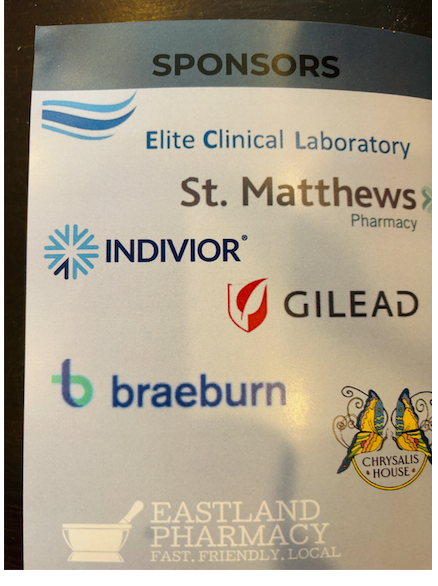
Thanks again to our sponsors who made the annual meeting possible.


ASAM Annual meeting 2026. April 23-26 in San Diego. Go to https://annualconference.asam.org/ to register.


New York Society of Addiction Medicine annual conference. In-person. March 6-7. Held at the New York Marriott Downtown. To register go to https://nysam-asam.org/conferences/2026-intersection-of-science-treatment-and-policy-conference/


Oklahoma Society of Addiction Medicine annual conference. Live online. February 21, 2026. To register go to https://oksam.org/oklahoma-society-of-addiction-medicine-events-conferences/


There are over 23 ASAM special interest groups including addiction medicine consult special interest group, child and adolescent addiction treatment special interest group, behavioral addictions, women in addiction, forensic addiction, criminal justice, and many more. These are great discussion groups where you can interact with experts, see what others are thinking and post your thoughts as well. To learn more, click here.


Tune in to ASAM Podcasts. It's a great way to make that 20 minute car ride useful. There are 4 podcasts, Beyond the Abstract, This Week in Addiction Medicine,Treat Addiction, Save Lives, and the newest one, Practice Pearls Podcast. You can find them on any podcast app.


The Members Only Section of the website is open. If you have forgotten the password, send an email to admin@kysam.org. You can post questions or comments there, and one of the Board members will respond. We cannot give direct clinical advice on specific patients, but we can offer resources or general guidance that is consistent with ASAM OUD guidelines.

Educational Resources

Providers Clinical Support System. https://pcssnow.org/


ASAM eLearning Center. https://elearning.asam.org/

SAMHSA Practitioner Training


AMA ED Hub (through ASAM) https://edhub.ama-assn.org/?utm_source=asam&utm_medium=referral&utm_campaign=backlink&utm_content=asam


Ky-Open: https://www.cecentral.com/kyopen

We want this newsletter to meet your needs. If you have any suggestions about content, or better yet, if you want to contribute to the newsletter in any way, please send an email to info@kysam.org.

KYSAM Logo