|
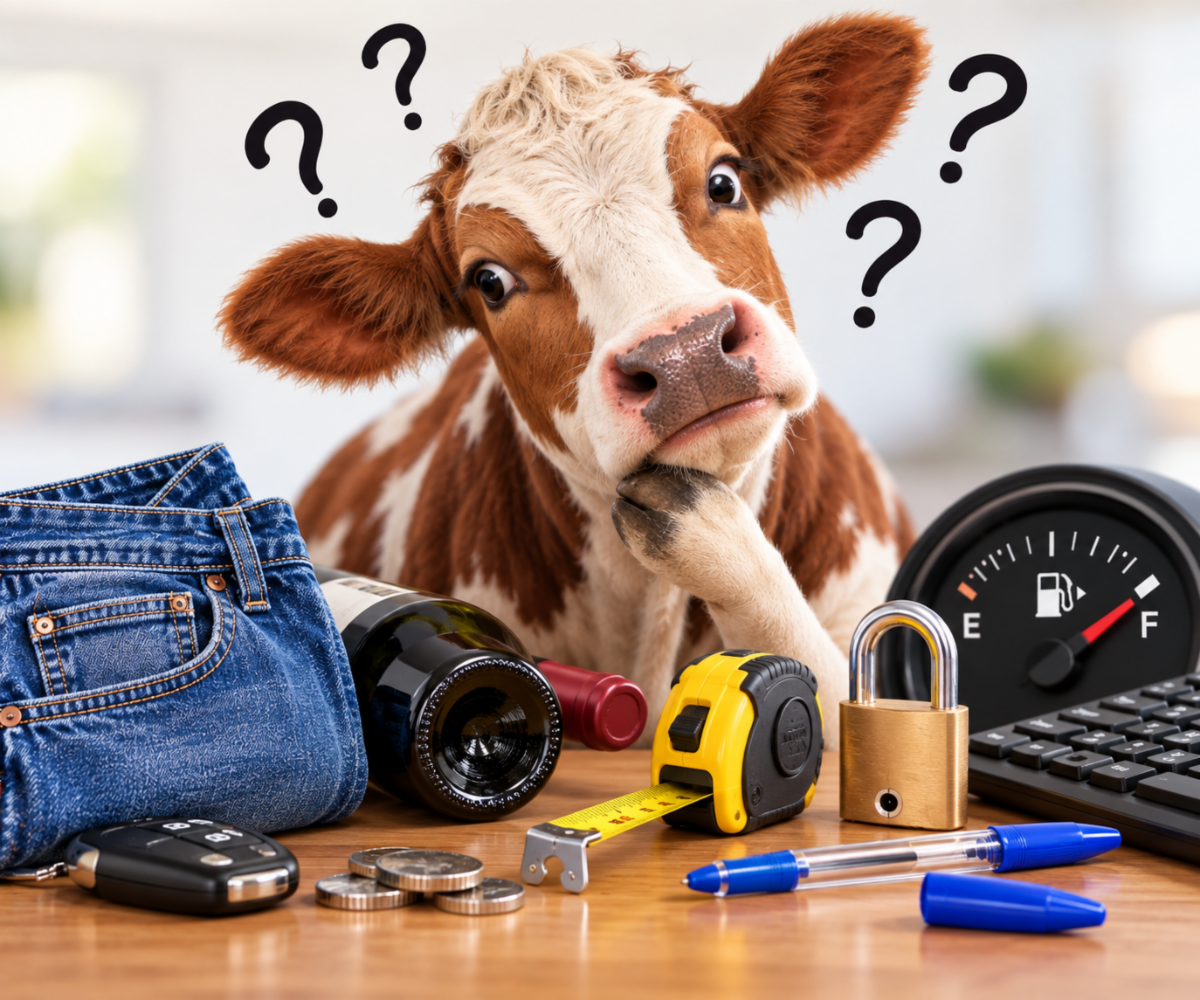
👖 Why do jeans have that teeny-tiny pocket?
It was originally designed for a pocket watch. Levi Strauss & Co. traces the little pocket back to early blue jeans, when men commonly carried watches on chains. Today it mostly holds… absolutely nothing useful.
✈️ Why are airplane windows rounded?
Early pressurized commercial airplanes with more square-shaped windows suffered dangerous stress concentrations at the corners. Rounded windows distribute that stress much better. So those curves aren't just prettier—they're an important safety feature.
🍷 Why is there a dent in the bottom of a wine bottle?
It's called a punt. Historically, it helped strengthen hand-blown bottles and allowed them to sit more steadily despite imperfections. Today, it can still add structural strength in bottles that hold pressure, although a deep punt does not automatically mean better wine.
⛽ Why is the little arrow next to the gas-pump symbol on your dashboard? It points to the side of the car where your fuel door is located. 👉 WAIT. WHAT?!
🍝 Why is there a hole in the middle of some spaghetti spoons?
Besides helping drain water, on many versions the hole happens to hold roughly one serving of dry spaghetti.
📏 Why is there a little metal piece that wiggles on the end of a tape measure? It's supposed to wiggle! The hook slides by approximately its own thickness so the measurement stays accurate whether you're hooking it over an outside edge or pushing it against an inside surface.
🪙 Why do some coins have ridged edges?
Back when coins contained valuable metals such as silver or gold, people could shave tiny amounts from the edges and keep the metal. Ridged or “reeded” edges made tampering easier to spot.
|