|
Women Make History: Stories we should have learned in school
Volume 51 –– August 2025
| | |
“I always wanted to be somebody. If I made it, it’s half because I
was game enough to take a lot
of punishment along the way and
half because there were a lot
of people who cared enough to help me.”
––Althea Gibson
| | |
Master of the Court: Althea Gibson
If you've heard the name Althea Gibson this month, there's a good reason. August 25 marks the 75th anniversary of an historic event: the day that Gibson became the first African American to compete at the U.S. National Tennis Championship, now known as the U.S. Open.
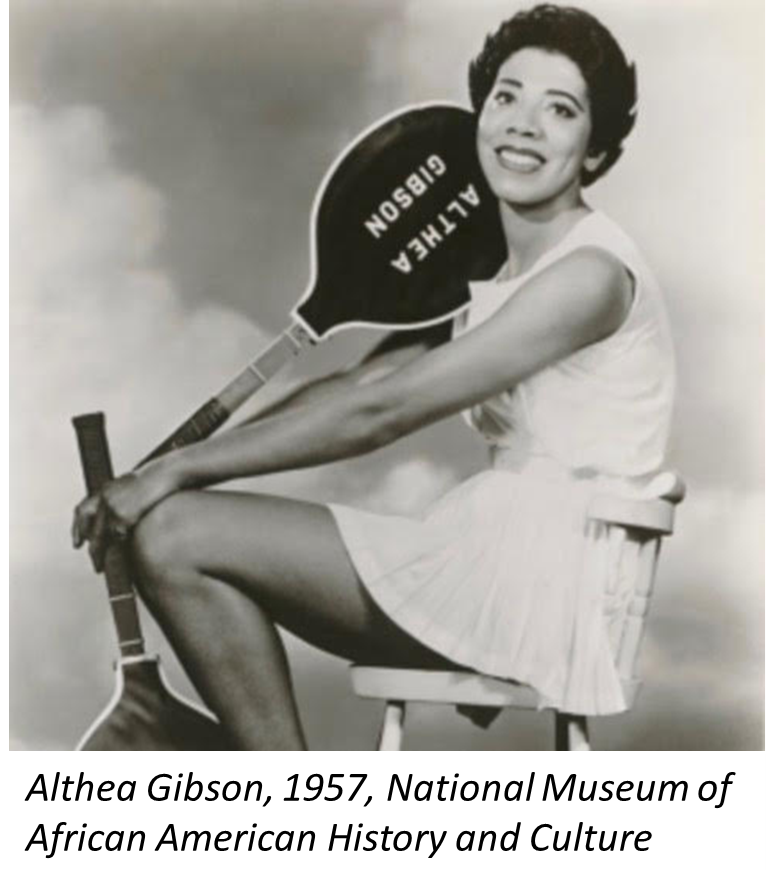
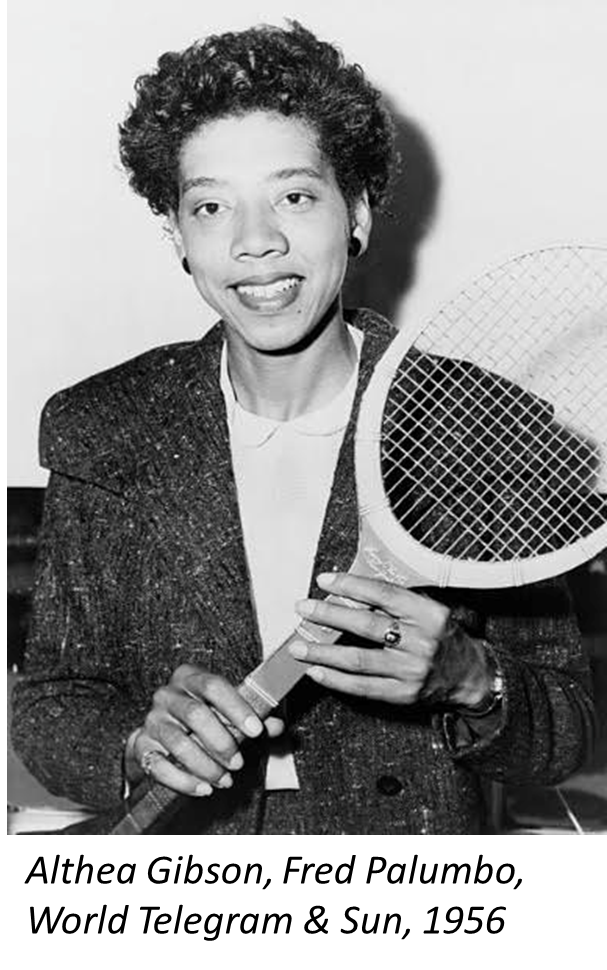
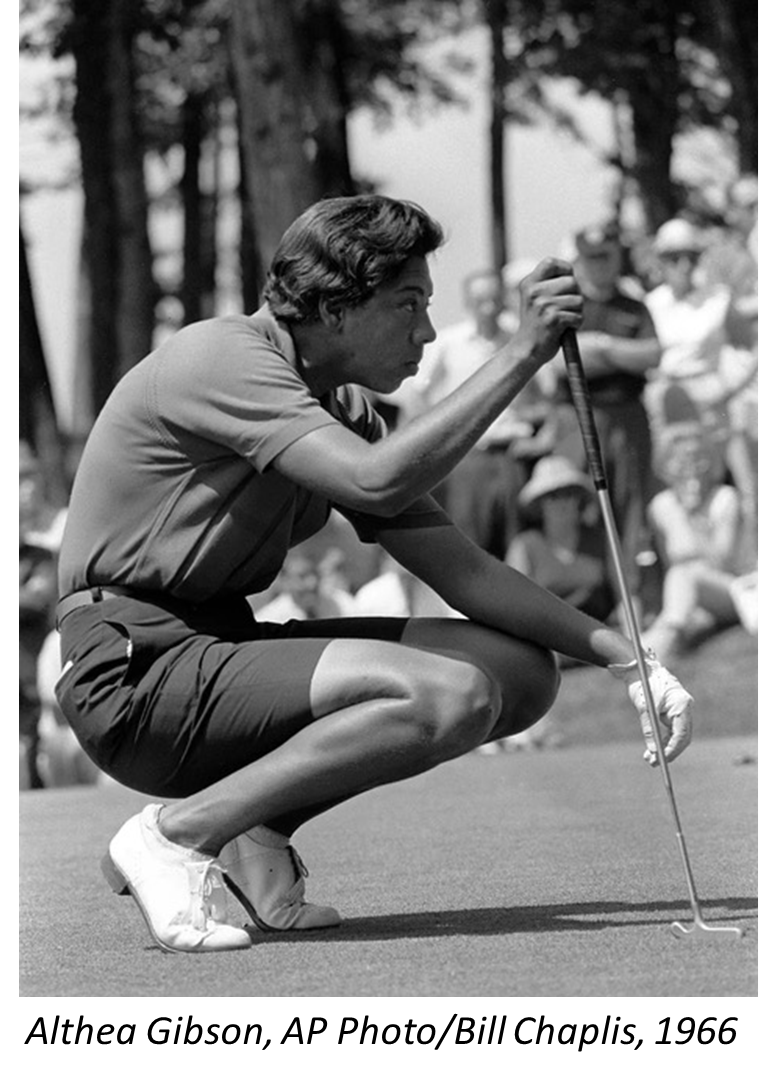
In the early 1950s, an era when “separate but equal” was federal law, Gibson broke racial and gender barriers to become the number one-ranked tennis player in the world. She was the first Black player to win a grand slam at the French Open, the first to win both Wimbledon and the U.S. Nationals. In the 1960s, she became the first African American to compete in the Ladies Professional Golf Association.
| | |
Born in Silver, South Carolina, in 1927, the family moved to Harlem, New York, three years later. From an early age, the athletic Gibson loved to play sports. By the time she was twelve, she was skipping school to play basketball and table tennis, reportedly winning the New York City women’s paddle championship the same year. Soon after, she traded her paddle for a racket and dropped out of high school.
Her skill caught the attention of New York tennis coach Buddy Walker. Under his tutelage, she developed her skills and learned the rules of the game. He also introduced her to the Cosmopolitan Tennis Club in Harlem, home to legendary Black players of the day. Recognizing her talent, the Club gave Gibson a junior membership and lessons with the club professional.
| | |
According to the Tennis Hall of Fame, at age seventeen and eighteen, Gibson won the junior national championships of the American Tennis Association (ATA), the Black equivalent of the U.S. Lawn Tennis Association. At age twenty, she took home the ATA national women’s title and went on to win it ten consecutive years. Between 1944 and 1950, she also won the New York State championship six times. Yet beyond the Black community, Gibson was denied the opportunity to compete.
As Gibson’s prowess increased, so did her supporters. Physician and tennis coach, Dr. Robert Walter Johnson, known as the “godfather” of Black tennis, took Gibson under his wing. Determined to integrate the sport, Johnson had founded an all-expenses-paid tennis camp for Black children in Virginia, where Gibson moved. In the South, people of color were denied the use of public courts, and often, they lacked the resources for lessons and gear.
| | |
With Johnson’s help, Gibson took her game to the next level physically and mentally. She completed high school and enrolled at Florida A&M University, where she earned her bachelor’s degree in 1955 at the age of twenty-seven.
It was also Johnson who helped Gibson secure her spot at the U.S. Nationals as the first African American player in 1950.
| |
White players, who practiced with Gibson, rallied to her side. Future Hall of Famers Alice Marble and Sarah Palfrey lobbied for Gibson’s inclusion. In early 1950, with their help, Gibson was invited to compete in the Eastern Lawn Tennis Association Grass Court Championships that summer. She made it to the second round, which then helped to secure her invitation to play at the U.S. Nationals in August.
In a July 1950 article for American Lawn Tennis, Marble wrote: “If Althea Gibson represents a challenge to the present crop of players, then it’s only fair that they meet this challenge on the courts.”
On Aug. 25, 1950, Gibson became the first African American to walk onto court at the U.S. Nationals. She defeated her opponent in the first round, 6-2, 6-2. In her second match, Gibson faced defending Wimbledon champion Louise Brough. Intense media and public scrutiny, the pressure of the moment, all took their toll, and she lost the first set. In the second set, however, Gibson recovered and won 6-3. In the third set, Gibson was leading 7-3 when a downpour and lightning storm postponed the match. It broke Gibson’s momentum, and she lost.
| |
In an interview with Sports Illustrated, sportswriter David Eisenberg said: “I have sat in on many dramatic moments in sports, but few were more thrilling than Miss Gibson’s performance against Miss Brough. Not because great tennis was played, because it wasn’t. But because of the great try by this lonely, and nervous, colored girl, and because of the manner in which the elements robbed her of her great triumph.’”
Still, history had been made.
| |
In 1956, Gibson became the first Black player to win a Grand Slam at the French Open, and in 1957 and 1958, she won both Wimbledon and the U.S. Nationals. The Associated Press named her Female Athlete of the Year both times, and in 1957, Gibson was the first Black woman to have her photo on the covers of Time magazine and Sports Illustrated. By the end of her career, she had won eleven Grand Slam titles: five singles titles, five doubles titles, and one mixed doubles title.
Gibson retired in 1958 as the number one-ranked player in the world. She taught tennis for a time, but in 1964, at age thirty-seven, Gibson crossed another racial barrier when she became the first Black player to compete in the Ladies Professional Golf Association. Although her skill on the golf course wasn’t on par with her game on the court, her ability to pick up another sport further demonstrated her strength and athleticism.
Although Gibson broke racial and gender barriers, she continued to face them throughout her life. Even after her legendary victories in the late 1950s, she was denied rooms at white hotels, and one restaurant refused to take reservations for a luncheon in her honor.
| | |
During her life, Gibson was criticized for not attending civil rights protests or speaking out forcefully about discrimination. She was known to counter it by pointing out that her mastery of tennis had opened doors for others. Indeed, she helped to pave the way for other greats, including Arthur Ashe, Zina Garrison, and Serena and Venus Williams. The Williams’ former coach, Bob Ryland, called Gibson “one of the greatest players who ever lived."
Gibson was inducted into the International Tennis Hall of Fame in 1971, the International Women's Sports Hall of Fame in 1980, and the Black Athletes Hall of Fame in 1974. Gibson died in Orange, New Jersey, in 2003 from respiratory failure. She was seventy-six.
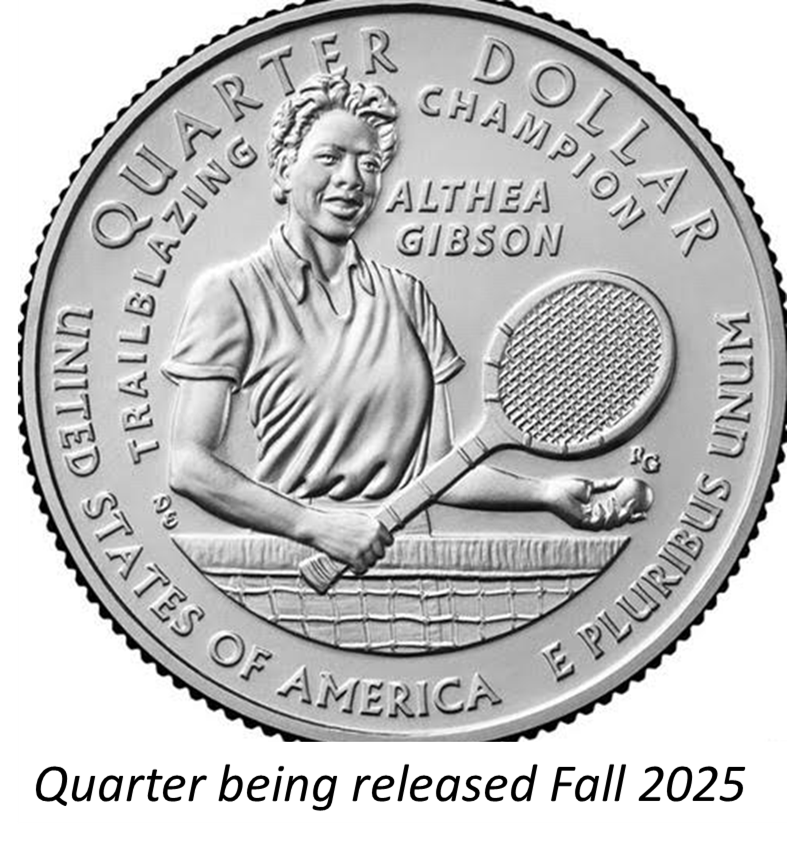
In 2022, 143rd Street in Harlem was renamed Althea Gibson Way, and a statue of Gibson as a teenager was placed at the end of the block. The U.S. Mint is honoring Gibson in the fall of 2025 by issuing a quarter in her likeness.
| | |
Bring it Home: Conversation Starters
Ask yourself: What would it take to handle the pressure that Althea Gibson must have felt?
Ask a friend: How do we develop and show support for others breaking barriers?
| | Keeping Me on My Toes: An Astute Reader pointed out that last month, I incorrectly wrote that Emily Roebling was born in Cold Springs Harbor, New York. It should have read: Cold Harbor, New York. | | |
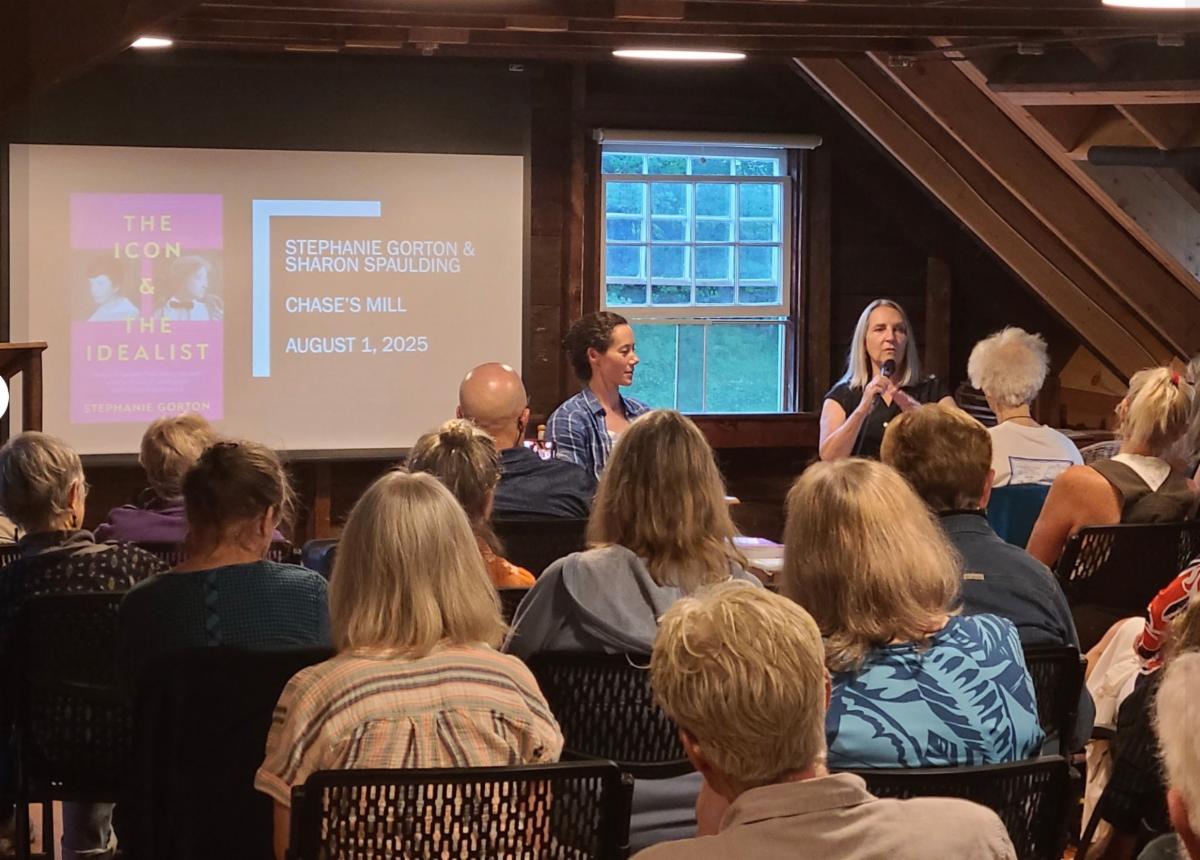
Shout Out To Chase's Mill & Stephanie Gorton: Great discussion on August 1, about Reproductive Rights in America and the two women who led the charge: Mary Ware Dennett and Margaret Sanger. It was especially fun to have so many Dennett and Chase family members in attendance. If you haven't read Stephanie's book, The Icon and the Idealist, I recommend it!
| | |
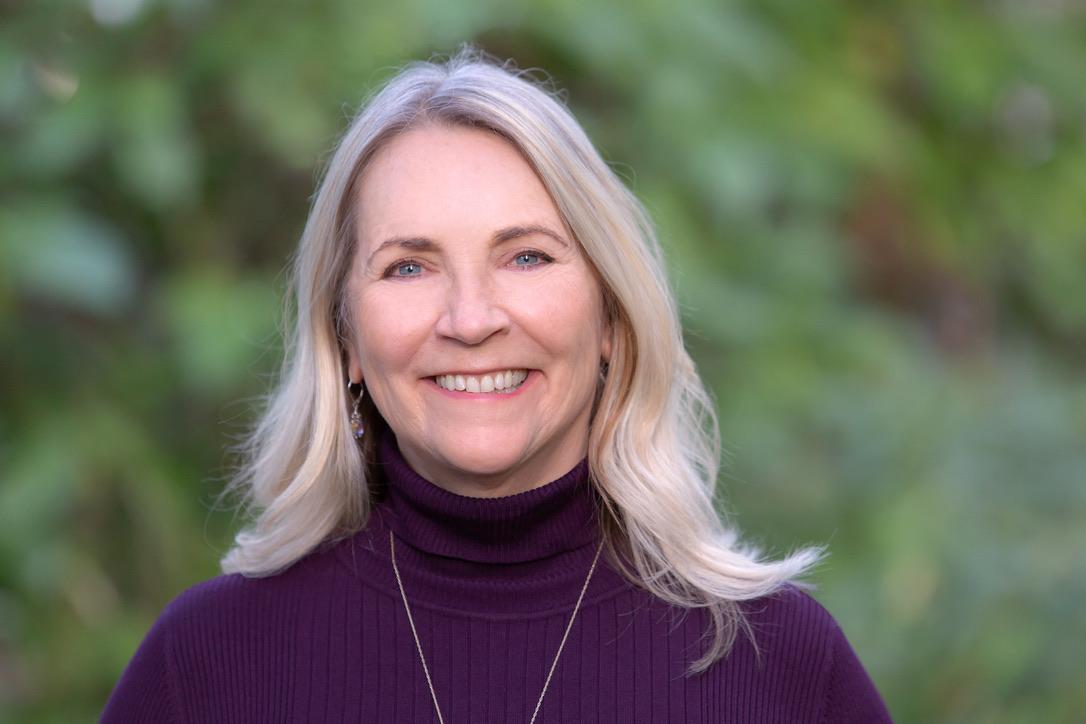
I specialize in the life and times of reproductive rights activist, Mary Ware Dennett (1872-1947). In 2020, Time magazine included her as one of the most important women in American history. I curate Dennett's family archive, and am at work on a novel about her extraordinary life. In 2024, my manuscript was named runner-up in Book Pipeline's General Fiction category.
I received a grant from Radcliffe College’s Schlesinger Library to support my work. My essays about Mary Ware Dennett have been published in Ms.Magazine, Smithsonian, New Hampshire Magazine, BOLD, and others. I love to hike and ski in the Wasatch Mountains near Salt Lake City, where I live with my husband and a black lab named Hank.
If you need a speaker, reach out! My passion is sharing the forgotten stories of remarkable women and the history of the suffrage and reproductive rights movements of the early 20th century. Be in touch: SharonSpaulding.com.
| | |
Help reclaim the lives of remarkable women.
Share this newsletter and encourage others to subscribe.
Follow me on social media. www.SharonSpaulding.com
| | | | |