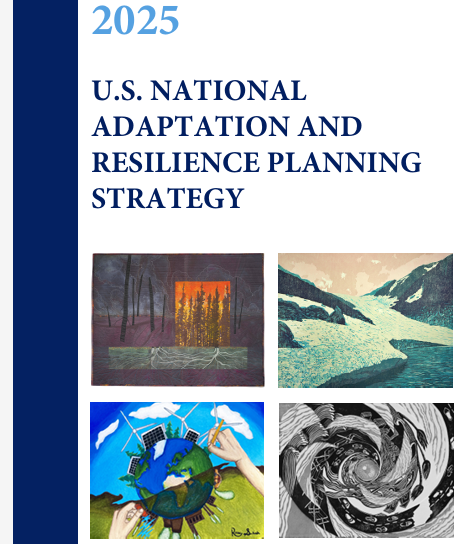
2025 U.S. National Adaptation & Resilience Planning Strategy | |
|
The U.S. National Adaptation and Resilience Planning Strategy provides a critical blueprint to help our nation adapt to and prepare for the immediate, medium-, and long-term consequences, impacts and risks of a changing climate. The plan offers a roadmap for our nation, states and local communities to save lives and livelihoods, protect business investments and our economy, safeguard national security, and help secure a resilient future for our nation from the wide-range of climate risks.
| |
|
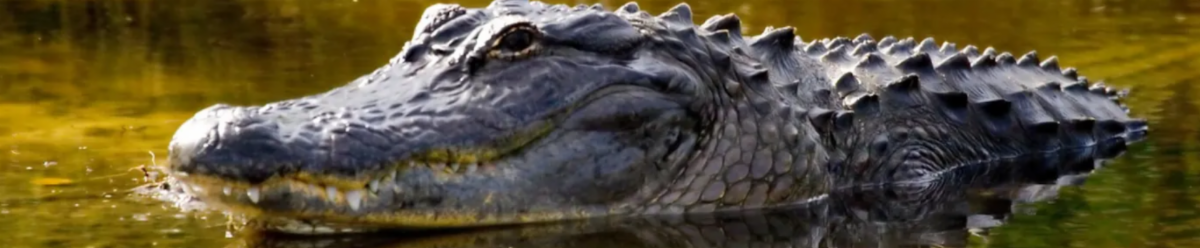
Scientists make troubling discovery while researching alligators in the Florida Everglades: "We need to get ready" | |
"Some of the islands that we have visited before and saw nesting, now we see nothing." Florida biologists are closely monitoring how alligators in the Everglades are responding to rising global temperatures, and they're concerned about what they've found so far. What's happening? Scientists from the University of Florida "Croc Docs" team are studying threatened American alligators to help assess the impacts of rising global temperatures in the Everglades. The Miami Herald reported on the team, explaining that alligators are a good target species for this type of research because they are sensitive to environmental changes. | |
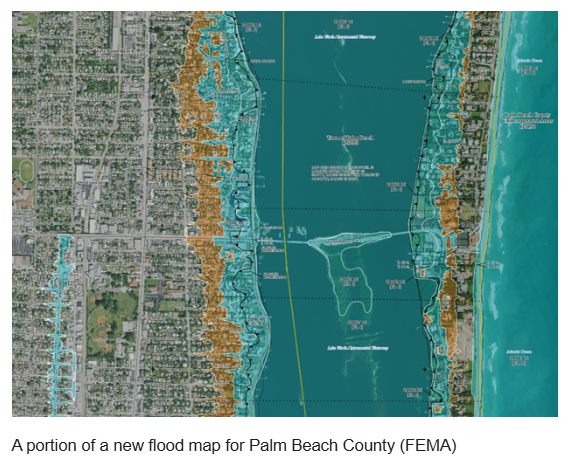
New FEMA maps bring Florida's flood risks to forefront | |
|
By Katie Carpenter, Everwild Media
The new maps mean more Floridians will be required to buy flood insurance.
Florida is considered the most flood-prone state in the U.S., closely followed by Texas, Louisiana and New Jersey. After hurricanes Helene and Milton broke flooding records last year, more homeowners are starting to pay attention, but not all.
| |
|
Nature-based solutions help address Florida's climate challenges | |
|
By Carrie Schuman, Conservancy of Southwest Florida
Hurricanes Debby, Irma, Ian, Helene and Milton are “five good reasons” the Conservancy of Southwest Florida hosted “Working with Nature: Nature-Based and Hybrid Solutions for Resilient Communities” last month, said Rob Moher, president and CEO of the Conservancy.
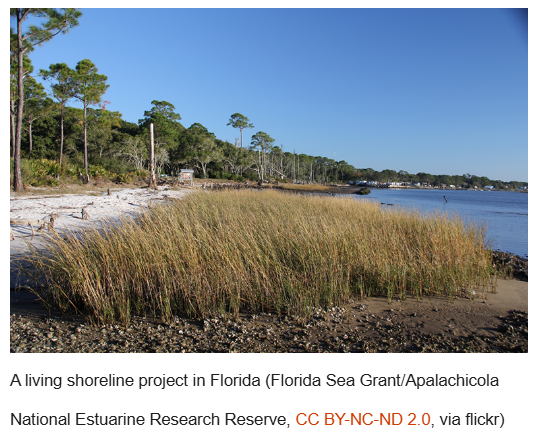
Nature-based solutions (such as mangrove forests, salt marshes and beach dunes) or hybrid solutions, which combine nature-based elements with engineered options (such as seawalls, levees and culverts) can address the challenges Moher outlined.
| |
Sea surface temperatures and deeper water temperatures reached a new record high in 2024 | |
|
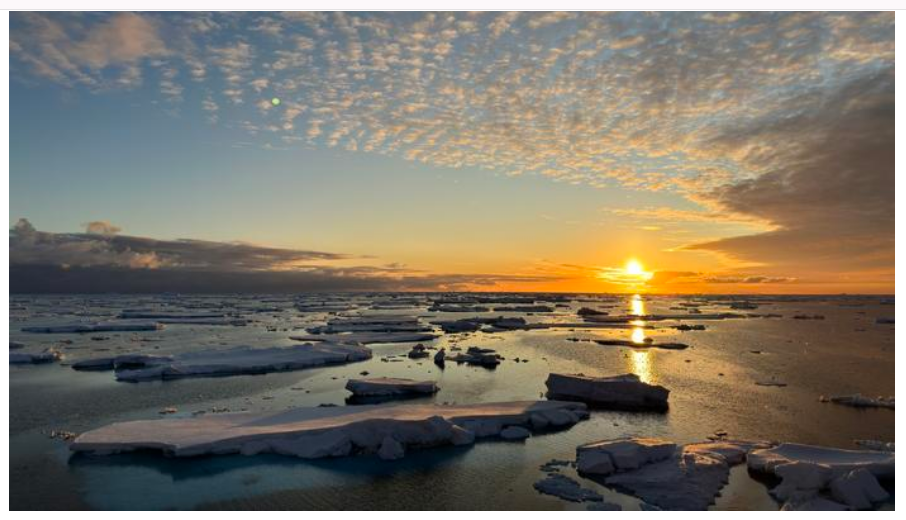
A new study published in Advances in Atmospheric Sciences has found that ocean warming in 2024 has led to new record high temperatures. The ocean is the hottest it has ever been recorded by humans, not only at the surface temperature but also for the upper 2000 meters.
photo credit: Chao Ben
| |
|
People are flocking to Florida. Will there be enough water for them? | |
|
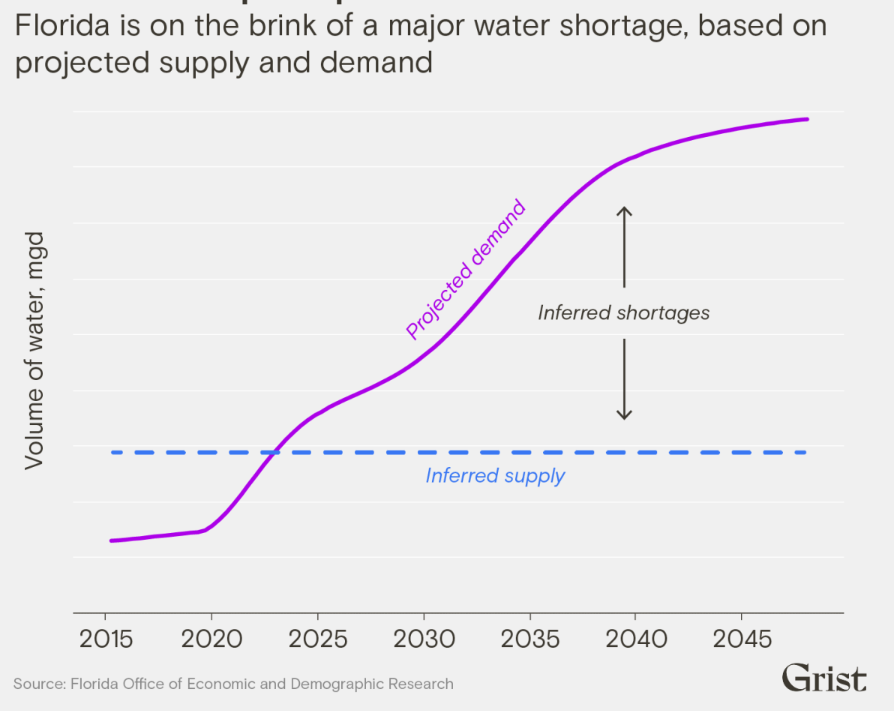
An intensifying climate, overexploitation of groundwater, and a development boom have catalyzed a looming water supply shortage — something that once seemed impossible for the rainy peninsula.
Like many places worldwide, the dwindling freshwater availability in Florida is being exacerbated by a warming atmosphere. Sea levels in the state’s coastal regions have already risen dramatically in the last few decades, pushing salt water into the groundwater and creating an impotable brackish mixture that is costly to treat
| |
|
2025 Champions for Change award nominations open | |
|
The UF Office of Sustainability and Healthy Gators (currently overseen by GatorWell) are excited to announce that the nomination period for the 2025 Champions for Change Awards is now open!
The Champions for Change Awards is a celebration of those who have demonstrated exceptional leadership, innovation, and dedication to driving positive change in the area of sustainability or health & wellness while at UF. Nominees may include students, faculty, staff, student organizations, groups, etc.
Nominations close on Friday, March 14, 2025
| |
|
Seven Best Practices for Risk Communication | February 4, 2025 | virtual
10th Annual UF Climate Communications Summit | February 6, 2025 | Gainesville, FL
Advancing Coastal Resilience through Nature-Based Solutions: Weathering the Storm | February 10, 2025 | virtual
2025 Public Interest Environmental Conference | February 20 & 21, 2025 | Gainesville, FL
Science Needs Related to Harmful Algal Blooms and Climate Change | February 19, 2025 | virtual
Voices of the Past, Planning for the Future: Coastal Resilience and Cultural Preservation in the Apalachicola System | February 25, 2025 | virtual
Flood Evacuation and Real Time Forecasting Mentoring Session | February 26 & 27, 2025 | Sacramento, CA
GEOHAB Marine Geological and Biological Habitat Mapping | May 12 - 16, 2025 | Florida Keys
| |
If you have any climate-related research, news items, or events that you would like to submit for consideration in the next newsletter, please email them to info@floridaclimateinstitute.org. | |
Job, Internship, and Fellowship Opportunities | |
|
National, International, and Remote
Postdoctoral Associate, Water, Health, Opportunity Lab, George Washington University | Washington, DC
Senior Manager, Climate Policy, Audubon | Sacramento, CA
Senior Policy & Research Associate, Climate XChange | various/remote
Senior Director, Climate Finance & Carbon Markets, World Wildlife Foundation | Washington, DC
| |
|
Aaron J. Adams, R. W. P., Daniel Dourte, Amy Bainbridge. (2024). Recreational Fisher Local Ecological Knowledge Provides Information Applicable to the Management of an Anthropogenically Impacted Estuary. Aquaculture, Fish, and Fisheries.
Abukhalaf, A. H. I., Dougherty, R. B., & Naser, A. Y. (2025). Understanding hurricane preparedness behaviors: The case study of Florida college students. International Journal of Disaster Risk Reduction, 116.
Adedeji, I. C., Ahmadisharaf, E., & Clark II, C. J. (2025). A unified subregional framework for modeling stream water quality across watersheds of a hydrologic subregion. Science of The Total Environment 958, 177870.
Carrère, A., Broad, K., & Mach, K. J. (2024). Defining climatopia: An evaluation framework to support transformational adaptation in climate-inspired utopic design. One Earth, 7(10).
Chizmar, S., Cushing, T., Baral, S., & Ruseva, T. (2025). How do landowners perceive and respond to incentives for sustainable forest management? A synthesis to inform discussions on programs for climate-smart forestry. Trees, Forests and People, 19.
de Almeida, D. R. A., Vedovato, L. B., Fuza, M., Molin, P., & et al. (2024). Remote sensing approaches to monitor tropical forest restoration: Current methods and future possibilities. Journal of Applied Ecology.
De Frenne, P., Beugnon, R., Klinges, D., Lenoir, J., & et al. (2024). Ten practical guidelines for microclimate research in terrestrial ecosystems. Methods in Ecology and Evolution.
Figueiredo Moura da Silva, E. H., Hoogenboom, G., Boote, K. J., Cuadra, S. V., Porter, C. H., Scivittaro, W. B., et al. (2025). Implications of water management on methane emissions and grain yield in paddy rice: A case study under subtropical conditions in Brazil using the CSM-CERES-Rice model. Agricultural Water Management, 307.
Friedman, E. (2024). Climate resilient development pathways boost inclusive national adaptation action. Clim. Action, 3(1).
Hogan, J. A., Lichstein, J. W., Helmer, E. H., Craig, M. E., Fricke, E., & et al. (2024). Anthromes and forest carbon responses to global change. Plants People Planet.
JJayakumar JM, Martinez-Urtaza J, Brumfield KD, et al. (2024). Climate change and Vibrio vulnificus dynamics: A blueprint for infectious diseases. PLOS Pathogens, 20.
Kirk, D, J. M. C., Vianda Nguyen, Marissa L. Childs, et al. (2025). Impacts of Weather Anomalies and Climate on Plant Disease. Ecology Letters, 28.
Kumagai JA, Goodman MC, Villasenor-Derbez JC, et al. (2024). Marine Protected Areas That Preserve Trophic Cascades Promote Resilience of Kelp Forests to Marine Heatwaves. Glob Chang Biol, 30(12), e17620.
Lai, L., Fonzo, O., Beckett, J. F., Tykot, R. H., Goddard, E., Hollander, D., et al. (2025). Understanding the intersection of Rapid climate change and subsistence Practices: An isotopic perspective from a Mediterranean Bell Beaker case study. Journal of Anthropological Archaeology, 77.
Laitano O, Oki K, & Charkoudian N. (2025). Factors Contributing to Heat Tolerance in Humans and Experimental Models. Physiology, 40.
Lashgari, A., Rahimi, L., Ahmadisharaf, E. et al. Probabilistic pre-conditioned compound landslide hazard assessment framework: integrating seismic and precipitation data and applications. Landslides 22, 413–434 (2025).
Lee, S. K., Kim, D., Gomez, F. A., Lopez, H., & et al. (2024). A pause in the weakening of the Atlantic meridional overturning circulation since the early 2010s. Nature Communications, 15(1).
Liu, L., Zhang, X., Jiang, S., & Zhao, X. (2025). Hurricane evacuation analysis with large-scale mobile device location data during hurricane Ian. Transportation Research Part D: Transport and Environment, 139.
Lyu, J., Obia, A., Cornelissen, G., Mulder, J., Smebye, A. B., & Zimmerman, A. R. (2025). Comparison of three quantification methods used to detect biochar carbon migration in a tropical soil: A 4.5-year field experiment in Zambia. Geoderma, 453.
MacKie, E. J., Millstein, J., & Serafin, K. A. (2024). 47 Years of Large Antarctic Calving Events: Insights From Extreme Value Theory. Geophysical Research Letters.
Matos, M. (2025). Innovation drivers in climate adaptation. Journal of Environmental Studies and Sciences.
Morton, J. P., Fischman, H. S., Cordero, O., Crabill, J. T., Anthony, M. R., & et al. (2025). Strategic planting and nutrient amendments to accelerate the revegetation of rapidly retreating coastal dunes. Journal of Applied Ecology.
Neely, K. L., Nowicki, R. J., Dobler, M. A., Chaparro, A. A., Miller, S. M., & Toth, K. A. (2024). Too hot to handle? The impact of the 2023 marine heatwave on Florida Keys coral. Front. Mar. Sci., 11.
Saba, J. A., Ash, K., & Napton, D. (2024). Assessing the vulnerability of Cape Coral, Florida, to sea level rise using principal component analysis (2020-2050). International Journal of Disaster Risk Reduction, 115.
Stokes, G. L., Smidt, S. J., Tucker, E. L., Cleary, M., Funge-Smith, S., ValboJørgensen, J., et al. (2025). Adaptive capacities of inland fisheries facing anthropogenic pressures. Global Environmental Change. Global Environmental Change, 90.
Wang, L., Bian, L., Leon, A. S., Yin, Z., & Hu, B. (2024). Integrating Policy Instruments for Enhanced Urban Resilience: A Machine Learning and IoT-Based Approach to Flood Mitigation. Water, 16(23).
Yang, H., Lee, J. - W., Klepac, S., Santos Cruz, A. U., Subgranon, A., & Jiao, J. (2024). Reconstructing missing data of damaged buildings from post-hurricane reconnaissance data using XGBoost. Front. Built Environ., 10.
Zhang, L., Zhang L, van Riemsdijk, I., van Riemsdijk I, Liu, M., Liu M, et al. (2024). Biogeography of a Global Plant Invader: From the Evolutionary History to Future Distributions. Glob Chang Biol, 30(12), e17622.
| |
About Us
The Florida Climate Institute (FCI) is a multi-disciplinary network of national and international research and public organizations, scientists, and individuals concerned with achieving a better understanding of climate variability and change.
| | | | |