Elmo Peeler Note-for-Note Piano Transcriptions |
|
|
Greetings!
Today is the first day of June and time again for my monthly newsletter, to keep you informed of recent transcriptions and other news of the last month.
|
|
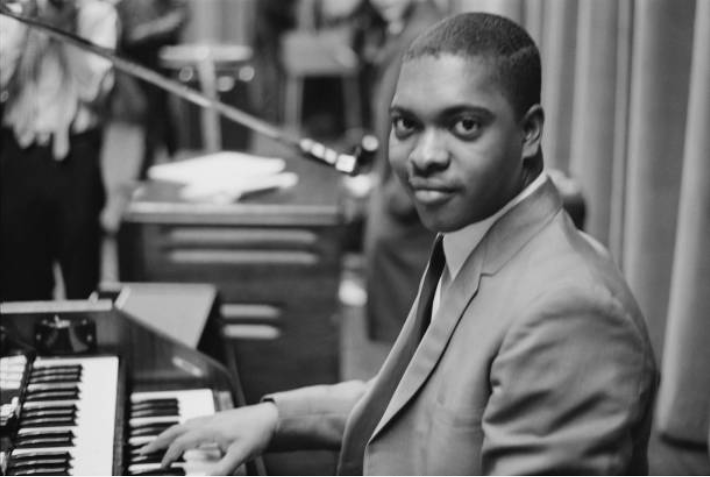
Booker T. Jones - "Chinese Checkers" |
|
My new transcriptions this month feature two great Oldies-but-Goldies
keyboard classics from the early 1960s.
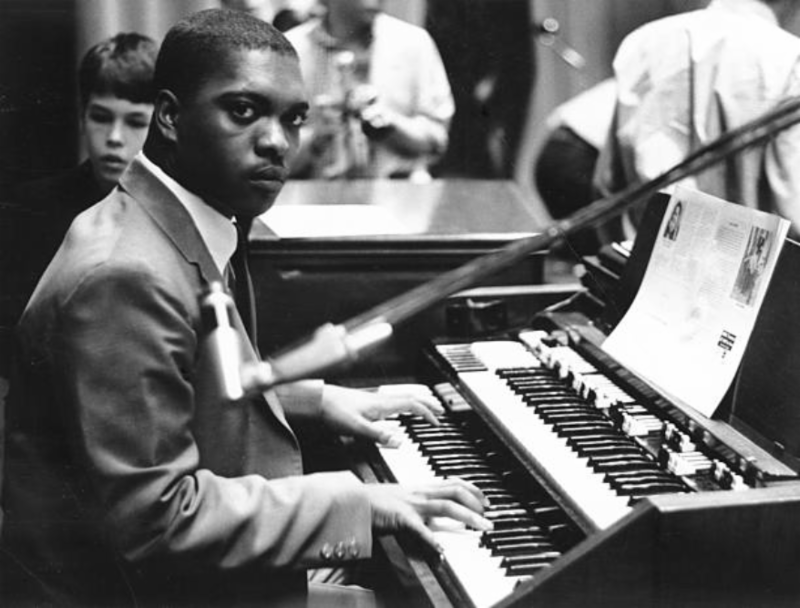
Booker T. & the M.G.'s "Chinese Checkers" wasn't as famous as his "Green Onions" or "Hip Hug-Her" but it was more complex and totally cool-sounding - certainly his very best electric piano recording, combining the gritty, slightly-distorted Wurlitzer timbre with great Oriental-sounding voicings/riffs.
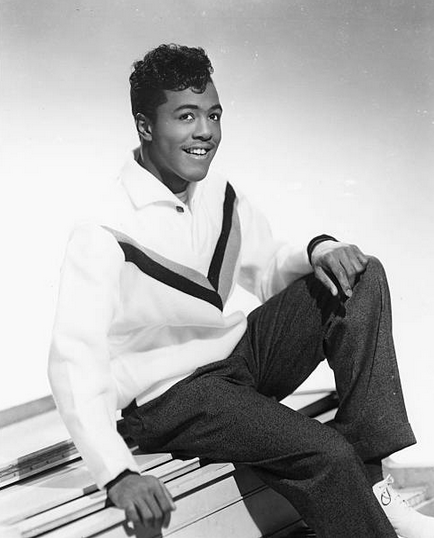
Also new this month is Dave 'Baby' Cortez' "Rinky Dink", one of the earliest B-3 organ instrumental hits, preceding Booker T.'s "Green Onions" in 1962.
|
|
Plus, this month's new "Propulsion Exercise", influenced by some of Richard Tee's techniques.
BTW, to make sure that my email doesn't end up in your Spam folder, please add me to your Contact list and/or mark my email as "Not Spam".
Note that every Title Heading is clickable.
|
|
ALL of the Sheet Music listed on my website has been personally transcribed by me, and guaranteed to be note-for-note perfect.
Whether you:
- have a cover band and want to get your keyboard parts exactly correct,
- are a professional who wants to study the styles of rock's greatest keyboard players, or
- are a hobbyist that wants to learn how to play pop/rock and great piano music,
...these note-for-note transcriptions will prove extremely helpful.
|
|
In 1944 Booker T. Jones was born in Memphis, Tennessee, and named after his father Booker T. Jones Sr., who had been named in honor of Booker T. Washington. Jones Sr. was a science teacher at Booker T. Washington High School in Memphis.
Booker Jr. became interested in music as a toddler, when he received his first dime store drum. At age five he taught himself chords on a ukulele and an old piano, and in the third grade his parents bought him a clarinet. Booker's mother and father were both musically inclined (his mother was a lead soprano in their church choir, and his father sang).
As a fourth grader, Booker found his way into Memphis' Porter Junior High School Band by playing the oboe, a difficult woodwind instrument that no one else wanted to tackle.
|
|
Booker T. Jones -
multi-instrumentalist extraordinaire
|
|
Spending evenings after school in the bandroom, Booker eventually learned to also play the saxophone and flute, then later moved to the brass instruments, trombone and baritone horn, at Booker T. Washington High School.
A multi-instrument musical prodigy, he went on to play string bass, guitar and organ, which he played at church.
At 14 Booker T. was sneaking into Memphis clubs to play music. And around this time while hanging around a Memphis record shop (next to Stax), he met a record clerk named Steve Cropper, who played guitar.
By the time he entered high school, he was recognized as the most talented musician there, and was appointed director of the high school band for four years.
Isaac Hayes and Maurice White ("Earth, Wind & Fire") also attended the same high school, where White was Booker T.'s first drummer.
Booker began working sessions at Stax Records in 1960 at age 16, introduced to the Stax team by high school pal David Porter. His first professional recording gig was playing bari sax on Rufus & Carla Thomas' "Cause I Love You".
He and Cropper went on to become half of the Stax house band that recorded the backing tracks for all Stax artists. The other half included Donald "Duck" Dunn, the bassist, and the incomparable Al Jackson, Jr. on drums.
Two years after Booker T. began working at Stax, while still only seventeen - the month before he turned eighteen, he and that house band released their first album, Booker T. & the M.G.'s Green Onions, which went on to make history with its title song.
Their second album, Soul Dressing, contained one of the best electric piano instrumentals ever, "Chinese Checkers". The single was released when Booker T. was eighteen. If you don't remember it, treat yourself and give it a listen, here on YouTube.
Here are my Booker T. Jones transcriptions:
|
|
|
|
Dave 'Baby' Cortez - his birth name was David Cortez Clowney - was born in Detroit in 1938. His father played piano and encouraged Dave to pursue a musical career. After playing piano for ten years, he took up the organ.
In 1956 he made his first record for Ember Records under his birth name and sang with two doo-wop groups, the Pearls (1955 - 1957) and the Valentines.
He was well-known in black pop-music circles as the Musical Director for Little Anthony and the Imperials.
During a 1959 recording session Clowney was scheduled to record an original song of his, "The Happy Organ", written with lyrics and intended to be accompanied by a piano and an organ.
The microphones were positioned for a vocal, but Clowney demurred: "I didn't like the vocal, because I'm not a great singer," he recalled in 2012.
He noticed a Hammond electric organ sitting unused in a corner of the studio. "Usually, when you go into a studio, they have the Hammond organ covered up. People weren't using it then, except in gospel, mostly. I said, 'Let me try this thing here.'"
|
|
"The Happy Organ" became the first pop/rock hit to feature the electronic organ as the lead instrument, and was the first instrumental #1 hit on Billboard's Hot 100 chart.
Three years later, in June 1962 - sixty years ago this month - he had another Top Ten hit with "Rinky Dink" on Chess Records. This record became well known in the UK as the signature tune of the Saturday afternoon program Professional Wrestling. It was covered the same year by Booker T. & the M.G.'s on their first album and by Bill Justis (of "Alley Cat" fame), and the following year by Paul Revere & the Raiders and by Steve Allen, and later by Willie Mitchell and many others.
To this day "Rinky Dink" has a special place in my heart, because I learned it at the age of 14 during my very first rehearsal with my first rock band, The Cavaliers, in Kosciusko, Mississippi, where I grew up.
If you don't remember how 'fat' that B-3 part sounded on "Rinky Dink", listen to it here on YouTube.
Here is my new Dave 'Baby' Cortez transcription:
|
|
|
|
This month I'm happy to offer two great Oldies-but-Goldies keyboard instrumentals from the early 1960s.
One of my favorite instrumentals has always been Booker T. & the M.G.'s "Chinese Checkers", recorded on a Wurlitzer electric piano, complete with all the 'dirty-ness' and borderline-distortion of the Wurly (it might have been a tube-amp Wurly).
I always wondered exactly how Booker T. got those Oriental-sounding licks, which were clearly more complex than just playing in 4ths or 5ths.
Plus, his opening riff, right from the very beginning, is such an ingenious interplay between the hands - and never played correctly by anyone other than Booker T.
|
|
My other brand-new transcription this month is of an even earlier instrumental classic - Dave 'Baby' Cortez' "Rinky Dink", which helped elevate the Hammond B-3 organ into its deserved popularity.
"Rinky Dink" is based upon a pretty simple I-vi-IV-V chord progression with an infectuous rhythm, and has an exceptionally catchy right hand lead line.
Although many cover bands play it, rarely does the organist get it just right. It has seven verses which change registers, some up an octave, others in the mid-register with the rhythmic chords on the lower manual. And every verse changes the lead line, which many players don't catch. Plus it contains two choruses that combine major and minor pentatonic scales that also are often mis-played.
"Rinky Dink" is not quite as simple as it sounds, and this transcription captures it exactly as it was recorded, including the Hammond drawbar settings for the upper and lower manuals and the Leslie tone cabinet speed.
|
|
BTW, MIDI files are available in addition to the PDF sheet music for both new transcriptions. |
|
My new exercise this month uses some elements in Richard Tee's style to demonstrate how to give "forward momentum" to your own playing.
The left hand part uses a Richard Tee pattern that he used in Phoebe Snow's "Gone at Last", and then adds some 'propulsive' elements into the right hand part.
This exercise will show you how to use 'pushes' and syncopation to achieve forward momentum in up-tempo grooves. The rhythms and the chords are similar to those often used by Richard Tee. The left hand keeps a straight, non-syncopated beat while the right hand is often playing syncopated rhythms and off-beat accents. Containing four sections, this will improve your ability to play chords in the G Dorian mode, increase Left/Right co-ordination, and show you how to make your uptempo jams more propulsive.
|
|
Here are my Richard Tee-related exercises & transcriptions:
|
|
The Hangout Place for Gospel Classics
|
|
You don't have to be from the Deep South to love Gospel piano, nor do you need to belong to any particular religion. All you have to have is a love for wonderful old-time, swinging, uplifting piano-playing.
Leon Russell, Billy Preston, Richard Tee and Ray Charles, some of the greatest keyboard players ever, loved the style and infused their own performances with Gospel licks and rhythms.
Inspired by the wonderful playing of the portly Associate Pastor/Musical Director of my childhood's Baptist Church deep in the piney woods of Mississippi, in recent years I've transcribed and/or arranged a few Gospel classics.
This little corner of my newsletter is where I'll keep you informed of my latest efforts to share that old-time Gospel sound.
Here are my Gospel transcriptions and/or arrangements, plus some exercises:
Full-blown Gospel:
Heavily Gospel Influenced:
Moderately Gospel Influenced:
Gospel-related Exercises:
|
|
Helpful for Those that Don't Read Sheet Music Well
|
|
Most of my transcriptions have heretofore been available only as sheet music in PDF's. That is gradually changing - some are now also available as MIDI files, which can be especially helpful for those who would prefer to listen to them than to read the sheet-music notation.
This section of my newsletter is where I'll keep you informed of which transcriptions and exercises are available as MIDI files.
BTW, if you'd like my sheet music in a MIDI file, just let me know which one(s).
Here are the currently available MIDI files of my transcriptions, arrangements, and exercises:
MIDI Files of Rock & Pop Transcriptions:
MIDI Files of Exercises:
|
|
If you're using a vintage synthesizer, please check out our synth patches here.
These are the most highly-organized and best-sounding synth patches available anywhere, guaranteed. Get the most out of your vintage hardware with these large patch libraries:
Ensoniq
Kawai
Korg
Roland
Yamaha
Even if you don't use the actual hardware synthesizers, there are software emulations that will allow you to play these patches on your computer, as VSTI's in your sequencer. These include:
Korg Legacy Digital Edition (for M1 & T1 synths)
Native Instruments FM8 (for DX7 synths)
Aurora FM (for DX7 & TX81Z synths)
SQ8L (for ESQ-1 synths)
|
|
I've had the good fortune to have taught some of the biggest names in the entertainment industry, and if you're serious about learning, I'll be happy to help you, too.
By means of Skype lessons (or in-person if you're in L.A.), I can coach you and help you to improve your technique, your rhythm, your ability to improvise, your knowledge of music theory, your sight-reading, and to develop relative pitch.
|
|
- The Beach Boys
- Rod Stewart - All 'Unplugged' Concerts
- Ricky Nelson - Stone Canyon Band
And I've also won classical piano competitions performing Beethoven, Rubinstein and Saint-Saens' Piano Concerti. See me playing here. "Josie's Boogie" is quite the virtuoso dramatic minor-key showpiece; check out the ascending double-octave run at the ending... :)
Thanks to the internet, I can help you play piano better - rock or classical, by ear or by note.
Or if you live near the Hollywood Hills, I'll teach you in my home or yours.
1) Your musical background
2) Where you are currently, musically-speaking
3) Your musical goals
|
|
|
My students include members of:
- Weezer (Rivers & Brian)
-
Vampire Weekend (Ezra & newest addition, Greta)
- Incubus (Mike)
- The Strokes (Nick)
- Rooney (Robert)
-
Jason Schwartzman (Mozart in the Jungle)
- Courteney Cox
- Pablo Dylan
|
|
Franz Liszt - Improvising on
|
|
|
|
"Thank you! It (Floyd Cramer's "One Day at a Time") is beautiful. It was quite easy to sightread. I always thought his music was more difficult, but they seem all the same. We just don't do the slip (his bag of tricks), and it seems harder than it actually is. I've been searching for this arrangement for years. I've never found this song from him written down. Sure wish I could do what you do...
- Susan W.
|
|
|
Los Angeles, CA
323-650-6602
|
|
|
|
|
|
|
|