Abstract:
This presentation starts with an introduction to memory systems in computing devices such as computers, tablets or smartphones. Then, an in-depth analysis of standard memory systems for low and high-performance applications is provided. The interactions between the signaling, clocking architecture and packaging technology of a memory interface as well as how these interactions determine the achievable data rates and power efficiency are discussed. Signaling and clocking schemes for standard memories, including DDR3 and DDR4 (DDR5?), and mobile memories, such as LPDDR3 and LPPDR4 are compared against each other. The emerging 2.5D/3D memory systems are also presented. Packaging options such as BGA, PoP, and 2.5D/3D are also discussed. To analyze/compare different state-of-the-art memory interfaces, they use: cost, power efficiency, bandwidth, design complexity, signal & power integrity, thermal solution, and form factor. The audience will gain an in-depth understanding of high-speed memory interfaces; learn about the interactions between the signaling, clocking architecture and packaging technology, and find out how those interactions determine the achievable data rates and power efficiency. The presentation will conclude by demonstrating how this can be used to analyze and compare different memory interfaces to help attendees implement a solution which best fits their specific application.
Speaker Biography:
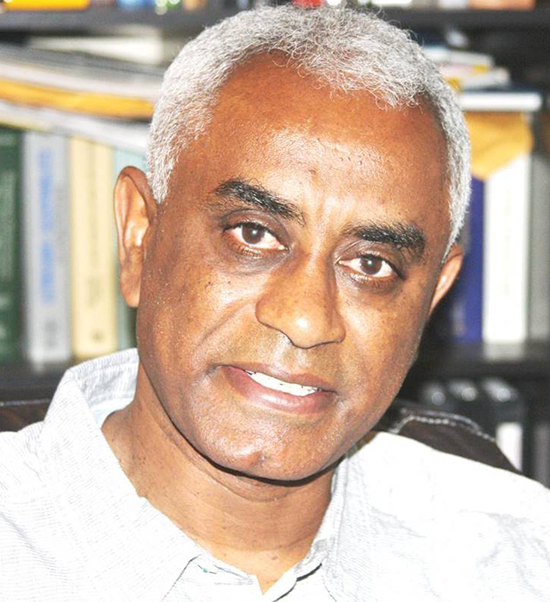
Dr. Wendemagegnehu (Wendem) T. Beyene (M'88–SM'05) was born in Addis Ababa, Ethiopia. He received the B.S. and M.S. degrees in electrical engineering from Columbia University, New York, NY, USA, in 1988 and 1991, respectively, and the Ph.D. degree in electrical and computer engineering from the University of Illinois at Urbana-Champaign, USA, in 1997. In the past, he was employed by IBM, Hewlett-Packard, and Agilent Technologies. In 2000, he joined Rambus Inc., Los Altos, CA, USA, and served as a senior principal engineer responsible for signal integrity of multi-gigabit parallel and serial interfaces. During 2017-2020 he served as principle engineer with responsible for signal and power integrity analysis of high-performance FPGA including fabric and high-speed I/O subsystems as well as I/O modeling. In 2020 he joined Facebook as a Analog & Mixed-Signal Architect in Facebook Reality Lab.
Dr. Beyene has authored or co-authored numerous refereed publications in various leading IEEE Transactions and conferences. These publications covered various disciplines including package and interconnect modeling, analysis and optimization. He is currently an Associate Editor of IEEE Transactions on CPMT and is a Senior Member of the Institute of Electrical and Electronic Engineers (IEEE). He also serves on several leading technical program committees, including EPEPS and SPI.