|
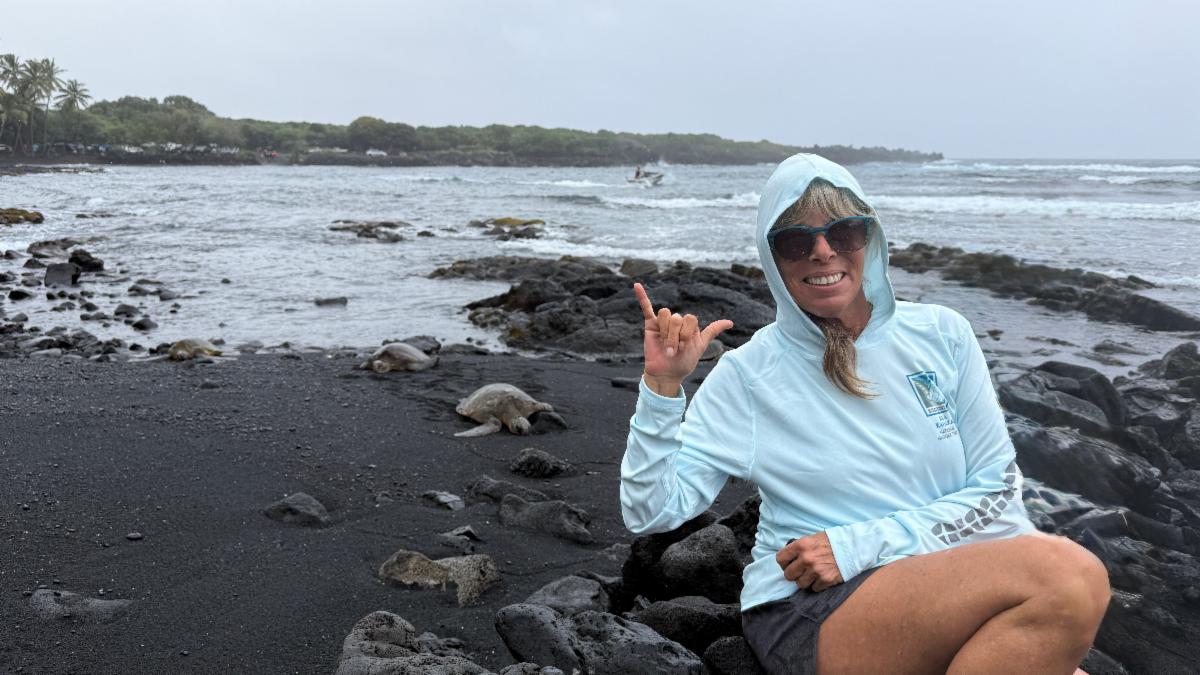
My name is Sherri Crilly, and I have been a volunteer with Save-A-Turtle since 2016. I am also an Florida Fish and Wildlife Conservation Commission (FWC) permit holder and volunteer for sea turtle nesting, stranding, and salvage in the Lower Keys.
Aloha! Last month, I shared an article with you regarding ancient traditions versus modern conservation discussed at the International Sea Turtle Symposium in Kona, Hawaii. This month, I’m excited to tell you about a behavior known as basking.
In Florida, sea turtles only emerge from the ocean and crawl onto the beach when they are ready to deposit a clutch of eggs. Therefore, males never come out of the ocean during their entire lives, which can span upwards of 80 years.
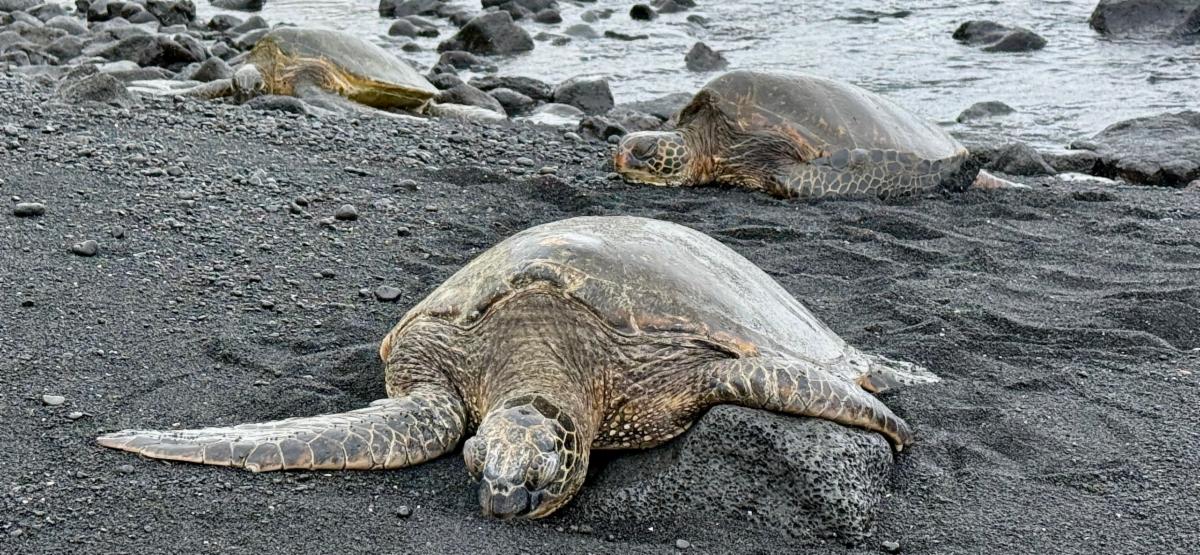
However, in Hawaii and just a few other locations on this planet (the Galapagos Islands, Mexico’s Socorro Islands, and parts of Australia’s Wellesley Islands), both male and female green sea turtles exhibit “basking,” where they crawl up onto the beach on a regular basis and will lie there for hours at a time. Why? And why in only select places on the entire planet?
First, let’s answer the “why.” Research on basking behavior is ongoing as to why it occurs and why it is limited to only green sea turtles (Honu). Researchers have found that turtles crawl up onto the beach to regulate their body temperature from colder waters, escape shark predation, and simply rest. It has also been discovered that basking helps aid digestion.
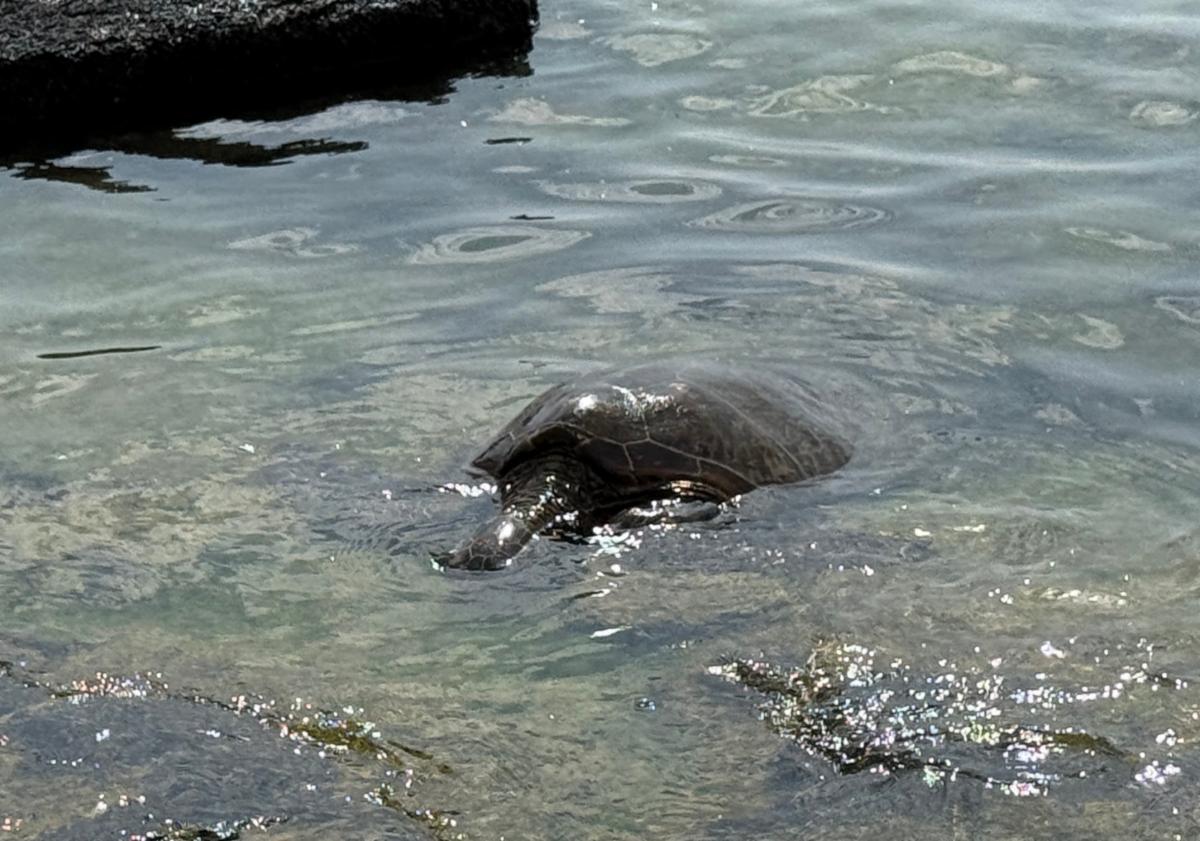
Basking occurs day and night, and often dozens of turtles can be seen basking at the same time. While in Hawai’i, I was blessed to witness this behavior on several beaches and noticed that the turtles seem to come in with the tides and love to bask on the black lava rocks as well as the sand. Furthermore, I observed turtles munching on algae that collects on the lava rock right at the shoreline.
Here in the Florida Keys, green turtles love to eat seagrass, which is not present in the ocean waters of the Pacific around the Hawaiian Islands. So, that algae is an easy meal for the Honu. Eat. Relax. Sleep. They like the beach for the same reasons we humans do.
There is no scientific reason as to why Honu are the only species seen basking.
So, why do they choose these particular locations? My research discovered that basking has been noted in logbooks going back centuries in the Galapagos and the northwestern Hawaiian Islands. However, before 1990, basking didn’t exist on the main Hawaiian Islands, most likely because turtle harvesting was legal until the 1970s. It appears that the main reasons turtles choose to bask in these locations come down to water temperature changes and predation. And since harvesting is no longer legal, basking turtles are not allowed to be captured by humans when they come ashore.
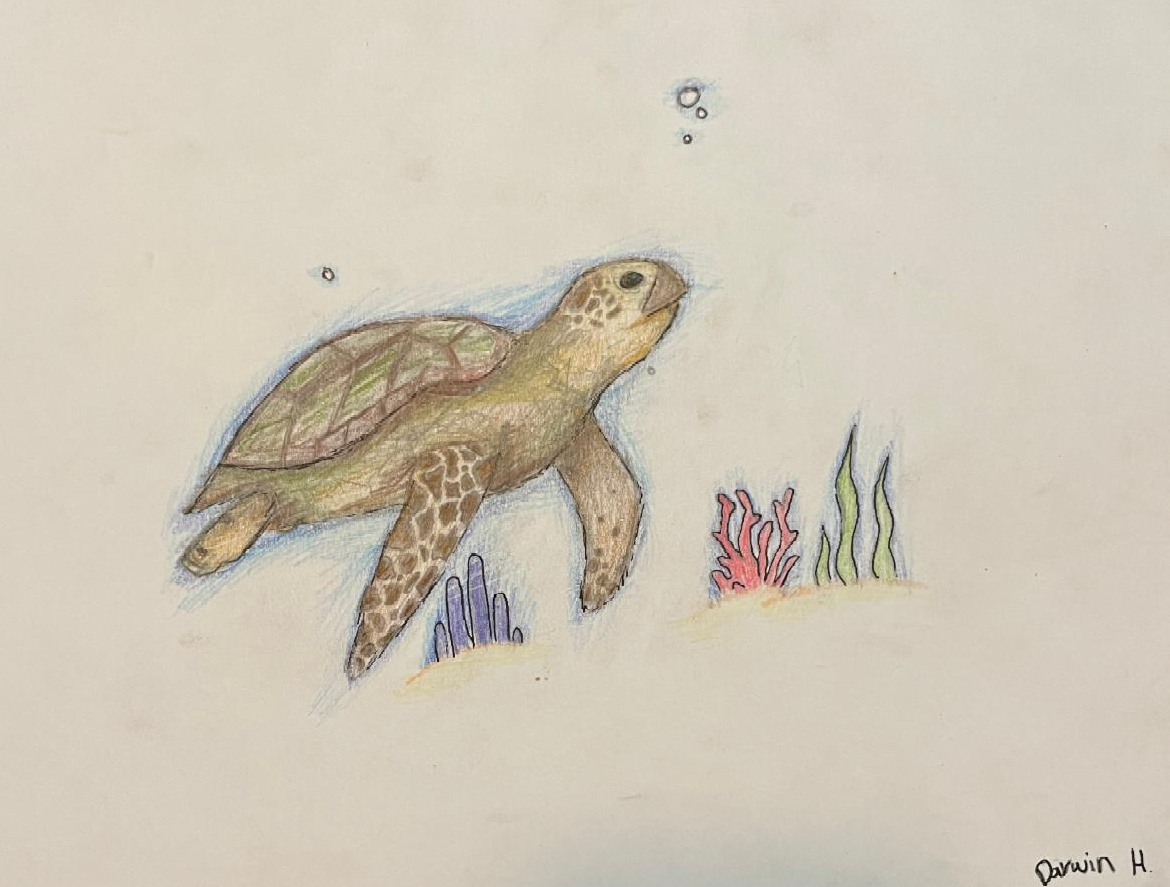
When diving here in the Florida Keys, it is always so exciting to see a sea turtle swimming by. During my time in Hawaii, I actually witnessed more turtles on the beach than in the ocean! Due to how cold the water was, I completely understand why they chose the warm beach over the chilly seas.
|