White House press secretary Jen Psaki said Tuesday that the site was in its beta phase to allow troubleshooting ahead of Wednesday's official launch day. The website is COVIDTests.gov, which then directs people to a U.S. Postal Service site.
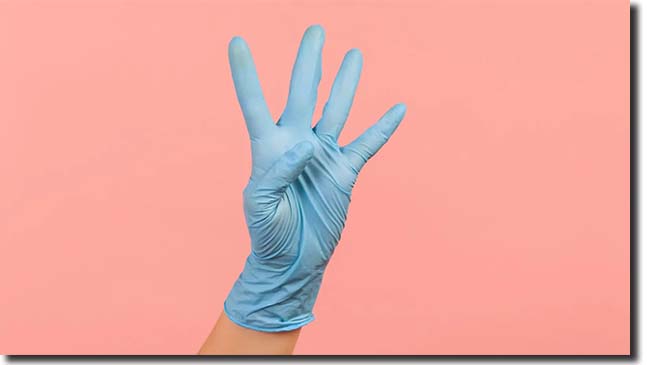
Americans are supposed to be able to order four kits per address. Once ordered, tests are expected to be mailed within seven to 12 days.
|
|
Policymakers must help address the national emergency of healthcare workforce shortages
America's hospitals and health systems are seeing rapid increases in inpatient and ICU admissions as the Omicron wave of COVID-19 sweeps the nation. With more than 55 million total cases to date in our country and a heartbreaking 800,000 deaths and counting, hospital teams are pressed beyond belief.
As they respond, America's hospitals and other facilities have not been spared the supply chain challenges that many faced leading up to the holidays. One less visible but very serious aspect of our service should concern everyone: making sure we have the necessary workforce to care for patients.
Millions of American workers have either quit or changed jobs in recent months. It's been called the Great Resignation or the Big Quit, and it is affecting many employers, including the healthcare field.
|
|
ASIPP is conducting a survey on the practice patterns of perioperative management covering antiplatelet and anticoagulant therapy in Interventional Pain Management. We last surveyed this topic 10 years ago. We would like to compare the 2011 data to 2021 to see the changes to the practice pattern. Your help is needed to accomplish this!
We recently mailed to you the survey titled Practice Patterns of Perioperative Management of Antiplatelet and Anticoagulant in Interventional Pain Management. If you did not complete the survey, please take a few minutes to complete it mail it back to us in the prepaid return address envelope.
If you did not receive the survey, you may download the survey by clicking here. Please complete and e-mail it back to drm@asipp.org or fax to 270.554.5394.
This survey is most important to ASIPP and its members. It will demonstrate how our members practicing Perioperative Management utilize antiplatelet and anticoagulant therapy in pain management procedures. The more members that participate will increase the impact of the survey.
Please complete the survey and mail, e-mail, or fax back as soon as possible.
|
|
Experts say additional boosters could provide diminishing returns
Once, twice, and now three times, many people in the U.S. have rolled up their sleeves to get vaccinated against COVID-19.
But as daily infections break records and hospitals across the country near capacity during the Omicron surge, many people have raised questions about whether they'll need to get a fourth dose.
Some wonder whether their waning antibody levels from a booster shot last September will be protective during this period. Others question whether or not their immune systems would even benefit from continual boosting in the future.
|
|
The community of people who use(d) drugs offer valuable knowledge and compassion
"Overdose! Atkinson Street!"
We grabbed the oxygen tank, AED, and emergency kit. We ushered our patients out of the clinic and ran past the metal detectors to the street. We ran to the cluster of outreach workers, police officers, and onlookers that the emergency had attracted.
I work as a physician in a shelter-based clinic in Boston, near the intersection of Massachusetts Avenue and Melnea Cass Boulevard, where a large encampment of people experiencing homelessness has emerged. Injection drug use in this area has picked up recently, and overdoses are not uncommon. When people need help, outreach workers and shelter staff run in and call for us.
The man before us that day was pale, nearly blue, rigid, and barely breathing. His pupils were pinpoint, and the oxygen saturation meter read 68% -- very low and consistent with an overdose that had suppressed his drive to breathe.
|
|
Is the patient hospitalized "for" COVID, "with" COVID, or somewhere in between?
Doctors are experiencing a shift in the kinds of COVID patients they're seeing as Omicron spreads at unprecedented rates -- and it's not just more of them. Rather than patients with classic COVID pneumonia symptoms, they are treating more vaccinated patients with other conditions whose COVID infections have pushed them over the edge into more serious health crises.
"We have tons of people with COVID in the hospital, equal in number to what we had last winter, but very different patterns," said Christopher Cannon, MD, a cardiologist at Brigham and Women's Hospital and Harvard Medical School in Boston. "Amongst the vaccinated patients, it's more the COVID 'tip' type of thing. It's tipping over patients' other conditions to become worse."
Rather than primarily people with lung problems and ventilators, patients now present with issues that have something to do with COVID and something to do with heart failure or heart disease, for example, said Cannon. He is one of several interviewed doctors theorizing that fewer people with existing health problems sought medical care during last winter's COVID-19 peak -- perhaps fearing that they would catch the virus in the hospital -- and the lack of care is now catching up with them.
|
|
With a record number of COVID-19 cases being reported, two top U.S. health officials made a stark prediction on Tuesday: Most Americans eventually will be infected with the virus.
"I think it's hard to process what's actually happening right now, which is most people are going to get COVID," FDA acting Commissioner Janet Woodcock, MD, told the Senate Health, Education, Labor and Pensions committee, according to The Washington Post.
Woodcock had been asked if the United States needed to change its COVID strategy. She said people need to accept the reality of widespread infection so the nation can focus on maintaining "continuity of operations" in crucial sectors.
|
|
You'll end up on a wild goose chase
Leading up to and following the holidays, the Biden administration has continued to urge the general public to test for COVID-19 before gatherings to protect our loved ones and stop the spread of COVID-19.
That is easier said than done. I imagine for President Biden, getting a COVID-19 test is no sweat, he would just have someone come to his office to swab his nostril, and then report back to him his result. Similarly, Anthony Fauci, MD, director of the National Institute of Allergy and Infectious Diseases, may just have to walk down to his laboratory and get a test.
For an ordinary citizen, getting a COVID-19 test is more involved and oftentimes takes hours to arrange and necessitates them waiting in long lines. Holiday travel and the rapid spread of Omicron made this even worse.
|
|
Dr. Walensky Said Deaths May Rise Dramatically Given the Sheer Number of Cases
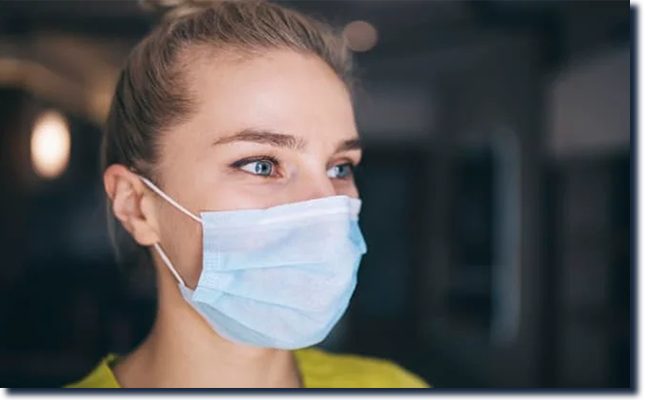
The U.S. Centers for Disease Control and Prevention has updated its guidance on face masks, saying loosely woven cloth masks offer the least protection against COVID-19 and N95 and KN95 masks offer the most.
The CDC update doesn't come out and say Americans should avoid cloth masks but clarifies that some kinds of masks work better than others.
"To protect yourself and others from COVID-19, CDC continues to recommend that you wear the most protective mask you can that fits well and that you will wear consistently," the CDC said in its first updated mask guidance since last fall.
|
|
-
To log in for the first time you will need to click “forgot password” at the bottom of the login window.
- Check your email and then log in as directed.
-
If you have problems logging into your account, click here.
|
|
Call for
Abstracts & Poster Presentations
|
Proposals accepted through March 1st
|
A $50 submission fee is required upon completion of the form. |
Questions can be directed to
Savannah Gold at 270.554.9412 ext 4219 or
|
|
After reading the 2022 Abstracts & Poster Presentations guidelines, please complete the form along with the presenter's CV by clicking here.
- Top 3 will present during the general session on the final day.
- Top 10 will present during the abstract breakout session.
-
Rapid review and publication in the Pain Physician journal will be extended to the Top 10 authors accepted for meeting presentations.
Click here for Abstract and Poster Presentation
|
|
Pain Medicine Case Reports (PMCR) and Editor-in-Chief Alaa Abd-Elsayed, MD, PhD would like to invite you to submit case reports and case series to the PMCR journal. Your article will be published free of charge.
Open access journals are freely available online for immediate worldwide open access to the full text of published articles. There is no subscription fee for open access journals. Open access journals are no different from traditional subscription-based journals: they undergo the same peer-review and quality control as any other scholarly journal.
Interested in becoming a member of the PMCR Editorial Board?
Editorial board members are asked to review 2-6 manuscripts per year. Please submit your most up-to-date CV to sgold@asipp.org for consideration.
For more information or to submit your articles, click here.
|
|
| CASE REPORT |
Oktay Faysal Tertemiz, MD, Can Eyigor, MD, and Erkan Ozduran, MD
Abstract
BACKGROUND: There are many different treatment methods available in terms of complex regional pain syndrome (CRPS). In patients who do not respond to medical treatments, treatment is first started with sympathetic blocks and somatic nerve blocks are added when necessary. Epidural catheter applications can be practised if sufficient results cannot be obtained from the blocks in very few patients. Continuous epidural block application allows both sympathetic and somatic nerve block, allowing the patient to recover, as well as pain palliation, and adequate physical therapy and rehabilitation.
CASE REPORT: In this case report, although partial pain palliation was provided with sympathetic and somatic blocks in a female patient with a diagnosis of CRPS for a long time, especially in physical therapy and rehabilitation applications, due to the inadequate response due to pain, even in the late period, a subcutaneous tunnel epidural catheter was used.
CONCLUSION: We present the use of continuous epidural block application in treatment successfully.
KEY WORDS: Catheters, complex regional pain syndromes, epidural block, physical therapy modalities
|
|
| RETROSPECTIVE STUDY |
Yu-Yi Huang, MD, Tsai-Sheng Fu, MD, Dong-Yi Lin, MD, Yun-Da Li, MD,
Ying-Chih Wang, MD, Chak-Bor Wong, MD, and Chia-Wei Chang, MD
Abstract
BACKGROUND: The traditional treatment for an instrumented vertebral fracture involves removing the loosened pedicle screws and extending the posterior instrumentation cephaladly or caudally. There has been a recent trend of performing minimally invasive fluoroscopy-guided percutaneous vertebroplasty as a salvage procedure.
OBJECTIVE: The aim of this study was to compare the outcomes of surgical interventions for instrumented vertebral fracture.
STUDY DESIGN: Retrospective assessment.
SETTING: All data came from Chang Gung Memorial Hospital, Taiwan.
METHODS: We retrospectively reviewed 35 patients with an instrumented vertebral fracture who underwent fluoroscopy-guided percutaneous vertebroplasty (Group I, n = 16) or extension of the posterior instrumentation (Group II, n = 19). Demographic data were recorded. The operating time, amount of intraoperative blood loss, time to postoperative ambulation, and duration of hospital stay were also evaluated. The visual analog scale (VAS) score, kyphotic angle on radiological images, Kirkaldy-Willis functional score, complications, and revision surgery were evaluated at one week and one, 3, 6, and 12 months postoperatively.
RESULTS: Group I had a shorter operating time (P < 0.001), less intraoperative blood loss (P < 0.001), earlier postoperative ambulation (P < 0.001), and a shorter hospital stay (P < 0.001). The mean VAS score improved significantly after surgery in both groups (P = 0.001). The postoperative kyphotic angle was better in Group II (P < 0.05). There was no significant between-group difference in the Kirkaldy-Willis functional score at the last follow-up (P = 0.91). There was no significant between-group difference in the need for revision surgery (Group I, n = 4; Group II, n = 5; P = 0.93).
LIMITATIONS This study is a retrospective cohort.
CONCLUSIONS: Minimally invasive fluoroscopy-guided percutaneous vertebroplasty can be used as an alternative to extension of posterior instrumentation for instrumented vertebral fracture. It has several advantages, including a shorter operating time, earlier postoperative ambulation, less blood loss, and a shorter hospital stay. The clinical outcomes of these 2 treatment approaches were similar.
KEYWORDS: extension of posterior instrumentation; fluoroscopy-guided percutaneous vertebroplasty; instrumented vertebral fracture; osteoporosis; percutaneous cement augmentation; Minimally invasive.
|
|
| RETROSPECTIVE STUDY |
Ahmed J. Awad, MD, Braden Jex, DO, Gwynne Kirchen, MD,
Stacy Peterson, MD, Sarah A. Endrizzi, MD, and Peter A. Pahapill, MD, PhD
Abstract
BACKGROUND: There is a debate on the long-term outcomes of surgical decompression for lumbar spinal stenosis (LSS) as compared to conservative treatment, with even more limited outcomes in repeat surgeries. Hence, other less invasive treatment modalities, such as neuromodulation with a modern spinal cord stimulator (SCS), could be considered in the spectrum of management options for symptoms of neurogenic claudication (NC) related to LSS as an alternative to surgery.
OBJECTIVE: Assessing the outcomes and efficacy of SCS in neurogenic claudication in patients with or without a prior lumbar surgery.
STUDY DESIGN: This is a retrospective study of a prospectively collected database.
SETTING: The research was conducted at the Medical College of Wisconsin (MCW), an academic medical center, in Milwaukee, Wisconsin.
METHODS: This study reviewed all patients who had undergone SCS therapy for symptoms consistent with NC between 2013 through 2020. The data were collected from MCW. Only patients with at least one year of follow-up were included in outcome assessment.
RESULTS: One hundred and eighteen patients with primary symptoms of NC underwent an SCS trial with an 86% pass-rate. A total of 69 of the 93 patients who underwent permanent SCS implantation had at least one year of follow-up. All patients reported initial improvement after permanent implantation. At one-year follow-up, 55 (80%) patients had sustained improvement of their pain levels and claudication symptoms, of whom 52 (75%) continued to experience benefit for an average of at least 27 months. For patients with no prior surgical decompression, 86% continued to experience sustained benefit at the latest follow-up.
LIMITATIONS: This study has several limitations. It is of a retrospective nature that includes selection and recall biases. It is a single-center study that limits its generalizability. More limitations are discussed in the main article.
CONCLUSIONS: With modern SCS techniques, the majority of patients can achieve sustained improvement of symptoms of NC of at least a 2-year duration regardless of previous history of lumbar decompressive surgery. SCS can be considered as part of the conservative treatment options before committing to surgical decompression.
KEYWORDS: neurogenic claudication; neuromodulation; spinal stenosis; SCS.
|
|
Since this malpractice insurance program officially launched in November 2018, ASIPP has signed up hundreds of providers with an average savings of 30%. This is professional liability insurance tailored to our specialty and will stand up for us and defend our practices.
Norcal Mutual is A-Rated by AM best and is licensed in all 50 states. To read a few important points to keep in mind about the program, including discounts, administrative defense, cyber coverage, aggressive claims handling, and complimentary award-winning risk management CME activities, click here.
|
|
ASIPP® has formed a partnership with Henry Schein and PedsPal, a national GPO that has a successful history of negotiating better prices on medical supplies and creating value-added services for independent physicians. Working with MedAssets, PedsPal provides excellent pricing on products like contrast media that alleviate some of the financial pressures you experience today.
|
|
ASIPP® is now offering our members the benefit of a unique revenue cycle management/ billing service.
We have received a tremendous amount of interest in the ASIPP® billing and coding program.
Click here to learn more about the negotiated rate for practices and more!
|
|
|
up-to-date news related to you, your practice, and your patients!
|
|
|
|
|
|
|