Dear Colleagues,


Happy National Rural Health Day! It's a great day to bring attention to and honor the incredible efforts of rural healthcare providers, communities, organizations, State Offices of Rural Health, and other stakeholders dedicated to addressing the unique healthcare needs of rural America!


It's been a unique fall so far with regards to telehealth, but we've recently seen some uplifting progress! A week ago, Congress passed a continuing resolution (CR) (passed and signed on November 12, 2025) that reopened the government and retroactively restored (and extended) the Medicare telehealth flexibilities first put in place in 2020. The flexibilities are now active and back in place through January 30th, 2026, including the removal of geographic restrictions, provider eligibility expansion, FQHC and RHC Distant site eligibility and more. While this remains a temporary "fix", it does allow for vital access to care for millions of patients nationwide and indicates bipartisan interest in making some form of these extensions permanent.


As a reminder, these changes in federal Medicare policy do not impact your state’s Medicaid or private payer policies, many of which have been permanently expanded to allow for more broad utilization of digital health solutions. Please reach out to the NETRC team anytime with questions regarding federal or state telehealth policy, or to explore how your organization can use telehealth to its full potential in the evolving environment. Read more about the current status of the Telehealth Flexibilities here, here, here and at the NCTRC website, or at CCHP's website.


The end of the year is shaping up to be a busy and impactful one, filled with implications for the future of telehealth. In addition, we've entered conference season, and there are also a number of great webinars highlighting innovative use cases and/or telehealth providers utilizing workflows that you may be able to implement in your health system; we hope to see you at some of these events to glean from their successes and lessons learned.


Take time to catch up with family over the thanksgiving holiday, but first, fill your plate with these updates and more below in our newest edition of Northeast Connections. As always, please don't hesitate to reach out with your telehealth questions, success stories, or just to say hello; we hope to hear from you!


On behalf of the entire NETRC Team – Be Well,

Reid Plimpton, MPH - Program Manager


Regional Updates


Stories From the Region


We would like to start a new segment of Northeast Connections in which we share telehealth-related stories or innovations from around NETRC's region (Maine, New Hamsphire, Massachusetts, Connecticut, Rhode Island and New York) We want to hear from you! Have you launched a new program or process that is working well?

What successes have you had? Click below to reach out and your story may be featured in a future issue of this newsletter.

National Updates

Can I use telehealth at school?

School-based telehealth can help children more easily receive health care services.

To learn more go Here

Interstate licensure resources for health care providers, states, and health care organizations.


Getting started with licensure

Learn about the role of the federal government and states in licensing health care providers for telehealth.


Licensing across state lines

The ability to deliver health care services across state lines varies based on state regulations.


Licensure compacts

There are many compacts between states that make it easier for health care providers to practice telehealth across states.


Licensure for behavioral health

Behavioral health professionals are subject to state licensure regulations, including for telehealth.

New: Health Technology Ecosystem

CMS recently announced the digital health ecosystem to modernize health care by empowering patients and providers through innovative health technologies.


Read more


NEW from ATA: Unlock the Digital Infrastructure Score (DIS) and Mapping Tool

Not all communities have the same access to technology due to variables including broadband access, speed, affordability, and device ownership. These variables directly impact telehealth, remote work, and access to critical online resources.

The Digital Infrastructure Score is an index comprised of the variables that measure a community's capacity and readiness to utilize technology. The user friendly Mapping Tool gives you instant, data-driven insights to:

  • Pinpoint communities with limited digital access
  • Plan and target telehealth and resource deployment
  • Compare digital readiness across ZIP codes, counties, and states
  • Align infrastructure gaps with social and economic indicators

Why Access It?

With interactive maps, service-area comparisons, and built-in analytics, the DIS Tool helps health systems, policymakers, service providers, and more see where digital gaps exist, and where to act.

👉 Submit the form to access the DIS and Mapping Tool and start identifying where your communities are most in need.

Thought leadership by the ATA’s CEO Advisory Group on Expanding Access to Healthcare. 


Go here to submit the form

News & Events from Around the NCTRC

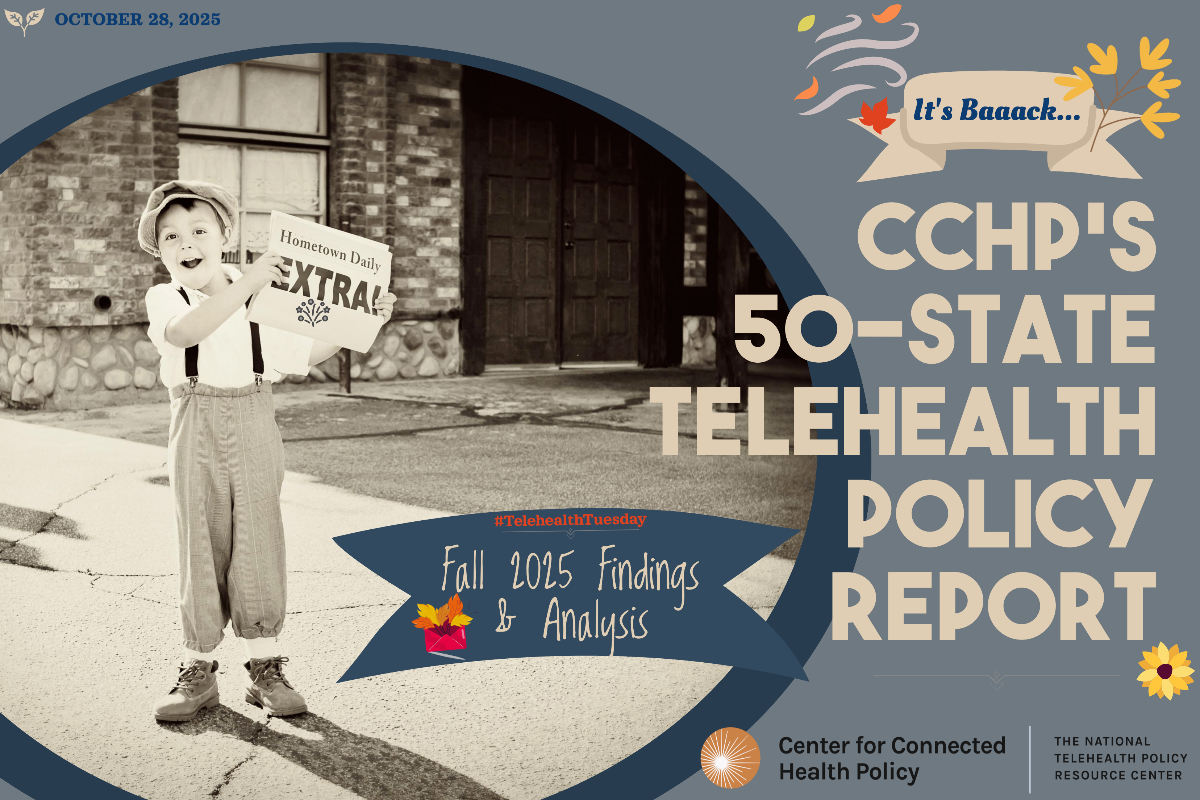
The Center for Connected Health Policy (CCHP) announced the release of its 2025 State Telehealth Policy Summary. Alongside the report, CCHP has also published a companion chart that outlines how states compare across a range of telehealth policies, as well as an infographic capturing the major findings. For those seeking state-specific details, the most up-to-date information can always be accessed and exported as a PDF directly from CCHP’s online Policy Finder tool. This edition reflects CCHP’s review of states conducted between late May and early September 2025. In some cases, states may have enacted significant legislation or implemented new policies after their respective review date; in which case, those changes will be reflected in future Policy Finder updates. Read more Here

Other Upcoming Webinars and Events


TeleBehavioral Health 2025: Does Modality Matter? Comparing the Quality of Mental Health Care Delivered by Video, Phone, and In-person

Nov 21, 2025 02:00 PM in Eastern Time (US and Canada)

Description:


TeleBehavioral Health 2025 Training Series is a free twelve-part webinar series open to anyone providing services to individuals who live with mental health and substance use issues. This Zoom-based series takes place the third Friday of each month, January through December 2025, from 11 am – 12 pm (PT). You are invited to attend all webinars, but you will need to register for each webinar separately.


Overview:

This talk will review recent research examining differences in the quality of video, phone, and in-person telemental health care. Outcomes of interest include patient and provider preference ratings, as well as clinical metrics such as mental health hospitalization rates and emergency department visits. The presentation will explore whether the modality through which mental health care is delivered may impact overall effectiveness and satisfaction.


Locking in Progress — Hardwiring Telehealth for 2030

Securing payment. Protecting data. Expanding access for all.


There’s a lot happening in Washington right now—and it’s reshaping virtual care. New policies. Shifting priorities. Big decisions. A new era of telehealth is being written in real time—and now is the time to make virtual care permanent.

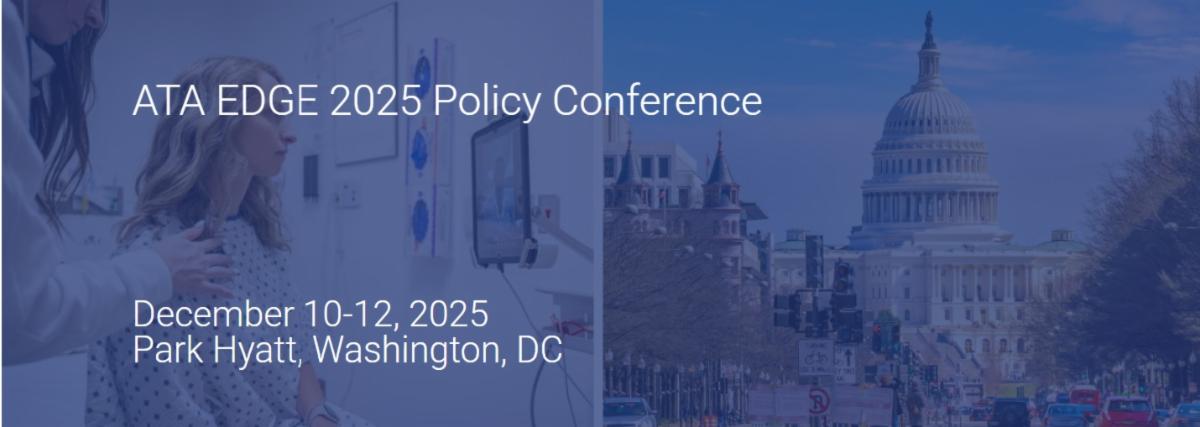
Join us at ATA EDGE 2025, the nation’s premier digital health policy forum, where healthcare leaders, policymakers, and innovators come together to cut through the noise and shape what’s next. From emerging regulations to long-term strategy, EDGE is where it all comes into focus—and where you need to be.


Featured Telehealth News

A larger news compilation can be found on the NETRC site here.


CMS Finalizes Ambulatory Specialty Model Allowing $1,000 For Remote Monitoring, Tech Incentives

InsideHealthPolicy November 7, 2025 Link

CMS’ recently finalized Ambulatory Specialty Model (ASM), targeting specialists treating costly chronic conditions like heart failure and low back pain, will test the administration’s hypothesis that linking reimbursement to cost and quality outcomes can improve care and reduce spending.


CMS Offers Good News, Bad News for Telehealth 

Healthleaders November 3, 2025 LInk 

The 2026 Medicare Physician Fee Schedule boosts virtual care in hospitals and skilled nursing facilities but complicates reimbursement for providers using telehealth from alternate sites, like their homes. 


How to Measure Telehealth Success: Metrics That Matter for Clinicians 

telehealth.org November 3, 2025 Link 

Measuring telehealth success can be tricky. Not all metrics that can be collected are meaningful, and some relevant aspects of telehealth success are difficult to measure accurately. 


Tips for telehealth transformation from Lee Health's telemedicine chief 

HealthcareITNews, November 3, 2025  Link 

Virtual services at the sprawling Florida health system have helped strengthen essential clinical programs, says Jonathan Witenko, transforming struggling initiatives into lasting pillars of care delivery. 


CMS finalizes increased pay rates for physicians in 2026, but hospital docs could lose out 

FIERCEHealthcare October 31, 2025 Link 

The Centers for Medicare & Medicaid Services (CMS) released its annual physician pay rule for 2026 on Friday night, which increases physician reimbursement by 3.77% for qualifying providers in advanced alternative payment models and 3.26% for other providers. 


Clinician Social Media Use: Expert-Informed Professional Activities, Legal-Ethical Guardrails, and Practical Steps for Safer Online Practice 

telehealth.org October 31, 2025 Link 

For clinicians providing telehealth or hybrid care, social media is now an extension of professional presence. Clinicians increasingly use digital platforms to educate patients, connect with colleagues, and advocate for access to care. However, many post or share content without fully considering licensure obligations, HIPAA/42 CFR Part 2 compliance, ethics codes, or organizational policies.   


Teleconsent In Telehealth: How Clinicians Can Remain Compliant And Improve Patient Understanding 

telehealth.org October 30, 2025 Link 

In virtual care and research, informed consent is the legal and ethical foundation of patient autonomy. In telehealth, this means ensuring that patients understand what to expect from their virtual visit and are fully informed of their rights. Many states explicitly require clinicians to obtain informed consent from their patients before providing telehealth services. 


Patients Go Without Treatment After Government Shutdown Disrupts Telehealth 

MEDPAGETODAY October 30, 2025 Link 

— It "feels like you're taking a step back," says one patient 

Bill Swick has a rare degenerative brain disease that inhibits his mobility and speech. Instead of the hassle of traveling an hour to a clinic in downtown Chicago to visit a speech therapist, he has benefited from virtual appointments from the comfort of his home. But Swick, 53, hasn't had access to those appointments for the last month 


CCHP’S 50-STATE TELEHEALTH POLICY REPORT 

CCHP October 28, 2025 Link 

The Center for Connected Health Policy (CCHP) is pleased to announce the release of its 2025 State Telehealth Policy Summary. Alongside the report, CCHP has also published a companion chart that outlines how states compare across a range of telehealth policies, as well as an infographic capturing the major findings. 


Recommended Telehealth Research/Resources
Check out the complete Telehealth Library Database on the NETRC site here.

State Telehealth Laws and Reimbursement Polices/Fall 2025 At A Glance

CCHP 2025


State Telehealth Laws and Reimbursement Policies/Fall 2025/Summary Chart of Key Telehealth Policy Areas

CCHP 2025

Billing for Remote Patient Monitoring in Medicare

U.S. Department of Health & Human Services-Office of Inspector General


Telehealth and Federally Qualified Health Centers-FQHC Fact Sheet

CCHP 2025


State Telehealth Laws and Reimbursement

Telehealth adds to primary care workload, study finds

Austin Littrel 2025


Opportunities to Alleviate the Health Care Workforce Crisis with Telehealth and Emerging Technologies: Proceedings From an Expert Roundtable

Jared Augenstein, Tracy A. Massel, Annie Fox, Ryan Kruis; 2025


Webinar: Use and Usefulness of Billing Data to Estimate Telehealth Reach and Outcomes

Telehealth Centers of Excellence; 2025


Wearable Intervention for Alcohol Use Risk and Sleep in Young Adults

Lisa M. Fucito, PhD, Garrett I. Ash, PhD, Ran Wu, MS, et al. 2025


Implementation of an AI-powered Virtual Nursing Program

Saurabh Chandra MD PhD, Bethany Smith RN, Lindsey Kuiper PhD, Yueh-Yun Lin PhD, Briana Petty RN, Kristina Cherry RN PhD; 2025


Organizational Factors Associated with Using Telehealth Services: Perspectives from Leaders of Rural Health Clinics and Federally Qualified Health Centers

Constance van Eeghen, DrPH; John A. Gale, MS; Erika Ziller, PhD; Yvonne Jonk, PhD; 2025


Have telehealth questions?

The Northeast Telehealth Resource Center has been made possible by grant number 6 U1UTH42523‐04‐01 from the Office for the Advancement of Telehealth: HRSA / DHHS.


NETRC | netrc@mcd.org | 800-379-2021 | www.netrc.org

 ‌  ‌

X  Linkedin