|
1.2 Commercial Office Building with DC Microgrid:
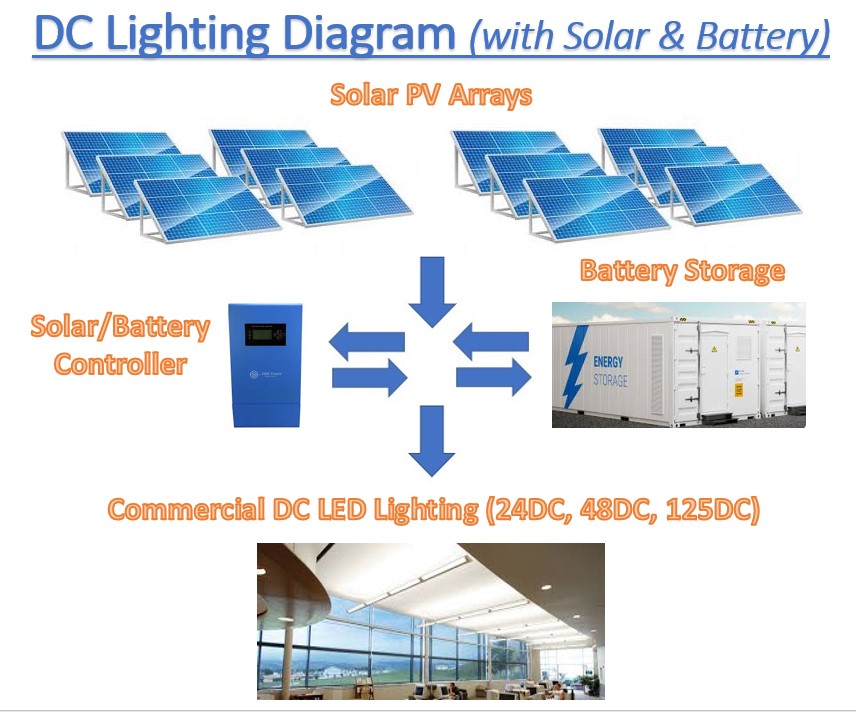
Scenario: A modern office building integrates a DC microgrid to power LED lighting, occupancy sensors, and IoT devices, with energy supplied by a combination of rooftop solar panels and a battery storage system.
Implementation: The building uses 48VDC LED fixtures controlled by 24VDC occupancy sensors (powered via a DC-DC converter). A centralized DC power supply distributes 48VDC to lighting zones, eliminating the need for individual AC-to-DC drivers at each fixture.
Efficiency Benefit: Traditional AC-powered LED systems might lose 15% of energy in conversion (e.g., 85% efficient drivers). In contrast, the DC system operates at near 100% efficiency for power delivery to the fixtures. For a 100,000 sq ft office with 500 fixtures consuming 20W each, this could save approximately 150,000 kWh annually (assuming 15% loss reduction and 3000 operating hours per year).
Impact: The building owner reduces energy costs by thousands of dollars annually and achieves higher LEED certification points, while occupants benefit from a responsive, sensor-controlled lighting system.
|