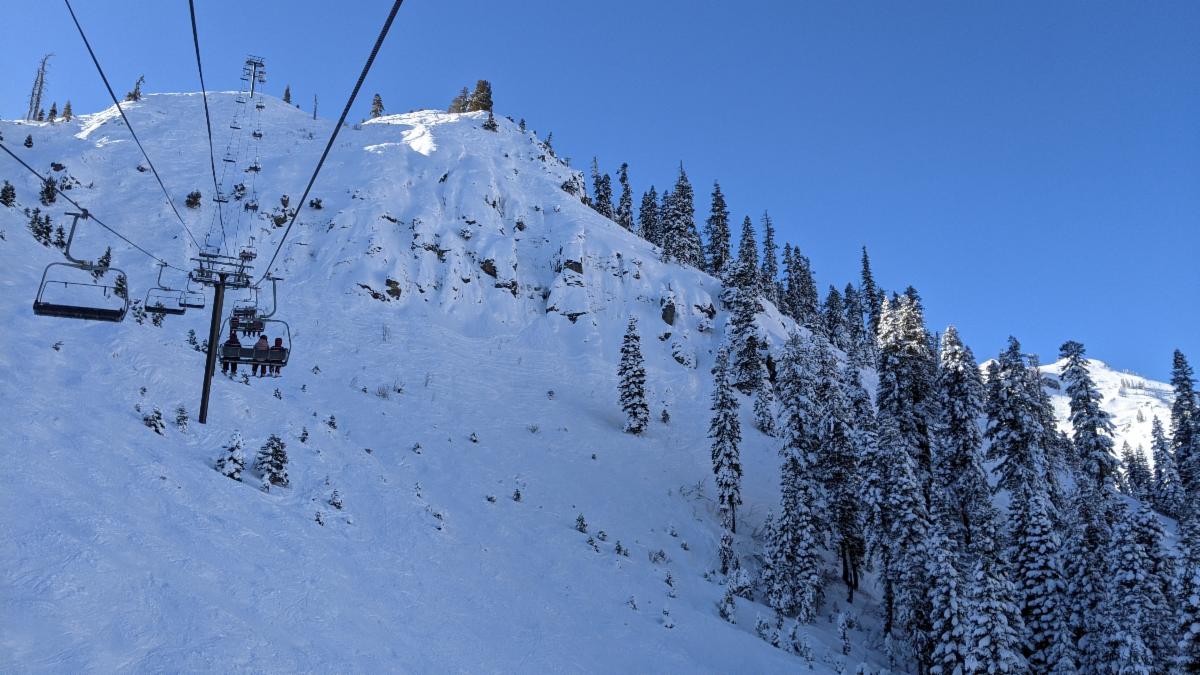
Snow falls when water vapor in the atmosphere freezes. Putting aside the shoveling, the treacherous roads, and the increased cost of heating, there are lots of reasons to love snow. While many of us enjoy winter sports, all of us can appreciate the large role snow plays in regulating the earth’s availability of water and the earth’s climate.
The melting of seasonal snow and glaciers provide precious drinking water as well as water for irrigating crops all over the world. Snowmelt also adds moisture to the soil and reduces the risk of wildfire. Too much snow, however, can lead to springtime floods and other hazardous conditions.
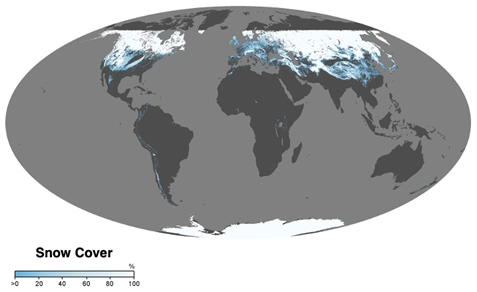
The Moderate Resolution Imaging Spectroradiometer (MODIS) on NASA’s Terra satellite produces daily snow cover maps. Snow cover values range from medium blue (greater than 0%) to white (100%). Landmasses that do not sustain snow cover and places where data are not collected are gray. In areas over the highest latitudes of the Northern Hemisphere, the sensor cannot collect data as no sunlight reaches those regions in winter.

Look at the animated images of global snow cover and imagine if all that snow had fallen as rain? Rather than accumulating for months and effectively storing water, there would be massive runoff leading to flooding and all that water would eventually flow into the ocean. Thousands more reservoirs would be needed to store even a fraction of this water for human use.
Because snow is so reflective (it has a very high albedo), it plays an important role in regulating climate. Snow reflects incoming sunlight back into space, cooling the planet. As snow recedes, we expose surfaces with lower albedo and less light is reflected and more heat gets absorbed by the ground. Not a good thing for a warming planet.

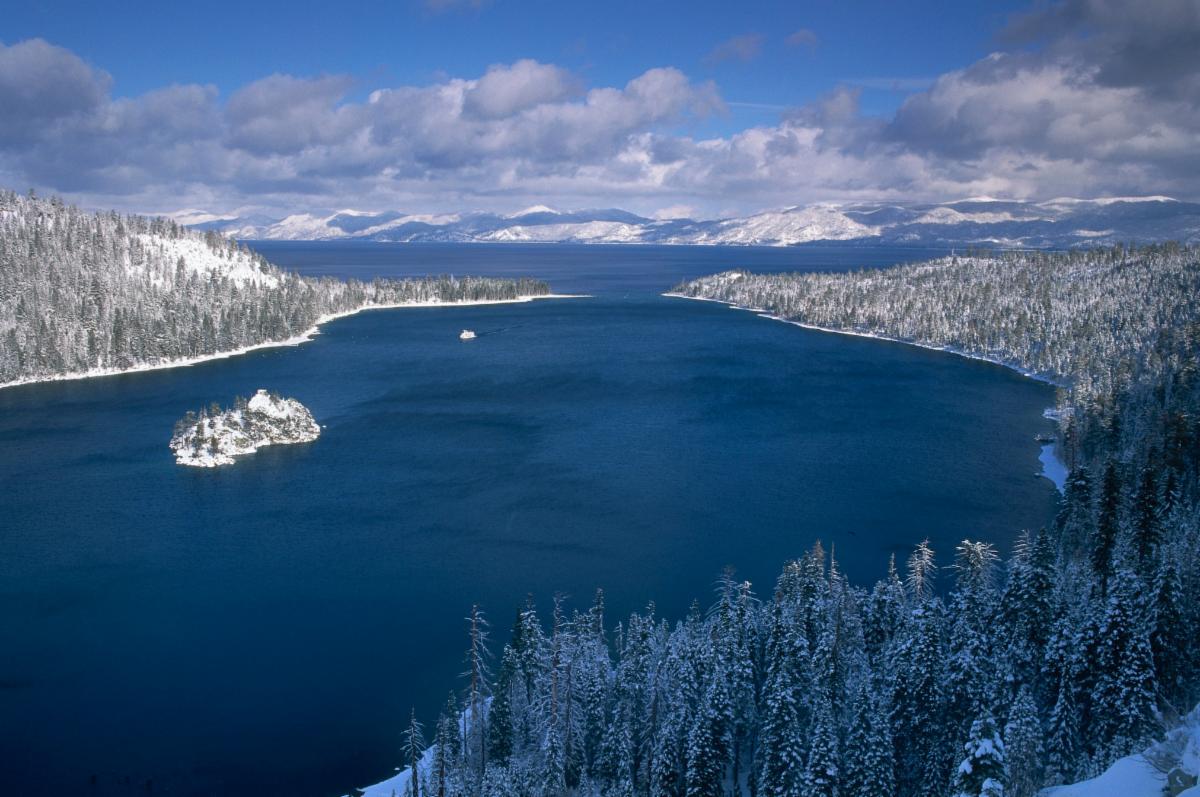
Here at Tahoe, the seasonal distribution of snowfall changes each year and has evolved over the decades. There is far less snowfall now than there was when Tahoe was home to the 1960 Winter Olympics. The future is, unsurprisingly, likely to have even less snow.

This winter TERC will be releasing its Changing Winters: Save Our Snow Instagram filter, with a focus on changes in snowpack. Look out for it coming soon.
To learn more, update your UC Davis TERC mailing lists options, visit the UC Davis Tahoe Science Center in person, check out the UC Davis Tahoe YouTube channel, and stay social with us on Facebook, Instagram, and Twitter.

Support Science to Save the Lake