APRIL 27, 2026

Facebook  X  Instagram  Web  Email

HAPPY HOUR APRIL 29TH DETAILS BELOW

Maricopa County Election Dispute Heads Toward Appeal as Election Nears


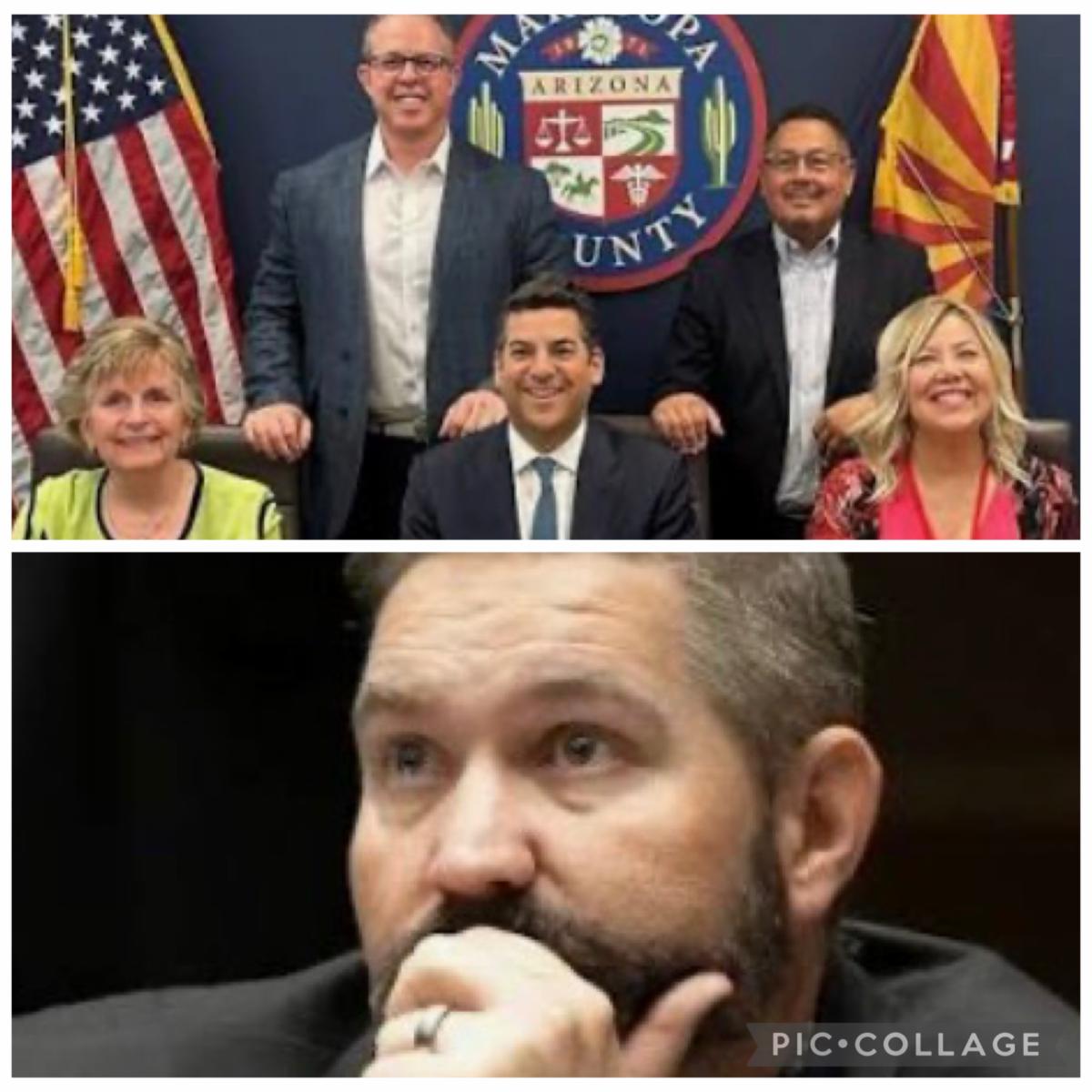
The ongoing legal battle between the Maricopa County Board of Supervisors and Recorder Justin Heap is far from over. In a 4–1 vote on April 22, the Board signaled its intent to seek a stay of the court’s ruling—and, if that request is denied, to pursue an appeal.


At the heart of the Board’s argument is timing. With ballots set to be mailed in roughly two months, officials argue that implementing sweeping operational changes this close to an election risks confusion and disruption. This concern aligns with what is commonly referred to as the Purcell Principle—a legal doctrine cautioning courts against making significant election-related changes too close to voting, when such changes could undermine voter confidence and election administration.


The dispute stems from an April 17 ruling by Maricopa County Superior Court Judge Scott Blaney, who ordered the Board to return key election-related responsibilities to the Recorder’s Office. These include control over information technology staff, software systems, and funding necessary to carry out election duties.


Board Chairwoman Kate Brophy McGee defended the decision to challenge the ruling, stating that it “injects uncertainty into the process just weeks before the upcoming elections,” and emphasized the need for clear guidance for both voters and election officials.


Recorder Justin Heap, however, urged the Board to accept the court’s decision and move forward. He described the prolonged conflict as a drain on time and taxpayer resources, arguing that the ruling provided a clear path ahead. Following the vote, Heap criticized the Board’s actions as continued “obstructionism and delay.” This is interesting since Heap filed the first lawsuit.


The disagreement reflects a broader divide that has defined election debates in recent years. Public comment at the meeting revealed a sharp split between those concerned about past election integrity issues and those worried about potential disruptions to upcoming elections.

Critics of Heap raised concerns about control of voter data and the potential for political misuse, while supporters argued the Board had overstepped its legal authority and wasted taxpayer dollars fighting a battle that, they claim, was already settled by precedent.


Tensions between the two sides have been escalating for over a year. The Board has maintained that it has the authority to manage county resources and revise power-sharing agreements, while Heap has argued that those actions improperly stripped his office of its statutory responsibilities.


Despite the ruling, the conflict shows no signs of resolution. A two-hour executive session preceding the vote, separate legal briefings for supervisors, and a lone dissenting vote from Supervisor Mark Stewart all underscore the deep divisions within county leadership.


Public testimony during the meeting further illustrated the divide, with roughly 20 speakers split on whether the Board should proceed with an appeal.


For now, the case appears headed into its next phase—one that could extend well into the election cycle. If the court grants a stay, the current structure will remain in place temporarily. If not, the Board could appeal.


As the election approaches, one thing is clear: resolution remains elusive, and the stakes—for both governance and voter confidence—are high.

A Breakdown in Trust: What Happened in LD29


Last fall, Legislative District 29 experienced what can only be described as a coordinated effort to take over its leadership. This effort involved individuals including Frank Jugo, Steve and Michelle Skvara, and Mary Jane Ziola (LD29 PCs), with support from members of the Maricopa County Republican Committee (MCRC).


These are the same individuals—Frank Jugo, Steve and Michelle Skvara, and Mary Jane Ziola—who, with the assistance of the Maricopa County Republican Committee, were involved in removing the previous LD29 board prior to my election. This pattern of coordinated intervention raises serious concerns about whether leadership decisions within the district are being driven by members or influenced by outside forces seeking to shape outcomes behind the scenes.

For months leading up to my resignation, I sought guidance from MCRC leadership—particularly Shelby Busch. I trusted that advice, even when my instincts told me otherwise. That trust, in hindsight, was misplaced. Lesson learned.


During that time, I faced relentless harassment from several of the individuals involved. While Mary Jane Ziola participated less frequently, the tone and pattern of behavior from others created an environment that became increasingly hostile and unproductive.

The September LD29 meeting marked a crossroads. What should have been a standard monthly gathering instead became a public display of intimidation and bullying, not only from local participants but also from representatives from MCRC. It was clear that the situation was no longer sustainable.


On October 6, I made the difficult decision to resign. Many Precinct Committeemen urged me to stay, but I knew the harassment would not stop—and that my ability to serve effectively had been compromised.


Shortly after, a series of financial contributions raised additional questions. On October 18, 2025, Frank Jugo—now serving as Chair of LD29—donated $1,600 to MCRC. On November 3, 2025, Steve Skvara contributed $1,300, and Mary Jane Ziola donated $50. Notably, none of these individuals had made contributions to MCRC prior to these dating back to at least 2020. And they have not made a contribution since.


Since my resignation, I have heard from countless PCs who have chosen to step away from LD29 altogether. At the time I stepped down, there were approximately 180 PCs. Today, only 96 are expected to appear on the ballot in July, with 17 precincts lacking any representation at all.

That level of attrition should concern anyone who values grassroots participation. The divisive leadership style now present within both MCRC and certain legislative districts is driving dedicated volunteers away. These are individuals who once gave their time and energy to strengthen the party at the local level.


It is also worth asking broader questions about transparency and accountability. When leadership organizations involve themselves so directly in internal district matters, and when financial contributions follow closely behind major leadership changes, it raises concerns that deserve scrutiny.


Grassroots organizations depend on trust. Once that trust is broken, rebuilding it is not easy.

I encourage anyone involved in local politics to pay close attention—not only to what is said publicly, but also to what is happening behind the scenes, including patterns in campaign donations and organizational involvement.


For some, these events may have been a crossroads. For others, they may serve as a wake-up call. Either way, the future of LD29—and organizations like it—depends on restoring integrity, transparency, and respect for those willing to serve.

Data Centers: Powering the Modern Economy—Separating Fact from Fiction


The digital economy runs on data centers—a vital piece of modern infrastructure that most people never see, but everyone depends on.


From online banking and healthcare records to streaming services and student learning platforms, nearly every aspect of daily life is powered by these facilities. Yet despite their importance, a growing debate—often fueled by misinformation—is attempting to slow or even halt data center development.


To address these concerns, the Goldwater Institute released its Free-Market Guide to Data Center Infrastructure, offering a fact-based look at what data centers are—and what they are not

.

Not Just “Big Tech”

A common misconception is that data centers exist solely to serve large technology companies. The truth is far broader.


Data centers are the 21st-century equivalent of power plants or water towers. They provide the digital backbone for virtually every sector of the economy. Hospitals rely on them for real-time patient data. Banks use them to process millions of secure transactions. Manufacturers depend on them to run advanced, automated production systems.


Even everyday activities—backing up photos, using GPS, streaming entertainment, or students logging into online coursework—depend on data centers working behind the scenes.


Because every digital action requires a physical location for storage and processing, data centers must operate at immense scale. What may appear to be a simple warehouse is actually a highly engineered facility, housing tens of thousands of servers designed to run continuously with near-zero downtime. These operations require advanced cooling systems, high-capacity fiber connectivity, and significant on-site power infrastructure.


Water Use: A Modern Efficiency Story

Another frequent concern is that data centers will drain local water supplies. In reality, that claim is outdated.


Modern data centers are among the most water-efficient industrial facilities in operation today. Nationwide, they account for less than 0.05 percent of total U.S. freshwater withdrawals—a fraction compared to agriculture, energy production, or manufacturing.


Unlike traditional industrial sites, data centers do not produce chemical runoff or wastewater. Their primary byproduct is heat, which is managed through sealed cooling systems with little to no external discharge.


There’s also a strong financial incentive for efficiency. Water usage comes at a cost, and companies are continuously innovating to reduce consumption through improved cooling technologies and system design.


Energy and Grid Reliability

Concerns about electricity usage and grid strain are also common—but often misunderstood.

The primary drivers of rising electricity costs are regulatory policies, infrastructure upgrades, and generation expenses—not data centers. In fact, data centers can strengthen grid reliability.

Because they provide steady, predictable demand, data centers act as “anchor customers,” allowing utilities to better plan long-term infrastructure investments. Many facilities also fund their own transmission and distribution upgrades, reducing the burden on existing ratepayers.


Additionally, modern data centers frequently participate in demand-response programs. During peak demand events—such as extreme heat or cold—they can shift to on-site backup power or reduce load, helping stabilize the grid when it is under stress.


Who Pays for Infrastructure?

Another misconception is that taxpayers are left to cover the cost of supporting data center development.


In most cases, the opposite is true.


Developers are typically required to fund the infrastructure needed to connect their facilities to the grid, including substations, transmission lines, and other upgrades. These privately funded improvements are often transferred to utilities or local governments, becoming long-term public assets without direct cost to taxpayers.


Many states have also implemented policies requiring large energy users to pay for system expansions, ensuring residential customers are protected from additional costs.


The Bottom Line

As demand for digital services continues to grow—from artificial intelligence to cloud computing—data centers are no longer optional. They are essential infrastructure for a modern, functioning economy.


While debate is healthy, it should be grounded in facts—not fear. Data centers are not the drain on resources or threat to communities that some claim. Instead, they are efficient, highly engineered facilities that support economic growth, technological innovation, and everyday life.

The conversation moving forward shouldn’t be about stopping data centers—it should be about how to responsibly and effectively support the infrastructure that powers our future.

Bullies Within the Republican Party: A Growing Problem We Can’t Ignore


Republicans, by their very nature, are independent thinkers. We question the narrative. We form our own opinions on a wide range of issues, even when those opinions aren’t popular. At our core, most Republicans share foundational beliefs—respect for the Constitution, the value of life, support for school choice, limited government involvement in healthcare, and a deep

commitment to protecting family. For many, faith plays a central role in shaping those views. Even those who are not religious often draw on biblical principles to guide their positions.

But something troubling is happening within our own ranks.


In counties across the country—including right here in Maricopa County—a small but loud group has chosen a different path. Instead of engaging in thoughtful debate, they resort to bullying. They target fellow Republicans—those doing the work, standing firm in their beliefs, and speaking what they believe to be the truth.


Many Republicans embrace the 80/20 rule: if we agree on 80% of the issues, we can work together. I also strongly believe in Ronald Reagan’s Eleventh Commandment: “Thou shalt not speak ill of a fellow Republican.” Unfortunately, that principle seems to be fading. The mudslinging today is not just coming from across the aisle—it’s coming from within.

As we get closer to primary season, it’s only getting worse.


A large portion of this behavior comes from so-called “keyboard warriors”—individuals who hide behind screens, spending their days attacking other Republicans online. The same names show up repeatedly. Some claim to be reporters, presenting themselves as experts on the law while spreading misinformation and half-truths. Others gain proximity to public officials through personal relationships and begin to speak as if they hold authority themselves—sometimes even referring to government resources as “ours.”


Then there are those who take their behavior into public spaces—attending meetings only to disrupt, insult, and attack elected officials during public comment, often to the point of being removed. And yes, there are also individuals who engage in stalking, harassment, and rumor-spreading simply because they disagree with someone.


This isn’t strength. It’s not leadership. It’s not even productive disagreement.

It’s childish—and it’s damaging our party.


There is a clear difference between holding elected officials accountable and launching personal attacks. One strengthens our system. The other tears it down. Unfortunately, politics has become increasingly personal, and that toxicity is pushing good people away—people who might otherwise serve, volunteer, or lead.


This isn’t just a Maricopa County issue. It’s happening in other places too. I’ve seen it back in Texas as well. For some reason, the anonymity of a keyboard gives people the courage to act in ways they never would face-to-face.


Enough is enough.


If we want to preserve the integrity of the Republican Party, we need to raise the standard. We need to bring civility back. That means calling out bad behavior—not with more attacks, but with clarity and firmness. It means refusing to engage in gossip and lies. It means supporting candidates and ideas without tearing others down.


There are even campaigns now that employ individuals whose sole job is to attack opponents online. That’s not strategy—that’s sabotage. And it hurts everyone.


The truth is simple: bullies only thrive when they are tolerated.


It’s time for Republicans to stand together—not just on policy, but on principle. We don’t have to agree on everything, but we should be able to disagree without destroying each other.


Let’s class things up. Let’s lead by example. And when we see bullying, let’s be willing to say—clearly and collectively—this is not who we are.

Federal Oversight Under Scrutiny: Biggs Introduces Monitor Accountability Act


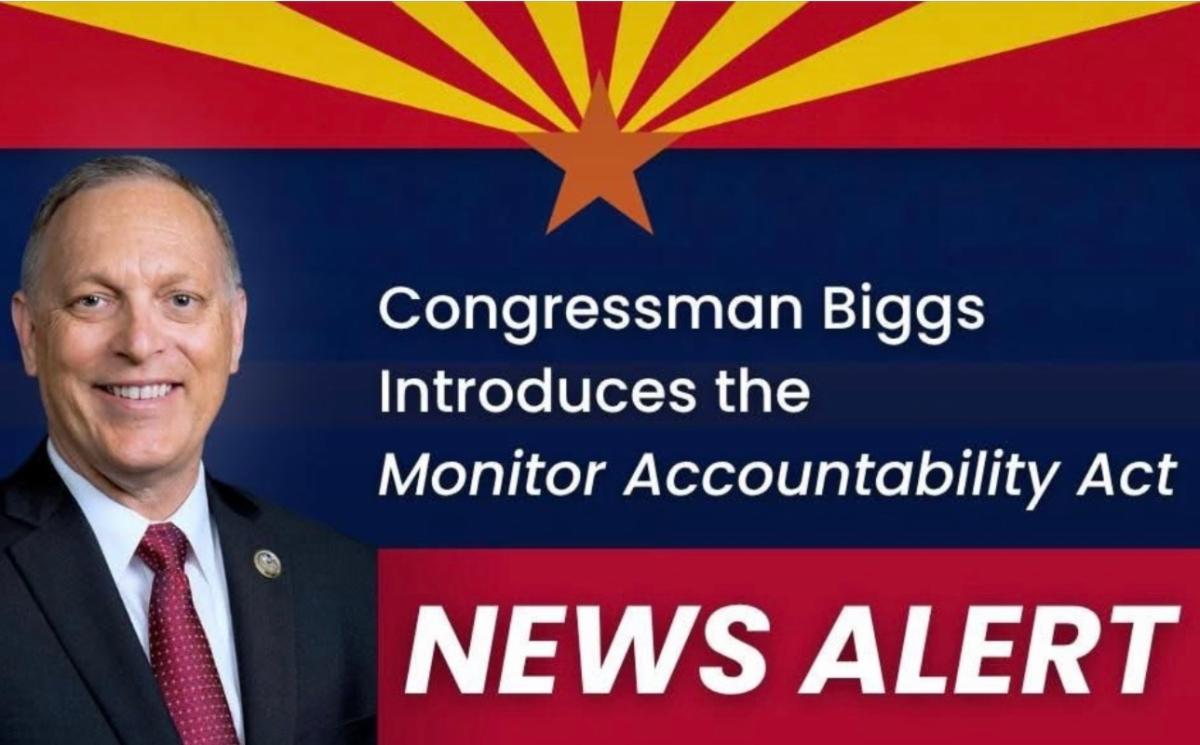
WASHINGTON, D.C. — This week, Congressman Andy Biggs introduced the Monitor Accountability Act, a bill aimed at setting firm boundaries on how federal courts use outside monitors to oversee state and local agencies. The legislation is rooted in a long-running issue much closer to home: the federal monitorship of the Maricopa County Sheriff's Office (MCSO).


The MCSO monitorship began in 2013 following a federal court order and has continued for more than a decade. While originally intended to ensure compliance with court-mandated reforms, critics argue the oversight has expanded far beyond its initial scope. Over the years, three different sheriffs have implemented those reforms, and even the U.S. Department of Justice has acknowledged significant progress—reportedly supporting an end to the monitorship.


Despite that progress, the monitorship remains in place, and the cost to taxpayers has been staggering. Maricopa County residents have spent nearly $350 million tied to the oversight, including more than $32 million paid directly to the monitor and associated firm. Beyond the financial burden, local officials say the prolonged federal involvement has contributed to challenges in recruiting and retaining deputies, ultimately impacting public safety.


“I have watched the consequences of these federal monitors up close and personal in Maricopa County for over a decade,” Congressman Biggs said. “The federal monitor’s continued existence in our county and propensity for moving the goalposts from his original charge only serves to exploit taxpayers and undermine the brave work of the men and women who serve our communities.”


What the Monitor Accountability Act Would Do


The proposed legislation introduces several structural reforms designed to prevent indefinite or costly federal oversight:


  • Term Limits: Monitors would be limited to five years and barred from reappointment under the same court order.
  • No Revolving Door: Successive monitors could not come from the same firm or employer.
  • Fee Caps & Transparency: Compensation would be capped, with encouragement for reduced-cost or pro bono work.
  • Public Input: Courts would be required to allow public comment before appointing a monitor.
  • Clear Off-Ramp: Monitorships could only be extended if substantial compliance has not been achieved.
  • Judicial Rotation: Cases lasting more than six years would require reassignment to a new judge.
  • Retroactive Application: Existing long-term monitorships—including Maricopa County’s—would trigger mandatory changes to both monitor and judge.


Supporters argue these provisions restore balance, ensuring oversight does not become permanent or self-perpetuating.


Cochise County Sheriff Mark Dannels voiced strong support, stating the current system has allowed monitors to operate with little accountability while draining public resources. His concerns echo a broader sentiment among Arizona law enforcement leaders that oversight should have a defined endpoint.


A Local Issue with National Implications


In February, Congressman Biggs chaired a House Judiciary field hearing in Phoenix to examine the real-world impacts of federal monitorships, using Maricopa County as a case study.


Testimony highlighted not only the financial costs but also the operational strain placed on law enforcement agencies working under prolonged federal supervision.


At the heart of the debate is a fundamental question: when does oversight become overreach?

For many in Maricopa County, the answer is long overdue. Taxpayers have invested hundreds of millions of dollars into compliance efforts, yet the structure of the monitorship offers little financial incentive for it to end. As long as the system allows for continuous expansion and ongoing billing, critics argue, true closure remains out of reach.


The Monitor Accountability Act seeks to change that—bringing clearer limits, greater transparency, and a defined path toward resolution. Whether it gains traction in Congress remains to be seen, but one thing is certain: the conversation about federal oversight,


accountability, and taxpayer protection is far from over.

Wittmann Intermodal Hub: Federal Response Adds Complexity to Local Fight


The proposed BNSF Railway intermodal hub in Wittmann continues to move through a complicated legal and political landscape—one that now includes direct input from the Surface Transportation Board (STB).


On March 30, Vice Chair Debbie Lesko sent a formal letter to the STB seeking clarity on whether federal law could override local opposition to BNSF’s planned development. This came after the Maricopa County Board of Supervisors unanimously voted on November 5 to deny a Comprehensive Plan Amendment—effectively stalling the project at the local level.


What the STB Said — In Plain English

The STB’s response did not give a definitive yes or no on Wittmann. Instead, it outlined how these decisions are made and what factors matter most:


1. No Immediate Ruling

  • The STB cannot issue a binding decision without a formal legal filing.
  • Any definitive answer would require a “declaratory order” proceeding, a structured legal process where the Board evaluates the case.

2. Federal Law Often Overrides Local Control

  • Railroads fall under exclusive federal jurisdiction when it comes to “transportation by rail.”
  • This includes rail yards, terminals, and facilities like the proposed intermodal hub.
  • The purpose is to prevent a patchwork of local laws from interfering with interstate commerce.

3. Two Types of Federal Preemption

  • Categorical Preemption:
  • Local governments generally cannot:
  • Require permits that could block rail construction
  • Regulate core rail operations like routes, services, or facilities
  • “As-Applied” Preemption:
  • Some local laws may still apply—but only if they don’t interfere with rail operations.
  • This is decided case-by-case.

4. It Depends on the Details

  • Whether local rules apply depends on factors like:
  • How much they impact rail operations
  • Whether they specifically target railroads
  • Whether active rail transportation is involved

5. Not All Local Authority Is Lost

  • Some requirements—like fencing, safety improvements, or costs tied to public infrastructure—can still be enforced if they don’t disrupt rail activity.


What This Means for Wittmann

The STB’s response makes one thing clear: this fight is far from over.

  • The county’s denial of the Comprehensive Plan Amendment does not necessarily stop the project permanently.
  • If BNSF chooses, it could pursue a federal ruling that may override local decisions.
  • However, such a ruling is not guaranteed and would depend heavily on the specifics of the project.


The Bigger Picture

This situation highlights a growing tension seen across the country:


  • Local communities want a say in large-scale industrial development.
  • Federal law prioritizes the efficiency of interstate rail and commerce.


For Wittmann residents and Maricopa County leaders, the key takeaway is this:


While local governments can influence development, railroad projects operate under a unique legal framework where federal authority often carries significant weight.


What Comes Next

If BNSF moves forward, the next major step would likely be:


  • Filing a petition for a declaratory order with the STB
  • Triggering a formal legal review that could take months—or longer


Send letters to:


Chairman Patrick Fuchs Surface

Transportation Board

395 E Street SW

Washington, DC 20423


Until then, the Wittmann intermodal hub remains in a holding pattern, with both local opposition and federal law shaping its uncertain future.

The Rise of the Independent Voter in Arizona: A Warning Sign for Both Parties


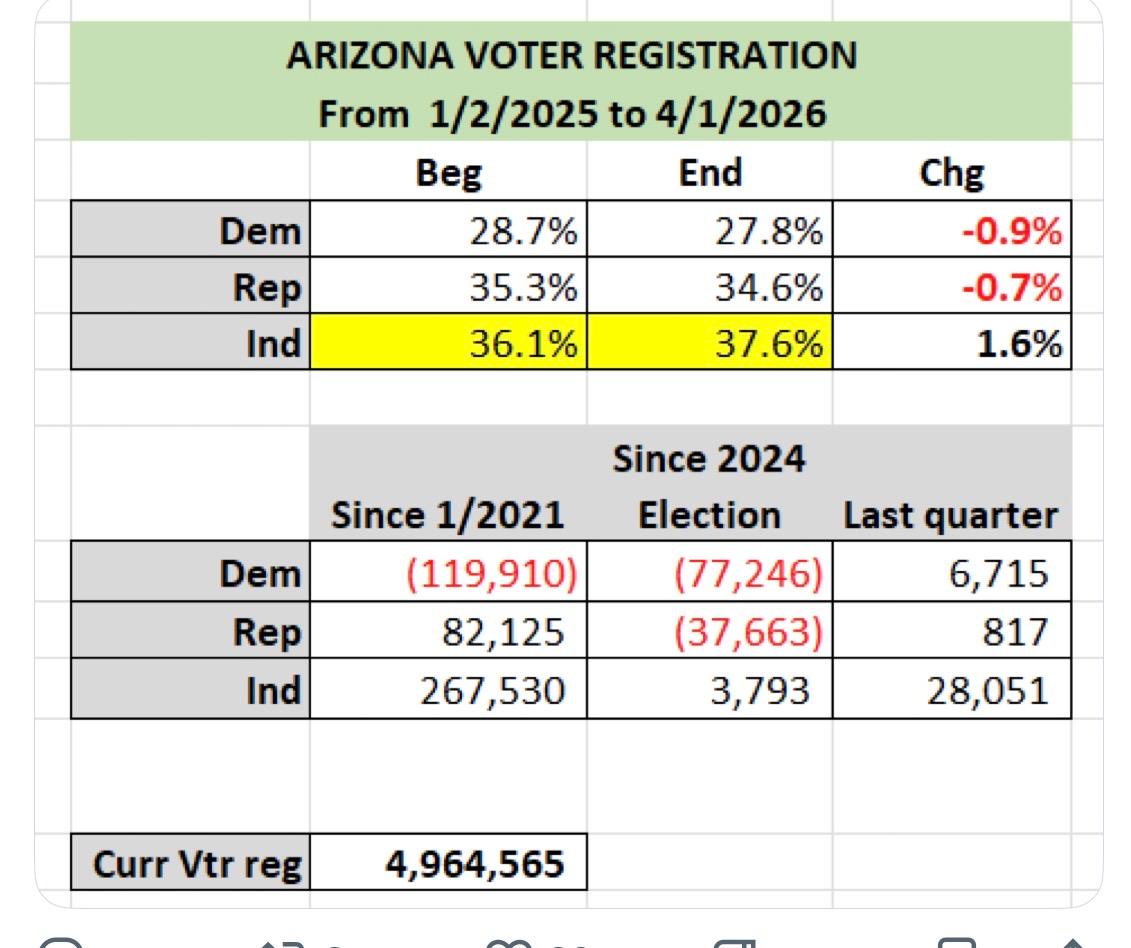
Over the past 15 months, something significant—and potentially consequential—has been unfolding in Arizona’s voter registration trends. While both major political parties continue to invest time, money, and manpower into registering new voters, the numbers tell a different story about where Arizonans are heading politically.


Republican registration has decreased by 0.7%. Democrats have seen an even steeper decline of 0.9%. Meanwhile, Independent and “no party preference” voters have surged by 1.6%.

That shift may seem small at first glance, but in a state like Arizona—where elections are often decided by razor-thin margins—and usually Independents ---it is a political earthquake in slow motion.


Both parties are working hard, especially in Maricopa County, to grow their base. But the reality is they are not just competing against each other anymore—they are losing voters to a growing bloc that is increasingly disillusioned with both sides.


Why is this happening?


From my perspective, it comes down to one thing: extremes.


Voters are tired. They are tired of the rhetoric, tired of the infighting, and tired of being asked to choose between candidates who often represent the far edges of their respective parties rather

than the common-sense middle where most Americans live.


This is exactly why I often quote William F. Buckley Jr.:


“Vote for the most conservative candidate that can win.”


Buckley understood something many in politics today seem to forget—winning matters. Principles matter too, but if a candidate cannot win a general election, those principles never have the chance to become policy.


Arizona is at a crossroads.


If current trends continue, Republicans risk losing not just statewide offices, but potentially control of the State House—and even influence in congressional races. And if that happens, we

are likely looking at continued leadership under Governor Katie Hobbs, Attorney General Kris Mayes, and Secretary of State Adrian Fontes for years to come.


That’s not a prediction rooted in ideology—it’s one grounded in math.


Independent voters are now the fastest-growing segment of the electorate. They are not as predictable, not as loyal to party lines, and often decide elections. If either party ignores them—

or worse, alienates them—they do so at their own peril.


The takeaway is simple: candidates who can build coalitions, communicate clearly, and appeal beyond their base will win. Those who cannot, won’t.


Arizona voters are sending a message.


The question is—who’s actually listening?

ICYMI - In Case You Missed It


We live in a fast-paced, always-moving world. Between work, family, and everything happening in our communities, it’s easy to miss important updates that impact our daily lives. Whether it’s local government decisions, education updates, or stories that shape the future of our neighborhoods, staying informed can feel like a full-time job

.

That’s why I’ve pulled together a few key stories you may have missed. These are the issues that matter—topics that affect our schools, our safety, our growth, and the direction of our community. My goal is to make it easier for you to stay connected without having to dig through endless headlines.


Take a few minutes to catch up, stay informed, and share with others. An informed community is a strong community—and together, we can make a difference.

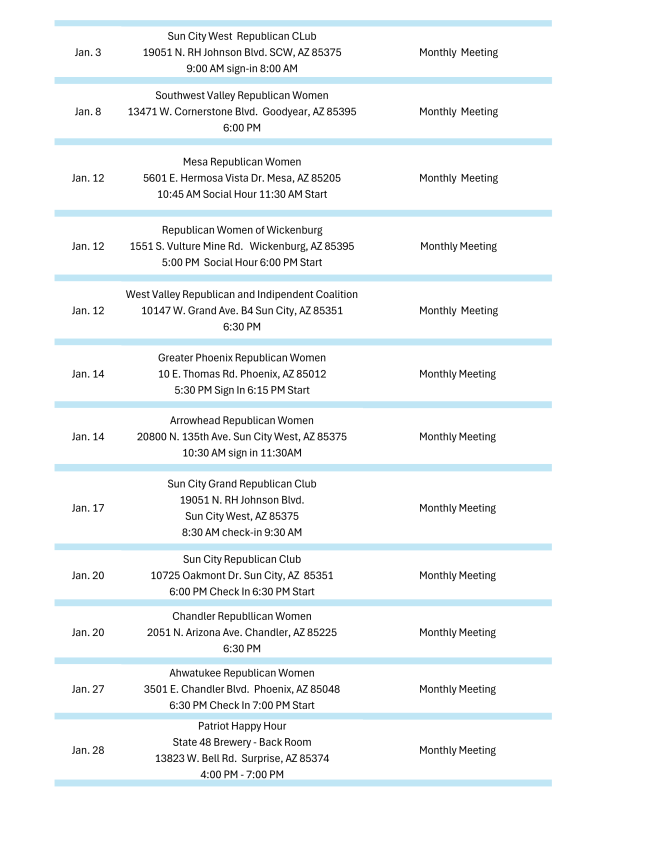
PATRIOT HAPPY HOUR WITH FELLOW REPUBLICANS!


Join Us for Another Great Evening!


Due to overwhelming demand, we’re bringing back our Patriot Happy Hour at State 48 in Surprise! Last month’s gathering was a fantastic success, with great food, drinks, and, most importantly, meaningful conversations with fellow conservatives. Let’s do it again!


 Where: State 48 Brewery - 13823 West Bell Road, Surprise, AZ 85374

 When: Wednesday,

 Time: 4:00 PM – 7:00 PM


This is the perfect opportunity to connect with like-minded individuals, get to know fellow PATRIOTS, and strengthen our local Republican community. Whether you're a seasoned PC, new to our LD, or simply want to make new friends everyone is welcome!


Bring a friend and join us for an evening of camaraderie, networking, and fun. Let’s keep the momentum going!


Patriot Happy Hour is always the last Wednesday of the month.

IF YOU WOULD LIKE YOUR CLUB LISTED PLEASE CONTACT ME

Thank you,

Lisa Everett


www.patriotnheels.com


Follow me on:

X - @patriotnheels

Facebook - @patriotnheels

Instagram - @patriotnheels