Strong Families. Strong Futures. | | |
Greetings to our VFN Family and Community Partners.
Across the nation, proposed changes to education and health policies are shaping the lives of children, youth and adults with disabilities and special health needs. Discussions about special education, Medicaid funding, vaccines, caregiving, and other essential issues directly affect many families and the child or youth with a disability or special health need they love and support.
Vermont Family Network (VFN) was born from conversations among mothers gathered around a kitchen table in the 1990s. They recognized that by collaborating, networking, and tapping into available funding, they could build an organization dedicated to empowering all Vermont families whose children face challenges. Today, one of VFN’s major funding sources comes from the U.S. Department of Education through the Individuals with Disabilities Education Act (IDEA).
IDEA has deep roots in the civil‑rights movements of the 1960s and 1970s, when families pushed back against the widespread exclusion of children with disabilities from public schools. Congress responded in 1975 with the Education for All Handicapped Children Act, guaranteeing every student the right to a free appropriate public education (FAPE). This landmark protection evolved into IDEA in 1990. Subsequent reauthorizations in 1997 and 2004 strengthened the law further by expanding services, promoting inclusion, and ensuring individualized support through the Individualized Education Program (IEP).
Today, IDEA remains the cornerstone of special education rights in the United States. It’s easy to forget that these protections, now taken for granted, have only existed for a few decades. Yesterday (June 16th), the US Department of Education announced that interagency agreements were signed moving the Office of Special Education Programs (OSEP) to the Department of Health and Human Services, and the Education Office for Civil Rights (OCR) to the Department of Justice. These agreements move special education and dispute resolution out of the Department of Education where they will become one of many programs the receiving departments administer. This represents a profound shift and a potential threat to the education and civil rights guaranteed under current federal law.
VFN now supports thousands of Vermont families raising children with disabilities or special health needs. Through our Family Support programs and Puppets in Education initiative, we provide education, resources, and community connection to families and children across the state. We continue to work closely with state and federal partners to ensure that families receive the support they need so that all children have the opportunity to live full, meaningful lives. We are deeply grateful for our state partnerships, local collaborations, and strong community support.
If you are interested in supporting VFN’s work by volunteering on behalf of our programs, advocating for the disability community, making a financial contribution, or learning more about how to get involved, please reach out. We would appreciate hearing from you.
From the heart,
The VFN Leadership Team
| | |
Is a Coordinated Service Plan (CSP) Meeting
Right for You and Your Child?
| | |
If your child has a disability, mental health condition, or special health care need, you may be working with several different organizations at the same time. Your child might receive support from their school, a mental health agency, a developmental services agency, medical providers, or other community programs. Keeping everyone informed and working together can be challenging!
A Coordinated Service Plan (CSP), sometimes called an Act 264 meeting, was created to help families and service providers coordinate support for children with complex needs. A CSP meeting brings together family members and professionals from different systems to discuss your child's strengths, needs, goals, and supports. The goal is to make sure everyone is working together and moving in the same direction.
How Is a CSP Different from an IEP Meeting?
Many parents are familiar with Individualized Education Program (IEP) meetings, but a CSP serves a different purpose. An IEP meeting focuses on your child's educational needs. A CSP meeting looks at the bigger picture. It brings together people from different systems, including the school and community agencies, to coordinate support for your child and family.
You Don't Have to Do It Alone
Families participating in the CSP process must be offered the support of a parent representative. A parent representative is someone with lived experience who understands the challenges of navigating multiple systems and services. VFN has a dedicated team of parent representatives that are ready to help you through this process!
Want to Learn More?
To learn more, you can review Vermont Family Network’s fact sheet on Act 264, watch our recorded workshop on Act 264/CSP meetings, you can find your parent rep on our parent representative flyer, or you can contact our help line at 802-876-5315 or email info@vtfn.org to learn more.
| | |
Join Vermont Family Network’s
Family Faculty Community
| | |
We invite families to play a meaningful role in shaping the future of healthcare by joining VFN's Family Faculty Program. This unique opportunity connects family members with medical and health sciences students, offering a powerful way to share lived experiences and influence how future professionals deliver care.
Through the program, families can participate in a variety of opportunities. Medical Education Partnership (MEP) visits give families the chance to welcome medical students into their homes or communities, creating space for authentic conversations about real-life healthcare experiences. For those who enjoy collaborative discussions, panel presentations at the College of Nursing and Health Sciences bring families together to speak on a range of topics across different courses. Additionally, Professionalism, Communication, and Reflection (PCR) sessions provide opportunities to connect with first-year medical students in small groups, helping them build empathy, communication skills, and patient-centered perspectives early in their training.
Families who engage in the program consistently highlight the reward of knowing their experiences are helping to shape more compassionate, informed care.
To learn more about joining our Family Faculty, email Ashley at ashley.michaud@vtfn.org.
| | Special Education Evaluations Timeline | | |
When you think your child may need special education services, the first step is an initial special education evaluation. Once you give written consent for the evaluation, the school district has 60 calendar days to complete the evaluation. This timeline is designed to keep the process moving so your child can get support as soon as possible. School breaks, including summer vacation, cannot be used as a reason to delay the evaluation. Evaluations can absolutely occur in the summer. The only exception is if the school can show that your child wasn’t available for evaluation during the summer months.
If you have questions about your child’s IEP, the special education evaluation or how to build a more collaborative partnership with your child’s school, contact the VFN helpline at 802-876-5315 or info@vtfn.org.
| | Parent Matches by the Numbers | | |
Vermont Family Network’s (VFN) Parent Match Program provides parent to parent support for parents of children with disabilities and special health needs. Parents contact VFN when their child receives a new diagnosis, they hit a bump in the road related to their child’s diagnosis or special health condition, and/or they are feeling isolated and alone in their parenting journey.
So far this year, 67% of the parents we matched have a child with autism; 22% of the parents matched have a child with complex medical needs; and 11% have a child with a mental health diagnosis.
Currently, sixty-two parents have completed the Support Parent Training and stand ready to support other parents who have a child or children with a similar diagnosis or special health need.
A parent match does not require a large time commitment, but it can make a world of difference to a parent who is feeling alone. Support Parents decide when they are available to connect, making it possible to offer support in ways that fit their own schedules and family responsibilities.
If you are feeling isolated and would like to be matched with another parent in a similar situation or are in a place where you feel you could support another parent, contact VFN at 802-876-5315 or email info@vtfn.org
and request information about the Parent Match Program.
Our next scheduled Support Parent Trainings are:
-
July 9th at 12:00-2:00 pm
-
August 13th at 6:00-8:00 pm
Please complete the Support Parent Application to apply to be a trained support parent in VFN’s Parent Match Program.
| | |
The Puppets Are on Summer Vacation!
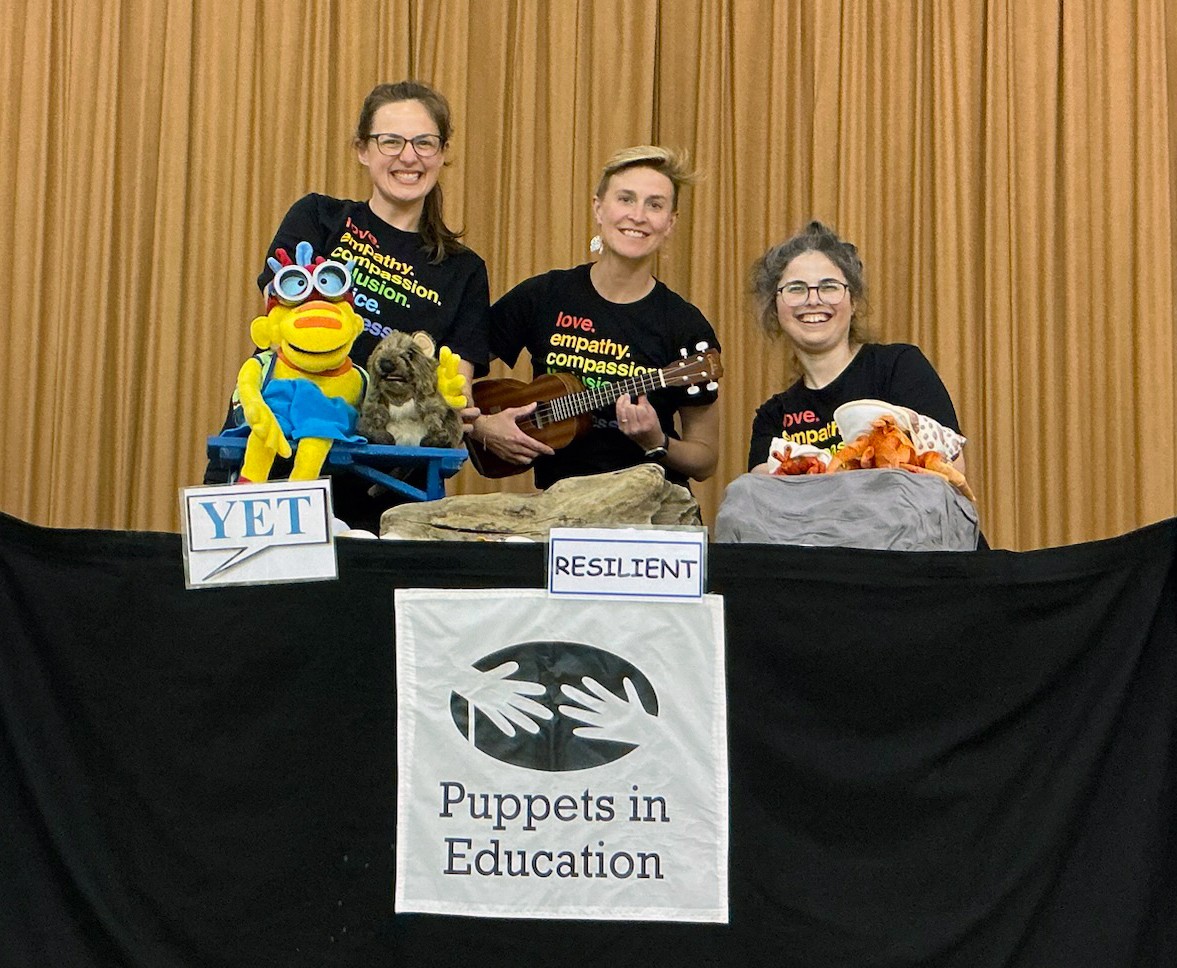
We have wrapped up another amazing school year with a new puppet team, a new program, new puppets, and renewed enthusiasm for bringing social-emotional learning to children across our communities.
This year, we reached more than 5,800 people through 111 performances at 34 different locations. Our programs impacted 739 adults and more than 5,100 children through engaging lessons focused on social-emotional wellness and mental health.
The impact of these programs extends far beyond the performance itself. Teachers regularly share how they use the concepts and language from the shows in their classrooms long after the puppets have left. As one teacher reflected after our Friendship program, "We are getting a new student Monday, and this will help students understand ideas to help the new student feel welcomed."
Students and educators welcomed programs on Anxiety, Friendship, Feelings, Bullying Prevention, and our newest program, Resilience. Debuting in December, Resilience quickly became our most requested performance. As heard from a teacher, "Sometimes you need to make a new plan and bounce back."
Our newest puppet friends, Ollie and Hermie the Hermit Crab, had a wonderful time helping children explore friendship, confidence, feelings, and coping skills through laughter, music, and storytelling.
It has been an incredible year of powerful puppetry. While the puppets are enjoying their summer vacation, we are already scheduling programs for the fall. Please contact Sarah at Sarah.Vogelsang-Card@vtfn.org to bring a puppet program to your school or community.
Thank you for helping us build friendship, resilience, and hope… one puppet show at a time.
| | |
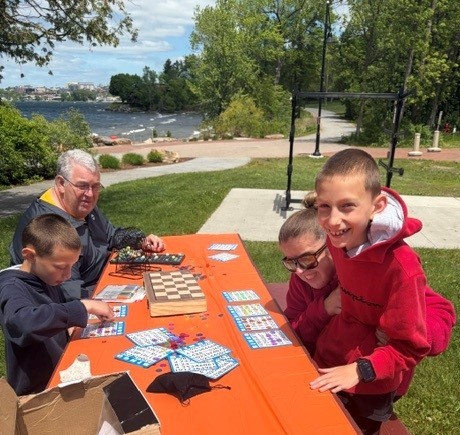
We held our final Sibshop of the school year on May 30th at Oakledge Park. Sibs and their families enjoyed a picnic lunch, mini-golf, games, face painting and the view of beautiful Lake Champlain. This rounded out our year of participating in many fun activities such as aerial movement, rock climbing, ice skating, bowling and a service project.
Stay tuned for information on the 2026-2027 Sibshop year. For more information, please contact Marie at Marie.Fetterhoff@vtfn.org.
| | |
Summer Travel Tips
With the warmer summer months upon us, many families are making plans for rest, recreation, and travel. For families of children with medical complexities and/or a genetic diagnosis, a little extra preparation can help make summer vacations safer, smoother, and more enjoyable for everyone.
Plan ahead: There are a few things you can do to help prepare: Talk with your medical team, contact TSA Cares if you are flying, confirm that your lodging can provide needed amenities such as a mini fridge, and identify the nearest pediatric hospital at your destination. To reduce anxiety and build excitement, watch videos, look at photos, and create a daily schedule in advance to help your child prepare for transitions and travel.
Gather documentation: If you are flying with medical equipment, ask your providers for letters of medical necessity. It is also helpful to bring copies of important medical information, and if you have a care binder, be sure to pack it.
What to Pack: Traveling with medical equipment often makes packing light unrealistic. If possible, bring a few extra days’ worth of medications, feeding supplies, formula, and other essentials. It may also help to explore renting certain durable medical equipment (DME) and to ask your current DME provider whether additional equipment is available to rent.
Be flexible: Even with careful planning, travel does not always go as expected, and that is okay. Building in extra time, keeping expectations realistic, and being willing to adjust plans when needed can help reduce stress and make the experience more manageable for both you and your child.
We would love to know about any of your travel tips and trusted travel resources!
| | |
The No-Fuss Picnic 🧺
You do not need a basket. You do not need a plan. You need a blanket, something your loved one will actually eat, and about fifteen minutes.
For families supporting loved ones with sensory differences, outdoor eating has a quiet superpower: you are in charge of everything. The food is familiar because you packed it. The noise level is manageable because you picked the spot. There is no waiting, no menu, no one giving you a look. And if someone needs to get up and run circles around a tree for a few minutes, the tree is absolutely fine with that.
Here is something worth knowing: outside is actually doing something for your loved one’s nervous system. The breeze on their skin, the uneven texture of grass under their hands, the wide open visual field with no walls closing in. These are not small things. They are regulating. Many people who spend the whole day fighting their environment find that something shifts when they get outside. The body settles a little. The window opens.
Caregivers feel it too. There is something about sky overhead and space around you that loosens the tight feeling of a hard day. You might not be able to name it. But you will notice it.
The goal is not a perfect afternoon. It is just a little air, a little ease, and maybe one of those moments where everyone is okay at the same time.
Those happen more often on a blanket in the grass than you might think.
| | Upcoming Events - Register today! | | |
Free Online Workshops
June 25 at 10:00 - 11:00 a.m. "Chronic Absenteeism and Students with Disabilities: The Impact and Intervention Best Practices"
In this workshop you will learn more about chronic absenteeism and the disproportionate impact it has on students with disabilities, along with some general intervention best practices.
Presenter: Jess LaClair - Public Health Specialist and School Liaison at the Burlington District Office of the Vermont Department of Health.
July 16 at 1:00 - 2:00 p.m. "What's New with Vermont ABLE? Expanding Opportunities for Families"
Vermont ABLE allows individuals and families to save for disability-related expenses without jeopardizing federal benefits like Medicaid and Social Security Income SSI. We review the basic structure of the program and discuss the latest changes to federal rules for the program.
Presenter: Kirsten Murphy - Executive Director of the Vermont Developmental Disabilities Council (VT DDC)
July 23 at 1:00-2:00 p.m. "Navigating Vermont’s CSHN New Geographic Information System (GIS) Resource Map"
Children and Youth with Special Health Care Needs recently launched a CSHN GIS Resource Map. CSHN understands that Vermont’s system of care can be hard to navigate. To simplify it, they created a digital guide that helps families, youth, and providers to quickly find CSHN-related resources in an easy-to-understand, accessible format. Learn about this resource which includes content categories such as autism, care coordination, designated agencies, education, medical, organizations, planning for adulthood, and statewide resources, organized by county.
Presenter: Regina-Anne Cooper - Program Administrator for CSHN Health Systems Team
August 13 at 1:00 p.m. "Attending College as a Student with a Disability"
What is it really like to attend college as a student with a disability? Join us for a conversation with several young adults who are pursuing different college pathways while navigating disability-related challenges and supports. Join us to hear about their personal experiences with academics, campus life, self-advocacy, accommodations, and building independence. Whether you are considering college, preparing for the transition from high school, or simply curious about what to expect, this workshop offers an opportunity to hear honest perspectives, practical advice, and lessons learned from students who have been there.
Presenters: Panel of young adults
Our workshops are online using the Zoom meeting platform.
If you are unable to attend the live presentation, you can still register and we’ll send you a link to the recording of the workshop which you can watch on your own time, unless otherwise noted. We appreciate when you register for our workshops as we need that data for our grant reporting.
Registrations are also posted under Upcoming Events on the landing page of our website. In case you missed our last series of workshops, you can find a full list on our VFN website. Check in regularly as we add more workshops to our schedule!
We save workshops on our website and YouTube channel.
| |
VFN Workshop Topics/Speakers Survey
We want to hear your ideas for our upcoming online workshops. What topics interest you? Are there presenters you would recommend?
Let us know your thoughts.
| | Contact Us. We Will Listen! | | Helping Vermont Families thrive for more than 30 years | | | |  |
Office
600 Blair Park Rd, Ste 240,
Williston, VT 05495
| | | | |