Rail Workers Weekly News Digest
Number 4 - January 28th, 2019
|
|
Below is a series of articles compiled over the previous week.
They are of interest to railroad workers.
_____________________________________________
|
|
Article 1 -
CANADA RAILS
Railways report more accidents with dangerous goods
The number of rail accidents involving dangerous goods more than doubled in Canada in 2018.
(Editor's Note: The vast majority of these accidents involved the two major Class One railroads in Canada - the CP and the CN, the senior PSR railroads of North America. Coincidence? Is this what is in store for the railroads now in the U.S. as they all move towards PSR?)
There were 25 accidents involving dangerous goods in 2018, involving one death, according to Transport Canada data published Monday. There were 11 accidents recorded a year prior, and five in 2016.
These accidents involve dangerous goods — flammable or corrosive substances — that either exploded or leaked.
Seven of the reported incidents involved human error, up from three for each of the previous three years. Equipment problems made up for four incidents, a number that has been on the rise.
Bruce Campbell, an adjunct professor with York University, said the numbers are small but the increase in overall incidents is concerning.
"It's a pretty big bump," said Campbell, who has written extensively about railway regulation in the wake of the 2013 Lac-Mégantic rail disaster, in which the explosion of a runaway oil train killed 47 people.
In Manitoba, there were two accidents in 2018, compared with none for the previous four years.
The data published Monday suggest that despite an apparent uptick in oil moving across Canada by rail, the number of explosions involving crude is trending downwards.
The number of accidents involving trains carrying either liquefied petroleum gases or gasoline went from 10 in 2016, to none the next year and eight in 2018.
|
|
Article 2 -
CONTRACT BARGAINING
Rail Unions Announce Bargaining Dates, Other Information
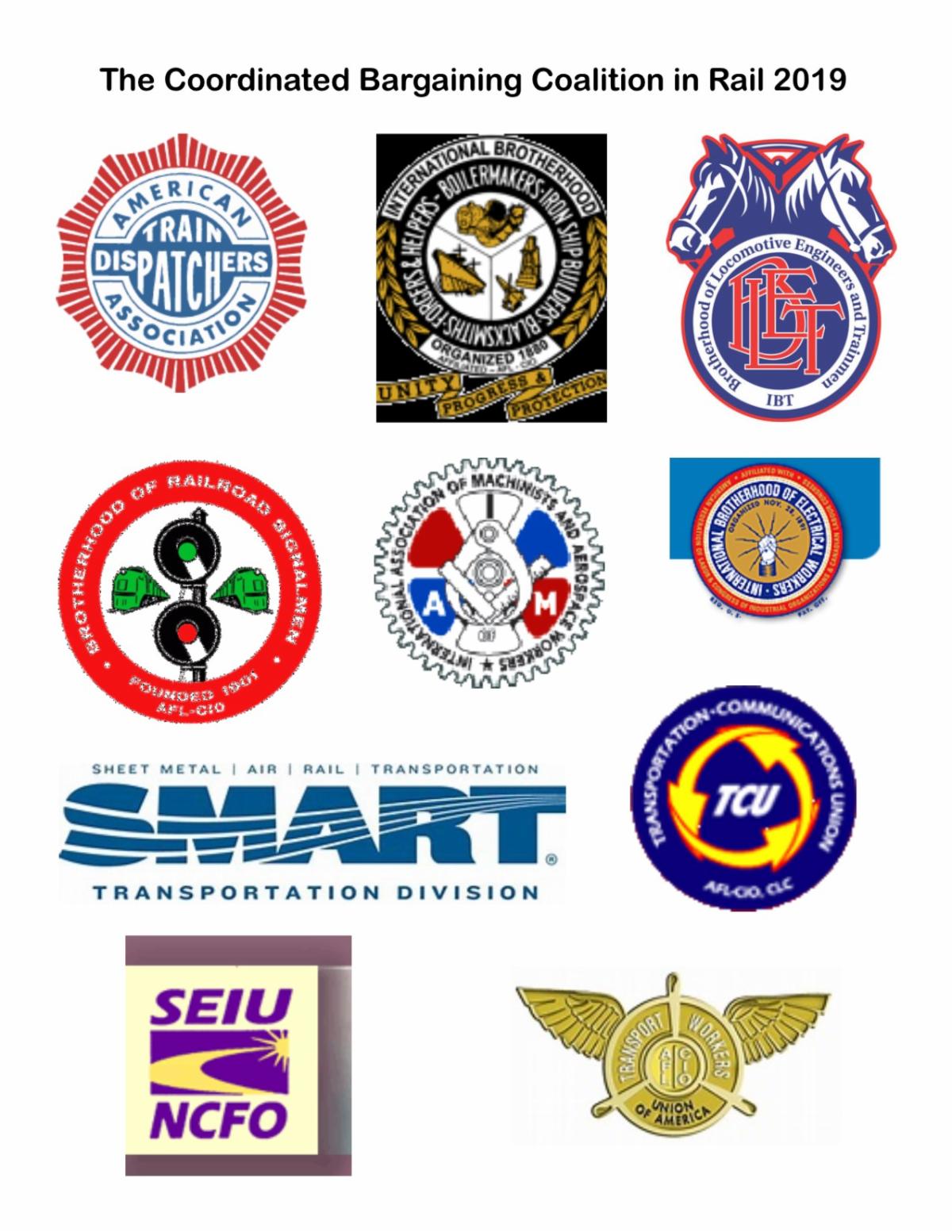
The major rail carriers in the U.S. exchanged "Section 6 Notices" last November 1st. Now the carriers and the myriad rail unions have scheduled bargaining sessions with the carrier umbrella group, the National Carriers Conference Committee (NCCC). All railroad workers should pay close attention as this process progresses. There is a lot at stake. If your union has not set up some sort of website or other way to communicate with the rank & file, demand that they do so!
|
|
Federal Railroad Administration Publishes Research Results
The Federal Railroad Administration (FRA) has published the following listing of Research Results and/or Technical Reports in December 2019:
If you have any questions or would like more details about a particular report, please contact FRA’s Office of Railroad Policy and Development at
OfficeofRPD@dot.gov
.
|
|
Article 4 -
RAIL SAFETY
Hank Investigates: A risk on the rails
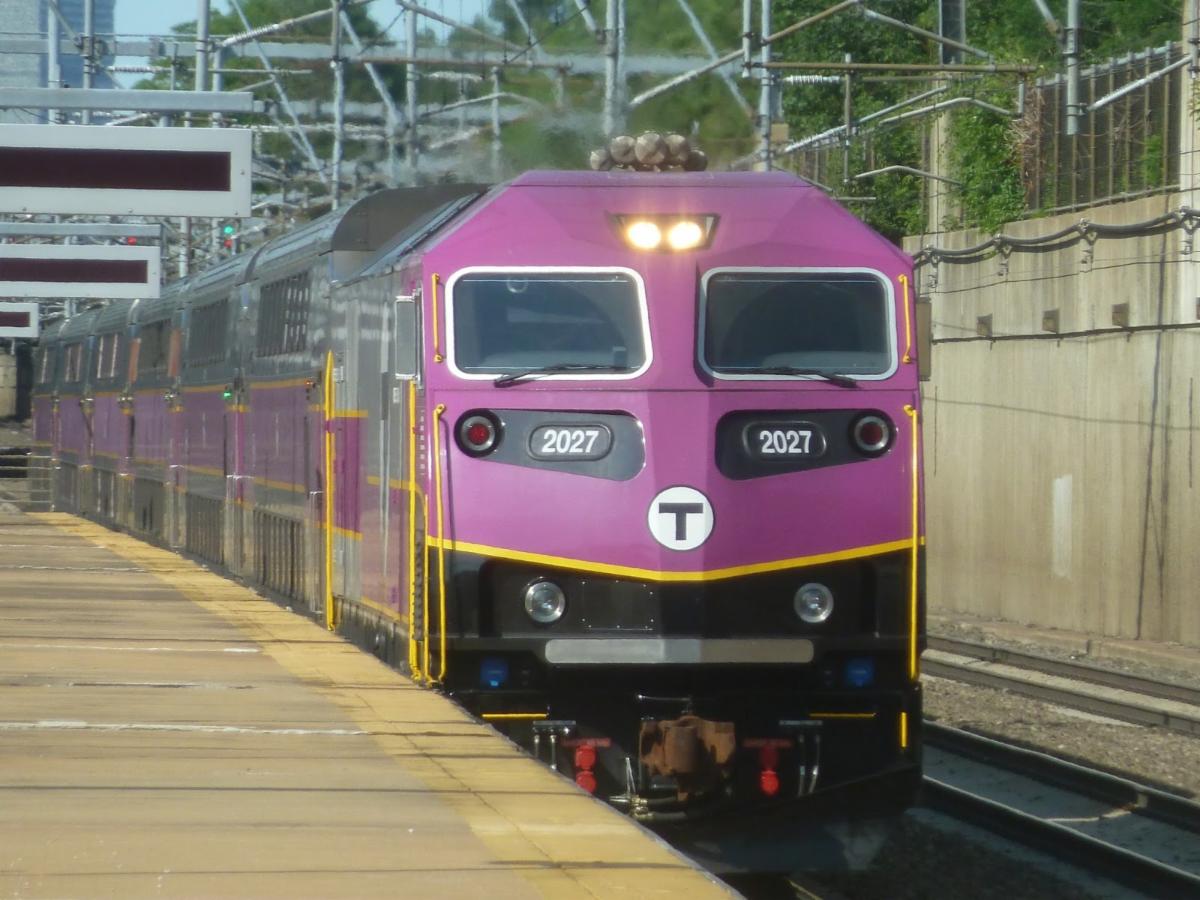
Why is your commuter rail train delayed or canceled? Hank Phillippi Ryan’s exclusive investigation found it could be because the engineer is afraid to drive it.
When we staked out local commuter rail trains at random we found engineers driving locomotives wearing masks over their faces. Different days, different trains and different engineers wearing masks.
What are the masks protecting engineers from? A potentially hazardous substance they say is leaking into some driving compartments.
A commuter rail employee sent Hank a video of white stuff swirling in the air inside a locomotive driving compartment and says it’s very fine sand.
The sand, made up of the mineral silica, is supposed to stay in a box outside the locomotive so engineers can drop it directly onto the tracks if they need traction.
But on some locomotives, engineers say, the silica sand is getting inside. The problem: breathing in tiny particles of that silica sand can be dangerous.
An employee also sent Hank a picture of the bag the sand comes in. There’s a printed warning on it that says: “Never breathe dust.” “May cause cancer by inhalation.” “Causes damage to organs through prolonged or repeated exposure by inhalation.”
“It was like being in a dust storm a sandstorm and you couldn’t escape from it. It was in the air conditioning and the heating vents it was blowing everywhere in the cab,” the retired engineer says. “You could taste the grit in your teeth from the sand it was so bad. You would get little particles in your eyes they would hurt, turn red. I’d have to rinse my eyes several times and breathing it in it would make it hard to breathe.”
|
|
Article 5 -
FREIGHT INDUSTRY NEWS
Rail Carriers Post Lower Performance Overall
Class One railroads have seen a dramatic decline in freight volume moved, lower revenues, fewer employees, with no end to the decline in sight. Recent statistics show freight down 10% vs. this time last year. Below is a series of articles.
|
|
Article 6 -
INTERNATIONAL NEWS
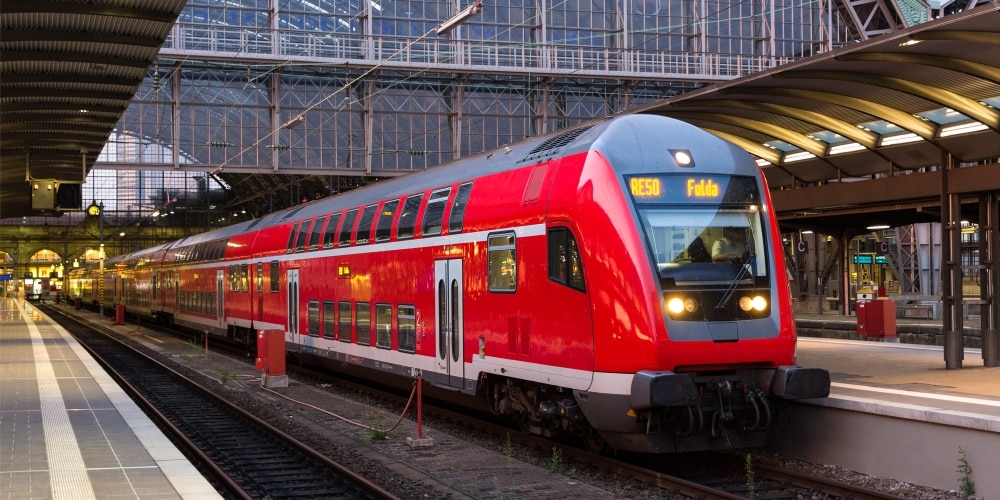
German government signs $96 billion rail infrastructure plan
(Editor's Note: Compare this to the paltry sums for capital investment in the U.S. and Canada. And this generous amount is to beef up infrastructure in a country with one of the world's premier rail systems already!)
BERLIN — The German government signed a deal Tuesday with state-owned train operator Deutsche Bahn to inject almost $100 billion into the country’s rail infrastructure over the next decade.
Under the agreement, the federal government will contribute 62 billion euros ($69 billion) toward maintaining and modernizing the existing train network.
Deutsche Bahn will contribute 24 billion euros (about $27 billion) to the plan that will see ageing tracks and railway bridges replaced.
Transport Minister Andreas Scheuer said the investment – a 54% increase over the previous planning period – would herald a “shining age” for Germany’s railways.
The German government has pledged to expand rail travel as part of its efforts to cut emissions of planet-heating greenhouse gases from transportation.
It recently agreed to cut a value-added tax for train tickets, reducing the cost of long-distance journeys by about 10%.
|
|
Article 7 -
RAILS & ENVIRONMENT
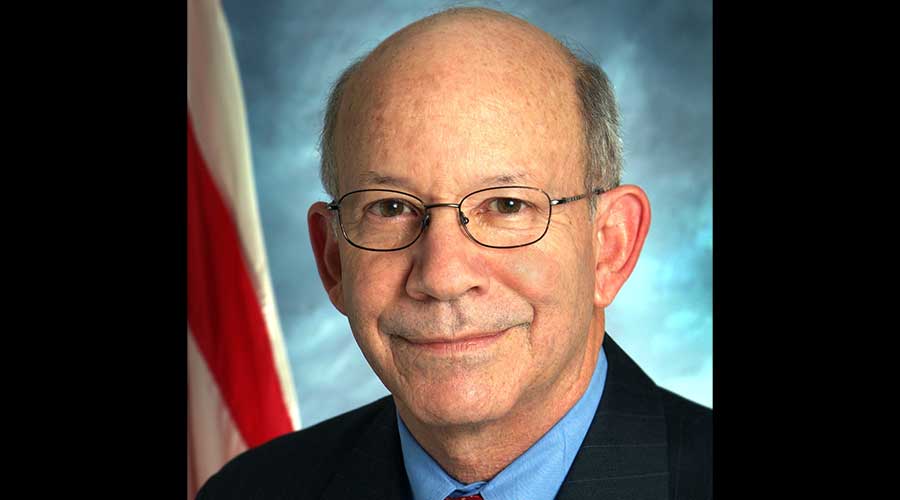
U.S. House Transportation and Infrastructure Committee Chairman Peter DeFazio (D-Ore.) yesterday questioned whether the nation's four largest Class Is are committed to combating climate change.
In a Jan. 16 letter to
Association of American Railroads
(AAR) President and Chief Executive Officer Ian Jefferies, DeFazio asked for additional information in response to a magazine article about the railroads' position on climate change.
The
Dec. 13 article in The Atlantic
indicated the four largest U.S. Class Is — BNSF Railway Co., Norfolk Southern Railway, Union Pacific Railroad and CSX — have been "major players in the climate-denial movement," DeFazio's letter stated.
Although the railroads have cast themselves as stewards of the environment, they have invested millions of dollars to discredit climate science and oppose federal climate legislation, the lawmaker wrote.
"These four railroads are members of the American Coalition for Clean Coal Electricity, which in 2014 called climate change a 'hypothesis' and claimed that carbon dioxide is 400 times more beneficial to the population than it is harmful," the letter stated. "If indeed members of AAR 'joined or funded groups that attacked individual scientists, cast doubt on scientific consensus, and rejected reports from major scientific institutions,' such actions are extremely troubling."
In his letter, DeFazio asked Jefferies if the information in the article is true, adding: "And if so, how can your organization continue to tout the environmental benefits of freight railroads while these same railroads are funding organizations who deny climate change?"
|
|
Article 8 -
UNION NEWS
The Teamster Revolt Against the Hoffa Era
... Now, the Teamster rank and file is taking aim at the International Union with the goal of transforming the leadership of the 1.4-million-member Teamsters Union.
At the TDU Convention in November, activists voted to endorse the O’Brien–Zuckerman Teamsters United slate and to join a coalition campaign to replace the Hoffa administration with new International Union leadership.
Ballots won’t be mailed to Teamsters until November 2021, but the International Brotherhood of Teamsters (IBT) election starts now.
An election supervisor will be appointed in March, and the campaign will begin in earnest in June, with a national Teamster-to-Teamster petition drive to collect 100,000 signatures to make the Teamsters United Slate officially accredited candidates.
In an age of digital campaigns and online organizing, Teamster elections are old school, grassroots, and personal. Petitions are signed in person in break rooms and employee parking lots.
“To get 100,000 signatures, you need to have 150,000 worker-to-worker conversations,” said Nick Perry, a TDU cochair and petition drive veteran. “That means recruiting volunteers, training them, building local committees. We’re not just collecting signatures. We’re building a network and an organization.”
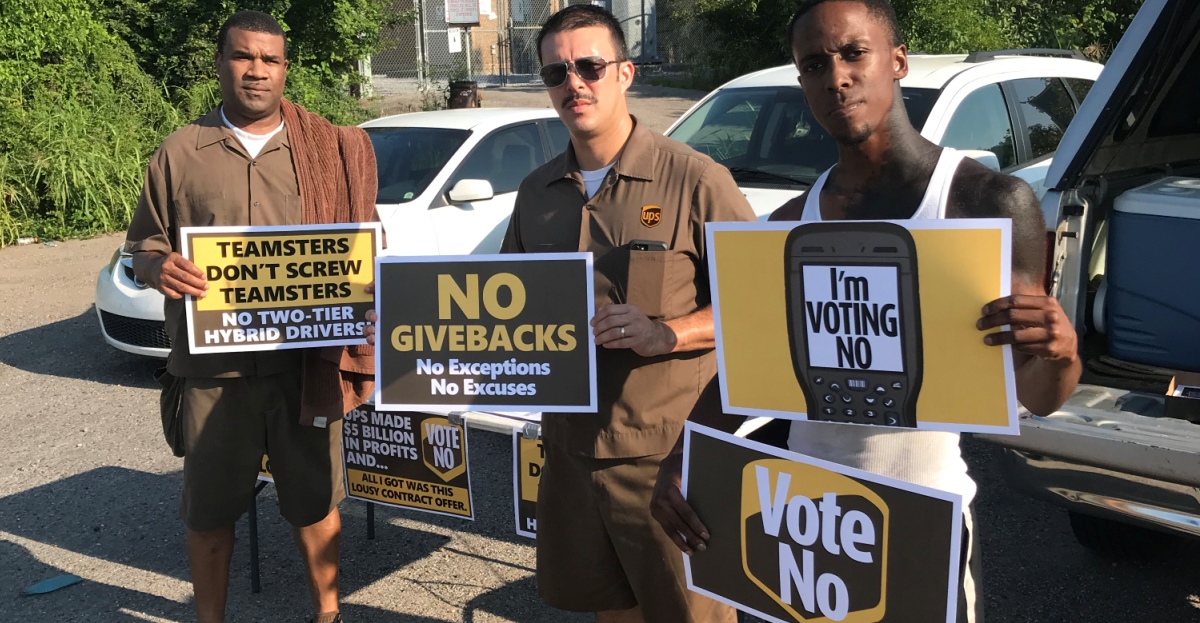
A year from now, activists will test their organizational muscle when members will vote in a separate election in every local union to choose delegates to the Teamster Convention. Delegates will officially nominate candidates and vote on reforms to the Teamster Constitution, like eliminating the Two-Thirds Rule — the loophole that was used to impose contract concessions at UPS.
|
|
|
|
|
|
|