|
What is the difference between market-rate housing development and affordable housing development?
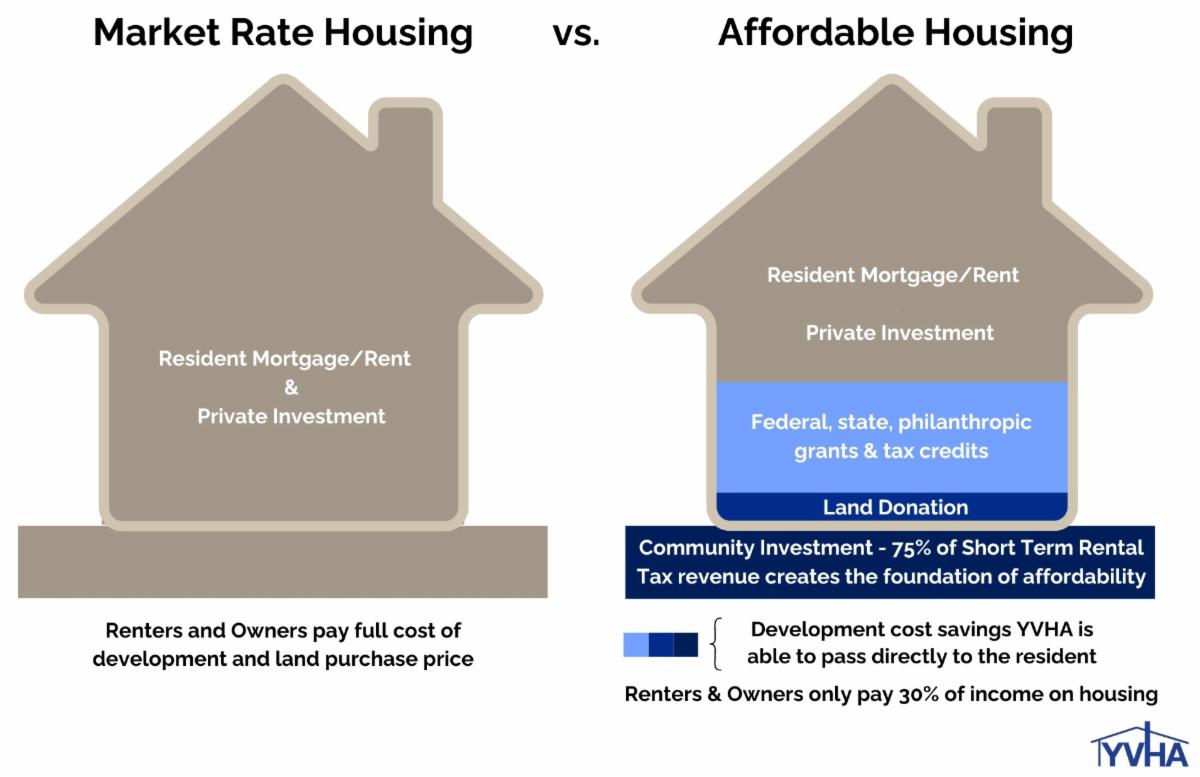
Affordable housing is very different than market-rate housing. By definition, Affordable Housing is housing that is subsidized so that households at specified income ranges can afford it without spending approximately 30% of their income. Here are a few points to help explain how YVHA builds its housing developments and keeps costs lower for renters and owners.
· Cost to build: Construction costs are the same for market-rate home and an affordable home. The main difference between market-rate housing and affordable housing is how these costs are passed down to the renter/buyer.
· Passing on costs to the renter/owner: In market-rate housing, developers pass on the costs associated with building a home to the renter or owner.
· YVHA reduces costs to the renter/owner: However, since the YVHA is a non-profit government entity, it has access to federal and state tax credits and grants that reduce the end cost to the renter/buyer.
· Subsidy reduces equity cost for developers: In addition, YVHA has worked with private developers on their housing units at The Reserves, Alpenglow Village, Sunlight Crossing and Anglers Four Hundred. The private developers invest their money and assume the risk to get a return on their investment, but their costs are less because YVHA has secured a subsidy.
· Land donations reduce costs: In the case of Mid Valley and the Brown Ranch, the subsidy is even greater because donors gave YVHA the funds to buy the land. Market-rate developers typically include the cost of land in the price renters/owners pay.
· Price points of affordable homes are based on income tiers, not based on supply and demand dynamics of the housing market: Both for Mid Valley and Brown Ranch, YVHA will offer as many income tiers as possible, based on Area Median Income (AMI), for both rental and ownership options. This effort is aligned with the goal of helping individuals meet the federal affordability standard that approximately 30% of income goes to rents or mortgages.
· Mid Valley and Brown Ranch will include a variety of home types to serve a wide range of incomes. The Reserves, Alpenglow Village and Anglers Four Hundred were all built as low-income federally subsidized apartments. Sunlight Crossing rental units were built for middle-income earners.
Mid Valley will also be built for middle-income earners.
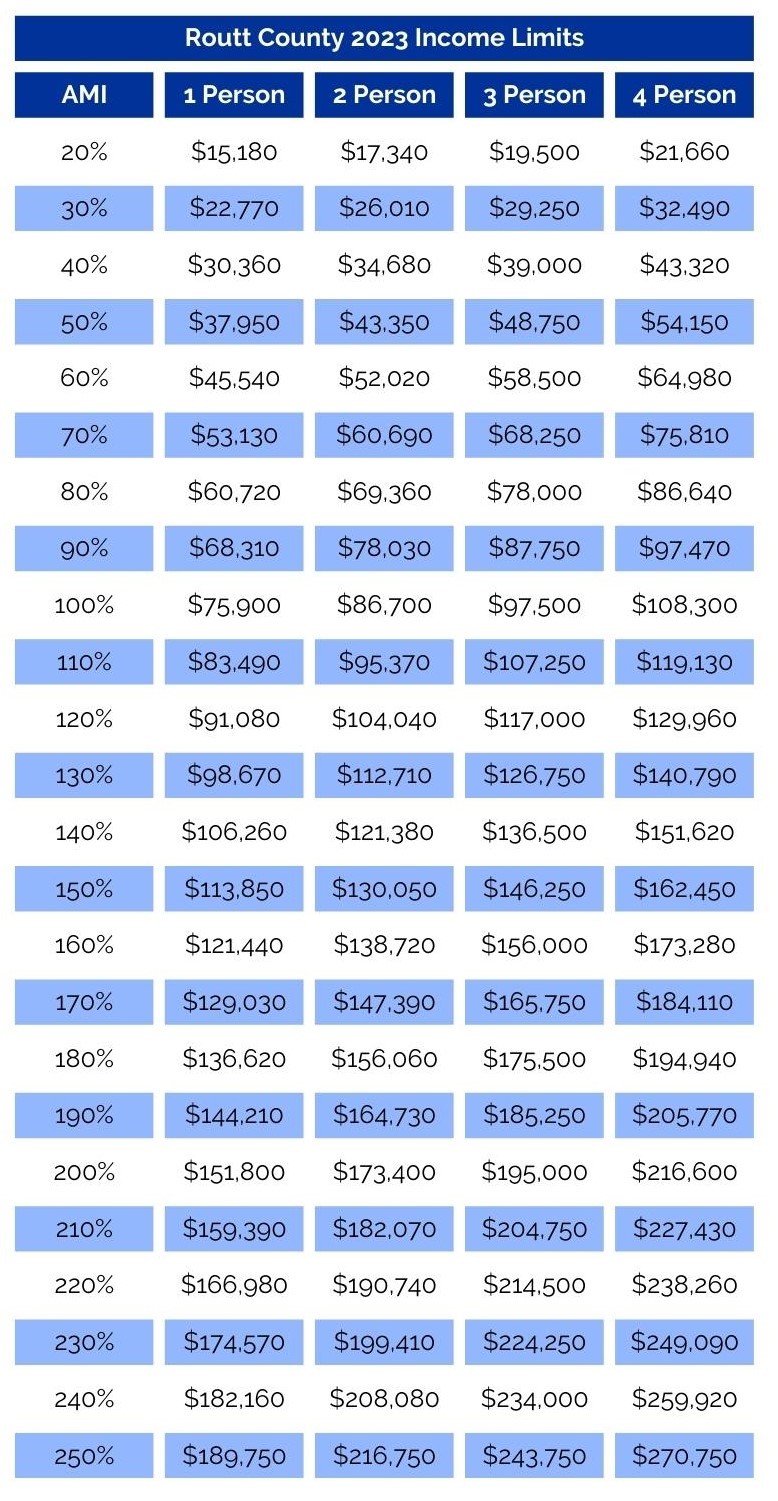
-- Ownership will be 100 to 140% Area Median Income (AMI) which is:
- Individual: $75,100 (100% AMI) to $106,260 (140% AMI)
- 4-person household: $108,300 (100% AMI) to $151,620 (140% AMI)
- Rentals will be 80 - 140% Area Median Income (AMI)
- Individual: $60,720 (80% AMI) to $106,260 (140% AMI)
- 4-person household: $86,640 (80% AMI) to $151,620 (140% AMI)
The Brown Ranch plans to have rental and ownership options for a broad range of incomes in the Routt County workforce.
· Individual - 20% Area Median Income (AMI) ($15,180) to 250% AMI* ($189,750)
· 4-person household - 20% AMI ($21,600) to 250% AMI ($270,750)
More details can be found here.
More details can be found here.
* AMI numbers are based on salaries in 2023.
|