By Jefferson Scholar-in-Residence
Dr. Andrew Roth
|
|
Great Poems About Spring
(Part Two)
|
|
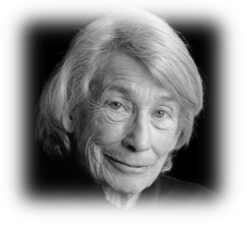
In last week’s Book Notes, somewhat impetuously, I said in this week’s Note I’d list my 10 favorite poems about spring and even put them in some sort of rank order, as if they were seeded like basketball teams in that other rite of spring – March Madness. As I sketched an outline for today, I discovered that I’d already shared with you several that ought to make anyone’s “Top 10 Spring Poems” – Walt Whitman’s “When Lilacs Last in the Dooryard Bloom’d,” Amy Gerstler’s “In Perpetual Spring,” Billy Collins’ “Today,” the opening lines of Chaucer’s “The Prologue” to The Canterbury Tales, and, of course, Mary Oliver’s marvelous “Spring.”
There are so many fine poems about spring, about resurrection and renewal, about the life-force rekindling desire, about humans finding one another, coupling and producing another generation sustaining life into endless tomorrows, about the simple joy of sunshine on one’s face after a winter spent indoors, that to reduce it to some sort of “pop list” seems a reductionist exercise. So, rather than some simplistic ranking, I’ll share with you 10 – no more, I promise, well, maybe, one or two more – of my favorite spring poems accompanied by passing commentary. We’ll end with several I think are especially fine.
|
|
Let’s begin with one from Robert Burns, whom we’ve met before in several Book Notes, but particularly in one exploring the origins of his “Auld Lang Syne,” which can be found here. Burns would certainly agree that ranking these poems in a stale list somehow seems to violate the spirit of which he sang in “O Were My Love Yon Lilac Fair”:
O were my love yon Lilac fair,
Wi' purple blossoms to the Spring,
And I, a bird to shelter there,
When wearied on my little wing!
How I wad mourn when it was torn
By Autumn wild, and Winter rude!
But I wad sing on wanton wing,
When youthfu' May its bloom renew'd.
That grows upon the castle wa';
Into her bonie breast to fa'!
O there, beyond expression blest,
I'd feast on beauty a' the night;
Seal'd on her silk-saft faulds to rest,
|
|
Many poems, on the other hand, rather than telling of life’s reaffirmation speak of spring’s positive rhythms’ ephemeral quality reminding us that just as the fresh, green leaves of spring turn sere and wither in autumn’s chill, so shall we. Philip Larkin captured that tincture, that slight trace of springtime regret in his:
The Trees
The trees are coming into leaf
Like something almost being said;
The recent buds relax and spread,
Their greenness is a kind of grief.
Is it that they are born again
And we grow old? No, they die too,
Their yearly trick of looking new
Is written down in rings of grain.
Yet still the unresting castles thresh
In fullgrown thickness every May.
Last year is dead, they seem to say,
Begin afresh, afresh, afresh. [2]
|
|
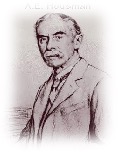
If puzzled by Larkin’s admonition to “begin afresh,” one might heed the advice of A.E. Housman. Housman’s poems, with their easy meter and clean diction, with their intimations of mortality, once soaked undergraduate minds when education still sought something more than economic facilitation, but today’s career focused curriculum pays him less and less heed. About which Housman, a classical scholar, would probably be dismayed but not surprised. In his “Loveliest of Trees, the Cherry Tree,” from his Shropshire Lad poems, Housman, who predated Larkin by two generations, sings a variation on Larkin’s theme exhorting us “to be here now” making the most of the time we have.
Loveliest of Trees, the Cherry Tree
Loveliest of trees, the cherry now
Is hung with bloom along the bough,
And stands about the woodland ride
Wearing white for Eastertide.
Now, of my threescore years and ten,
Twenty will not come again,
And take from seventy springs a score,
It only leaves me fifty more.
And since to look at things in bloom
Fifty springs are little room,
About the woodlands I will go
To see the cherry hung with snow. [3]
|
|
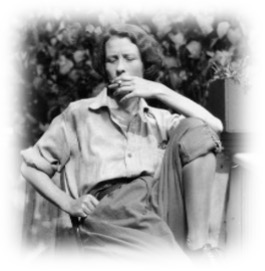
Taking a decidedly non-Housmanian approach to the topic was Edna St. Vincent Millay, who for a time in the early and mid-20th century was one of the most successful and respected American poets. Recipient of the Pulitzer Prize, a noted librettist and dramatist, Millay was heralded as an avatar of the New Woman. Escaping the strictures of her Victorian upbringing, she managed to do two things not often done by women in America a hundred years or so ago: she earned her living as a writer and flouted convention by living a very Bohemian life in Greenwich Village and Provincetown (of which she wrote in a much anthologized poem that admittedly has nothing to do with spring):
First Fig
My candle burns at both ends;
lIt will not last the night;
But ah, my foes, and oh, my friends –
lIt gives a lovely light. [4]
By the middle of the 20th century Millay had fallen out of favor but a resurgent feminism in the early-21st century has seen her reputation rebound. Still, her dyspeptic take on “spring” sucks the romance out of both Burns and Housman.
Spring
To what purpose, April, do you return again?
Beauty is not enough.
You can no longer quiet me with the redness
Of little leaves opening stickily.
I know what I know.
The sun is hot on my neck as I observe
The spikes of the crocus.
The smell of the earth is good.
It is apparent that there is no death.
But what does that signify?
Not only under ground are the brains of men
Eaten by maggots.
Life in itself
Is nothing,
An empty cup, a flight of uncarpeted stairs.
It is not enough that yearly, down this hill,
April
Comes like an idiot, babbling and strewing flowers. [5]
|
|
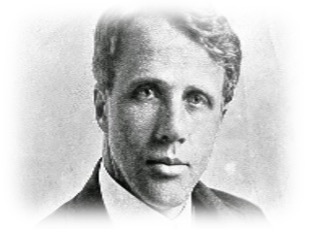
A contemporary of Millay’s, Robert Frost shared little with her of either temperament or interest. Not quite the gentle person his public persona and poetry portrayed, Frost relished spring’s renewal of life’s energy, unlike Millay, perhaps because he was a farmer, albeit an intellectual one, and not a cosmopolitan artiste.
The Pasture
I’m going out to clean the pasture spring;
I’ll only stop to rake the leaves away
(And wait to watch the water clear, I may):
I sha’n’t be gone long. – You come too.
I’m going out to fetch the little calf
That’s standing by the mother. It’s so young,
It totters when she licks it with her tongue.
I sha’n’t be gone long. – You come too. [6]
|
|
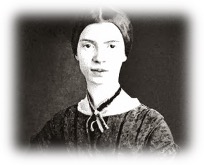
Emily Dickinson, who died six years before Millay was born, would publicly have been appalled by her lifestyle and privately envied her energy and freedom bursting society’s boundaries and relishing life’s elemental force. A force whose presence she glimpses in spring’s light hinting at the sacred.
A Light Exists in Spring
A Light exists in Spring
Not present on the Year
At any other period –
When March is scarcely here
A Color stands abroad
On Solitary Fields
That Science cannot overtake
But Human Nature feels.
It waits upon the Lawn,
It shows the furthest Tree
Upon the furthest Slope you know
It almost speaks to you.
Then as Horizons step
Or Noons report away
Without Formula of sound
It passes and we stay –
A quality of loss
Affecting our Content
As Trade had suddenly encroached
Upon a Sacrament. [7]
|
|
One of the great lyric poets of the English Renaissance, Robert Herrick, as The Poetry Foundation notes, was “almost forgotten in the 18th century, and in the 19th century alternately applauded for his poetry’s lyricism and condemned for its ‘obscenities.’” Herrick wrote several of the finest poems celebrating spring and life’s renewal, which for him took a decidedly sensual turn. [8]
We read his “To Daffodils” last week, and I am all but certain that sometime in a high school or college English class you giggled, trembled, or thrilled to his “To the Virgins, to Make Much of Time,” or, if none of that, you’ve at least heard the line. Although he titillated many an undergraduate, Herrick aimed not at seduction only but to remind us that life is short, wake up and enjoy it while you can. His most famous spring-themed poem is “Corinna’s Going A-Maying” in which he exhorts his lover to get up, to get out of bed, and to come with him to revel in the beauty of the day’s flowering.
from Corinna’s Going A-Maying
Come, my Corinna, come; and coming mark
How each field turns a street, each street a park
Made green and trimmed with trees; see how
Devotion gives each house a bough
Or branch: each porch, each door ere this,
An ark, a tabernacle is,
Made up of whitethorn neatly interwove,
As if here were those cooler shades of love.
Can such delights be in the street
And open fields, and we not see ‘t?
Come, we’ll abroad; and let’s obey
The proclamation made for May,
And sin no more, as we have done, by staying;
But, my Corinna, come, let’s go a-Maying. [9]
|
|
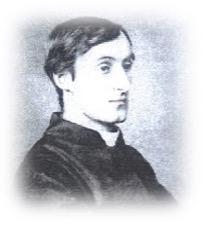
Gerard Manley Hopkins, a Jesuit priest who struggled with the tension between poetry and religion, questioned whether poetry with its intense involvement in the sensual world somehow blasphemed the sacred. He finally resolved that tension seeing nature as the intersection of the divine and the physical. Although its second stanza (omitted here) hints at sin undoing youthful joy, the first stanza of his “Spring” is a glorious celebration of life’s renewal.
from Spring
Nothing is so beautiful as spring—
lllllllllWhen weeds, in wheels, shoot long and lovely and lush;
lllllllllThrush’s eggs look little low heavens, and thrush
Through the echoing timber does so rinse and wring
The ear, it strikes like lightnings to hear him sing;
lllllllllThe glassy peartree leaves and blooms, they brush
lllllllllThe descending blue; that blue is all in a rush
With richness; the racing lambs too have fair their fling. [10]
|
|
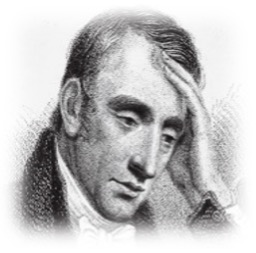
In the second stanza that I omitted from Hopkins’ “Spring” he equates the beauty of spring to the Garden of Eden only to rue its undoing by sinning humans. William Wordsworth, one of the seminal English Romantic poets, expressed a similar sentiment in his “Lines Written in Early Spring,” a poem which in this spring of massacres in the Ukraine sounds as if it might have been written yesterday.
from Lines Written in Early Spring
I heard a thousand blended notes,
While in a grove I sate reclined,
In that sweet mood when pleasant thoughts
Bring sad thoughts to the mind.
To her fair works did Nature link
The human soul that through me ran;
And much it grieved my heart to think
What man has made of man. [11]
|
|
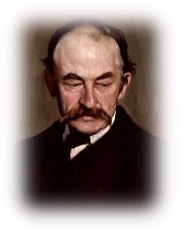
One of the greatest of English novelists, Thomas Hardy, author of The Return of the Native, The Mayor of Casterbridge, Far From the Madding Crowd, Jude the Obscure, and Tess of the d’Urbervilles, practically defines the turn of the 19th into the 20th century. Lamenting, like Wordsworth, what humans had done to themselves, he gave up writing novels seeking instead to share his insights in short, lyric poems of concentrated focus. He sought affirmation, maybe even redemption, in the grounded reality of every day’s banal “here and now.” For anyone who has ever attempted to build anything, Thomas Hardy’s snapshot of a blackbird building his nest will ring a note of appreciation.
I Watched a Blackbird
I watched a blackbird on a budding sycamore
One Easter Day, when sap was stirring twigs to the core;
I saw his tongue, and crocus-coloured bill
Parting and closing as he turned his trill;
Then he flew down seized on a stem of hay,
And upped to where his building scheme was under way,
As if so sure a nest were never shaped on spray. [12]
|
|
In “Sonnet #98,” William Shakespeare uses the metaphor of spring to heighten his sense of loss at being parted from his beloved, for his beloved’s absence makes a winter of everything. Pining for his absent lover, the poet misses spring’s sweet return, but, of course, he doesn’t for its all there in the poem. |
|
Sonnet #98
From you have I been absent in the spring,
When proud-pied* April (dressed in all his trim)
Hath put a spirit of youth in every thing,
That heavy Saturn* laughed and leaped with him.
Yet no lays* of birds, nor the sweet smell
Of different flowers in odour and hue,
Could make me any summer’s story tell,
Or from their proud lap pluck them where they grew;
Nor did I wonder at the lily’s white,
Nor praise the deep vermillion in the rose;
They were but sweet, but figures of delight,
Drawn after you, you pattern of all those.
lllllllllYet seemed it winter still, and, you away,
lllllllllAs with your shadow I with these did play. [13]
|
|
*many colored; brightly colored
*the Sun
*songs
|
|
Let’s conclude this ramble through poems ancient and modern singing of spring with a pair from two contemporary, 21st century poets – Gillian Clarke and Mary Oliver – sharing with us the miracle of spring’s renewal. |
|
It’s not often I’d give priority of place to someone over Mary Oliver, but today we’ll conclude with Gillian Clarke’s “Miracle On St. David’s Day,” but first another from Mary Oliver. I’ve said many times that explication can kill a poem, so without any prefatory comments, here is Oliver’s:
Spring
Somewhere
la black bear
lhas just risen from sleep
land is staring
down the mountain.
lAll night
lin the brisk and shallow restlessness
llllllllllof early spring
I think of her,
lher four black fists
lflicking the gravel,
llllllllllher tongue
like a red fire
ltouching the grass,
lthe cold water.
llllllllllThere is only one question;
how to love this world.
lI think of her
lrising
lllllllllllike a black and leafy ledge
to sharpen her claws against
lthe silence
lof the trees.
lWhatever else
my life is
lwith its poems
land its music
land its glass cities,
it is also this dazzling darkness
lcoming
ldown the mountain,
lbreathing and tasting;
all day I think of her –
lher white teeth,
lher wordlessness,
lher perfect love. [14]
|
|
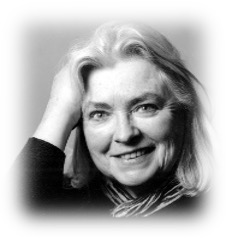
Gillian Clarke, whose poetry I have just been discovering, was the National Poet of Wales from 2008 to 2016. An accomplished poet, she continues writing, teaching, and translating from the Welsh. . Although she writes on her website that “all you need to know about this poem is that it is a true story,” for the non-Welsh I will simply note that St. David’s Day celebrates the patron saint of Wales, that it occurs on March 1and the symbols of Wales and St. David are the daffodil and the leek. Clarke adds, that in addition to being a true story, that “it happened in the ’70s, and it took me years to find a way to write the poem.” [15] “Miracle on St. David’s Day” speaks for itself.
Miracle on St. David’s Day
‘They flash upon that inward eye
which is the bliss of solitude’
lllllllllllllllllll(from ‘The Daffodils’ by William Wordsworth)
An afternoon yellow and open-mouthed
with daffodils. The sun treads the path
among cedars and enormous oaks.
It might be a country house, guests strolling,
the rumps of gardeners between nursery shrubs.
I am reading poetry to the insane.
An old woman, interrupting, offers
as many buckets of coal as I need.
A beautiful chestnut-haired boy listens
entirely absorbed. A schizophrenic
on a good day, they tell me later.
In a cage of first March sun a woman
sits not listening, not feeling.
In her neat clothes the woman is absent.
A big, mild man is tenderly led
to his chair. He has never spoken.
His labourer’s hands on his knees, he rocks
gently to the rhythms of the poems.
I read to their presences, absences,
to the big, dumb labouring man as he rocks.
He is suddenly standing, silently,
huge and mild, but I feel afraid. Like slow
movement of spring water or the first bird
of the year in the breaking darkness,
the labourer’s voice recites ‘The Daffodils.’
The nurses are frozen, alert; the patients
seem to listen. He is hoarse but word-perfect.
Outside the daffodils are still as wax,
a thousand, ten thousand, their syllables
unspoken, their creams and yellows still.
Forty years ago, in a Valleys school,
the class recited poetry by rote.
Since the dumbness of misery fell
he has remembered there was a music
of speech and that once he had something to say.
When he’s done, before the applause, we observe
the flowers’ silence. A thrush sings
and the daffodils are flame. [16]
|
|
-- Andrew Roth, Ph.D.
Scholar-in-Residence
The Jefferson Educational Society
This content is copyrighted by the Jefferson 2022.
|
|
Photo Credits
End Notes
-
Burns, Robert. “O Were My Love Yon Lilac Fair” in RobertBurns.org available here accessed April 12, 2022.
-
Larkin, Philip. “The Trees” in The Poetry Archive available here accessed April .
-
Housman, A.E. “Loveliest of Trees, the Cherry Tree” in The Norton Anthology of Poetry. (New York: W.W. Norton Co., 1970), p. 893.
- Millay, Edna St. Vincent. “First Fig” in 101 Great American Poems: The American Poetry and Literacy Project. (Mineola, NY: Dover Publications, Inc., 1998), p. 71.
-
Millay, Edna St. Vincent. “Spring” at The Poetry Foundation available here accessed April 12, 2022.
-
Frost, Robert. “The Pasture” at The American Academy of Poets available here accessed April 12, 2022.
-
Dickinson, Emily. “A Light Exists in Spring” in Final Harvest: Emily Dickinson’s Poems. Ed. Thomas Johnson (Boston: Little Brown and Co., 1961), p. 201.
-
“Robert Herrick” at The Poetry Foundation available here accessed April 13, 2022.
-
Herrick, Robert. “Corinna’s Going A-Maying” in The Norton Anthology of Poetry. (New York: W.W. Norton Co., 1970), p. 264.
-
Hopkins, Gerard Manley. “Spring” at Gerard Manley Hopkins: Official Website available here accessed April 13, 2022.
-
Hardy, Thomas. “I Watched a Blackbird” at Poetry Nook available here accessed April 13, 2022.
-
Wordsworth, William. “Lines Written in Early Spring” at Poets.org available here accessed April 13, 2022.
-
Shakespeare, William. “Sonnet #98” in Helen Vendler, The Art of Shakespeare’s Sonnets. (Cambridge, MA: Harvard University Press, 1997), p. 418.
- Oliver, Mary. “Spring” in Devotions: The Selected Poems of Mary Oliver. (New York: Penguin Press, 2017). pp. 317-318.
-
Clarke, Gillian. “Miracle On St. David’s Day” at GillianClarke.co.uk available here accessed April 13, 2022.
- Ibid.
|
|
JES Mission: The Jefferson was founded to stimulate community progress through education, research, and publications. Its mission also includes a commitment to operate in a nonpartisan, nondenominational manner without a political or philosophical bias. As such, the Jefferson intends to follow the examined truth wherever it leads and is neither liberal nor conservative, Democratic nor Republican in philosophy or action. Our writers’ work reflects their own views. |
|
|
|
|
|
|