Council of Producers & Distributors of Agrotechnology

Terry Kippley, CPDA

May 28, 2025


Welcome New Members!

CPDA is pleased to welcome new members NewLeaf Symbiotics and Neu-Ag. 

Membership dues fund our advocacy efforts which include working with EPA on the PRIA and non-PRIA backlog and on the possibility of giving growers credit for the use of Drift Reduction Adjuvants as an ESA mitigation tool alternative to No-Spray buffers which would be difficult for growers and our members.

NewLeaf Symbiotics is the pioneer and global leader of PPFM technology and the closely related methanotroph microbe family. With a robust technology portfolio of biocontrol and biostimulant solutions across a variety of row and specialty crops as well as a deep pipeline addressing the industry’s biggest challenges around nitrogen, methane emissions, and insect and disease pressure, NewLeaf’s science-led, performance-driven and data-backed approach drive it to the forefront of the next generation of biological innovation.

NeuAG is one of the foremost ammonium sulfate and ammonium sulfate blends distributors in the United States. With over 32 years of experience in the agricultural industry and in the selling and distributing of ammonium sulfate they offer the highest quality product on the market. Their longstanding relationship with BASF located in Freeport, Texas enables NeuAG to consistently distribute both bulk and bagged ammonium sulfate and ammonium sulfate blends to customers across the nation.

Make America Healthy Again Commission Report Released – CPDA Deep Dive

Last week, the Make America Healthy Again (MAHA) Commission released its initial assessment of the nation’s health, with a focus on children. The assessment suggests environmental chemicals, including pesticides, may contribute to chronic childhood diseases such as autism, cancer, and autoimmune disorders. The assessments also highlight ultra processed foods (UPFs), lack of exercise and overmedicalization as other risk factors affecting the health of children.


For pesticides, the MAHA report highlights countries with stricter pesticide regulations as examples of better health outcomes. They also recommend greater scrutiny of pesticide residues on food and exploration of federal actions to reduce agricultural chemical exposure.


All of this might sound familiar to those industry veterans over the age of fifty-five. In 1993, the National Research Council published the book Pesticides in the Diets of Infants and Children, which examined “whether the present regulatory approaches adequately protect infants and children, who may differ from adults in susceptibility and in dietary exposures to pesticide residues.” Congress took note of the recommendations in the book and three years later unanimously passed the Food Quality Protection Act of 1996, which contained many of the recommendations in the book.


FQPA completely overhauled how pesticides were assessed and approved, while establishing additional protections for infants and children. 


Key provisions include:

Special protections for infants and children: FQPA required EPA to consider the potential risks to infants and children and apply additional safety factors (often a tenfold increase) when assessing exposures to kids. 


Reassessment of existing tolerances: EPA was required to re-evaluate all existing pesticide tolerance levels within 10 years to ensure they were protective of children. 


Cumulative and aggregate exposure: FQPA required EPA to consider the combined effects of exposure to multiple pesticides with similar mechanisms of toxicity, as well as exposure from various sources (food, water, etc.). 


Fast forward to today and, according to the MAHA report, we have made no progress since 1996 – pesticides are still one of the main culprits affecting the health of children. But let’s have a closer look at that.


The report tells us that “nearly 70% of an American child’s calories today comes from ultra-processed foods.” This staggering number has led to dramatic increases in obesity and diabetes among children. One thing is for sure. Kids are not overweight due to a diet rich in fruit and vegetables. Instead, they are overweight because they rarely eat fruits and vegetables. A recent Centers for Disease Control report confirms this. The report found that nearly one-third of children aged 1-5 do not eat a daily fruit, and nearly half do not eat a daily vegetable. 


On top of that, we also know from USDA’s Pesticide Data Program that over 99% of the foods sampled by USDA were well below safety limits set by the EPA with 40% having no detectable residues at all. So, how can kids be exposed to pesticides in their diets when they don’t routinely eat their fruits and vegetables and when they do, residues are either nonexistent or  present at very low levels? That’s a question the MAHA Commission needs to answer.


To encourage healthier diets for kids, we need a renewed national focus on diets rich in fruit and vegetable consumption. To do that, we first need a regulatory system that provides the crop protection tools farmers need to produce a wide variety and amount of fresh produce items. Stripping farmers of these tools would be incredibly counterproductive and if we did that, we would soon be talking about Making America’s Fresh Produce Affordable Again. This is especially important for low-income Americans.


To read more about the MAHA report and CPDA’s response, you can find the CPDA Press Release here.

Administrator Zeldin on the Hill Again

EPA Administrator Lee Zeldin appeared before the House Energy and Commerce Committee last week to discuss the agency’s budget and operations. During his testimony, Zeldin acknowledged the backlog of more than 12,000 pesticide registration actions.


To address this, Zeldin outlined plans to shift staff to the Office of Pesticide Programs (OPP) and improve internal processes and efficiencies to reduce delays. CPDA welcomed his remarks as a step toward a more transparent and science-based regulatory system.

CPDA State Affairs & Regulatory Committee Meets

CPDA’s May 21 State & Federal Affairs and Regulatory Committee meeting provided a comprehensive update on CPDA priorities. The issues discussed include:

  • EPA Backlog: CPDA’s advocacy helped drive EPA’s plan to add 130+ staff to address the pesticide review backlog, which affects over $500 million in pending products. Funding gaps under PRIA V remain a concern.


  • MAHA Commission: CPDA supported efforts to secure a bicameral congressional letter and launched an Action Alert to ensure the Commission’s recommendations reflect science-based pesticide policy.


  • Farm Bill: CPDA is pushing for adjuvant-related provisions, including incentives for Drift Reduction Adjuvants, USDA practice standard updates, and increased research investment.
  • California: Members discussed Department of Pesticide Regulation delays, proposed changes to groundwater rules, and the expanding Sustainable Pest Management framework. Labeling, registration timelines, and county enforcement remain top issues.
  • State Trends: CPDA is monitoring PFAS bans, adjuvant formula disclosure, recycling mandates, and pesticide liability legislation across multiple states.
  • Regulatory Initiatives: CPDA is supporting EPA reforms to reduce CSF duplication and piloting a side-by-side verification program to speed “me-too” approvals. TSCA regulation of dioxane remains a concern.


The next committee call is scheduled for September 9. If you would like to be included in these calls, please contact Andrew Walmsley at andrew.walmsley@cpda.com

CPDA Comments on Threatened Species Listing of Monarch Butterflies

On May 19, CPDA submitted comments on the U.S. Fish and Wildlife’s (FWS) Proposed Threatened Species Status with Section 4(d) Rule for Monarch Butterfly and Designation of Critical Habitat. 


If FWS lists the monarch butterfly as a threatened species, EPA would be required to formally “consult” with FWS to consider potential impacts to Monarch during the pesticide registration process.


CPDA’s comment letter can be found here.

Confidential Statement of Formula Update

In a May 19 webinar, OPP outlined their plan to reduce the alternate number of CSFs required for pesticide products. This is a positive development as CPDA has been advocating for these reforms through a series of interactions with OPP staff. OPP’s current procedures can require as many as hundreds of alternate CSFs for a single product, causing a significant drag on time and resources, both for registrants and EPA staff.


The famous “Herndon memo” of 2012 has allowed certain variations in formulation to be detailed in attachments to a main CSF, including:

  • Alternate production sites;
  • Alternate countries of formulation;
  • Alternate suppliers of inert ingredients.


EPA will now revise the Herndon memo, retaining these attachments for alternate CSFs, and allowing a few more:

  • Alternates to an inert ingredient, having the same use, concentration in the formulation, and certified limits;
  • Alternate sources of active ingredients that can vary in purity within the certified limits listed on the alternate CSF. Differences in concentration of the active ingredient source must be made up in the formulation by adjustment of a single active ingredient that is designated on the alternate CSF.


Details are still being finalized. Registrants are cautioned to wait for the final revision before using these approaches. 


Also discussed in the same webinar were plans to revise Pesticide Registration Notice 98-1, which allows and encourages self-certification of certain product chemistry data for pesticide products. The revision would:

  • Simplify and accelerate application and review processing for registration while improving efficiency, without adding extra burden.
  • Focus on PRIA actions and consideration for other data types;
  • Make administrative updates; and
  • Accept Tier II dossier summary of product identity; physical and chemical properties; and methods of analysis based on OECD Guidance.

CPDA Supports Nomination of Dudley Hoskins for USDA Role

Last week, CPDA joined over one hundred agricultural organizations in a letter to the Senate Agriculture Committee endorsing Dudley Hoskins for Under Secretary of Agriculture for Marketing and Regulatory Programs (MRP). Hoskins has a deep background in agricultural policy, having served as Chief of Staff for MRP and Senior Advisor to Secretary Sonny Perdue, and currently as senior professional staff for the Senate Agriculture Committee. A confirmation hearing was held on May 21, where Hoskins received bipartisan praise.

1,4-Dioxane Update

One of the agenda items discussed during the CPDA quarterly State and Federal Affairs call was the latest regulatory news on 1,4-dioxane. Special thanks goes to Ian Bartlett with Synesqo walking us through the latest developments.


To bring you up to date with what is going on, I have attached a summary of information, provided by CPDA Board Member Jonathan Selby of Innospec, concerning the history of regulatory investigations into the health hazards of 1,4-dioxane and the pending regulatory restrictions on products that contain 1,4-dioxane. This document is not meant as the end-all regulatory statement but is provided, as a courtesy and unofficial summary to CPDA members to alert them of the potential changes and disruption that these regulatory restrictions could impose on our industry.

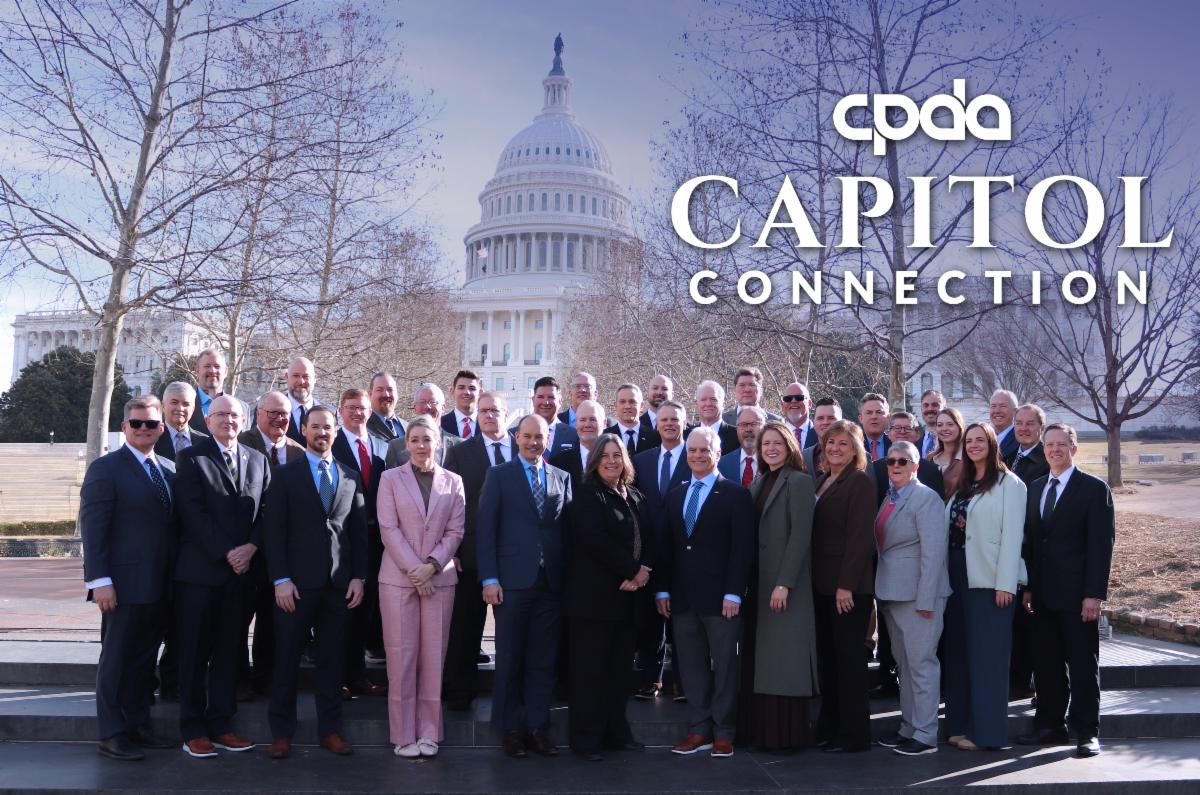
CPDA’s Capitol Connection

At CPDA, our commitment to advocacy and member support remains at the core of everything we do. CPDA’s Capitol Connection is your go-to source for quick, essential updates on policies and regulations impacting your business—in just two minutes.


Each week, we will break down the most pressing issues affecting our industry, offering valuable insights into both state and federal initiatives.


The latest Capitol Connection can found on our website and LinkedIn page.

Upcoming Industry Events

June 21, 2025

Tech Hub Live Conference & Expo

Des Moines, IA

August 5, 2025

AgriBusiness Global Trade Summit

Lake Buena Vista, FL

CPDA Members use code: CPDA25 for $100 off!

September 29, 2025

CPDA Annual Meeting

Lake Geneva, WI

October 5, 2025

Western Plant Health 2025 Annual Meeting San Diego, CA

February 2026

CPDA DC Fly-In

Washington, D.C.

April 27, 2026

CPDA Adjuvants, Inerts & Crop Protection Conference

Austin, TX


Until next time….


Connect with us!

LinkedIn  Email  Web

ABOUT CPDA

NEWS

EVENTS

LIKE US ON LINKEDIN