An Unusual Description
of God
Luke 15:1-10
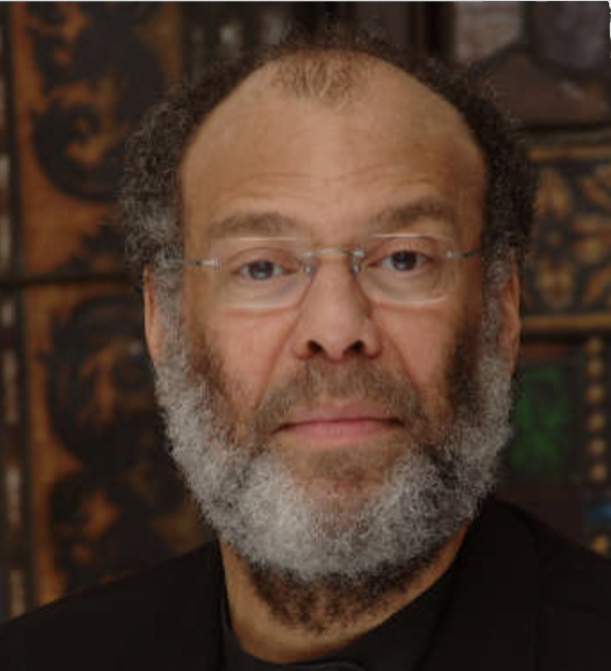
Dr. William S. Epps, Senior Pastor
|
|
Sunday, September 11, 2022 |
|
1Then all the tax collectors and the sinners drew near to Him to hear Him. 2And the Pharisees and scribes complained, saying, “This Man receives sinners and eats with them.” 3So He spoke this parable to them, saying: 4“What man of you, having a hundred sheep, if he loses one of them, does not leave the ninety-nine in the wilderness, and go after the one which is lost until he finds it? 5“And when he has found it, he lays it on his shoulders, rejoicing. 6“And when he comes home, he calls together his friends and neighbors, saying to them, ‘Rejoice with me, for I have found my sheep which was lost!’ 7“I say to you that likewise there will be more joy in heaven over one sinner who repents than over ninety-nine just persons who need no repentance. 8“Or what woman, having ten silver coins, if she loses one coin, does not light a lamp, sweep the house, and search carefully until she finds it? 9“And when she has found it, she calls her friends and neighbors together, saying, ‘Rejoice with me, for I have found the piece which I lost!’ 10“Likewise, I say to you, there is joy in the presence of the angels of God over one sinner who repents.”
Luke 15:1-10
Introduction
September 11 (9/11/2001) is a date that is forever etched in our national memory. We awakened to a horrific sight as we were alerted that we are under attack. We began the first decade of the twenty-first century with the security and safety of our nation at risk. Since 9/11, we are extremely aware of the frightening prospects of terrorism.
President Barack Obama said the anniversary of the Sept. 11 attacks is a time for Americans to, “rekindle the spirit of unity and common purpose,” as a nation. We are reminded of the loss of life which awakens a sense of our vulnerability. We are not isolated or insulated from injury. Whenever loss occurs we search for the meaning in it all. Even if answers escape us, resolve, resilience and resistance to defeat produces determination to surmount the situation with strength. In our searching we find or rather we are found by what we need to continue with purpose, persistence, and perseverance. Life continues to mount resistance to all that threatens its existence. Losing, searching and finding are aspects of human experiences. We lose what is invaluable to us. We search to find what we lost. And when we find what we’ve lost, we rejoice and celebrate. That is the cycle of our lives.
Consider what it means to search for meaning when
something catastrophic happens.
|
|
Monday, September 12, 2022 |
|
Jesus uses stories of people’s lives to engage them in understanding who God is, how God is, and where God is at work in our lives. He offers a few memorable stories of divine mercy, of the unbounded joy of God when what's lost is found.
1Then all the tax collectors and the sinners drew near to Him to hear Him. 2And the Pharisees and scribes complained, saying, “This Man receives sinners and eats with them.” (Luke 15: 1-2)
Jesus shares these stories to those who were persistently complaining, grumbling and judging others with negative and pejorative terms.
Jesus pictures God throwing a celestial party. It is an unusual picture of -
God throwing a celestial party, which the angels dare not miss. It may be an arresting depiction of God for those who imagine a stern taskmaster or a vindictive judge or a divine scorekeeper.
Listen to what Jesus says, "I say to you that likewise there will be more joy in heaven over one sinner who repents than over ninety-nine just persons who need no repentance. Likewise, I say to you, there is joy in the presence of the angels of God over one sinner who repents.”
(Luke 15: 10)
The parables in this chapter speak of the joy of finding that which is lost.
The good news in these stories, with their vivid characters and powerful plots, have a context. They function as a disturbing response to the complaints of the Pharisees and scribes (those who were considered ethically pure, morally upright and righteous). Both the shepherd and the woman connote figures from the underside of Jewish society. Shepherds had notorious reputations and were generally avoided as outcasts. Women were treated as second-class citizens. The mere choice of the two as images must have caused a shock among the listeners, and especially among those who grumbled because Jesus was welcoming (the Greek verb suggests the offering of hospitality) and eating with those (tax collectors and sinners) who were considered undesirable. Publicans were the tax gatherers, Jews who had sold themselves to collect Roman taxes from their oppressed countrymen. Sinners were people careless of the religious laws. Thus publicans and sinners were a corporation of the un-holiest. Pharisees and scribes were (in their own eyes at least) a corporation of the holiest.
Consider what it means to search for what you have lost until you find it.
|
|
Tuesday, September 13, 2022 |
|
The listeners are immediately thrust into the middle of the parables:
"Which one of you, having a hundred sheep ..?" (15:4). They are asked to reflect on their own experiences of losing what’s valuable, and searching to find what has been lost, and the delight that comes with finding what you lost. By association they are invited to share with God and the angelic host in the celebration over the reclaiming of a person. Jesus saw promise in strange friends - publicans and sinners - who were considered lost. However, the Pharisees and scribes were equally lost. The only difference is that they had wandered away by a different road. The godly can choke love and mercy out of life by the routine of their ritual and use their self-righteous condemnation on those they label as godless.
In answer to the complaint that Jesus has overstepped the boundaries in fellowshipping with undesirables, the parables implicitly beckons those who are grumbling (Pharisees and the scribes) to join him, to be part of the searching, because God is a searching God.
Consider what it means that everyone experiencing loss, searches to find what has been lost and rejoices when finding the objects of their search.
|
|
Wednesday, September 14, 2022 |
|
What do these stories of the lost sheep and the lost coin, depict for us?
They are about losing, searching, and finding.
Firstly, loss tells of the tragedy of human existence. Jesus begins the parable by thrusting the listeners into the middle of the story. He says, "which of you having one hundred sheep, if one is lost does not leave the ninety-nine to go after the one that is missing. Who is it who has not lost something. The attacks of 9/11 remind us of losses. Lives were lost. There was the loss of our sense of safety and security. Some lost faith. Some lost joy. Some lost health and well-being. We experience losses with the pandemic. We continue to experience losses with the current climate of division that is so prevalent in our nation culturally, emotionally, politically, and religiously. We lost the unity that we once embraced as the pledge of allegiance says, one nation under God with liberty and justice for all and the motto e pluribus unum, out of many one. We are not the united states but the divided states. We are lost and we are searching to find our way.
The most obvious element common to both the parable of the lost sheep and the lost coin is the compassionate concern of a searching God. The details heighten the importance and intensity of the searchers' efforts. The shepherd risks temporarily abandoning the ninety-nine sheep in the wilderness (a decision many would no doubt question), and when he finds the straying sheep "he lays it on his shoulders and rejoices" (15:5). The woman is described as lighting a lamp and taking a broom in hand in her attempt to recover her missing coin. Neither the shepherd nor the woman has a moment's hesitation as to what to do; neither forsakes the search until the sheep/coin is found.
God is like that, the stories says, meticulously pursuing confused, conflicted and recalcitrant rebellious creatures. Such search gives value to those being sought. They become treasured and significant because they are not left for lost, but are made objects of divine concern.
Loss tells of the tragedy of human life. How do sheep get lost? "They just nibble themselves lost. They keep their heads down, wander from one green tuft to another, come to a hole in the fence - and never can find a hole by which to get back again." We just nibble ourselves lost with our heads down feeding on what we presume will nourish us. In seeking to fulfill our aspiration, desires and hopes, we keep our heads down, going from this tuft of acquisitiveness to that tuft of security to the other tuft of a comfortable standard of living - through the hole in the fence. Man has more intelligence than sheep, but his wisdom continues to create - by choice - calamity, confusion, contentiousness, conflict and the like.
Jesus befriended sinners because of their promise and possibility and because of the unlimited capacity of the compassion of God to continue at all cost to reach those who have nibbled themselves lost with their heads down seeking that which at best provides temporary satisfaction.
This is the only method of redemption. Montefiore, a Jewish scholar, says the distinctiveness of the gospel is precisely in the fact that God became incarnate: God seeks us out. A doctor cannot set the broken limb from the other side of the street: Love cannot cure our loveless-ness from the other side of the sky. "The Word was made flesh" (John 1:14). A love that seeks is not without risk and pain! God has come to the other side and voluntarily shares the prison house which remorse and defiance have built for themselves, that He may set the prisoners free.
Consider what it means that the tragedy of humanity is dealing
with the reality of experiencing losses.
|
|
Thursday, September 15, 2022 |
|
Secondly, searching tells of the unrelenting persistence of a determined will to keep looking until you find what you lost.
Jesus notes in the story that the one who has lost does not sit idly, twiddling thumbs, wondering what to do. Immediately, the one who has lost gets up and actively conducts an unrelenting search. Searching involves risk. You are not sure where it will take you but you go anyway. The conjunction (preposition) "until" says it all. Search until you find. The activity that precedes, which is the searching, suggests the conclusion or outcome, the finding. Keep on looking for answers. Keep on searching until the desired outcome is achieved. Look until you find what you have lost, whether it is your faith, your sense of security and/or surety, your well-being, your joy.
Seeking tells of the pursuing love of God. Here we have the unrelenting search of God for each of us. The phrase, "man's search for God" is a misnomer; for no man seeks God until he has first heard the Shepherd's call. People usually seem to be unaware of God, or so intent on their own affairs as to be deaf and indifferent; but their secret heart tells a different story.
“If you are looking for God, God will find you.” Ignatius of Loyola or Mother Teresa, would have likewise believed that even as we are looking, and even when we mostly feel lost, God is somehow finding us, whether or not it feels that way to us. Ignatius believed (as I do) that when we set ourselves toward some worthy purpose that transcends our meager strength, we tap into a source of meaning, strength, peace, and courage that is beyond us. We come to realize, in a graced moment, that we are called to some great purpose, that we cannot do it on our own, but that we don’t have to do it on our own. That’s why Ignatius urges, in one after another of his spiritual exercises, that we speak to Jesus “in the way one friend speaks to another.”
Search until... this speaks to the persistence of God's love. "Until" is Luke's word. Luke tells of God's concern. Those weak in faith are the object of the search.
Imagine while you are searching, you get found by what you are looking to find.
The opening pages of scripture remind us that God seeks fellowship with us. Biblical faith depicts God pursuing humanity. The Lord comes in the cool of the evening and we hide because we have violated the restrictions that are part of being in relationship with the Lord. We hide ourselves. We have the call of Abraham, a covenant relationship established, nurtured and maintained by God who takes the initiative. It continues through the Exodus event on through the wilderness sojourn; through the conquest of the land to the establishment of the monarchy. It continues in crib in Bethlehem where the paradox of the incarnation stills a world in silence as an angelic chorus sings. (Glory to God in the highest and peace on earth and goodwill to man). It continues on through the life, teachings, preaching, healing, death, burial, resurrection and ascension of Jesus. It continues through the power of the Holy Spirit to manifest itself even now, and shall continue.
Consider what it means to search unrelentingly until you
find the object of you searching.
|
|
Friday, September 16, 2022 |
|
Thirdly, there is the striking image of heaven's delight in the recovery
of the lost.
Joy is the climax of the drama. So overcome are the shepherd and the woman with the success of their search that they call their friends and neighbors to come for a party. Neither wants to celebrate alone. It has been noted, the expense of the entertainment may have been more than the value of either the sheep or the coin, but that possibility only adds to the extravagance and joy of the occasion.
Jesus presupposes that if you search for what has been lost, you will find it. Jesus made us aware that those who seek find (Matthew 7:7-9).
It is true that the narrator makes a point of speaking of heaven's joy "over one sinner who repents" (15:7, 10). But the stories are not primarily calls to repentance. Sheep and coins can't repent. The image of a merciful and joyful God completely overshadows any interest in the behavior or remorse of the lost creatures.
As with most parables, the text is open to multiple meanings. It offers good news to those who feel themselves un-redeemably lost and who can delight in a God who patiently searches, not only for them, but also for others like them. It subverts and disorients, however, those offended by the remarkable generosity of God. The naysayers were silenced. They wanted to exclude what the Lord wanted to include.
Consider what it means that when the love and grace of God is
experienced in the life of a person, the Lord has a celebration with
rejoicing that even the angels cannot forgo.
|
|
Saturday, September 17, 2022 |
|
Conclusion
You can find in Christ all you may have lost: assurance for your adversity;
belief for your bewilderment; confidence for your crises; courage for your circumstance; deliverance from your disappointment and distress / faith for your frustration; grace for your guilt; pardon for your poor performance; salvation for your situation; triumph in trouble .
If the ship of your life / Is tossing on the sea of strife
You need someone / If your house is not a home
And you feel so alone / You need someone / If it seems life isn’t fair
And there's no one left to share / All your lonely days and nights
It seems that nothing turns out right / And you need someone to care
Someone to just be there / You need someone
So, I give you, Jesus / He's the peace that passes all understanding
I give you, Jesus / He's the perfect love that cast away all fear
I give you Jesus / He's that water that you drink and never thirst again
I give you, Jesus / My friend... I give you, Jesus
If the pressures all around / Keeps your spirit to the ground
You need someone / If your body is in pain
And your health you can't regain / You need someone
If there are times that you have tried / All the strength you have inside
And it seems like you have failed / Remember Jesus was nailed
All that bitterness and grief / To give you peace and sweet relief
You know Jesus, is that someone you need
I give you, Jesus / He's the peace that passes all understanding
I give you, Jesus / He's the perfect love that cast away all fear
I give you Jesus / He's that water that you drink and never thirst again
I give you, Jesus / My friend... I give you, Jesus
|
|
|
|
I Give You JESUS
~Martha Taylor LaCroix
|
|
2412 Griffith Ave
Los Angeles, CA 90011
Phone: (213) 748-0318
|
|
|
|
|
|
|
|