NJ MAT Centers of Excellence Newsletter |
|
Friday, July 30th, 2021 | Issue #28 |
|
|
|
Hospitals May be Violating Federal Laws by Denying Necessary Care for SUD’s in Emergency Departments |
This video by the Bloomberg American health Initiative reviews the legal obligations of hospitals to offer and treat patients with evidence-based care to patients presenting to the emergency department with substance use disorders. Specifically, it examines the potential violations of the Emergency Medical Treatment and Labor Act (EMTALA), Americans with Disabilities Act (ADA), Rehabilitation Act of 1973, and Title VI, Civil Rights Act of 1964. View the short Youtube video and the associated report. |
|
|
|
|
ECHO: Chronic Alcohol Use Disorder Management in Patients with OUD |
If you missed any of the previous MAT or continuous quality improvement ECHO sessions, they are posted on our Northern COE Website webinar archive. Please note that you are only able to receive CE credits by attending LIVE ECHO sessions.
The next Project ECHO session is on Friday, August 6th from 12 - 1pm
The didactic speaker for this session will be Tony Juneja, MD, who is the associate director of the addiction medicine fellowship at Hackensack Meridian. He will discuss how to manage concurrent alcohol use disorder with opioid use disorder. Free CEs are provided and all are welcome!
Do you have a patient or client you would like to present to the panel to receive recommendations and suggestions for management? Please click here to email your question(s) or scenario(s).
|
|
|
|
|
REMINDER: Next OBAT Navigator Training Series Begins Tuesday, August 10th |
This training series of four webinars focuses on actionable information for OBAT navigators on how to support patients' goals and priorities as well as best practices in connecting patients to behavioral health and social service resources. Click below for more information.
4-Part Series: August 10th, 17th, 24th, and 31st
1:00 PM - 4:00 PM
|
|
|
|
|
Hosted by the Camden Coalition, Navigator Support Events are an ongoing opportunity occurring every two months for OBAT navigators to continue learning through de-identified patient cases, discussion of patient engagement strategies, and sharing of updated resources about relatives topics. This is similar to the MAT Lunch Hours but specific for patient navigators.
Join us for the next event on Wednesday, August 11th from 12:00 - 1:00 PM
|
|
|
|
|
Join us and the Camden Coalition of Healthcare Providers for the next monthly MAT Lunch Hour to network, collaborate, and discuss. We will send an announcement on a future date with the next topic.
Next Forum: Wednesday, August 25th, 12 - 1pm
|
|
|
|
|
Atlantic City Voted to Shut Down the City’s Only Syringe Access Program |
On Wednesday, July 21st, the Atlantic City Council voted 7-2 to close Atlantic City’s only syringe service program providing clean syringes, testing services, and recovery support, despite the evidence-base supporting harm reduction methods and the outpouring of support from advocates, which include the residents of Atlantic City. There will now be only six harm reduction centers offering similar services in New Jersey. For the article, please click the link.
For more information from the CDC that summarizes The Safety and Effectiveness of Syringe Service Programs, click here.
|
|
|
|
|
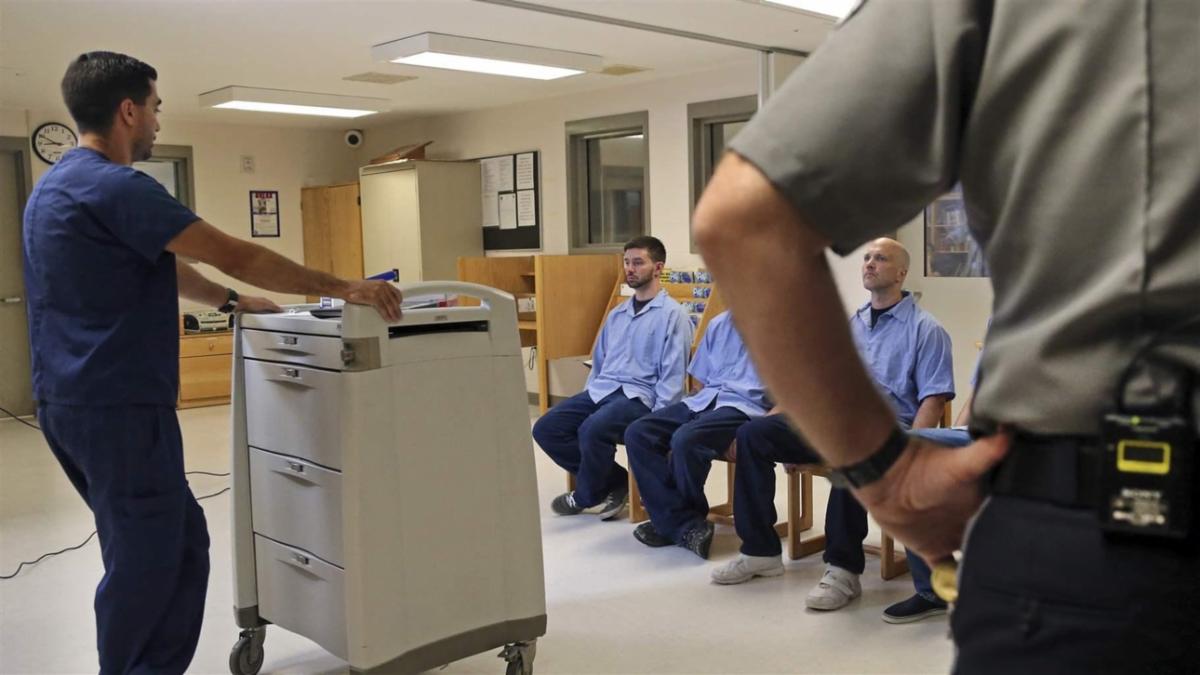
Medications for Opioid Use Disorder in Jails and Prisons: Moving Toward Universal Access |
This is a report that summarizes five key areas with significant barriers to access to MOUD in the jail and prison setting, but also areas for change. These include:
- Methadone and buprenorphine regulation
- Low-threshold treatment
- Collaboration between security and medical staff
- Harm reduction
- Reentry services and Medicaid enrollment
The document outlines a vision in each area, identifies the challenges, and proposes solutions. To access the full report, click the link.
|
|
|
|
|
High-Dose Buprenorphine Induction in the Emergency Department for Treatment of Opioid Use Disorder |
This is a study in JAMA Network Open published by Dr. Andrew Herring, Director of CA Bridge. Researchers used a retrospective chart review to analyze data from electronic health records documenting 579 visits (made by 391 adult patients with opioid use disorder) in 2018 at the Alameda Health System Highland Hospital in Oakland, California. The patient cohort was primarily from highly vulnerable populations with 41% experiencing a psychiatric comorbidity and 23% experiencing homelessness. The outcomes of interest included vital signs, use of supplemental oxygen, presence of precipitated withdrawal, sedation, respiratory depression, adverse events, length of stay, and hospitalization during and 24 hours after the ED visit. The results of the case series indicated that increased doses of buprenorphine medication for treatment of OUD can provide extended withdrawal relief to patients after being discharged and was safe and well tolerated.
|
|
|
|
|
Methadone Access for Opioid Use Disorder During the COVID-19 Pandemic Within the United States and Canada |
The COVID-19 pandemic led to significant changes to methadone access for OUD. This is a study in JAMA Network Open that conducted a cross-sectional analysis of methadone clinics in 13 US states, the District of Columbia, and three provinces in Canada (all geographical areas with the highest rates of opioid overdose fatalities). More than 1 in 10 clinics were not accepting new patients, 1/3 of which was due to COVID-19. It found that the clinics in Canada provided more access to methadone than US opioid treatment programs, with a mean wait for first appointment that was significantly less compared to programs in the US. The results of the study indicated that methadone access may be worse than previously estimated and exacerbated during the pandemic, and that open-access clinic models and other changes are needed to increase timely access to methadone even beyond the pandemic.
|
|
|
|
|
Understanding Harm Reduction, Syringe Service Program (SSP) Utilization In a Rural State |
This is a cross-sectional study assessing safe injection practice techniques and reviews the predictors of its utilization in a rural state. It highlights the unsafe practices and lack of SSP utilization among those admitted with injection drug use-associated infections and the importance of expanding harm reduction services. |
|
|
|
|
ASAM OUD Mini-Course: Treatment in the Emergency Department |
This is a one-hour, free, on-demand module that provides education for emergency department providers on the screening, diagnosis, and management of patients with opioid use disorder with an application-focused learning. To view the course, please click the below link. |
|
|
24/7 MAT Provider Hotline: 844-HELP OUD (844-435-7683)
|
|
|
|
|
|
|