Rail & Labor News from RWU
| | Weekly Digest Number 42 - October 20, 2026 | | Welcome to the RWU Rail & Labor News! This news bulletin is produced and emailed out each Tuesday morning. We hope you find each week's news and information useful. If so, please share with co-workers, friends, and colleagues. If you like, you can sign them up to get all the news from RWU HERE. Or forward them the link. Got a hot tip? Please forward the article and a link to raillabornews@gmail.com. Note: If you read over this news bulletin each week, you will be sure to never miss the important news of what is going on in the railroad world from a worker's perspective! | | THIS WEEK'S RAIL AND LABOR NEWS | | Editor's Note: It is always great to see new units organized by rail labor. Sadly, there are hundreds of properties along with railroad contractors that have yet to be brought into the union fold. It is critical in the coming years that this task is undertaken to successfully bring thousands of railroad workers into the Union family. It is a daunting task to say the least. But imagine just how much easier and efficient it would be to undertake it if we had a single powerful railroad workers union that encompassed all crafts... | |
Progressive Railroading / October 14th
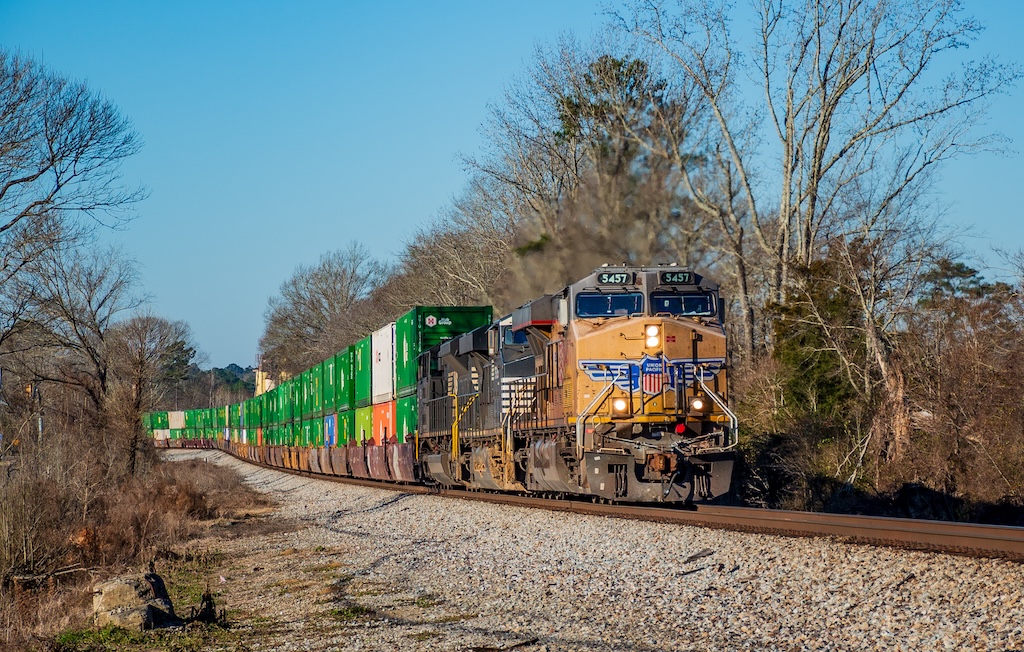
Brotherhood of Locomotive Engineers and Trainmen (BLET) members recently ratified their first agreement with the Georgia Central Railway, a Genesee & Wyoming Inc. short line.
The workers voted to join the BLET in October 2024. The ratified contract establishes a formal framework covering rates of pay, seniority, job bidding, disciplinary procedures, grievances, compensations, benefits, layoffs and union representation, BLET officials said in a press release.
"The agreement is another example of BLET’s continued efforts to organize and represent railroad workers beyond the nation’s largest carriers," they said. "As the railroad industry changes, organizing new properties and expanding the Brotherhood’s presence throughout the industry will remain an important part of protecting railroad jobs and strengthening the collective voice of our members."
| | Editor's Note: A railroad takes the strength of a worker’s body, the hours of their life and often the best years they have, but it has no right to send them home carrying the poison of the job in their lungs and blood. More than thirty Roseville railroaders now allege that decades spent keeping Union Pacific moving left them with cancers and pulmonary disease while the dangers around them went inadequately warned of and inadequately protected against. If those allegations are proved, no settlement can return the years already taken, and no corporate statement about safety can make honorable what happened to the men and women whose labor produced the company’s wealth. A worker should never have to discover in retirement that their pension came with a death sentence. | |
|
KCRA / October 15th
More than 30 former Union Pacific Railroad workers have filed lawsuits, claiming that decades of exposure to hazardous substances at the Roseville rail yard caused serious illnesses, including chronic lung disease and various types of cancer.
“We are alleging in all of the lawsuits that their work over decades at the railroad has caused them to either have pulmonary illnesses or cancers that they're now dealing with,” said Carisa Oden, a railroad and personal injury attorney.
The workers are covered under the Federal Employers’ Liability Act, which governs workplace injury claims for railroad employees. Oden, who handles cases involving injuries and illnesses allegedly caused by on-the-job exposure to hazardous substances, described the conditions at the rail yard as a “toxic soup.”
| |
| Editor's Note: When customers say they fear retaliation for opposing a merger, every worker who has ever been told to keep quiet and keep the freight moving should recognize the pattern. Power that cannot tolerate criticism is already too concentrated, and handing it still greater control over the nation’s rail system will not make that power more accountable to workers, shippers or communities. The men and women who build, move, maintain and depend upon this railroad deserve competition and a voice, not an empire so powerful that speaking against it becomes a risk to one’s livelihood. A corporation asking for more power should be answering its critics, not teaching them to fear it. | |
|
Stop the Rail Merger Coalition / October 16th
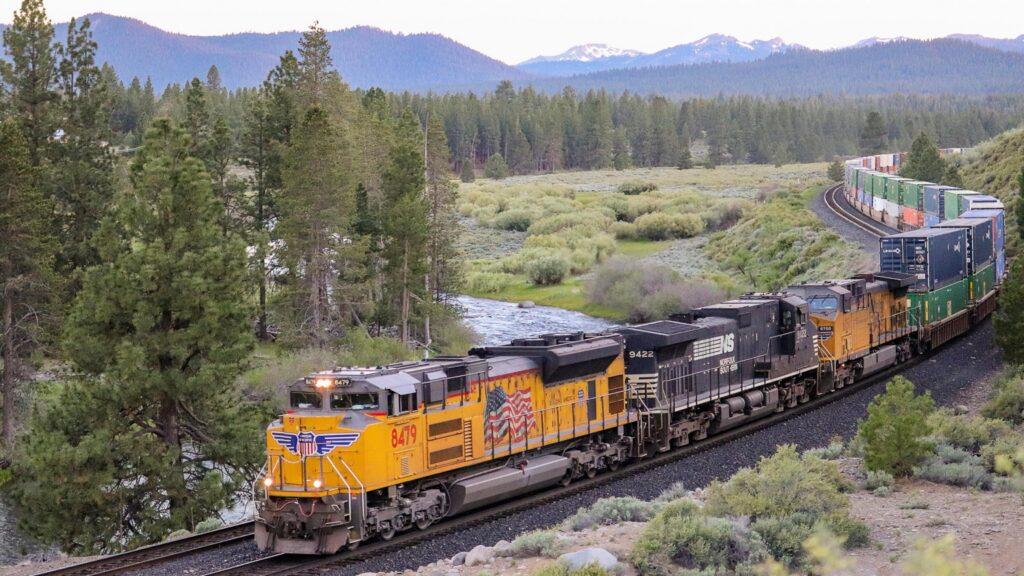
Three major freight rail customer groups are pushing back on Union Pacific’s attempts to dismiss and intimidate critics of its proposed merger with Norfolk Southern, warning that the deal would further reduce competition, increase costs and leave shippers with fewer options.
In a new joint blog post, leaders of the American Chemistry Council, Alliance for Chemical Distribution and American Fuel & Petrochemical Manufacturers write:
“When it comes to its proposed merger with Norfolk Southern, Union Pacific seems increasingly intent on monopolizing not only the nation’s freight rail system, but the debate over whether the deal is good for America.”
| |
|
2 KUTV / October 13th
Sparks from railroad vegetation maintenance accidentally ignited the Adams Fire, according to an investigation by the Utah Division of Forestry, Fire and State Lands.
The fire started July 27 along the railroad corridor near 182 W. 5700 South in Washington Terrace. Investigators determined it began in an area where Union Pacific railroad workers had recently used a brush-hog-type cutting attachment.
Investigators found a damaged steel J-bolt and metallic shavings near the fire’s origin. They concluded that metal-to-metal contact between the maintenance equipment and steel hardware produced sparks or hot particles that ignited nearby cured grass.
| | Editor's Note: America may well need a better coast-to-coast railroad, but it does not follow that the cure is to place still more of the nation’s transportation system in the hands of a single corporation. The first transcontinental railroad was built with enormous public support and by the labor of thousands of working people; invoking Lincoln now to justify greater private concentration turns that history neatly on its head. Workers, farmers, manufacturers and communities all have an interest in faster and more reliable rail service, but they also have an interest in competition and in retaining some power over the corporations upon which they depend. A truly national railroad should serve the nation, not merely enlarge the empire of the company that owns it. | |
|
Trains Magazine / October 13th
For generations, railroads have tied the American economy together. Farmers in Texas depend on them to move grain and livestock. Manufacturers in Missouri rely on them to receive raw materials and deliver finished products. Ports, warehouses, power plants, and the small businesses in between depend on freight rail, even if most Americans rarely see the trains that power their livelihoods.
Yet the network that carries all of this has a gap at its center. There is not a single rail line in America that lets a producer ship a box from one end of the country to the other without stopping at a rail yard for sometimes days at a time, coming off its originating train, moving to a separate carrier, and loading once again. When President Lincoln signed the Pacific Railway Act in 1862, he set in motion a transcontinental line, yet more than a century and a half later no single carrier can move freight coast to coast without handing it off. It is 2026, and that is unacceptable.
| |
| Editor's Note: The Surface Transportation Board understood twenty-five years ago that continued consolidation could leave the rail industry concentrated in the hands of only a few enormous corporations, and it deliberately wrote tougher rules to prevent that outcome. Union Pacific and Norfolk Southern now arrive asking the Board to permit precisely the kind of concentration it once warned could give railroads immense market power over workers, shippers and communities. If the claimed benefits can be achieved through cooperation, better interchange and improved service, then the public should not be asked to surrender competition merely because ownership is more profitable. The burden belongs to the corporations seeking more power, not to the people who will have to live under it. | |
|
Trains Magazine / October 14th
Following the burst of rail mergers in the 1990s, the Surface Transportation Board wrote the “new” 2001 merger rules in anticipation of just the kind of merger being proposed by Union Pacific and Norfolk Southern. The board said then that it worried about the “end game:” a further reduction in the number of Class I railroads, “perhaps to the point where only two major railroads remain in the U.S. and Canada,” with massive market power.
To guard against that outcome, the board raised the bar, saying merger applicants should bear a heavier burden to prove that a merger is in the public interest. The board promised “a more skeptical, ‘show me’ attitude toward claims of merger benefits.” And it added a crucial test: whether the claimed benefits could be achieved “by means other than the proposed consolidation,” such as interline partnerships, thus avoiding the anti-competitive risks that would come with further mergers.
Measured against these standards, the UP-NS application falls short. Three important examples will suffice to demonstrate the hurdles faced by the application.
| |
|
Trains Magazine / October 13th
A former Amtrak employee has been sentenced to 20 months in prison and ordered to pay almost $960,000 in restitution for his part in a fraud scheme that saw the Amtrak health care plan pay more than $11 million in false claims.
Devon Burt, 53, of Blue Bell, Pa., received the sentence on Oct. 7, the U.S. Attorney’s Office for the District of New Jersey announced. Sentencing followed his guilty plea in June 2023 for conspiracy to commit health care fraud and conspiracy to communicate extortionate threats. Along with the prison time, he received two years’ supervised release and an order to pay $959,072.
Burt worked with health care providers to recruit Amtrak employees in a scheme that offered cash payments in exchange for allowing health care providers to use their information to submit false claims; those providers received payments from the health care plan for services that were never provided or were medically unnecessary.
| |
Stop The Rail Merger Coalition / October 13th
In a recent post, Union Pacific says it wants to “talk facts” about its proposed merger with Norfolk Southern, directly responding to an op-ed opposing the merger from former Labor Secretary Lori Chavez-DeRemer. However, UP’s response only distorts and obfuscates them.
Here are the facts about the overwhelming worker opposition to the merger:
FICTION: “More unions representing employees across the combined railroad support this combination than oppose it.”
FACT: UP continues to use the same misleading tactic it has used for months: counting unions instead of counting workers. A clear majority (over 70%) of the unionized workforce is represented by unions opposing the merger.
| | NEWS FROM AROUND THE LABOR MOVEMENT | | Each week, RWU includes a few articles about advances and developments in the larger labor movement that are of interest to railroad workers. Got an artcile to submit for possible inclusion next week? Email it along to raillabornews@gmail.com. Thank you! | | Editor's Note: The UAW membership has sent a strong message to the old order by re-electing President Shawn Fain to another term. His militant approach to bargaining, willingness to strike and not back down has energized the membership. We need candidates/slates to run for office in the rail unions with this no-holds-barred outlook that can inspire the rank and file to fight back. | |
The American Prospect / October 13th
Over the past four years, the United Auto Workers—once the most influential and progressive union on the planet—has shown clear signs of reviving some of its past glory and moxie. In recent decades, the union’s once-stellar record had been tarnished by the declining fortunes of America’s three legacy automakers (GM, Ford, and the renamed Chrysler, now doing business as Stellantis) and the concomitantly paltry contracts the union had bargained, by the UAW’s inability to unionize the foreign-owned auto plants spread across the South, and by the spending of union funds on the semi-lavish lifestyles of some union officers (including two past presidents), a number of whom have served time in federal pens for their misdeeds. As a result of those felonies, the union reached a court settlement that brought its internal workings under the oversight of a court-appointed monitor, who four years ago shifted the union’s process of electing its officers from the delegated conventions it had been holding since its founding in 1936 to elections by the rank-and-file membership.
| |
Convergence / October 6th
Since taking office, Trump and MAGA forces have made considerable advances in implementing Project 2025 and consolidating authoritarian power—but many of these moves have proved unpopular and undermined their support. With Trump’s approval ratings dropping and elements of his coalition defecting, conditions look promising for pushing back MAGA in the midterm elections.
But there are at least two sources of concern. With their support declining, the MAGA forces are likely to step up their efforts to interfere with the elections—doing everything from stopping people from voting to refusing to seat elected officials to unleashing violence. And even if elections go smoothly, will the anti-MAGA forces be prepared to govern in a way that brings about real change? Or will we face business-as-usual Democrats who answer to billionaires and waffle on key reforms? A growing number of billionaires support authoritarian rule because they directly benefit from it or know they could not amass such wealth under a true democracy.
| | WEEKLY DERAILMENT DEPARTMENT | | Each Tuesday in this news bulletin, RWU does our best to present a picture of what has been happening over the course of the previous week in terms of derailments in North America, and investigation determinations of previous accidents. NOTE: This list is by no means comprehensive. Smaller and less consequential mishaps are generally not reported here. If the wreck results in injury or fatality, or is especially damaging/extreme, a full article will appear as a feature in the dozen or so rail articles above. Know of a train wreck? Please feel free to forward a link to raillabornews@gmail.com for possible inclusion next week. Thanks! |
| | | |