Spring 2026

Welcome!

Welcome to this issue of the HEAL Data2Action (HD2A) Digest! Please share with colleagues, friends, and anyone else you know who might be interested in our work and encourage them to subscribe to our newsletter.

Feature Story

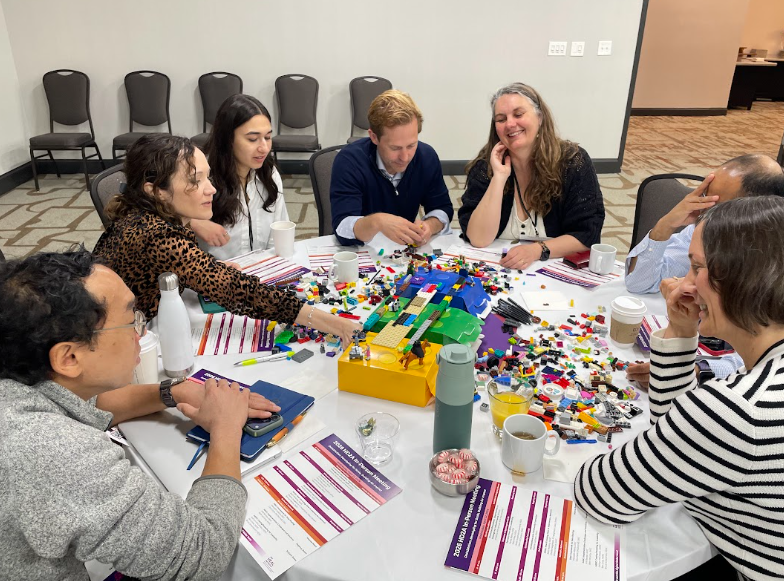
HD2A Network In-Person Meeting Recap: Celebrating Our Shared Commitment and Collective Momentum

Dear Colleagues,


The HD2A Network's April 22–23 in-person meeting marked an important transition as projects enter the R33 phase of their work. This shift reflects progress from early development efforts to the creation of actionable tools, measurable outcomes, and dissemination-ready products. The meeting also provided an opportunity to honor the memory of Dr. Bryan Garner, whose leadership and generosity continue to inspire the HD2A community.


Opening remarks from National Institute on Drug Abuse (NIDA) leadership set a collaborative, forward-looking tone that carried throughout the meeting, including the Community Connector and group discussions focused on strengthening how we work together. Breakout sessions highlighted practical outputs across the network, including DISC's data-sharing framework, RASC's implementation insights, and MERC's costing and modeling strategies to support scalability.


A key takeaway was the strong alignment across projects. Despite differences in project design, teams recognized shared methods, common challenges, and overlapping opportunities. This collective perspective reinforced a unifying mission and a clear purpose: advancing prevention, treatment, and systems-level solutions that meaningfully benefit the populations we serve.


Discussions also emphasized the importance of remaining adaptive in an era of rapidly evolving artificial intelligence technologies. The meeting highlighted the need for scientific agility and ongoing dialogue with NIDA program officials as projects refine their approaches or consider strategic pivots. Participants also received updates on scale and sustainment readiness assessment, an area of growing interest as projects begin looking ahead to broader implementation and long-term impact.


This milestone serves as a meaningful reminder of how far we've come together and what we can accomplish over the next two years. With coordinated dissemination efforts ahead, including shared manuscripts and a strong presence at major scientific conferences such as the Addiction Health Services Research (AHSR) conference and the AcademyHealth Annual Research Meeting, the HD2A Network is moving from ideas to action and measurable impact. We invite the broader research community to engage by attending HD2A sessions at these conferences and exploring forthcoming tools and resources as they become available.


Sincerely,

Janet Kuramoto-Crawford, PhD, MHS

Initiative Lead, HD2A


To access the in-person meeting materials, including slide decks, notes, handouts, and a summary of the meeting evaluation, please visit the Digital Folder.


Community Engagement

Patient Experience With Take Home Methadone

In this short video produced by the Clinics Optimizing Methadone Take-Homes (COMET) Innovation Project, led by Charles Neighbors, Yuhua Bao, and Ashly Jordan, people with lived experience of opioid use disorder speak to how access to methadone take-home doses changed their lives, enabling stable employment, education, and autonomy.


A few reasons this is worth your time:

  • Hearing directly from patients grounds us in why this work matters. Their voices carry a weight that data alone cannot.
  • It's a reminder that giving end users a voice, and then actually using it, can be more powerful than any study.
  • It's also a model for community engagement and communications, and an example of how projects can broaden their reach and deepen their impact.
 

What We're Reading and Listening To

Websites and Information on AI in Science

Explore NIH's artificial intelligence and machine learning initiatives, including resources, policies, and efforts to make biomedical data FAIR (findable, accessible, interoperable, and reusable). https://datascience.nih.gov/artificial-intelligence


The National AI Research Resource (NAIRR) Pilot connects researchers and educators with computational, data, and training resources to support artificial intelligence research and innovation. https://nairrpilot.org/

AI and Pain Management

Utilizing Artificial Intelligence for the Diagnosis, Assessment, and Management of Chronic Pain

Zakeri et al., 2025 · Journal of Biomedical Physics and Engineering

A review of AI applications across the diagnosis, assessment, and clinical management of chronic pain conditions. https://pmc.ncbi.nlm.nih.gov/articles/PMC12402416/


The Perceived Benefits of an Artificial Intelligence–Embedded Mobile App Implementing Evidence-Based Guidelines for the Self-Management of Chronic Neck and Back Pain: Observational Study

Lo et al., 2018 · JMIR mHealth and uHealth

An observational study of patient-perceived benefits from an AI-powered mobile app supporting evidence-based self-management of neck and back pain. https://pmc.ncbi.nlm.nih.gov/articles/PMC6288595/

AI and Opioid Use Disorder

A systematic review of machine learning applications in predicting opioid-associated adverse events

Medina et al., 2025 · npj Digital Medicine 

A synthesis of 44 supervised ML studies predicting opioid harms — finding moderate-to-strong performance but significant gaps in validation and transparency. https://www.nature.com/articles/s41746-024-01312-4


Predicting treatment retention in medication for opioid use disorder: a machine learning approach using NLP and LLM-derived clinical features

Haredasht et al., 2025 · Journal of the American Medical Informatics Association (JAMIA)

Using LLMs to extract psychosocial risk factors from clinical notes to improve prediction of buprenorphine-naloxone treatment retention at six months. https://academic.oup.com/jamia/article/32/12/1865/8261127


Subscribe and Stay Connected

You are receiving this email because you either subscribed to receive updates from us or someone you know thinks you'd be interested in our work. If this email was forwarded to you, please subscribe to our newsletter to continue getting updates.

Web