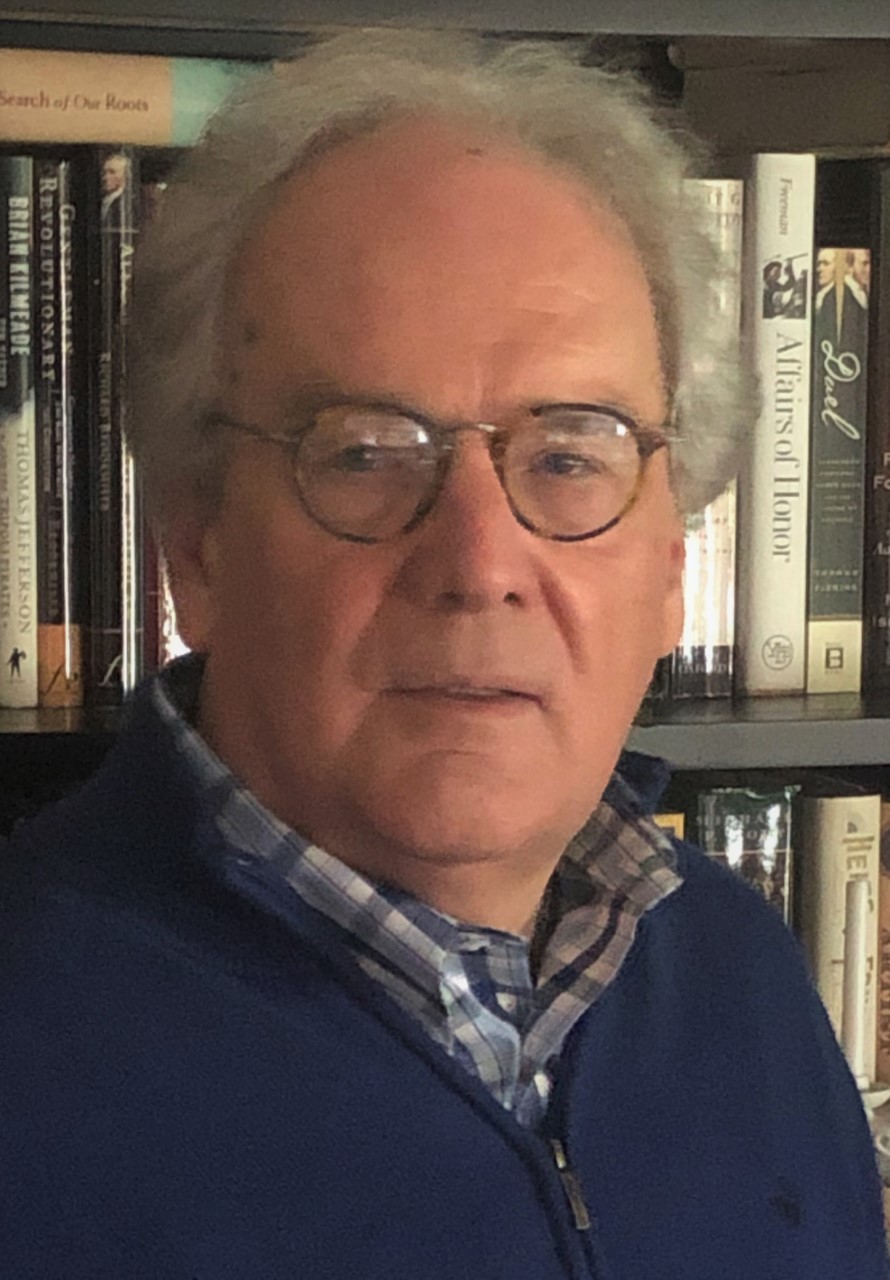
By Jefferson Scholar-in-Residence
Dr. Andrew Roth
|
|
Several ‘Amazing’ 19th Century Women
Lost to History
|
|
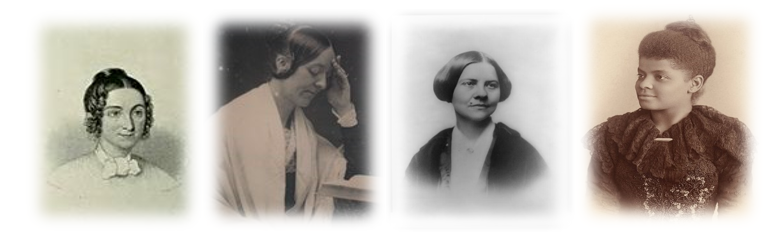
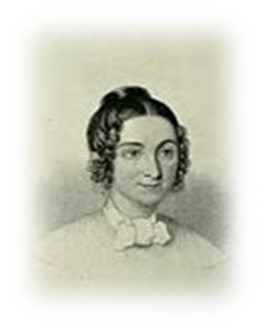
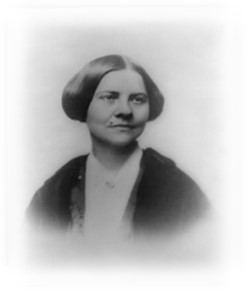
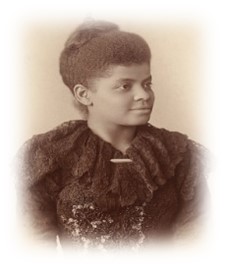
From left: Lydia Sigourney, Margaret Fuller, Lucy Stone, and Ida B. Wells |
|
Let’s conclude this March Women’s History Month series on 19th century women of note with brief snapshots of four women whom history finally caught up with, then passed by, and now, with one exception, seems largely to have forgotten. Along with Sarah Josepha Hale and Lydia Maria Child, they deserve to be remembered. In remembering them, you’ll notice they were all abolitionists. They were all advocates for women’s rights. They were all champions of human rights. You’ll also notice an escalating theme as these pathfinders at first indirectly and then with increasing clarity directly demand women’s equality.
The earliest, Sarah Josepha Hale and Lydia Sigourney, although they supported a woman’s traditional role, indirectly undermined it by the example of the lives they lived and the causes for which they fought. More overtly than Hale and Sigourney, Lydia Maria Child, in her History of the Condition of Women in Various Ages and Nations, demonstrated that societies in which women were free to exercise their talents were prosperous societies, but she stopped short of explicitly stating her research’s feminist implications. Margaret Fuller, a younger friend and confidant of Child’s, made those implications explicit in her Woman in the Nineteenth Century. Lucy Stone, as subtle as a blunt fist, demanded an education equal to a man’s. She broke educational, marital, and political ground as a passionate advocate for abolition and women’s rights. Born a slave, Ida B. Wells became a journalist and the most famous African American woman of the 19th century through her fearless fight against lynching and her demands for women’s rights.
|
|
Who was Lydia Sigourney?
|
|
Known as the “Sweet Singer of Hartford,” Sigourney was a contemporary of Sarah Josepha Hale and Lydia Maria Child. She was a frequent contributor to Hale’s Ladies’ Magazine and Godey’s Lady’s Book. Born Lydia Huntley in 1791, she, like Hale and Child, was one of “the first women to establish a successful literary career.” [1] At first, since her husband disapproved of her name appearing in print, she signed her work “L.H.S.” Later, when his financial failures forced her to earn an income to support her family, she signed her work “Lydia Huntley Sigourney.” [2]
Like Hale, Sigourney was a paradox. On the one hand, she supported the 19th century notion of Home and gendered spheres of influence. Home was a woman’s domain; commerce and politics a man’s. One of her first publications for Hale’s Ladies’ Magazine in 1830 was “Comparative Intellect of the Sexes,” in which Sigourney wrote, “The sexes are intended for different spheres and constructed in conformity to their respective destinations … but disparity does not necessarily imply inferiority.” [3] And in that second clause lurks the other hand, for by the example of her professional success and independence she undermined the social conventions she sought to support.
Both a poet and an essayist, Sigourney authored 52 books and more than 2,000 contributions to more than 300 periodicals. As her reputation grew, notes the Women’s History Blog, “by the early 1840s, her popularity was so great that magazines vied for her contributions.” [4] As an advocate of gendered spheres of influence, she wrote two conduct books titled Letters to Young Ladies and Letters to My Pupils about, what else, how young women ought to conduct themselves in society. Yet, at the same time she spoke out against slavery and the mistreatment of Native Americans and in support of female education. In her autobiography Letters of Life, she said she wanted her writing to be “an instrument of good.” [5]
In both her essays and poems, she evoked patriotic themes, but also highly personal and emotional topics, such as her poem “Death of an Infant.” In the epigraph to her most famous poem about Native Americans, “Indian Names,” Sigourney asks, “How can the red men be forgotten, while so many of our states and territories, bays, lakes, and rivers, are indelibly stamped by names of their giving?” Natalie Merchant, of the musical group 10,000 Maniacs, gave it a brief bit of 21st century fame when she recorded it on her solo album Leave Your Sleep. [6]
Sigourney might have advocated for gendered spheres of influence, but even in her own time she was a paradox: she celebrated home, but was so popular she became a public figure “courted by dignitaries and literary celebrities.” [7] She might have thought commerce a man’s sphere, but professionally she was known as a shrewd promoter of her own work not averse to cutting a corner to get a deal. [8]
Her poetry can be maudlin and sentimental, her conduct essays clearly dated. Regardless of literary quality, Lydia Huntley Sigourney unwittingly set in motion forces leading to the modern American woman. Or maybe not unwittingly; one must assume a woman so observant saw her life’s contradictions.
Now, in the early 21st century, maudlin verse or not, she has been rediscovered and credited with “establishing herself as the first female poet with a distinctly American voice. … Her autobiography was the first written by a poet, dramatist, or novelist. … She wrote about Native Americans, advocated an end to slavery … (and) supported Thomas Gallaudet’s school for the deaf until her death.” [9]
|
|
Who was Margaret Fuller?
|
|
Not quite a tragic figure, Margaret Fuller died young at 40. She “was an American critic, teacher, and woman of letters.” [10] As The Poetry Foundation says, she “was one of the most prominent literary women of the 19th century, and is sometimes thought of as America’s first feminist.” [11] As 19th century Americans sought to shake off British influence and find their own identity, Fuller made major contributions to American cultural history, but she is most famous for her milestone 1845 book examining women’s place in society – Woman in the Nineteenth Century.
Born in 1810, Fuller was an extremely bright child. Educated at home by a demanding father, the adult Fuller always “attributed her ‘nervous affections’ – she was subject to nightmares and sleepwalking in her youth, migraines, and depressions in her maturity – to the despotism of her father.” [12] As Judith Thurman continues in a 2013 The New Yorker article, Fuller’s mother was a prototypical sweet and docile 19th century wife; “Margaret was her father’s daughter.” [13] Fuller’s father Timothy, a highly successful lawyer educated at Harvard, homeschooled her. She learned to read at four and to write at six. Fuller later wrote he wanted me to be “heir of all he knew.” Starting her on Latin at six, her father told her “To excel in all things should be your constant aim.” [14] In the process, she received an education other women of her time were denied.
After her father’s death in 1835 from cholera, Fuller’s financial position was fragile. She earned a meager living as a teacher at two schools operated by Bronson Alcott, father of Louisa May Alcott, who wrote Little Women. Because of Alcott, Fuller was connected to the growing transcendentalist movement. She formed friendships with leading members such as Ralph Waldo Emerson, Elizabeth Peabody, William Ellery Channing, and Orestes Brownson.
An aspiring writer, Fuller through her network of friends, in particular Emerson and Alcott, in 1840 became editor of The Dial, the transcendentalist magazine. In that role, she wrote poetry, reviews, and literary criticism “advocating the philosophy of liberation and fulfillment of the highest potential of all human beings – including women.” [15]
At heart a teacher and reputedly a superb discussion leader, Fuller from 1839 to 1844 conducted classes – what she called conversations – in which she encouraged “women to think and talk together about ideas.” [16] In her conversations, Fuller sought to provide women a portion of the education society had denied them by involving them in discussions about “the fine arts, history, mythology, literature, and nature.” She wanted women to think about philosophy’s great questions: what were you born to do; and, how shall you do it? [17]
One of Fuller’s closest friends at the time was Lydia Maria Child, who attended Fuller's conversations. They were the hub of Boston’s intellectual community. By introducing women to subjects allegedly beyond their intellectual ability, Fuller sought in her conversations to enrich “the lives of women and to dignify their place in society.” [18]
Emerging out of her conversations, Fuller in 1845 published Woman in the Nineteenth Century. As Child herself remarked, “I should not have dared to have written some things in it,” in particular Fuller’s detailed attack against the era’s moral code’s sexual double standard. [19] Considered a feminist classic and the first work of overt American feminist philosophy, it “had a profound influence on the Seneca Falls Women’s Rights gathering in 1848.” [20] It demanded women’s political equality and argued for women’s emotional, intellectual, and spiritual fulfillment.
Seeking the same ends as Sarah Josepha Hale, Fuller took a very different tack. Hale, as we know, somewhat contradictorily championed Home, women’s right to an education, and their right to work. Fuller, on the other hand, in Woman in the Nineteenth Century, counseled young women to seek an education to gain their independence from the home and family. Fuller scorned the notion that women should be contented domestics. She believed that women should be allowed to fulfill their personal potential by doing whatever work appealed to them. She famously said, “Let them be sea-captains, if they will.” [21]
Fuller argued for women’s property rights and opposed the law of coverture, which made women subject to their father’s or husband’s authority. She believed women should seek their own fulfillment and not be subordinate to men: “We would have every arbitrary barrier thrown down. We would have every path laid open to women as freely as to man.” [22] Fuller made women’s rights a national issue.
As an editor, Fuller encouraged American writers and crusaded for social reforms. In 1844, she became Horace Greeley’s literary critic for the New York Tribune and then his foreign correspondent. After moving to Europe in 1846, she landed in Italy in 1847. A freedom seeker and innate rebel seasoned with a large dash of romantic optimism, she got caught up in the cause of the Italian revolutionaries led by Giuseppe Mazzini. She also met an impoverished Italian nobleman and ardent republican, Giovanni Angelo, Marchese Ossoli. [23] Secretly married in 1849, the couple fled the failed revolution.
In mid-1850, they sailed for the United States with their infant son, Angelo. They never made it; they died in a shipwreck off Fire Island, New York.
Margaret Fuller, philosopher of women’s rights, led a Byronic life and died a Byronic death.
|
|
As Debra Michals writes at the National Women’s History Museum, Lucy Stone was “a leading suffragist and abolitionist, who dedicated her life to battling inequality on all fronts. She was the first Massachusetts woman to earn a college degree; she defied gender norms when she famously wrote marriage vows reflecting her egalitarian beliefs and refused to take her husband’s last name.” [24]
Born in 1818 in West Brookfield, Massachusetts, Stone was one of nine children born to a farming family descended from the New England’s earliest Puritan settlers. Her parents, both committed abolitionists, taught her early to value freedom and to oppose slavery. Stone learned her lesson well. “Disagreeing with her father’s belief that men should be dominant over women,” when her older brothers went off to college she asked, “Why not me?” and “undertook to educate herself.” [25]
Like Fuller and Hale, Stone was frustrated by the inequality that discouraged women from becoming educated. Largely self-taught, she worked at 16 as a teacher, probably in a dame school for young children, to earn money so she could go to college. She spent a semester at Mount Holyoke in 1839. Family illness caused her to return home. In 1843, however, she enrolled at Ohio’s Oberlin College – the first college to admit female students. Working her way through college, Stone paid for her education herself. [26] Even progressive Oberlin, however, prevented Stone from engaging in public speaking. At the time it was thought unfit for women. When she graduated in 1847, Stone, who was a powerful public speaker and would become a major figure on the era’s lecture circuit, “declined the ‘honor’ of writing a commencement speech that would be read by a man.” [27]
Since few professions admitted women, as she left college Stone’s career options were limited. Then she caught a break. Legendary abolitionist William Lloyd Garrison hired her for his American Anti-Slavery Society. As a paid agent for the society, Stone wrote and delivered abolitionist speeches, while also becoming active in women’s rights. As she said, “I expect to plead not for the slave only, but for suffering humanity everywhere. Especially do I mean to labor for the elevation of my sex.” [28]
Remember, in the 19th century, public speaking and the lecture circuit were major American popular culture events. Despite being a woman, despite advocating for women’s rights and despite being a passionate abolitionist, Stone proved to be one of the most popular speakers. For five years, Stone traveled all over the American and Canadian lecture circuits. As Michals says, “Despite being heckled, as were most women speakers of the era, and at least once physically attacked, Stone soon earned more than many male lecturers.” [29] Heckled she might have been and excommunicated by the Congregational Church, “Stone emerged as an outspoken voice in the anti-slavery movement and women’s rights cause.” [30]
In 1850, the year Margaret Fuller died and two years after the Seneca Falls Women’s Rights Convention, Stone organized the first national Women’s Rights Convention. Her speech at its 1852 convention converted Susan B. Anthony to the cause of women’s rights. [31]
In the early 1850s, she met Henry Blackwell, the brother of physicians Elizabeth and Emily Blackwell. Elizabeth Blackwell was the first American woman to become a medical doctor. Henry Blackwell convinced Stone to marry him by promising they could create an egalitarian marriage. Intended for publication, their 1855 vows omitted the then-common reference to wifely obedience and included a protest against marital laws, such as coverture. The vows said that “current marriage laws ‘refuse to recognize the wife as an independent, rational being, while they confer on the husband an injurious and unnatural superiority, investing him with legal powers which no honorable man would exercise, and which no man should possess.’ Women who followed her example called themselves ‘Lucy Stoners.’” [32]
She also set a new standard by retaining her own name, which, 24 years later in 1879, banned her from voting. At the time, Massachusetts allowed women voting in some local elections. Stone registered to vote. She was removed from the electoral rolls because she did not use her husband’s name. [33] Earlier, Stone set another precedent in 1858 when she reminded Americans about “no taxation without representation.” Since she could not vote and had no say in what laws were passed, Stone refused to pay her taxes. Not paying her taxes resulted in the sale of the Stones’ household goods. [34]
After the Civil War, Stone became even more active in the women’s suffrage movement. She served as president of the New Jersey Women Suffrage Association. She helped organize the New England association and served on the executive committee of the American Equal Rights Association. In 1869, siding with Frederick Douglass, Stone broke apart from suffragists Elizabeth Cady Stanton and Susan B. Anthony over passage of the 14th and 15th Constitutional Amendments granting voting rights to Black men but not to women. Stone was willing to accept this measure for her abolitionist goals while continuing to work for women’s suffrage. For a time, there were two women’s suffrage associations. Anthony and Stanton formed the National Woman Suffrage Association (NWSA). Stone, Julia Ward Howe, and others formed the American Woman Suffrage Association (AWSA). Stone edited the AWSA publication, the Woman’s Journal. [35]
Stone lived to see the reunification of the two suffrage associations in 1890. Stone gave her last speech in Chicago in 1893 at the World’s Columbian Exposition – the White City. She died later that year at 75.
|
|
Born a slave in Holly Springs, Mississippi in 1862, she was the great anti-lynching activist of the late 19th and early 20th century. [38] At one point she was the most famous African American woman in the country. Wells' parents were active in the Republican Party during Reconstruction. They instilled in their daughter the importance of education. Her father was involved with the Freedman’s Aid Society and helped start a school for freed slaves, Shaw University, which Wells attended. Unfortunately, demonstrating early that she would stand up for herself, the school suspended her for starting a dispute with the president. [36]
When 16, both of Wells’ parents died during a yellow fever outbreak leaving her to care for her seven siblings. Determined to keep her family together, Wells convinced a school administrator she was 18 and got a job as a teacher. In 1882, Wells and her youngest sisters moved to Memphis to live with an aunt. During the summers, Wells attended Fisk University in Nashville and, when back in Memphis, Lemoyne Owen College. She had already developed strong political opinions on women’s rights, writing when only 24, “I will not begin at this late day by doing what my soul abhors; sugaring men, weak deceitful creatures, with flattery to retain them as escorts or to gratify a revenge.” [37]
In 1884 on a train ride between Memphis and her job as a teacher at a rural school, the conductor told her she had to move from her first-class seat. When she refused, the conductor and two male passengers threw her off the train. Wells sued the railroad and won a lower court settlement for $500. It was overturned on appeal by the Tennessee State Supreme Court saying Wells only wanted to harass the railroad. [39] Thus was an activist born. The incident inspired Wells to write about issues of race and politics challenging the era’s growing Jim Crow laws. A number of her articles were published in Black newspapers under the moniker "Iola." Wells eventually became an owner of the Memphis Free Speech and Headlight newspaper, which she used “to further the cause of African American civil rights.” [40]
Wells became a legend by her courageous fight against lynching. It began in Memphis in 1892. She was infuriated by the lynching of a friend and two others who had opened a grocery store. Their new business drew customers away from a white-owned store in the neighborhood earning the enmity of white Memphis. One night, guarding their store against attack by envious whites, they fought back. In the fight, several whites were injured. Wells’ friends were arrested and brought to jail. They were never tried; a lynch mob murdered them. [41]
Wells wrote newspaper articles denouncing the lynching of her friend and the wrongful deaths of other African Americans. Risking her own life, she spent months traveling the South gathering information about lynchings and then writing about her findings. Her writings angered the city's whites. A mob stormed her office and destroyed her printing press and other equipment. Wells, who was traveling to New York City at the time, was unscathed. Warned that she would be killed if she ever returned to Memphis, she remained in New York.
Staying in the North, Wells wrote an in-depth report on lynching in America for the African American newspaper, the New York Age, titled “Southern Horrors.” In it, Wells did an in-depth study of “these ritualized killings … designed to terrorize black people from claiming economic or political power.” [42]
Wells followed it in 1895 with A Red Record, a personal examination of lynchings in America based on her own firsthand investigation and research throughout the South and other parts of the nation. As David Smith notes in The Guardian, “(I)t was astoundingly courageous work in an era of Jim Crow segregation and in which women did not have the vote. … Wells visited places where people had been hanged, shot, beaten, burned alive, drowned, and mutilated. She examined photos of victims hanging from trees as mobs looked on, pored over local newspaper accounts, took sworn statements from eyewitnesses and, on occasion, even hired private investigators.” [43] In it, she “countered the ‘rape myth’ used by lynch mobs to justify the murder of African Americans. … She found that lynch victims challenged white authority or had successfully competed with them in business or politics.” [44]
In 1896, Wells formed the National Association of Colored Women. In 1898, she led a protest in Washington, D.C. calling for President William McKinley to make reforms. Although not listed as an official founder, she was in Niagara Falls for the founding of the NAACP. Later, she was ousted from the organization for being too radical. [45] She worked with Susan B. Anthony in the women’s suffrage movement, but she also frequently sparred with white women in the movement who she accused of not doing enough to combat lynching. [46]
With Frederick Douglass, she protested the exclusion of African Americans from the Chicago World’s Fair of 1893. When she married Chicago lawyer and newspaper editor Ferdinand Barnett in 1895, channeling Lucy Stone, she hyphenated her name rather than take his. She wrote for Barnett’s The Chicago Conservator, Chicago’s first Black-owned newspaper. They had four children.
Wells died in 1931 at 68, but not before becoming a major force for urban reform in her adopted hometown of Chicago. She established Chicago’s first Black kindergarten, joined Jane Addams in fighting against school segregation, fought for workers’ rights urging Black women’s organizations to support the Brotherhood of Sleeping Car Porters, and worked for Black women’s suffrage in Illinois and Chicago. [47]
In fighting for social justice and inclusion, Wells remarked, "I felt that one had better die fighting against injustice than to die like a dog or a rat in a trap." [48]
A great woman who never got her due in her lifetime, she is finally being recognized. The list of her posthumous awards includes buildings named for her and awards from schools of journalism for her bravery. In 1991, she was featured on a 25-cent postage stamp, and, in 2016, the Ida B. Wells Society for Investigative Reporting was started in Memphis. In 2020, she received a special Pulitzer Prize citation “for her outstanding and courageous reporting on the horrific and vicious violence against African Americans during the era of lynching. [49]
Across the span of a century, four amazing women – Lydia Sigourney, Margaret Fuller, Lucy Stone, and Ida B. Wells.
|
|
-- Andrew Roth, Ph.D.
Scholar-in-Residence
The Jefferson Educational Society
This content is copyrighted by the Jefferson 2022.
|
|
Photo Credits
“Lydia Sigourney” at Wikicommons available here accessed March 15, 2022.
“Margaret Fuller” at Wikicommons available here accessed March 15, 2022.
“Lucy Stone” at Wikicommons available here accessed March 15, 2022.
“Ida B. Wells” at Wikicommons available here accessed March 15, 2022.
End Notes
-
Kirkpatrick, Melanie. Lady Editor: Sarah Josepha Hale and the Making of the Modern American Woman. (New York: Encounter Books, 2021), p. 117.
- Ibid, p. 43.
- Ibid, p. 44.
-
“Lydia Sigourney” at History of American Women available here accessed March 16, 2022.
-
“Lydia Huntley Sigourney” in The Norton Anthology of American Literature. Ed. Nina Baym, Robert S. Levine and Arnold Krupat. Vol. B (New York: W.W. Norton Co., 2007), pp. 1028-1029.
-
“Indian Names” at Natalie Merchant available here accessed March 16, 2022.
-
“Lydia Sigourney” at History of American Women available here accessed March 16, 2022.
-
“Lydia Sigourney, Hartford’s High Priestess of Bad Poetry” at New England Historical Society available here accessed March 16, 2022.
- Ibid.
-
“Margaret Fuller” in Encyclopedia Britannica available here accessed March 16, 2022.
-
“Margaret Fuller” in The Poetry Foundation available here accessed March 16, 2022.
-
Thurman, Judith. “The Desires of Margaret Fuller” in The New Yorker (March 25, 2013) available here accessed March 16, 2022.
- Ibid.
- Ibid.
-
“Margaret Fuller” at National Women’s Hall of Fame available here accessed March 16, 2022.
- Ibid.
-
“Margaret Fuller” in Wikipedia, the free encyclopedia available here accessed March 16, 2022.
-
“Margaret Fuller” in Encyclopedia Britannica, cited above.
-
Karcher, Carolyn L. The First Woman of the Republic: A Cultural Biography of Lydia Maria Child. (Durham and London: Duke University Press, 1994), p. 226.
-
“Margaret Fuller” at National Women’s Hall of Fame, cited above.
-
“Margaret Fuller” in Encyclopedia Britannica, cited above.
-
“Margaret Fuller” at National Women’s Hall of Fame, cited above.
- Cf. Thurman, cited above, for a detailed analysis of the psycho-sexual nuances of Fuller’s autumn romance.
-
Michals, Debra, Ed. “Lucy Stone” at National Women’s History Museum available here accessed March 17, 2022.
-
“Lucy Stone” in Oberlin College Archives available here accessed March 17, 2022.
-
“Lucy Stone” at Biography.com available here accessed March 17, 2022.
- Michals, cited above.
-
“Lucy Stone” in Women’s Rights, National Park Service available here accessed March 17, 2022.
- Michals, cited above.
-
“Lucy Stone” at Biography.com, cited above.
-
“Lucy Stone” in Women’s Rights, National Park Service, cited above.
- Ibid.
- Michals, cited above.
- Ibid.
-
“Lucy Stone” in Women’s Rights, National Park Service, cited above.
-
“Ida Wells-Barnett (1862-1931)” in BlackPast available here accessed March 17, 2022.
-
“Ida B. Wells-Barnett” in National Women’s History Museum available here accessed March 17, 2022.
-
“Ida B. Wells” in Wikipedia, the free encyclopedia available here accessed March 17, 2022.
-
Ibid. and “Ida B. Wells-Barnett” in National Women’s History Museum, cited above.
-
“Ida Wells-Barnett (1862-1931)” in BlackPast, cited above.
-
Smith, David. “Ida B. Wells: the unsung heroine of the civil rights movement,” The Guardian (April 27, 2018) available here accessed March 18, 2022.
-
“Southern Horrors” in Encyclopedia.com available here accessed March 18, 2022.
- Smith, cited above.
-
“Ida Wells-Barnett (1862-1931)” in BlackPast, cited above.
- Smith, cited above.
-
“Ida B. Wells-Barnett” in National Women’s History Museum, cited above.
-
“Ida B. Wells” in Wikipedia, the free encyclopedia, cited above.
- Ibid.
- Ibid.
|
|
JES Mission: The Jefferson was founded to stimulate community progress through education, research, and publications. Its mission also includes a commitment to operate in a nonpartisan, nondenominational manner without a political or philosophical bias. As such, the Jefferson intends to follow the examined truth wherever it leads and is neither liberal nor conservative, Democratic nor Republican in philosophy or action. Our writers’ work reflects their own views. |
|
|
|
|
|
|