Included in this issue of the newsletter:
- Message from Sasakawa USA's Chairman, Satohiro Akimoto
November Activities
- Policy Briefing: Taiwan Crisis and Japan's Strategy with LTG Koichiro Bansho
- Policy Briefing: 2021 ASEAN Summit: U.S. Policy Toward Asia with Amb. David Shear
- The U.S.-Japan NEXT Alliance Initiative: Bilateral Dialogue Series, “Surveying the Alliance Science & Technology Landscape”
- The U.S.-Japan NEXT Alliance Initiative: Bilateral Dialogue Series, “Alliance Perceptions of Central Bank Digital Currency”
- Washington Kenkyu Group: A Discussion with Mr. Takuji Tanaka, Executive Director for Japan, IMF
- The Alliance Working in America Series (TAWA): TAWA in Dallas, TX
- Discussion with Japan Experts in Dallas-Fort Worth, TX
- The Japan-U.S. Military Program (JUMP): JUMP Washington, DC
- JETAADC Mentorship Program "Mentorship Talks" Webinar
Publications
- Japan Political Pulse: Mr. Kishida Goes to Washington: The Right Way and the Wrong Way (Dr. Curtis)
- Japan Political Pulse: The 2021 Election and Democratic Representation in Japan (Dr. Smith)
- Gaiko: The Next U.S. Ambassadors to China and Japan (Beikoku no Chuuchuugoku Chuunichi Taishi) (Dr. Akimoto)
Announcements
- Dr. Atsushi Sunami, President of the Sasakawa Peace Foundation, Visits Washington, DC
- JETAA Florida Webinars on WWII Nisei Legacy
|
|
Message from Sasakawa USA's Chairman, Satohiro Akimoto |
|
The U.S.-Japan relationship is strong and Japanese companies play a major role by investing in the United States. Japan had $645 billion invested in cumulative stock through 2018, the largest foreign direct investment in the U.S., surpassing the U.K. The role that Japanese companies play in contributing to a strong alliance is so extensive that not only are they part of the American economic engine but also they are embedded in the social fabric of the U.S.
According to Keidanren USA (Japan Business Federation), Japanese companies employ nearly 1 million Americans in all 50 states and the District of Columbia. California tops with more than 115,000 people and Texas is second with roughly 75,000 people. Manufacturing is especially strong in providing jobs, employing nearly 475,000 people. Motor vehicles and parts are central to creating these manufacturing jobs with more than 187,000 jobs provided. It should also be noted that jobs created by Japanese companies are quality jobs. Insourced compensation by Japanese companies per person per year is $87,800, the second-highest among large investor countries. (All figures are based on 2018 data by Department of Commerce, Bureau of Economic Analysis survey.)
Contributions made by Japanese companies go far beyond economic benefit. Japanese companies engage in a wide range of public-minded activities in respective local communities and states in which they establish their business operations. Many of them are delivering social benefits to the public in terms of public health, clean environment, education, and other charitable causes. For example, Toyota Motor North America, the largest Japanese corporate investor in the U.S., engages multiple generations from the same family to help them help themselves to generate success for families. Toyota has contributed more than $50 million to date in multiple states.
We were delighted to hold an iteration of The Alliance Working in America (TAWA) program in Dallas, Texas on November 30 in partnership with the World Affairs Council of Dallas/Fort Worth and World Affairs Councils of America. The program was designed to highlight Japanese companies’ economic and social contributions in the North Texas area with the backdrop of the strong economic impact of the U.S.-Japan relationship. The area has become a major destination for Japanese companies because of a pro-business environment, which Dallas-Fort Worth provides, consisting of advantages such as good people, talented workers, reasonable business and living costs, advanced communication infrastructure, easy access to many business locations within the country, and so on.
The program was a success thanks to knowledgeable presenters and an informed public. Ms. Liz Brailsford, President and CEO of the World Affairs Council of Dallas/Fort Worth, welcomed participants. Ms. Shanti Shoji, Director of Programs at Sasakawa USA hosted three Japanese corporate representatives; Mr. Masahiro “Mark” Ikeno of NEC America, Mr. Yoichiro Suzuki of NTT Data Services, and Mr. Yasuhiro Uozumi of Keidanren USA. Mr. Ikeno and Mr. Suzuki provided their respective companies’ economic and social activities in the North Texas area. Mr. Uozumi provided macro-economic aspects of Japanese investment in the U.S. to give the context to remarks by Mr. Ikeno and Mr. Suzuki. Ms. Diana Newton, Director of the Tower Scholars Program and Lecturer in Public Policy and International Affairs at Southern Methodist University participated in a discussion following the presentation.
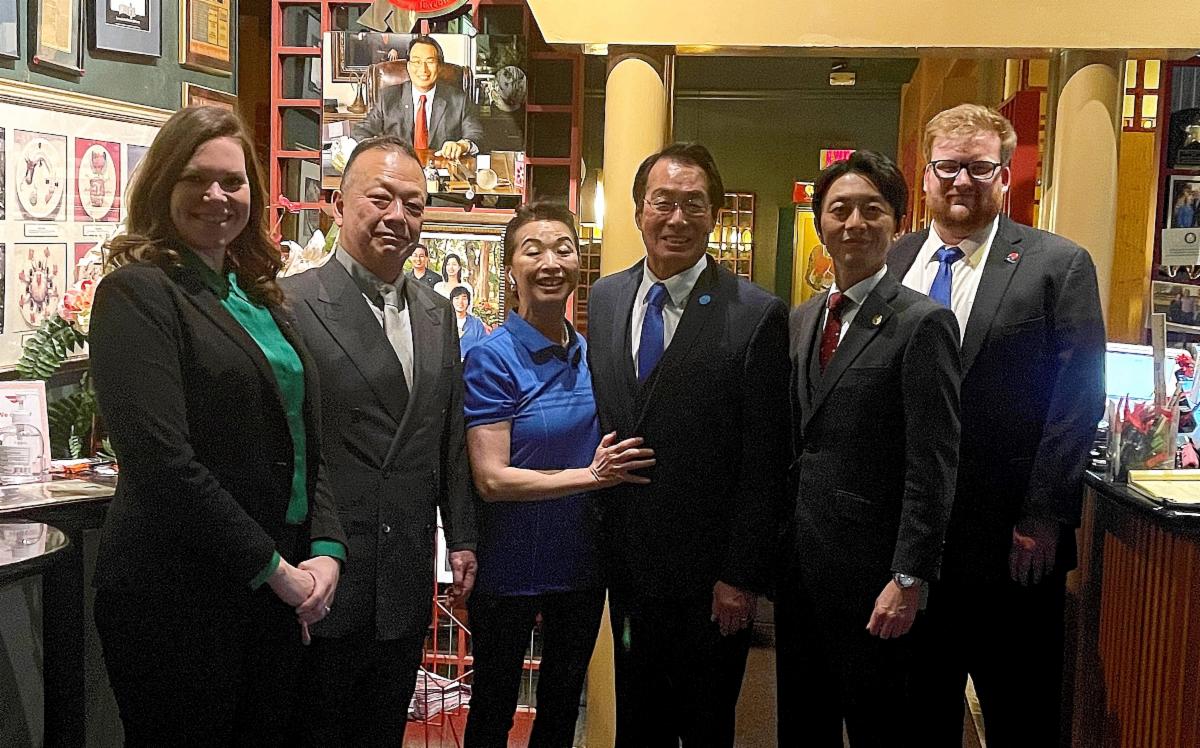
I would like to offer special thanks to Mr. Joe Chow, Mayor of Addison, an incorporated town in Dallas County, where the event was held. He was kind to open the event with his greetings. Mayor Chow moved from Taiwan to the U.S. in 1979 to pursue a Master of Administration degree at Southeastern Oklahoma State University. He was first elected Mayor in 2005 and served three consecutive terms of two years each before stepping down due to term limits. He successfully ran again in 2017 and is in his fifth Mayoral term. He is a hard-working, self-made man who is obviously very popular in Addison. We appreciated hearing his views about politics, and business and social situations in Greater Dallas and the nation. In addition, we enjoyed our conversation over a delicious dinner at May Dragon, the Chinese restaurant which he established in 1986. Our heartfelt thanks to Joe and Chi Chi.
|
|
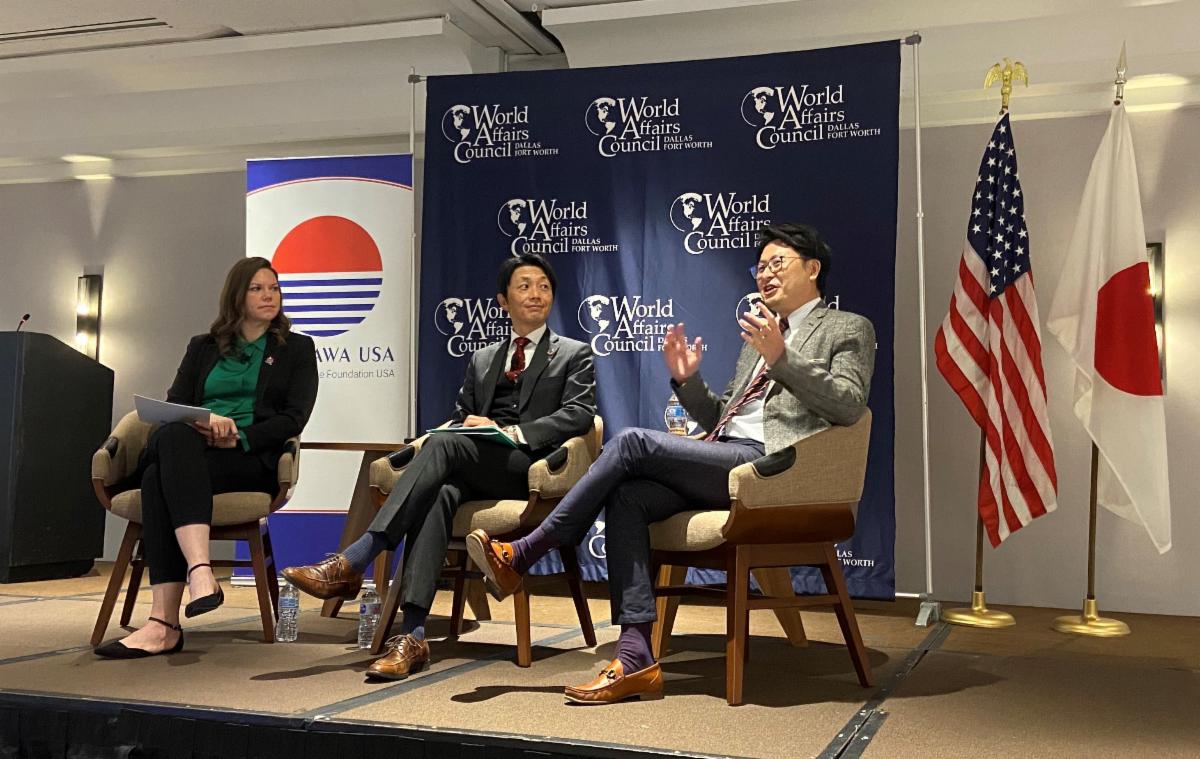
Photo top: Ms. Shoji, Mr. Uozumi, and Mr. Suzuki
Photo bottom: Ms. Shoji, Dr. Akimoto, Mrs. Lin, Mayor Chow, Mr. Uozumi, and Mr. Canady
|
|
Policy Briefing: Taiwan Crisis and Japan's Strategy with LTG Koichiro Bansho |
|
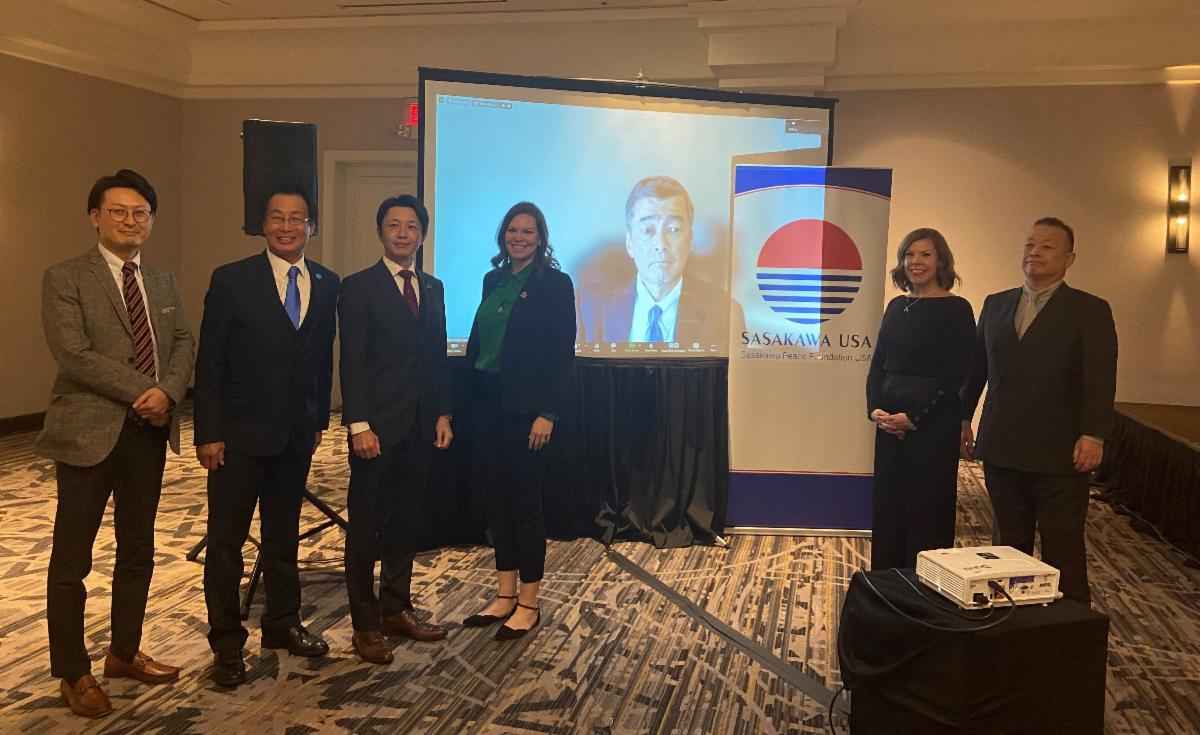
On November 2, Sasakawa USA hosted the virtual event, “Taiwan Crisis and Japan’s Strategy.” This event featured LTG Koichiro Bansho, JGSDF (Ret.), former Commander of the Western Army of Japan from 2013-2015, for a discussion on Japan’s perspective on the expectations and roles of the United States and Japan in a Taiwan contingency. LTG Bansho analyzed the current threat landscape in the region, Japan’s measures in a Taiwan crisis, and the relationships between the United States, Japan, and Taiwan. LtGen Chip Gregson, USMC (Ret.) provided a brief commentary from the American perspective afterward. Following speaker remarks, Dr. Satohiro Akimoto moderated a lively Q&A discussion with engaging questions from the audience. The video and recap of the event are available here.
Event video: LTG Bansho and LtGen Gregson
|
|
Policy Briefing: 2021 ASEAN Summit: U.S. Policy Toward Asia with Amb. David Shear |
|
On November 10, Sasakawa USA hosted the virtual event, “2021 ASEAN Summit: U.S. Policy Toward Asia.” This event featured Amb. David Shear, former U.S. Ambassador to Vietnam (2011-2014), for a discussion on the 2021 ASEAN and East Asia Summit, both of which took place in October. Amb. Shear shared his insights on the U.S. approach to cooperation with ASEAN, as well as U.S. goals and challenges in Southeast Asia. Dr. Nobuhiro Aizawa, Associate Professor at Kyushu University, immediately followed with a brief commentary from the Japanese perspective, expanding on what the United States and Japan can do together to engage with their ASEAN partners. Following speaker remarks, Dr. Satohiro Akimoto moderated a productive Q&A discussion with questions from the audience. The video and written recap of the event are available here.
Event video: Amb. Shear and Dr. Aizawa
|
|
The U.S.-Japan NEXT Alliance Initiative: Bilateral Dialogue Series, "Surveying the Alliance Science & Technology Landscape" |
|
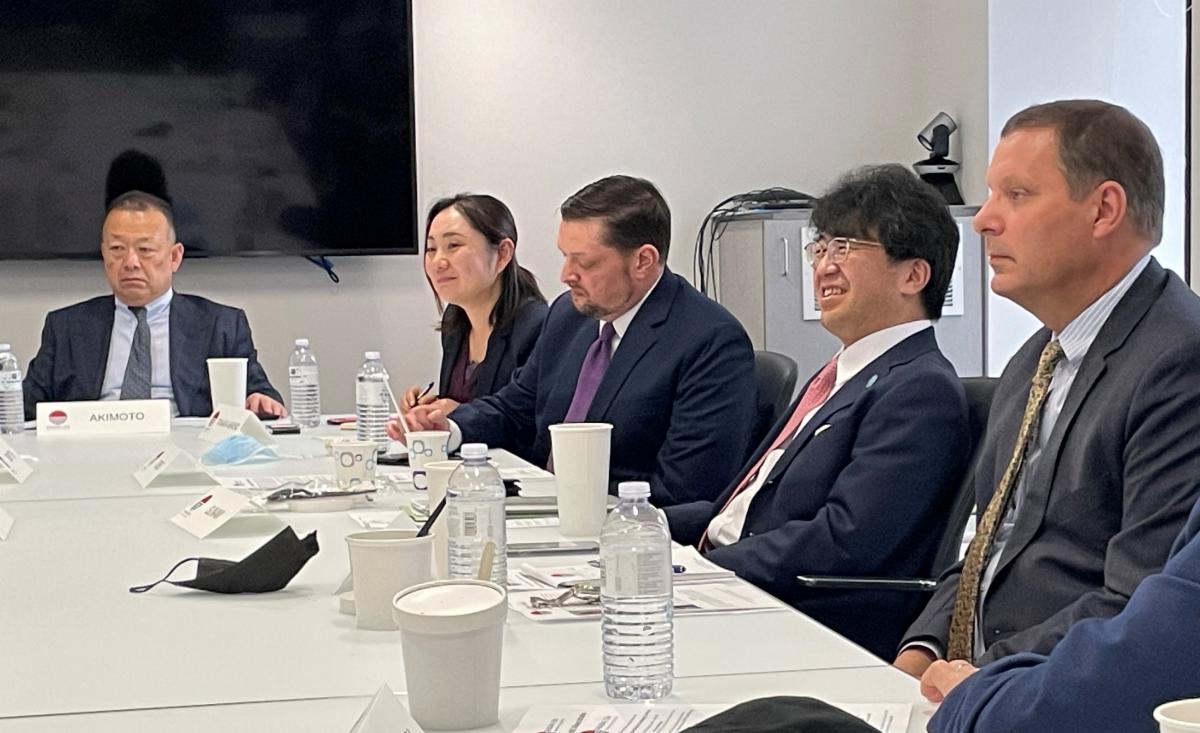
On November 22, Mr. Jim Schoff, Senior Director of Sasakawa USA’s new U.S.-Japan NEXT Alliance Initiative, hosted the lunch dialogue, “Surveying the Alliance Science & Technology Landscape.” This discussion centered on the current science and technology landscape of the U.S.-Japan alliance and the importance of bilateral cooperation on issues pertaining to technology and economic security. Attendees included individuals from the Department of State, Department of Energy, the Embassy of Japan, and think tanks. Dr. Atsushi Sunami, President of the Sasakawa Peace Foundation, provided opening remarks and the dialogue was moderated by Mr. Schoff. The U.S.-Japan NEXT Alliance Initiative will continue to host dialogues to stimulate new alliance connections across foreign, security, and technology policy areas.
Photo: Dr. Akimoto, Ms. Tanaka, Mr. Dobbs, Dr. Sunami, and Mr. Schoff
|
|
The U.S.-Japan NEXT Alliance Initiative: Bilateral Dialogue Series, "Alliance Perceptions of Central Bank Digital Currencies" |
|
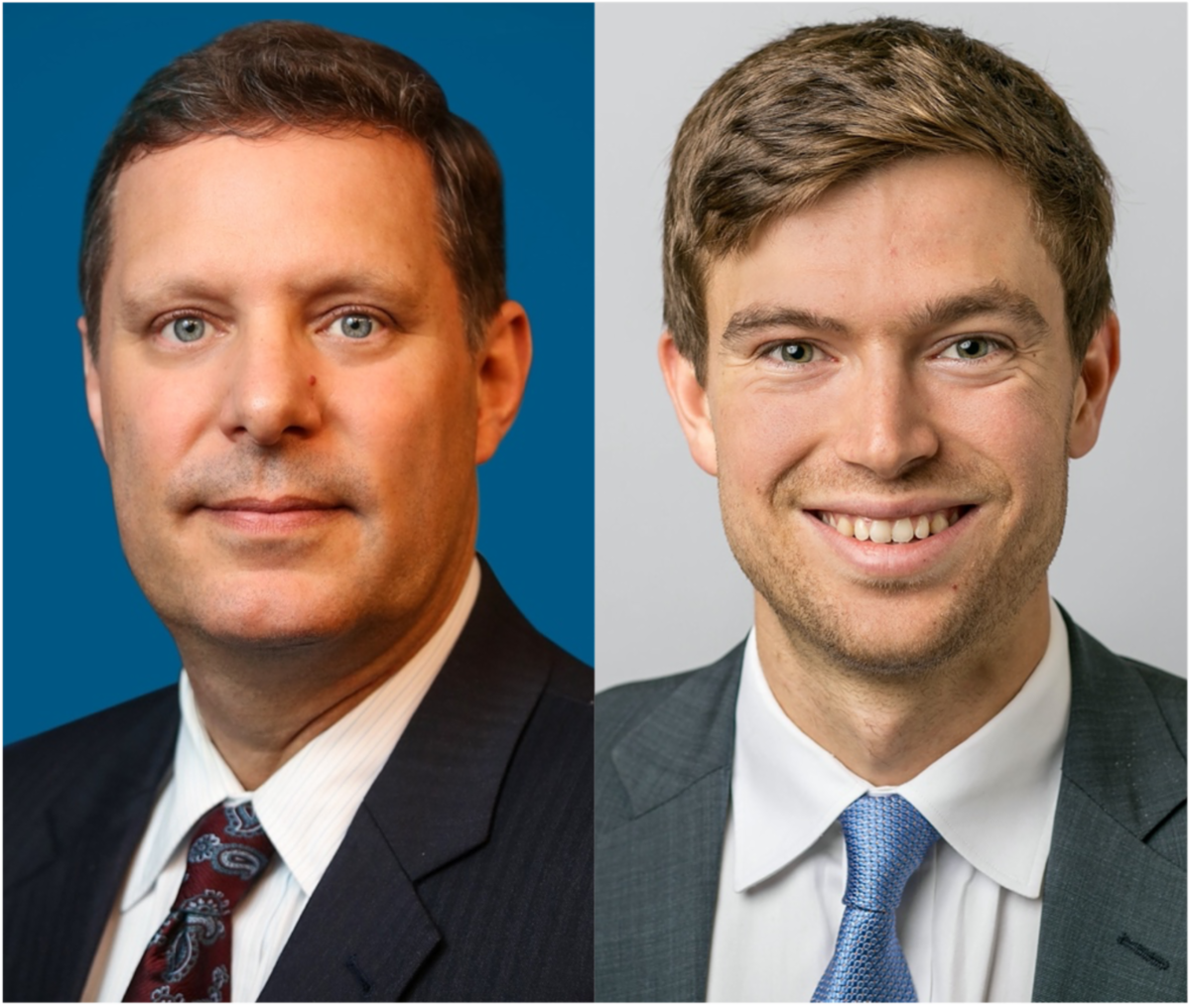
On November 30, Sasakawa USA’s U.S.-Japan NEXT Alliance Initiative held a Track 1.5 bilateral dialogue, “Alliance Perceptions of Central Bank Digital Currencies.” This off-the-record, virtual event convened policymakers and fintech specialists to exchange views about the current state of the CBDC debate in the United States and Japan, as well as their perceptions of CBDC developments in other countries and their potential implications. Mr. Jim Schoff, Senior Director of Sasakawa USA, and Mr. Robert Greene, nonresident scholar of Carnegie Endowment for International Peace moderated the dialogue, which featured active contributions by participants from the public, private, and non-profit sectors.
Photo: Mr. Schoff and Mr. Greene
|
|
Washington Kenkyu Group: A Discussion with Mr. Takuji Tanaka |
|
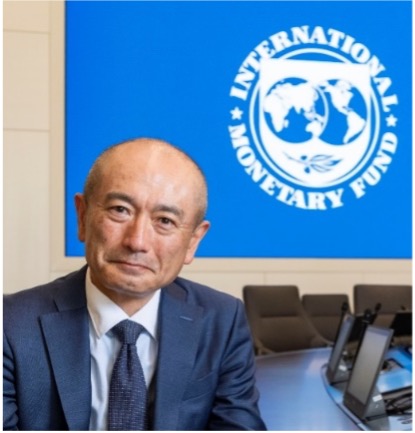
On November 4, Sasakawa USA Washington Kenkyu Group welcomed Mr. Takuji Tanaka, Executive Director for Japan at the International Monetary Fund (IMF). For this off-the-record, virtual event, Mr. Tanaka described the mission and roles of the IMF and how the IMF mitigates unparalleled crises like the ongoing COVID-19 pandemic. Following Mr. Tanaka’s presentation, the event continued with an engaging and robust discussion with the attendees, including Japanese representatives from the media, think tanks, private sector, and government.
Photo: Mr. Takuji
|
|
The Alliance Working in America Series (TAWA): TAWA in Dallas, TX |
|
On November 30, Sasakawa USA, in partnership with the World Affairs Council of Dallas/Fort Worth, and the World Affairs Council of America, held an installment of TAWA series in Addison, TX. The TAWA-DFW program highlighted the economic impact of Japanese investment in North Texas and outlook for the future of Japan-Texas relations. The in-person program was attended by Mayor of Addison, Joe Chow, local business leaders, politicians, economic development leaders, and students. Ms. Shanti Shoji, Director of Programs at Sasakawa USA, moderated the discussion with a panel consisting of Mr. Masahiro “Mark” Ikeno, President and CEO of NEC Corporation America; Mr. Yoichiro Suzuki, Senior Vice President of Corporate Collaboration for NTT DATA Services; and Mr. Yasuhiro Uozumi, Executive Director of Keidanren USA. A recording of the event will be available on Sasakawa USA’s website in the coming weeks.
Photo: Mr. Suzuki, Mayor Chow, Mr. Uozumi, Ms. Shoji, Mr. Ikeno, Ms. Brailsford, and Dr. Akimoto
|
|
Discussion with Japan Experts in Dallas-Fort Worth, TX |
|
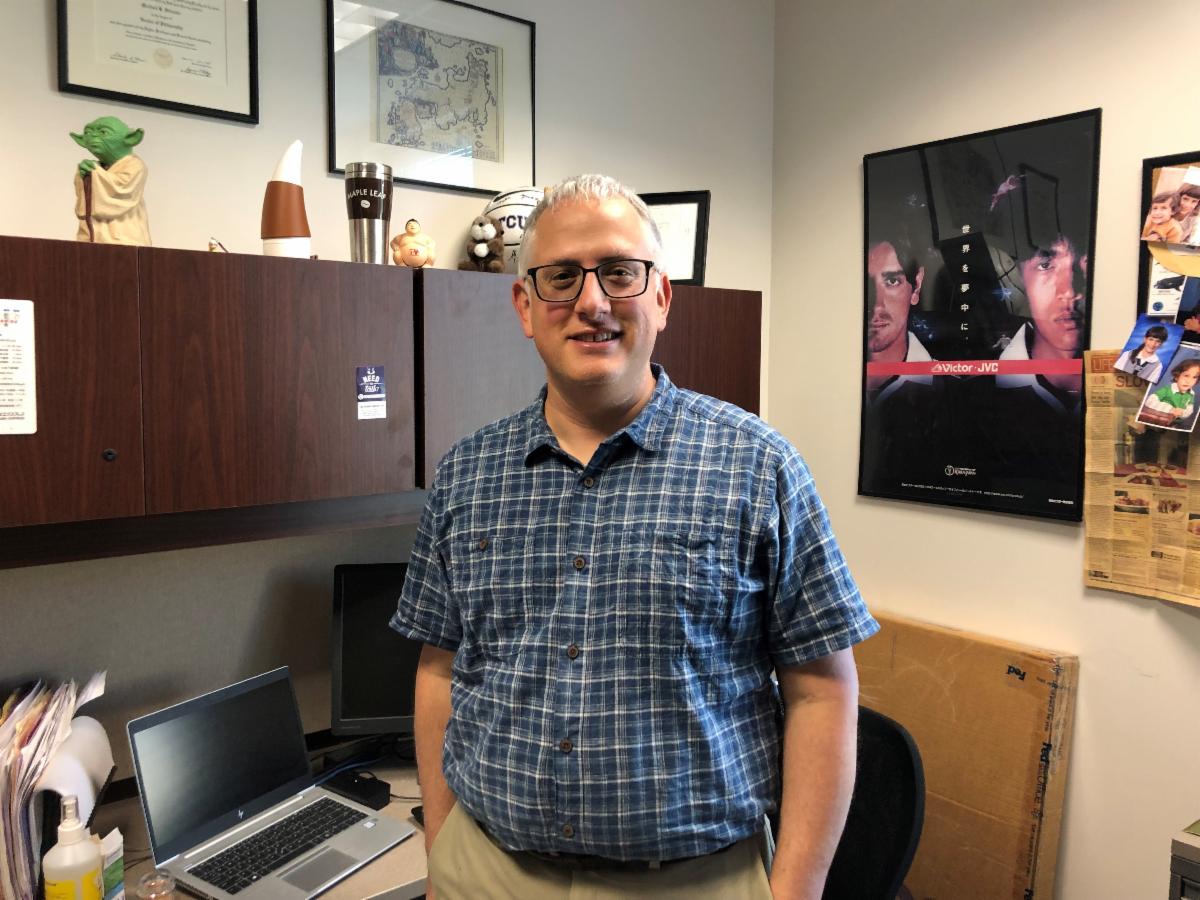
Dr. Satohiro Akimoto, Chairman and President of Sasakawa USA, and Mr. Benjamin Canady, Associate Program Officer, visited experts on Japan-related academic subjects in the greater Dallas-Fort Worth, TX area on November 29 and 30. They gained valuable insight on the research subjects of Southern Methodist University Professors, Dr. Hiroyuki Takeuchi, Director of the Sun and Star Program on Japan and East Asia; Dr. Nicolas Sternsdorff-Cisterna, Associate Professor of Anthropology; and Prof. Diana Newton Director of Tower Scholars Program and Lecturer in Public Policy and International Affairs; University of North Texas Professor, Dr. Ko Maeda, Associate Professor and Graduate Placement Director; and Texas Christian University Professor, Dr. Michael Strausz, Associate Professor and Director of Asian Studies. Sasakawa USA looks forward to continuing to engage on Japan and U.S.-Japan Relations with these professors.
Photo: Prof. Strausz
|
|
The Japan-U.S. Military Program (JUMP): JUMP Washington, DC |
|
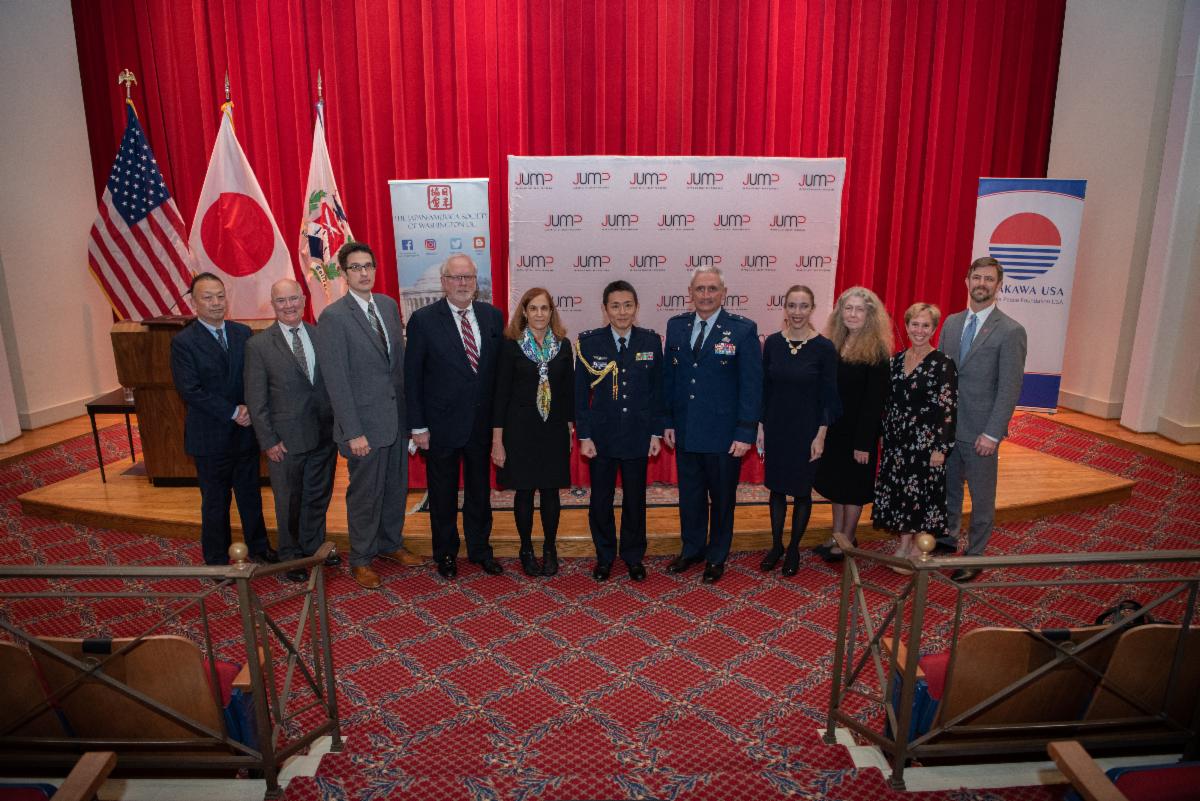
On November 18, JUMP hosted the event, “Great Power Competition in the Indo-Pacific: Implications for U.S.-Japanese Regional Leadership.” This event was held in partnership with the Japan-America Society of Washington, DC (JASWDC), the National War College Alumni Association, the National Association of the Japan-America Societies (NAJAS), and the Embassy of Japan. MG Hiroyuki Sugai, Defense and Air Attaché, Embassy of Japan delivered a keynote presentation, with additional remarks by Mr. Ryan Shaffer, President of JASWDC; Brig Gen. Jeffrey Hurlbert, Commandant, National War College; and Dr. Satohiro Akimoto, Chairman and President of Sasakawa USA and Director of JUMP. The following distinguished specialists presented their analyses on Chinese operations in the Indo-Pacific region, Southeast Asia’s key role in the region, and the U.S.-Japan security alliance: Dr. Cynthia Watson, Acting National Defense University (NDU) Provost; Ms. Bonnie Glaser, Asia Program Director, German Marshall Fund; Dr. Jeffrey Hornung, Senior Political Scientist, RAND Corporation; Amb. David Shear, Senior Advisor, McLarty Associates; and Ms. Bethany Allen-Ebrahimian, China Reporter, Axios. Closing remarks were provided by Mr. Peter Kelley, President of NAJAS. This event gathered members of the armed services and government civilians who have served in Japan to foster a deeper understanding of the U.S.-Japan alliance.
Photo: Dr. Akimoto, Mr. Kelley, Dr. Hornung, Amb. Shear, Ms. Glaser, MG Sugai, Brig Gen. Hurlbert, Ms. Allen-Ebrahimian, Dr. Watson, Dr. Finley, Mr. Shaffer (Photo credit to NDU Audio Visual)
|
|
JETAADC Mentorship Program "Mentor Talks" Webinar |
|
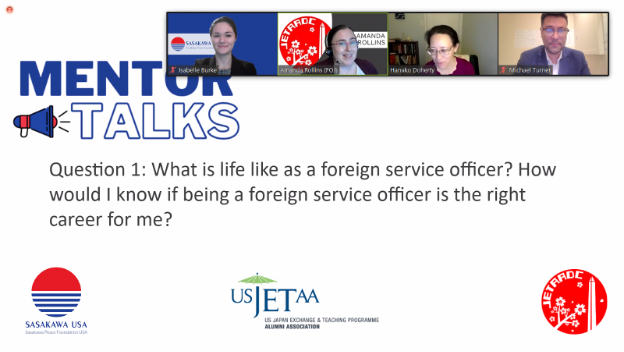
On November 17, the JET Alumni Association of Washington, DC (JETAADC) hosted the webinar, “Mentor Talks: Careers at State,” as part of its 2021-2022 Mentorship Program. It featured experienced JET Program alumni with careers in the U.S. State Department, including Michael Turner (Foreign Service Officer), Kathleen Hanako Douherty (Program Analyst), Andrew Buhler (Senior Policy Officer for East Asia and the Pacific), and Alec Weltzien (Requirements Officer, Office of Technical Collection Affairs). The panelists discussed their paths from JET to the State Department and shared their insights on how JET alumni can apply their unique skills and experiences to pursue careers in diplomacy and foreign policy. JETAADC’s Mentorship Program is supported by the Sasakawa USA-USJETAA Mini-Grant Program for JETAA Chapters. Information about the program can be found on JETAADC’s website.
Photo: A screenshot taken from the “Mentor Talks” webinar held on November 17, featuring images of Isabelle Burke (Sasakawa USA Program Assistant), Amanda Rollins (JETAADC Professional Development Chair), and panelists Kathleen Hanako Douherty and Michael Turner (U.S. State Department).
|
|
Japan Political Pulse: Mr. Kishida Goes to Washington: The Right Way and the Wrong Way (Dr. Curtis) |
|
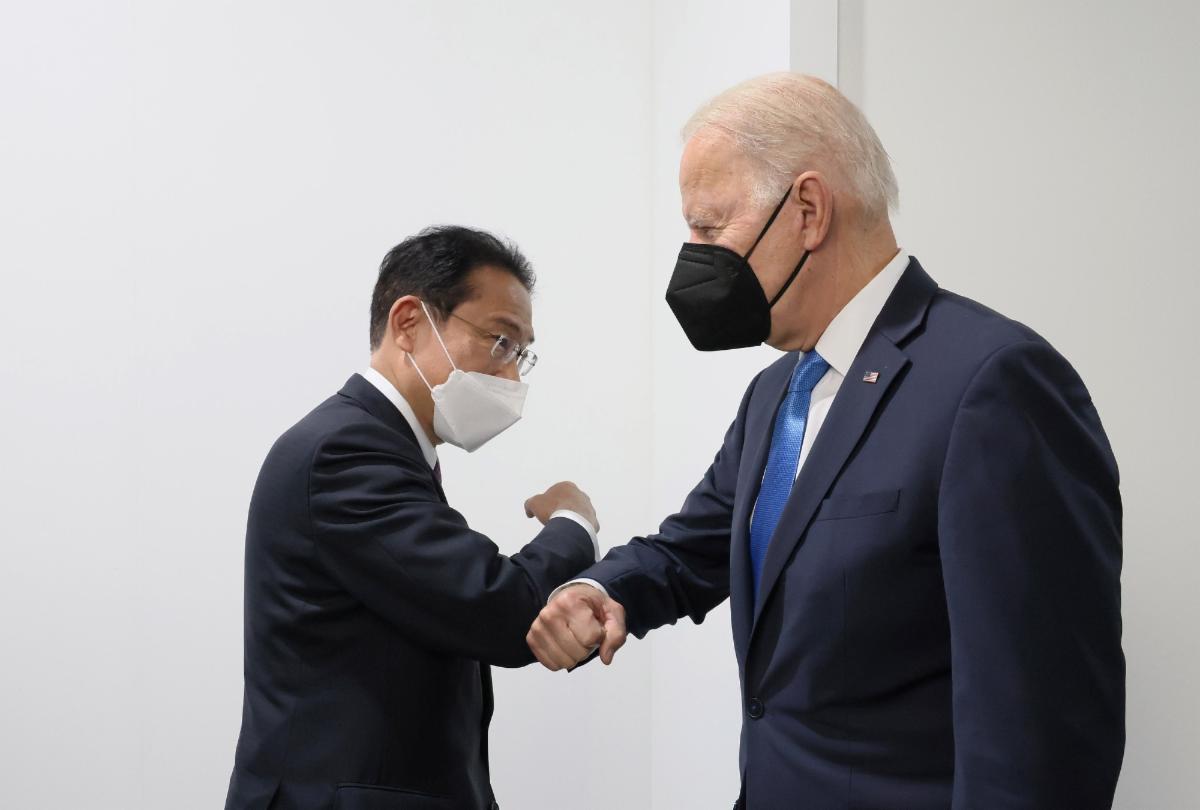
In his latest Japan Political Pulse article, “ Mr. Kishida Goes to Washington: The Right Way and the Wrong Way,” guest author Dr. Gerald L. Curtis, Burgess Professor Emeritus of Political Science at Columbia University, criticizes Japanese Prime Minister Fumio Kishida’s seemingly hasty visit to meet with U.S. President Joe Biden by the end of this year. Dr. Curtis sees Kishida’s visit as part of Japan’s usual practice of having its newly elected prime minister fly off to Washington at the earliest possible moment to meet the U.S. President, despite a lack of preparation for a concrete and rich discussion. Instead, Dr. Curtis argues that what is needed today is a frank, substantive, and well-organized bilateral summit between Japan and the United States to discuss how to deal with China, how to further technological cooperation, and how to strengthen regional and global multilateral institutions. You can read the article here.
|
|
Japan Political Pulse: The 2021 Election and Democratic Representation in Japan (Dr. Smith) |
|
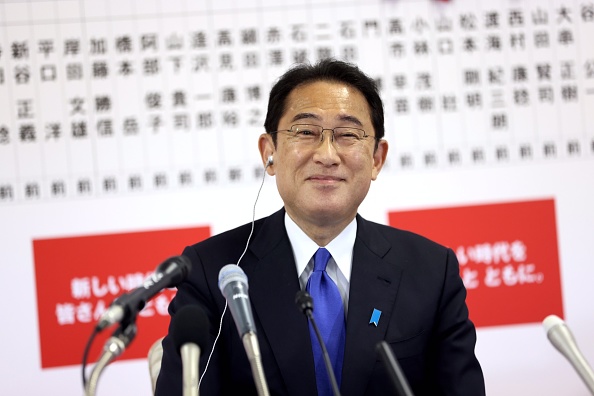
In his latest Japan Political Pulse article, “ The 2021 Election and Democratic Representation in Japan,” contributing author Dr. Daniel Smith, Gerald L. Curtis Visiting Associate Professor of Modern Japanese Politics and Foreign Policy in the Department of Political Science and School of International and Public Affairs at Columbia University, provides his key takeaways from Japan’s latest House of Representatives election that took place last month. Dr. Smith closely examines the results of the election and its implications for Japan’s political and democratic landscape going forward. In particular, Dr. Smith argues that Japanese elections have provided neither proportionality nor any serious opportunity for alternation in power among political parties over the past decade, especially under the ruling Liberal Democratic Party’s policies. You can read the article here.
Photo: Japan’s Prime Minister and ruling LDP leader Fumio Kishida makes a statement during a live interview with press members at LDP headquarters as polls in the country closed in general elections on October 31, 2021 in Tokyo, Japan. (Photo by Behrouz Mehri/AFP//Pool/Anadolu Agency via Getty Images)
|
|
Gaiko: The Next U.S. Ambassadors to China and Japan (Beikoku no Chuuchuugoku Chuunichi Taishi) (Dr. Akimoto) |
|
Dr. Satohiro Akimoto, Chairman and President of Sasakawa USA, contributed an article to Gaiko, a bimonthly magazine on International Relations published by Japan’s Ministry of Foreign Affairs. His article titled “The Next U.S. Ambassadors to China and Japan” analyzes the Biden administration’s decision to nominate Amb. Bill Burns to China and Rep. Rahm Emanuel to Japan. The U.S. has not had an Ambassador in Tokyo for more than two years since Amb. Bill Hagerty left in July 2019. The role of Ambassadors may have changed due to advancement in communication technology, but only ambassadors can do work such as managing the embassy in a hostile environment and gaining high-level in-depth insight from what is happening on the ground in-country. (Article in Japanese.)
|
|
Dr. Atsushi Sunami, President of the Sasakawa Peace Foundation, Visits Washington, DC |
|
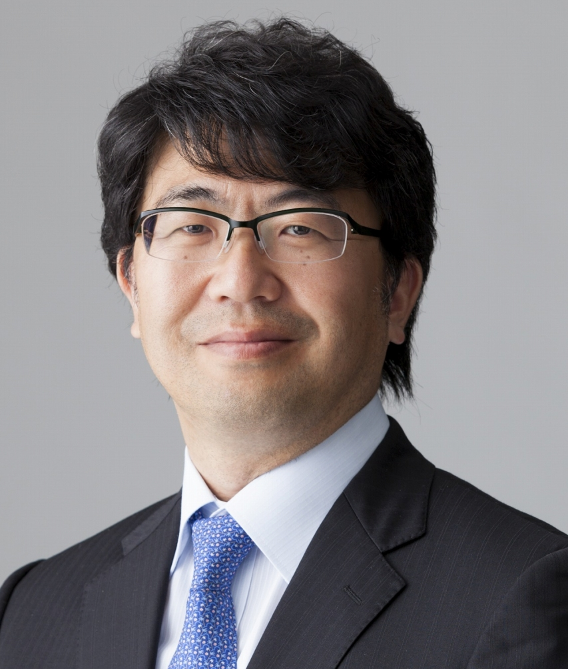
In late November, Sasakawa USA welcomed Dr. Atsushi Sunami, President of the Sasakawa Peace Foundation in Tokyo, for a visit to Washington, DC. It was his first trip to Washington, DC since he became president of the Sasakawa Peace Foundation last June. During his trip, Dr. Sunami visited with government officials, leaders in U.S.-Japan policy, partner organizations, and members of the media. Sasakawa USA was pleased to host him in Washington, DC.
Photo: Dr. Sunami
|
|
JETAA Florida Webinars on WWII Nisei Legacy |
|
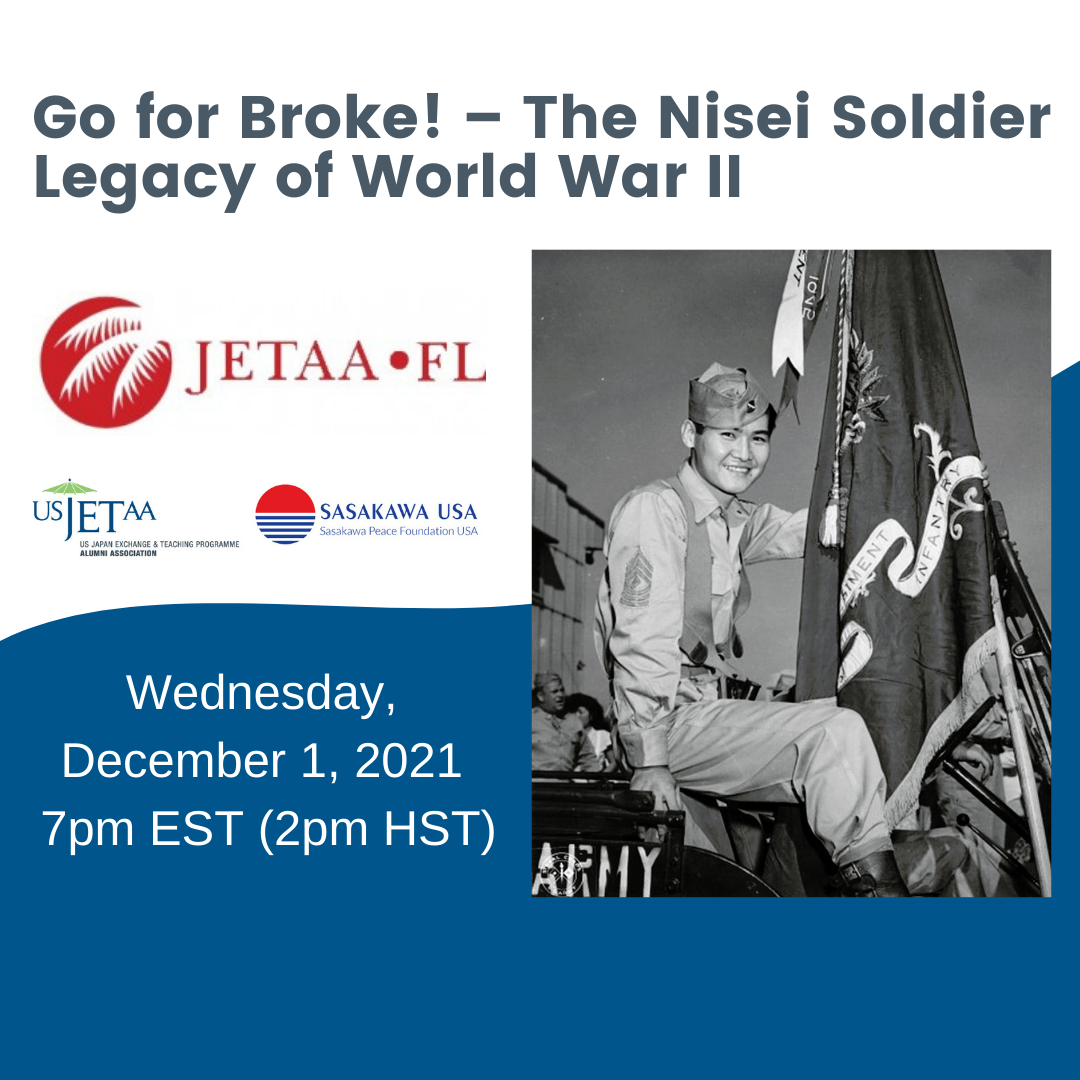
Through support from the Sasakawa USA/USJETAA Grants for JETAA Chapters & Sub-Chapters, the JET Alumni Association of Florida will hold two webinars in December highlighting the legacy of the Japanese Americans (“Nisei”) who served in the U.S. military during WWII. The first webinar on December 1 will feature remarks from Stacey Hayashi who produced the film, “ Go for Broke! An Origin Story,” about the 100th Infantry Battalion/442nd Regimental Combat Team. She will be joined by General David A. Bramlett (US Army, Ret.) and Tokuji Yoshihashi, who bravely served in the 100th/442nd RCT. The second webinar in January will discuss how the Nisei’s struggles to overcome prejudice can inform current social justice efforts. Speakers will include Dr. Lynn Heirakuji (President of the Nisei Veterans Legacy), Diane Hirabayashi Carter (Collections Assistant at the Morikami Museum and Japanese Gardens), and Dr. Mitzi Uehara Carter (Assistant Professor of Anthropology, Florida International University). Attendees can register for the first webinar at this link. Additional information on both webinars will be forthcoming on JETAA Florida’s website. |
|
Sasakawa Peace Foundation USA
1819 L Street, NW
Suite 300
Washington DC 20026
202.296.6694
|
|
|
|
|
|
|