Settlement Reached With State Officials
in Glen Mills Schools Case | |
Glen Mills Schools, shut down by the state in 2019, is the subject of ongoing litigation. | |
|
Earlier this week, a federal judge presiding over our continuing lawsuit filed in 2019 on behalf of former students placed at the Glen Mills Schools (GMS) ordered the voluntary dismissal of the Pennsylvania Department of Education (PDE) and former leaders of the Pennsylvania Department of Human Services (DHS) based on a settlement agreement reached with plaintiffs. The agreement resolves all disputes against the departments and their former employees in the Glen Mills litigation. We previously entered into a settlement agreement with Chester County Intermediate Unit, which provided relief to approximately 500 former students at GMS.
Filed with our co-counsel Juvenile Law Center and Dechert LLP, our case continues against defendant Glen Mills Schools, a juvenile justice facility, on behalf of our named plaintiffs. Glen Mills was closed in 2019 based on findings of pervasive abuse and a reported culture of violence.
ELC has long been concerned about the quality of education provided to students in such residential facilities and the need for community-based alternatives. These facilities, often privately run, house high percentages of Black and Brown students, who are ordered to be placed there due to systemic racial discrimination in child welfare and juvenile justice systems, and therefore these young people are disproportionately harmed.
ELC is pleased that PDE has committed to ensuring strong oversight of educational programs in residential facilities. PDE’s recently created Office of Program Monitoring and Accountability will collect data, conduct site visits, and provide guidance to local educational agencies responsible for education in these facilities. In addition, the office will establish a new complaint system for students, their families, caregivers, and others.
ELC looks forward to partnering with PDE to ensure effective oversight and delivery of comprehensive educational programs to students in residential facilities. For more on the need for reform, see Warehouses of Neglect: How Taxpayers Are Funding Systemic Abuse in Youth Residential Treatment Facilities.
| |
Pa. School Funding: Gains Made,
but There Still Is No Long-Term Plan | |
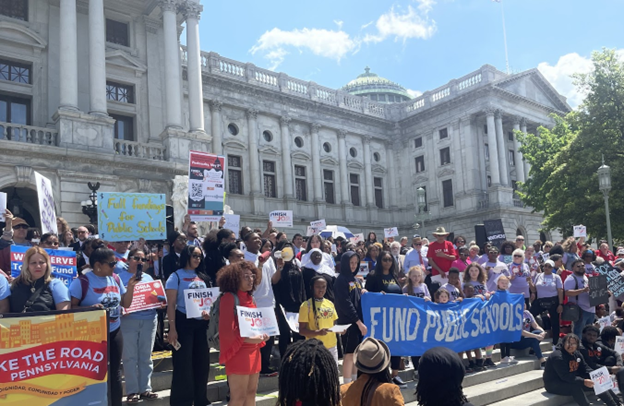
Mass rallies like this PA Schools Work one in May sent a strong message to state officials to fix the state’s funding system. | |
|
Across Pennsylvania, chronically underfunded public schools got a significant funding boost from the 2024-25 state budget signed into law on July 11. Our collective work and statewide activism have made a real difference.
The budget includes a new “adequacy funding” stream that drives an additional, recurring $494 million exclusively to school districts that are underfunded relative to their needs. This sets a new precedent: it targets underfunded districts for the largest portion of the state’s annual education funding increase. The majority of additional funding is going to low-wealth school districts at the center of our school funding lawsuit.
The state also committed to calculating annually the school funding shortfall for every district. By this calculation, three-fourths of Pennsylvania school districts are underfunded, with the shortfall in state funding totaling $4.5 billion.
Thanks to many advocates’ hard work, the budget compromise between the House and the Senate does not include a new private school voucher plan.
Despite these gains, this year’s budget does not include the robust long-term plan to bring Pennsylvania’s funding system into constitutional compliance that was adopted by the House in June, which committed the state to eliminating the state funding shortfalls in seven years. And adequacy amounts were artificially lowered by using community poverty rates not reflective of student poverty.
We must continue to fight for a long-term funding plan to close the shortfalls and fully comply with the 2023 Commonwealth Court ruling. We are working with our partners in the school funding lawsuit and with the statewide PA Schools Work coalition to plan our next steps for winning an adequate, equitable, and racially just school funding system. Stay tuned!
| |
ELC Issues New Analysis of Title IX Regulations That Take Effect Today | |
|
Today, Aug. 1, important new federal Department of Education regulations go into effect nationwide, strengthening protections against sex discrimination and making clear that Title IX prohibits discrimination and harassment based on sexual orientation, gender identity, and sex characteristics. The regulations include vital protections for LGBTQ+ students and pregnant or parenting students. They require schools to take prompt, effective action in response to sex-based discrimination, including harassment, and delineate the steps schools must take to guarantee due process for all parties.
While the Title IX regulations have been challenged in federal court, there is no nationwide injunction precluding their enforcement. In Pennsylvania, state law already prohibits discrimination in schools based on gender identity and expression and sexual orientation.
ELC has published a new analysis of the Title IX rule and its legal status. It clarifies the limited application of an injunction order issued by a federal court in Kansas v. U.S. Department of Education, which does not materially change schools’ obligations to students. The unusual ruling — which has been appealed — enjoins the U.S. Department of Education from enforcing the new Title IX rule in individual public schools where students have parents who are members of the far-right extremist group “Moms for Liberty.” The list submitted to the court includes specific schools in 49 districts across Pennsylvania.
Importantly, the federal district court decision does not affect the rights of students under state law to be free from sex discrimination, which encompasses pregnancy, sex assigned at birth, gender identity or gender expression, affectional or sexual orientation, differences of sex development, and variations of sex characteristics. This week, the Pennsylvania Human Relations Commission and the state’s attorney general released a statement reinforcing this fact and supporting the new Title IX rule.
| |
State Awards Compensatory Education Services to Youth with Disabilities at PJJSC | |
|
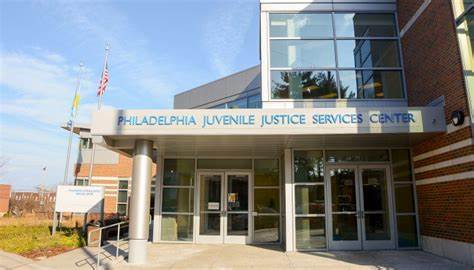
In response to ELC’s systemic complaint filed in March on behalf of students with disabilities at the Philadelphia Juvenile Justice Services Center (PJJSC), the state has ordered the School District of Philadelphia to determine compensatory education awards for over 200 students and directed the district to revise its policies and procedures to ensure students at PJJSC can access their education. The Corrective Investigation Report issued by the Pennsylvania Department of Education’s Special Education Bureau provides a remedy for youth with disabilities who were denied needed services and consistent access to instruction.
PJJSC, Philadelphia’s only secure youth detention center, is licensed to serve 184 young people; it often serves many more due to overcrowding. Of those in the youth legal system placed outside their home, 60% are detained at the PJJSC. In 2023, more than half of the young people detained at the PJJSC remained for over 30 days. Nearly half were students with disabilities. Due to systemic racism, including school discipline policies and practices that divert Black and Brown students into the school-to-prison pipeline, conditions at PJJSC disproportionately impact these students, who comprise 83% of youth in such out-of-home placements.
The state found in favor of students on all issues. Findings included that students with disabilities did not receive mandated special education services. Some youth were deprived of their right to receive access to classroom instruction at all. The state ordered significant compensatory education services for individually named students and directed the district to determine compensatory education awards for all students with disabilities at PJJSC during the relevant timeframe. In addition, the district must revise its procedures for transitioning students to PJJSC, implementing IEPs, ensuring parents can participate in educational decisions, and conducting special education evaluations.
ELC will monitor to ensure effective implementation of needed reforms.
| |
Our First ‘Supportive Spaces Advocacy Institute’: Thank You, we.Reign! | |
|
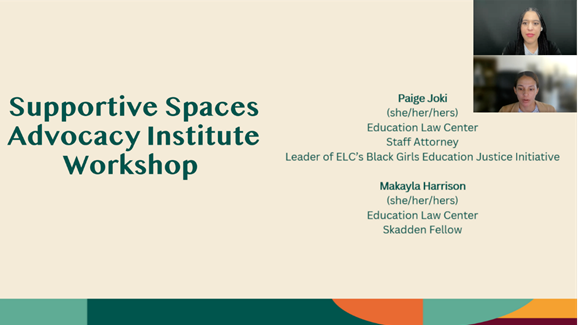
ELC was thrilled to collaborate on our first Supportive Spaces Advocacy Institute workshop on July 22 with our longtime partner, we.REIGN Inc., a Philadelphia-based youth leadership organization that champions the rights and leadership of Black girls.
ELC attorneys Paige Joki and Makayla Harrison led an online rights-based training for 16 student experts from we.REIGN, Inc. who have lived experiences with Black girlhood in Pennsylvania public middle and high school. We addressed students’ legal rights to access mental health supports at school and be free from racial and sex-based discrimination.
Our attorneys led real-time advocacy opportunities, including a virtual postcard campaign to urge legislators to pass the Pennsylvania CROWN Act (HB 1394), which would add a prohibition against discrimination on the basis of hair texture or protective hairstyles (such as locs, twists, braids, and knots), and HB 771, which would require the teaching of Black and Latinx studies in Pennsylvania public schools.
Stay tuned for forthcoming Supportive Spaces advocacy initiatives and check out our Black Girls’ Education Justice Initiative to learn more and support our work.
| |
New State Law Allows Children to Remain
in School During Residency Disputes | |
|
ELC often counsels families and represents children who are out of school due to residency disputes — disagreements over where a child is living. Sometimes children are abruptly disenrolled and remain out of school for weeks or months while awaiting resolution of a residency dispute. For example, ELC represented children who were out of school for over a year due to a residency challenge — even though the Commonwealth Court ultimately found the district’s determination of non-residency to be unsupported (Whitacker-Reid v. Pottsgrove Sch. Dist.). In other cases, children experiencing homelessness, who do not need to establish residency, were denied enrollment in violation of their rights.
Based on these experiences, ELC informed and supported the passage of H.B. 663, signed into law by Gov. Shapiro as Act 67 on July 17. The law prohibits a child from being out of school during the pendency of a residency dispute and mandates that all local education agencies allow children to remain in school until parents have had the opportunity to participate in a hearing, are apprised of their right to appeal, and the entire dispute has been fully resolved. The law also requires schools to consider whether a child is experiencing homelessness and directs districts to provide information to families about protections for students experiencing homelessness.
| |
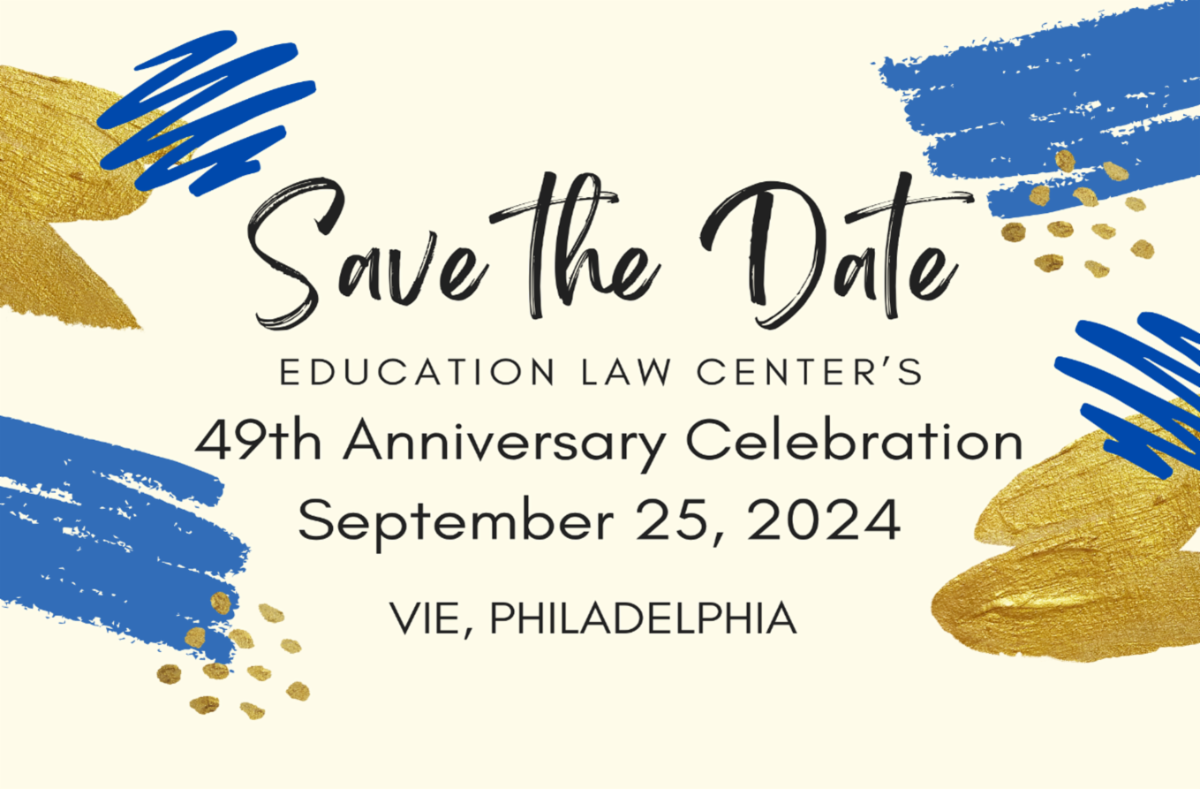
Save the Date: Join Us
for ELC’s 49th Anniversary! | |
|
We are thrilled to honor four remarkable education justice leaders at this fall’s celebration on Sept. 25 at Vie in Philadelphia: ELC’s outgoing board chair, Al Suh, as he concludes his distinguished tenure on ELC’s board of directors; longtime ELC champion David Buckman; and our courageous community partners dedicated to building affirming and inclusive schools, The PairUP Society and NAACP of Bucks County.
Learn more about sponsorship and ticket opportunities. We hope you will mark your calendars today and join us for this special evening.
| |
Check Out Our Job Postings!
| |
ELC is hiring a policy director, with the position based in Philadelphia or Harrisburg.
See our website for a description of internship opportunities at ELC. | |
Education Law Center | 215-238-6970 (Philadelphia) | 412-258-2120 (Pittsburgh)
| |
A copy of the official registration and financial information of the Education Law Center may be obtained from the Department of State by calling toll-free, within Pennsylvania, 1-880-732-0999. Registration does not imply endorsement. | | | | |