Wednesday | January 6, 2021
|
|
Patients will soon be able to read the notes that physicians make during an episode of care, as well as information about diagnostic testing and imaging results, tests for sexually transmitted diseases, fetal ultrasounds, and cancer biopsies. This open access is raising concerns among physicians.
As part of the 21st Century Cures Act, patients have the right to see their medical notes. Known as Open Notes, the policy will go into effect on April 5, 2021. The Department of Health and Human Services recently changed the original start date of November 2, 2020.
|
|
The US Food and Drug Administration (FDA) has issued a safety communication about the potential for false results from a rapid COVID-19 test from Curative Inc, which is being used in Los Angeles and other large metropolitan areas in the United States.
The real-time reverse transcription polymerase chain reaction (PCR) test was developed by Menlo Park, California–based healthcare start-up Curative Inc. Results are analyzed by the company's clinical lab, KorvaLabs Inc. The test, which is authorized for prescription use only, received emergency use authorization from the FDA on April 16, 2020. By November 9, the company had processed 6 million test results, according to the company.
|
|
We are pleased to share the good news that we have finalized details for the 23rd Annual Meeting, which is set to go live on June 24-26, 2021.
The meeting will be educational (providing much need CME credit hours), exciting, and will offer the long-awaited ability to leave our homes and attend meetings in person in a safe and responsible manner.
We are working on making the program highly relevant for our changing healthcare system and environment. We will also bring you cutting-edge lectures on exciting new technology, world-renowned speakers, and much, much more. We will open registration very soon, and will announce more meeting information as the program develops.
|
|
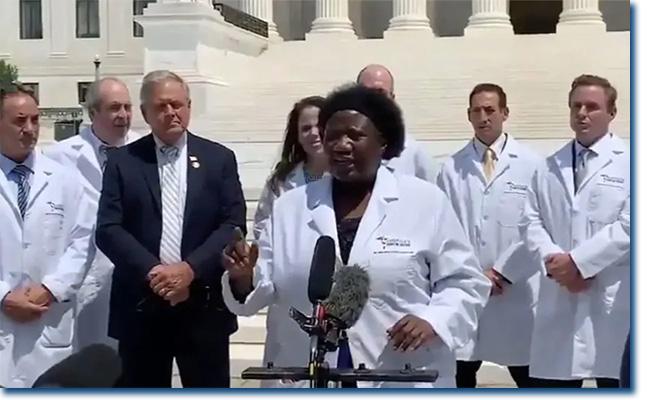
A physician group that rampantly spread COVID-19 misinformation is back in the spotlight -- but this time, sowing doubt about the vaccine.
America's Frontline Doctors, an organization that claims to provide uncensored, accurate information about the pandemic, became infamous in July after a viral press conference that protested government lockdown restrictions and spread inaccuracies ranging from the ineffectiveness of masks to claims that hydroxychloroquine could "cure" COVID-19.
Now, those same doctors -- the majority of which have no experience treating COVID-19 patients -- have launched a campaign to warn Americans that they should not be forced to take an "experimental vaccine," while failing to mention the safety trials and large phase III efficacy trials, along with the fact that no vaccine mandate exists.
|
|
Severe acute respiratory syndrome coronavirus 2 (SARS-CoV-2) vaccines hold promise to control the pandemic and help restore normal social and economic life. The US Food and Drug Administration (FDA) has granted Emergency Use Authorization (EUA) for 2 messenger RNA vaccines and will likely issue full biologics licenses in the coming months. Anticipating vaccine scarcity, the Advisory Committee on Immunization Practice (ACIP) published guidance on vaccine priorities.
|
|
Pain Physician Journal is currently looking for section editors and reviewers. If you are interested in joining the Editorial Board or you have a recommendation, please email us today!
Section Editor responsibilities are as follows:
- After peer review, each Section Editor is responsible for the selection and approval of manuscripts submitted in their subject area.
- Each Section Editor provides recommendations to the Editor-in Chief after evaluating the opinions provided through peer reviews by editorial board members.
Based on the Section Editor's evaluation, the Editor-in-Chief will recommend whether to accept or reject the manuscript. A process for conflict resolution will be developed.
Editorial Board responsibilities are as follows:
- Review a minimum of 6 manuscripts per year.
- Failure to review 2 manuscripts consecutively or 60% of the manuscripts sent will disqualify one from Editorial Board Membership.
For more information or to submit your letter of interest, please e-mail:
|
|
Two different mRNA vaccines have now shown remarkable effectiveness of about 95% in preventing COVID-19 disease in adults. As the first round of vaccine recipients become eligible to receive their second dose, we want to remind the public about the importance of receiving COVID-19 vaccines according to how they’ve been authorized by the FDA in order to safely receive the level of protection observed in the large randomized trials supporting their effectiveness.
|
|
In the early days of the SARS-CoV-2 outbreak, clinicians focused on respiratory symptoms and transmission, but Chinese researchers soon identified the GI/fecal/oral route as another avenue of spread for this imperialistic virus.
|
|
California issued a new health order Jan. 5 that delays nonessential surgeries at hospitals in counties where ICU capacity is diminished, CBS Sacramento reports.
The order, which will be in effect for at least three weeks, postpones nonessential surgeries in counties with less than 10 percent ICU capacity where the regional ICU capacity is zero percent.
Procedures affected include nonurgent orthopedic and spine surgeries. Emergency surgeries, such as cancer and heart procedures, will continue, according to the report.
|
|
HHS issued two rules on value-based care arrangements recently that will affect orthopedic surgeons and ASCs.
CMS made adjustments to the Stark law, and HHS updated the federal Anti-Kickback Statute and the civil monetary penalties law to ensure healthcare providers could develop value-based care arrangements without fear of fraud and abuse charges. The changes to the Anti-Kickback Statute make it easier to enter into value-based care arrangements, especially if providers take full risk.
"ASCs have always been important in value-based arrangements as the lower cost site of care," said Paul Jawin, JD, executive vice president at Phoenix-based HOPCo. "With Stark and anti-kickback changes, there will be an acceleration of the shift from inpatient procedures and the hospital outpatient department to the ASC. This makes it easier to create value-based programs, and physicians will have more flexibility in deciding where the appropriate site of care is for their patients."
|
|
All sessions from the September 2020 meeting are available through June 2021 for a reduced fee. On-demand registration also provides access to all of the great resources available in the exhibit hall.
*Recorded sessions are not eligible for CME credits.
|
|
ASIPP has formed a partnership with Henry Schein and PedsPal,
a national GPO that has a successful history of negotiating better prices on medical supplies and creating value added services for the independent physician. Working with MedAssets, PedsPal provides excellent pricing on products like contrast media that alleviate some of the financial pressures you experience today.
|
|
In an effort to further increase value to its physician members, ASIPP has endorsed Willow Risk Advisors as their professional liability insurance broker. Teaming up with the NORCAL group, Willow Risk has developed an exclusive Medical Malpractice Insurance Program tailored specifically to serve interventional pain physicians.
|
|
ASIPP is now offering our members the benefit of a unique revenue cycle management/billing service. We have received a tremendous amount of interest in the ASIPP billing and coding program. Click here to learn more about the negotiated rate for practices and more!
|
|
|
|
|
|
|