|
Written by Kieran Delamont, Associate Editor, London Inc. | |
WORKFORCE
The rapid ascent of the ageing workforce
The average age of a ‘new hire’ is now 42 years old
| | |
IT’S ROUGH OUT there for younger workers. All last year we heard a constant drum beat about the end of the entry-level position, the breaking of the career ladder and the jobs apocalypse for new grads. So, this data point isn’t all that surprising: the average age of a new hire is now 42 years old.
The data comes courtesy of Revelio Labs, which tracked the average age of workers starting new positions, pointing out that it has “risen sharply since 2022, as older workers re-enter or remain in the labour market, and younger workers face fewer entry opportunities.”
Indeed, the whole curve is being shifted towards older workers. In 2025, the share of workers in new positions who are under 25 nosedived, while the share of workers in new positions over 65 has skyrocketed, dragging the average age of the workforce up overall.
“This is the opposite of what typically happens late in an expansion, when tight labour markets pull younger workers into new roles and lower the average age of hires,” said Revelio Labs. “Instead, the current cycle shows a labour market that remains active but is increasingly tilted toward experience.”
Last week’s jobs report echoed the findings of Revelio Labs. Statistics Canada’s data found that, since 2022, the employment rate for every age group had dropped — except for workers aged 55 to 64, which had increased by around 1.5 per cent.
Whether looking at North American data or at Canada-specific data, the numbers tell a story that is clear as day, wrote Revelio Labs’ Lisa K. Simon.
“That pattern is mechanically consistent with two forces operating simultaneously: fewer young workers entering the labour market and fewer older workers exiting it,” Simon concluded. “Entry-level hiring has weakened across much of the economy, while older workers have become more willing to stay in the labour force or return after retirement.”
| |
CULTURE
Is vanity changing the office?
Why Ozempic, Botox, fillers and surgical tweaks are becoming job requirements in 2026
| | |
THIS MONTH, ACROSS the country, many workers were heading back to the office full-time. Some had only been off for Christmas, but others — those in government or the financial sector — might now have an all-in-office schedule for the first time in years. Whatever it is leading them back in, though, there’s something that seemingly unites everyone in their march back to the cubicle these days: the desire to look good at work.
The drive to look good at work has a lot of professionals going to ever-more extreme lengths to (literally) put on a good face.
“In the past year, I have been stunned by a new professional phenomenon: shrinking contacts,” wrote the Financial Times’ Emma Jacobs. “I turn up to a meeting, interview, or lunch, only to discover the lawyer or academic is startlingly leaner than when we last met.”
This is an Ozempic story to some degree. The popular weight loss drug (along with other similar GLP-1 drugs) is now covered by the insurance plans of 43 per cent of large companies, Jacobs reports. Employees believe there is at least some discrimination present in the workplace based on weight. “One study found that almost a third of workers had seen discrimination against someone at work because of their weight,” Jacobs wrote. “In an uncertain job market, maybe losing weight is rational.”
But it seems to go beyond weight, too. Business Insider wrote recently about a rise in plastic surgery that is tied to the increase of in-office work, especially for workers in middle age.
“I’ve had a couple people say they just feel like they’re in a young world and they’re older and they don’t want to be seen as aging out of their career,” said health professional Jennifer Belen, speaking to reporter Juliana Kaplan. Another professional in middle age told her that his facelift had similar motivations. “It’s not selfish,” one 55-year-old patient coordinator said. “You show up better, you show up more confident, you're more confident in what you’re doing because you feel good.”
The unfortunate reality is that a lot of these people are probably onto something. In an essay titled Being hot is now a job requirement, writer Amanda Hoover cites a number of studies that have shown more attractive workers have a higher lifetime earning potential. Many people who are going under the knife or getting injections say they do it from a place of seeing how good looks can make your professional life easier. And it’s hard to argue with people who say that their unapologetic glow-up is making them feel better at work.
“If people think that they can get further in their career by throwing some Botox in their forehead, they’re going to keep doing it,” said Maureen Wiley Clough. “The sad part is, in many ways, I think they’re probably not wrong.”
| |
| |
Terry Talk: 2026 Workforce Wake-Up — key takeaways from our webinar
| In this Terry Talk, Ahria Consulting president & CEO Terry Gillis recaps Ahria’s recent Workforce Wake-Up Call Webinar. From dealing with the economy and employee engagement to strategies for managing AI and recruiting,the focus is on actionable steps aimed at helping organizations, leaders and HR professionals build trust and performance within their teams. | | | |
PERKS & BENEFITS
Take more vacations, you workaholics
Unlimited PTO: A perk in Europe, a wash in North America
| | |
UNLIMITED PTO, AS a workplace policy, often gets a bad rap. What looks “unlimited” on paper, goes the criticism, is very much limited by what your managers will actually approve. Unlimited PTO, first introduced as a major flexibility perk, is now more commonly dubbed an “illusion” or a “trap.”
That is, so long as you’re in North America. Cross the pond to vacation-loving Europe, and unlimited PTO is clicking along just fine.
“Popular opinion holds that unlimited vacation is often an illusion — one that actually encourages workers to take less time off,” reads a recent study from Deel. They ran the numbers on 159,000 time-off requests from 17,500 employees on both sides of the Atlantic and found, rather than a trap everywhere, that “whether unlimited time off is a boon or a bust depends on where you are,” and that “nearly every European country had a statistically significant increase in time off under flexible leave.”
On average, the study found, European employees with unlimited PTO took four additional days off compared to North American employees.
The author of the study, Lauren Thomas, theorized that this effect comes down to a mix of culture and policy. “Perhaps in cultures where people are used to taking their time off seriously, they're more likely to take full advantage of an unlimited time-off policy,” she wrote.
And before you get a bit patriotic and assume the Western hemisphere is simply being brought down by Americans with weak labour laws — think again, because it’s us Canucks dragging down the average. “Though the U.S., the only country on our list that does not mandate paid vacation leave, falls near the bottom, it’s actually Canada whose employees are taking the least amount of leave,” Thomas wrote.
So please: go to the cottage, book that PTO, take that vacation. Do it for the team — we need all the help we can get, it seems.
| |
PRODUCTIVITY
Hooked on work
Move over Adderall, nicotine pouches are the latest productivity stimulant
| | |
|
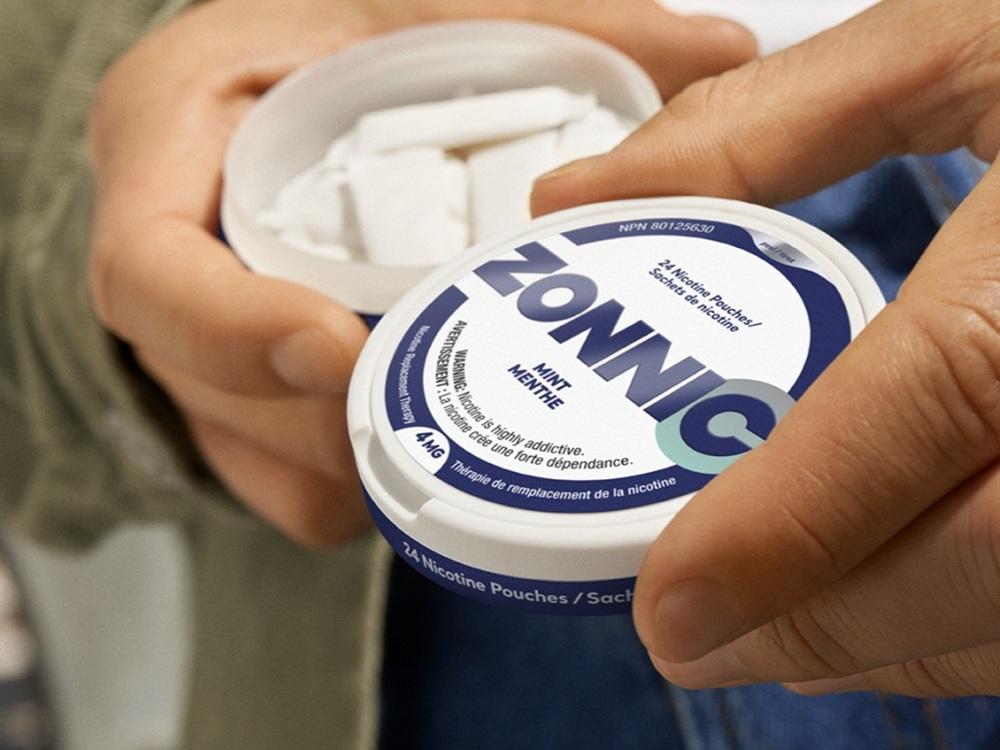
IT IS NOTHING new that high-pressure offices in sectors like tech and finance have leaned on various pick-me-ups (licit and otherwise) to squeeze the most productivity possible out of workers. So, perhaps it shouldn’t raise eyebrows that the latest in free productivity-boosting perks being doled out at the office are nicotine pouches.
“Nicotine pouches, which have grown in popularity in recent years, have become a go-to stimulant for a subset of tech workers who claim the products help them focus and get through the workday,” reads a recent report from The Wall Street Journal, which reported that two new nicotine startups called Lucy Nicotine and Sesh have begun producing branded vending machines destined for the offices of Palantir Technologies.
One startup founder, Alex Cohen, told WSJ he started offering free pouches to his employees after seeing his software engineers cramming the pouches all day. “They were very productive, so I thought maybe there’s something here,” he said. “Then, I accidentally got addicted.”
Users say there are some practical advantages. A coffee at 2 p.m., in contrast, might keep you awake at 10 p.m.; a nicotine pouch’s timeframe is much shorter and, fans might argue, better able to give you a discreet afternoon pickup.
The drawbacks, of course, are obvious. Yes, nicotine pouches are probably better than cigarettes, but they’re still nicotine pouches, and health experts warn they’re still addictive. But leaving that aside, is there any evidence for their productivity benefits?
“The jury is still out on that question,” wrote Dr. Mark S. Gold in Psychology Today. “Some employers may implicitly signal that nicotine initiation or use is compatible with performance. But dependence develops quickly, and withdrawal symptoms — irritability, dysphoria, impaired concentration — ultimately undermine productivity gains initially sought.”
The productivity angle, for what it’s worth, is also something that has taken the pouch makers by surprise (although they’re certainly not trying to put the brakes on this new line of business). “We can’t make any productivity claims,” said Sesh CEO Maxwell Cunningham. “But I do think it’s really interesting to see the types of people and industries that are using our product.”
|
| | | | |