e-Newsletter | November 5, 2021 |
|
We Will Remember Them:
Early Newburyport Casualties in World War I
|
|
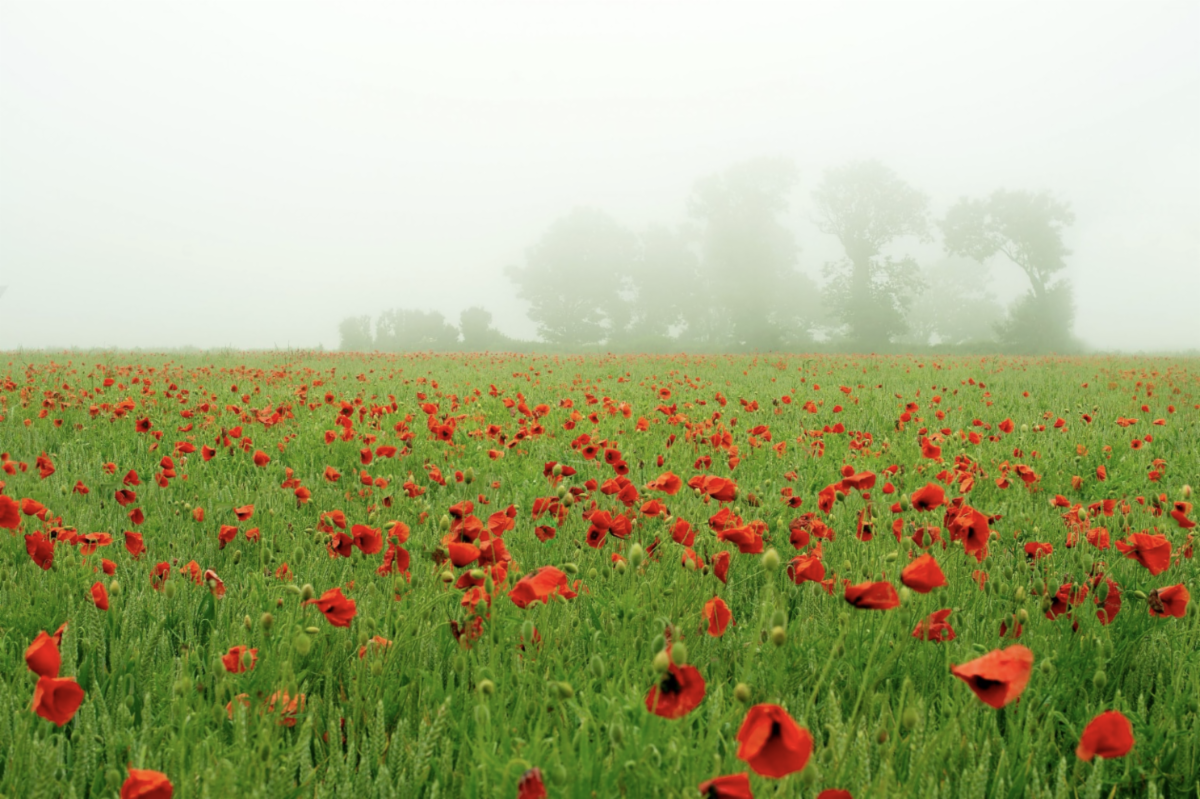
(Image credit: Cynthia August Images.) |
|
Before November 11 was Veteran’s Day, it was Armistice Day, celebrated first on Nov. 11, 1919, the first anniversary of the end of World War I. Veteran’s Day replaced Armistice Day in 1954, in honor of the hundreds of thousands of World War II and Korean War veterans who vastly outnumbered the survivors from World War I.
On November 11, 1918, at 11:11 a.m., the Armistice ended hostilities between Germany and her allies and France and her allies (including the United States and Great Britain) on the Western Front. Veterans of that war recalled the guns, which had been pounding entrenched positions since the fall of 1914, falling suddenly silent, the erupting cheers from the trenches of men who had been mortal enemies only moments before. Millions were dead, including twenty-nine men from Newburyport.
|
|
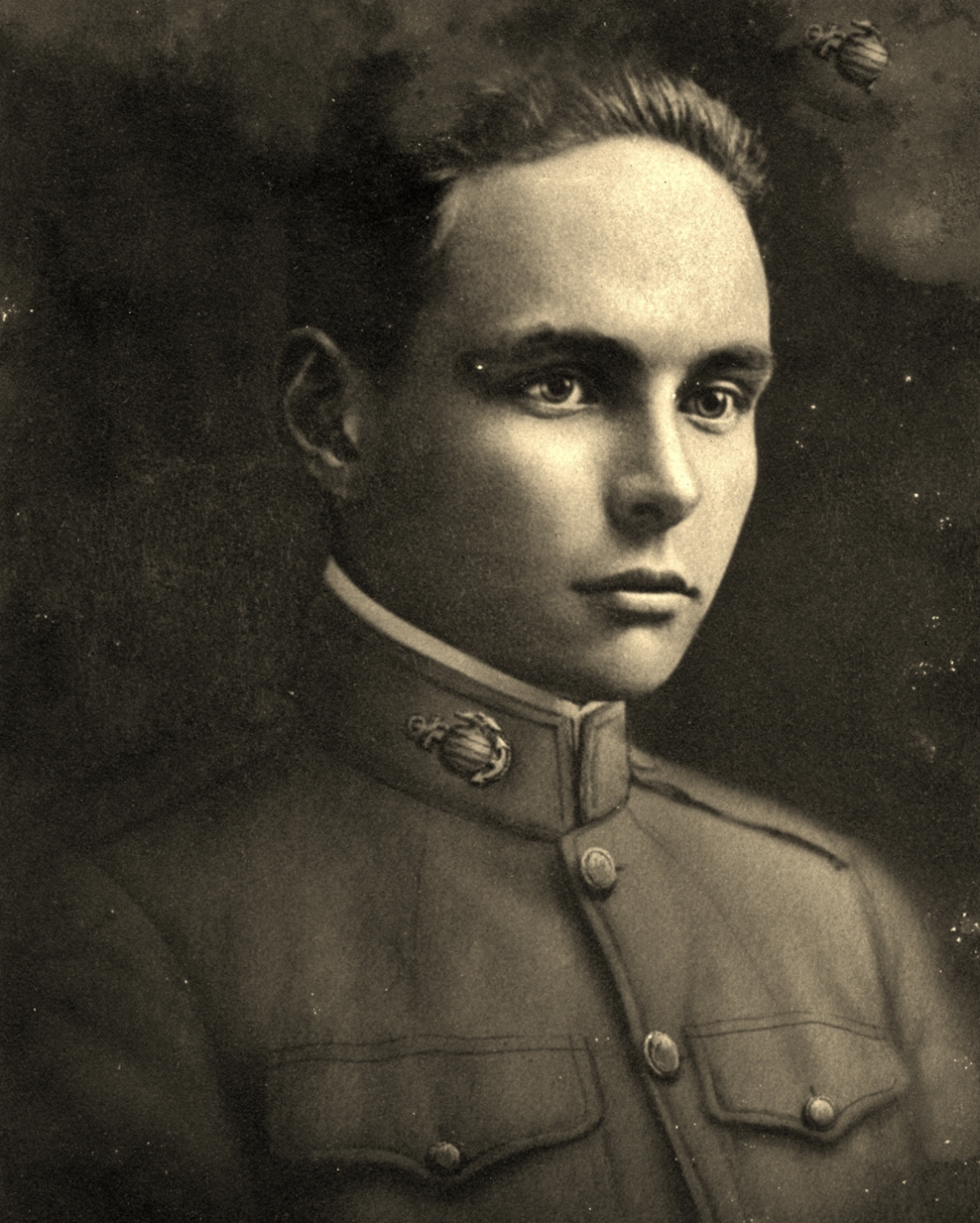
Eben Bradbury, 1897-1918. (Memorial photo courtesy of the Museum of Old Newbury.) |
|
At 67 Bromfield Street in Newburyport, the family of Eben Bradbury was in deep mourning. Though Eben had been killed in the Battle of Belleau Wood on June 12, his family received the news of his death in October. Their own letters were sent back stamped “Killed in Action.” The end of the war was cold comfort to his family and many others like him.
Eben Bradbury was the first Newburyport man who volunteered to join the marines after the declaration of war with Germany on April 4, 1917. He was gone within ten days and never saw his hometown again. Eben was also the first young man born and raised in Newburyport to be killed while serving with American armed forces in France, but he was far from being the first young man from here to die in World War I.
Here are three others who lost their lives before Eben Bradbury’s death on June 12, 1918.
|
|
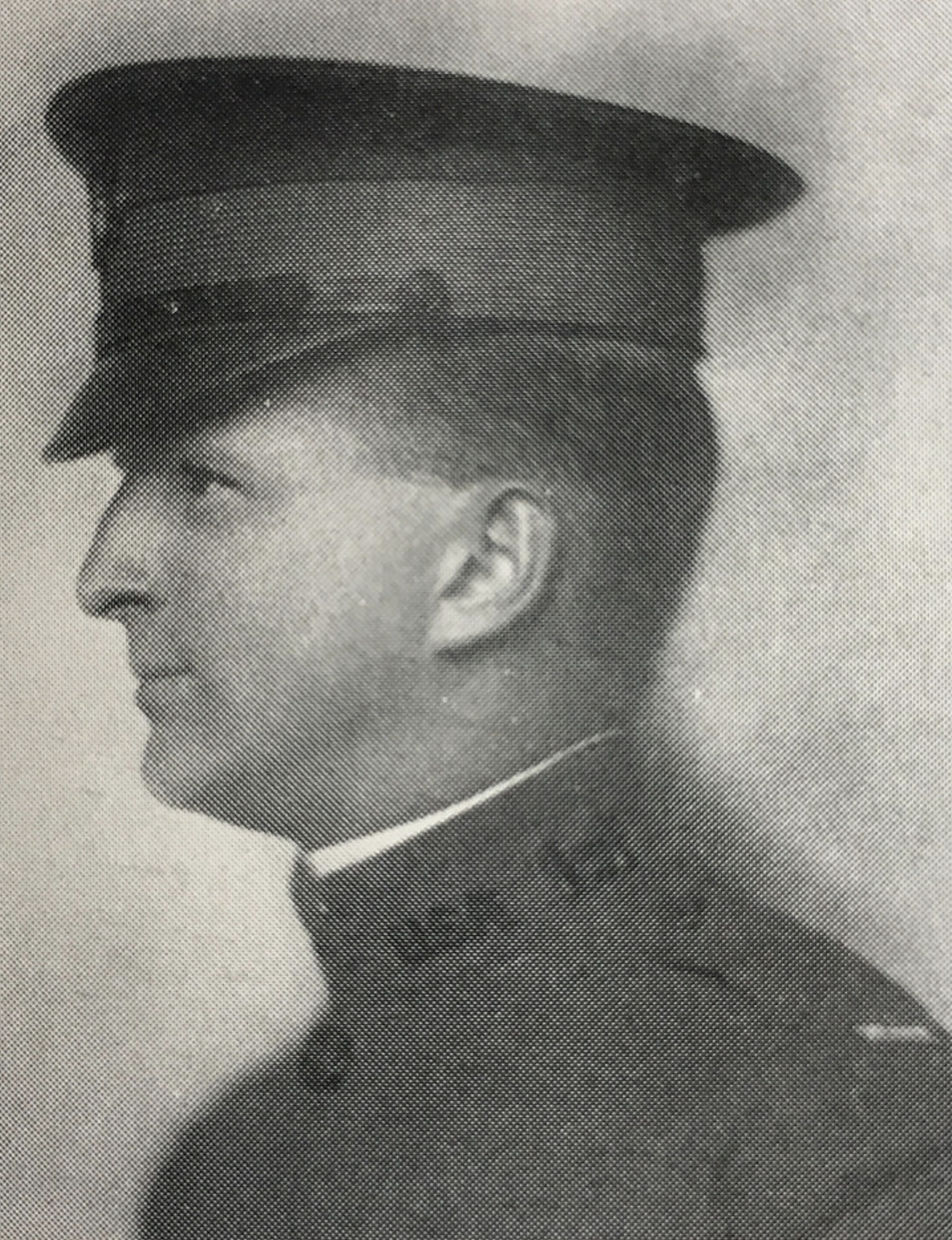
This is Lieutenant Edward Hale Perry, who died on March 30, 1918, in battle, serving as an engineer in the American army in France. He was born in Boston, and his family purchased the grand house at 47 High Street in 1898, when he was 11 and summered here.
Perry’s captain said of him, “No officer in the regiment was so trusted and looked up to by the men; they gave him their money to keep for them, asked his advice on all sorts of affairs, and besieged me with requests to transfer to his platoon.”
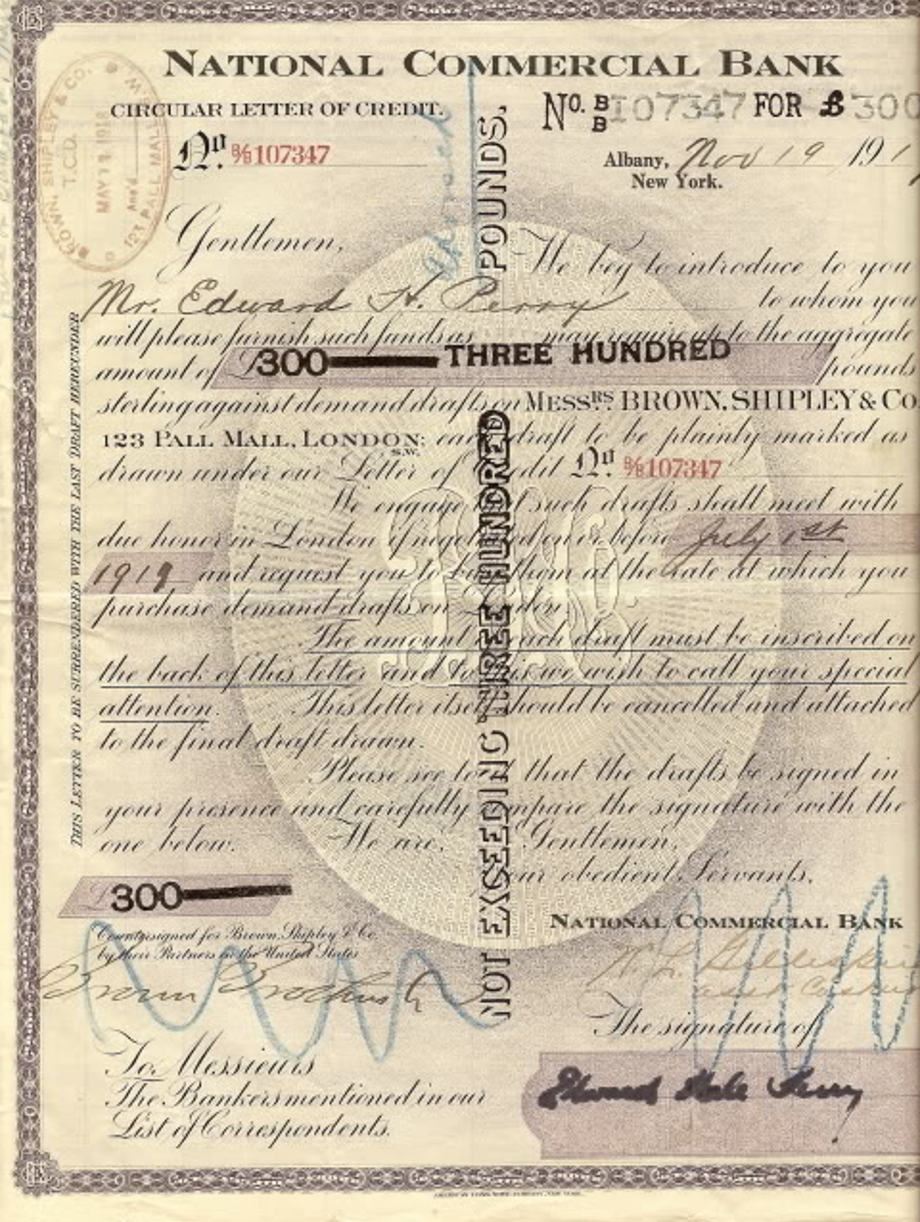
The body of Edward Hale Perry was never found. This letter of credit, issued to Perry by the National Commercial Bank of Albany, NY, was found on the battlefield in France and returned first to the English firm it was drawn on, and then Perry’s family.
|
|
Lt. Edward Hale Perry, 1887-1918. (Courtesy image.)
|
|
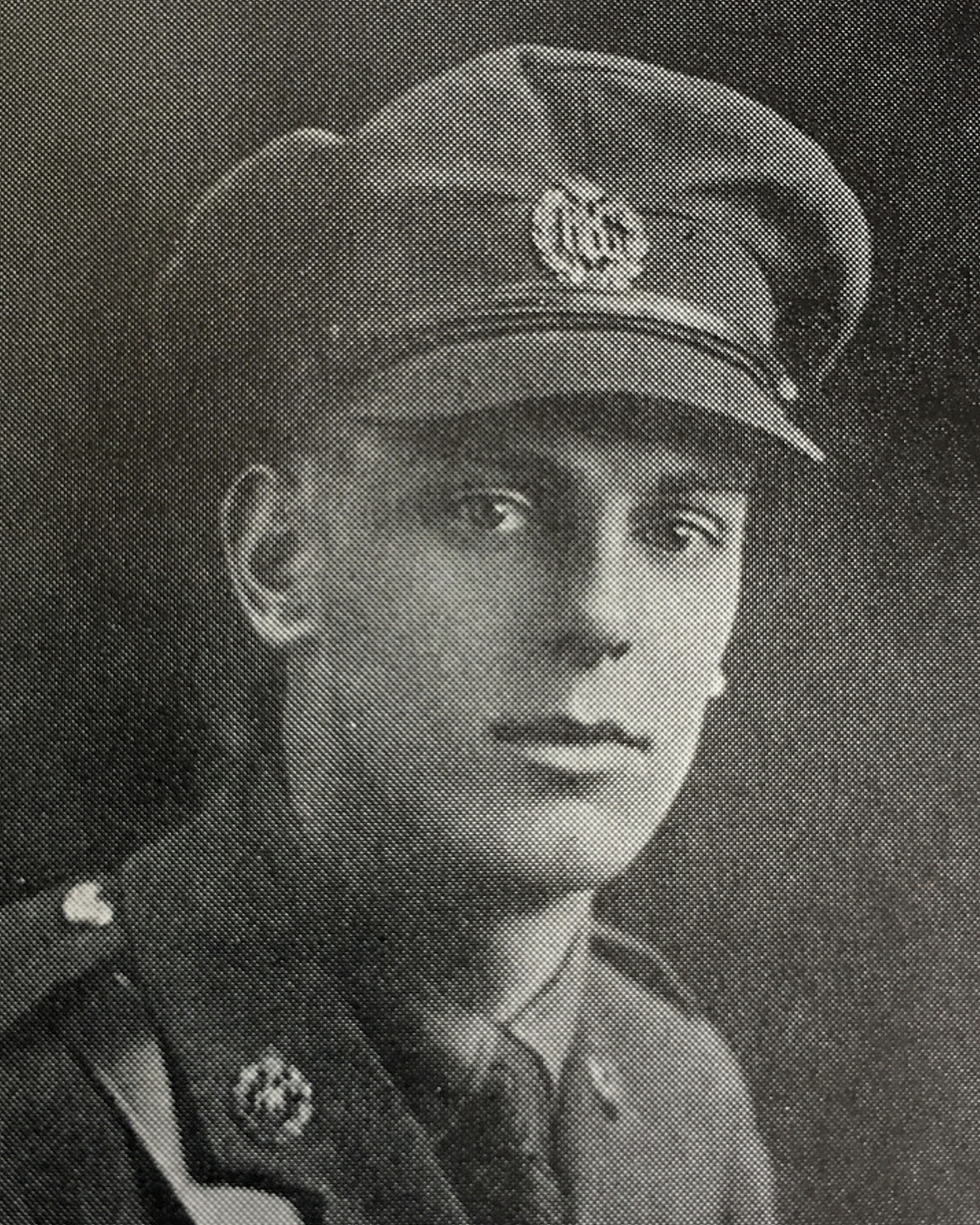
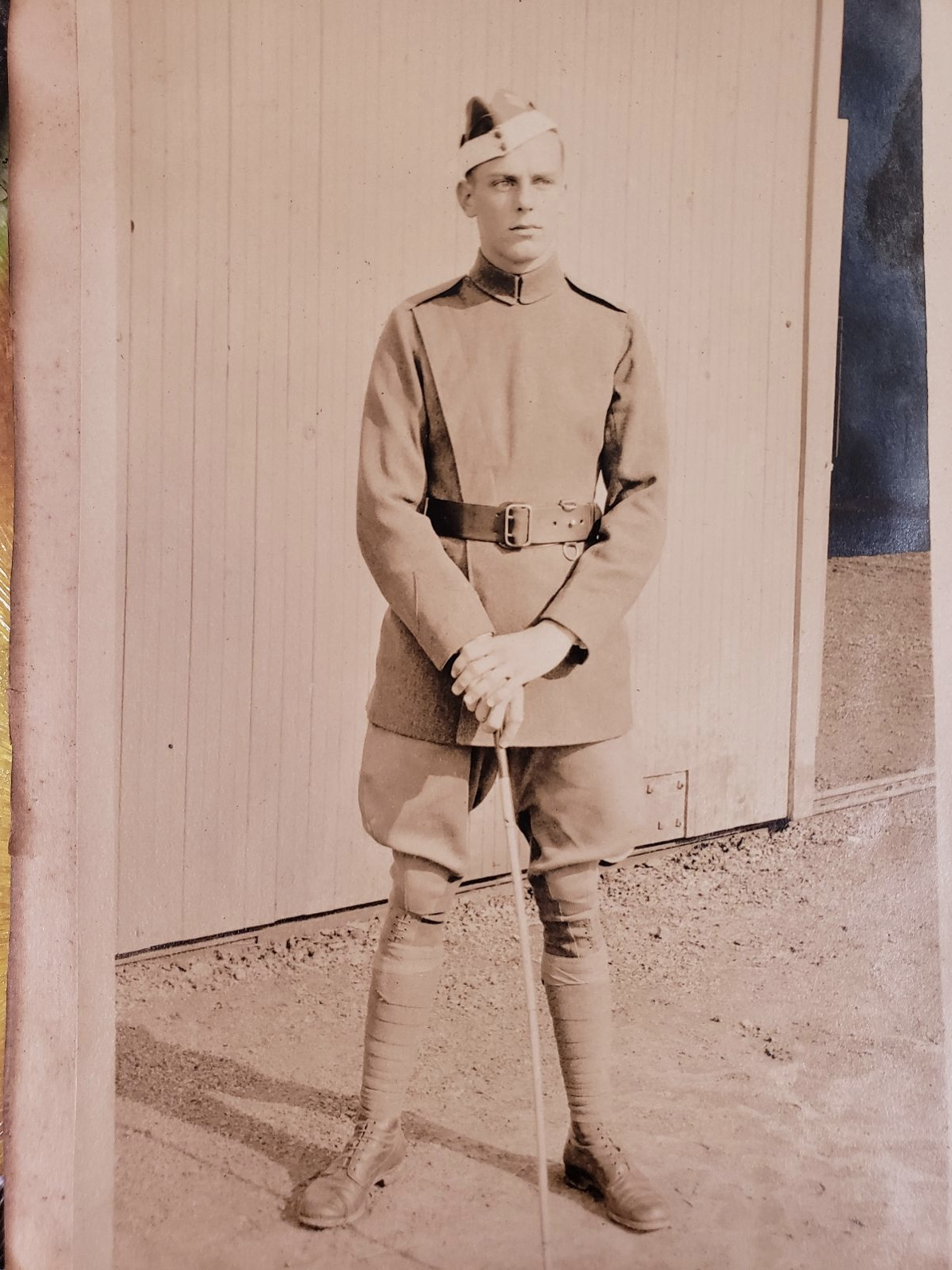
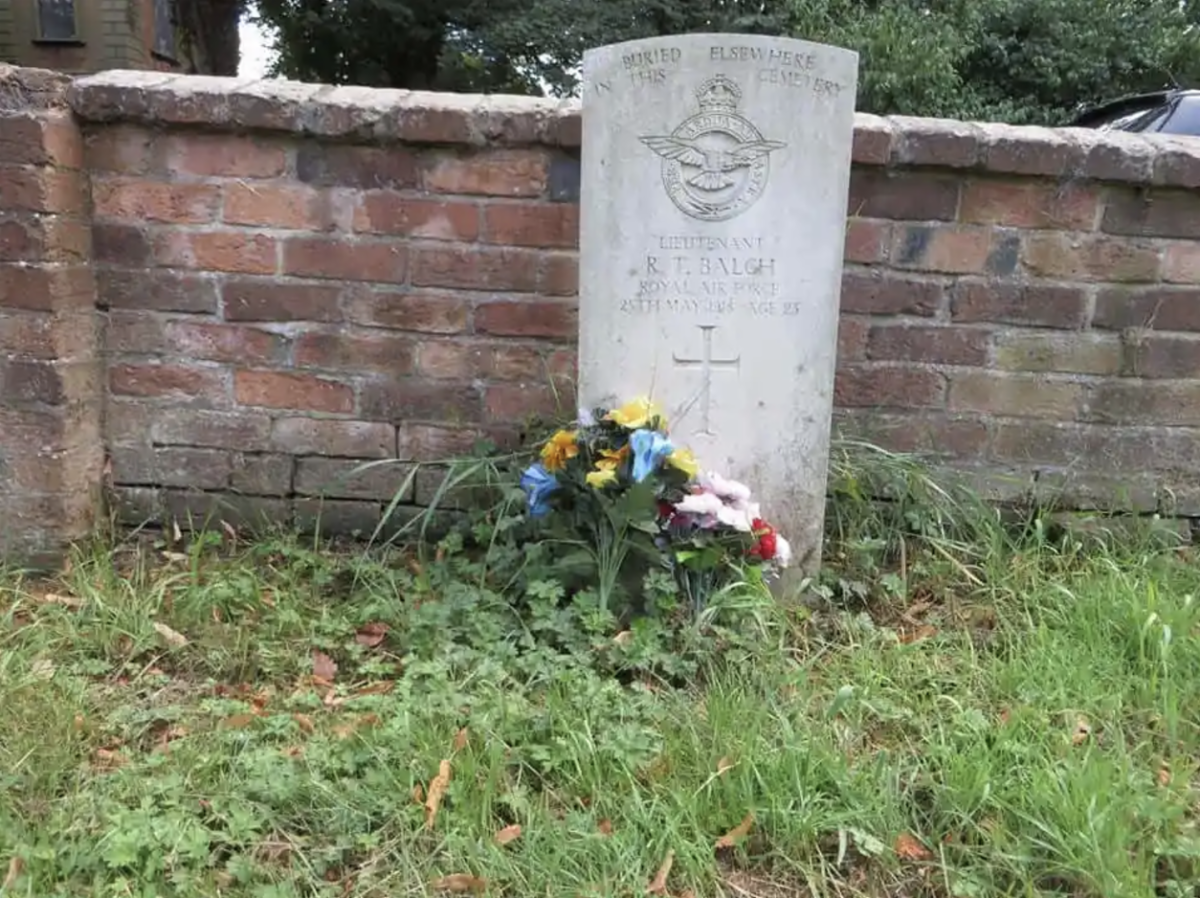
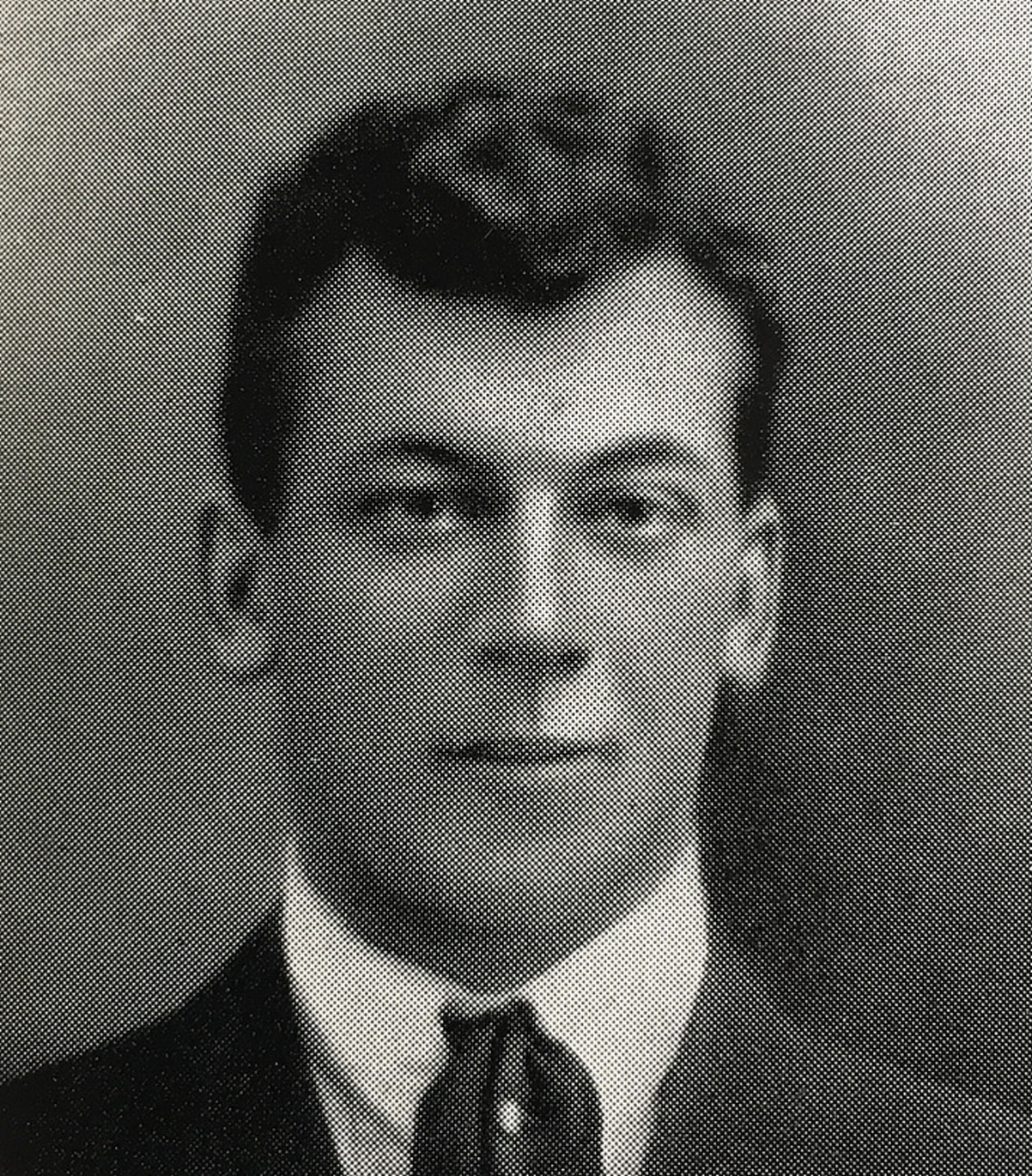
Raymond Tenney Balch, 1894-1918. (Courtesy images.)
|
|
This is Raymond Tenney Balch, born and raised in Newburyport. Balch joined the U.S. Navy, but was frustrated that the United States had not officially joined the war, and in the summer of 1917, he went to Toronto and joined the Royal Flying Corps.
He died on May 25, 1918, in England, when his plane went down during a training exercise over Sutton Park. He is buried in Castle Bromwich near Birmingham, England.
|
|
Frank Woodbury Brown, 1893-1918. (Courtesy image.) |
|
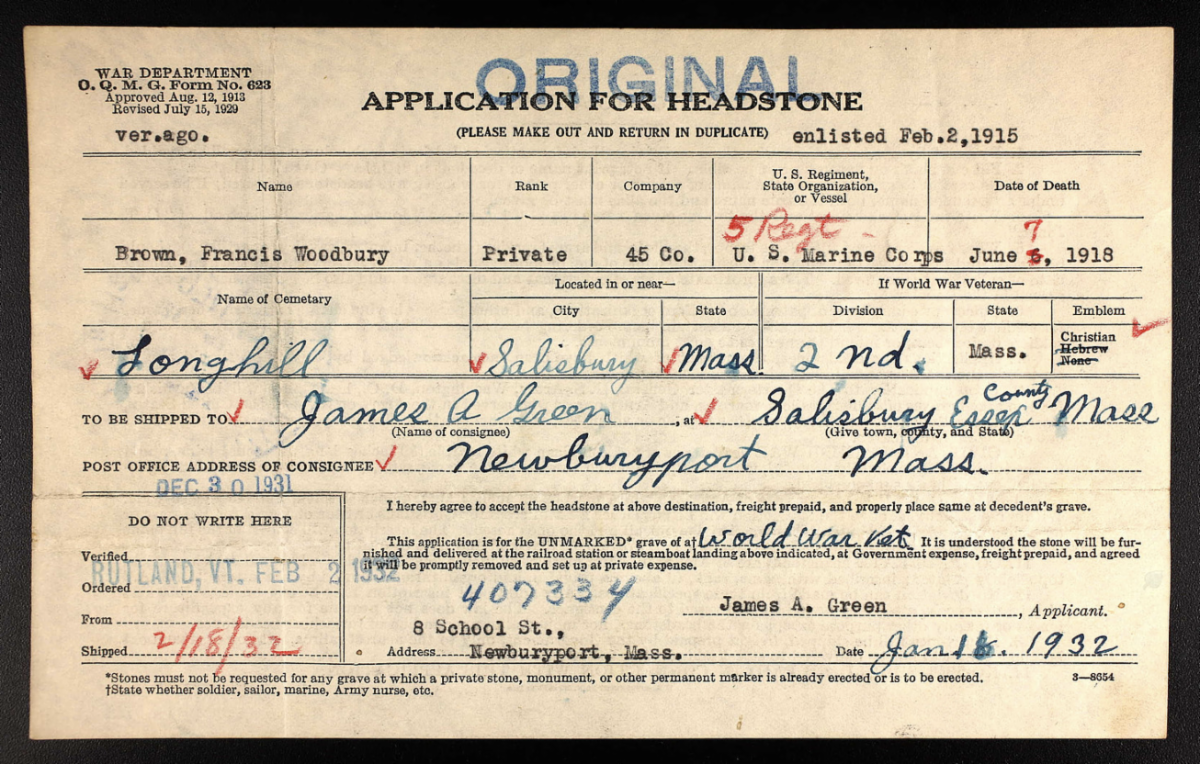
This is Frank Woodbury Brown. He died in battle, in France, on the first day of the Battle of Belleau Wood, June 6.
He had enlisted in the marines in 1915, two full years before the outbreak of war and Eben’s enlistment.
He was born in Salisbury, but seems to have lived in Newburyport with his grandmother and aunt after the death of his parents.
He was living in Newburyport when he enlisted, though he gave a Boston address, and he had “intended to make (Newburyport) his home permanently,” had he lived.
|
|
Frank Brown, an orphan, served in the marines two years longer than Eben, died six days before, and his body, which spent at least one of its burials near Eben’s in battlefield cemetery no. 1764, was shipped back to Salisbury in 1922. He spent a decade in an unmarked grave, until one was finally requested by a Newburyport relative in 1931. |
|
As we honor our veterans this November 11, please join us in pausing for a moment to think of those whose service in World War I was commemorated on Armistice Day.
They shall grow not old, as we that are left grow old:
Age shall not weary them, nor the years condemn.
At the going down of the sun and in the morning,
We will remember them.
From For The Fallen by Laurence Binyon
Read more about Eben Bradbury’s life and death in A Newburyport Marine in World War I, by Bethany Groff Dorau. Your purchase benefits the Museum of Old Newbury. Click here to order.
|
|
Running now through the end of the year, the team at the MOON will share their favorite family recipes, including a blog about its evolution and the significance of the item. Next week, Colleen shares Mildred Martha Theresa Studley Kelly's Perfect Pumpkin Bread. |
|
Woman on the Moon
Not Aunt Emily’s Cake...a blog by Bethany Groff Dorau
The original title of this post was “Aunt Emily’s Applesauce Raisin Cake.” Aunt Emily is my great-aunt, Emily Noyes Poore, my maternal grandmother’s sister, the last of the increasingly impoverished but proud Poores to live on Poore’s Lane since her great-grandfather Ebenezer Poore built the house that is perched atop the hill in 1817. “Poore by name, poor by nature” is our motto.
My parents and three siblings moved into the rambling, crumbling farmhouse in 1985, returning penniless from a decade-long sojourn into the wilds of Canada. Aunt Emily was still working, and my grandmother was wheelchair-bound and increasingly frail. We moved into three unheated rooms upstairs, and our stop-over in West Newbury stretched on into years, then decades.
In the end, when Aunt Emily, who had outlived my grandmother by over a decade, died without complaint on the couch in the living room, my parents had lived with her for thirty years. She left the house to my mother. My parents, who had never been alone in their four decades of marriage, began to prepare the house, which needed extensive repair, for sale. The house, with its seven generations of keepsakes and photographs, wallpaper, newspapers and junk shoved into every crevice, and the farmland on which it stood, were sacred to me, the historian and preservationist and nostalgic antiquarian. At the eleventh hour, my parents sold the property to my husband and me, and we built them an in-law apartment that my father designed. They are alone at last, in a way, though we now live together forever in the Poore House.
And what, you may ask, has this to do with Applesauce Raisin Cake? Well, let me paint a picture for you.
|
|
The Cake! (Courtesy image.) |
|
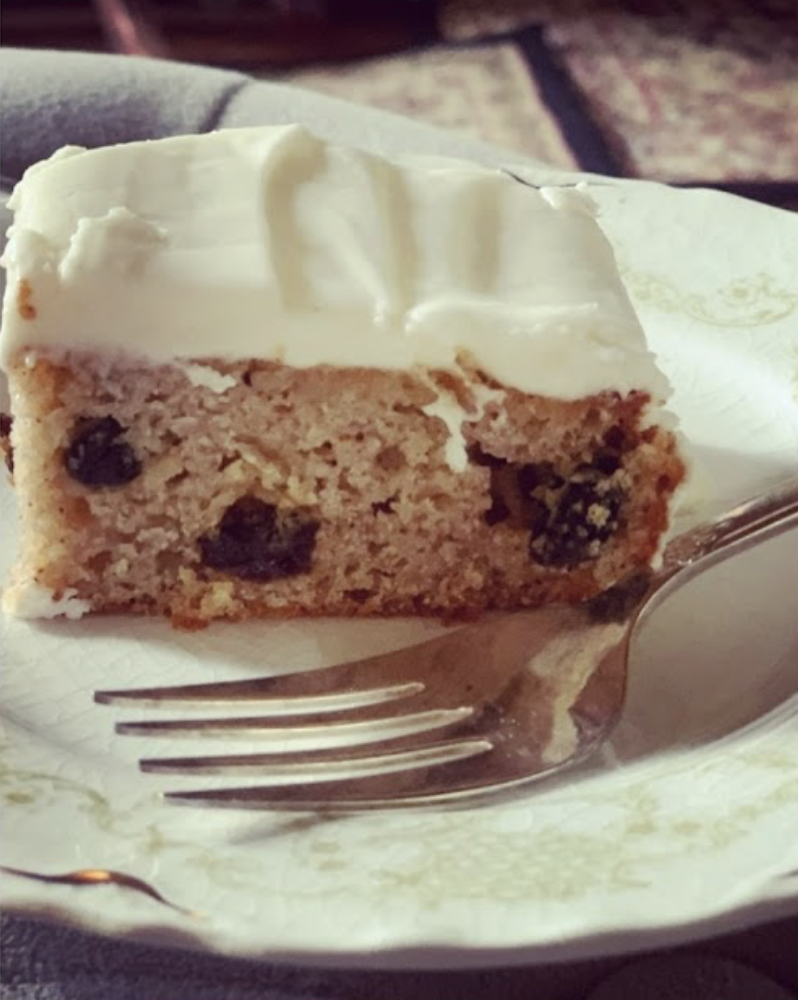
One of the many cousins, siblings, aunts or uncles has a birthday. We all gather around the big table in the kitchen. The house smells of lilacs and musty books and cinnamon. The guest is presented with a moist, sweet slice of Aunt Emily’s applesauce raisin cake, sometimes with a scoop of vanilla ice cream, we sing and clap and all is right with the world.
When, well into her nineties, Aunt Emily could no longer handle the stove, my mother took over, but in my mind, and certainly in the minds of my cousins, this is Aunt Emily’s cake, present at a thousand special occasions. I even had an imagined draft of its history when I came to write this story. I asked my mother to help me make it, anticipating tales of the kitchen adventures of my sainted great-aunt, whose bowls, sifter and mixer my mother still uses when she bakes.
|
|
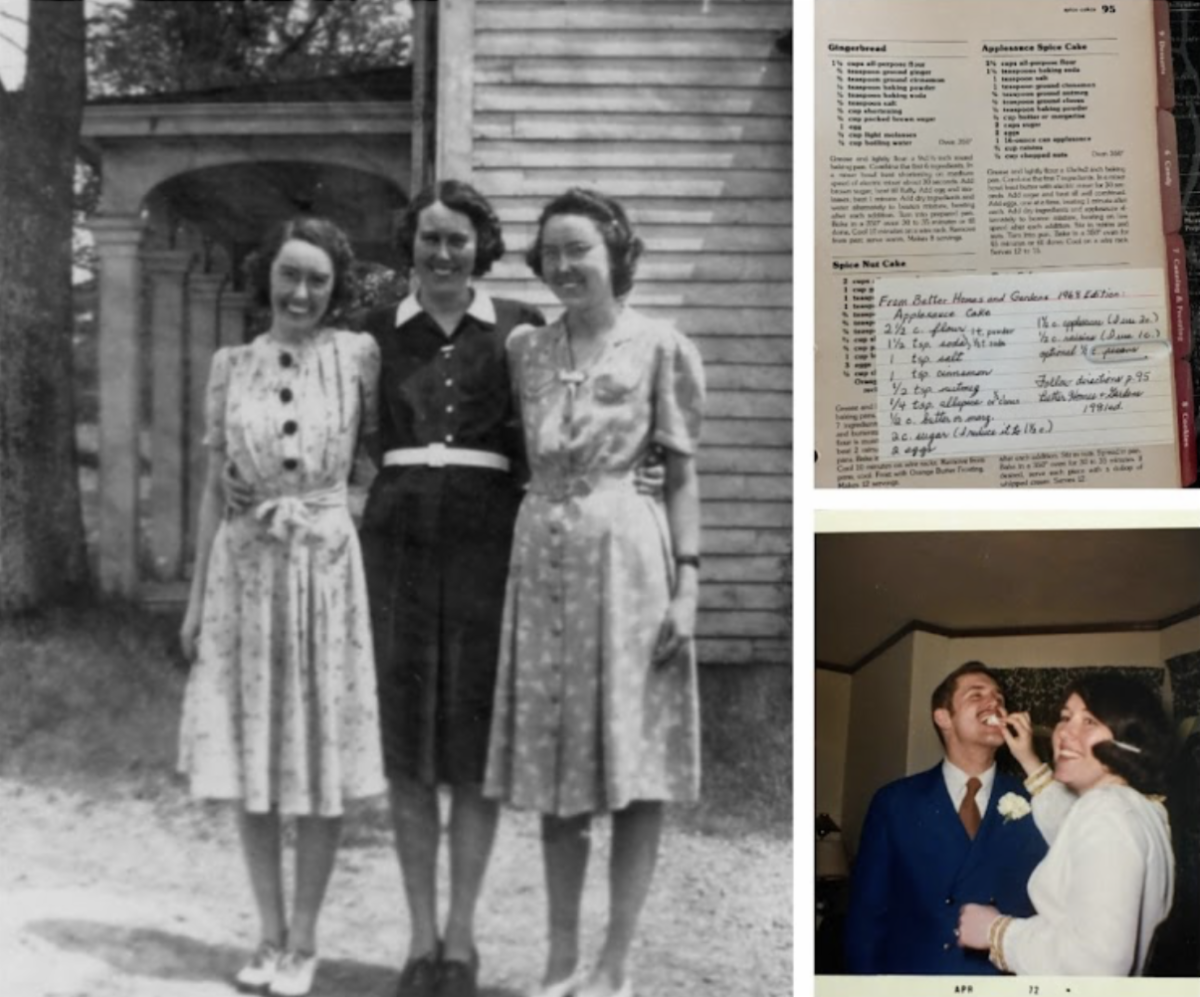
Aunt Emily, with her sisters Louise and Charlotte in front of the Poore House; the handwritten recipe card taped inside the cookbook (circa 1968) and Bethany's parents on their wedding day, 1972. (Courtesy images.) |
|
Last week, I trotted through the breezeway that connects our two houses, anticipating perhaps a yellowed recipe card in Aunt Emily’s careful handwriting. My mother had laid out the ingredients for the cake, and right in the middle was her well-thumbed copy of the 1981 Better Homes and Gardens cookbook. Taped inside the cookbook was a handwritten card – not in Aunt Emily’s handwriting, but in hers. “From Better Homes and Gardens 1968 Edition” it says. I was aghast.
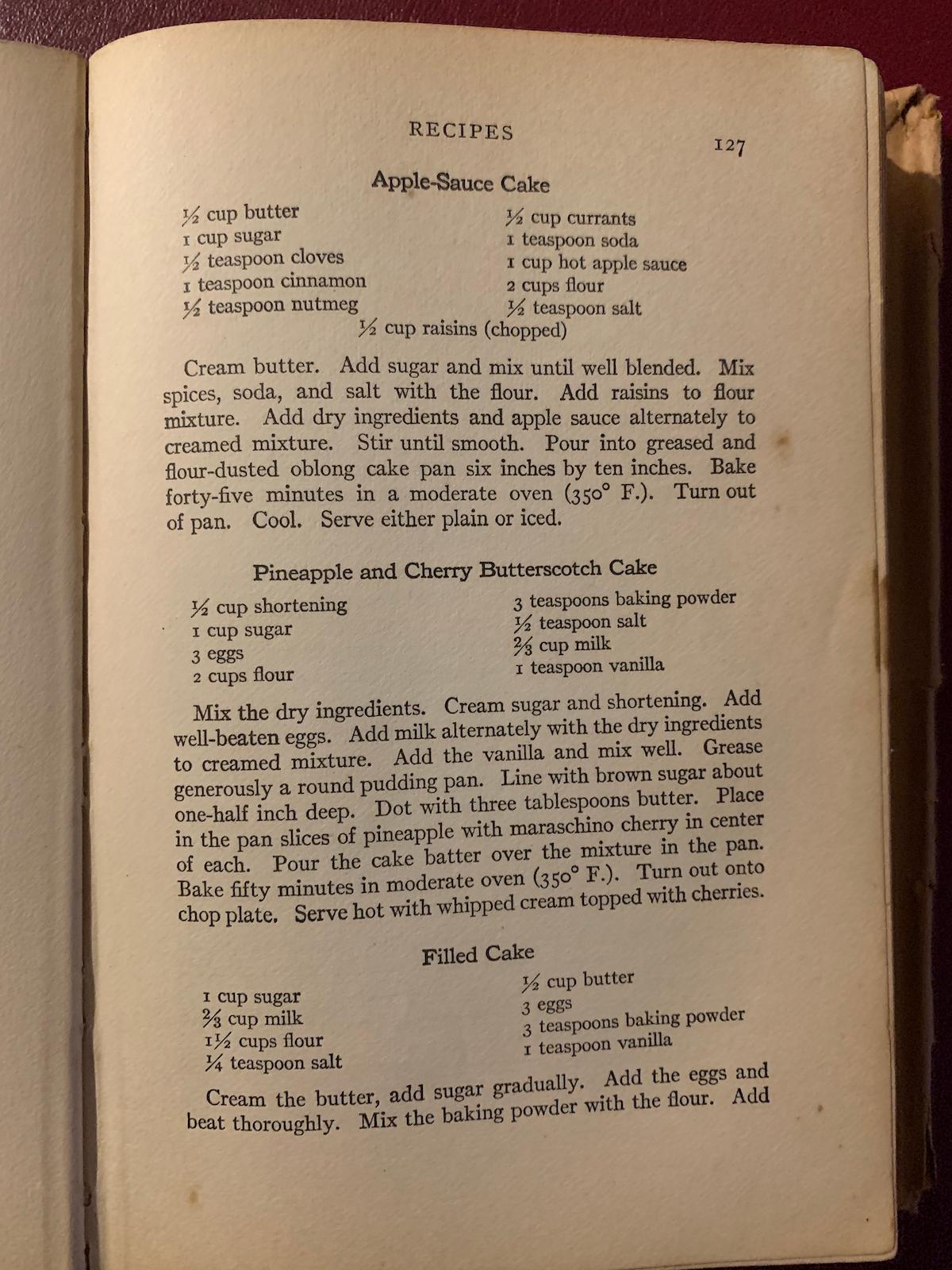
“Is Aunt Emily’s cake from the 1968 cookbook?” I asked. “Oh no” she said. “Aunt Emily had the 1948,” she said. “And probably the one before that.” And then she gave the obituaries of each of these cookbooks. 1948 was “covered with lard – the pages were practically clear!” 1968 was “falling completely apart.” The best we can come up with for an origin story is that my mother, born in 1948, remembers having applesauce raisin cake for her birthday when she was very young. There is an “Apple-Sauce Cake” recipe in the 1929 International Cookbook that was given to Aunt Emily following the death of her mother when she, at fourteen, became the woman of the house. My adorably linear and completely fictitious narrative of a treasured family heirloom was slipping away.
My mother was the younger sister, gentle and shy. She was born into a multi-generational household of people whose claims on the house were preexisting and irrefutable. It was never hers. Aunt Emily was kind, generous, quiet and powerful, in her way. She owned the farm outright until the day she died, by which time my parents were not able to put in the time and money needed to make it their own.
|
|
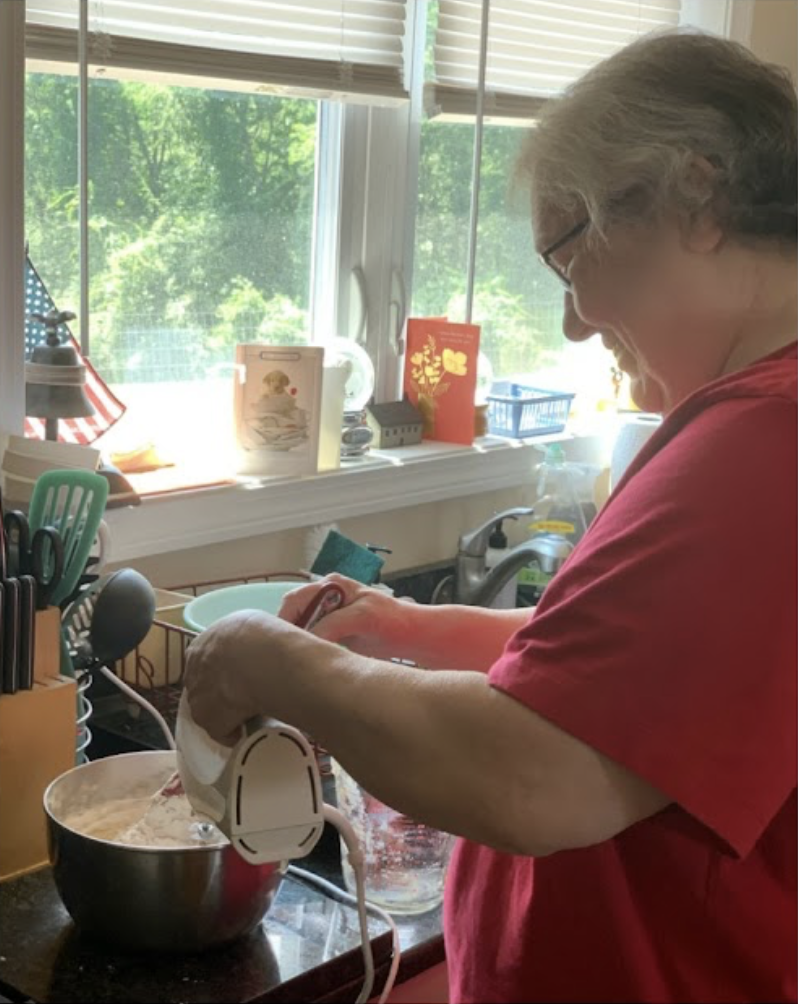
An "older" recipe (circa 1935) and Bethany's mom mixing up a little magic. (Courtesy images.) |
|
They now live in their space, but attached to my house, on land that belongs to my husband and me. “Do you want me to look up an older recipe?” she asks. “Aunt Emily always made it a little different than I do.” And in that moment, the color of the memory of those family birthdays changes for me. I see my mother hovering around the table, bringing spoons and plates and ice cream for the cakes Aunt Emily had made, and later, making the cakes herself while taking no credit, asking for none.
I see her wrestling with her desire for some control, some privacy, something of her own, even as she appreciates the roof over our heads, the willingness of my great-aunt to take in her whole brood, quadrupling the household in one fell swoop, my mother falling back into the role she had gone to Canada, in part, to escape.
She begins to point out, almost apologetically, the ways in which her applesauce cake differs from Aunt Emily’s. “I always preferred the cream cheese frosting,” she says, and “I changed the amounts of baking soda and powder and I use less sugar and more applesauce because, well, it just seemed like a lot of sugar.”
“I want to make the cake you make,” I say. “Just how you make it.” And we make it together, in the tiny kitchen that is unmistakably hers, but with Aunt Emily’s sifter, and mixer, and bowls, and she tells me about the applesauce that her mother used to make, the smell of paraffin melting on the stove when Concord grapes ripened on the arbor, and blueberry cake for dinner when they came back from the meadow with full pails. She sweeps her hand to indicate paths she has walked since she could walk – the steps to the vegetable garden, up the rise to the chicken coop. The cake is moist and flavorful and delicious – the cream cheese in the frosting a perfect touch. My mother and I stand happily together in the presence of our ancestors, and for once, they let her speak.
|
|
The Cake
Ingredients
2 1/2 cups flour
1 teaspoon baking powder
1/2 teaspoon baking soda
1 teaspoon salt
1 teaspoon cinnamon
1/2 teaspoon nutmeg
1/4 teaspoon allspice
1/2 cup butter, softened
1 1/2 cups sugar
2 eggs
2 cups unsweetened applesauce
1 cup raisins
Preheat the oven to 350ºF degrees. Sift together the first seven ingredients. In a separate bowl, mix softened butter and eggs. Add applesauce and dry ingredients in turn. Add raisins and pour into a buttered, floured 9x13” pan. Cook for 40 minutes. Cool before frosting.
The Frosting
Ingredients
3 ounces cream cheese
1/4 cup butter, softened
1 teaspoon vanilla
2 cups powdered sugar
Half and half, as needed
Mix together cream cheese, butter and vanilla. Add sugar slowly and half and half or heavy cream until smooth.
|
|
Learn about upcoming programs, register, find Zoom links and catch up on previous presentations here. All of our virtual programs are free, however donations are gratefully accepted to help defray speaker fees.
|
|
Columbus Day’s Origins in the Crescent City: Re-evaluating the Current Controversy
Virtual Event
For 50 years, Columbus Day has been a national holiday, more or less celebrating Christopher Columbus's "discovery" of the New World. Since then, more and more Americans are choosing, instead, to observe the holiday as Indigenous People's Day, acknowledging the native peoples whom Europeans displaced and critiquing their treatment by colonizers and by citizens and governments in the United States.
Those clashing historical narratives speak of deep division among Americans today. Some resolution to the controversy over Columbus Day, at least, might be found in the origin of that holiday long before 1971, but nearly 130 years ago in New Orleans.
Olivia Crisafi, '22, is a senior at The Governor's Academy from Newbury, MA. Drawn to controversial issues, she is passionate about public policy and engineering and spends her free time running, building robots and fundraising for her chosen social causes. Her investigation of Columbus Day, for her junior-year AP US History class, sparked her interest in historical research, which she pursued as an intern at the MOON this past summer, and plans to continue in college.
Register here. (This event is free, with an option to donate. A Zoom link will be sent closer to the presentation.)
|
|
Newburyport's Annual William Lloyd Garrison Lecture featuring Edward Carson
Friday, December 10, 2021 | 7:00 p.m.
Old South Presbyterian Church | 29 Federal Street, Newburyport, MA
Every year, Newburyport celebrates William Lloyd Garrison's legacy on his birthday with a lecture from a well-known author, historian, or public speaker about Garrison's life, and how it is still relevant today.
This year the talk is “The Gospel According to William Lloyd Garrison: Anti-Racism and the American Truth” and will be given by Edward Carson, the Dean of Multicultural Education at the Governor’s Academy and a leading organizer and activist in the Greater Boston area. Carson will discuss Garrison’s relevancy in twenty-first century issues like voting rights, Critical Race Theory, and Black political thought.
Join us in-person (masks required for attendees) on December 10, 2021 at the Old South Presbyterian Church in Newburyport at 7:00 p.m. For more information and to watch live go to lecture.porthistory.com. No registration required.
|
|
The Civil War: Crucible of American Christmas
Thursday, December 16, 2021 | 7:00 p.m.
Museum of Old Newbury | 98 High Street, Newburyport, MA
Bill Hallett, a former radio announcer covering Baltimore to Boston, as well as locally at 100.3 WHEB and 92.5 the River, has always had a passion for the past with an emphasis on Civil War history.
A re-enactor and board member of two Civil War Roundtables, he’s given talks on various Civil War topics from Maine to Maryland. He stumbled upon some small stories of soldiers at Christmas and further digging brought him to his topic, “The Civil War: Crucible of American Christmas.”
He will take us through the early years, when Americans did or didn’t celebrate Christmas, depending on their location in the new country. But with European immigrants arriving in the early 19th century, the American Civil War accelerated the customs and manners nationally bringing the holiday to what we know today.
When the Civil War began, Christmas was slowly on the verge of becoming what we see now, but as with many parts of our culture, the war accentuated and promoted such a holiday. We owe so much of our American Christmas customs to the years 1861-1865, as the country fought itself. Small customs in various corners or part of the country, emerged with new national traditions that are still carried on today.
|
|
Puzzle Me This...
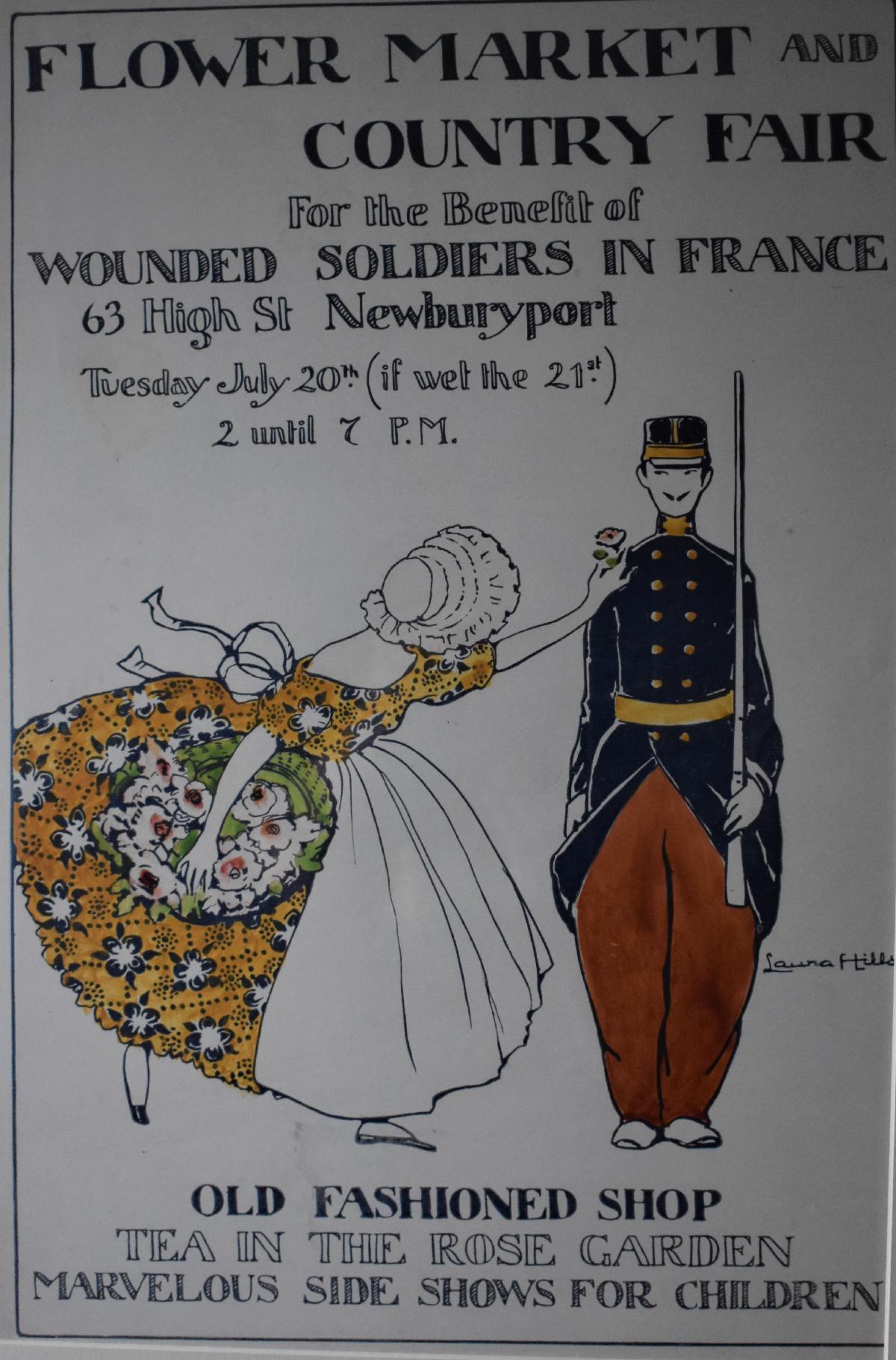
During the First World War, Newburyport artist Laura Coombs Hills created a series of whimsical posters for events held at 63 High Street to benefit wounded soldiers in France.
Five of these posters were given to the museum in 1958.
Silkscreen on poster board, 1914-1918.
From the collections of the Museum of Old Newbury.
Click on image to begin.
|
|
During this difficult period of COVID-19, we rely on your support more than ever. We continue to develop new, online programs for you to enjoy and keep us connected and look forward to in-person events as protocols for safety loosen. We hope, if you are able, that you will consider a donation to the museum. Thank you for your continued support.
|
|
Museum e-Newsletter made possible through the
generosity of our sponsors:
|
|
|
Museum of Old Newbury
98 High Street
Newburyport, MA 01950
978-462-2681
|
|
|
|
|
|
|
|