|
Because the best defense is always an offense, ELC worked more intensely than ever this season to advance the cause of environmental protection in places where this remains possible. With the national clean energy scene in retrograde, we envisioned multi-state regulatory changes that could make rooftop solar more affordable than ever despite elimination of government incentives (Permits to the People, below). With Congress in policy paralysis or worse, we advanced a California legislative strategy to address human exposure to toxic chemicals that could make everyday soap and body wash safer for the whole nation, while reducing antibiotic resistance (Safer Soap).
And as universities nationwide trembled and cowered while their researchers lost millions to billions in grant funding, ELC staff and former students continued their successful court challenge to the legality of Trump/DOGE/OMB/federal agency grant cancellations, winning successive injunctions that have now restored roughly one billion dollars to UC researchers. As a result, tens of millions are now reinvested in environmental justice, climate change mitigation, and clean energy research and projects (UC Researchers’ Suit).
We have also pressed on in our long-running litigation and advocacy on behalf of communities from San Francisco to the Bering Strait that are exposed to dangerous contaminants left behind by the U.S. military (Condos and . . . Plutonium?).
In the words of S.F. radio host Scoop Nisker: “If you don’t like the news, go out and make some of your own!” Read on for more glad tidings, as we send you our seasonal best.
| | With gratitude for your support, | |
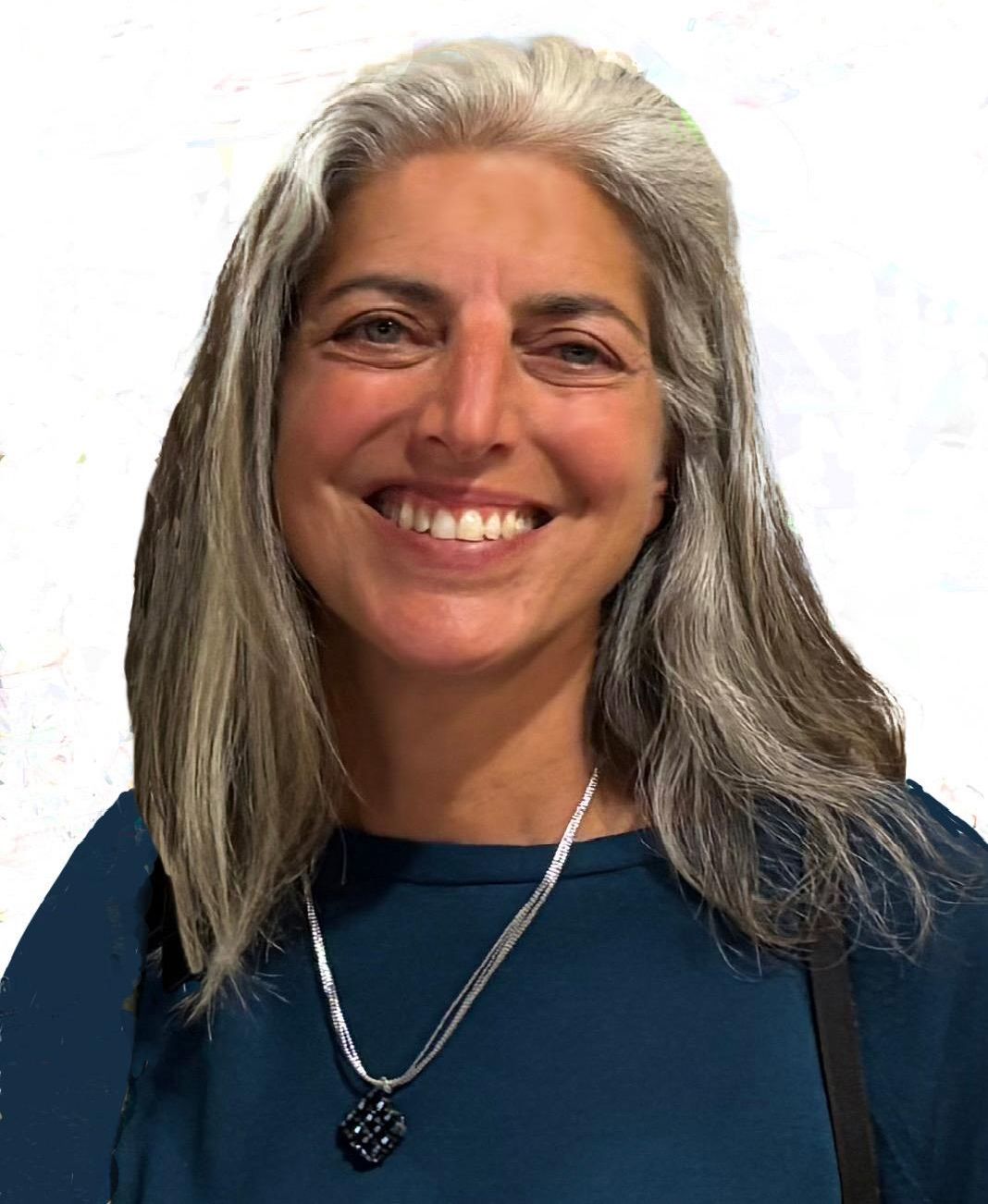
Claudia Polsky
Director, Environmental Law Clinic
| | | |
Permits to the People!
Reducing the cost of going solar
| | |
In perhaps its wonkiest project to date, ELC this semester deployed a student team passionate about clean energy to assist Permit Power, a wonderful repeat ELC client that works to reduce the bureaucratic friction (and thus, cost and delay) associated with installing residential solar and battery storage systems. Permit Power asked us to explore how FEMA floodplain regulations inhibit municipalities from permitting residential clean energy systems in floodplains, and make it difficult for state legislatures to automate solar permitting more generally.
After a mind-numbing dive into locality-specific permitting minutiae and floodplain-map-deciphering, the Permit Power team surfaced into delightful daylight: interviewing city managers, floodplain coordinators, and insurance experts from Florida to Hawaii to refine our understanding and gather examples of policy innovation. Among the semester’s high points was an extended discussion with Dave Jones, former Insurance Commissioner of California, about how to reimagine the flood/solar/insurance interface and craft smart policy.
Along the way, ELC was able to provide input and model legislative language to parties negotiating amendments to the National Flood Insurance Act, which represents one among the intervention points for reform to increase uptake of home solar. Stay tuned for policy outcomes.
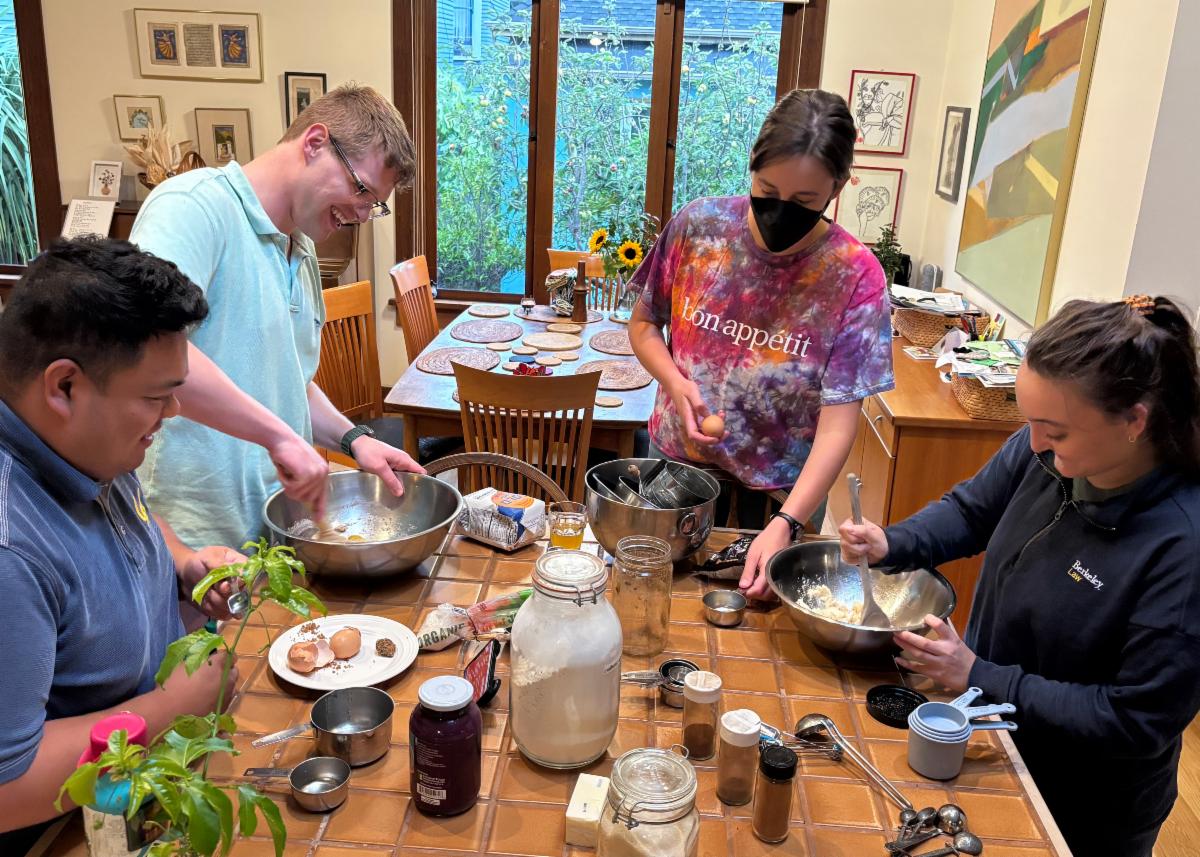
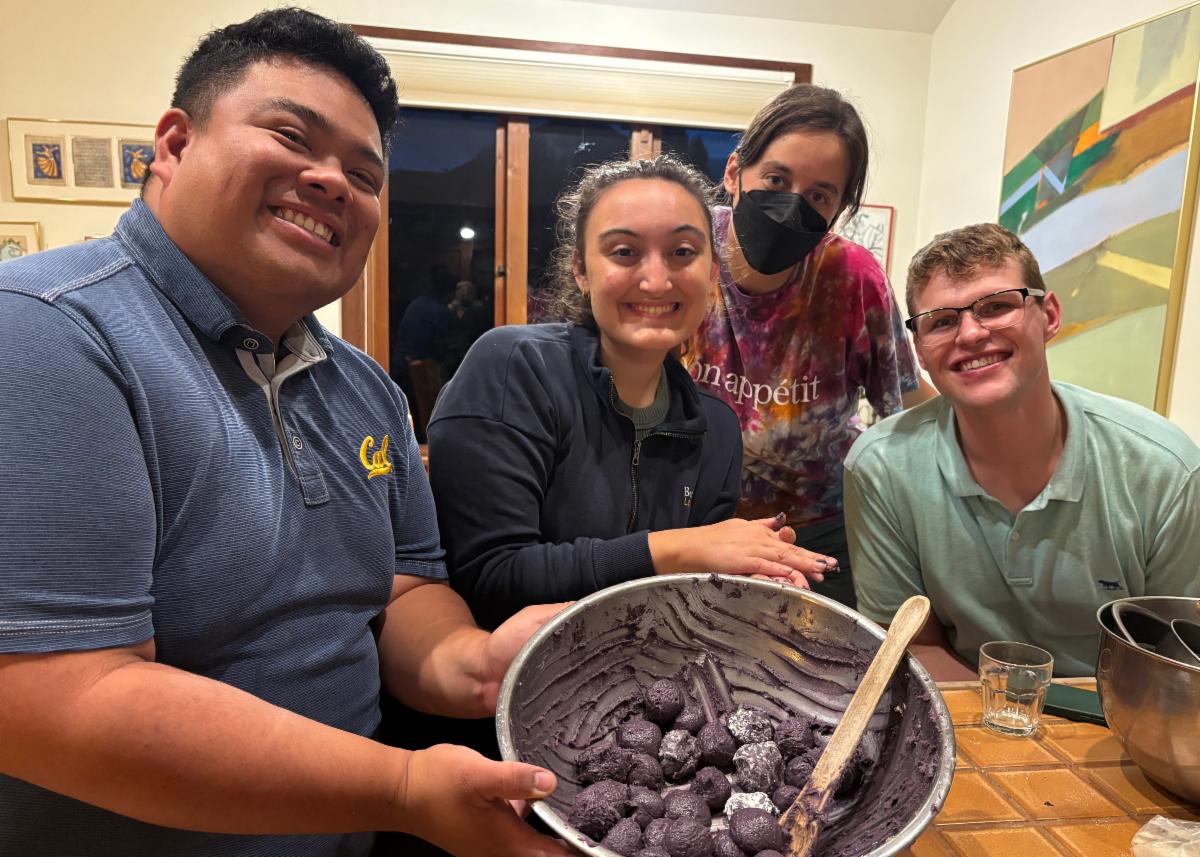
| | 2L Connor Tamor (lower left) teaches fellow Clean Energy team members 3L Mac Dickerson, 2L Jessie Sugarman, and 3L Lucy Peterkin how to make ube (purple yam) cookies. | | You can view the ube cookie recipe here. | | |
Safer Soap
Eliminating toxics in consumer products
| | |
ELC has been blessed with many repeat clients — ones we know, trust deeply, and are continually inspired by. In its second project for beloved client Green Science Policy Institute, ELC this fall worked to refine (and ultimately, to largely redraft) a California bill to create a Safer Soap Act (A.B. 916). The legislation addresses the ugly but little-known truths behind marketing claims that certain everyday soaps and body washes are “antibacterial” or “kill 99.9% of germs.” First, these products are no more effective for hygiene than plain soap and water, while costing more. Second (and motivating our client’s engagement): the products’ efficacy claims stem from inclusion of one or more chemicals that are increasingly understood to be toxic to humans and, once down the sink or shower drain, prone to interfere with water treatment (by killing beneficial bacteria). Worse still, inclusion of antibacterial chemicals contributes to antibiotic resistance.
Chemist Arlene Blum, our client organization’s founding director, was formerly a world-class mountaineer. A highlight of the semester was strategizing with her and legislative allies in the mode she still prefers at age 80: while hiking trails in the Berkeley Hills.
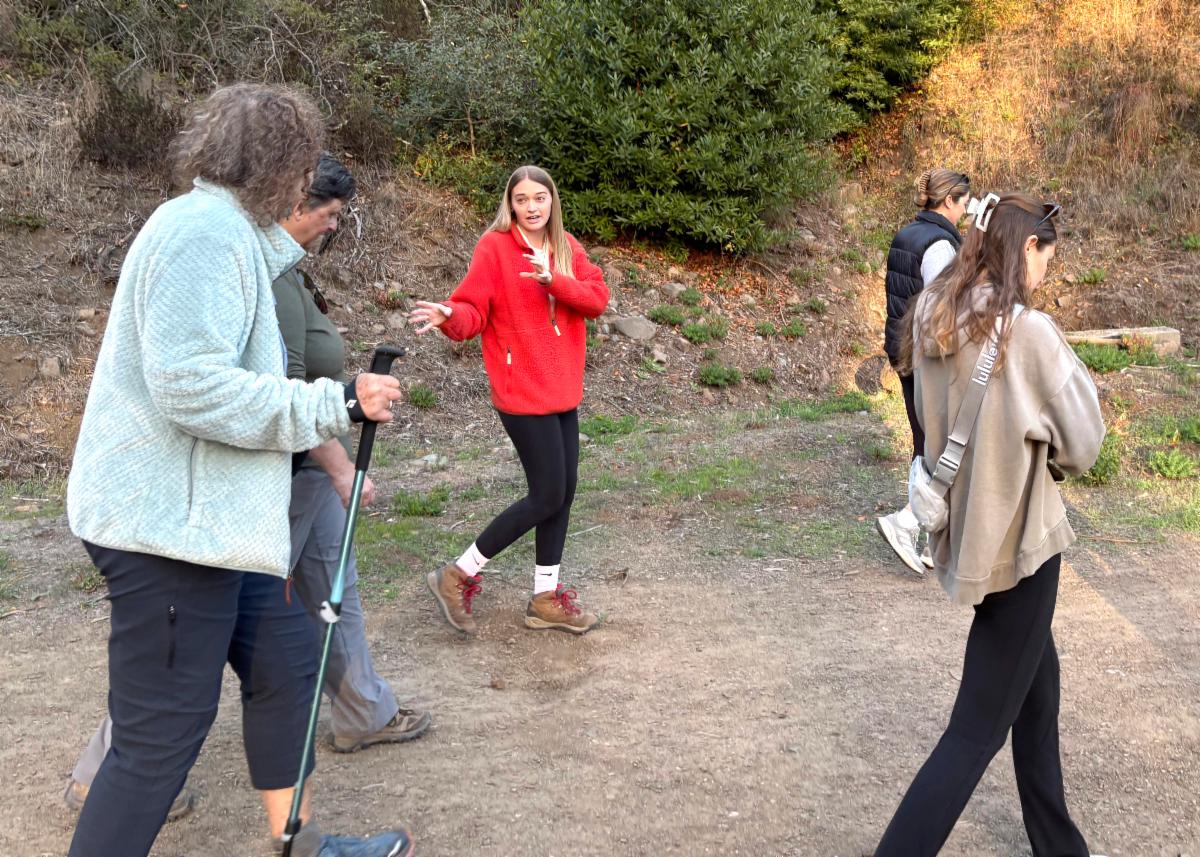
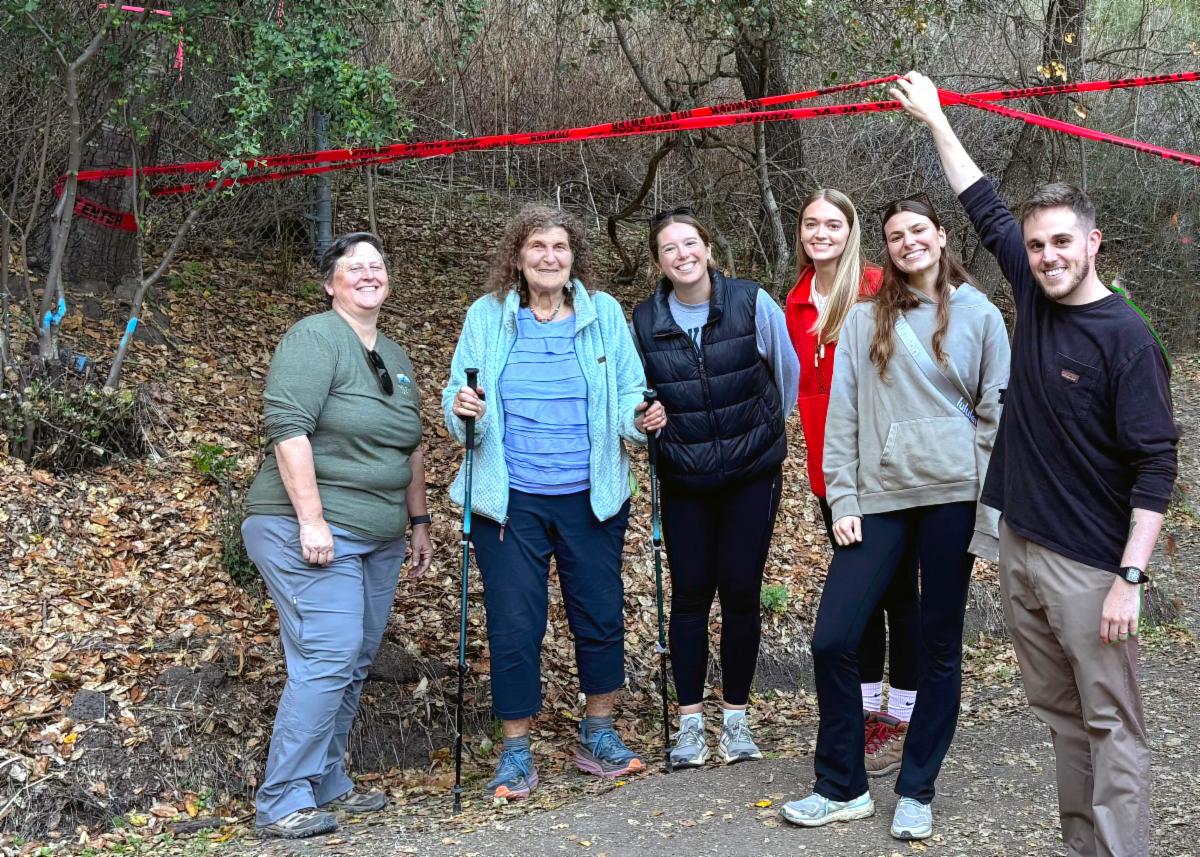
| | Client Arlene Blum (turquoise jacket) joins ELC’s Safer Soap team on a “policy hike” in Tilden Regional Park. 2L Lydia Jahn (orange jacket, gesturing) proposes a way to amend and refocus a bill now pending in the state Assembly. | | Left to Right: Nancy Buermeyer, Senior Policy Strategist, Breast Cancer Prevention Partners (project partner); Dr. Arlene Blum, E.D., Green Science Policy Institute (client); ELC project team 2L Sophie Janssen, 2L Lydia Jahn, 3L Hannah Tadros, and 3L Jake Levitan. | | |
Condos and . . . Plutonium?
Litigating to force Superfund cleanup in S.F.
| |
After long investigation, ELC in 2024 filed a federal lawsuit on behalf of client Greenaction for Health and Environmental Justice, alleging that the U.S. Navy’s shoddy radiological cleanup at the former Hunters Point Naval Shipyard does not adequately protect human health and the environment, even as the City sells site parcels off for condo development.
The suit alleges that the Navy failed to fulfill its obligation to demonstrate — through formal reviews every five years — that the cleanup is adequately protective, as required by CERCLA (the Comprehensive Environmental Response, Compensation, and Liability Act). The Navy has refused to update its nearly 20-year old cleanup goals to account for new toxicity science that resulted in EPA dramatically lowering its remedial goals for radioactive soil. The suit seeks a court order requiring that the Navy conduct five-year reviews that assure the cleanup is protective under up-to-date cleanup standards.
In Fall 2025, the Shipyard team drafted Greenaction’s brief in reply to the Navy’s opposition to Greenaction’s motion for summary judgment and the Navy's cross motion for summary judgment. Briefing on the dueling motions is complete, and the matter will be heard in San Francisco federal court on January 22, 2026. In a dramatic development just as briefing concluded, news media reported that the Navy had months ago detected — but had not timely reported to health authorities — unlawfully elevated levels of airborne plutonium at the site. We imagine this may affect the credibility of the Navy’s representations to the court that it has been both thorough and transparent in its cleanup efforts.
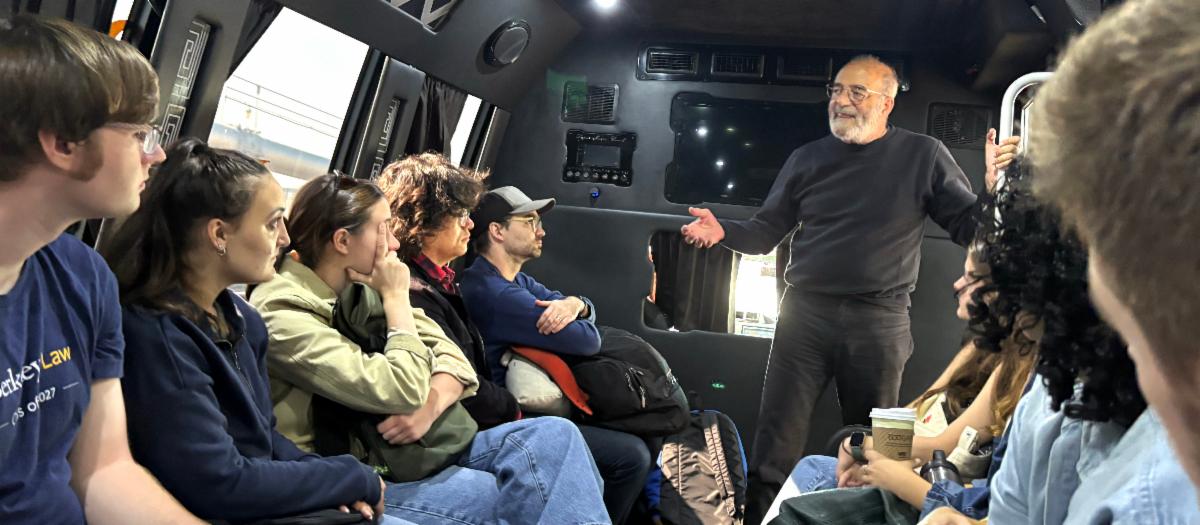
| ELC Supervising Attorney Steve Castleman explains the history of San Francisco’s only Superfund site — the former Hunters Point Naval Shipyard — as ELC’s whole class travels to visit the area and meet local activists. At Hunters Point, the Navy for years sandblasted ships that had been covered in radioactive fallout from atomic testing in the Pacific in the years before the first Nuclear Test Ban Treaty. | | |
UC Researchers’ Suit
Millions more in grant funding flows back to UC!
| | |
Upholding the law pays. In the case of Thakur v. Trump (N.D. Cal.) — a class action ELC’s Director initiated with pro bono counsel and UC researchers in spring 2025, as federal agencies began mass-terminating already awarded grants — it is paying very literally. Through three successive injunctions, Judge Rita Lin has required the Environmental Protection Agency (EPA), the National Science Foundation (NSF), the Department of Transportation (DOT), the National Institutes of Health (NIH), and other agencies to deliver tens of millions of dollars in promised-but-unlawfully-withheld grant funds to hundreds of world-class UC researchers. A case synopsis is here; court documents are hyperlinked here.
To say that this restored research will be life- and planet-impactful is no hyperbole: this fall, the University of California broke a world record by winning five Nobel Prizes in one month.
Researcher-plaintiffs are now heading to court yet again to challenge the latest round of unlawful terminations of research grants: the Department of Energy’s early October selective cancellation of scores of consequential clean energy and climate-related grants that had been awarded to researchers in politically “blue” states. Court arguments on December 18 highlighted how the partisan weaponization of grant programs threatens UC’s green energy research programs. These include a project to advance Direct Air Capture of greenhouse gases, and an exceptionally ambitious project to develop a California Hydrogen Hub capable of commercializing green hydrogen (i.e., hydrogen derived from renewable sources) for use in transportation, manufacturing, and other sectors.
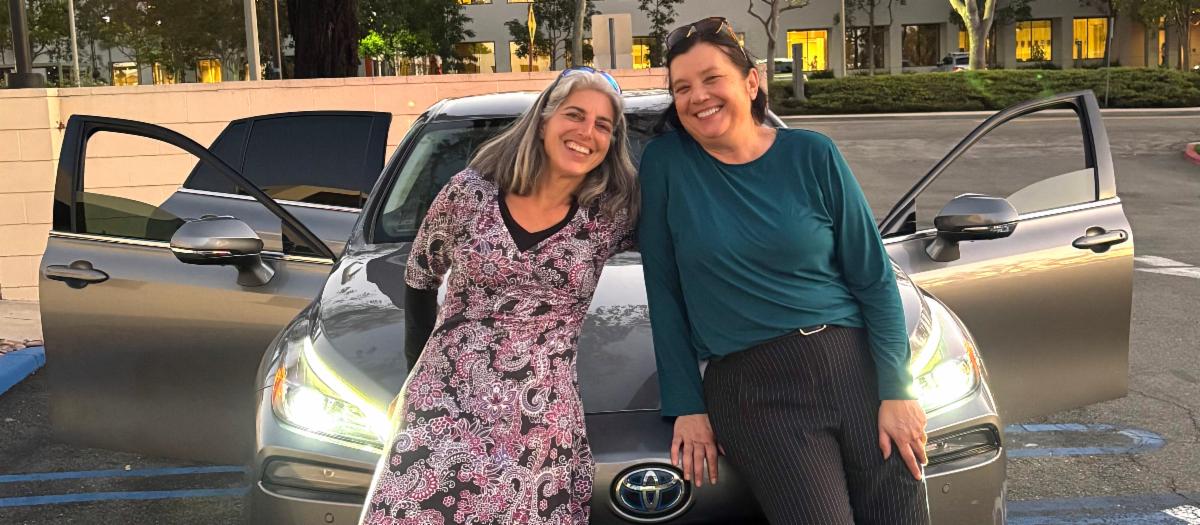
| | ELC’s Director and CA Hydrogen Hub CEO Angelina Galiteva pose with Angelina’s hydrogen-powered Toyota Mirai. It gets 400 miles per 5-minute charge, and its only “emissions” are drops of clean water. | | ONWARD to more justice — and green innovation — in the New Year! | | | | |
Justice is a Collective Effort.
At the heart of Berkeley Law’s commitment to justice, the Clinical Program continues to stand out as a place where learning meets purpose. Over the past year, our 15 clinics — driven by the dedication and work of our students, faculty, and staff — deepened their impact in the East Bay, across the country, and around the world.
Read the Clinical Program’s 2024-25 Annual Report
| | | | |